Domaća Kafa: An Unfiltered Dream
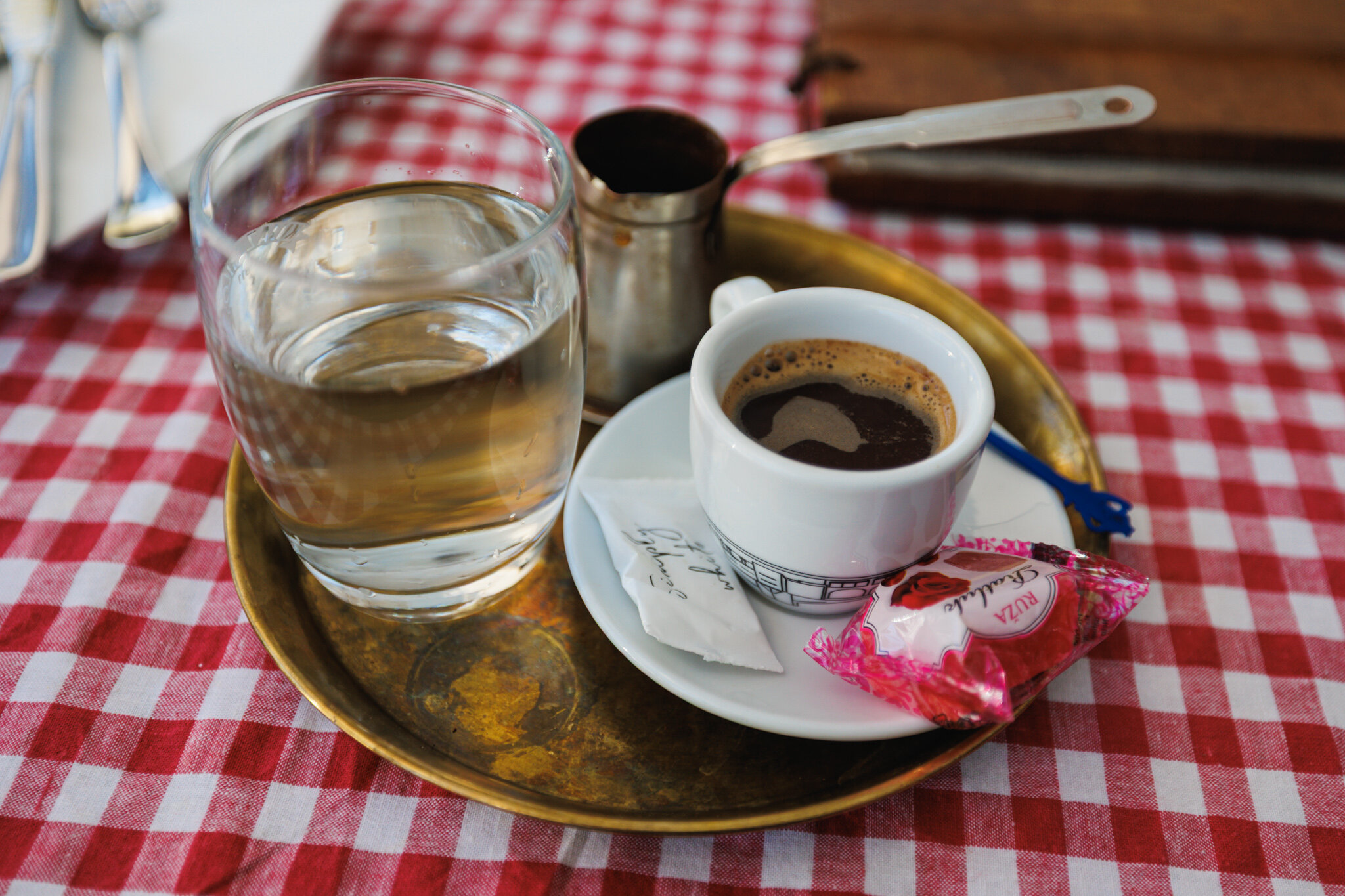
At Kafana “?” in Belgrade, a kafana whose name is simply a question mark, my coffee arrived with its own pot. A long-handled metal džezva stood beside a small white cup on a tray, with a glass of water and a wrapped sweet.
This was domaća kafa, and the pot was where it had been made.
The manager called me “my friend” every time he came to the table. By the third time, I was inclined to believe him.
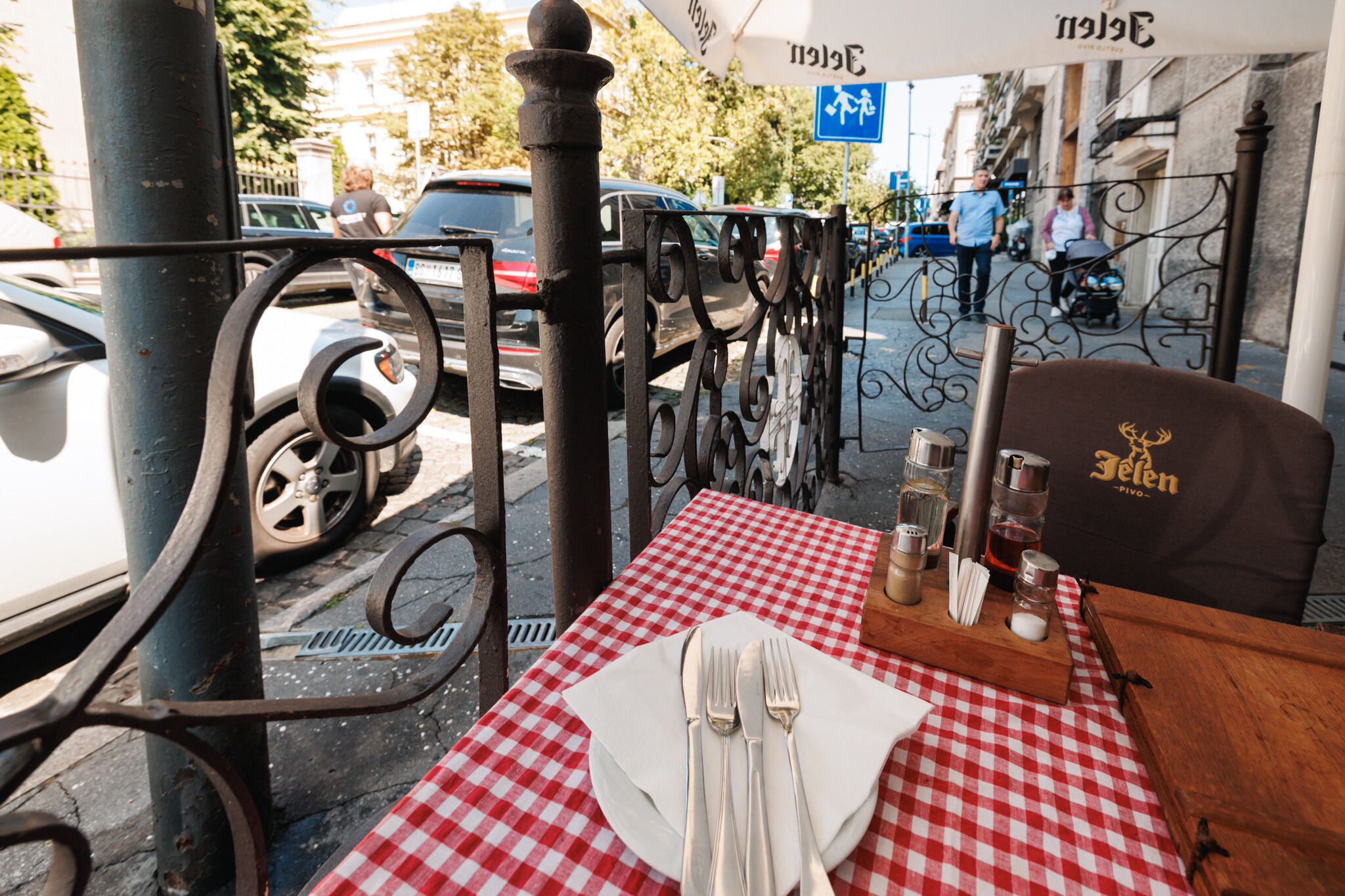
Only when I looked back through my photographs did I fully register where I had been sitting: alone, at a table right out on the pavement. At the time, it had seemed ordinary enough. In the photograph, the parked cars and passing pedestrians made the arrangement look considerably more public.
From pot to cup
Domaća kafa means “domestic” or “homemade coffee”, even when a kafana makes it for you. It belongs to the coffee tradition that reached Serbia through Ottoman influence; you may also see it called turska kafa, “Turkish coffee”. The name describes the preparation, not where the beans were grown.
In one common method, water is brought to the boil in the džezva and taken off the heat, and very finely ground coffee is stirred in. The pot returns briefly to the heat until the foam rises, then comes off again before it can boil away. The coffee goes into the cup unstrained, grounds and all.
The first sip
The coffee was intensely rich. I had braced myself for bitterness. What arrived was density.
Domaća kafa is often sweetened with sugar to soften that intensity. The wrapped sweet offered another option: ratluk, a soft confection related to Turkish delight. The wrapper said ruža: rose. Sugar goes into the coffee; ratluk goes between sips.
Meanwhile, in Novi Sad
Serbia’s coffee does not all come out of a džezva.
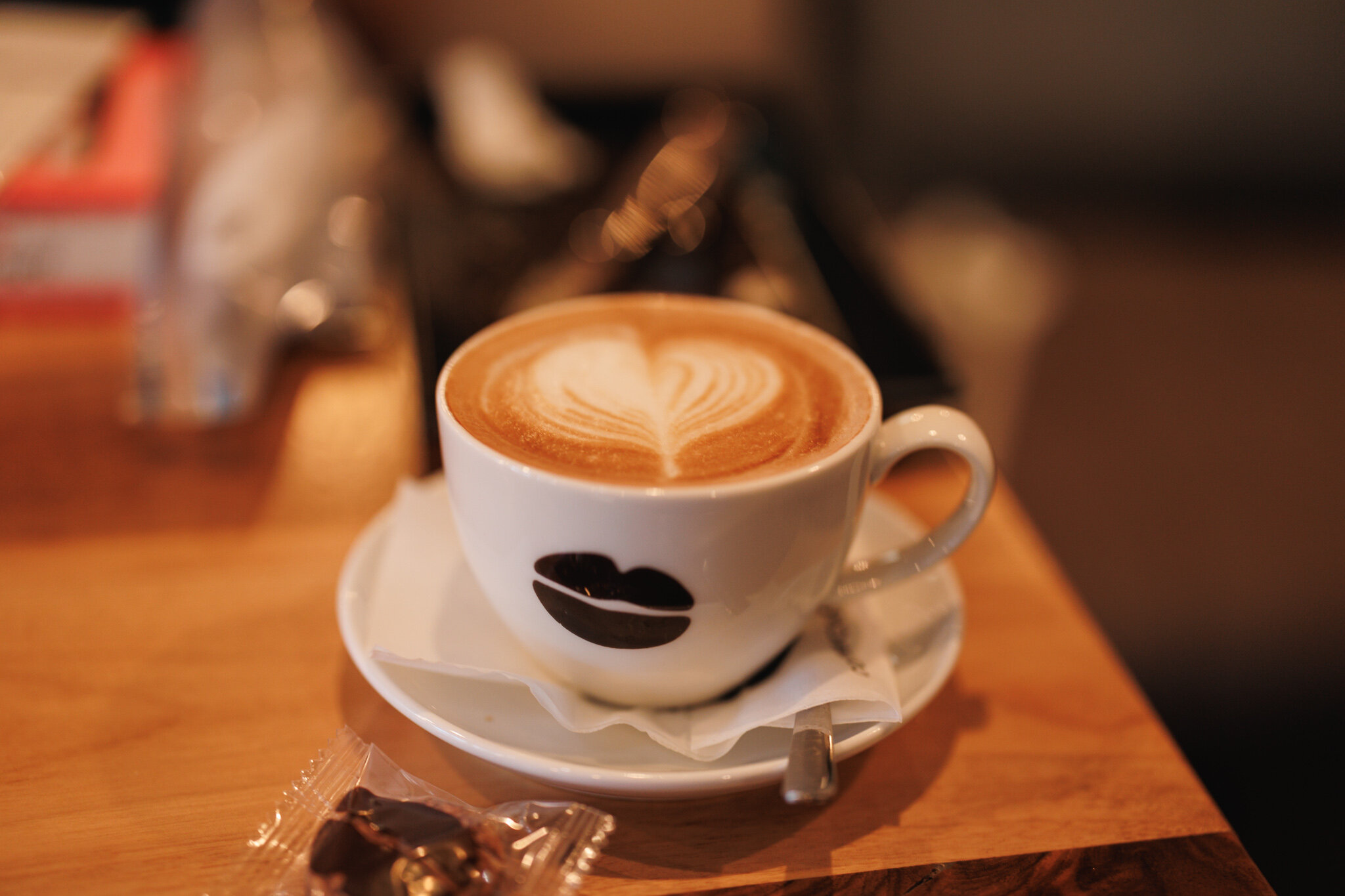
At Coffee Dream, a modern Serbian café chain in Novi Sad, my coffee wore a pattern of leaves in its milk foam. It could have been served almost anywhere in the world without anyone needing to ask how to drink it. In case of doubt, the cup was printed with a pair of lips.
Even so, it arrived with a glass of water and a wrapped sweet, just as in Belgrade.
Grounds included
Domaća kafa does need a little instruction. The grounds do not dissolve. Some stay suspended in the coffee; most slowly settle. Once any sugar has been stirred in, give the cup a moment, then drink without disturbing the sediment. The café habit of casually swirling a cup works rather differently when there is something at the bottom to stir up.
At Coffee Dream, the decoration was on top. Here, what gathers at the bottom is meant to stay there.
Finishing your coffee and emptying your cup are not quite the same thing.
Location
Restaurant
Kafana “?” (Znak Pitanja) / Кафана „?“ (Знак питања)
On Kralja Petra Street in central Belgrade
Kralja Petra 6, 11000 Belgrade, Serbia
Practical Information
- Drink
- Domaća kafa / Домаћа кафа — Serbian unfiltered coffee
- Opening hours
- Daily 10:00–22:00
- Official website
- Kafana Znak Pitanja
Information last checked: September 17, 2026 (Venue address and official opening hours checked; current menu, price and availability not confirmed.)
Conversation
Comments
Review pending commentsComments are reviewed before appearing. The internet already contains enough unattended surprises.
Loading comments…
Leave a comment