Belgrade’s Old Station: A Grand Station, a Grander Prince
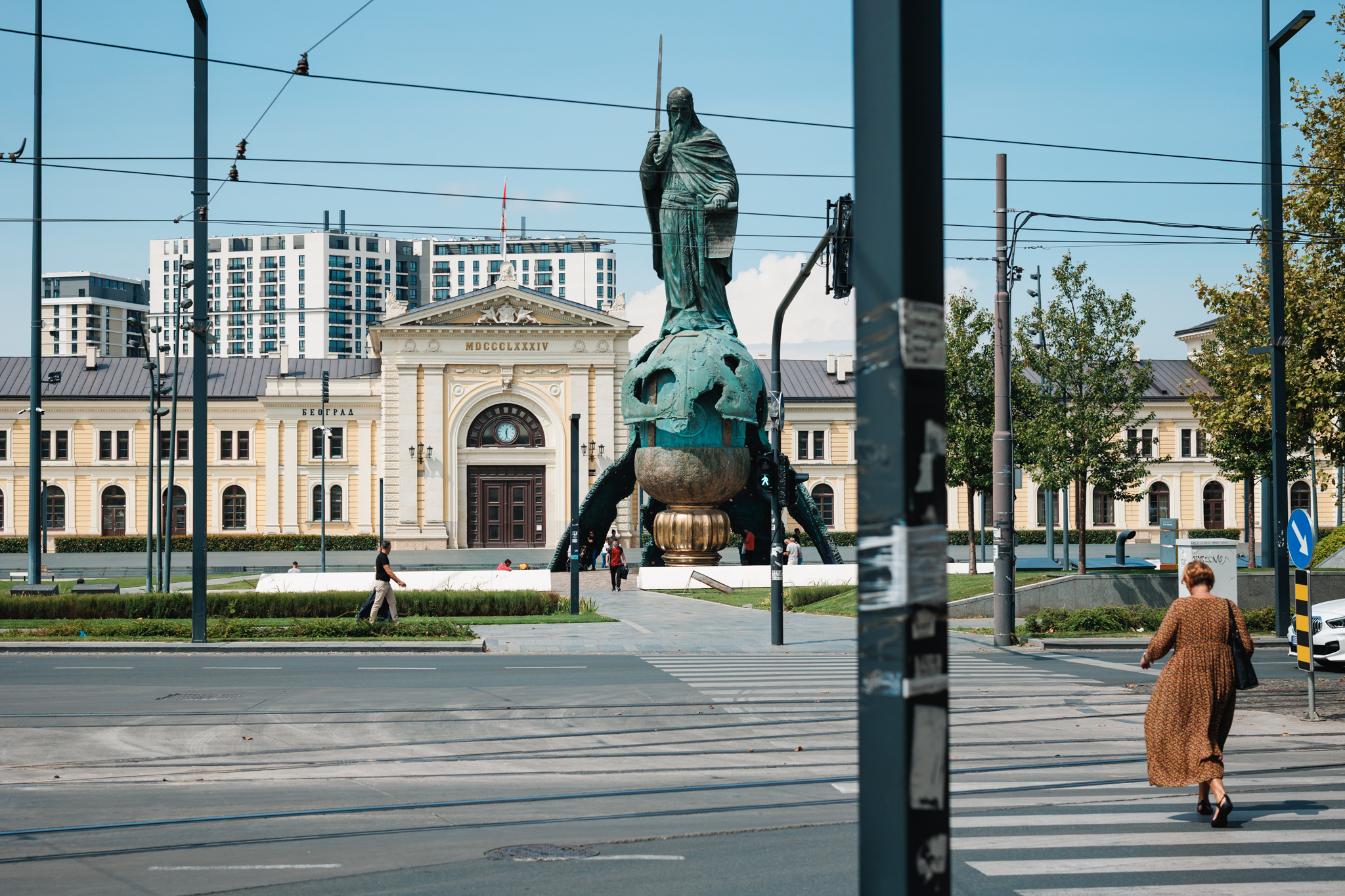
Belgrade’s old main railway station still looks well equipped to receive a train. A clock sits above the grand entrance, the city’s name stretches across the façade, and the pale yellow walls are neatly outlined in white. The building has retained its sense of occasion. Railway services ended in 2018.
Above the entrance, MDCCCLXXXIV records 1884, the year the station opened. For more than a century, this was a gateway to Belgrade. Its final departure, on June 30, 2018, was a train to Budapest. Services moved elsewhere as the riverside area was redeveloped, leaving the old station facing a square whose next major arrival would require no platform.
The square’s new arrival
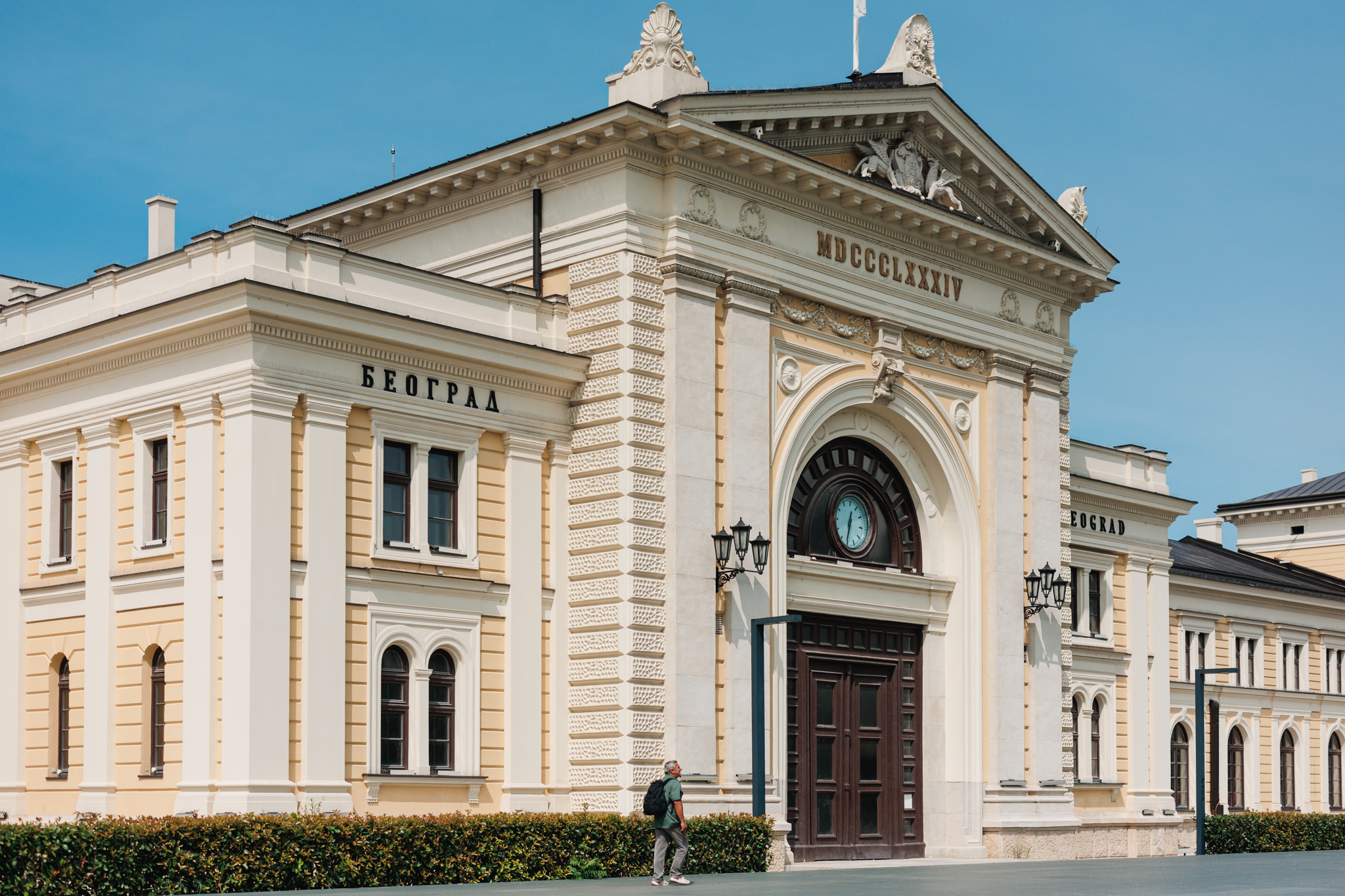
In January 2021, a monument to Stefan Nemanja was unveiled outside. The bronze figure holds a sword upright in one hand and a scroll in the other, his long robes descending towards an elaborate base. He stands with his back to the station, which finds itself in the unfamiliar role of background scenery.
Nemanja was a twelfth-century Serbian ruler and the founder of the Nemanjić dynasty. His title is usually translated as Grand Prince. That describes his rank, although here it also works as a fairly restrained comment on his size. The monument rises roughly 23 metres above the square.
For all his medieval appearance, he is the newcomer here. By the time his monument arrived, the station had already retired.
Even his name arrived second. Nemanjina, the street he faces, was named after him twelve years after the station opened.
The scroll offers a quieter part of his story. Nemanja eventually gave up his throne and became a monk. Together with his son, Saint Sava, he restored Hilandar Monastery on Mount Athos; the document in his left hand is the Hilandar Charter. The sword and scroll give both the ruler and the religious patron a place in the monument, though from across the square the sword is considerably easier to read.
At the foot of the monument
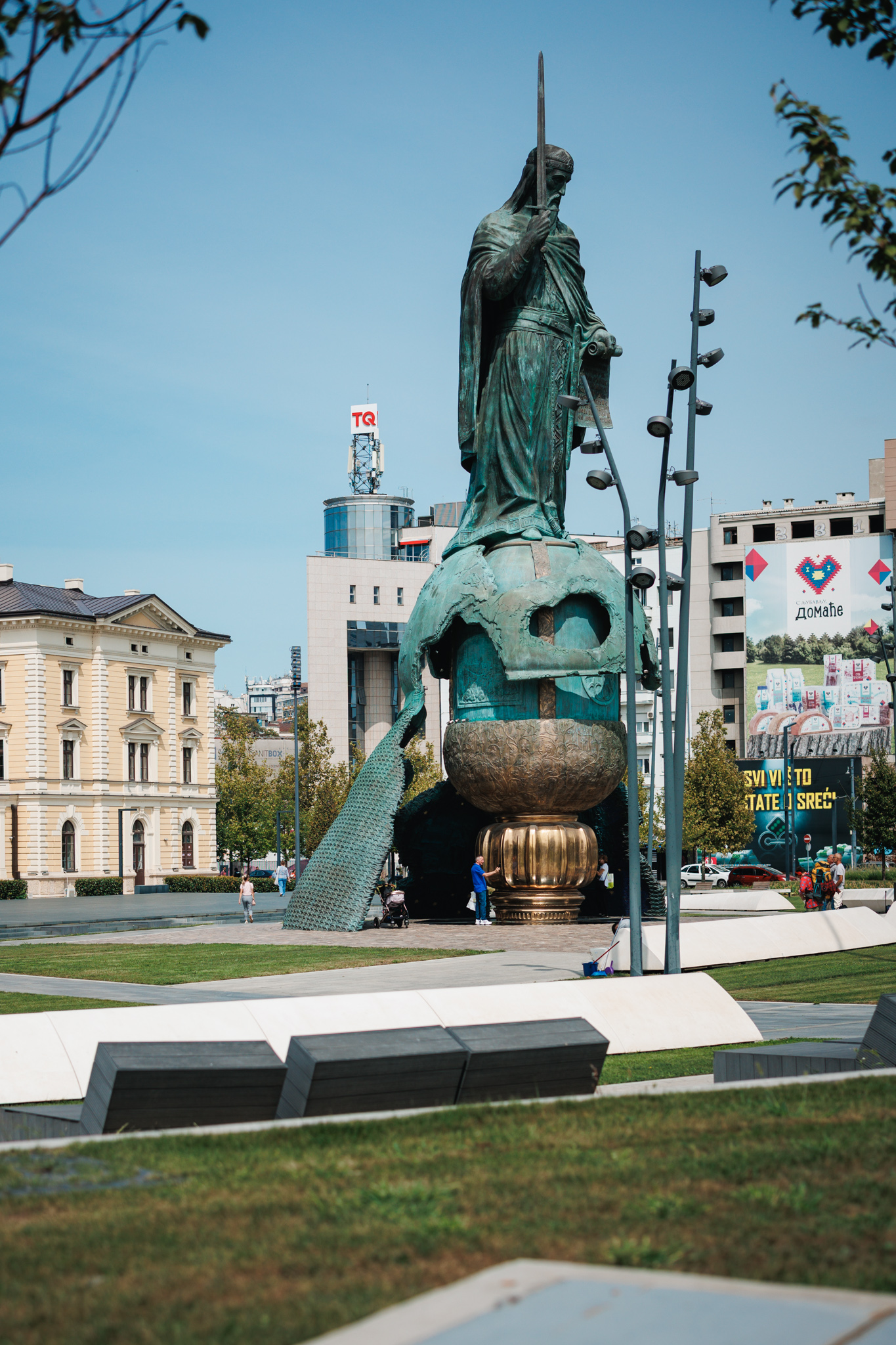
The people at the base make the scale clearer than the height alone. Beside them, the rounded golden centre and the great helmet-shaped shell become substantial structures in their own right. At ordinary human height, this is very much an encounter with the pedestal, and the pedestal has a good deal to say.
The shell is a Byzantine helmet, and it is cracked: a reference to Nemanja’s struggle for independence from Byzantium. He stands on top of it. The gold beneath it is the head of a staff modelled on one that belonged to his son, Saint Sava. Some critics asked whether a father should be standing on his son’s staff.
The monument’s size and style also drew criticism when it was unveiled, as did its price, which had been classified as confidential. Supporters welcomed a new landmark.
Behind him, the station is preparing for a second career. It is being converted into the Serbian Historical Museum, expected to be completed in 2027. The building that once brought people into the capital will soon be full of the national past. Nemanja simply got there first.
Around the monument, the square carries on with its day. People walk past the station entrance and gather at the base of the statue. There are still plenty of people going somewhere.
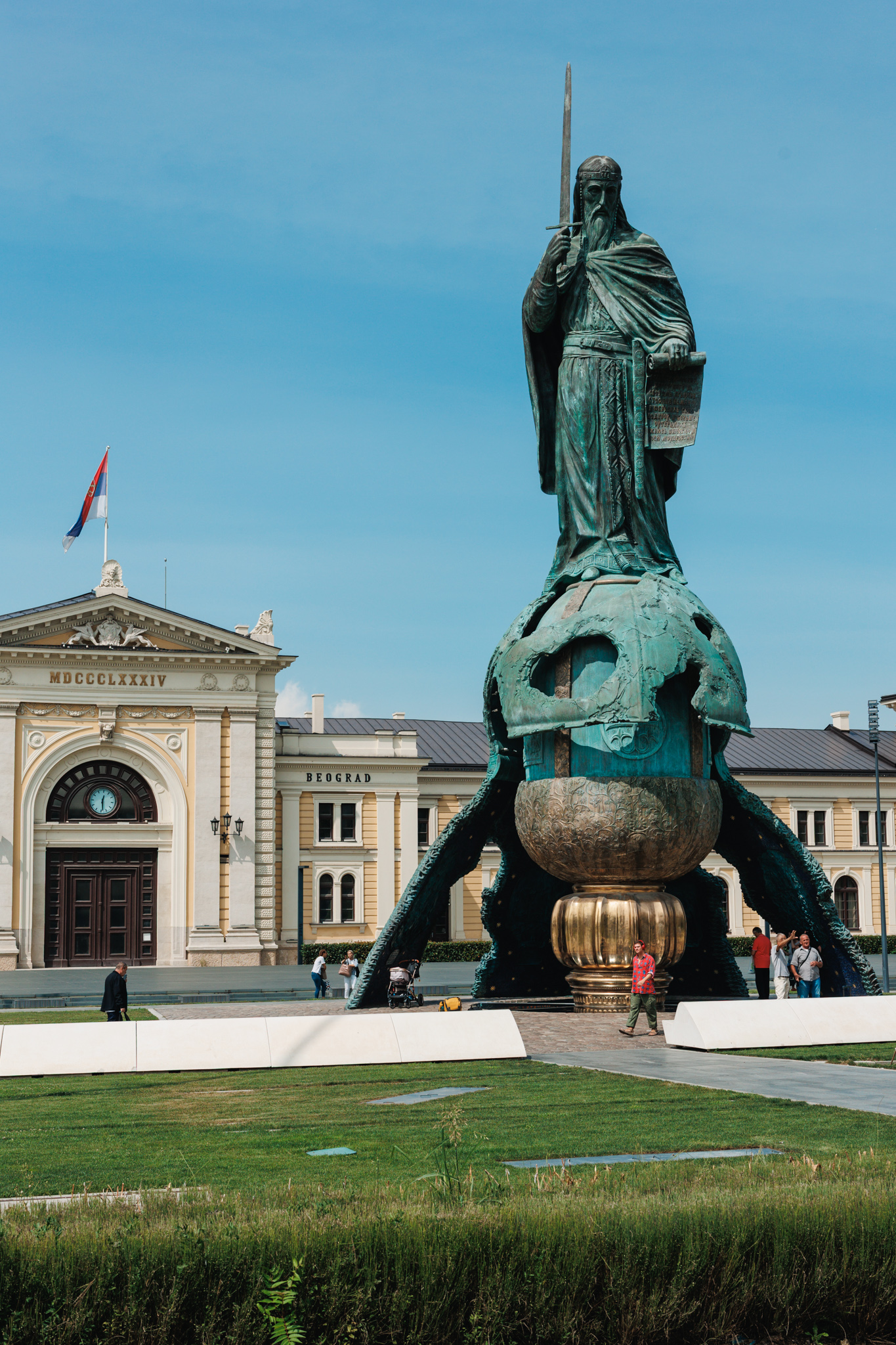
The trains have gone elsewhere.
The grand prince has made rather more permanent arrangements.
Visit this place
Location
Monument to Stefan Nemanja and Former Belgrade Main Railway Station
On Savski Square in Savski Venac, with the monument directly in front of the former station
Savski trg 2, 11000 Belgrade, Serbia
Practical Information
- Admission
- Free to view from Savski Square
- Visitor note
- The former station no longer serves trains and is being converted into the Serbian Historical Museum, expected to be completed in 2027. This article covers the outdoor monument and the station exterior.
Information last checked: October 5, 2026
Conversation
Comments
Review pending commentsComments are reviewed before appearing. The internet already contains enough unattended surprises.
Loading comments…
Leave a comment