St. Petka Chapel: A Spring with a Rather Elaborate Ceiling
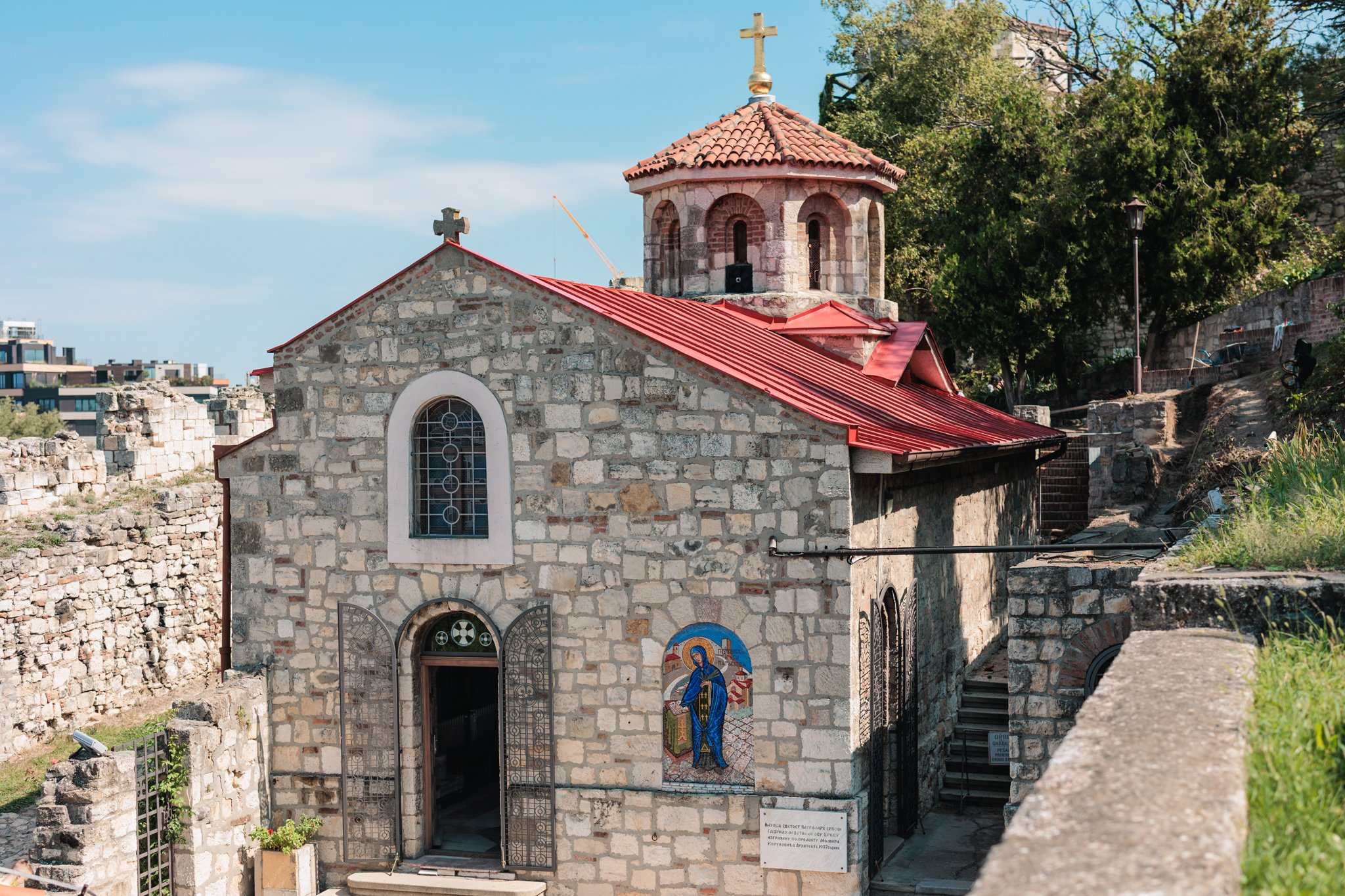
Just below Ružica Church in Belgrade Fortress, St. Petka Chapel looks modest enough: stone walls, a red roof and a small dome. A mosaic of its patron saint stands beside the entrance. The modesty stops at the door.
Very little wall to spare
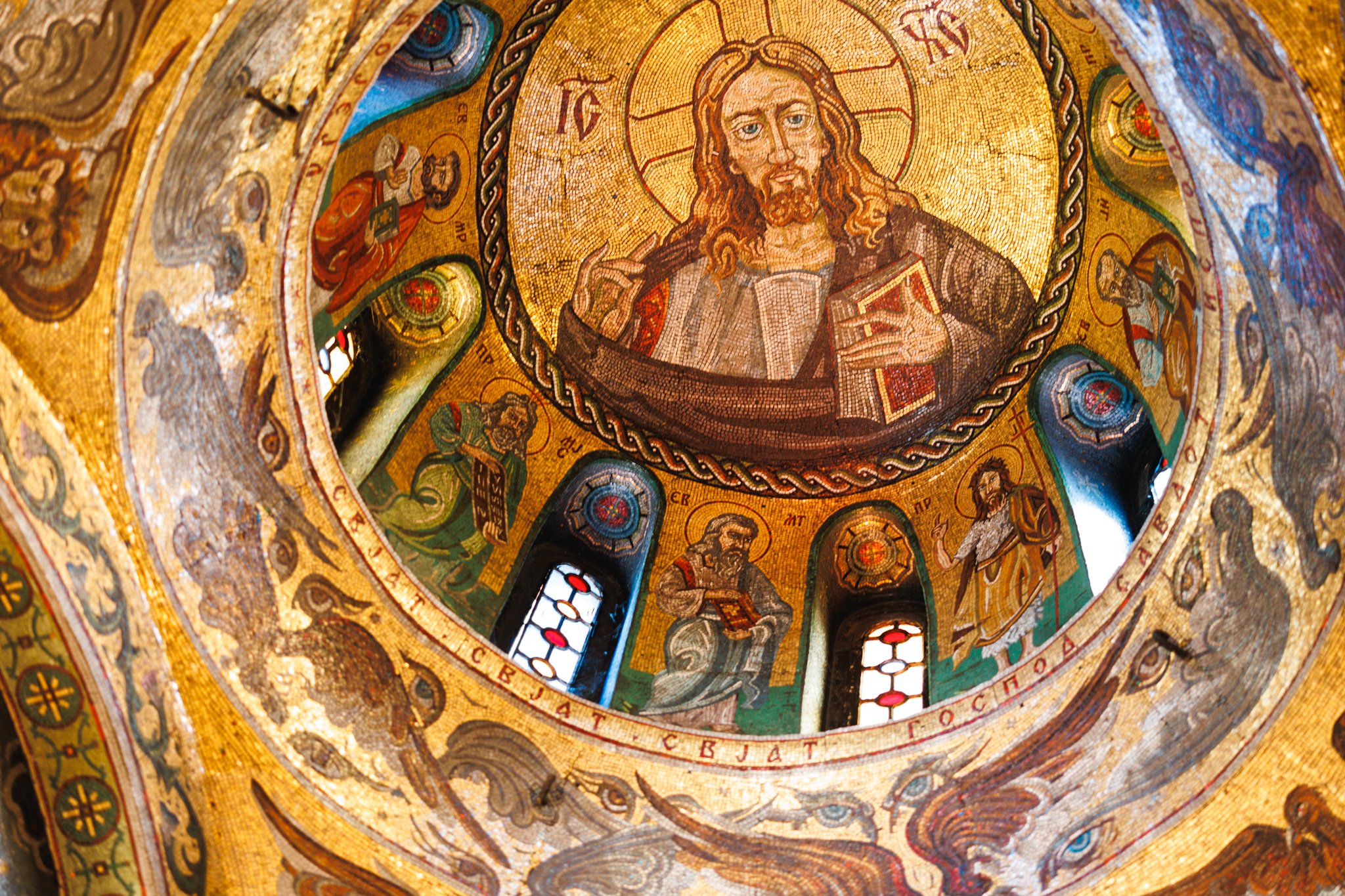
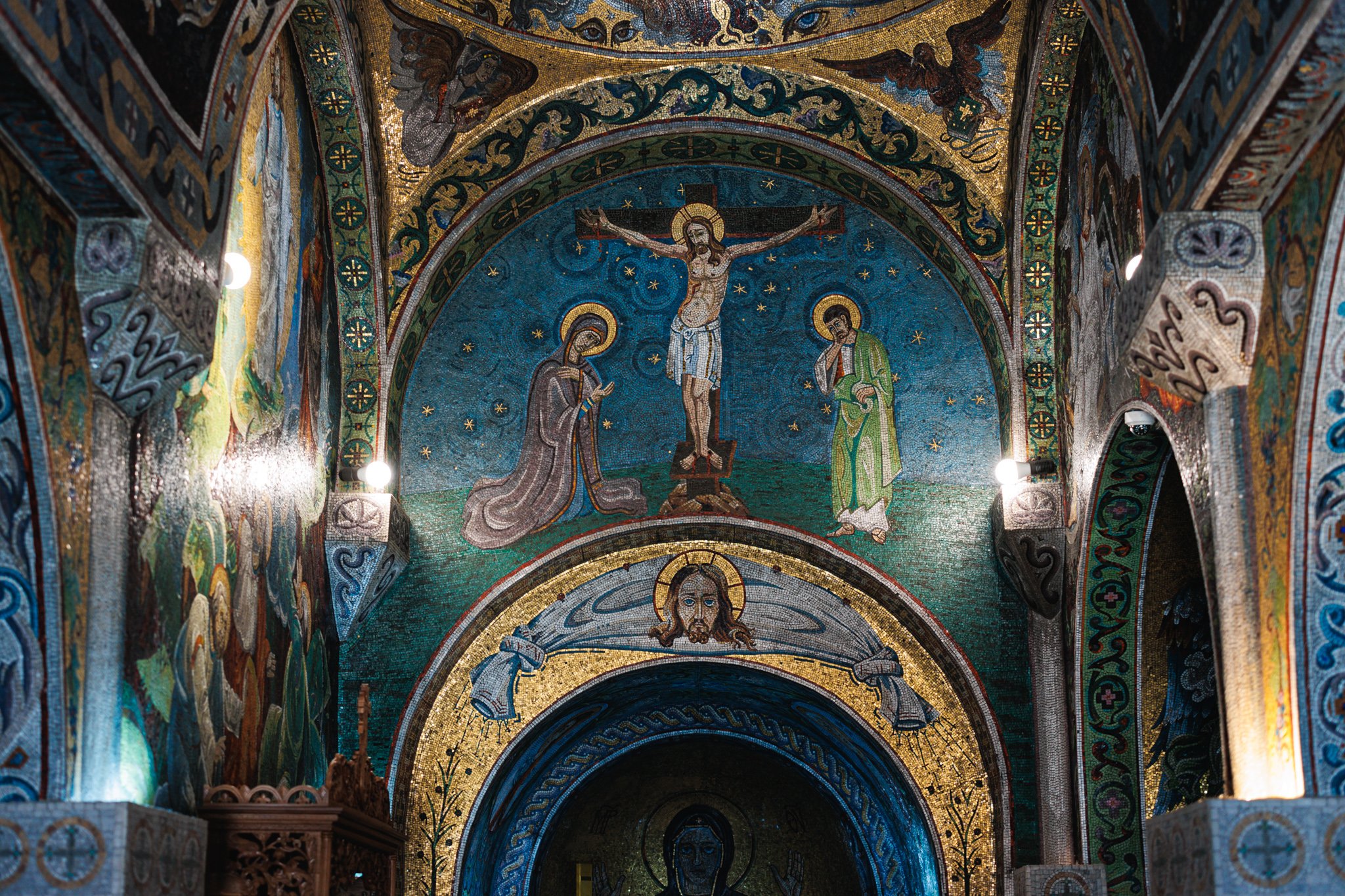
Inside, blue, green and gold spread across the walls and vaults. The Crucifixion occupies a blue field above an arch, while patterned borders follow the curves around it. Saints fill the spaces between. In the dome, Christ looks out from a golden circle surrounded by further figures and ornament.
There is a great deal to look at before the eye finds anywhere to rest. Even the narrow strips between scenes carry their own patterns.
The reason for building here lies beneath the floor.
The water came first
Beneath the chapel is a spring whose water has been believed to have healing powers since the Middle Ages. The present chapel, designed by Momir Korunović, was completed in 1937 over this older place of devotion.
The spring has had its lapses. It is said to have run dry in 1915, amid the fighting for Belgrade, and to have stayed dry for more than two years. On St. Petka’s feast day, the queue for its water can start at five in the morning.
When the chapel’s foundations were dug, the spring turned out not to be the only thing beneath the floor. Workers found the bones of soldiers who had died defending Belgrade; they were moved to an ossuary near Ružica Church.
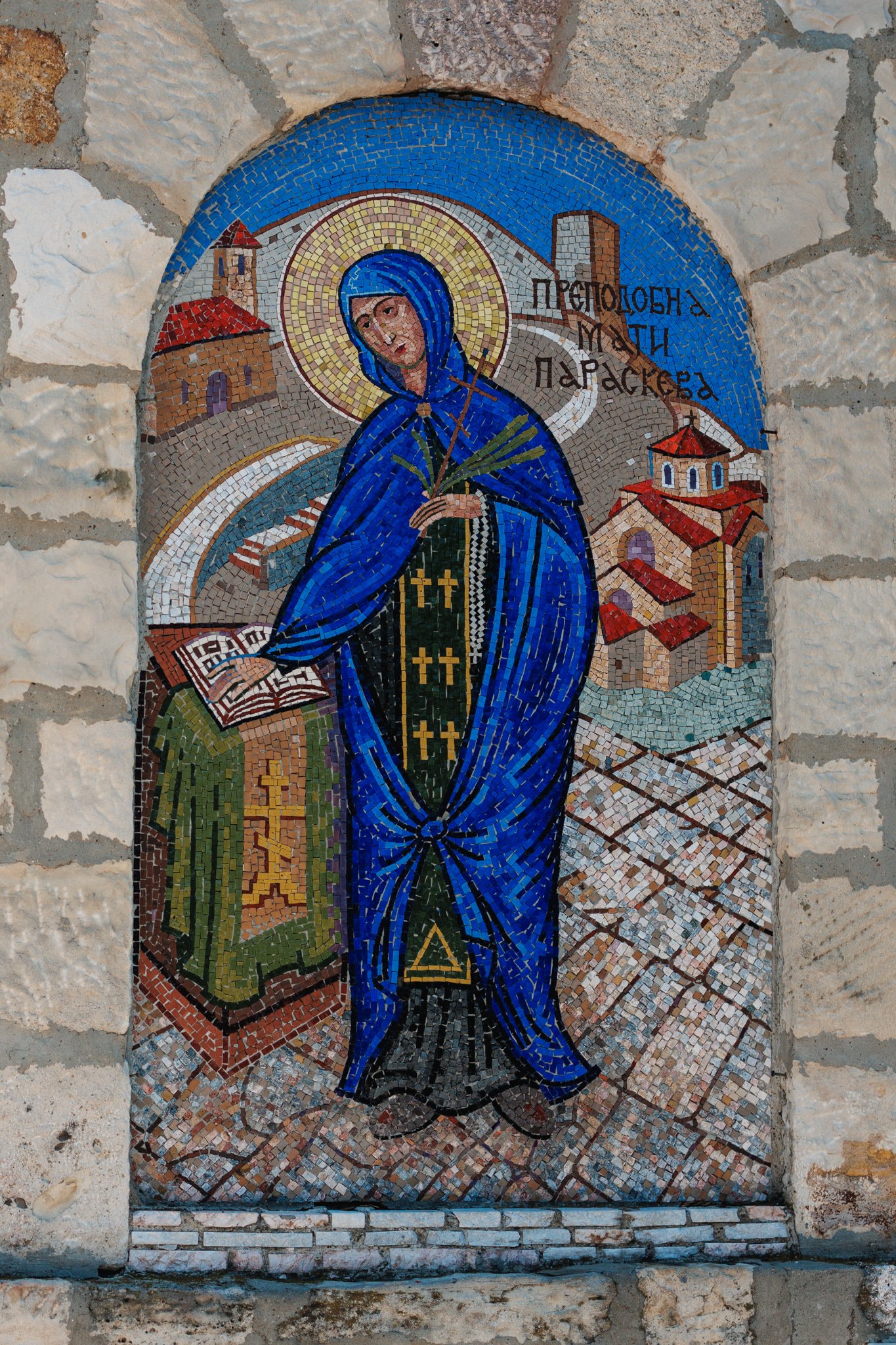
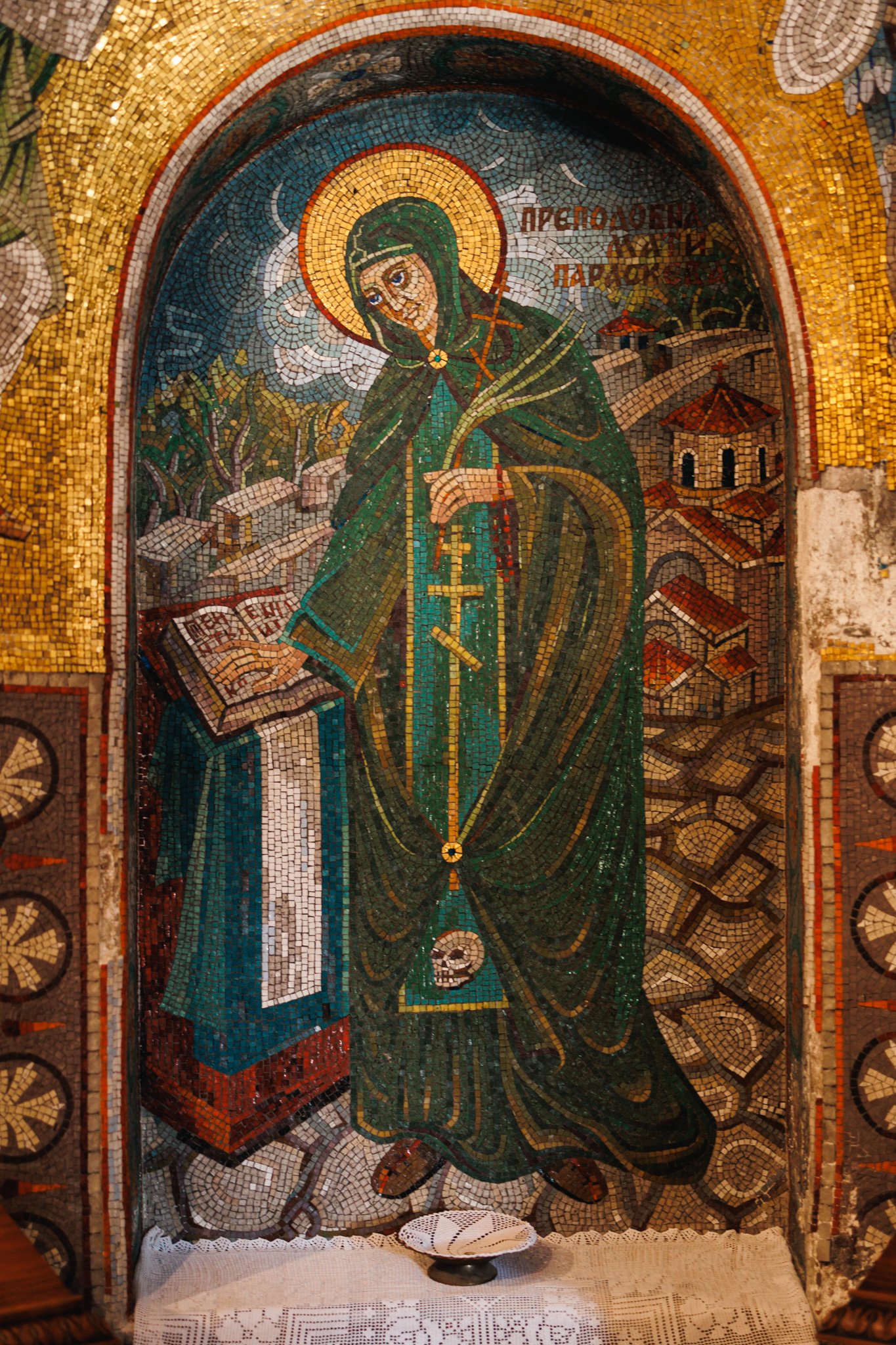
St. Petka, also known as Paraskeva, appears both outside and within. Beside the entrance she wears vivid blue; inside, she wears green, with the walls and towers of the fortress behind her. Identifying saints can take some homework. The background is just outside.
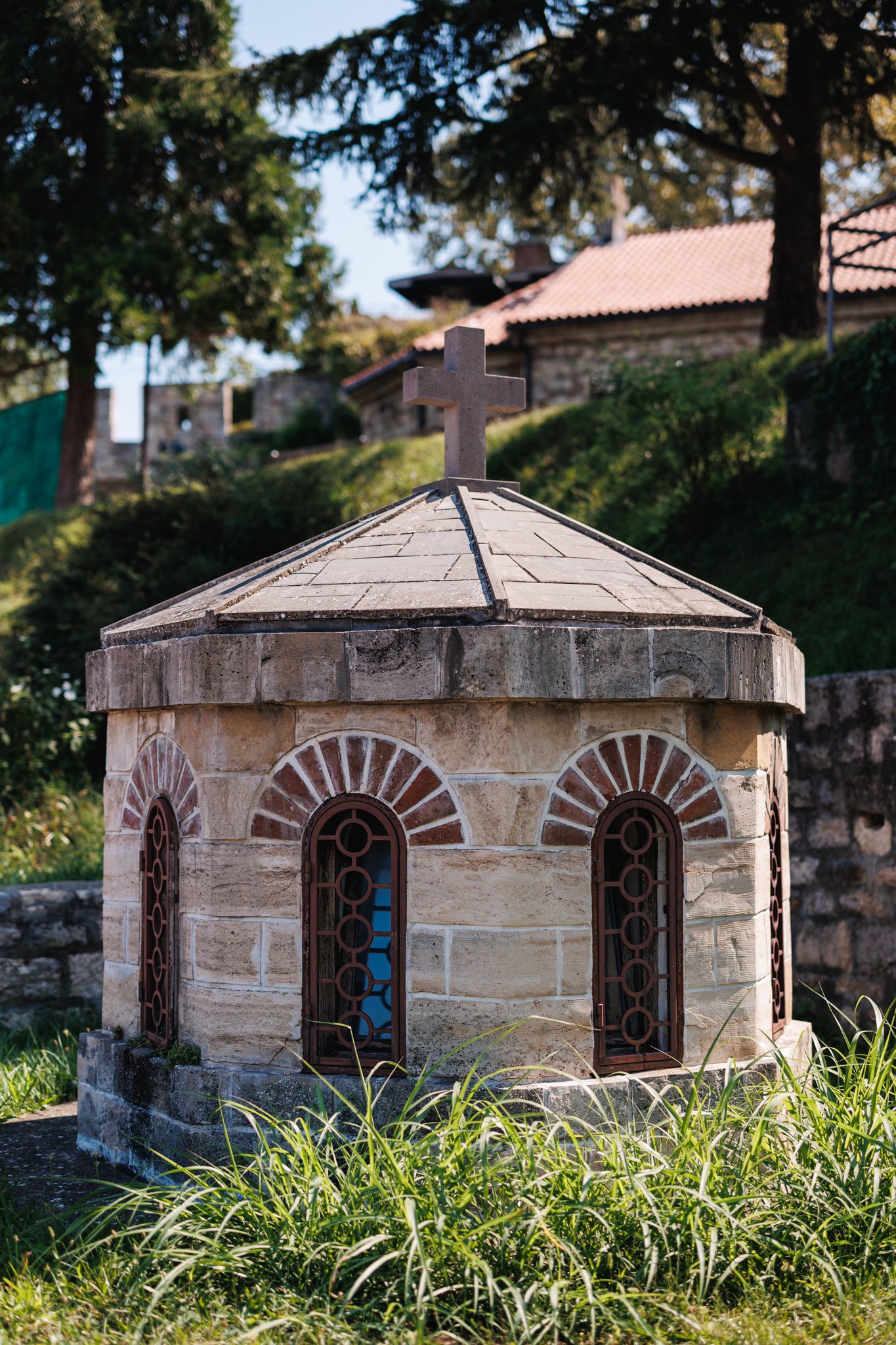
Nearby, water has a different role in St. Petka’s baptistery. Built in 2003–2004 for full-immersion baptisms following early Christian practice, it has a baptismal pool in a room cut into the hillside. An octagonal stone dome rises above the grass, its eight windows admitting light to the room below.
A change of surface
The chapel’s brilliant mosaics are more recent than they might first appear. Frescoes painted in 1948 soon deteriorated. The church’s own history gives an unromantic explanation: damp and poor preparation. For a chapel built over a spring, damp was perhaps not the most surprising problem.
The mosaics that replaced them were made by Đuro Radlović and blessed in 1983. What looks like a continuous world of saints and biblical scenes is also the result of a change of plan.
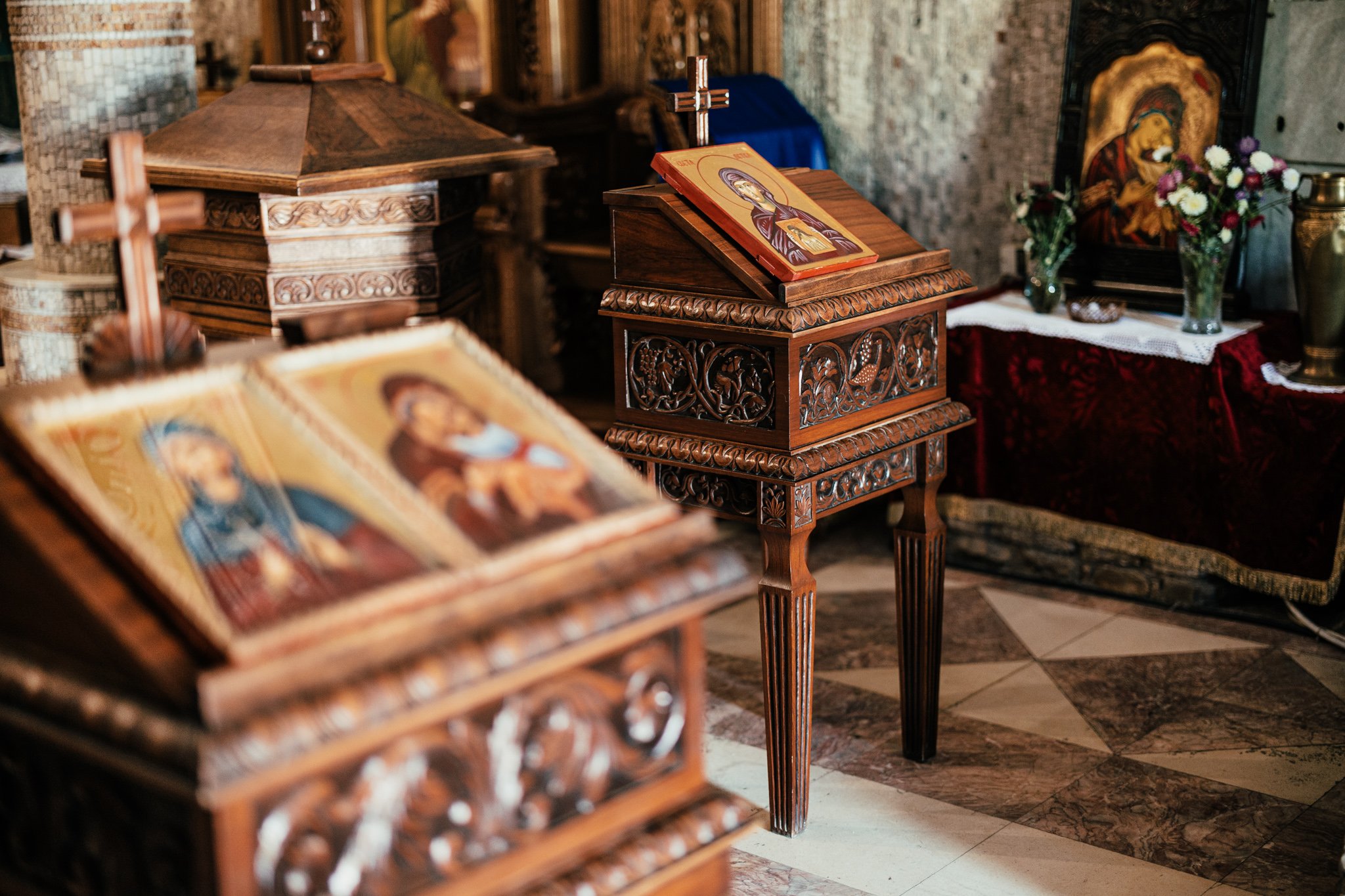
Below the mosaics, icons rest on carved wooden stands. Their dark wood offers a quieter contrast to the surrounding colour.
Seen close up, the mosaics resolve into individual pieces. Rows of tiles curve around faces and follow the folds of clothing. Around these scenes, patterned borders lead the eye over the arches and towards the gold of the dome.
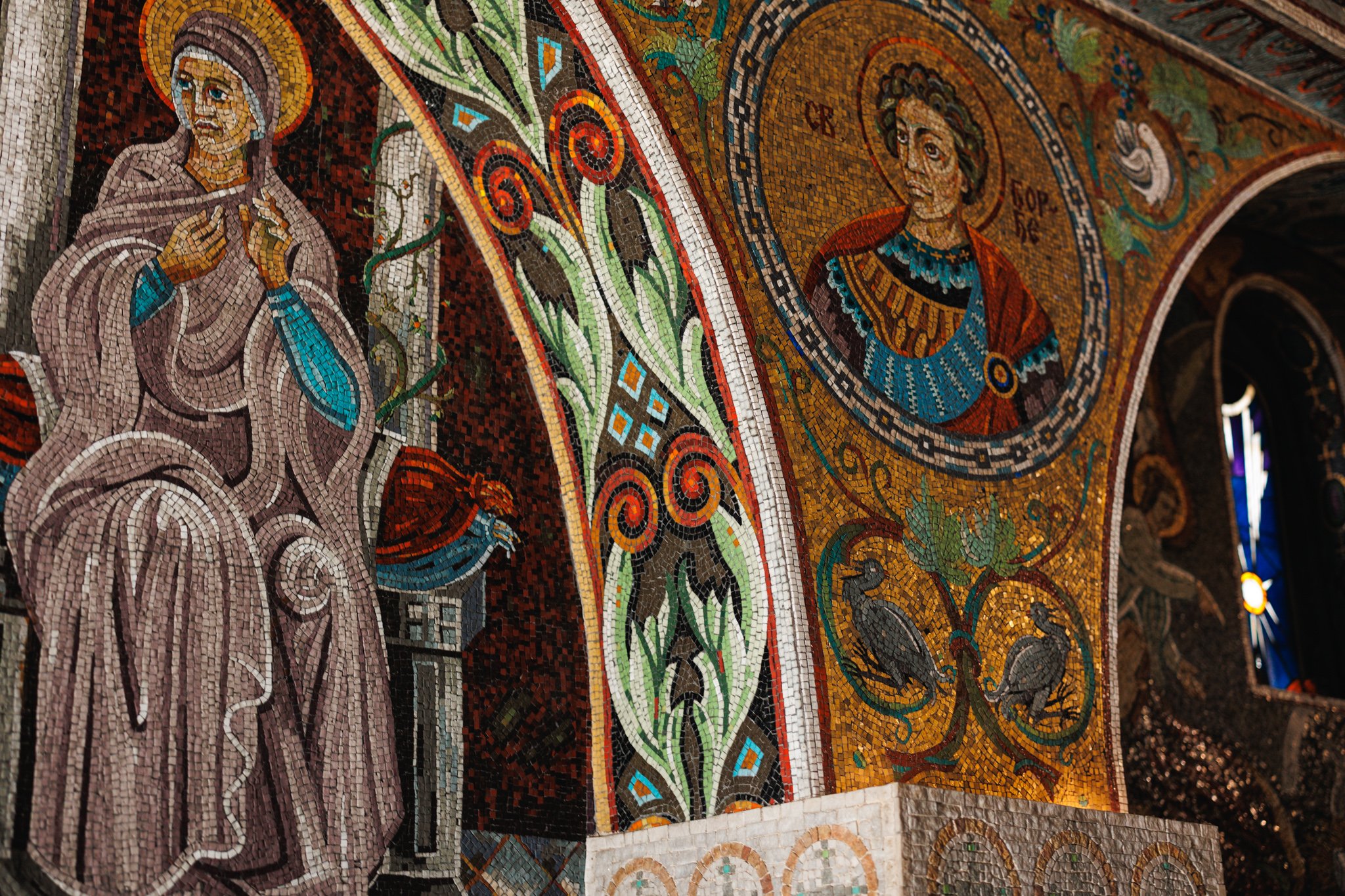
Most damp problems do not end in quite this much gold.
Visit this place
Location
St. Petka Chapel / Капела Свете Петке
Inside Belgrade Fortress, just below Ružica Church
Belgrade Fortress, Kalemegdan, Belgrade, Serbia
Practical Information
- Area
- Belgrade Fortress, Belgrade, Serbia
- Access
- Inside Belgrade Fortress, just below Ružica Church
- Visitor note
- This is an active place of worship. Keep quiet inside and avoid disturbing services or prayer.
- Official website
- Ružica Church and St. Petka Chapel — Kalemegdan sanctuaries
- Service schedule
- Ružica Church and St. Petka Chapel — service times
Information last checked: September 23, 2026 (The exact chapel map pin, church history and published service schedule checked; visitor opening hours, admission, photography policy and public access to the baptistery interior unconfirmed.)
Conversation
Comments
Review pending commentsComments are reviewed before appearing. The internet already contains enough unattended surprises.
Loading comments…
Leave a comment