Rolled Phở and Fried Phở: No Soup, No Noodles
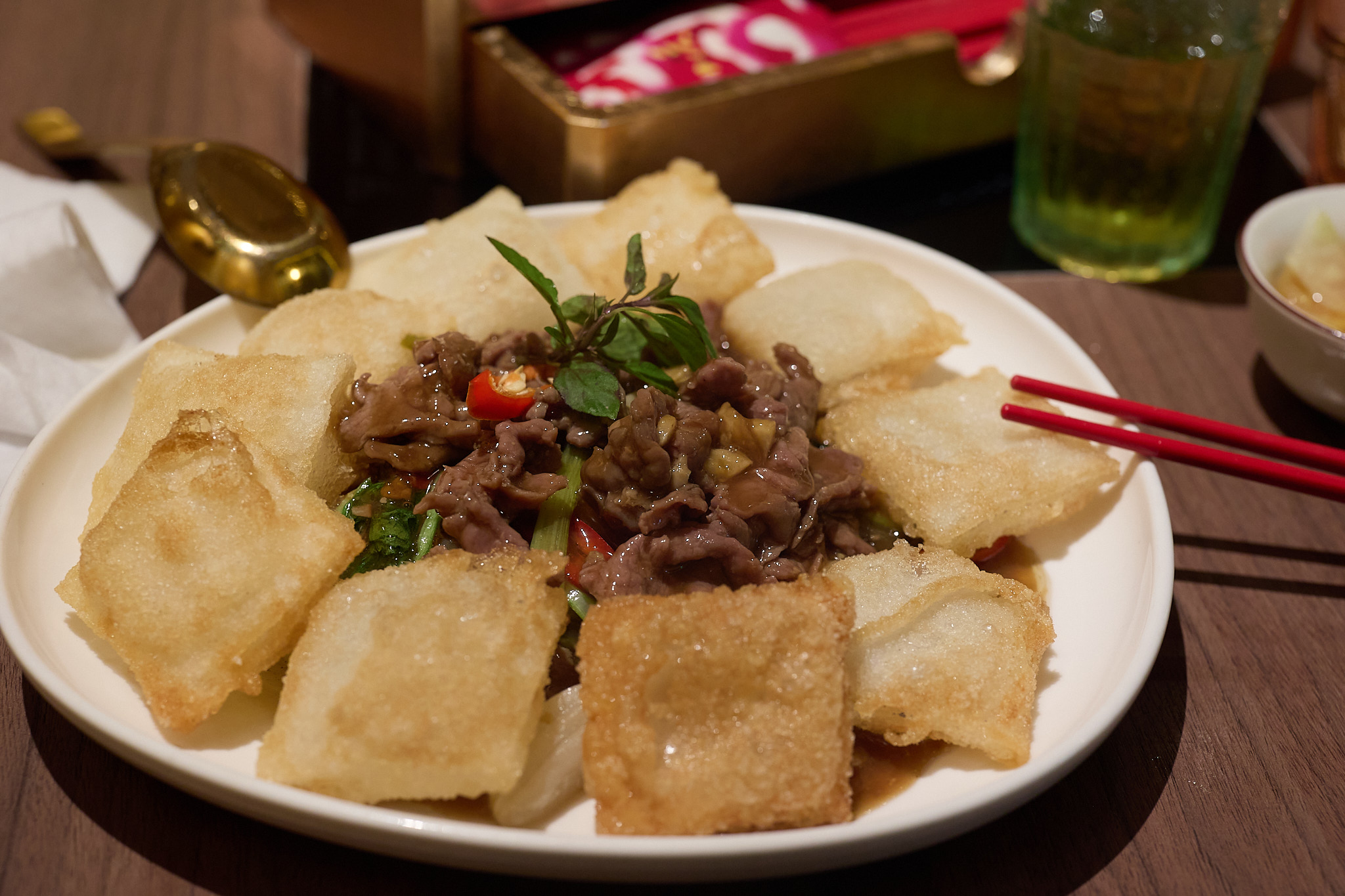
In Japan, fresh spring rolls are about as familiar as Vietnamese food gets. Perhaps for that very reason, I reached the last evening of a trip to Vietnam without having eaten one.
So for my last dinner I ordered some, at Phở SOL, a chain that serves Hanoi-style phở in Saigon. From the same menu I ordered a dish I had not known existed until I saw it there: fried phở.
Of the two, the spring rolls were the one I thought I knew.
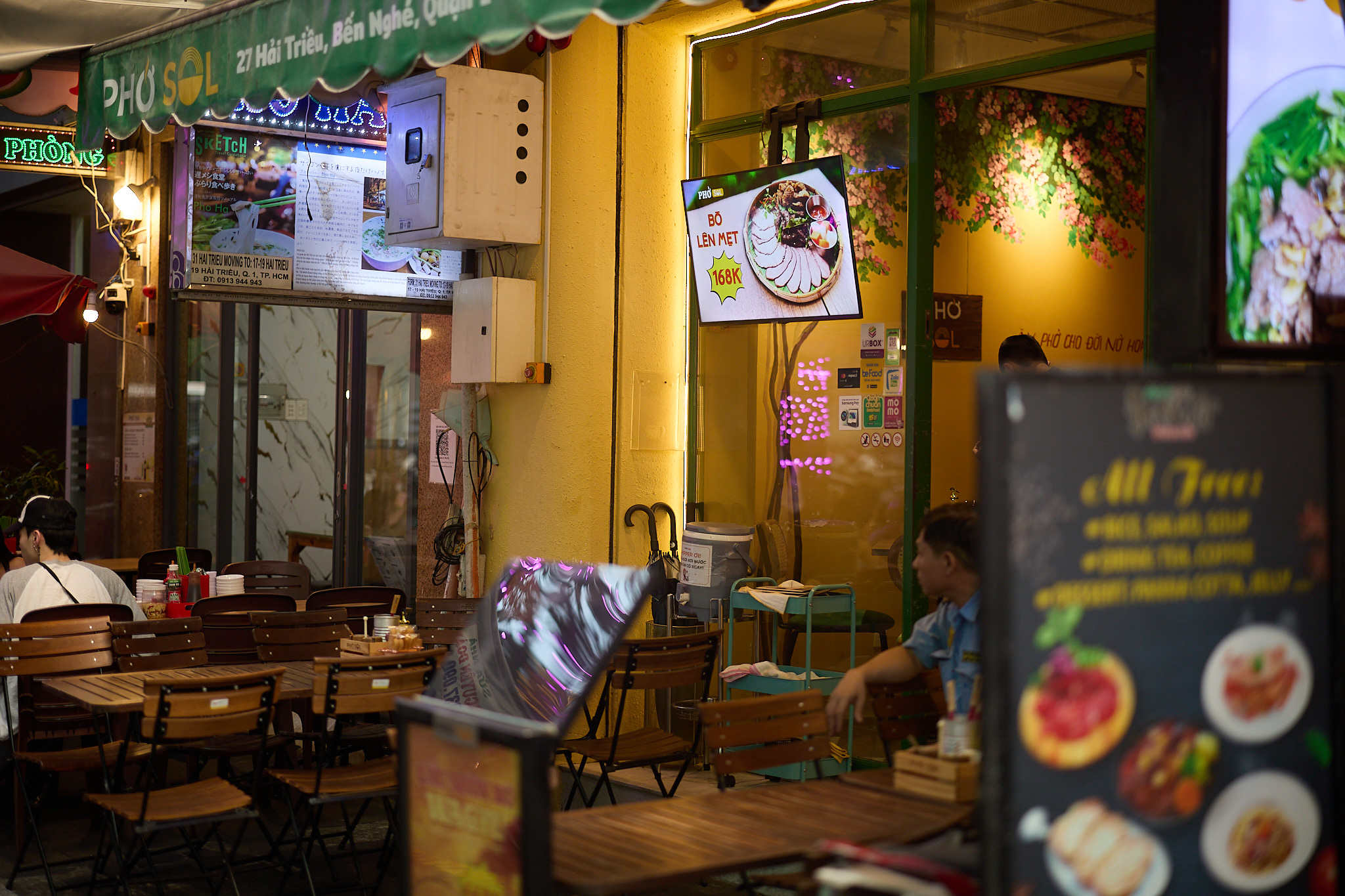
The familiar one
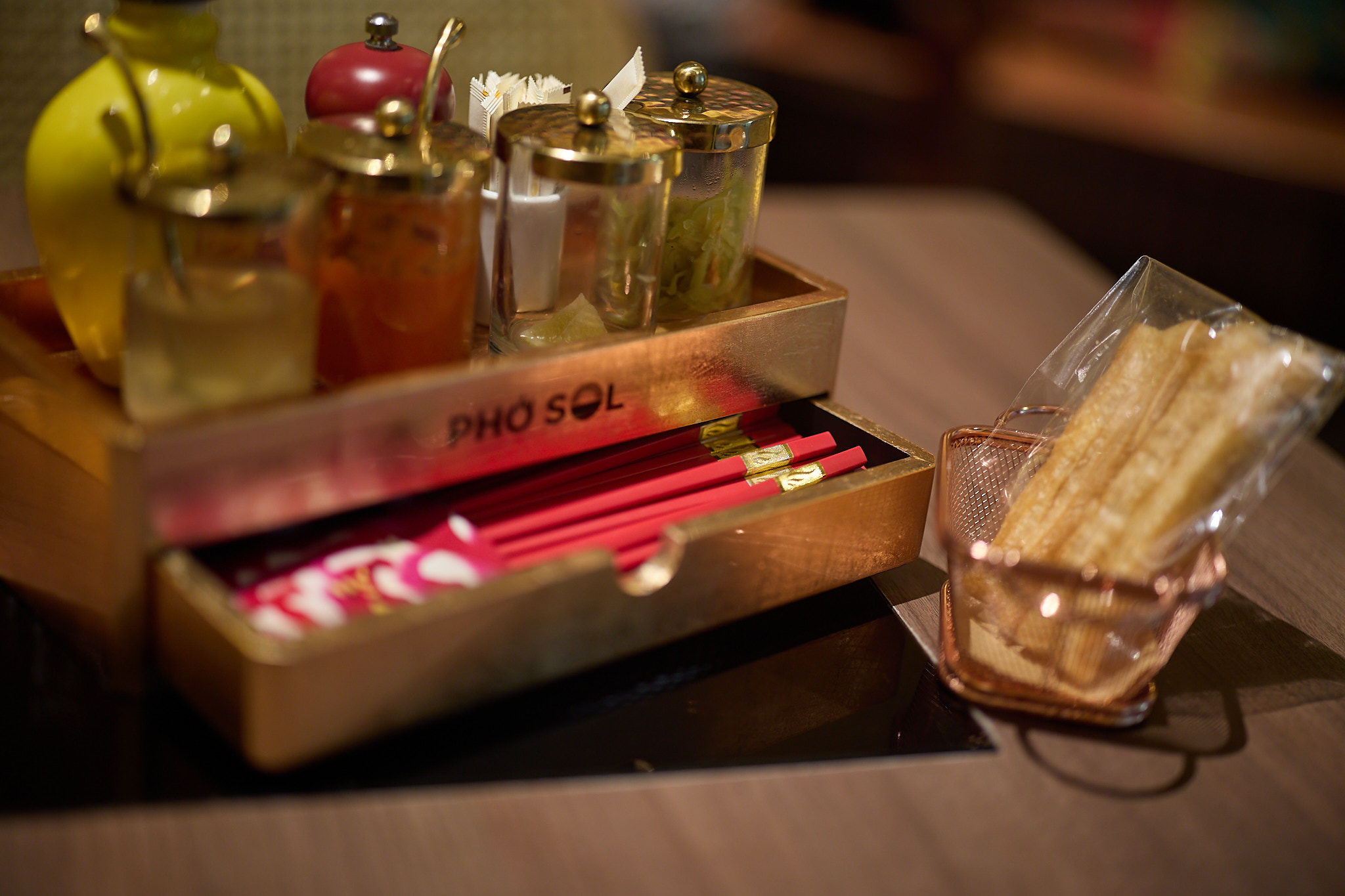
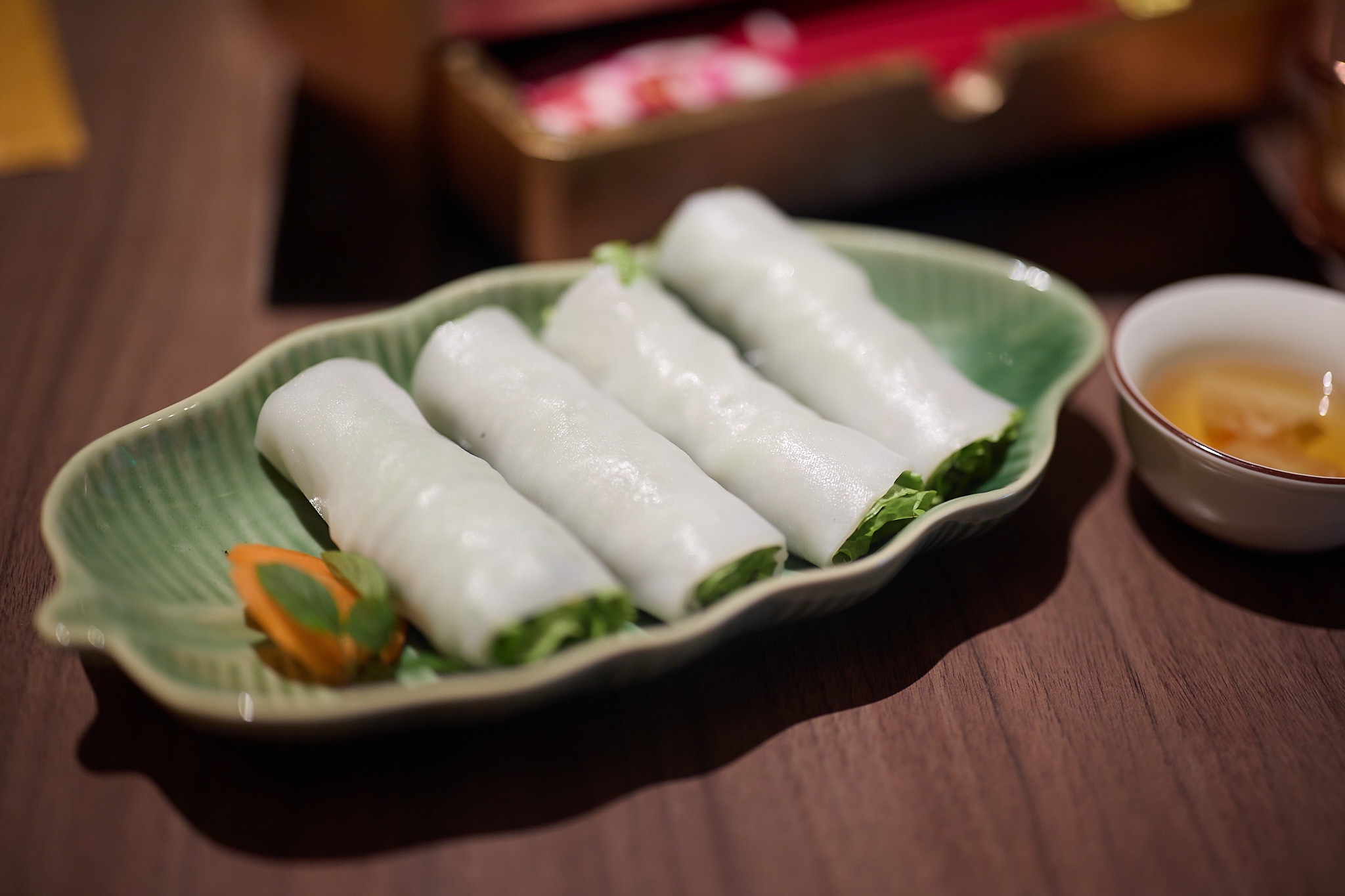
The rolls came four to a dish shaped like a leaf. Each was white and glossy, with lettuce poking out at the ends. A small bowl of pale amber sauce came on the side.
I ate them as fresh spring rolls. My notes from the time say just one thing about eating them: the mochi-mochi was amazing.
Mochi-mochi is Japanese for a soft, springy chew, the kind you get from mochi, pounded rice cake. It is a compliment.
The new one
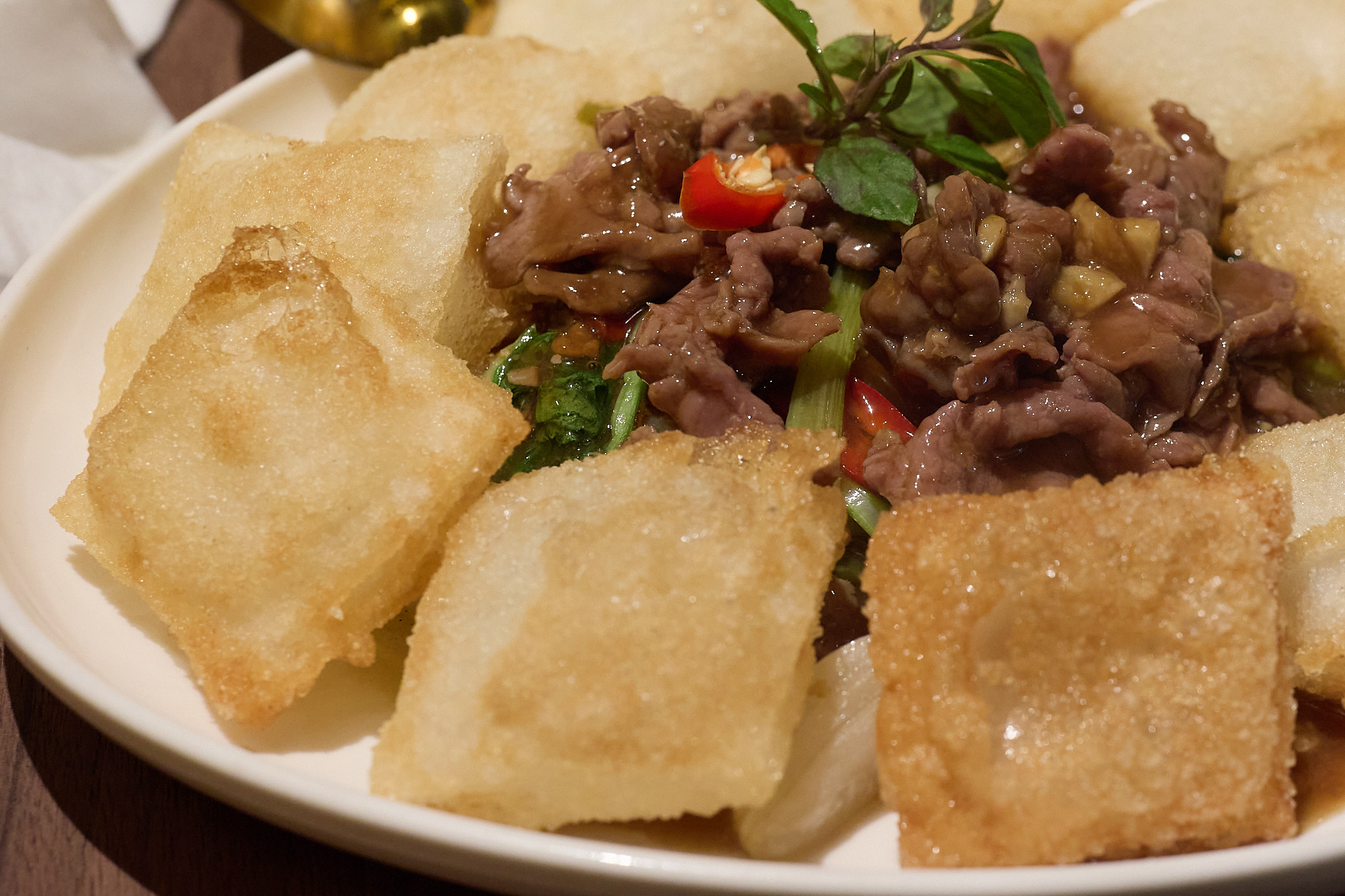
The fried phở did not look like phở, or like noodles of any kind. Golden squares, puffed up like small pillows, lay in a ring around a heap of stir-fried beef and greens.
Its Vietnamese name is phở chiên phồng: phở fried until it puffs up. Phở starts out as wide, soft, white sheets; cut into strips, they become the noodles in a bowl of phở. For this dish the sheets are cut into squares instead, and dropped into hot oil.
My notes ran a little longer this time: straight from the fryer, crisp and mochi-mochi, and the beef in its sauce very good too.
As it happens, that sums up the dish: the oil gives it a crisp shell, and underneath, it is still soft phở.
Twice
Two dishes, and the same word for both. I thought nothing of it for almost two years, until I looked up the restaurant’s menu to write this.
On Phở SOL’s website, the menu has a section called Món ngon từ phở, delicious dishes made from phở. There are two dishes in it. One is phở chiên phồng. The other is phở cuốn: rolled phở.
The spring rolls were phở too.
Fresh spring rolls, gỏi cuốn, are wrapped in rice paper: dry sheets like the ones I had softened in water and rolled around bánh xèo in Hanoi, earlier on the same trip. Wet, the paper turns translucent, thin enough to show the prawn that usually goes inside. Phở cuốn is rolled in the phở sheet itself, before anyone has cut it into noodles. In my photograph the wrapper is white, and shows almost nothing of what is inside.
At first glance, one can pass for the other, which is the whole of my defence.
Phở cuốn comes from Hanoi, where one restaurant owner says she came up with it so that people could eat phở in summer without breaking into a sweat.
As for fresh spring rolls, I thought I had finally got round to them on that last evening.
Strictly speaking, I still have not had one in Vietnam.
Location
Restaurant
Phở SOL Hải Triều
On Hải Triều Street in central Ho Chi Minh City, in what used to be District 1
27 Hải Triều, Sài Gòn Ward, Ho Chi Minh City, Vietnam
Practical Information
- Dishes
- Phở cuốn (rolled phở): phở sheets rolled around lettuce and other fillings, with a dipping sauce. Phở chiên phồng (fried phở): squares of phở fried until puffed, around stir-fried beef and greens. Both ordered in January 2025.
- Opening hours
- Daily from 6:00; until 22:30 Sunday to Thursday, and until midnight on Friday and Saturday, as listed on Google Maps
- Official website
- Phở SOL
- Visitor note
- Phở SOL has several branches in Ho Chi Minh City; this story is about the one at 27 Hải Triều.
Information last checked: November 11, 2026 (Branch and menu checked against Phở SOL’s website. Opening hours checked against the Hải Triều branch’s Google Maps listing.)
Conversation
Comments
Review pending commentsComments are reviewed before appearing. The internet already contains enough unattended surprises.
Loading comments…
Leave a comment