Turtle Lake: Lotus by Design, Turtle by Name
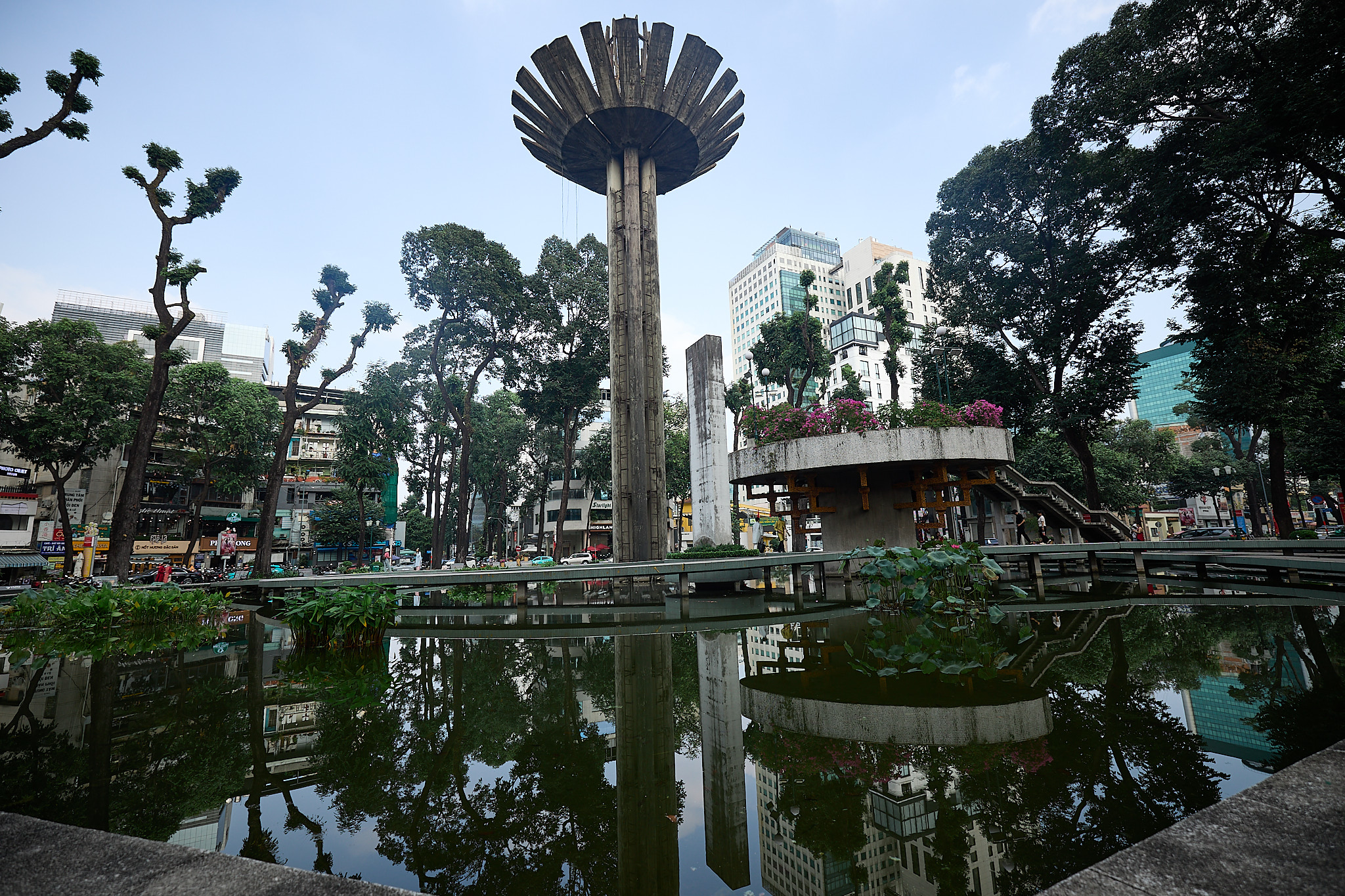
After South Vietnam unveiled a memorial in the middle of Saigon in 1969, its foreign ministry explained in print what each part of it meant. The concrete flower in the centre, its petals open to the sky, stood for freedom. The round disc on top stood for freedom as well. The eight-sided lotus lake around it was “another symbol of freedom”.
Then there was the turtle. It carried on its back an honour roll of the countries that had sent South Vietnam aid. The turtle itself, one of the four sacred animals of Vietnamese tradition, stood for longevity.
Saigon named the whole place after the turtle.
Hồ Con Rùa: Turtle Lake. There has been no turtle here since 1976.
The flower
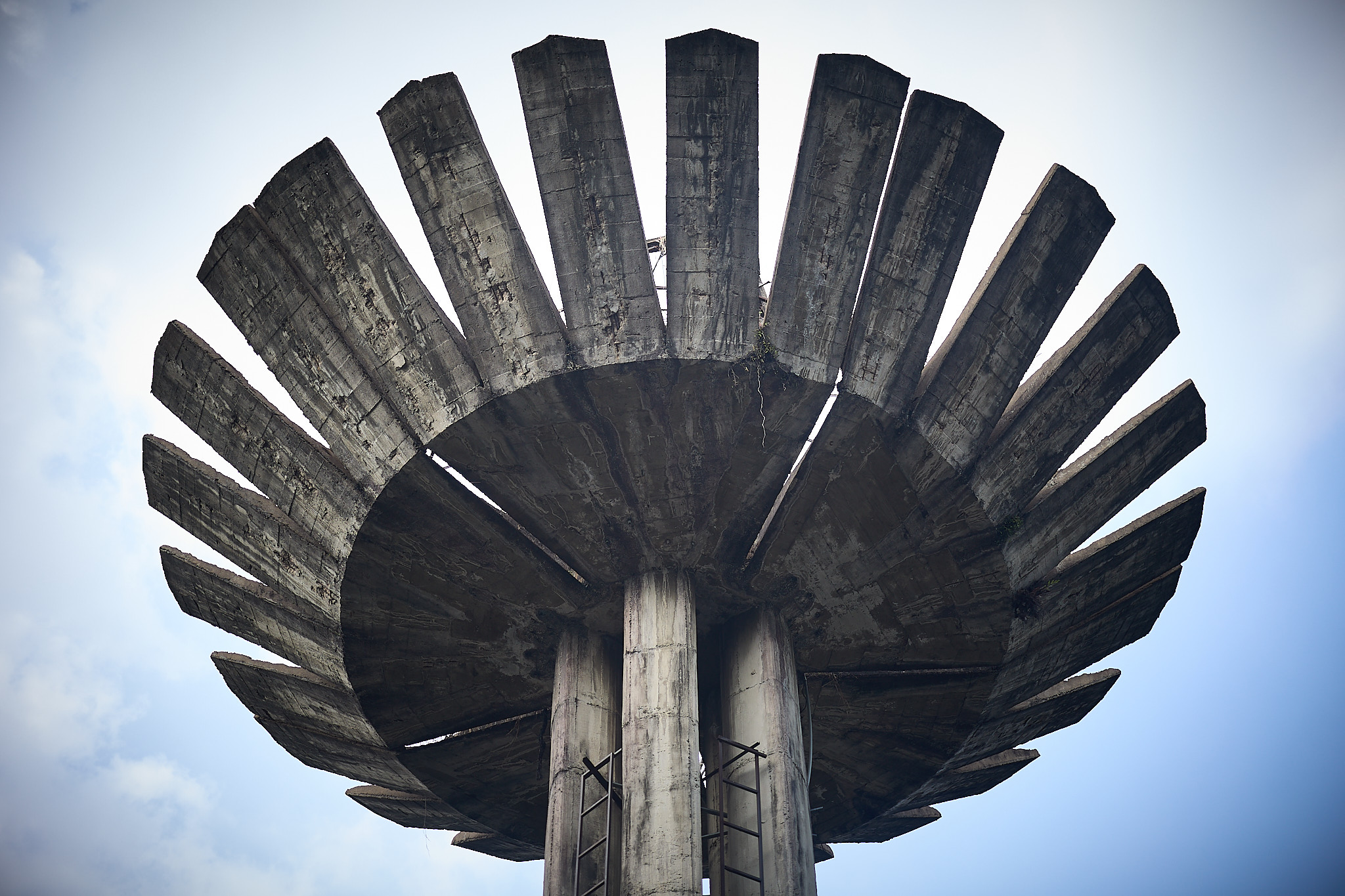
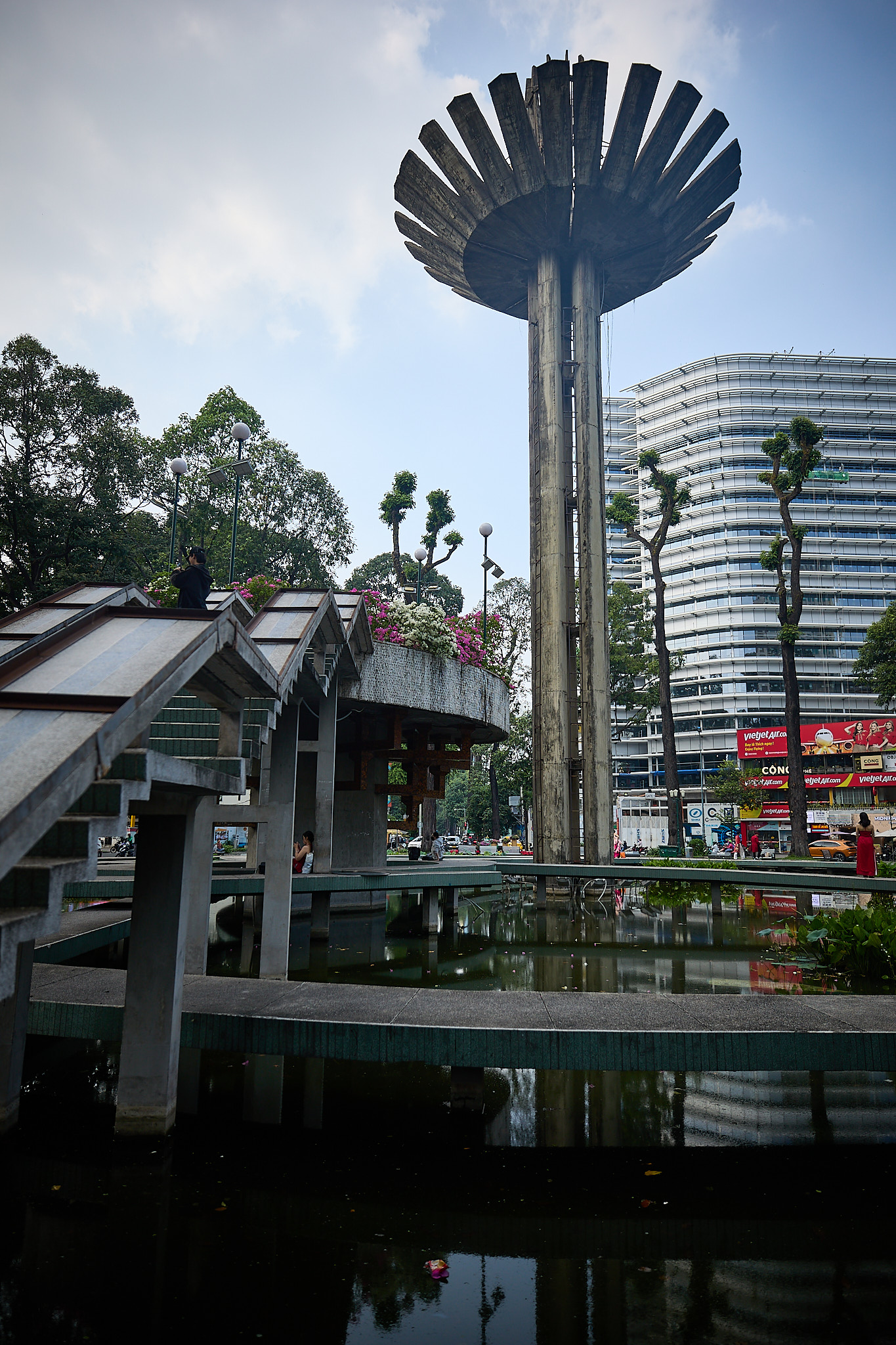
It was built as the International Aid Memorial, and its design, by the architect Nguyễn Kỳ, won a national competition in 1967. On the plans, the tower is Hoa Tự Do, the Flower of Freedom: a lotus rising from the pool, with five petals, each divided into five smaller ones. At the very top sat a copper-clad centre, probably the disc the ministry described. It has gone, and all that seems to be left up there is a metal frame.
The first time I saw it, it looked to me like a brutalist flower in full bloom. The concrete had been left bare, and in January 2025 it still was, streaked by more than fifty years of rain. A year later, for Tết 2026, it was painted white and pale yellow. Architects objected, and one of them called for the paint to be washed off.
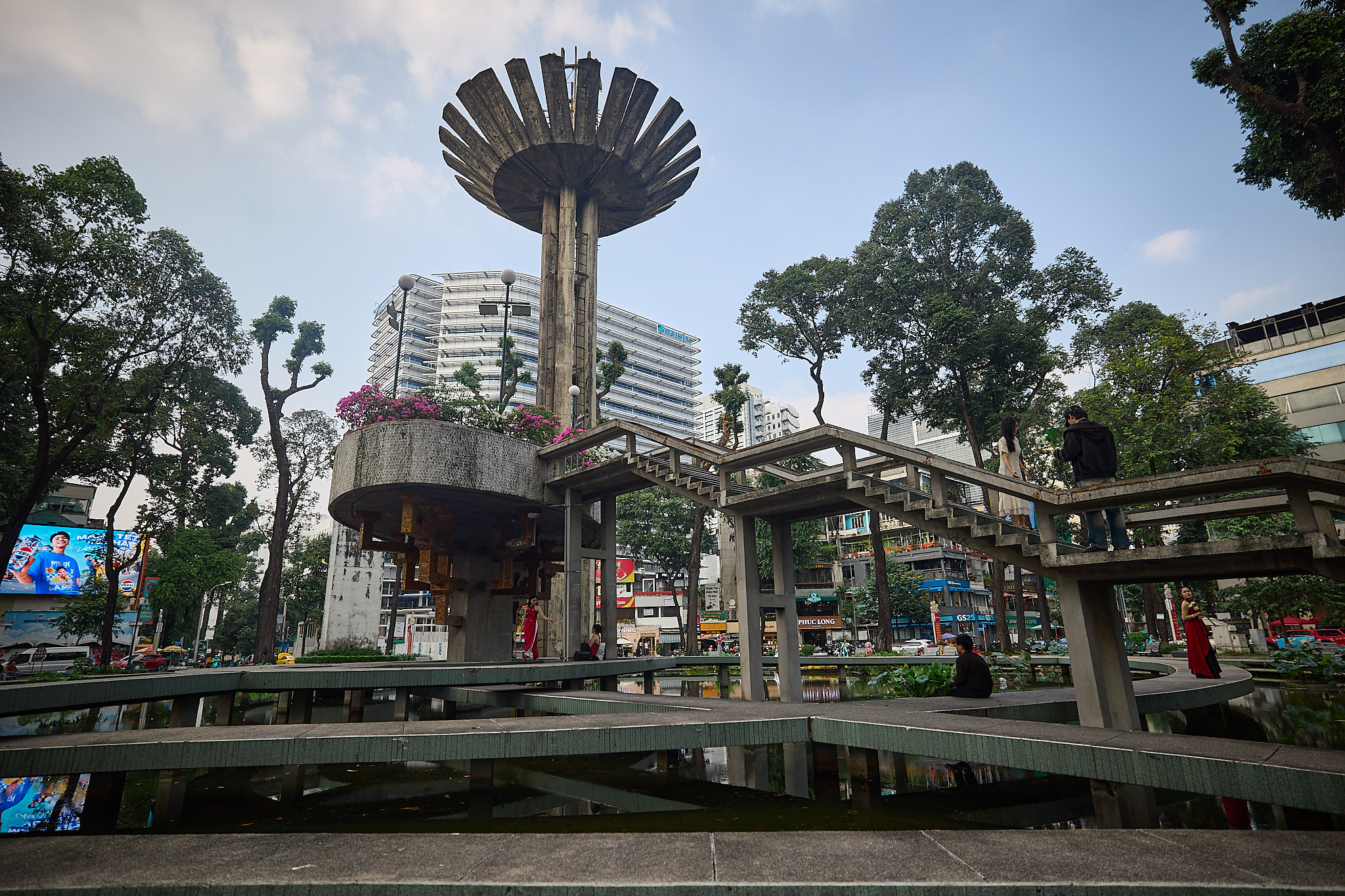
Low walkways spiral across the pool towards the middle, just above the water, with nothing along their edges. When the lake was new, the missing railings caused some alarm. The pool, as it happens, is very shallow, and the worst that seems to have happened since is that now and then somebody misses their footing.
On a Monday afternoon, the place seemed to be doing duty as a photo studio, and some of the sitters had brought their own flowers. On the staircase that climbs over the pool, a man was holding out a white flower to a woman in a white dress.
The turtle
The turtle stood beside the flower, large and made of metal. Schoolchildren used to climb up and ride it.
The square has an official name, Công trường Quốc tế, International Square. Out of habit, people use the other one.
On the evening of 1 April 1976, eleven months after the war ended, an explosion destroyed the turtle. One person was killed and four were injured. The newspapers blamed reactionaries and saboteurs, and reported that the person killed had been one of them. The conclusion came quickly, and it has had its doubters since.
A different story has grown up around the turtle, and it is the one that gets retold. In 1967, South Vietnam’s new president is said to have had a feng shui master look over the Independence Palace. The palace sat on the head of a dragon, the master said; the tail lay here, at the roundabout, and it was thrashing. A great turtle would hold it down. In the same telling, whoever set off the explosion wanted the tail loose again, to trouble the new order.
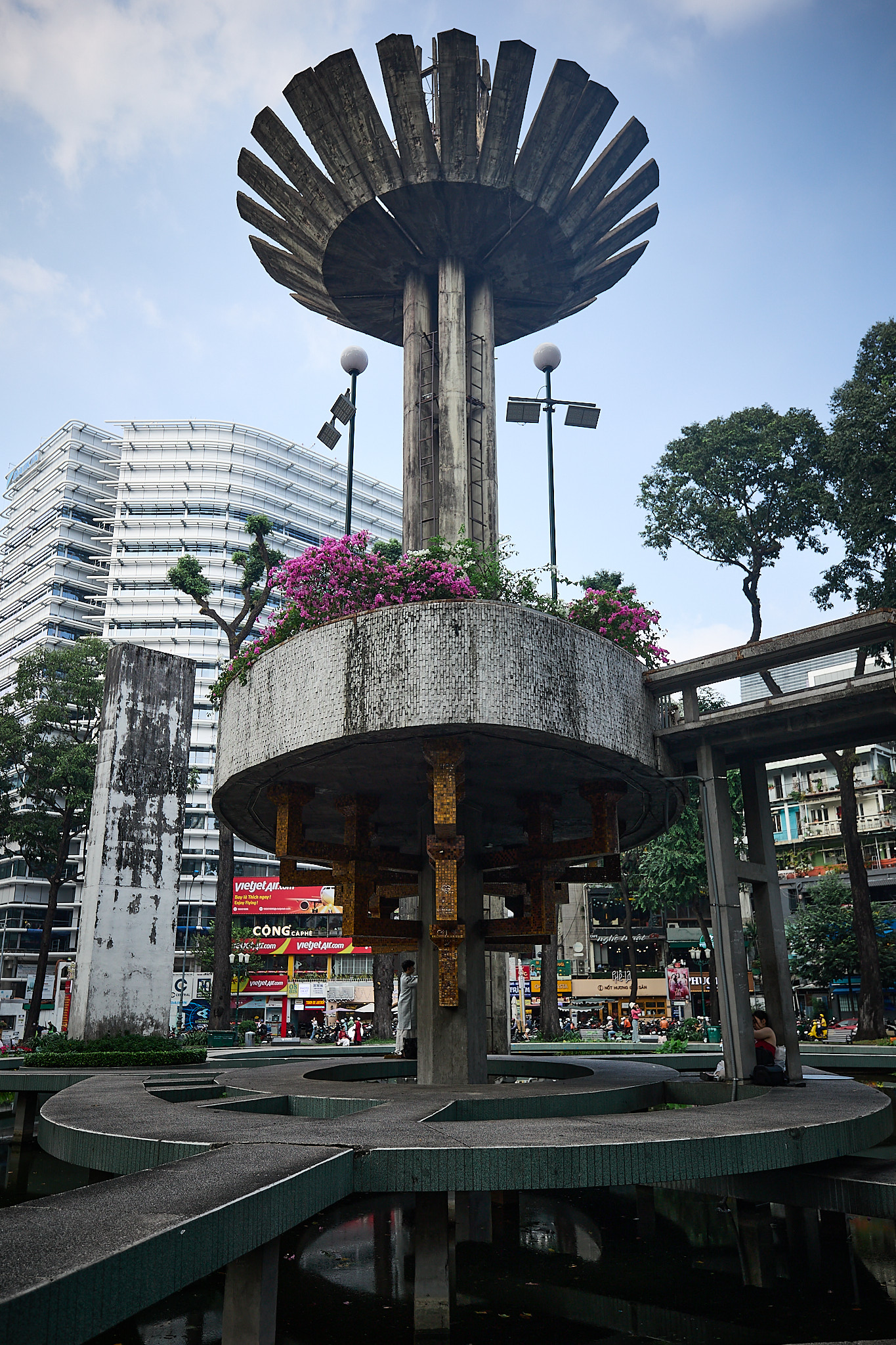
When I was there, beside the platform was a tall slab, white and patchy, with nothing written on it. Some say it is what remains of the honour roll, minus the names. Others say the roll went with the turtle.
Underneath
The turtle was not the first thing to go from the middle of this roundabout.
For some forty years, a water tower stood here, built by the French for their colonial city. Its most remarkable part was out of sight. Under the ground where the pool is now lay the filter basins: one immense vaulted hall.
In 1921, with the tower just demolished, an engineer named Jean Boy gave a lecture about it. Two shafts led down from the street, he said, each under a little kiosk. In each kiosk a banyan had taken root, and its roots had made their way down the shaft and along the galleries to the water at the bottom. A tour of the hall by sampan, he suggested, would be an attraction to match the sewers and catacombs of Paris.
After the tower came a memorial to the dead of the First World War, unveiled on Armistice Day in 1927. It had three statues, and Saigon named the square after them: Ba Hình, Three Figures. In July 1964, in a season of protests against France, students threw ropes around the statues and pulled them down.
Without its three figures, Ba Hình had nothing left to describe.
After dark
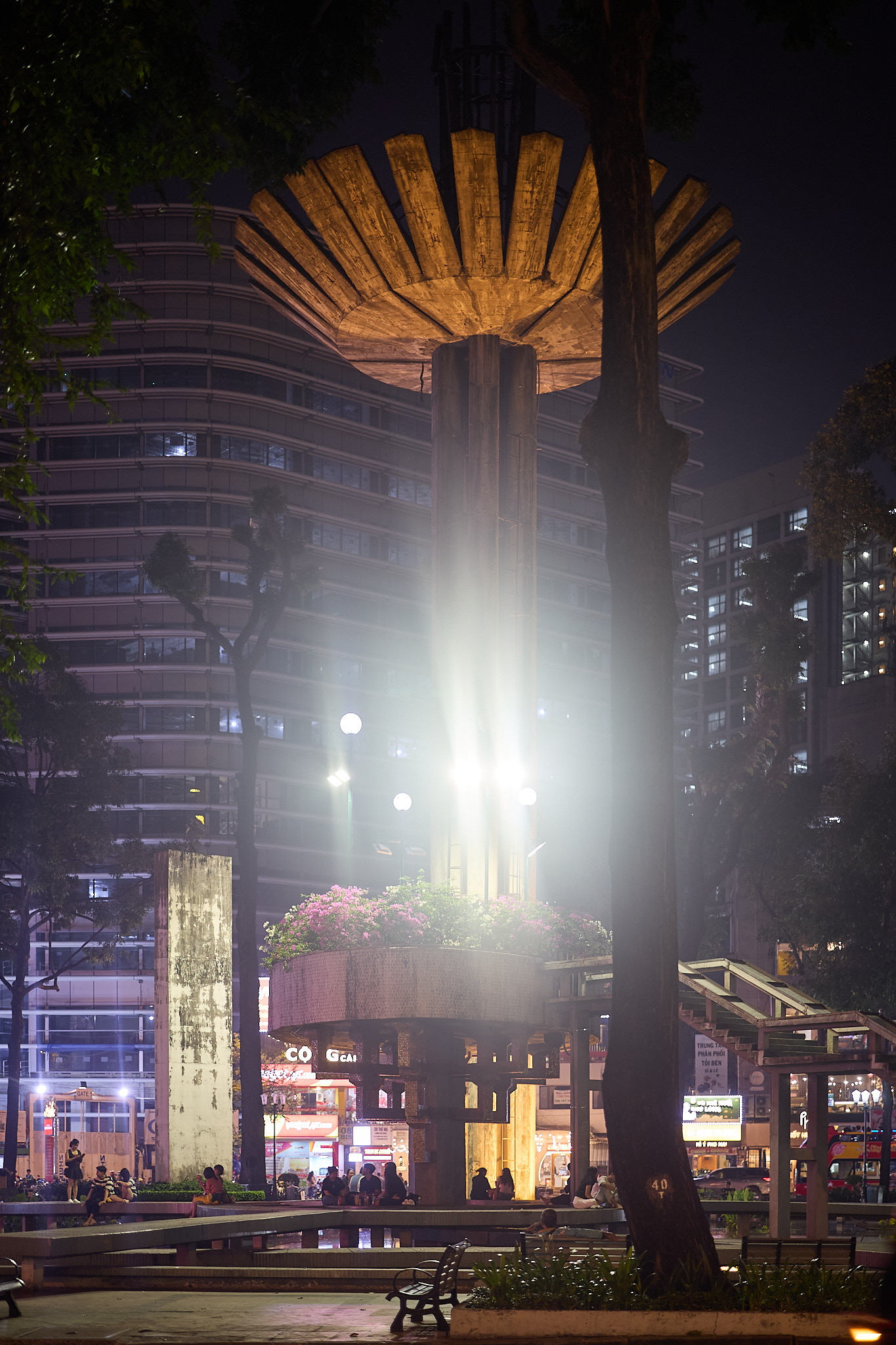
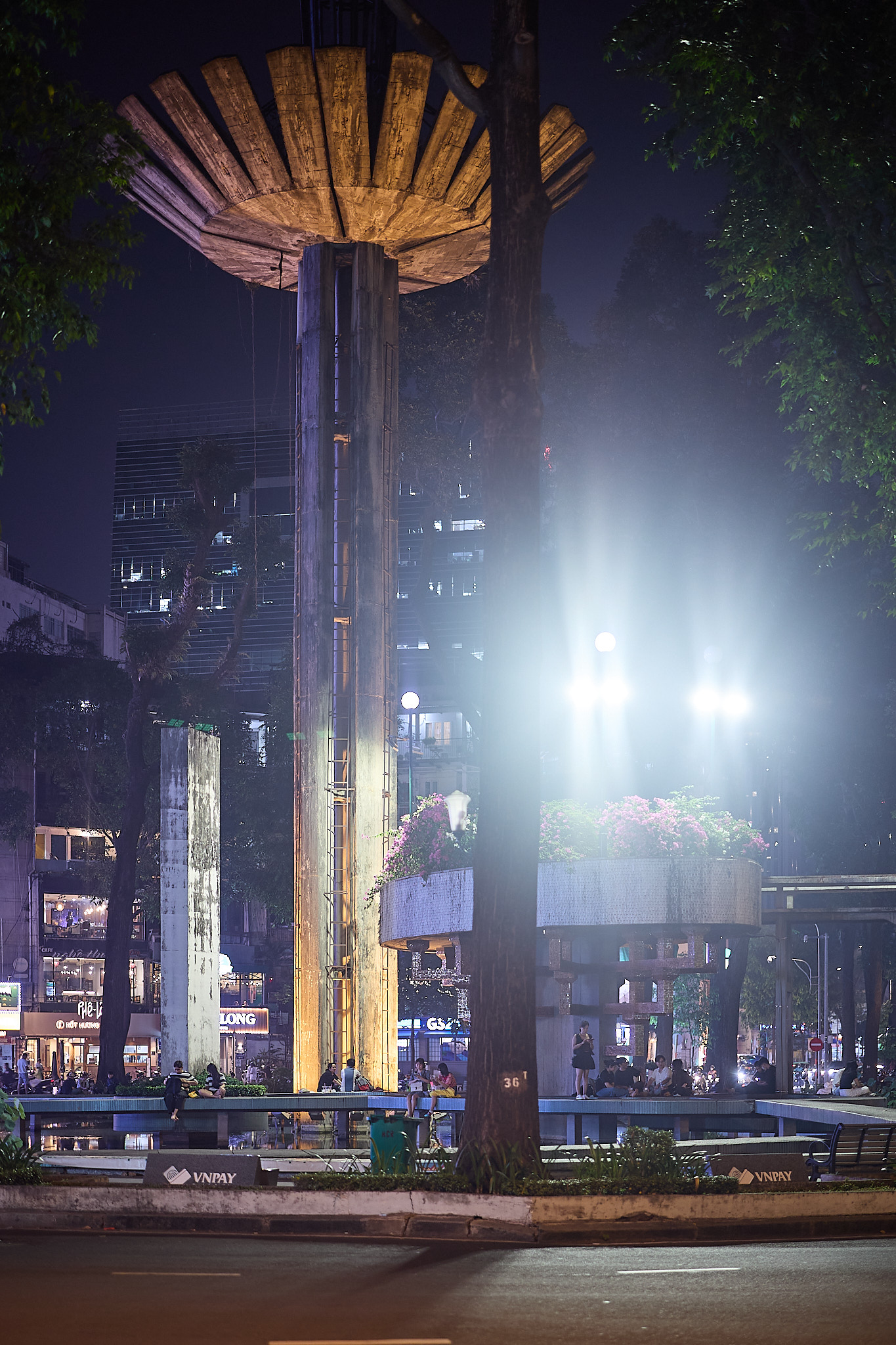
I went back that evening. The flower was lit from below and had turned gold, and people were sitting along the edges of the walkways, legs over the side, with the traffic going round them. A memorial that had lost its turtle and its list of names had become somewhere to sit.
Long before the water tower, this was the edge of a citadel, built in 1790. One of its eight gates stood about where the roundabout is now. An early account describes the citadel as shaped like a lotus. It was also called Thành Quy, the Turtle Citadel: on a map, it is said, it looked like a giant turtle.
It was not the first lotus here to go by a turtle’s name.
Visit this place
Location
Turtle Lake (Hồ Con Rùa)
In the middle of the roundabout where Phạm Ngọc Thạch, Võ Văn Tần and Trần Cao Vân streets meet, a short walk from the central post office
Công trường Quốc tế, Xuân Hòa Ward, Ho Chi Minh City, Vietnam
Practical Information
- Admission
- Free
- Visitor note
- The lake sits in the middle of a public roundabout. Take care when crossing the traffic. The tower was painted in early 2026. The photographs here, taken in January 2025, show the bare concrete.
Information last checked: November 11, 2026 (Public access and admission checked against local visitor information. Repainting in early 2026 reported in Vietnamese news.)
Conversation
Comments
Review pending commentsComments are reviewed before appearing. The internet already contains enough unattended surprises.
Loading comments…
Leave a comment