Saigon Central Post Office: A Postal Worker with a Rifle
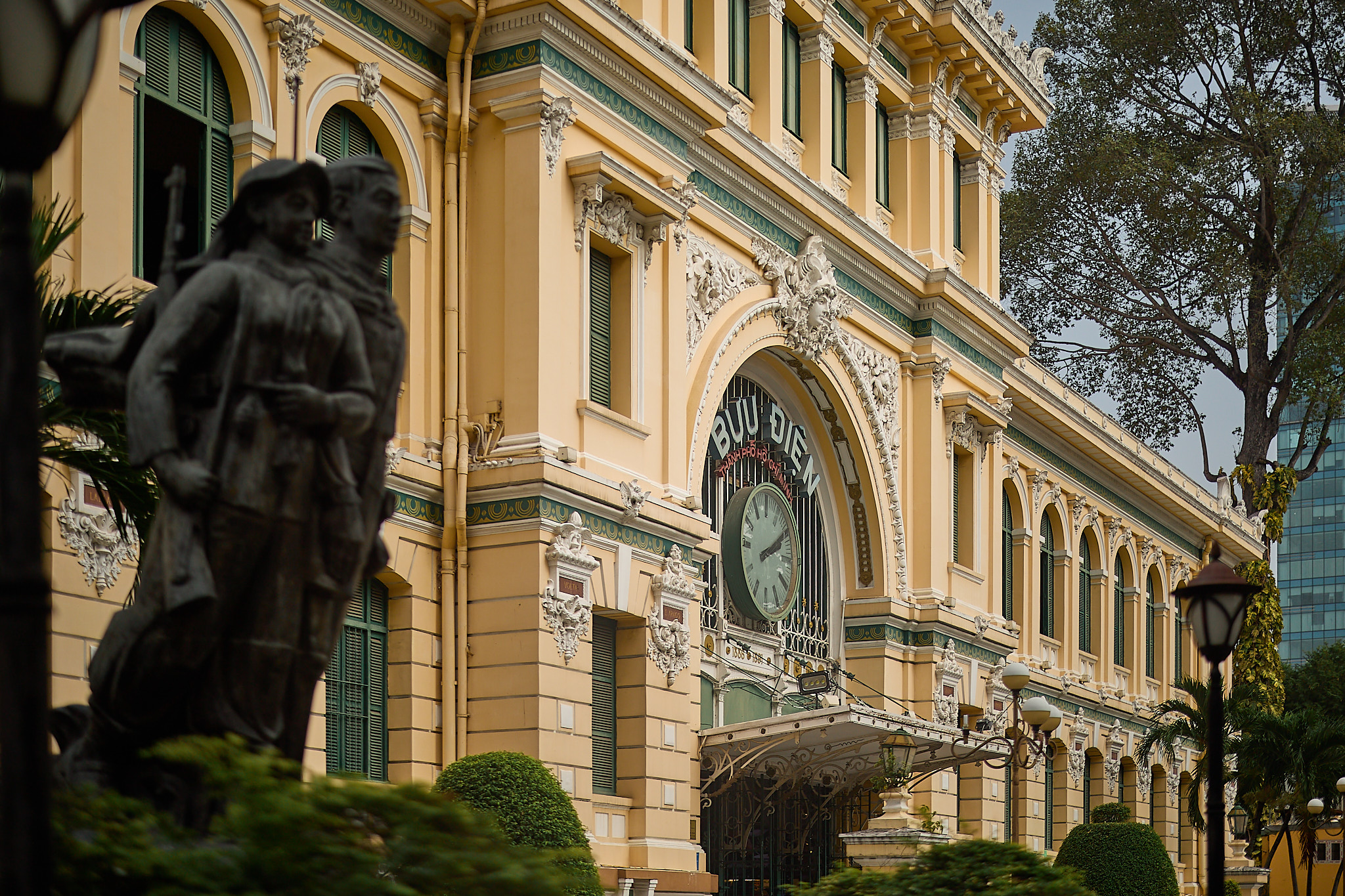
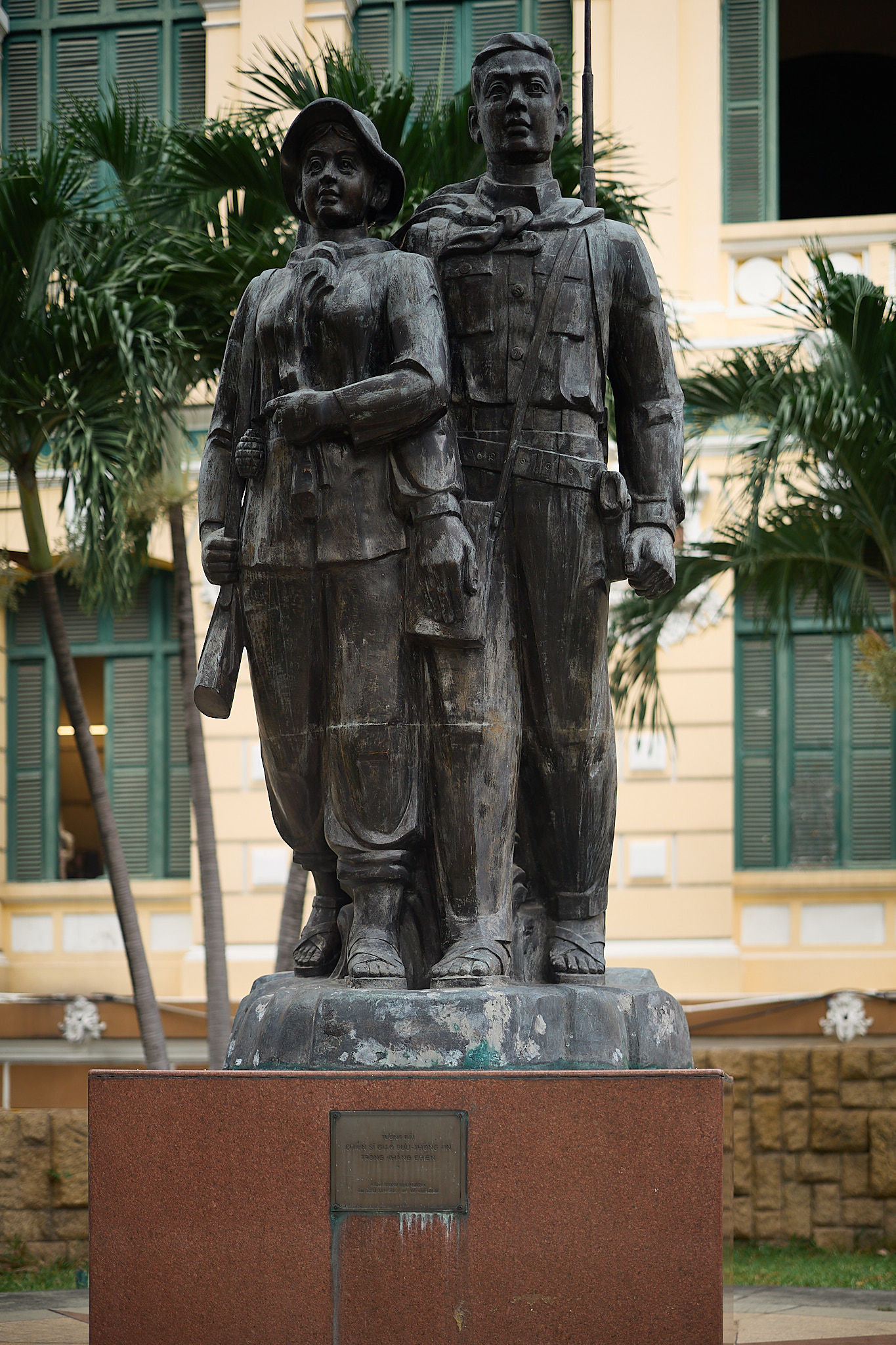
She stands outside Saigon’s central post office, on a reddish pedestal, a rifle in her hand and what looks like a grenade at her belt. Beside her stands a man in uniform, a thin rod rising behind his shoulder, probably a radio aerial. Both of them wear sandals.
The plaque explains the rifle: TƯỢNG ĐÀI CHIẾN SĨ GIAO BƯU – THÔNG TIN TRONG KHÁNG CHIẾN, a monument to the postal couriers and signallers of the resistance, as Vietnam calls its wars against France and then the United States. Through those wars, people like them carried letters and documents and kept messages moving.
Whose design
Behind them stands the building people come to see. The dates are over the entrance: 1886 and 1891, when Saigon was the capital of a French colony. Who designed it depends on whom you ask.
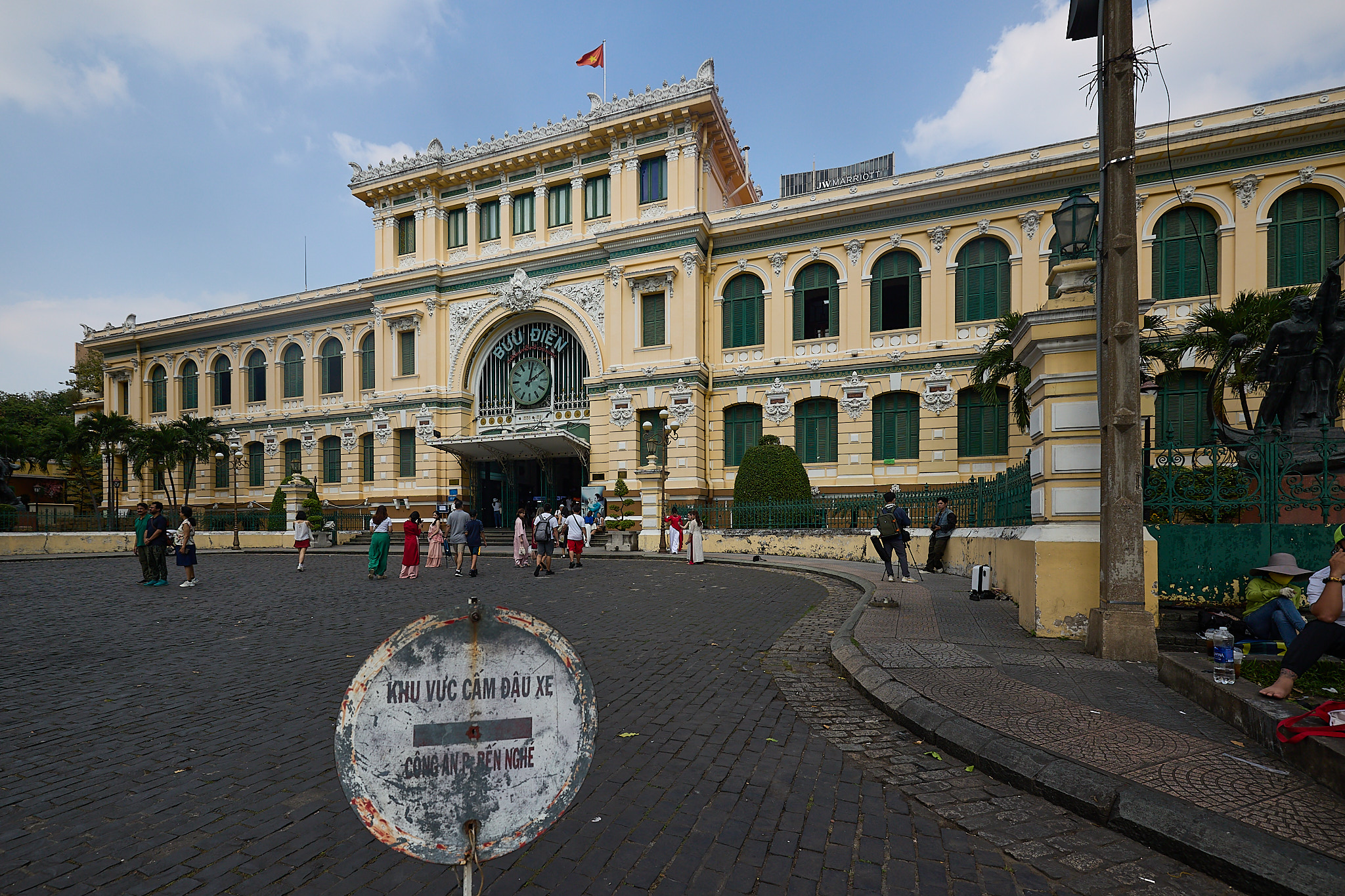
Ask a travel guide, and it will often say Gustave Eiffel. His name has a way of attaching itself to French ironwork in Vietnam: a bridge in Hanoi and another in Huế have been credited to him too, and he built neither.
Ask the newspapers of the time, and they say Alfred Foulhoux, the colony’s chief architect. While the post office was going up, a Paris paper reported that he was building “un superbe hôtel des postes”, a superb post office. The great iron frame was made in France, but nothing seems to tie it to Eiffel’s company.
Ask Vietnam Post, which runs the building, and you get a third answer: another architect, with Foulhoux as his assistant.
Under the roof
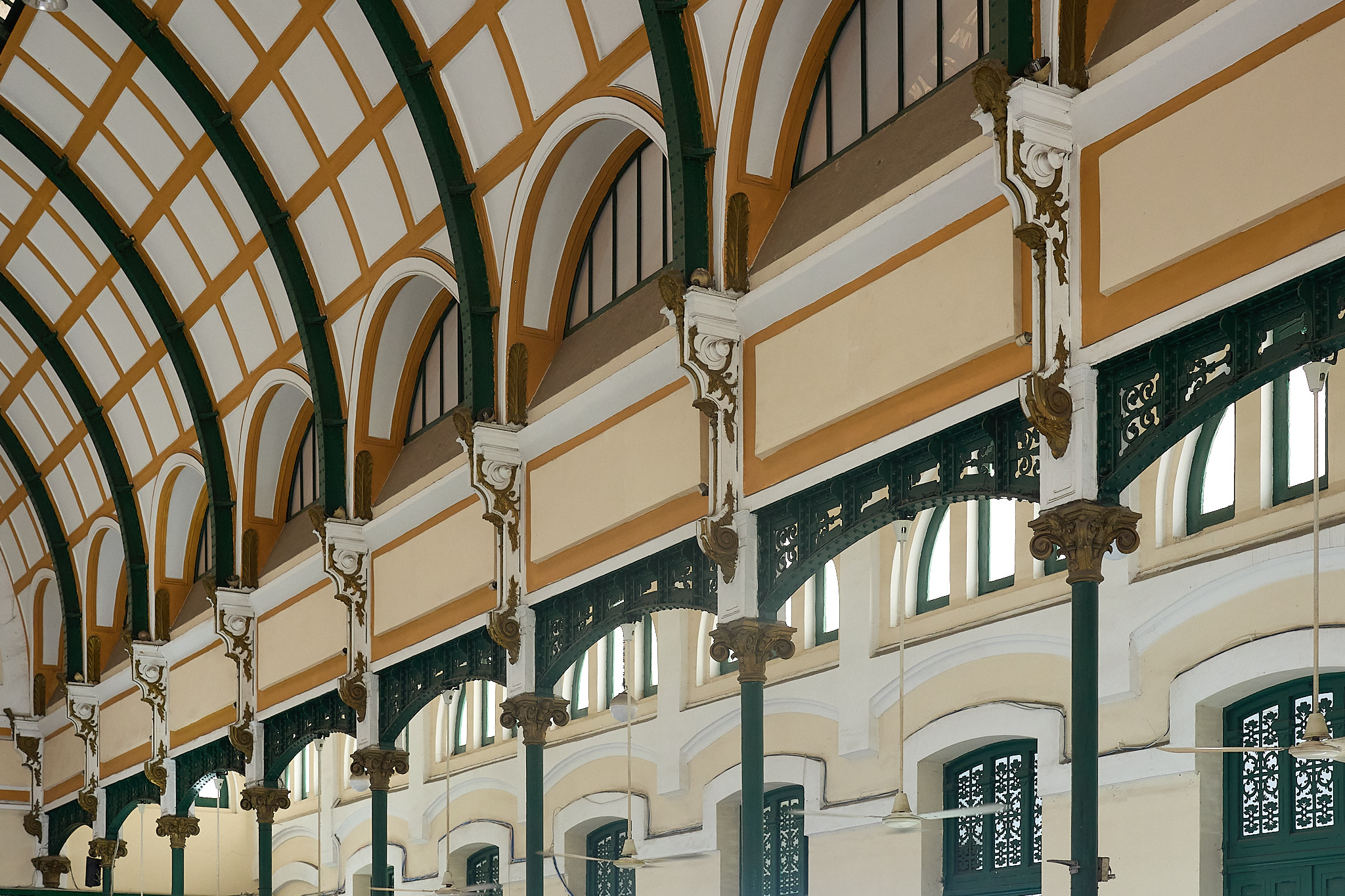
Whoever drew it, the hall still does the job it was built for.
At the far end hangs a portrait of Ho Chi Minh, the man Saigon was renamed after. Below him, a green band runs from one side to the other, with a clock in the middle. It reads NHANH CHÓNG – CHÍNH XÁC and AN TOÀN – TIỆN LỢI – VĂN MINH: fast and accurate; safe, convenient and civilised.
Overhead, green iron arches span the hall. Under a roof like this, it is easy to forget that the building is a post office. The band has not forgotten.
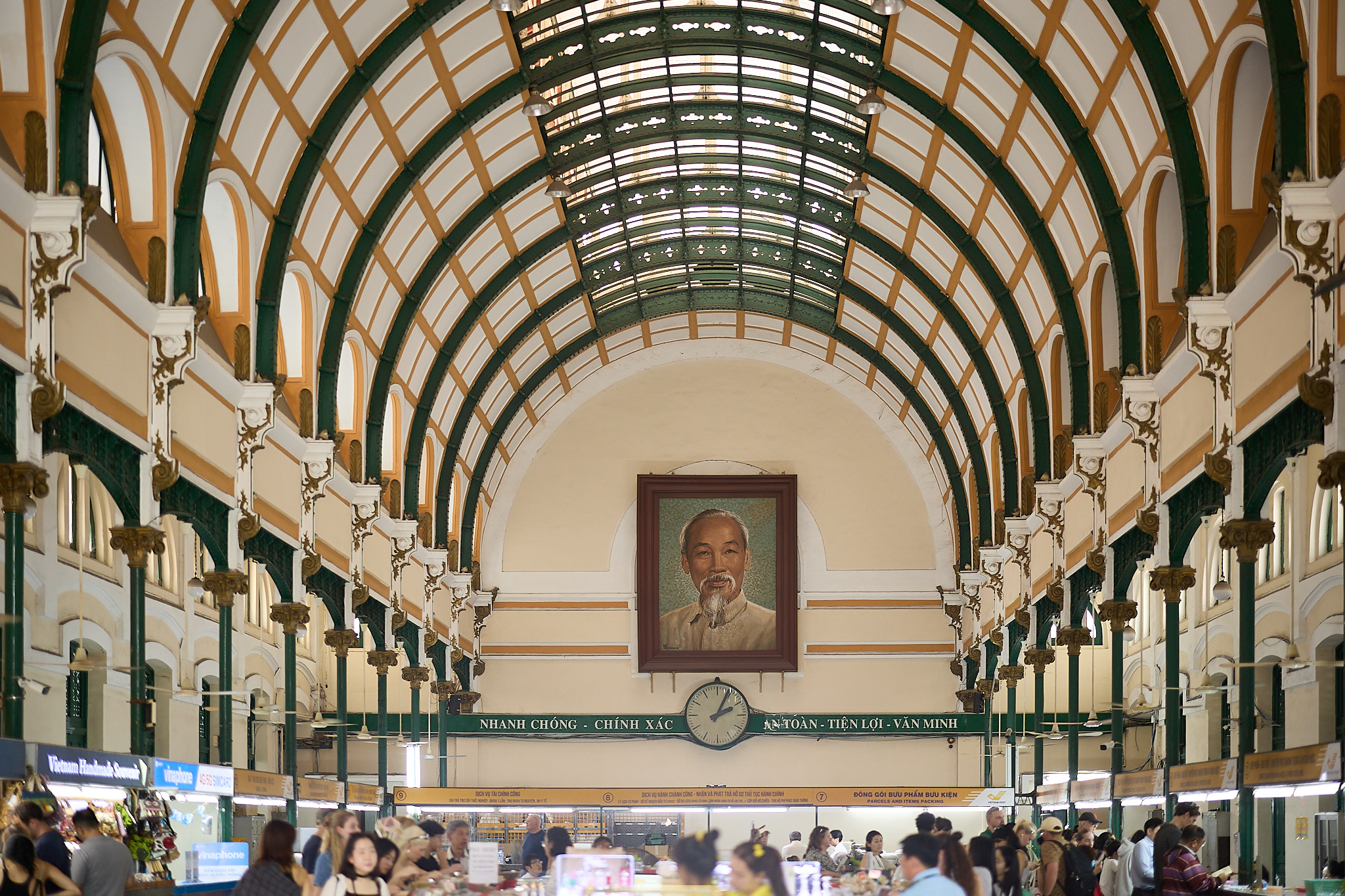
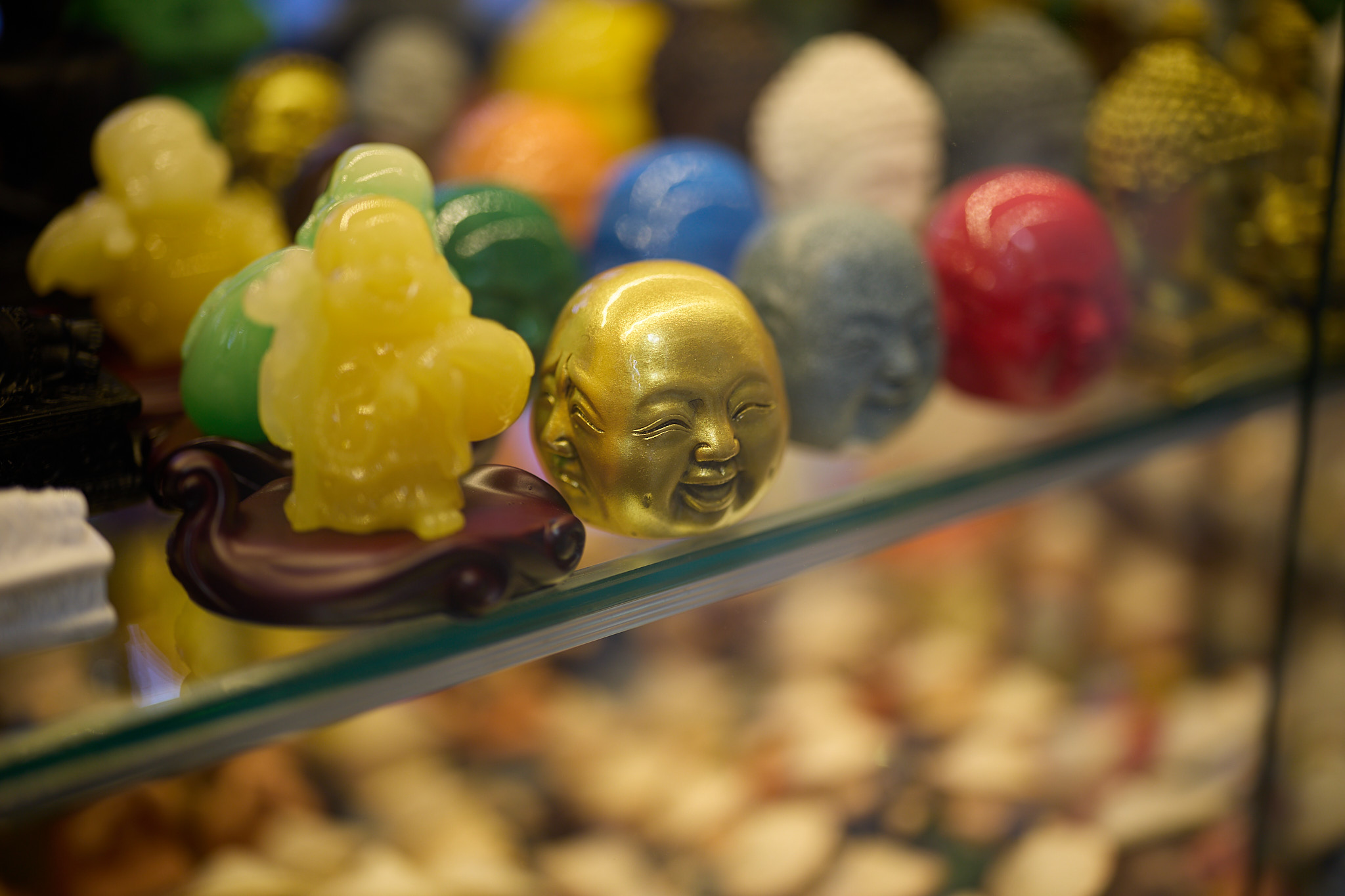
Down on the floor, the hall is two places at once. Ngoc Tuyet Postcard, Vietnam Handmade Souvenir and a counter selling SIM cards share it with a run of numbered yellow signs: 1, stamps; 2, parcels, at home and abroad; 7, parcel packing; 8, government paperwork, taken in and handed back.
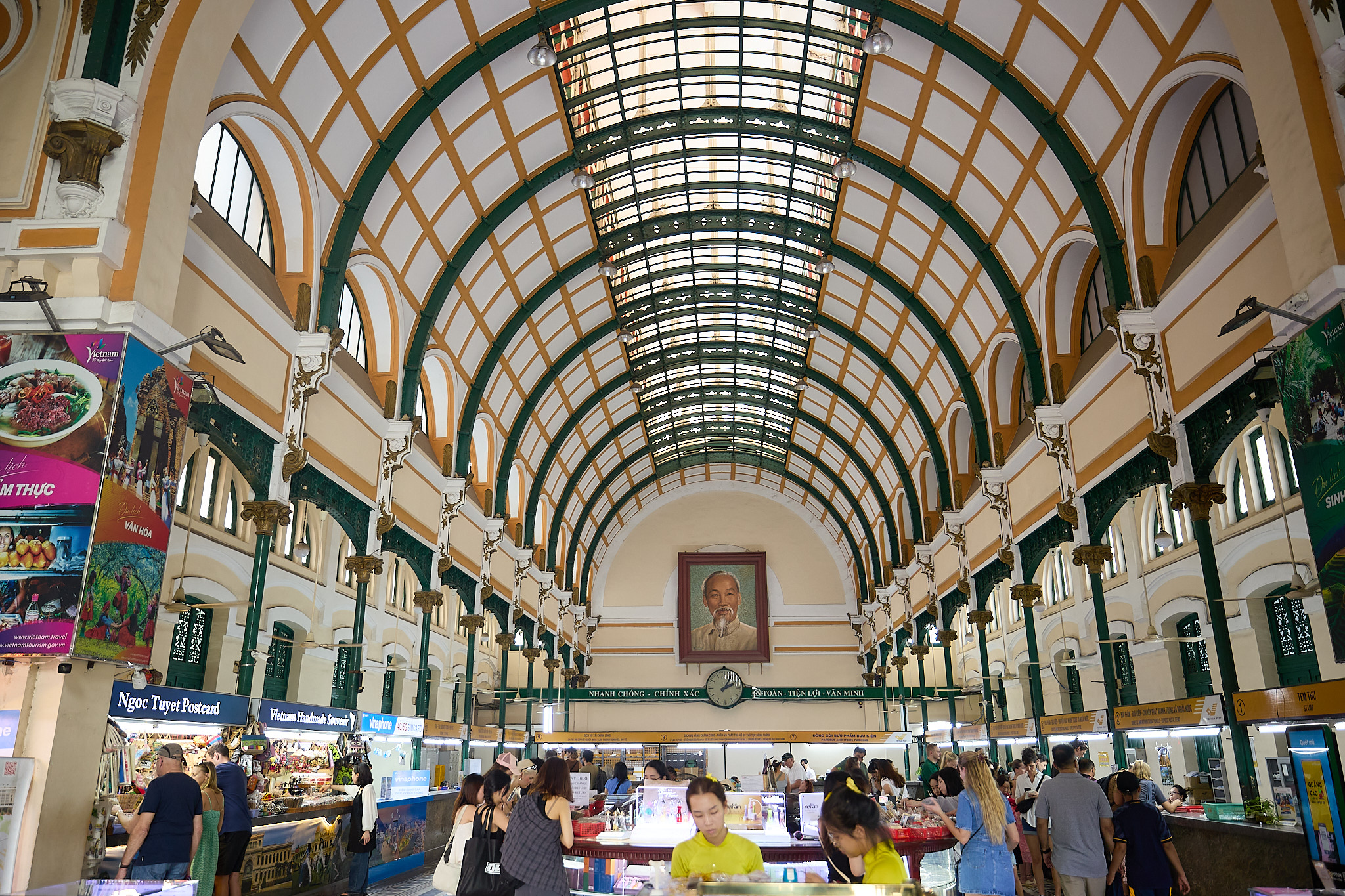
Not everyone here is sending anything. But people still sit at wooden tables to write cards home, choose their stamps and stick them on.
Tokyo, Beijing, Seoul
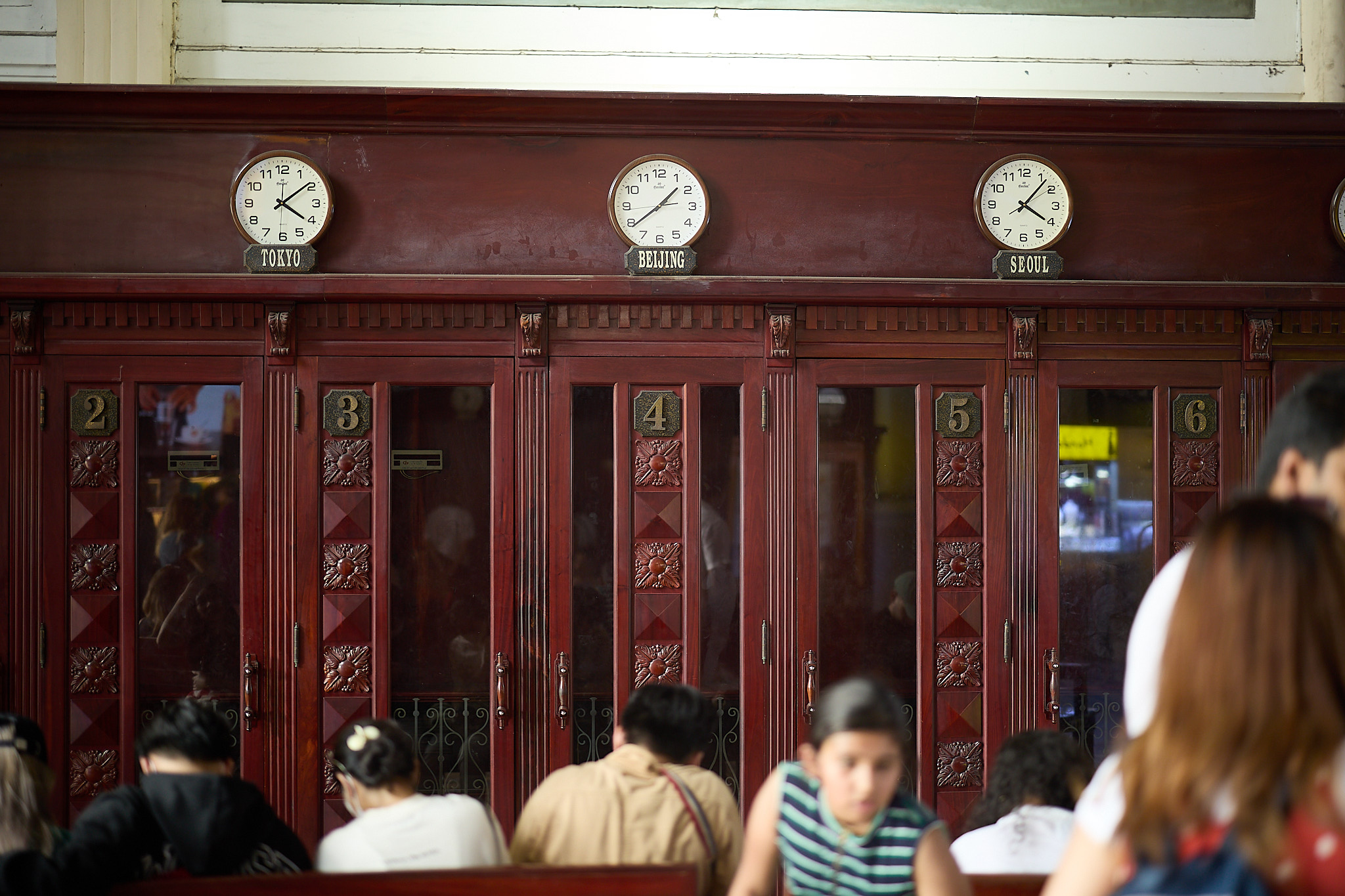
Letters were not the only way to reach someone from here. Along the sides of the hall stand wooden telephone booths, carved, glazed and numbered. Above them sit clocks labelled with other cities: Tokyo, Beijing, Seoul. It is a building for reaching people far away, and it keeps their time.
The letter writer
Some people needed help with the words themselves. For thirty years, the post office had a man for that: Dương Văn Ngộ, said to be the last letter writer for hire in Vietnam.
He had started out as a postman. When he retired, he was given special permission to stay on, and at a wooden table in the post office he wrote letters for the people who came to him, in Vietnamese, English and French, and translated the ones they had written themselves. There were thousands. Some of them helped families find each other again.
He kept at it into his nineties and died in 2023, at ninety-four. Even after he gave up the work, he would sometimes ride his bicycle back to the post office just to see his old table.
Visit this place
Location
Saigon Central Post Office (Bưu điện Trung tâm Sài Gòn)
On Công xã Paris square in central Ho Chi Minh City, next to Notre-Dame Cathedral and the Nguyễn Văn Bình Book Street
2 Công xã Paris, Sài Gòn Ward, Ho Chi Minh City, Vietnam
Practical Information
- Opening hours
- Open daily. Published hours differ slightly from source to source; all agree on at least 8:00–17:00.
- Admission
- Free
- Visitor note
- It is a working post office: stamps are sold at the counters, and postcards and letters can be sent from here. Part of the hall is given over to souvenir stalls.
Information last checked: November 1, 2026 (Opening hours and admission checked against current travel guides and Google Maps; the post office’s own published hours were not found.)
Conversation
Comments
Review pending commentsComments are reviewed before appearing. The internet already contains enough unattended surprises.
Loading comments…
Leave a comment