Český Krumlov’s Museum of Torture: The Woman in the Wall
The town council of Český Krumlov bought a house on the main square in 1597, for its new town hall. The mayor did not move in until 1791. For the 194 years in between, the mayors of Krumlov worked from home.
The municipal office is still upstairs, and the tourist information centre is next door. In the medieval cellars underneath both of them is the Museum of Torture.
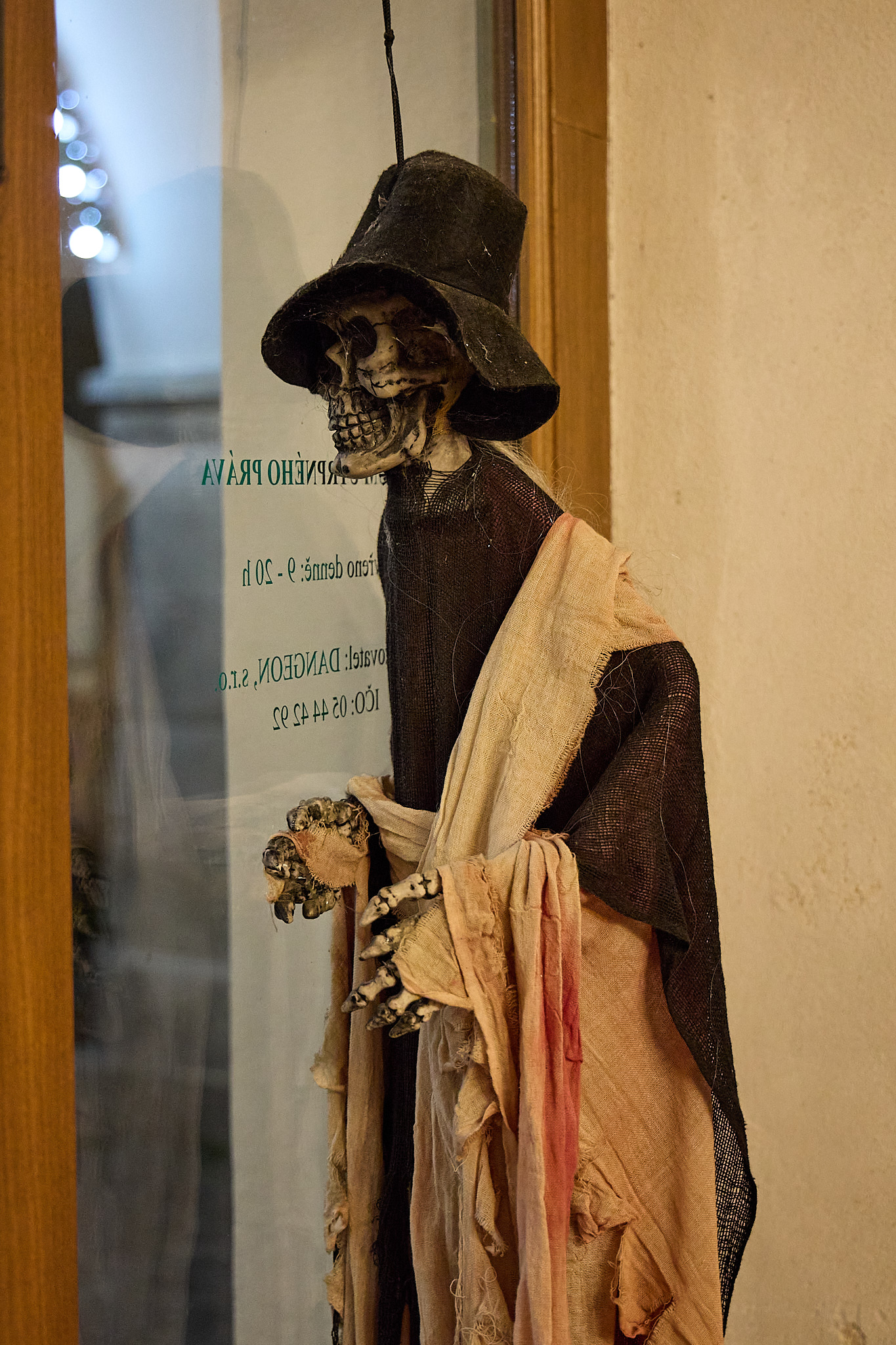
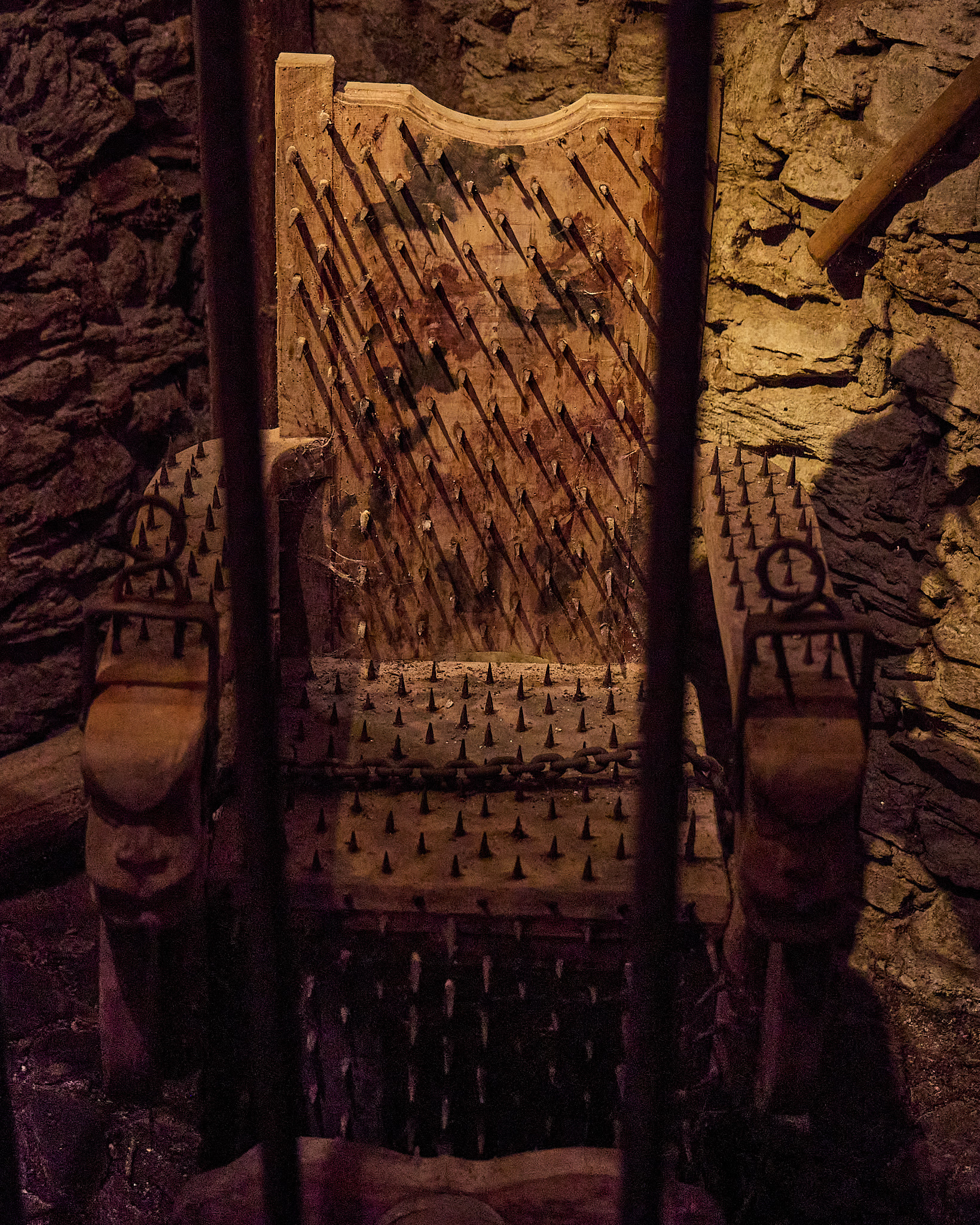
The same company runs a museum of torture in Prague, and the two share some of their cast: an iron maiden, a chair covered in spikes, wax prisoners behind bars. I went round this one a few days after the Prague one.
Violins
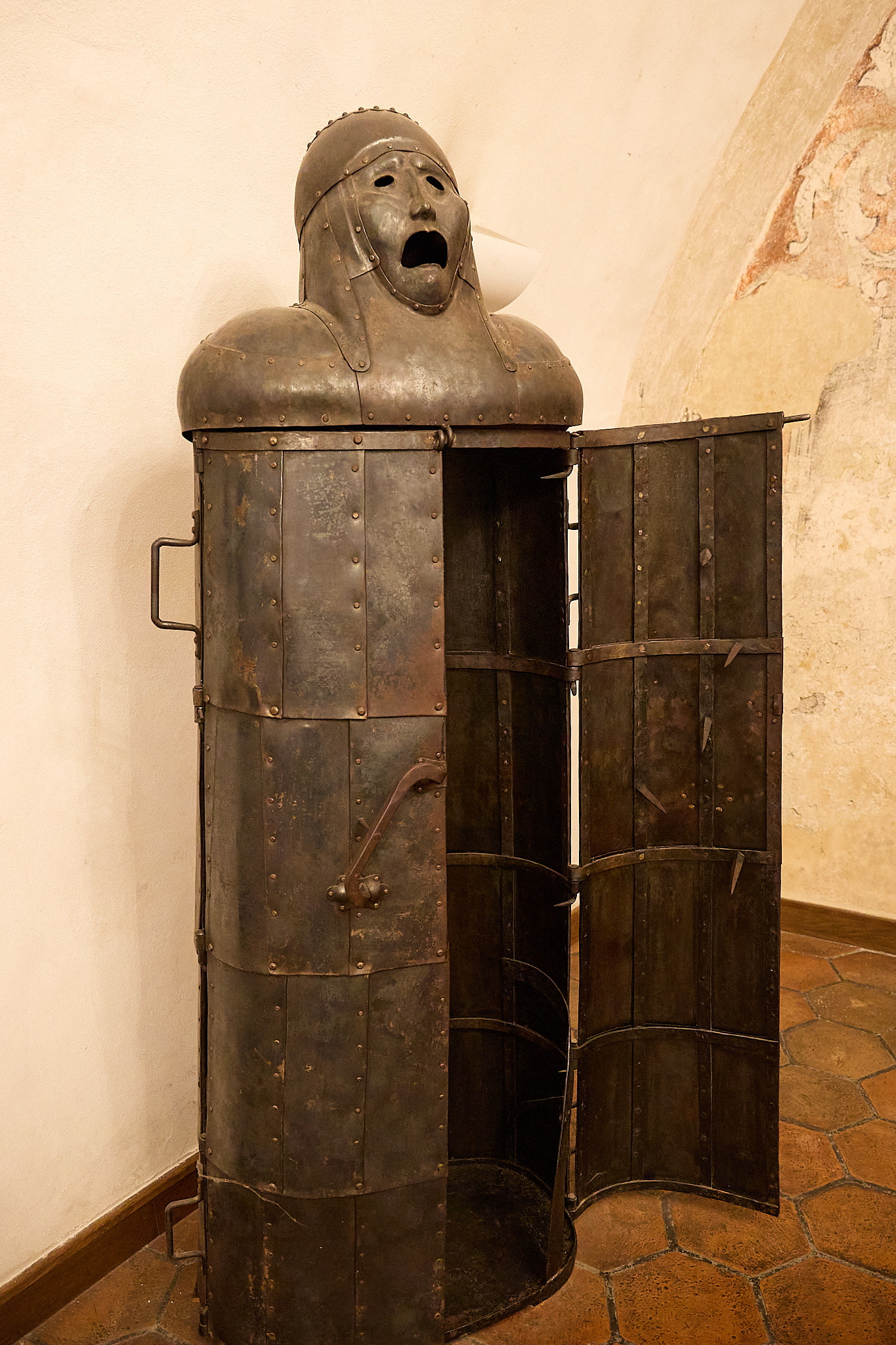
Krumlov’s iron maiden stands just inside, before the stairs, with one door open and a screaming iron face on top. On the wall behind it, a patch of old painting shows through the plaster.
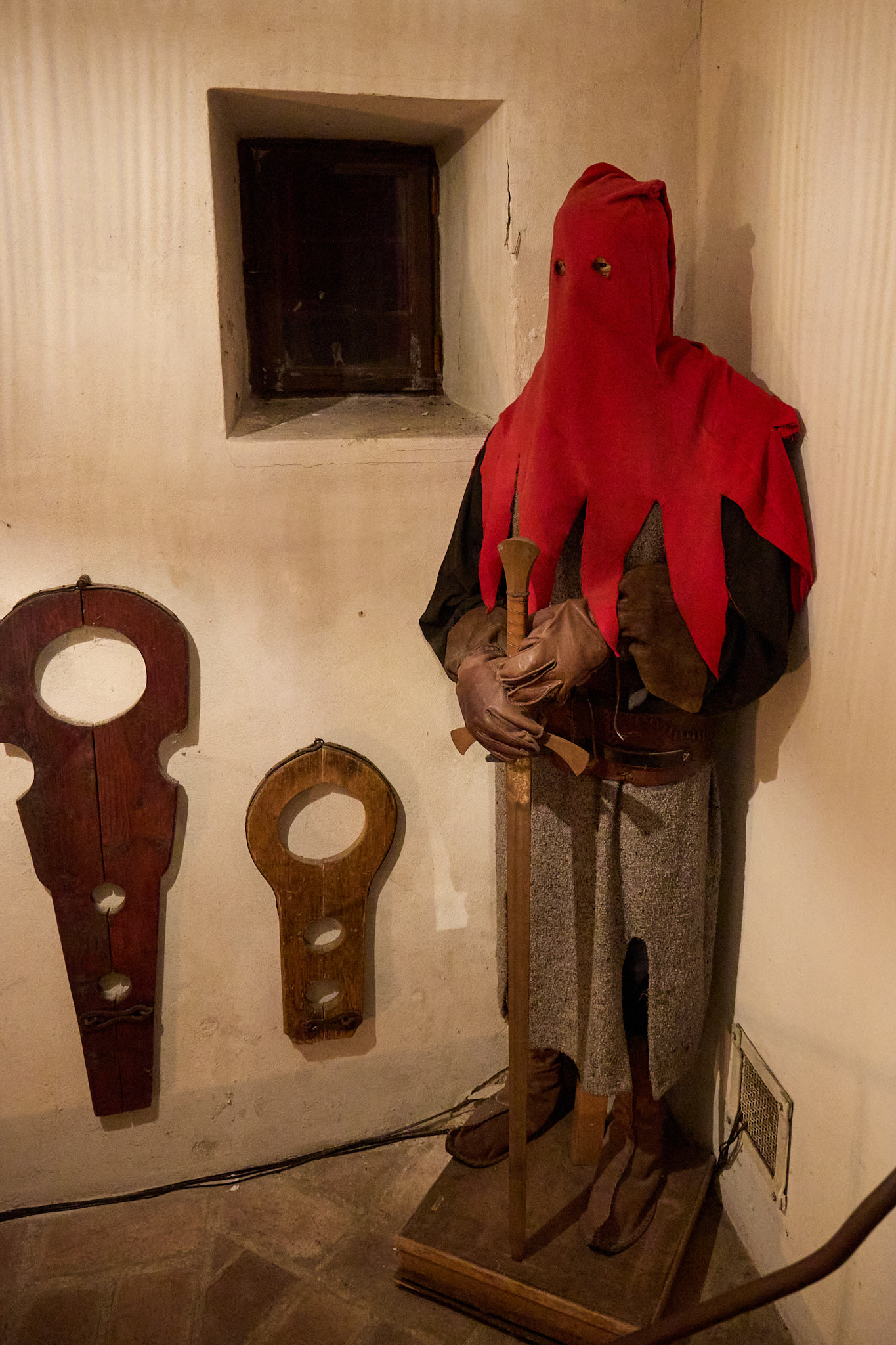
Nearby, an executioner in a red hood stands in a corner, gloved hands resting on a sword. The things to look at are on the wall beside him: two wooden boards, one large and one small, each with one big hole and two little ones.
The big hole was for a neck and the little ones for wrists. In Czech, the thing is called housle, a violin. The larger of these two does have the outline of one. The smaller looks more like a keyhole.
It was a punishment for petty offences and for quarrelling. Once locked in, the offender could be led about the marketplace on a rope.
Eyes open
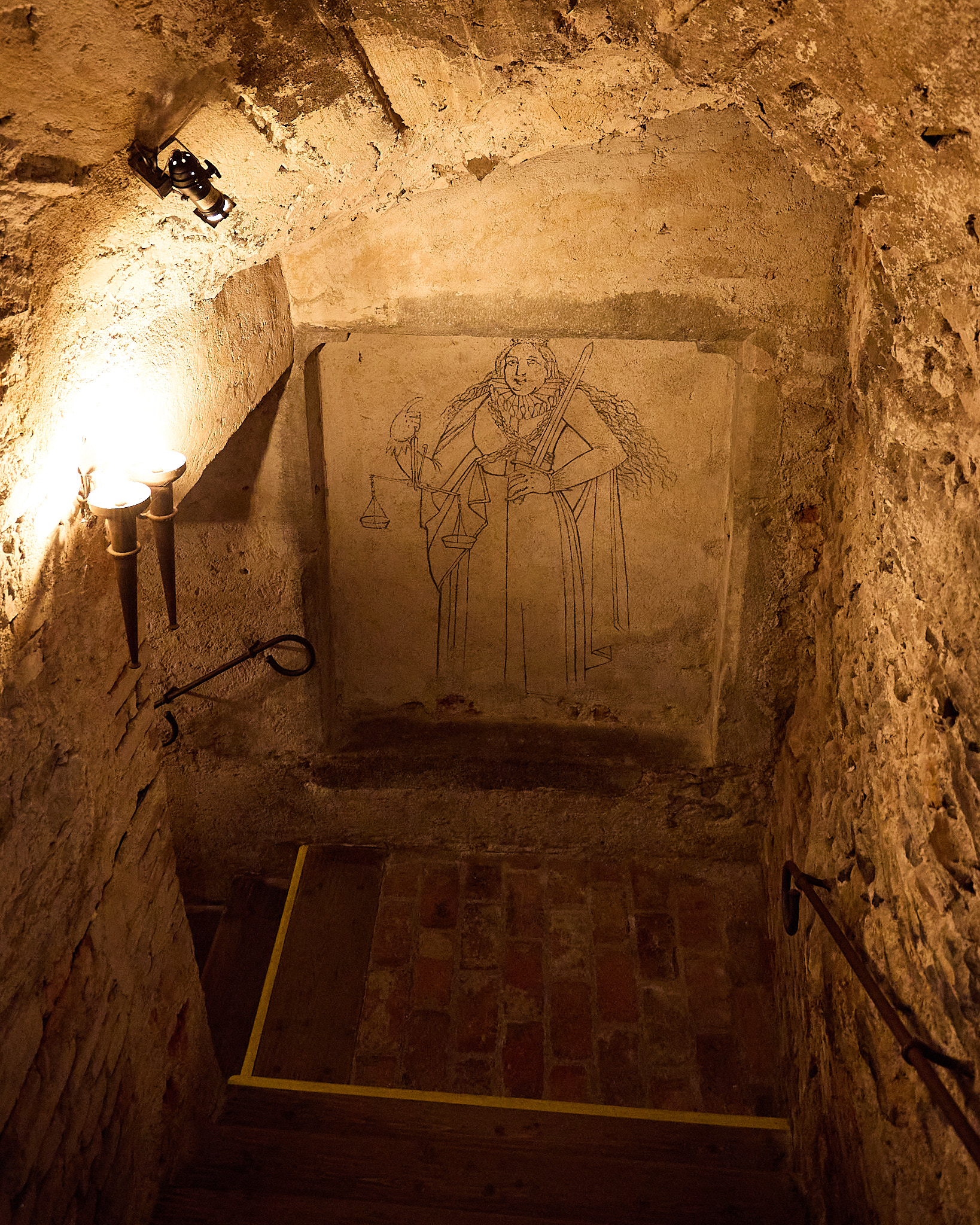
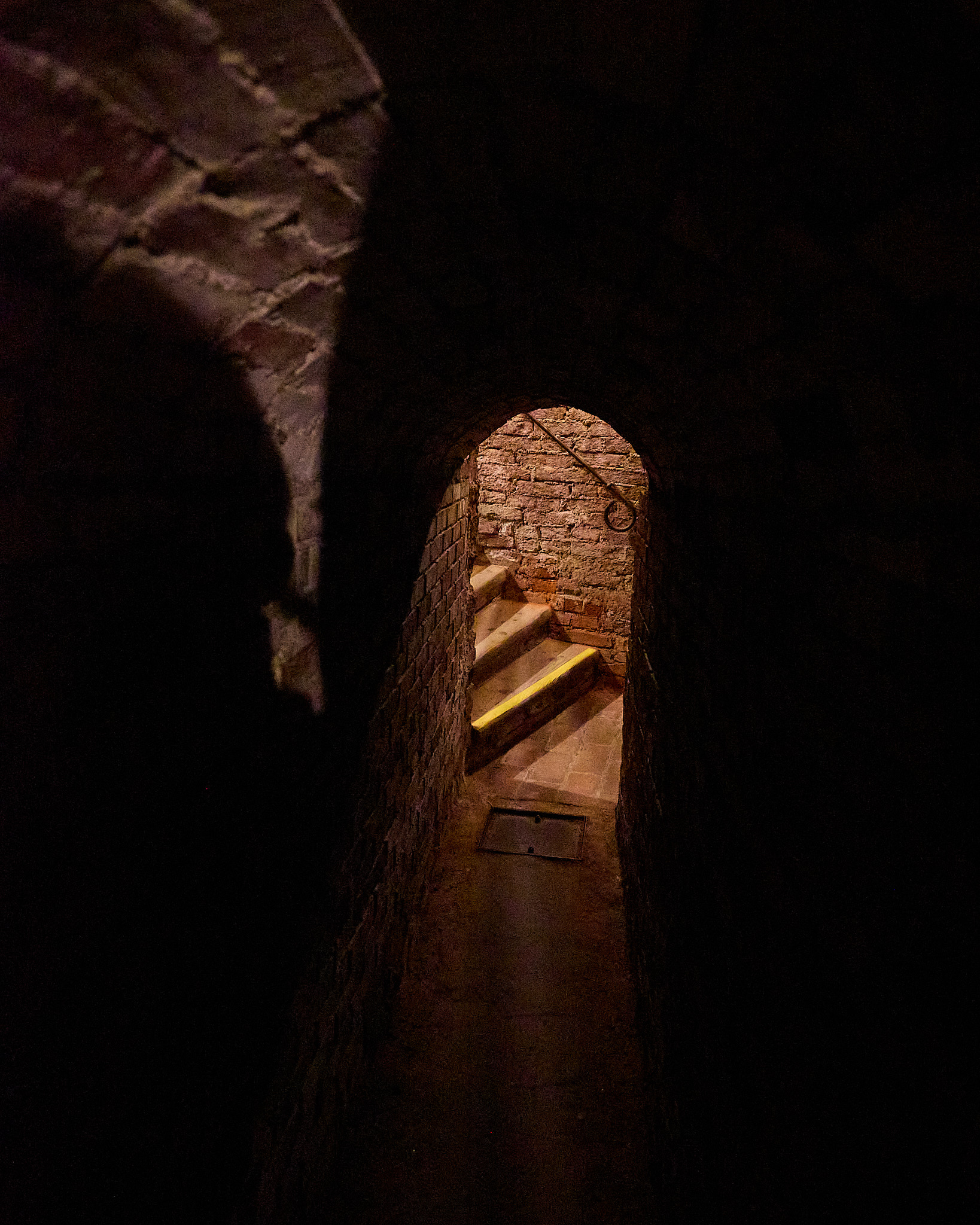
The cellars are down a flight of stone steps. On the wall above the landing, someone has drawn Justice in outline: long hair, a ruff, a sword in one hand and a pair of scales in the other. She has no blindfold.
Justice managed without one for a long time. The earliest known picture of her with her eyes covered is a woodcut from 1494, made for a satire called The Ship of Fools.
The blindfold is being tied on by a fool.
It was a jibe, not a compliment. Only later did covered eyes come to stand for fairness. The Justice on the stairs keeps hers open, and from her wall she can see everyone on the way down.
A necklace
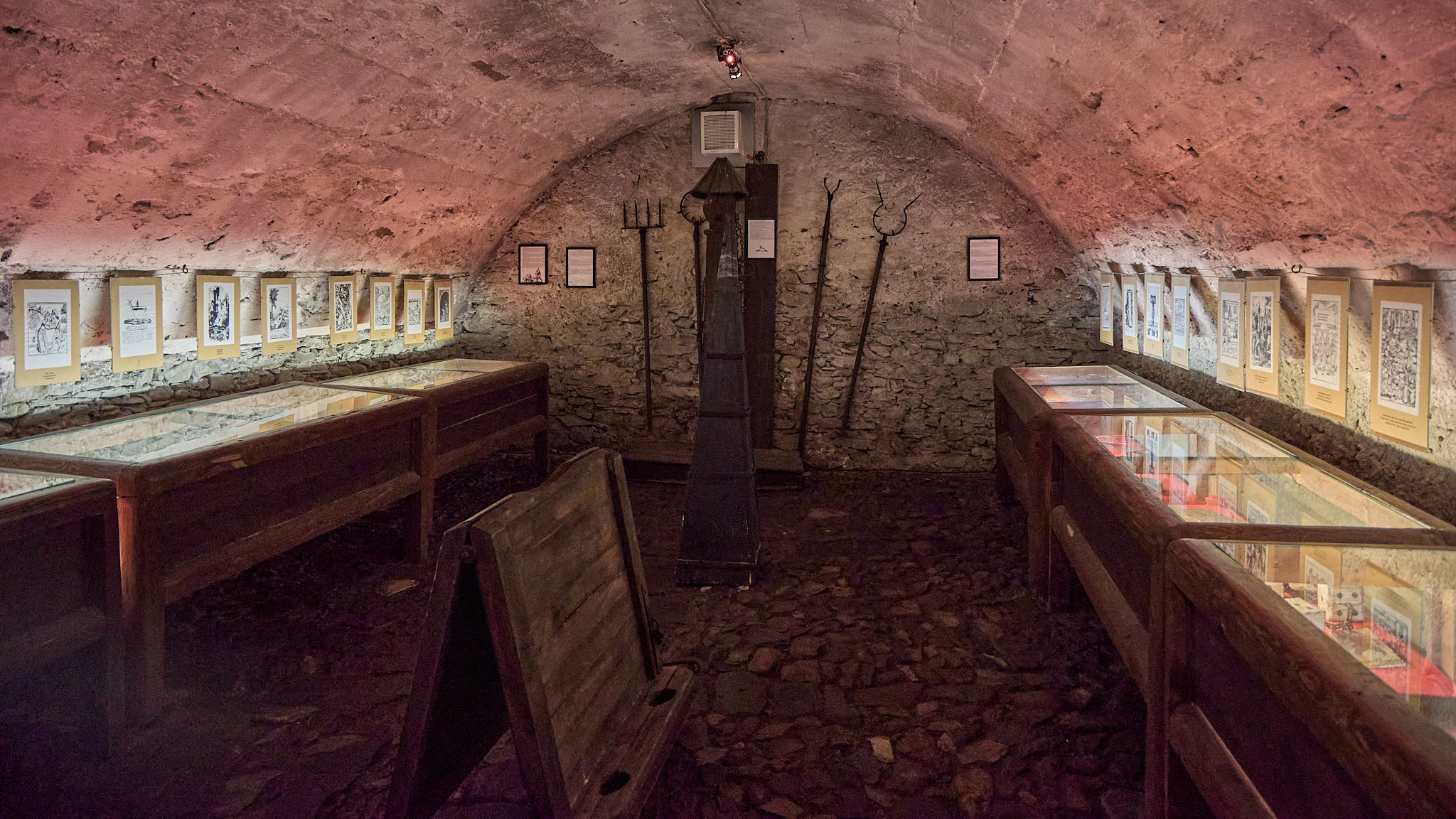
At the bottom is a long vault of rough stone, with red light along the ceiling. Glass-topped cases run down both sides, with rows of framed engravings above them.
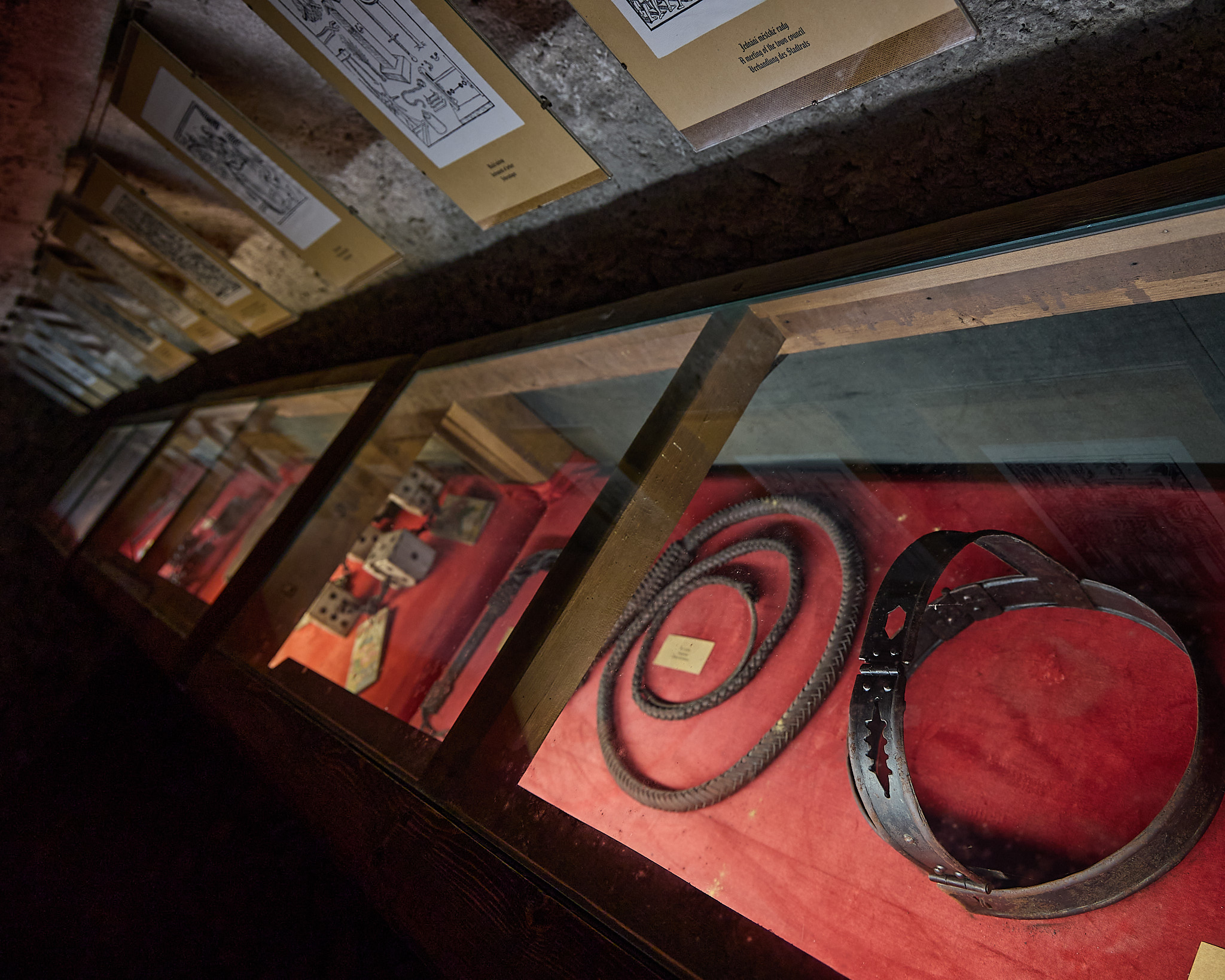
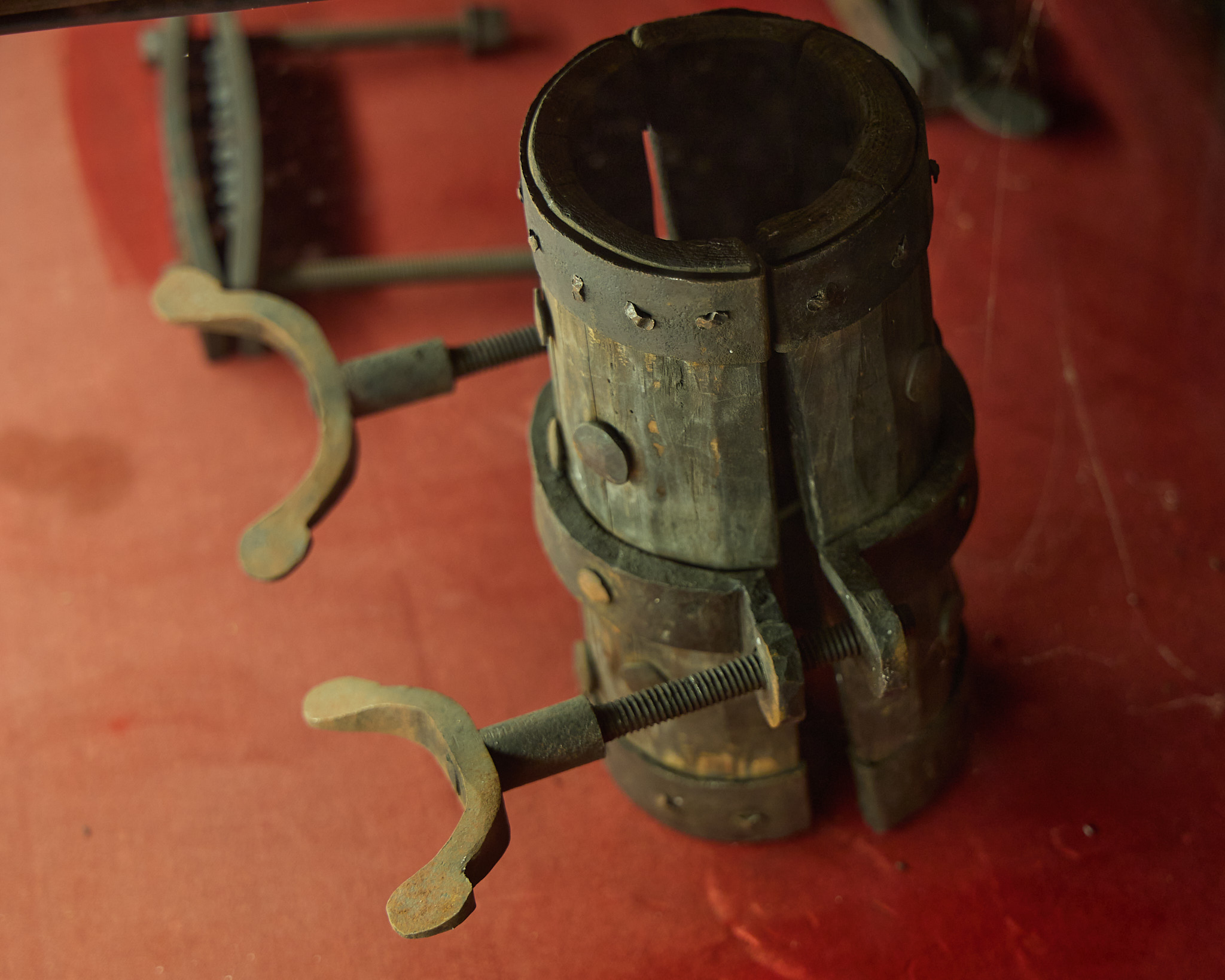
The cases are lined with red cloth, and in them lie whips, collars and things closed with screws.
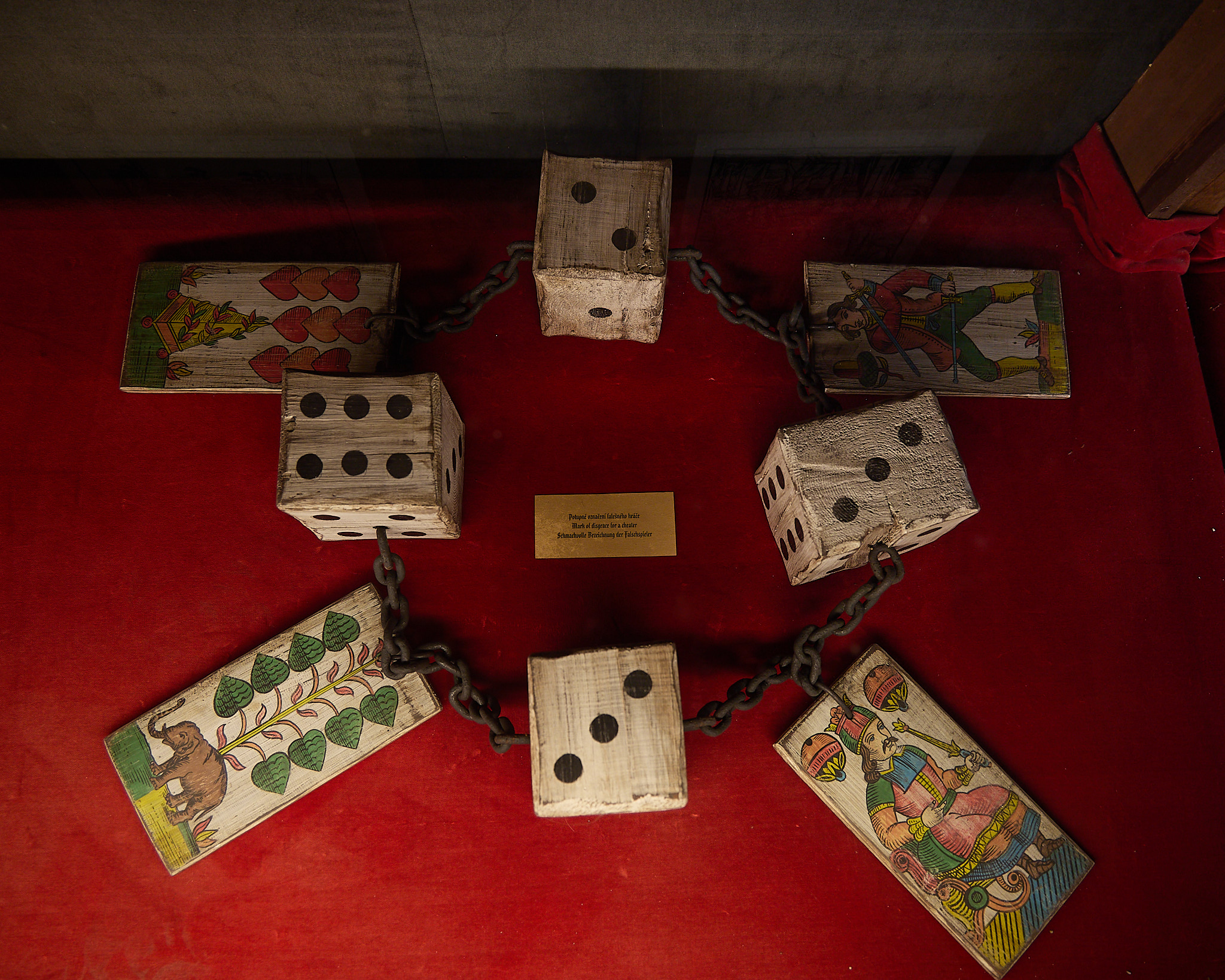
One case holds what looks like a game laid out on the cloth: four big wooden dice and four painted wooden cards, joined into a ring by a chain. The label calls it a “mark of disgrace for a cheater”, and the chain suggests where it went.
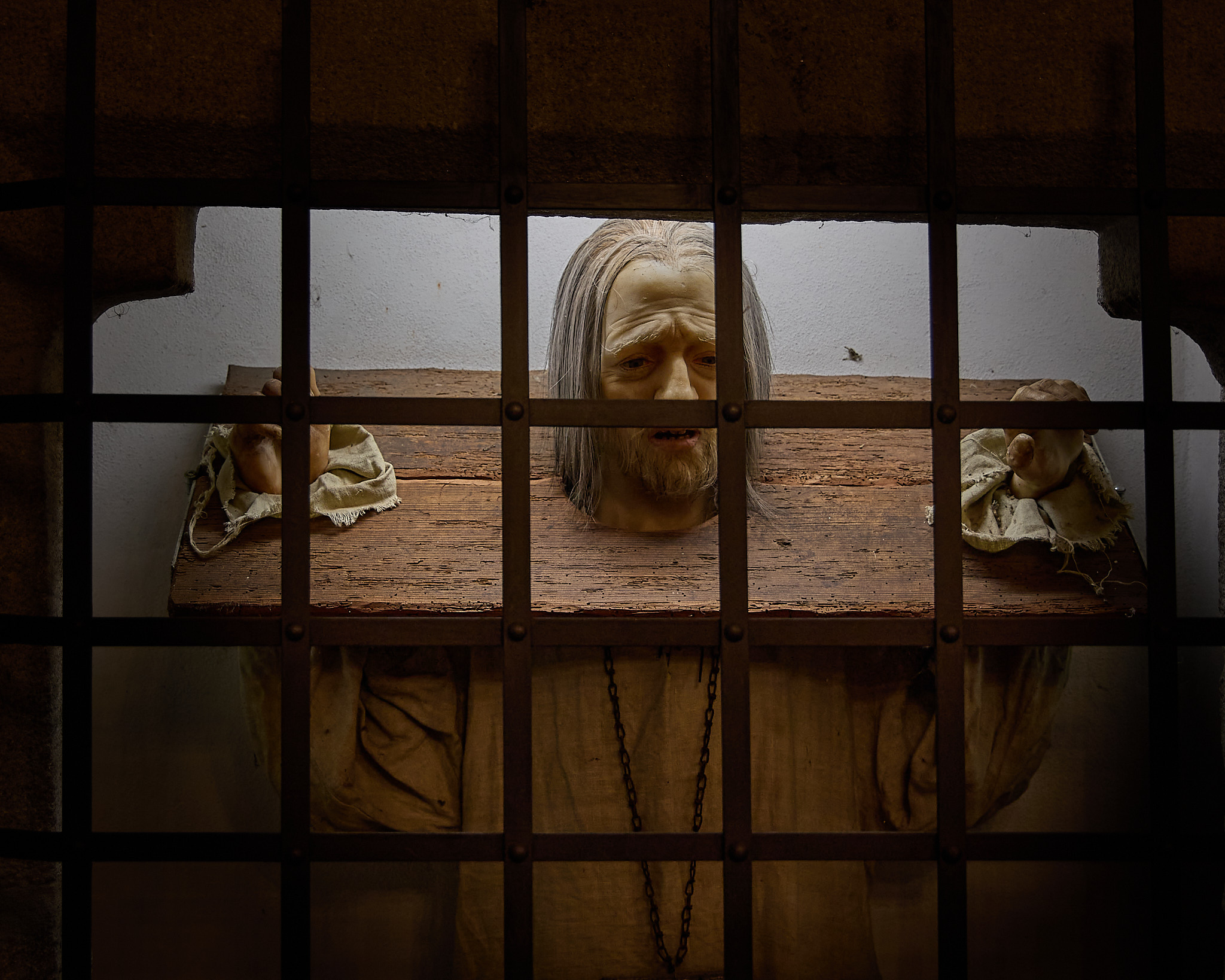
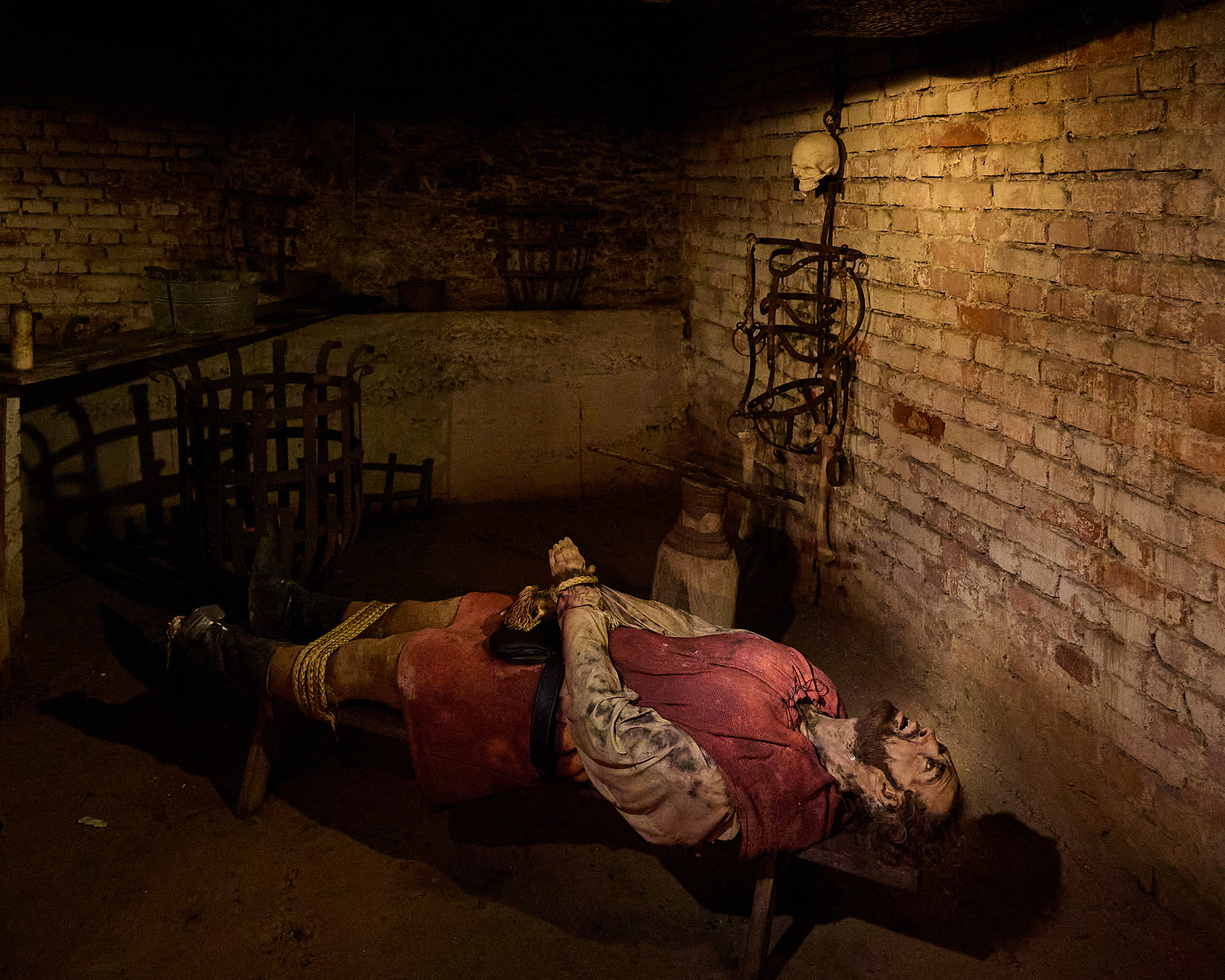
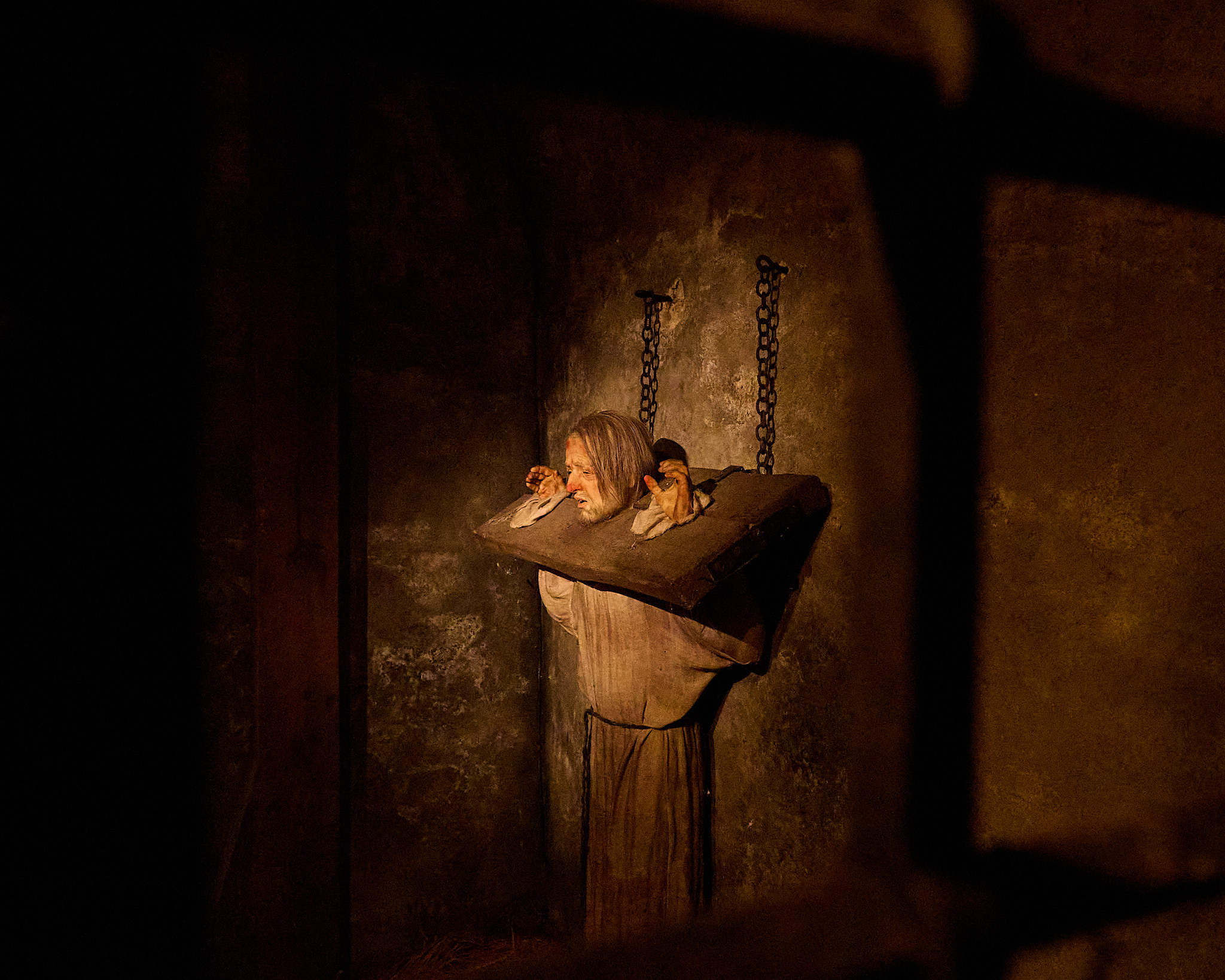
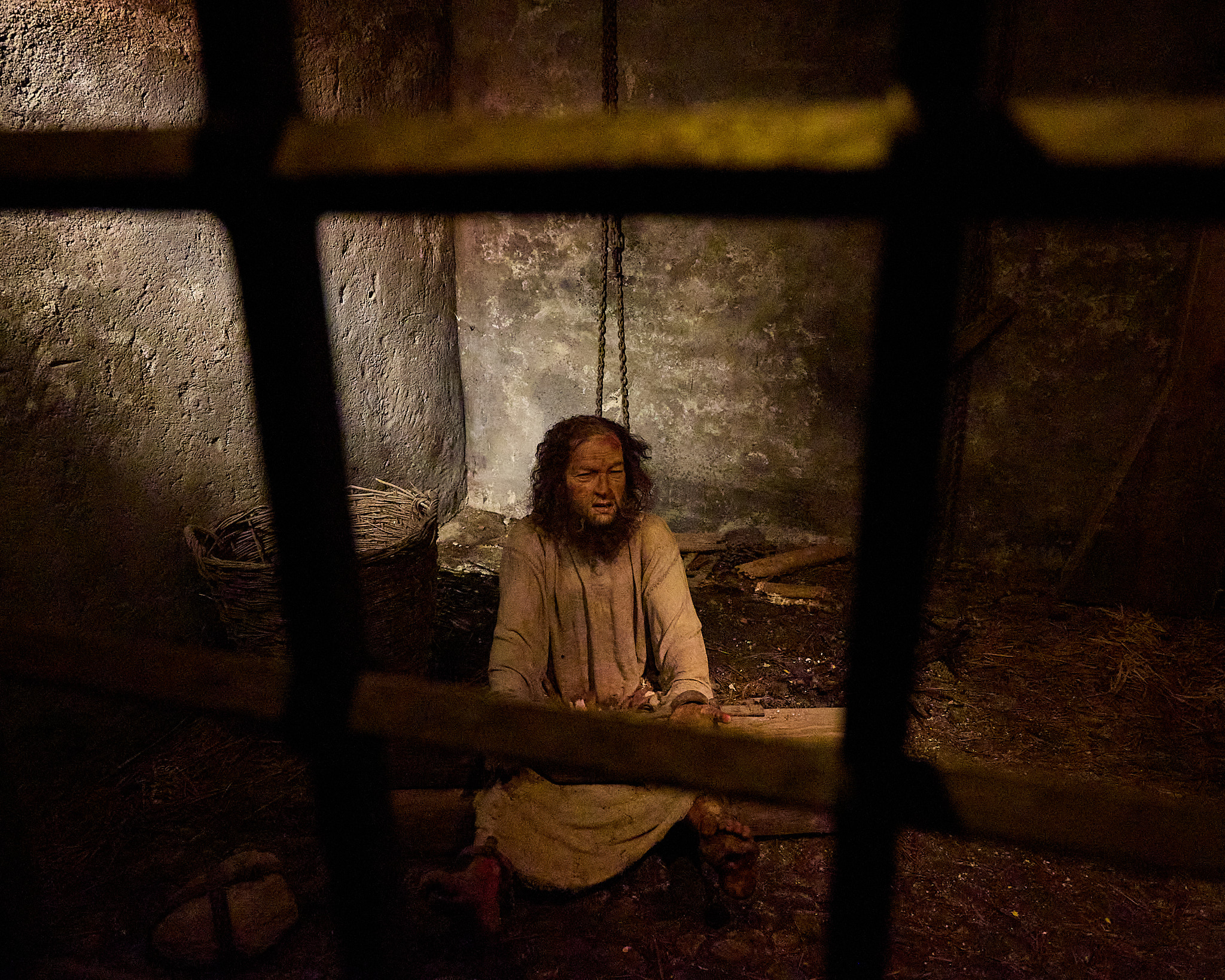
Elsewhere in the cellars, the people are wax, and most of them are fastened to something.
Swipe to explore
Tap to enlarge
In the wall
Near the end, in a niche of the vault and lit pink, a woman’s head looks out from a heap of stones: a pale face and long red hair. The rest of her is understood to be behind them.
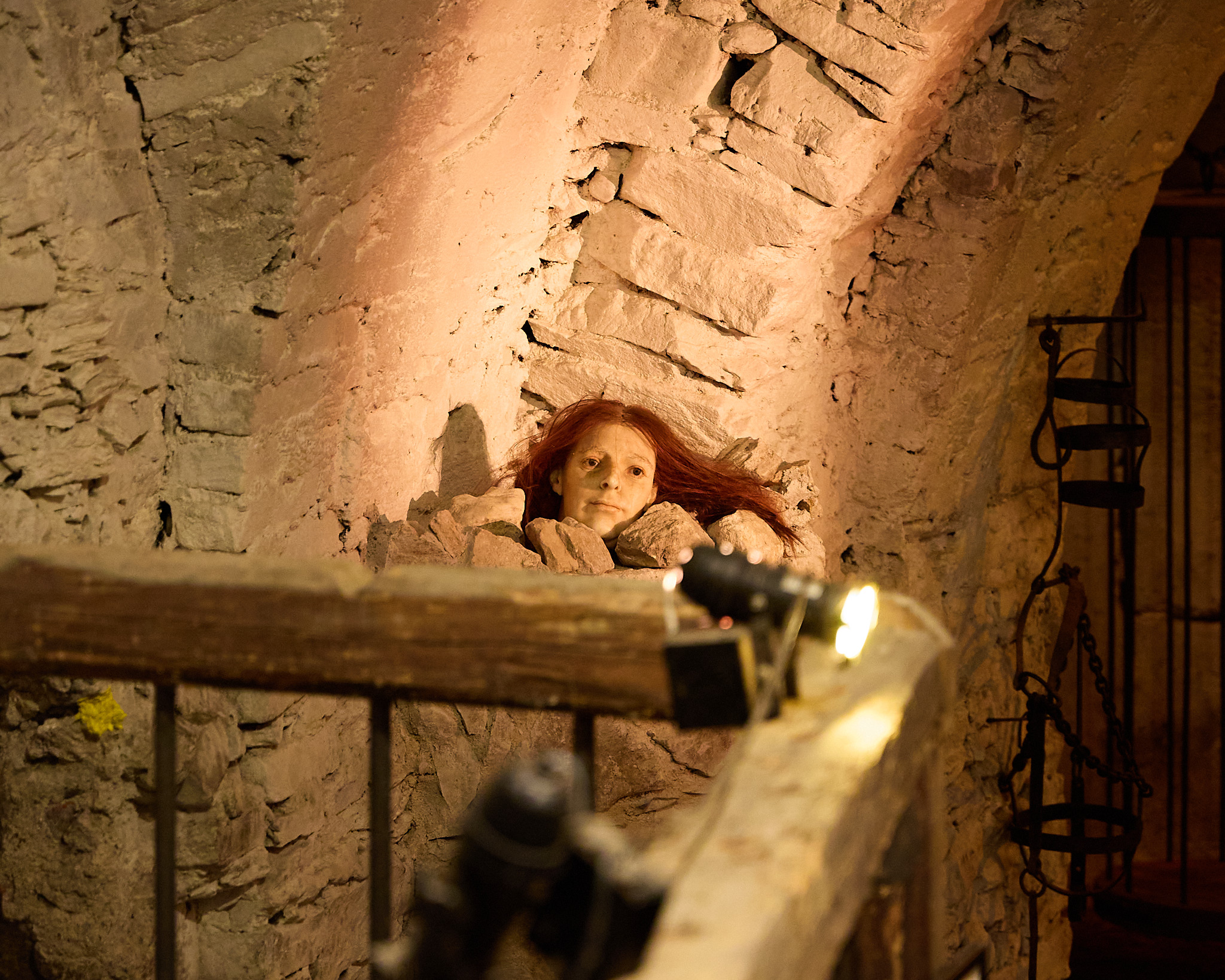
Bohemian castles have plenty of stories of people walled up alive, and not all of them are legends. One of them comes with a date, and a letter written at the time.
In May 1577, at a small manor house in South Bohemia, a young noblewoman called Markéta was shut in a tower, and the door was walled up behind her. She had been married only that year. The story usually goes that her husband had it done, because she had been unfaithful to him with Jakub Krčín, the man who ran the estates of the lords of Krumlov.
The letter was written to Krčín himself, by the captain of a nearby castle. People came to the tower as if on a pilgrimage, it says, and talked to her through the wall. She had water, and she ate earth. She broke out a good part of the wall and piled up the stones, trying to reach a hatch.
On Whit Monday, 27 May, a group of people arrived. Some of them talked with the guards. Meanwhile, the others broke open the walled-up door, and they carried her out of the village.
In the nearby town of Trhové Sviny, miners dressed her in a miner’s apron and a little hat, and she walked through the town among them. Behind the parsonage, a cart was waiting.
Who sent the miners is not known. One account says Krčín hired them. If so, he was a man who knew about getting things dug: he is remembered for the fishponds he had made across South Bohemia, among them the largest in the country. Three days after the rescue, Krčín wrote to his lord, denying the accusations against him.
Who had her walled up is not certain either. A chronicler of the time recorded the walling-up, but not who ordered it. One historian thinks it was done against the husband’s will, by his uncle’s wife.
Markéta went back to her husband. They had six sons.
When he died, in 1586, she inherited his estate. As a widow, she lived in Trhové Sviny, the town she had once walked through disguised as a miner.
Visit this place
Location
Museum of Torture (Muzeum tortury)
In the cellars of the town hall on the main square, Náměstí Svornosti
náměstí Svornosti 1, 381 01 Český Krumlov, Czechia
Practical Information
- Opening hours
- Daily, 10:00–18:00; July–August 09:00–20:00; January–February 10:00–17:00. Last tickets 45 minutes before closing.
- Admission
- Adults CZK 150; children under 15, students and seniors 65+ CZK 100; family (2+2) CZK 400; under 3 free. A combined ticket with the Wax Museum is available.
- Visitor note
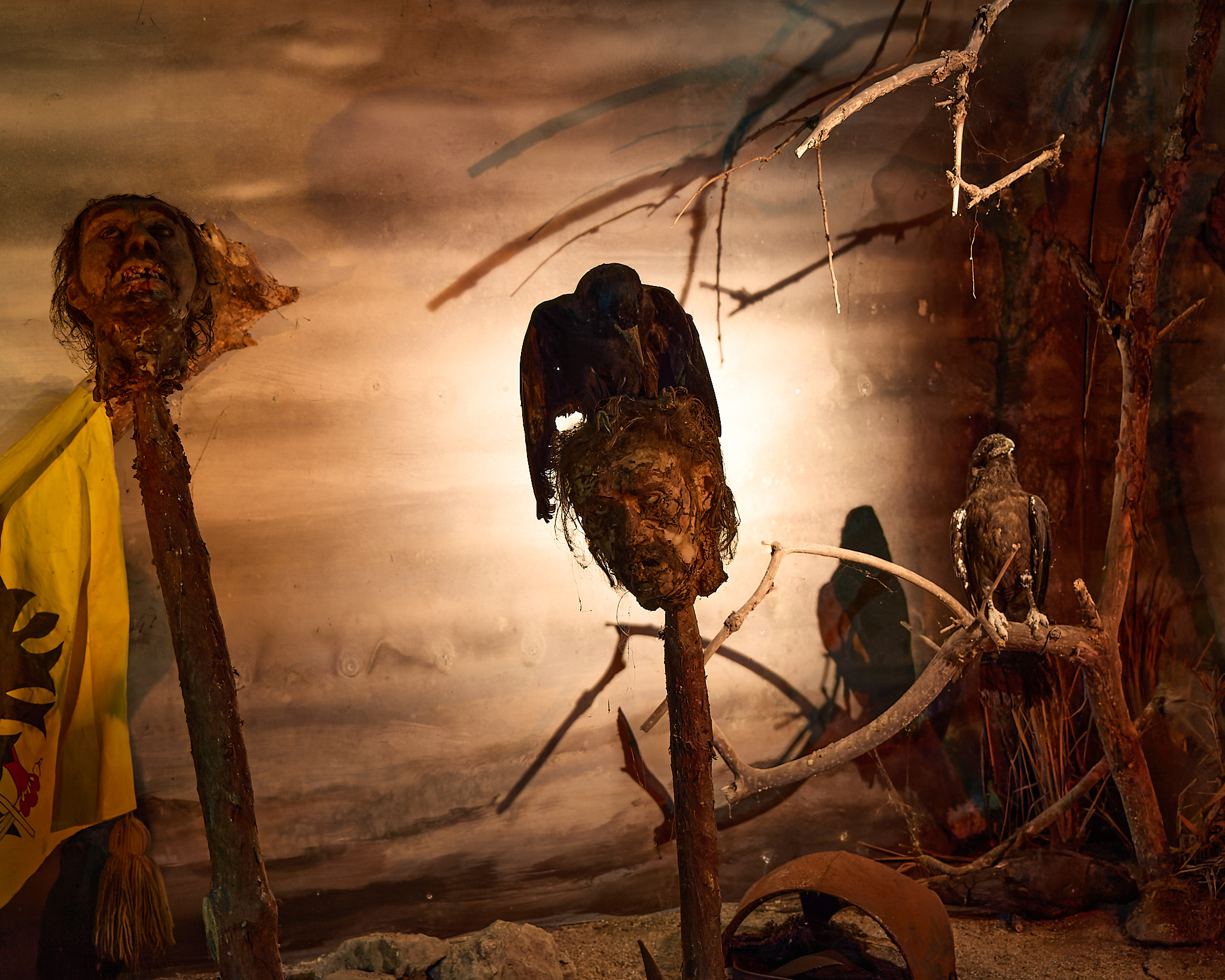
- Wax-figure scenes of torture and execution, including heads on stakes; not recommended for young children or sensitive visitors. The cellars run under several houses, and the way out is through the courtyard of a different building.
- Official website
- Museum of Torture, Český Krumlov
Information last checked: November 24, 2026 (Address, opening hours, last admission and ticket prices checked against the operator’s pages for the Český Krumlov museum.)
Conversation
Comments
Review pending commentsComments are reviewed before appearing. The internet already contains enough unattended surprises.
Loading comments…
Leave a comment