Prague’s Museum of Torture: The Man in the Barrel
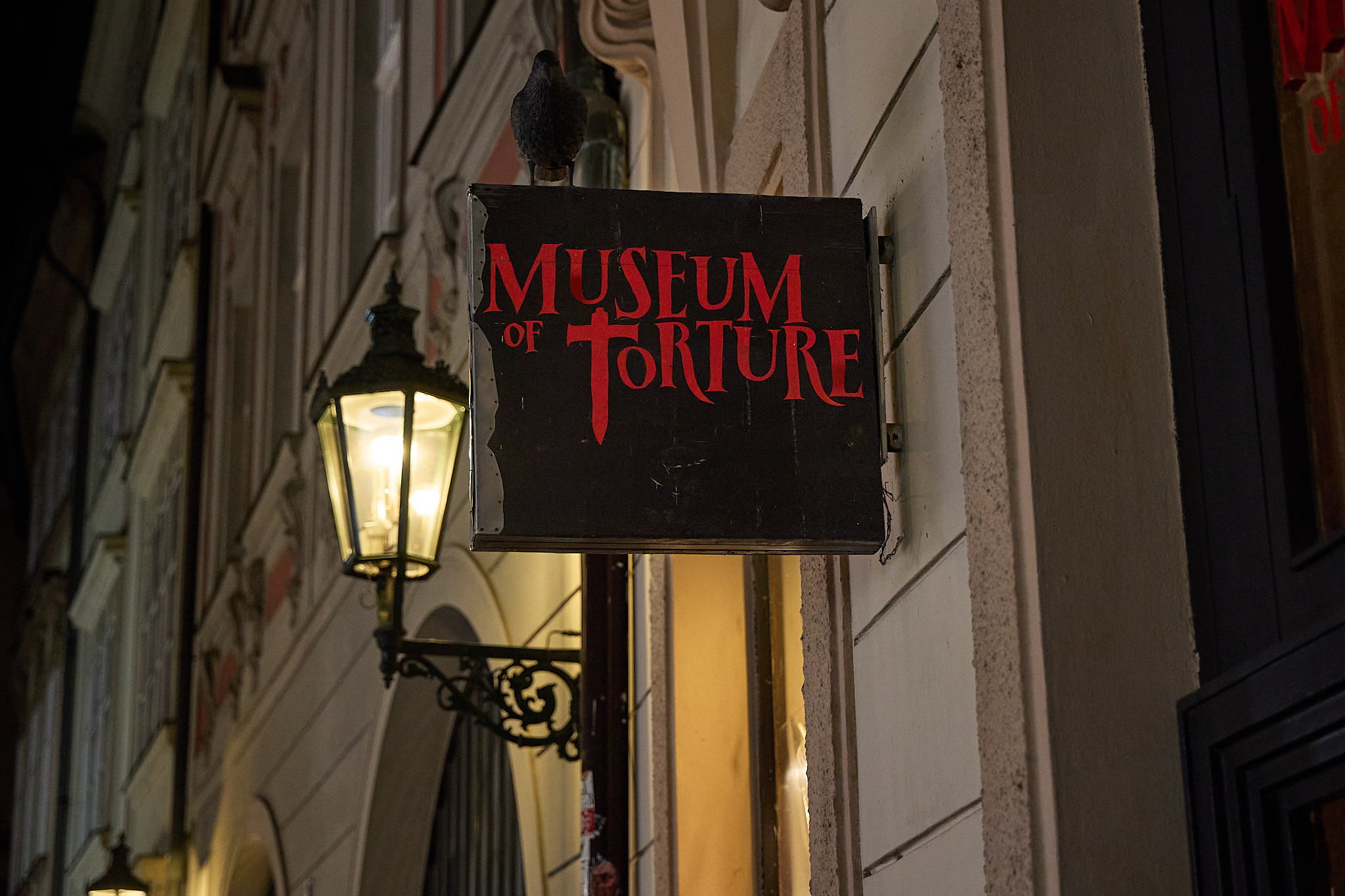
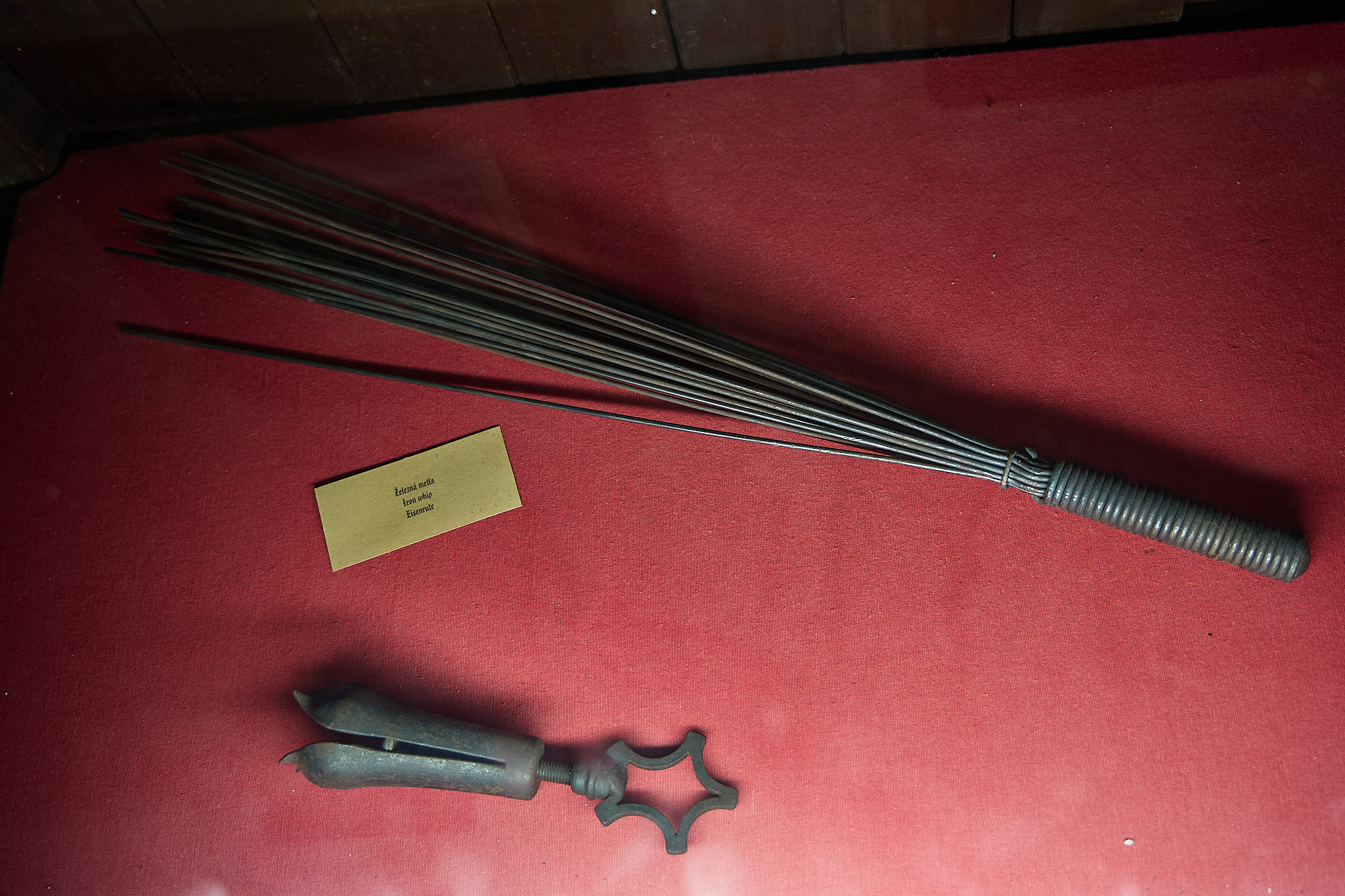
The label beside the thumbscrews names them three times. Palečnice, in Czech. Thumbscrew, in English. And in German, Fausthandschuh. Two of those mean the same thing. The third is a mitten.
To be fair to the label, a mitten is also built around giving the thumb special treatment.
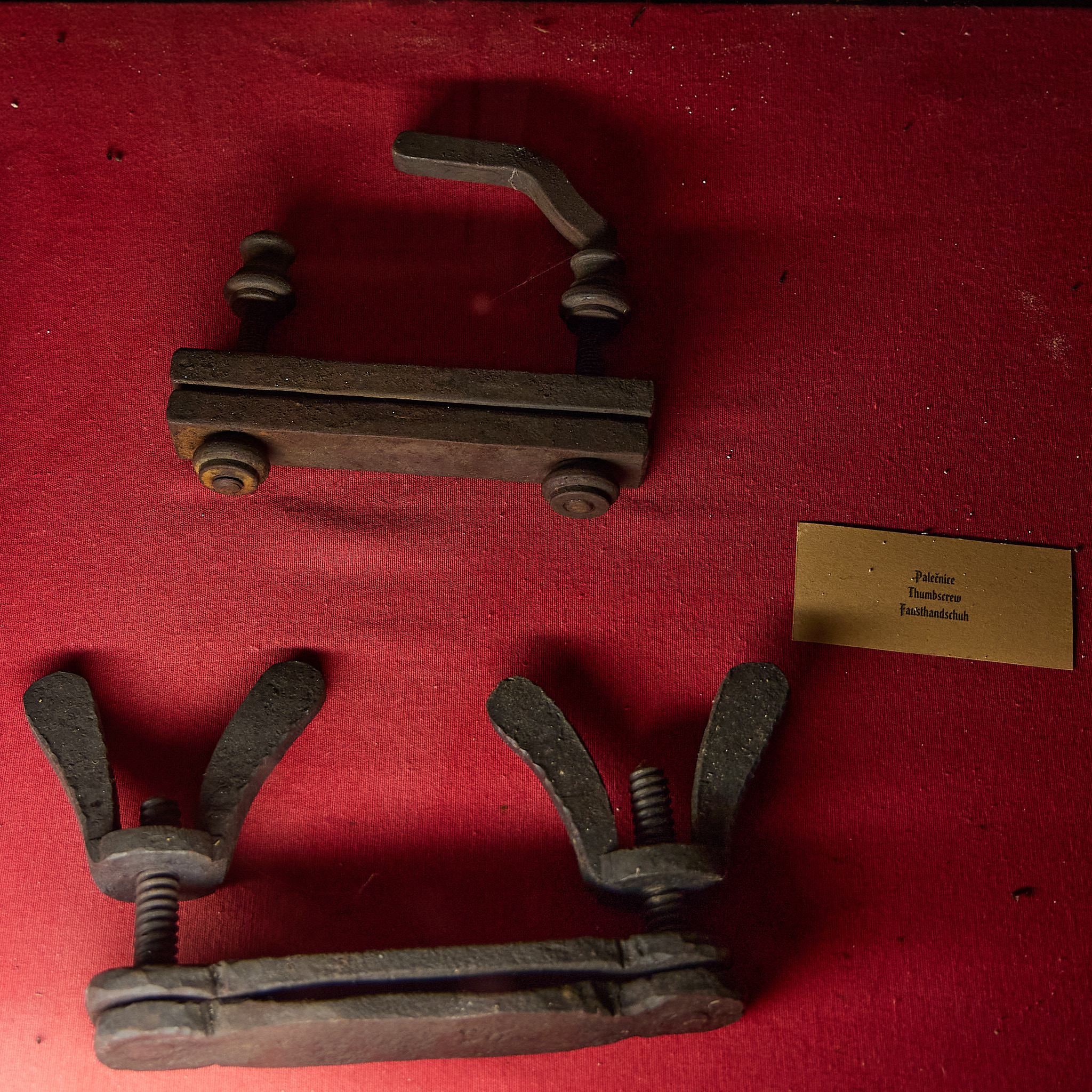
The thumbscrews themselves need no translation, and they come with paperwork. In 1768, Maria Theresa issued a criminal code for her Austrian and Bohemian lands. It set out how torture was to be carried out, with engravings, and the thumbscrew gets an illustration of its own. Eight years later, torture was abolished.
Not everything in Prague’s Museum of Torture can say as much.
Downstairs
The museum is in a run of cellars on Celetná Street, just off Old Town Square. I went down on a December evening. It was dark, the air was cool, and there was hardly anyone else about.
Most of the exhibits are behind bars. In one cell, in red light, a prisoner sits on the stone floor with his hands on a heavy log. Another stands against the wall with his neck and hands held in a single board.
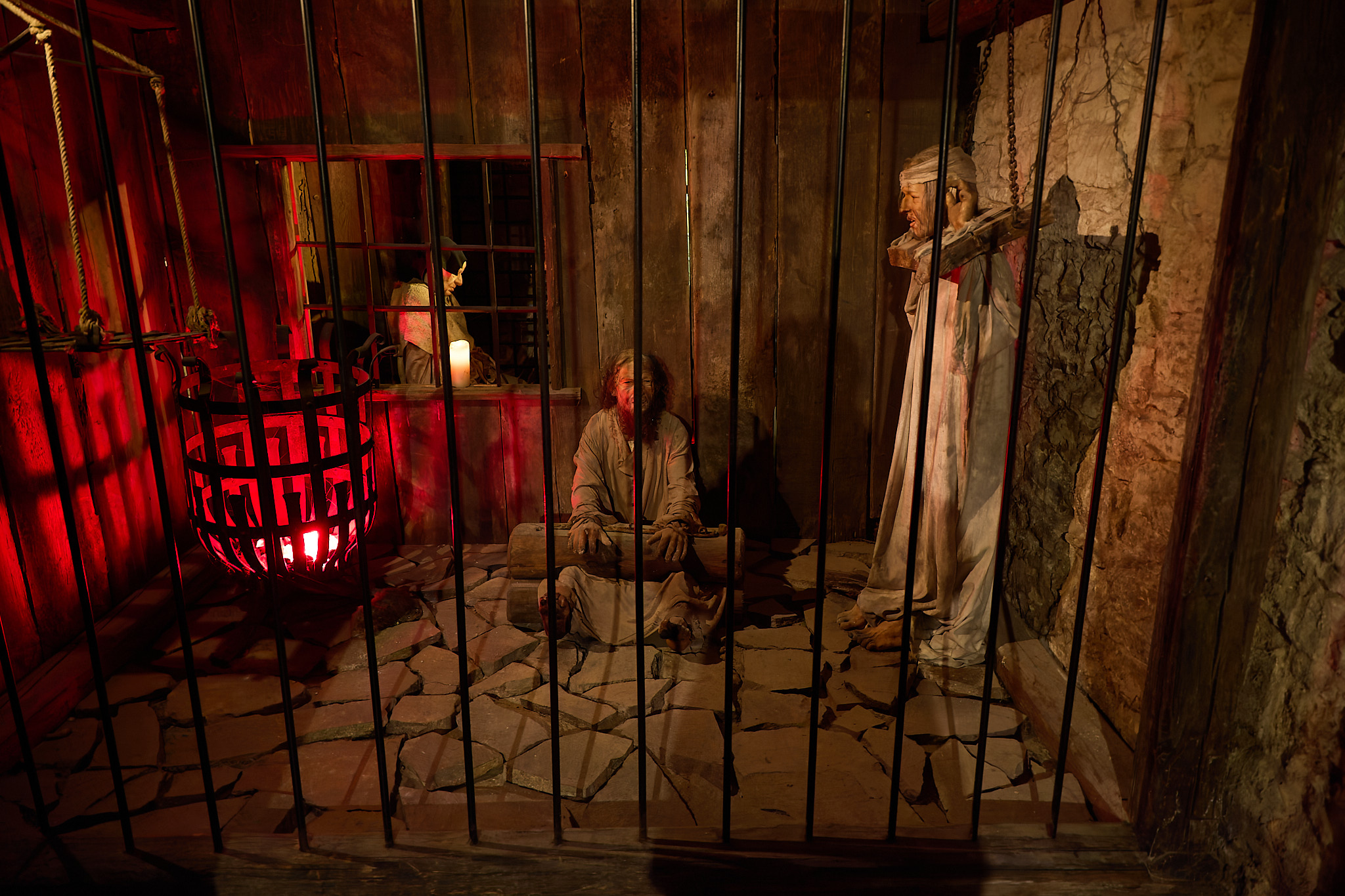
Somewhere in the dark, people scream. The screams come from loudspeakers, and not very good ones, which I thought improved them.

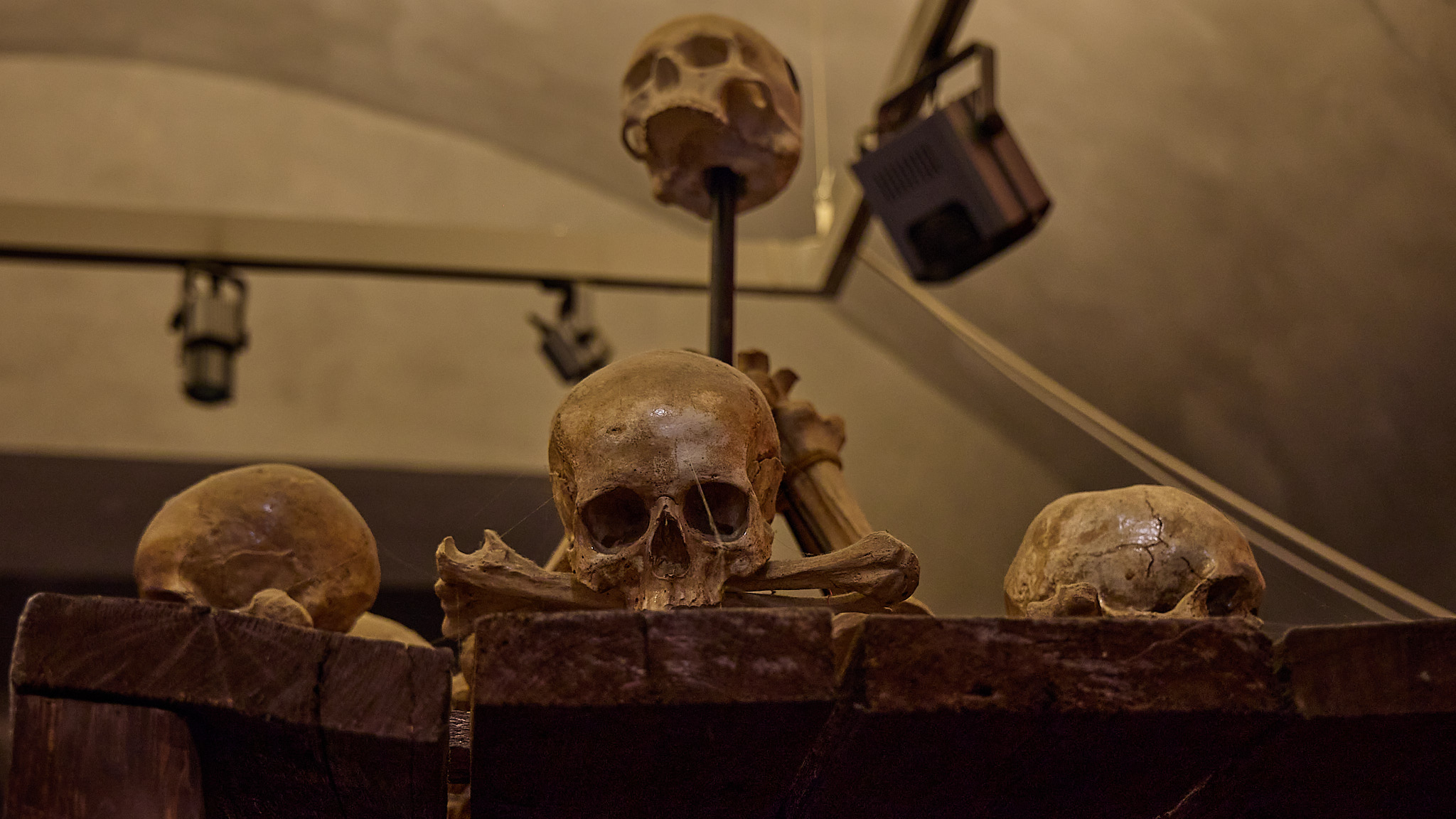
There are skulls on top of the cabinets, and a chandelier made of them.
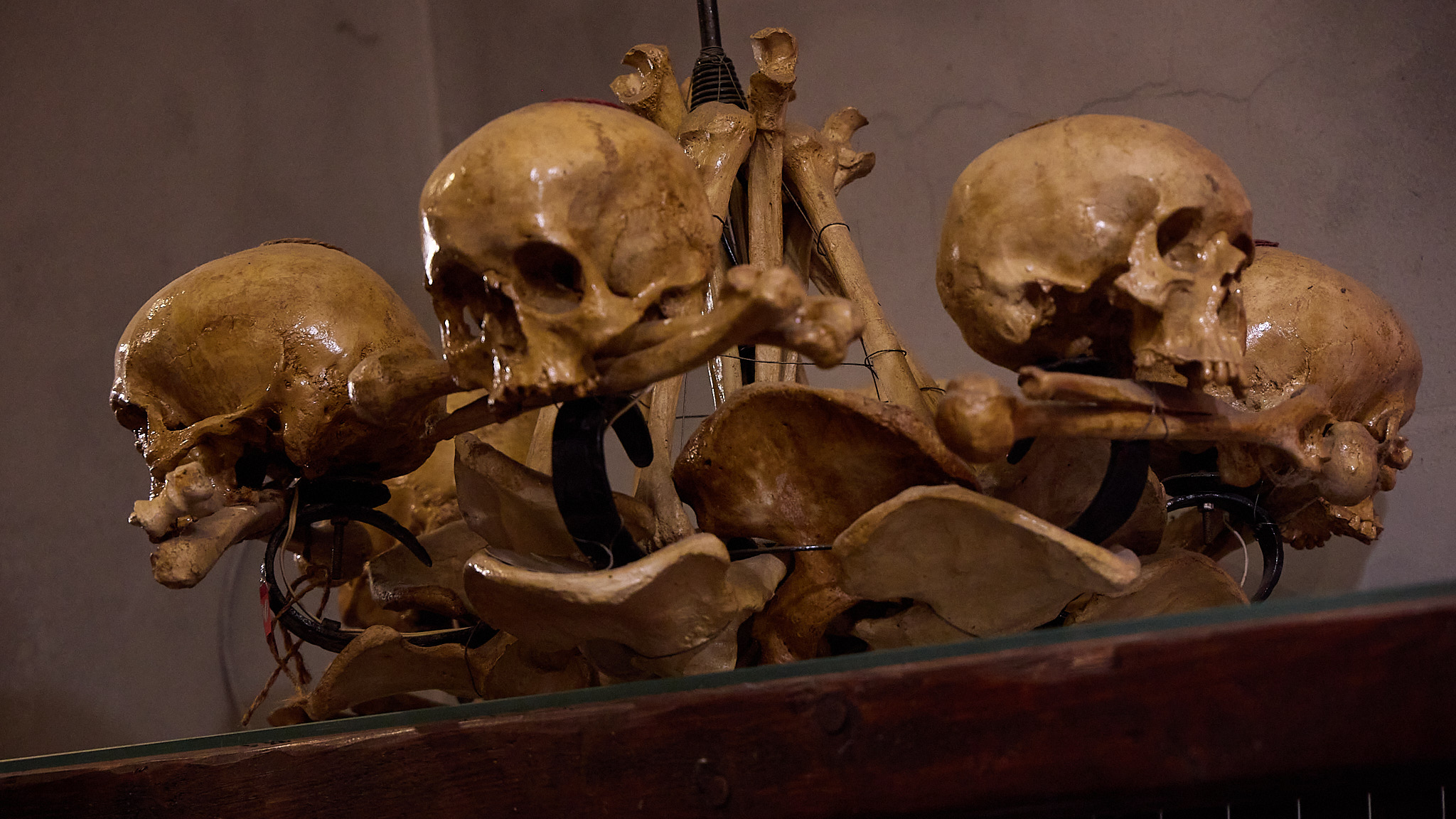
The museum describes its instruments as authentic and detailed replicas, which is candid of it. It leaves one thing open: replicas of what.
The star
The best-known piece in the collection is the iron maiden: a cabinet in the shape of a person, tall enough to stand in, with a metal face on top.
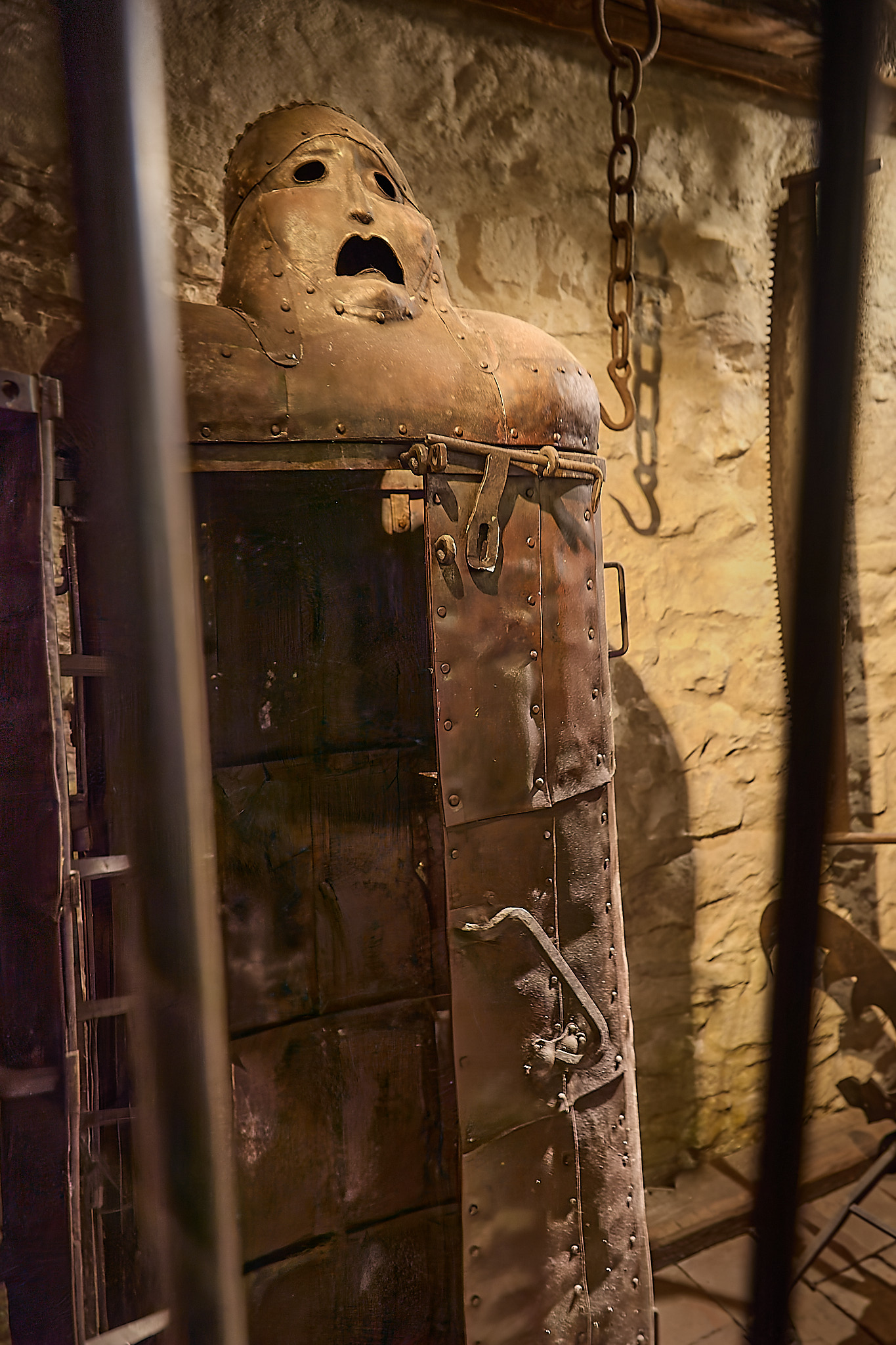
It is most people’s idea of medieval torture, in a single piece of furniture. It is also short of paperwork. No trace of an iron maiden has been found from before the 1790s, when a professor near Nuremberg put a story about one into print. By the early 1800s, one seems to have been on show in Nuremberg itself. Historians now think the maidens that survive were put together for display out of older objects, chief among them a kind of wooden cloak, made for a quite different purpose.
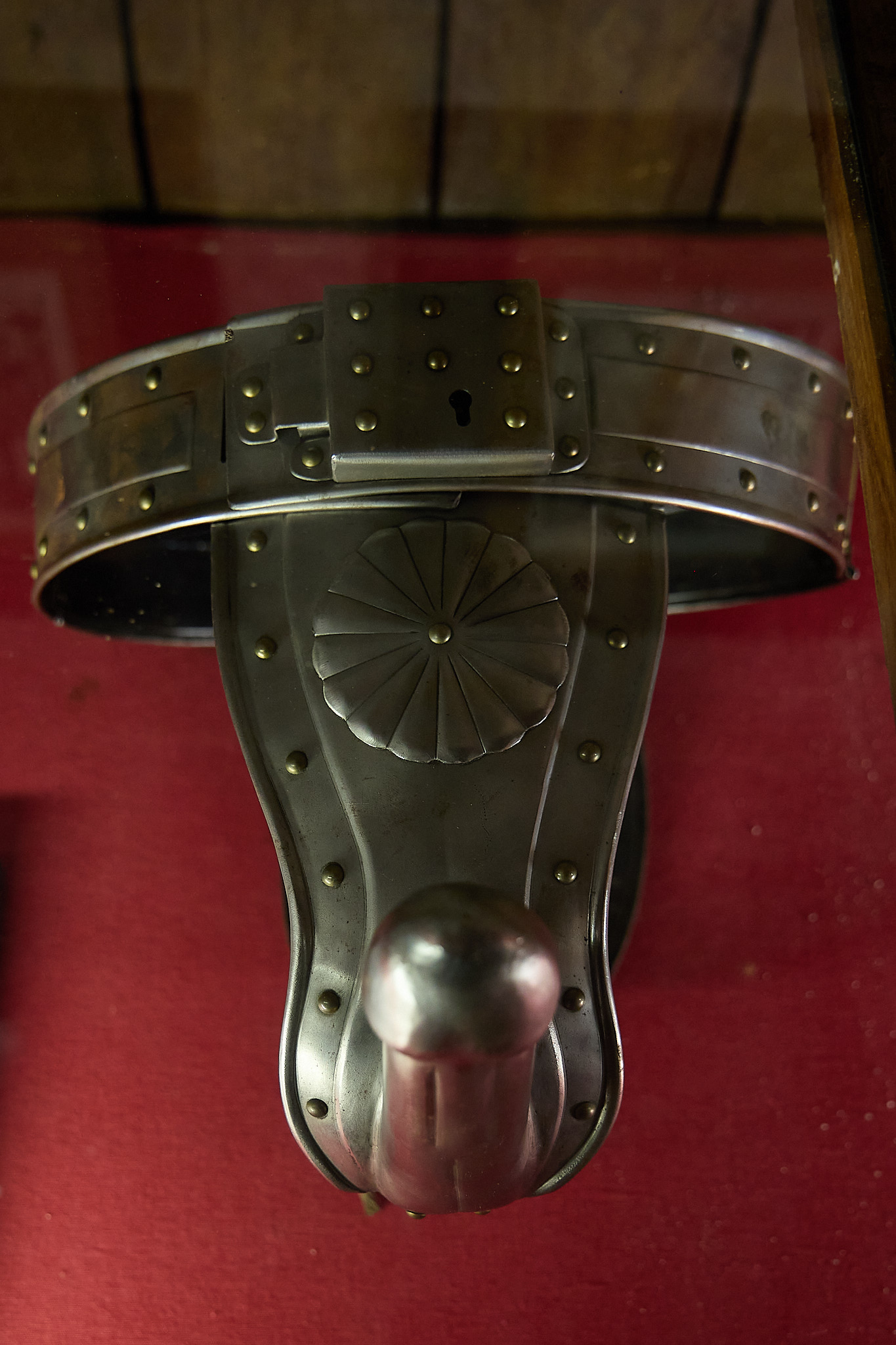
Some of its neighbours are no better documented. The chastity belt in one of the glass cases is built for a man. Locking devices for men are real enough, but they belong to the late nineteenth century, when masturbation was widely believed to cause insanity.
On the record
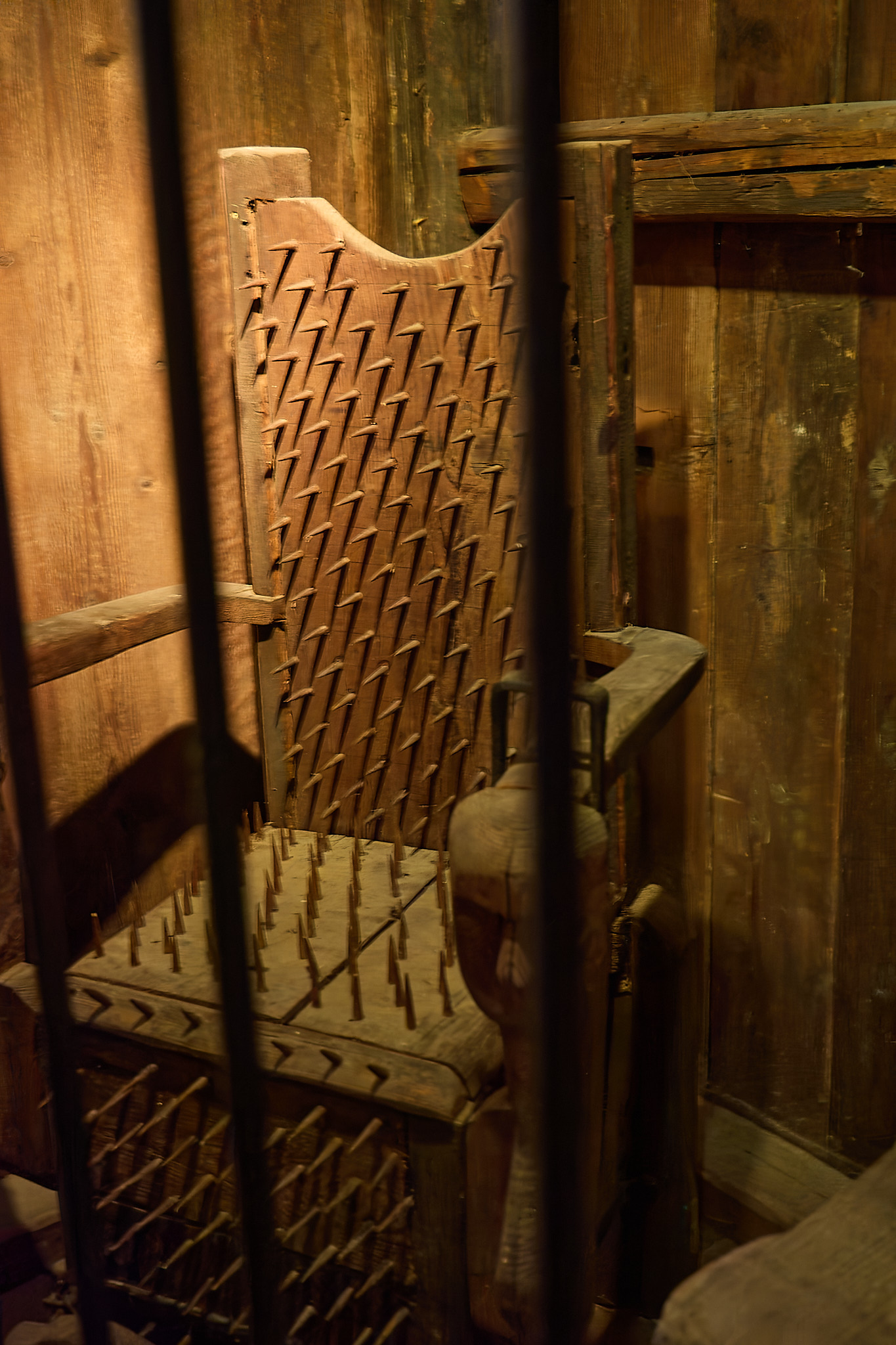
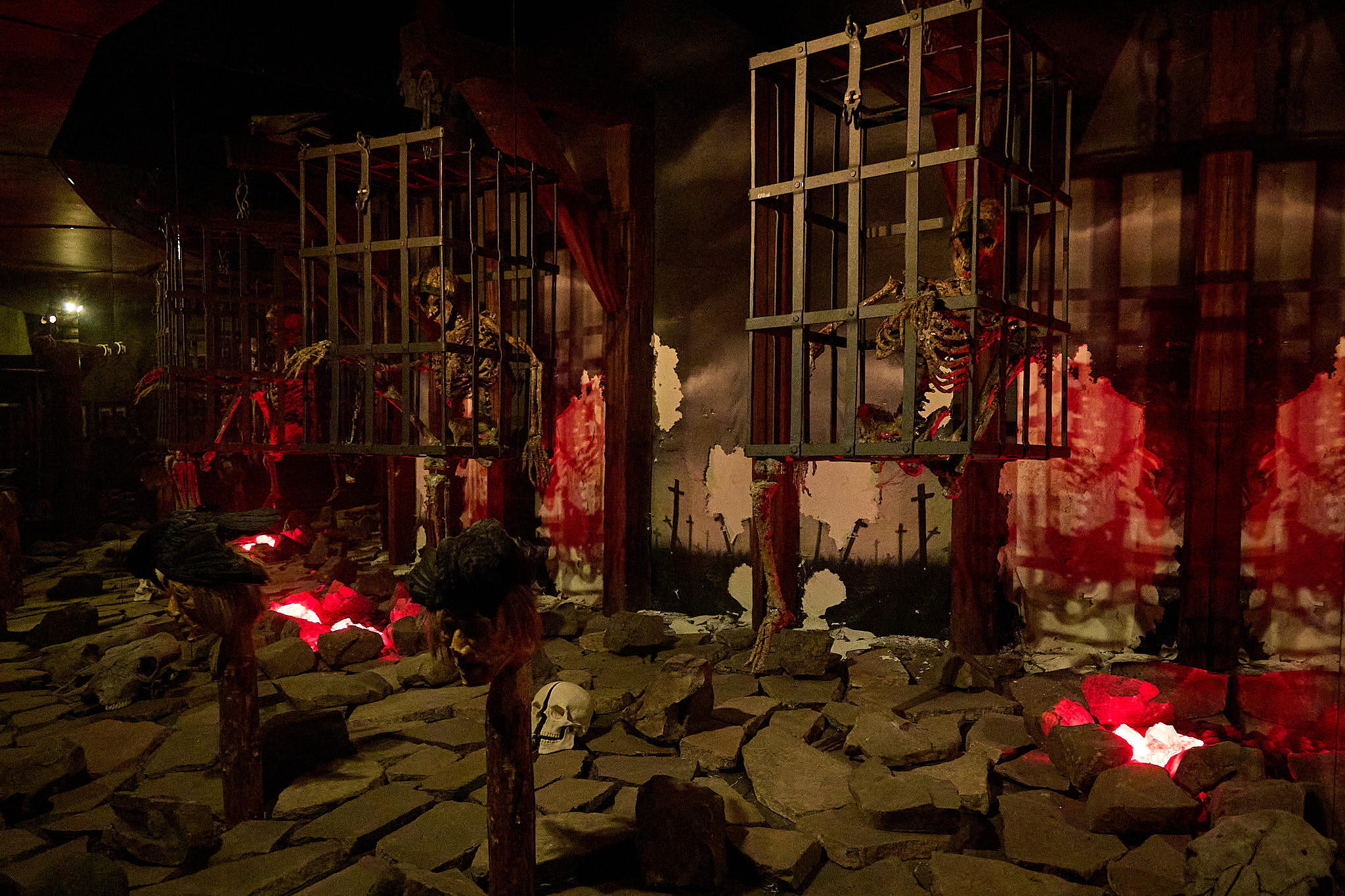
Other things in the cellar have records behind them. The rack is one: stretching is in Maria Theresa’s code, alongside the thumbscrews.
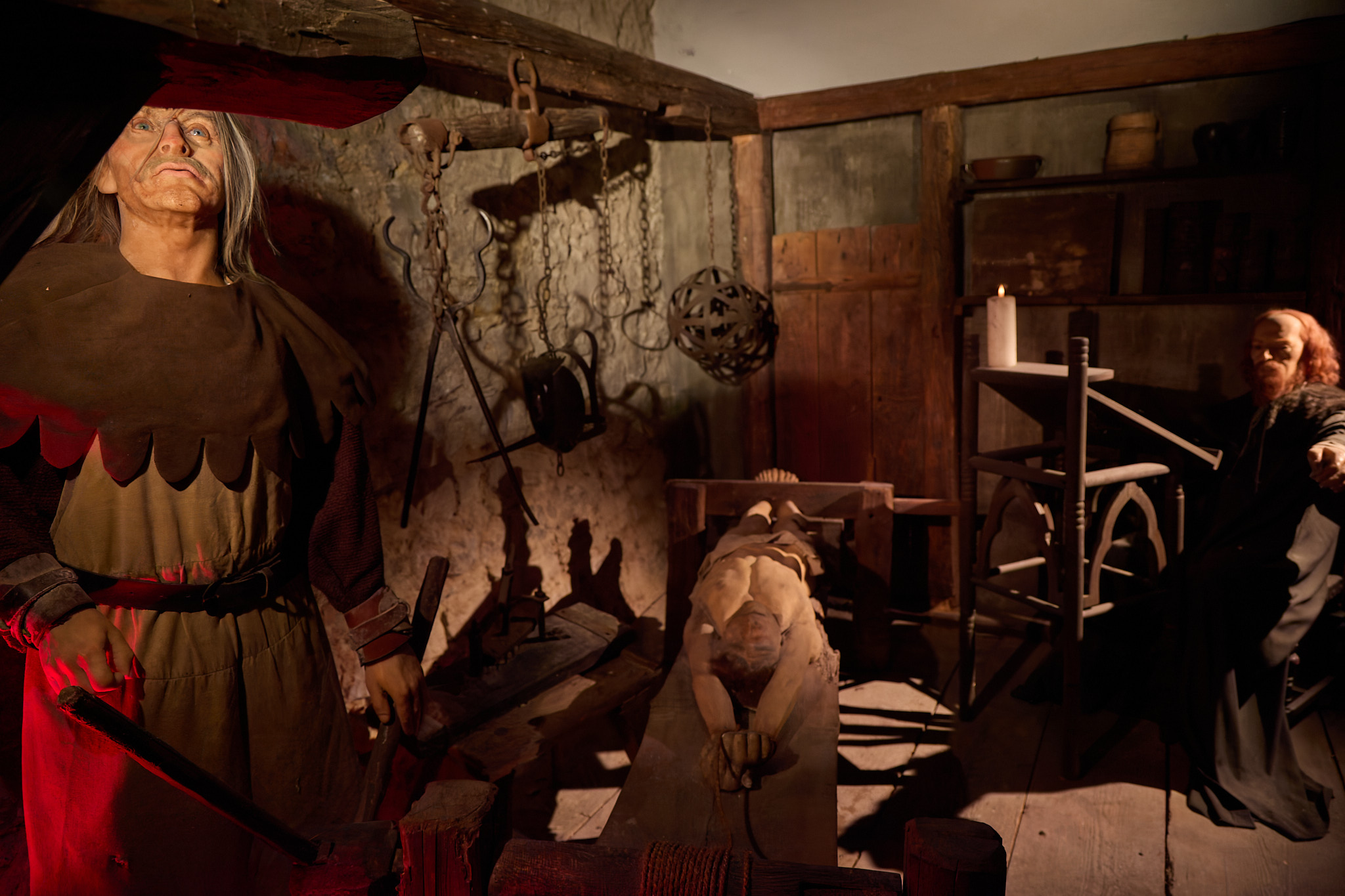
The masks are another. In the seventeenth century, masks like these were a punishment for minor offences. The offender stood at the pillory wearing one, with a sign round the neck naming the offence, and passers-by were free to laugh. The shapes meant something: big ears for an eavesdropper, a hanging tongue for a gossip.
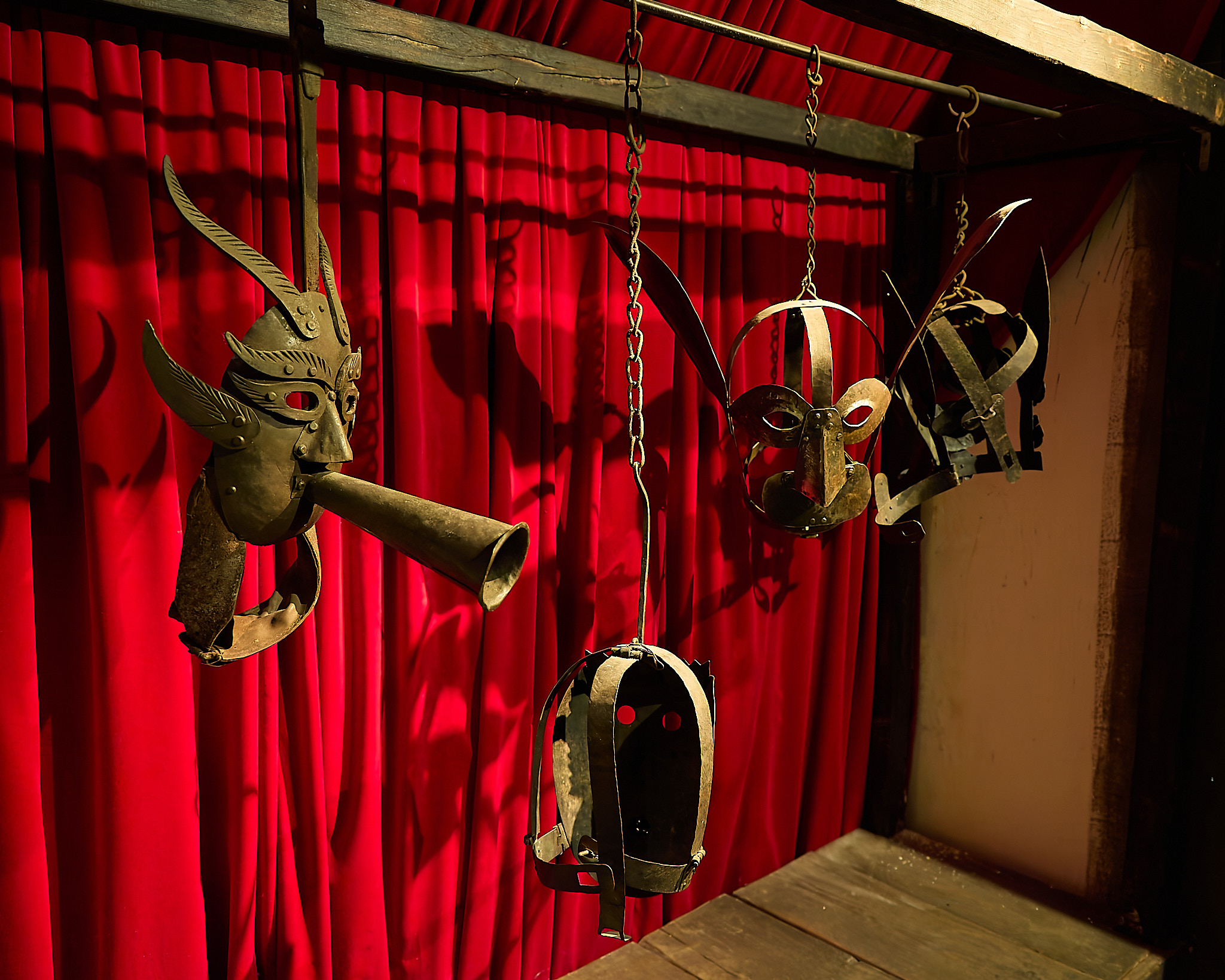
And then there are the cages. Skeletons hang in them above a field of rubble, among heads on stakes, and black birds sit on the heads.
Prague has its own record of this kind of display, and it is not a diorama. In 1621, men who had led or backed a failed revolt against the Habsburgs were executed on Old Town Square, a short walk from the museum door. Twelve of their heads were hung in wire baskets on the tower at the Old Town end of Charles Bridge, and most of them stayed there for ten years. When they were finally taken down, they were buried in secret, and nobody now knows where.
Head and hands
Not far from the masks, behind bars of his own, a man is shut in a barrel. Only his head and his hands show above the lid. He does not look tortured so much as inconvenienced.
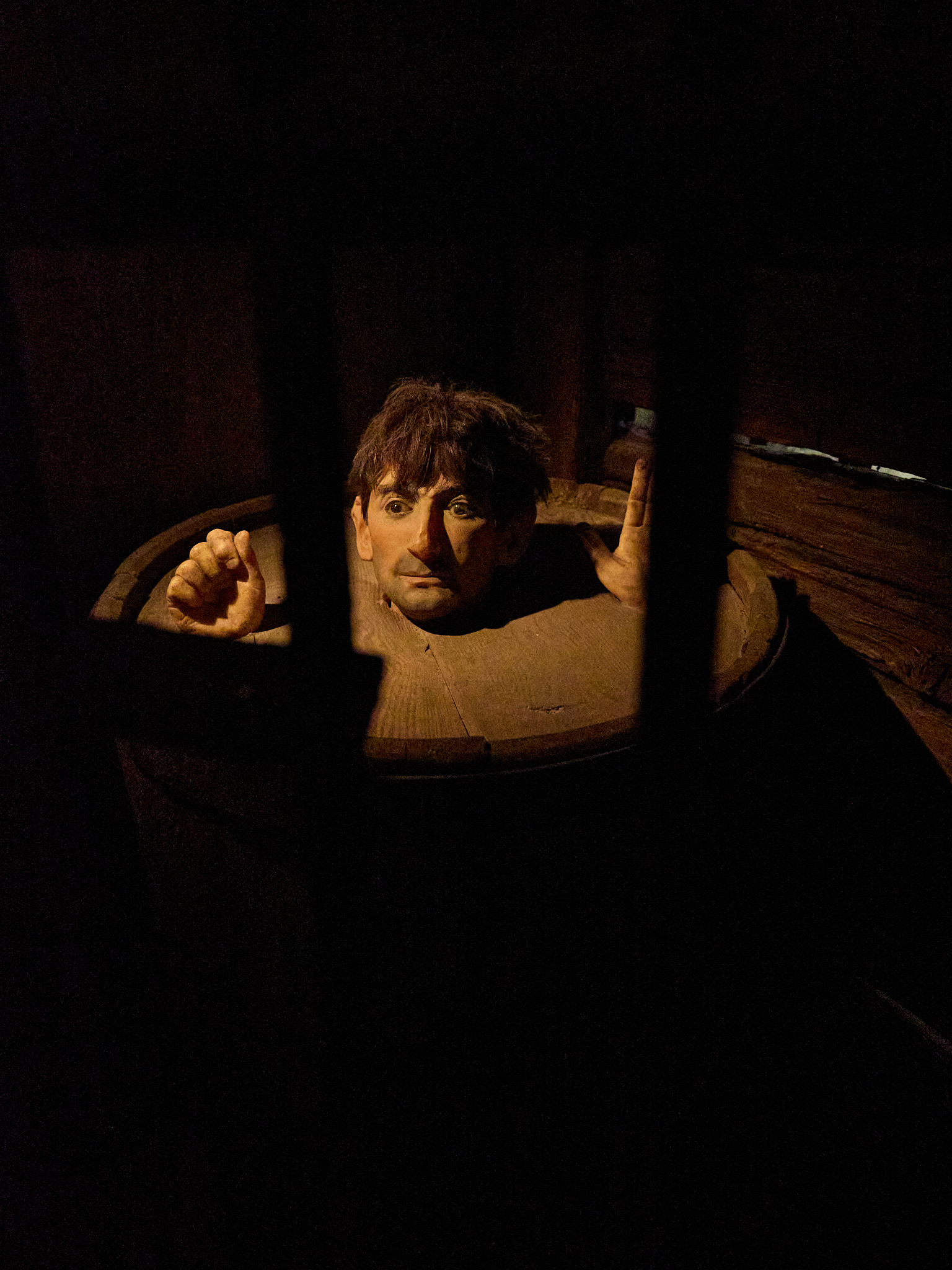
The barrel is on the record too. In Newcastle in the 1650s, drunkards were paraded through the streets wearing one, with holes cut for the head and arms. It was known as the new-fashioned cloak. On the Continent, the same idea went by other names: the cloak of shame, the Spanish cloak or, in blunt German, the Schandtonne, the shame barrel. It was made of wood, sometimes lined with sheet metal, and people could jeer at the wearer and pelt them with rubbish. Nobody was meant to die of it.
The Medieval Crime Museum in Rothenburg, in Germany, has an iron maiden of its own. It says the thing was used not to torture or kill but to shame, and that the nails were added later.
As far as historians can tell, the iron maiden and the man in the barrel are family.
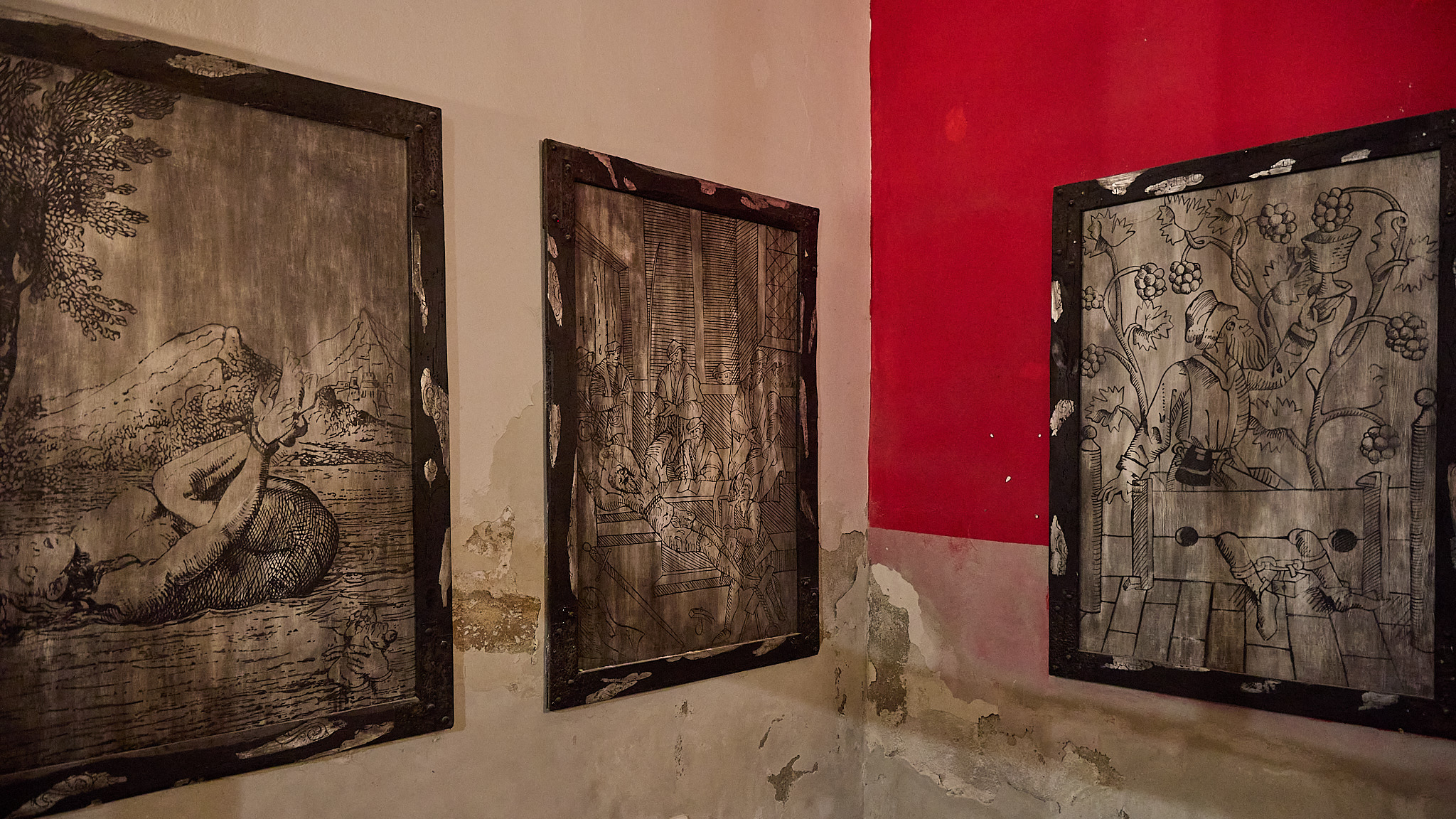
On one wall hang three framed pictures. In the right-hand one, a man sits with his feet in the stocks under a grapevine, raising a cup. The punishment does not appear to be working.
Back in his barrel, the man is still looking out through the bars. A shame barrel was only ever half a punishment. The other half was supplied by passers-by.
Several centuries late, I appear to have done my part.
Visit this place
Location
Museum of Torture (Muzeum útrpného práva a mučicích nástrojů)
In the cellars of Celetná Street, a short walk east of Old Town Square
Celetná 12, 110 00 Prague 1 – Staré Město, Czechia
Practical Information
- Opening hours
- Open daily. The operator’s contact page gives 10:00–18:00 (July–August 9:00–20:00; January–February 10:00–17:00), but its ticket page gives 10:00–20:00; check before a late visit. Last tickets 45 minutes before closing.
- Visitor note
- A small, dark cellar museum: most visitors spend around 15–30 minutes. Wax-figure torture scenes and some explicit exhibits; not recommended for young children or sensitive visitors.
- Official website
- Museum of Torture, Prague
Information last checked: November 24, 2026 (Ticket prices, last admission and opening hours checked on the operator’s pages; its contact and ticket pages give different closing times.)
Conversation
Comments
Review pending commentsComments are reviewed before appearing. The internet already contains enough unattended surprises.
Loading comments…
Leave a comment