Speculum Alchemiae: No Gold, Just Spirits
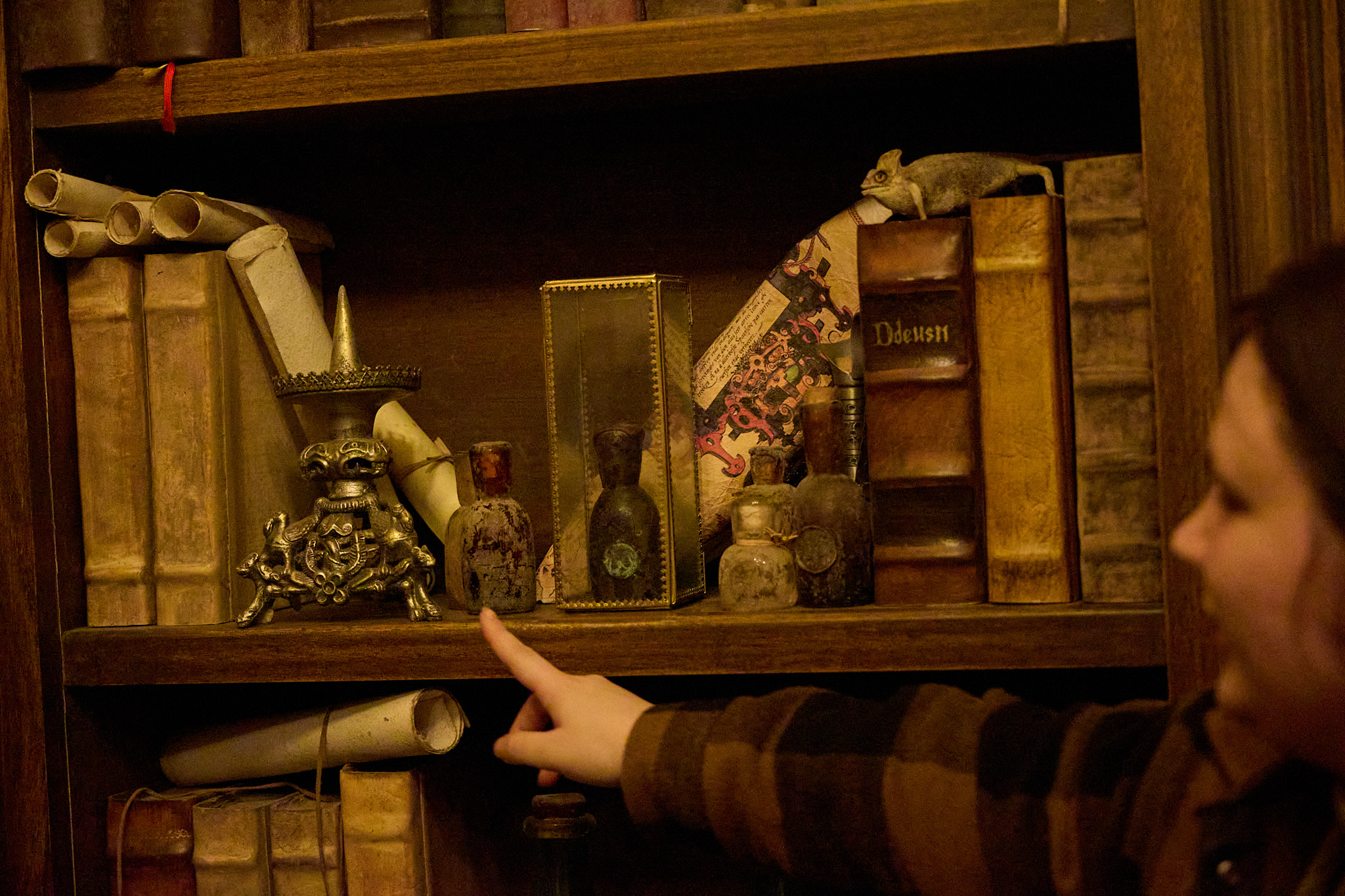
The guide put her hand into the bookcase and took hold of a small carved figure. A moment later, part of the bookcase swung open like a door. Behind it was the way down to the cellar.
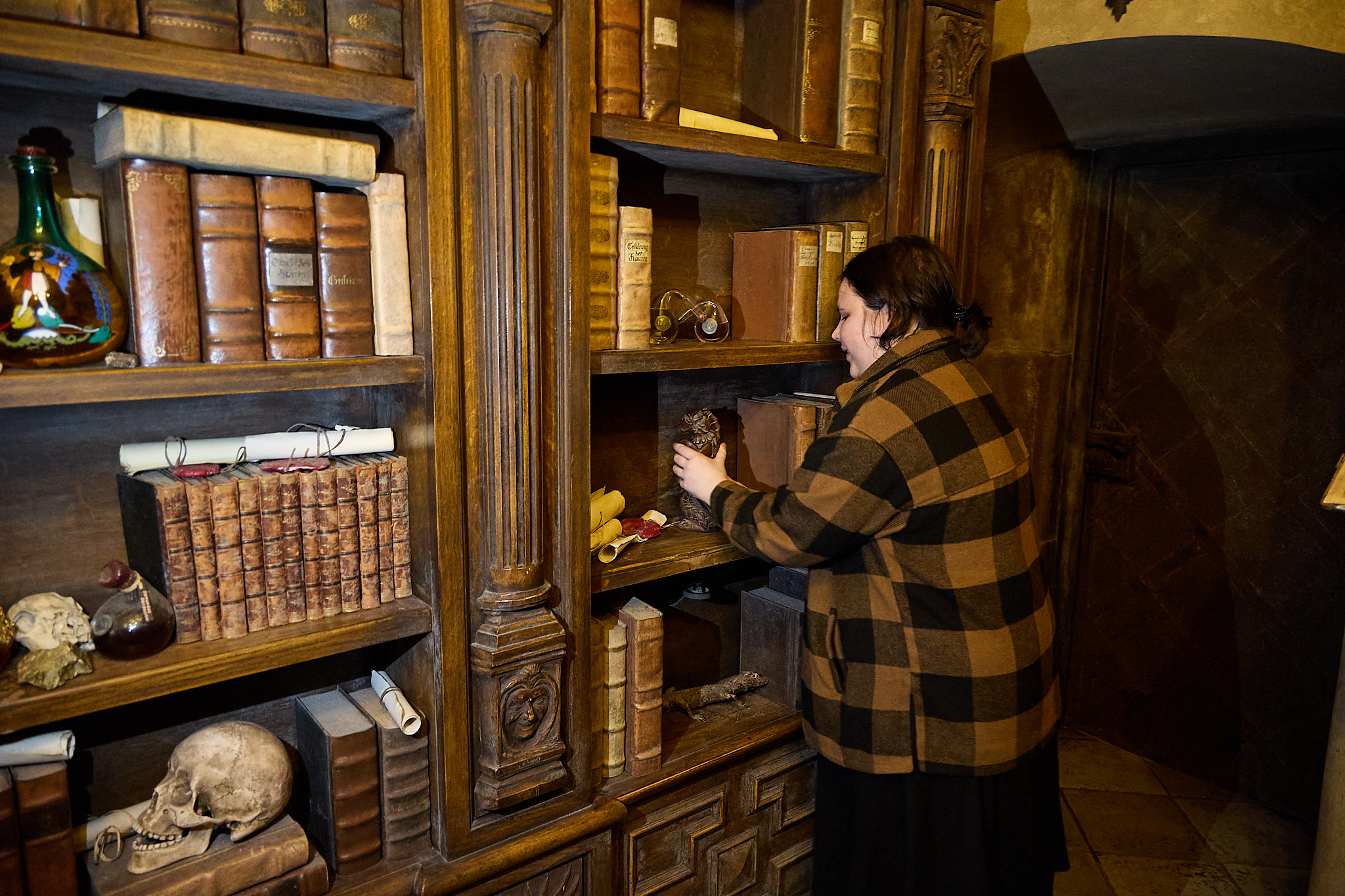
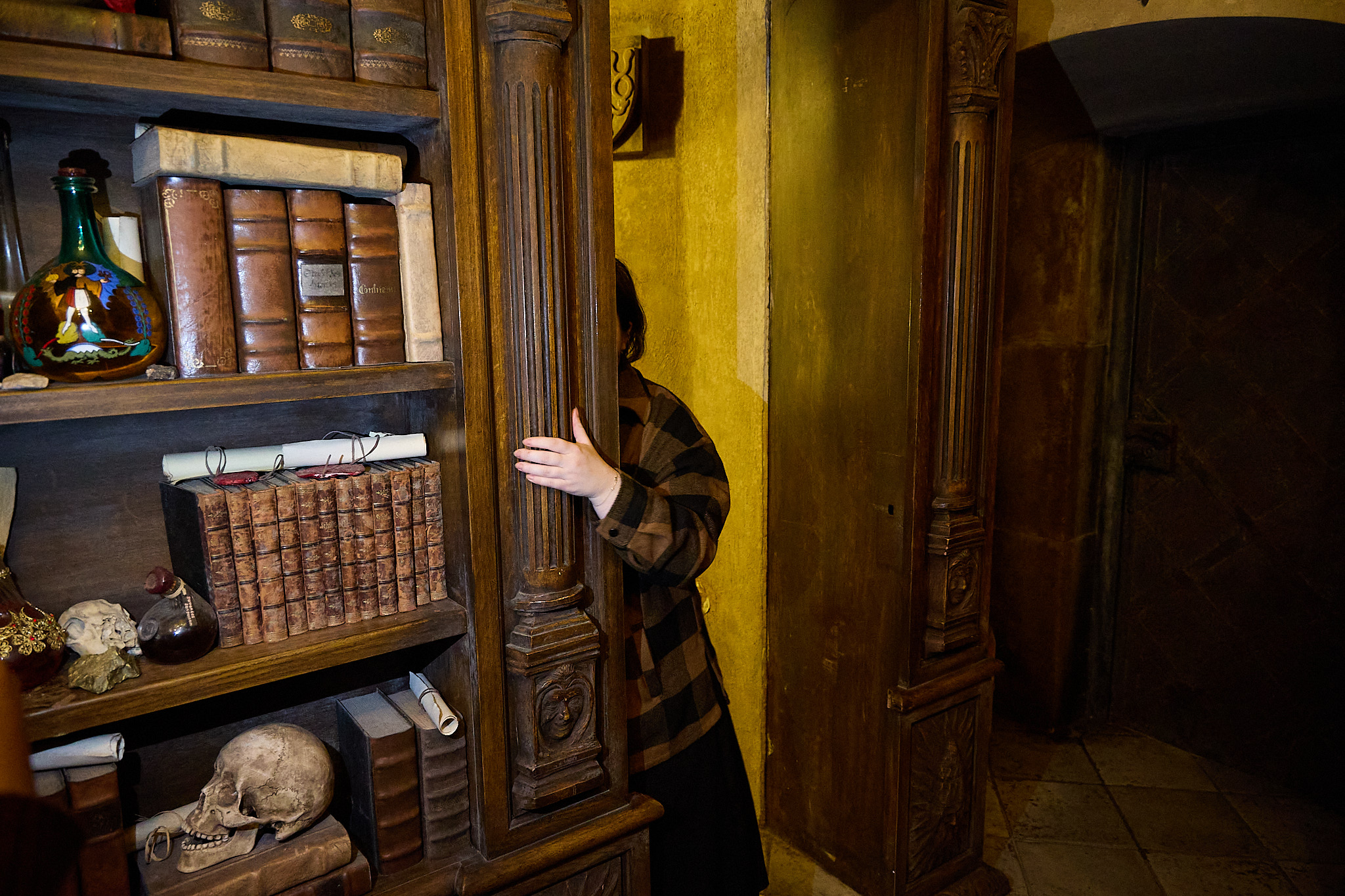
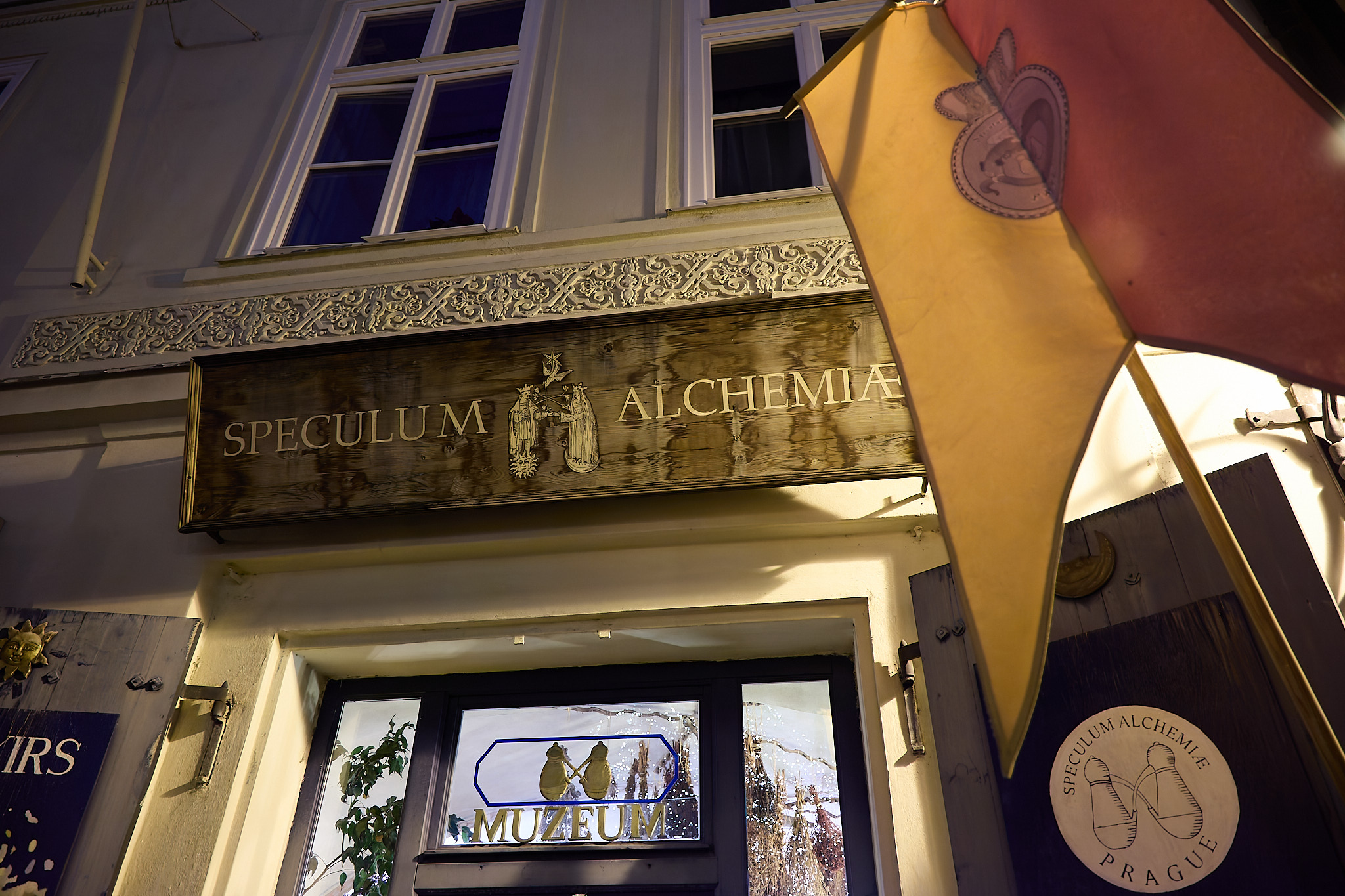
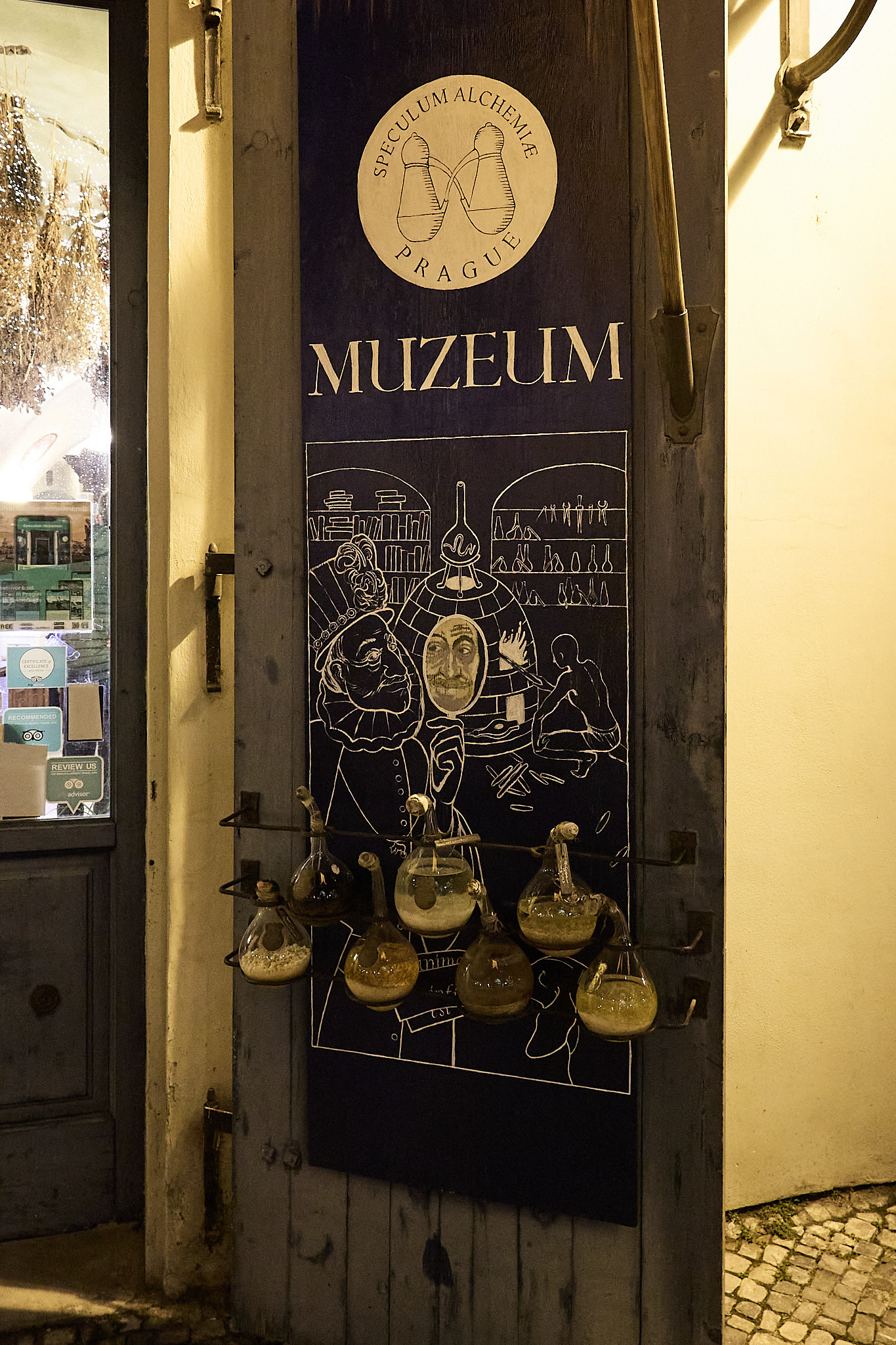
Speculum Alchemiae, Latin for the mirror of alchemy, is a museum in a corner house at Haštalská 1, in Prague’s Old Town. Its laboratory can only be seen on a guided tour, and the tour goes in through the bookcase.
The museum tells the house’s story like this. The first written references to the site date from the year 900, which makes the house “probably the second oldest building in Prague”. In the sixteenth century, the Emperor Rudolf II set up his alchemical laboratory here, and underground tunnels connected the three most important places in the city: Prague Castle, the Old Town Hall and the barracks. The laboratory came to light again after the flood of 2002, when groundwater undermined the little square outside and a passage beneath it caved in. The museum opened ten years later.
Rudolf, at least, is not in doubt. He was the Habsburg who moved his court to Prague and filled it with astronomers, painters and men who promised him gold.
Downstairs
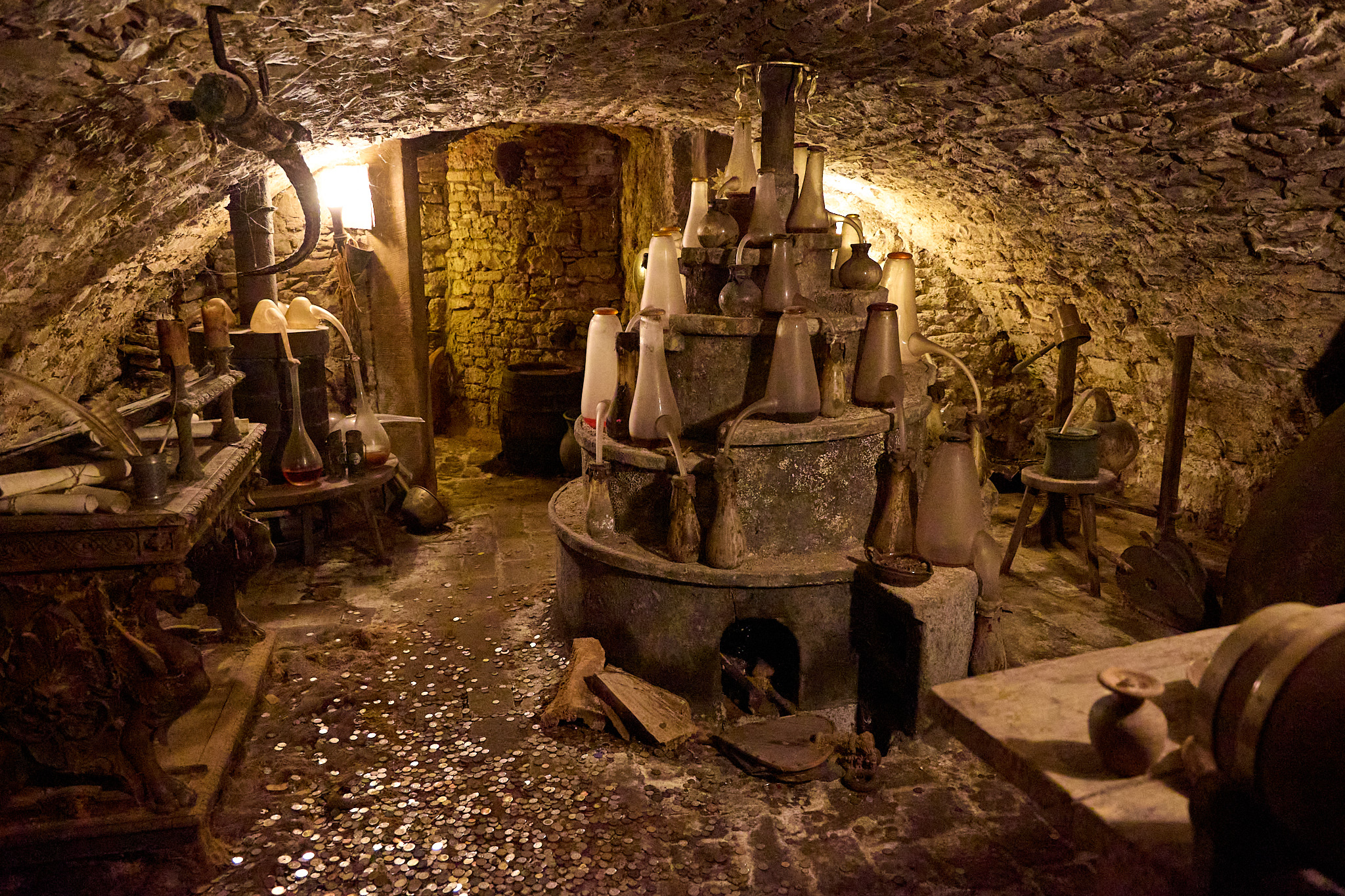
Downstairs is the room in the photograph at the top of this page. A round furnace rises from the floor in tiers, crowded with long-necked glass: flasks and alembics, the vessels in which alchemists distilled one thing in the hope of getting another. The floor around it is strewn with coins, presumably the visitors’ doing rather than the alchemists’.
The furnaces and glassware were reconstructed after surviving books, paintings and engravings of the period, and most of the antiques came from Germany and Italy. The house, though, is old: Gothic at its core, with parts of its Gothic cellars still in place.
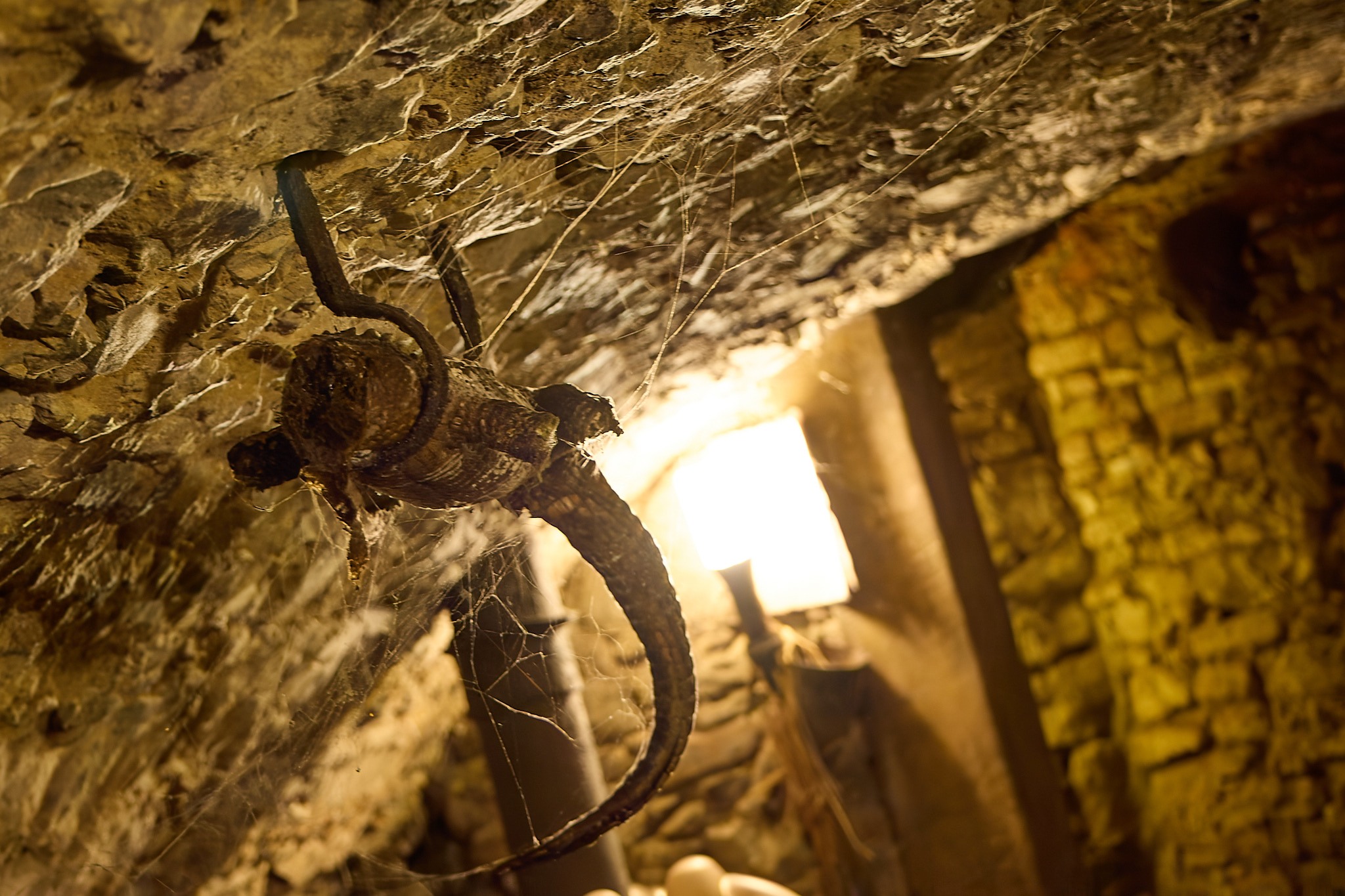
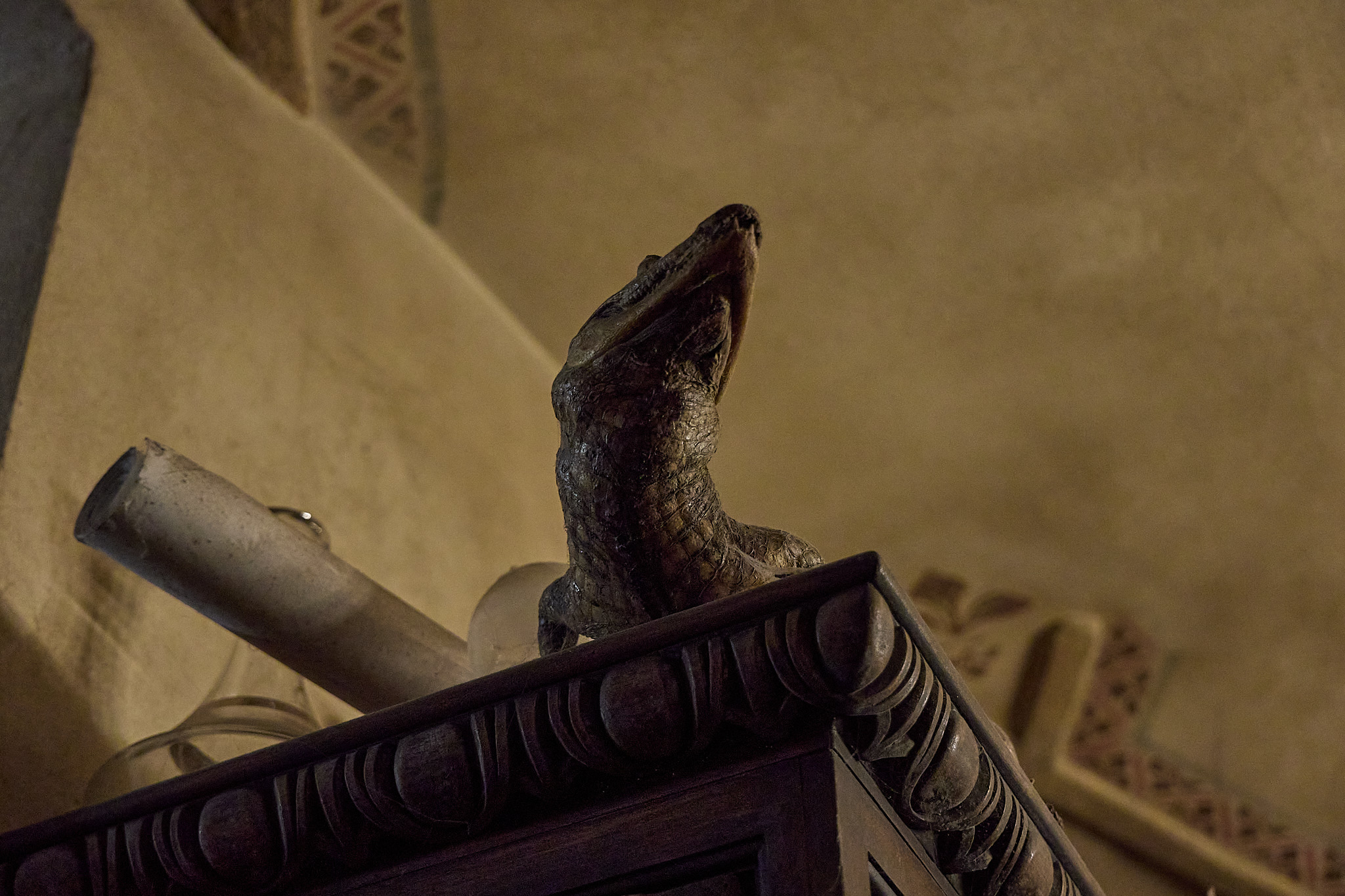
Overhead, on an iron hook, hangs a dried crocodile, or one of its near relations. This part is by the book. A stuffed crocodile or alligator overhead was long the mark of an apothecary’s shop, for reasons nobody seems sure of. In Romeo and Juliet, the apothecary in Mantua who sells Romeo his poison keeps “an alligator stuff’d” in his shop. The museum has a second one upstairs, on top of a cabinet.
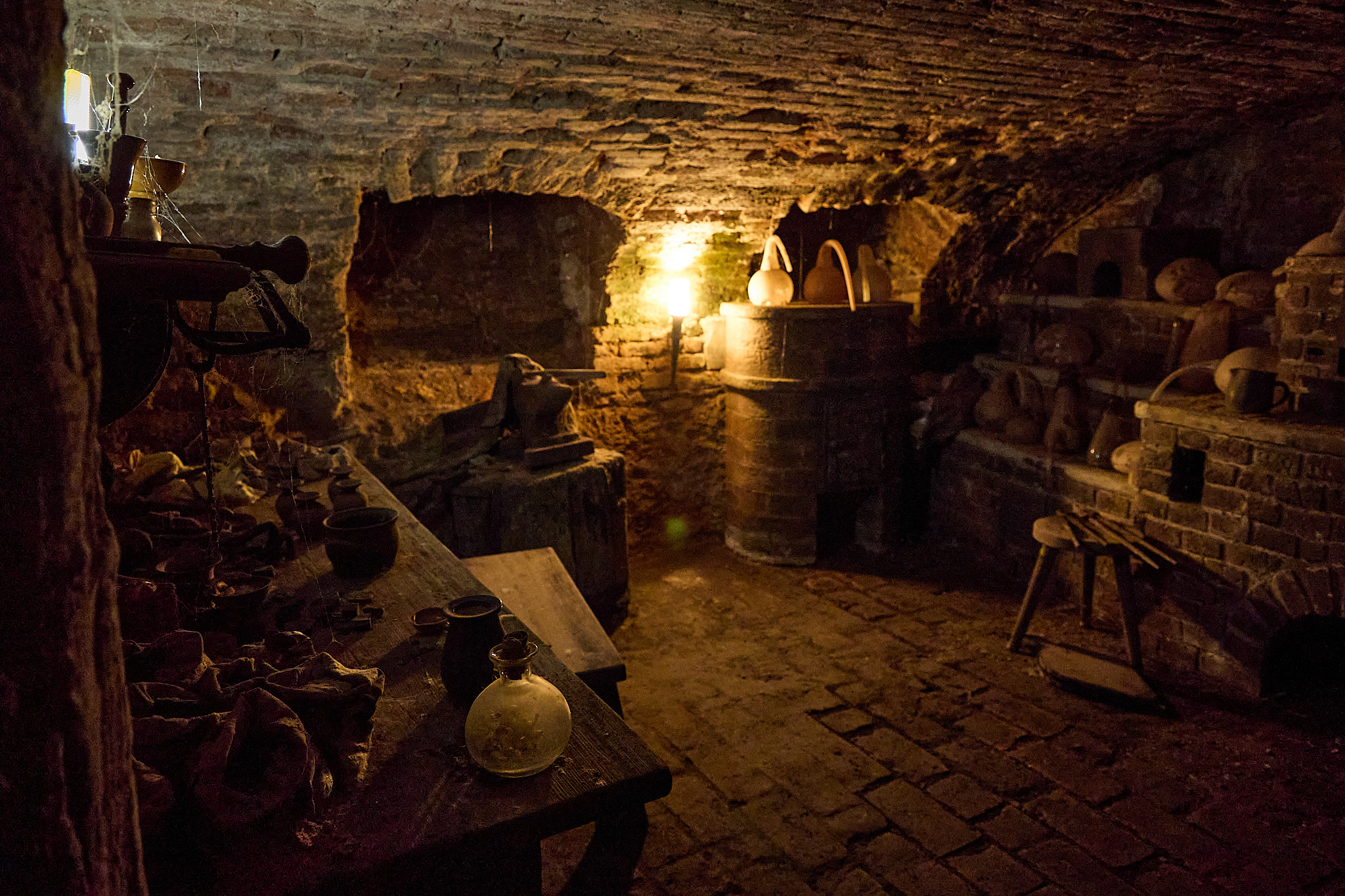
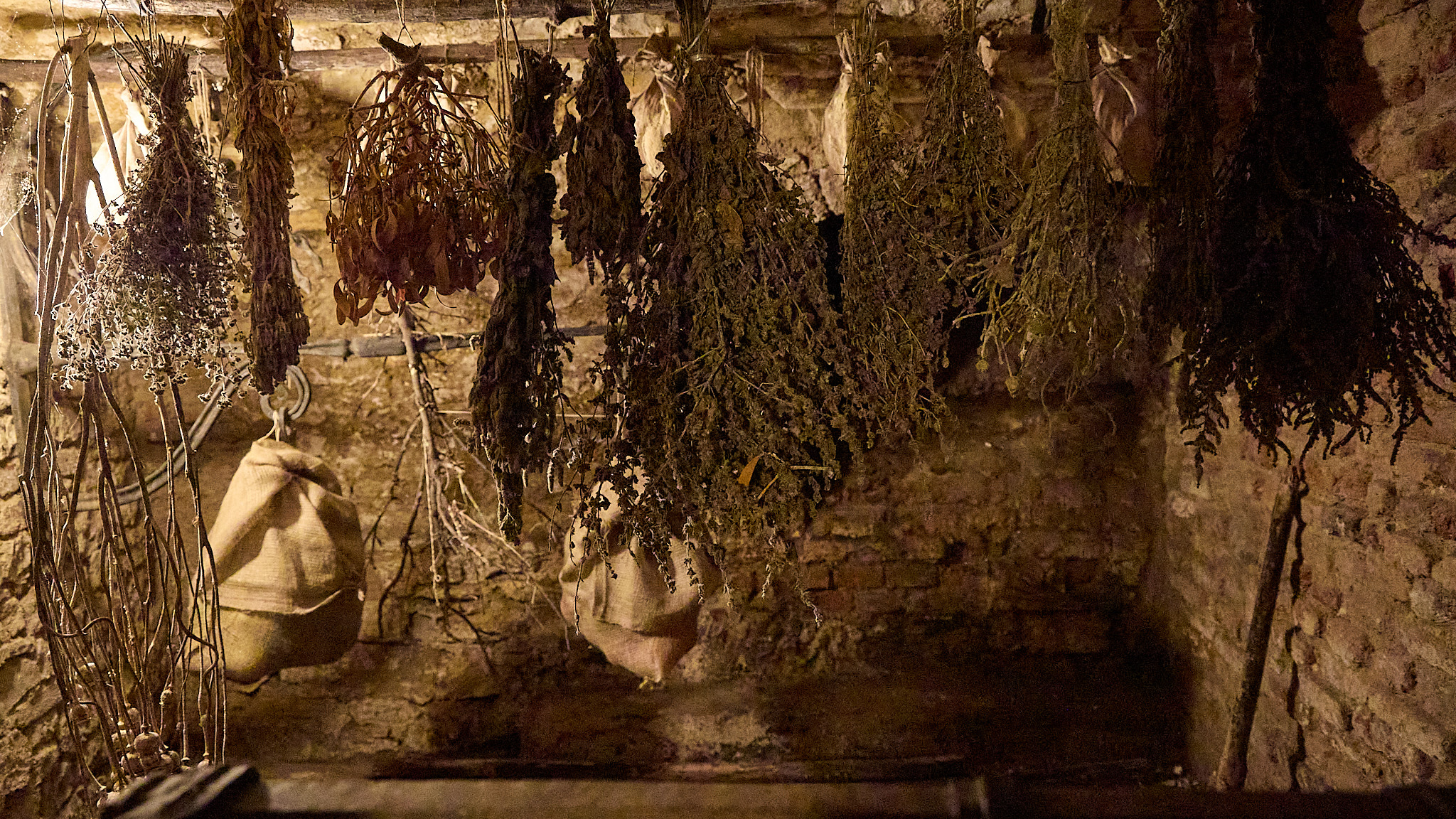
Beyond the first room, a second vault has a brick furnace topped with gourd-shaped vessels, and an anvil set on a block of wood. Elsewhere, dried herbs hang in bunches from a pole.
Anno Domini 1595
On the cellar wall, in a frame of scrolls and lions’ faces, is a plaque in Latin. It is the kind of thing one hopes will turn out to be a formula. It reads, roughly:
Councillor, whoever you are, coming into this chamber on the business of your office: before this door, cast off every private feeling—anger, violence, hatred, friendship, flattery—and take up the part and the cares of the commonwealth. For as you have been fair or unfair to others, so you too must expect, and bear, the judgement of God.
Underneath is the date: Anno Domini 1595.
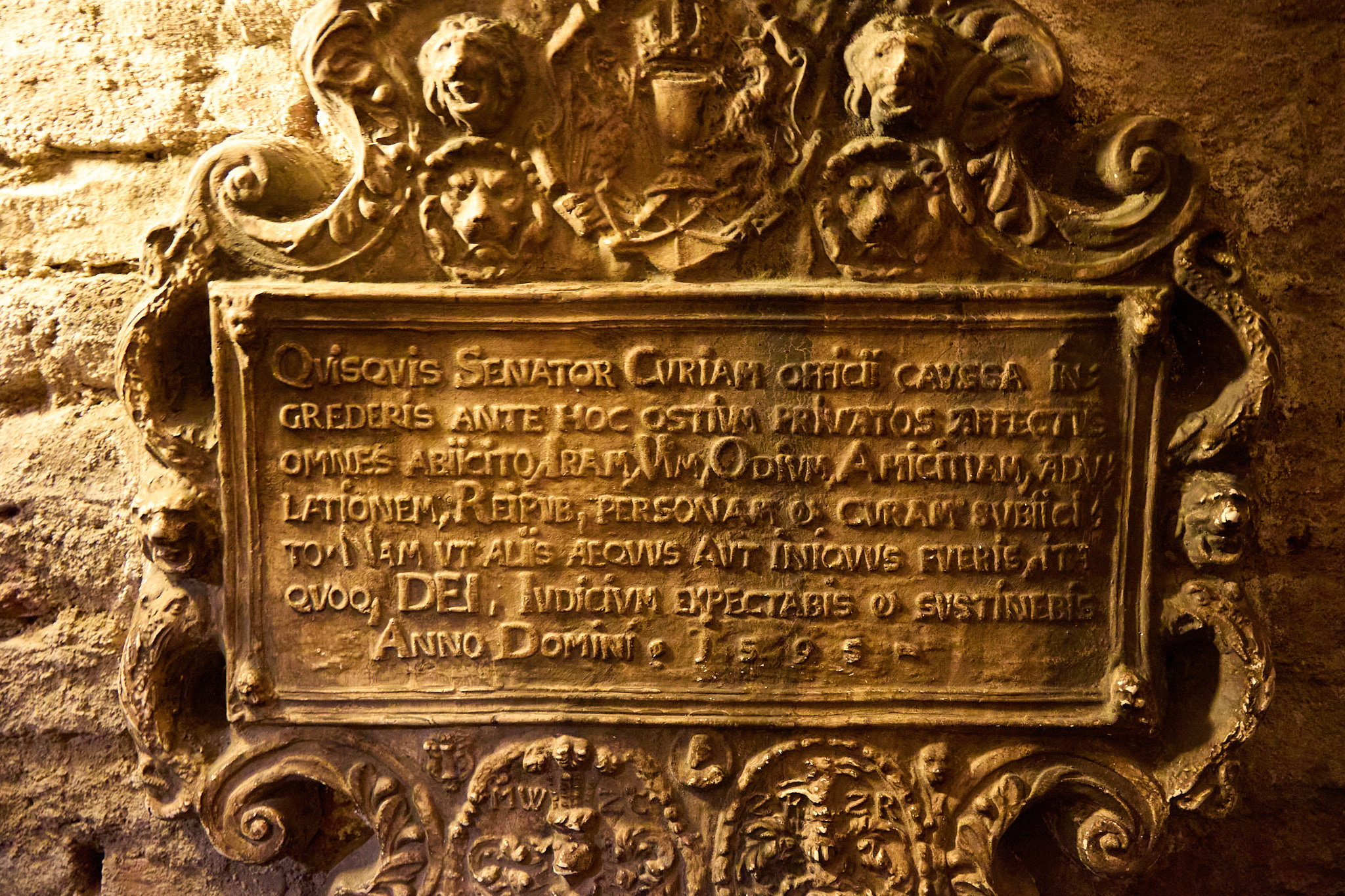
These are words for a town hall. In Regensburg, in Bavaria, a black board carrying the same admonition hung in a small anteroom of the town hall. It had been made some forty years before the date on this one, and the words turn up in other towns’ halls too. How this one came to hang in a cellar in Prague is not explained anywhere I have looked.
Down among the alembics, the writing on the wall is addressed to councillors.
Upstairs
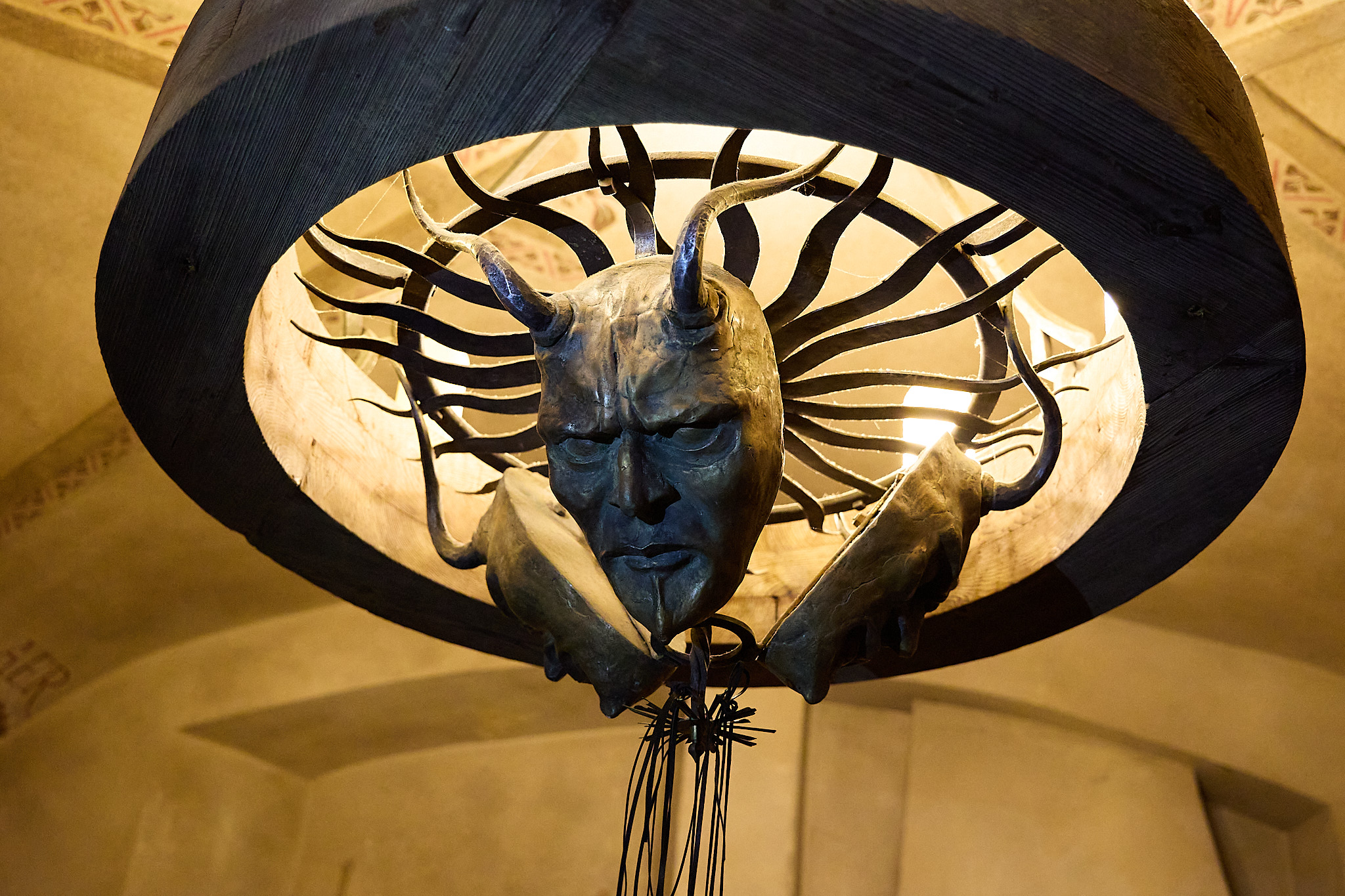
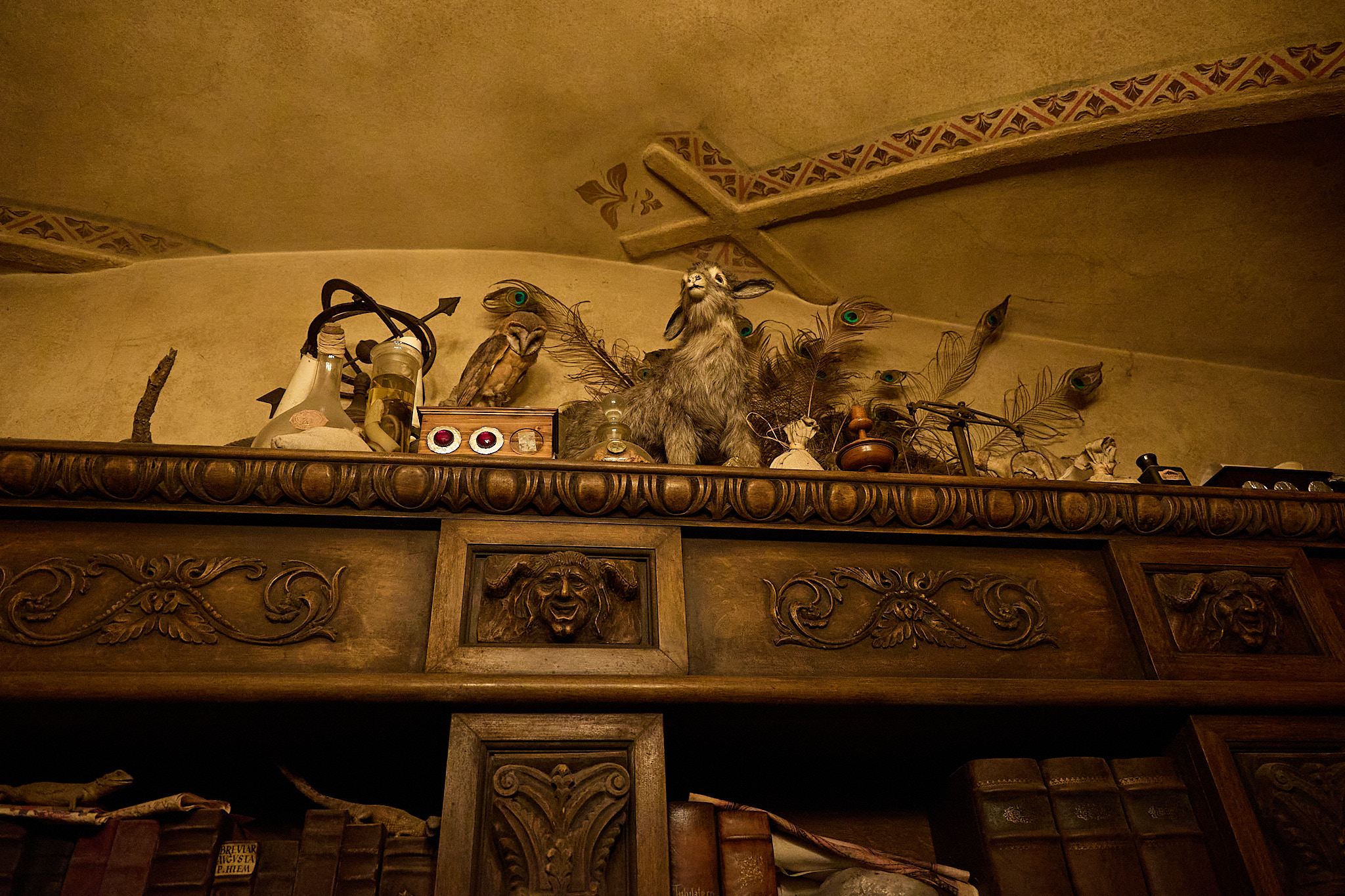
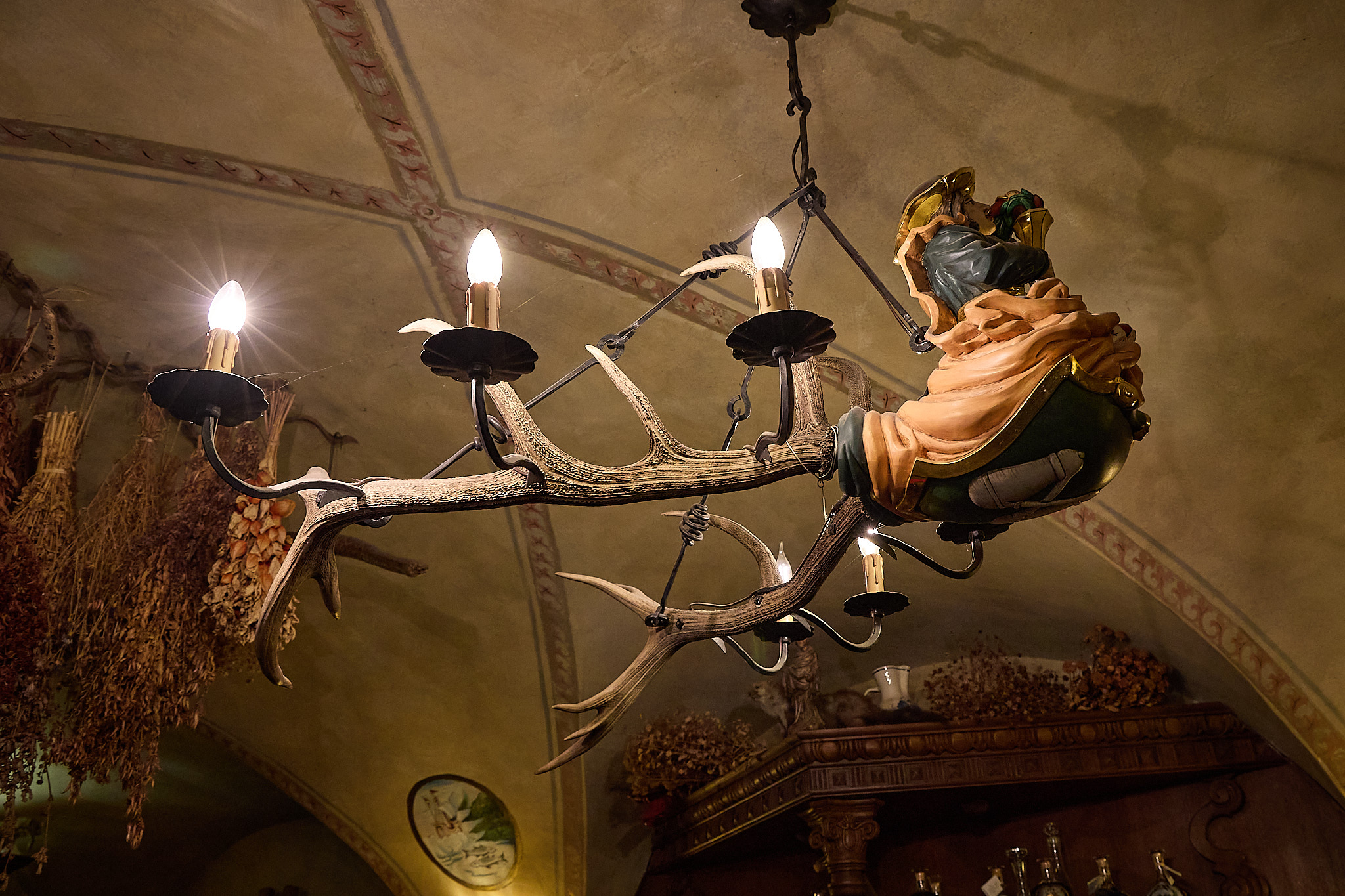
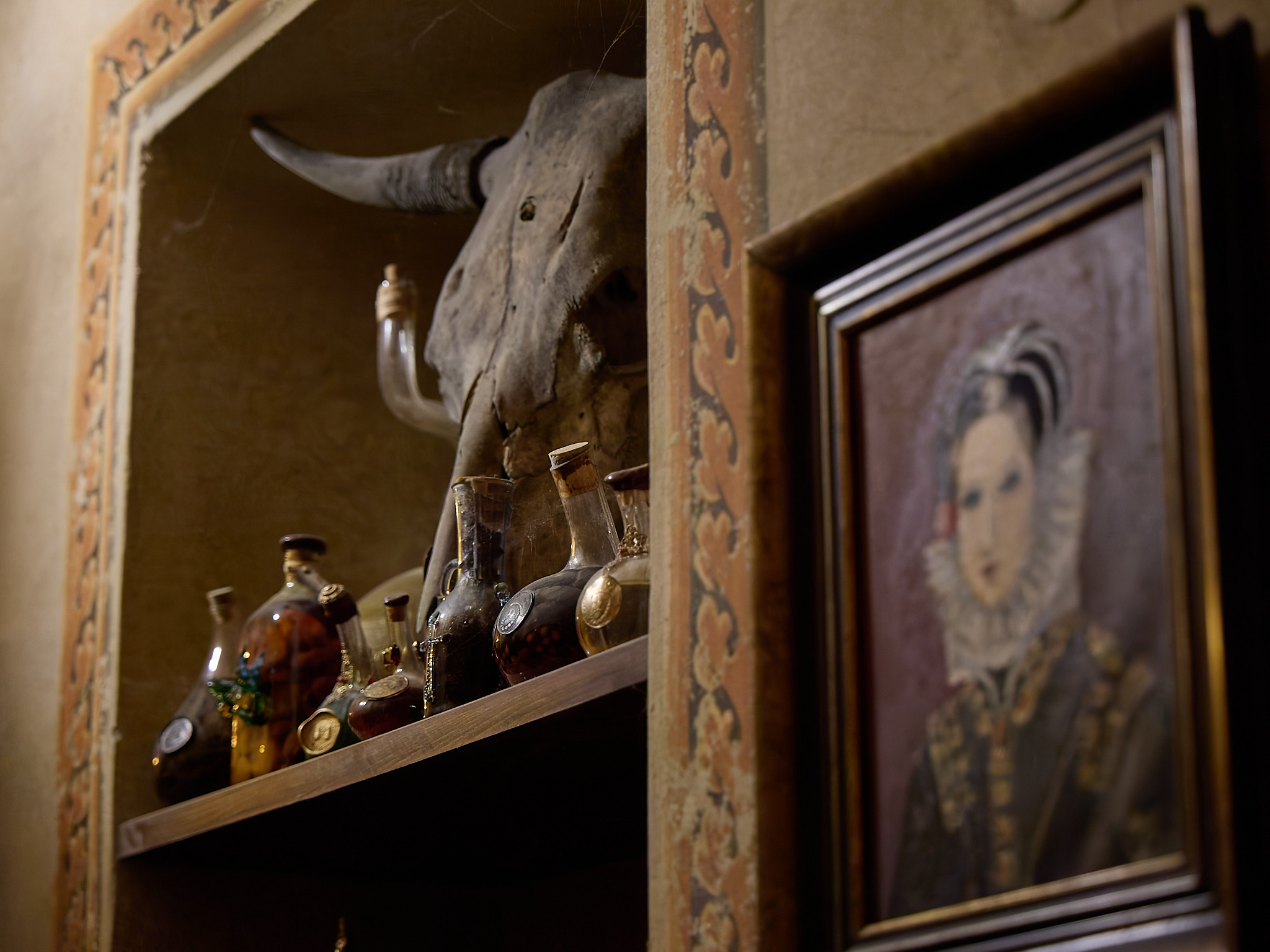
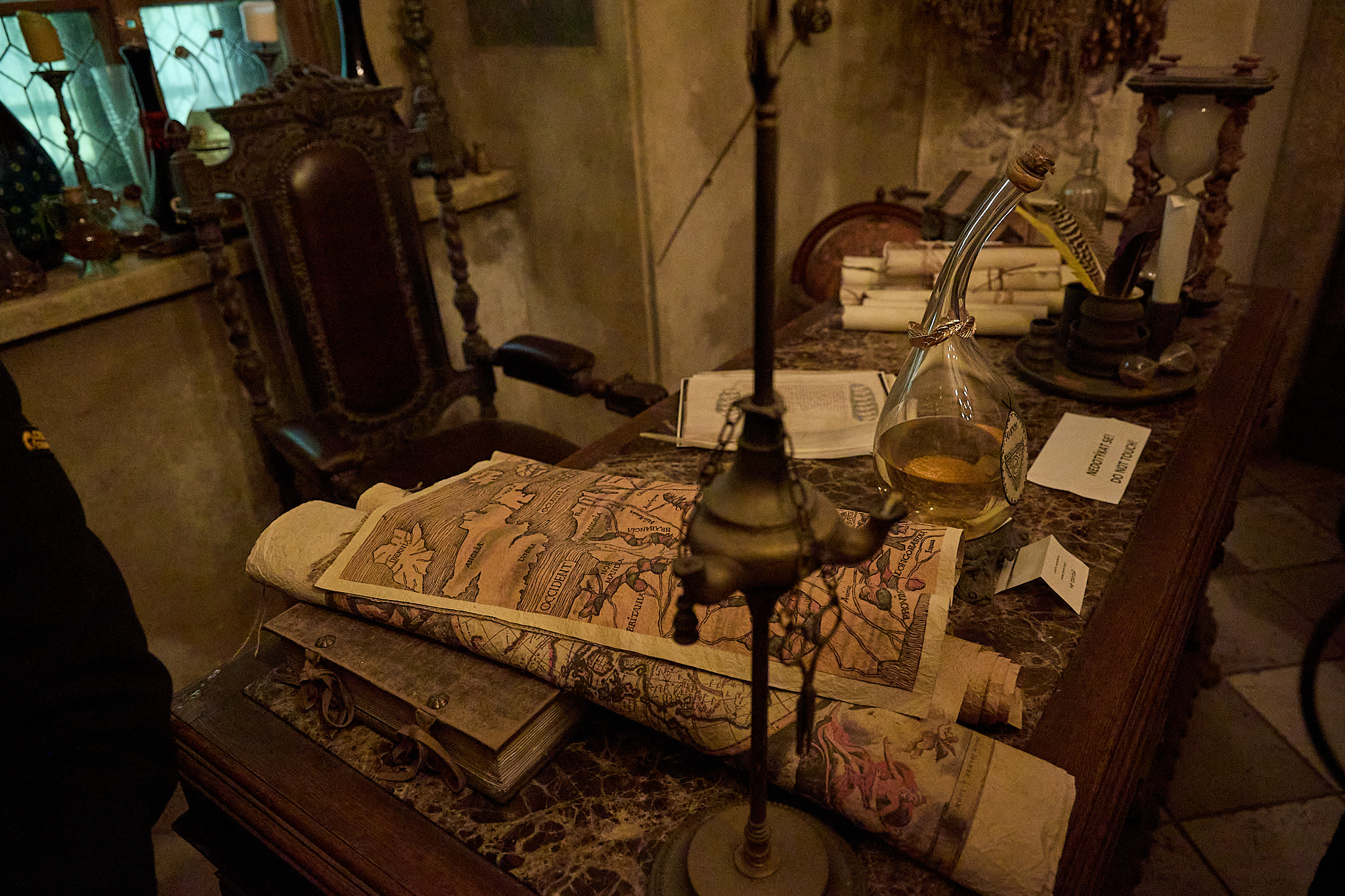
Above ground, the rooms are furnished as thoroughly as the cellar, and it pays to look up.
Swipe to explore
Tap to enlarge
On the record
The house has another history, in the records. Its registered name is U Valentů, probably after one of its owners, and the history that the local district council has put together for it starts not in 900 but in 1407.
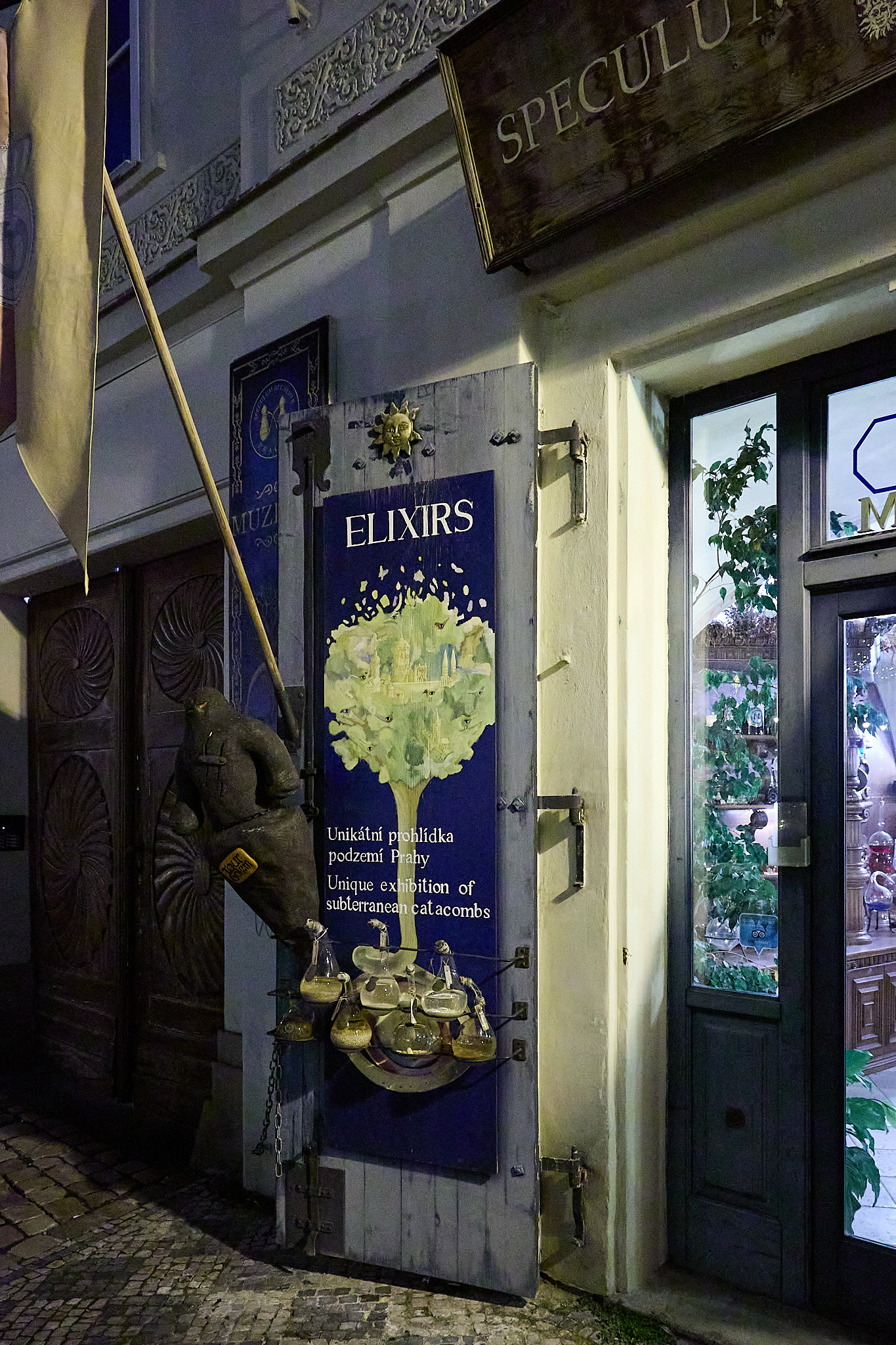
Alchemy does not come up in the council’s history. In the eighteenth century, a survey found a well-built stone house with two cellars, a courtyard, a well, a pump and a skittle alley. In 1816, an inspection found six tenants on the ground floor and, among the premises, a small shop selling spirits, a distillery to make them, and stabling for two horses.
After the Second World War a woman kept a bar in the house, selling wine and spirits. In 1951, under the Communist government, the authorities concluded that her trade was “not desirable on grounds of public interest”. The record adds that she accepted this, and closed.
Other tenants on record were drier: a tailor, a joiner, a couple of state firms’ storerooms and, in one of the flats, the archives of the State Bank. By 2002 part of the house was a photography gallery. When the river rose that August, the gallery reported a good metre and a half of groundwater inside the building for three days, cobbles fallen in at several places in the courtyard and the exhibition hall, and the pavement outside giving way. It had to move out. On the ground giving way, its report and the museum’s story agree. Written within weeks of the water, it does not get as far as alchemy.
Elixirs
The shop at the front of the house sells what the laboratory is supposed to have been for. Its Elixir of Eternal Youth is sold as the recipe of Rudolf’s personal physician, Tadeáš Hájek: seventy-seven herbs and 20 per cent alcohol, a teaspoon every morning. The Elixirs of Love and of Memory are herbal wines, at 14 per cent.
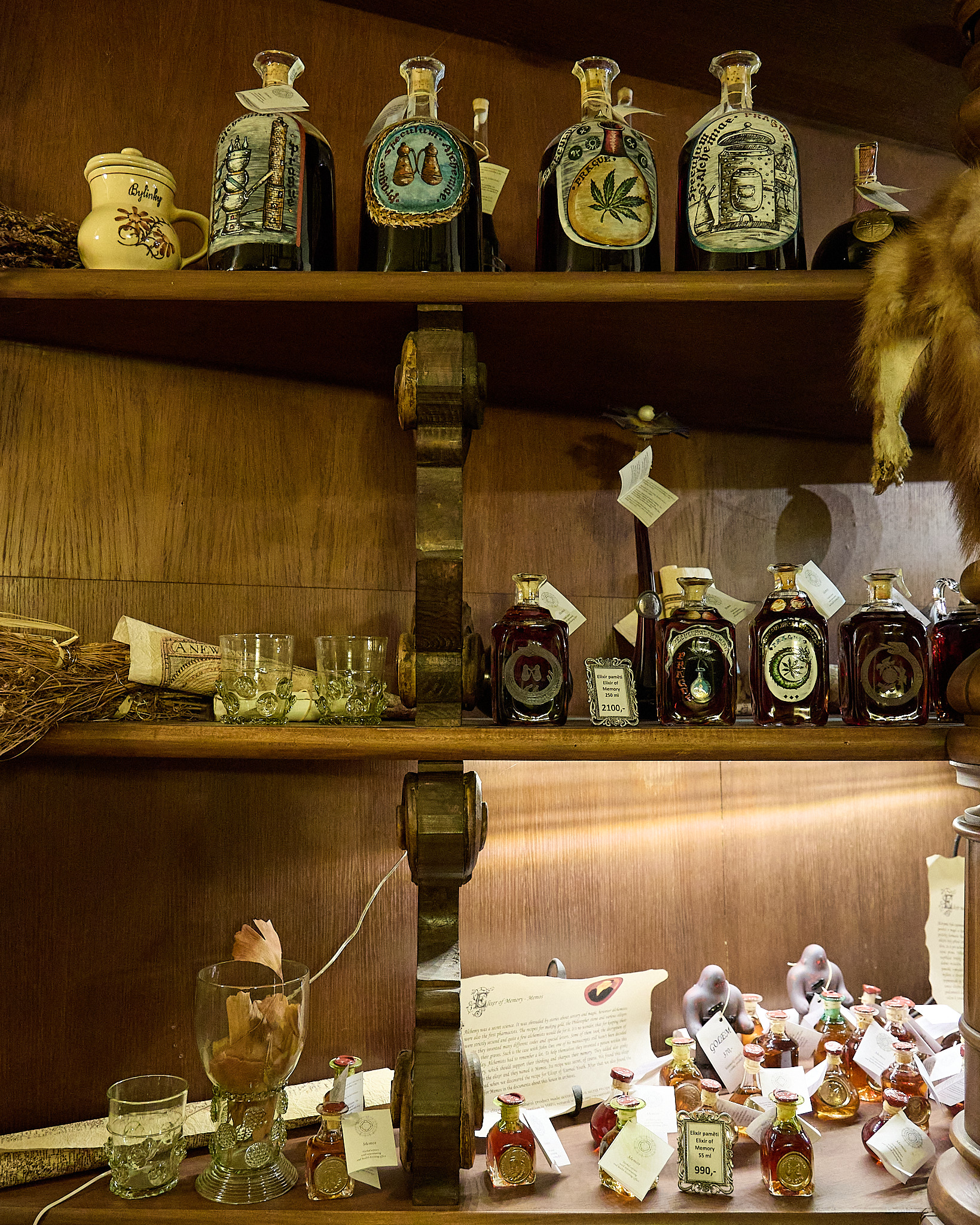
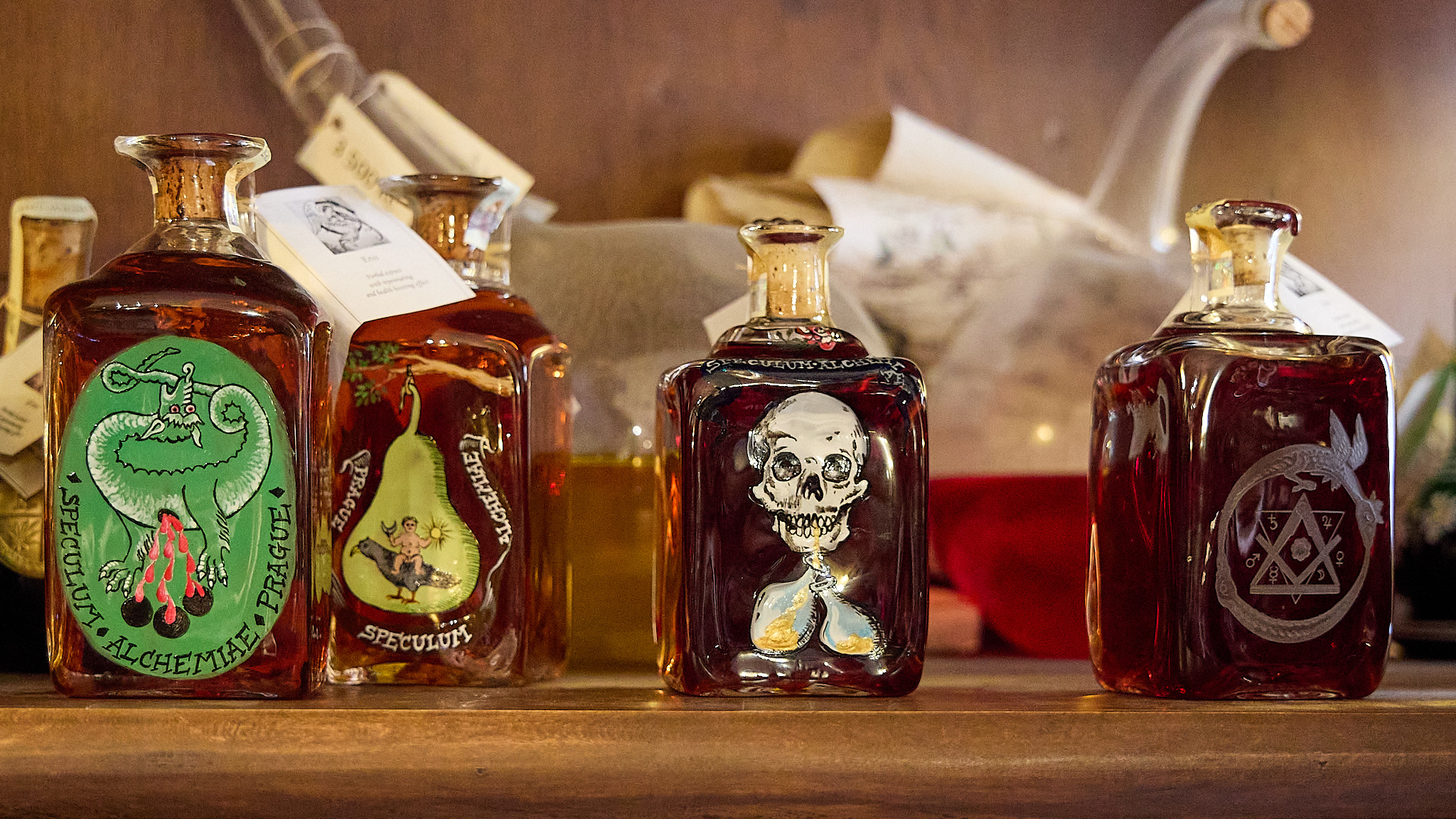
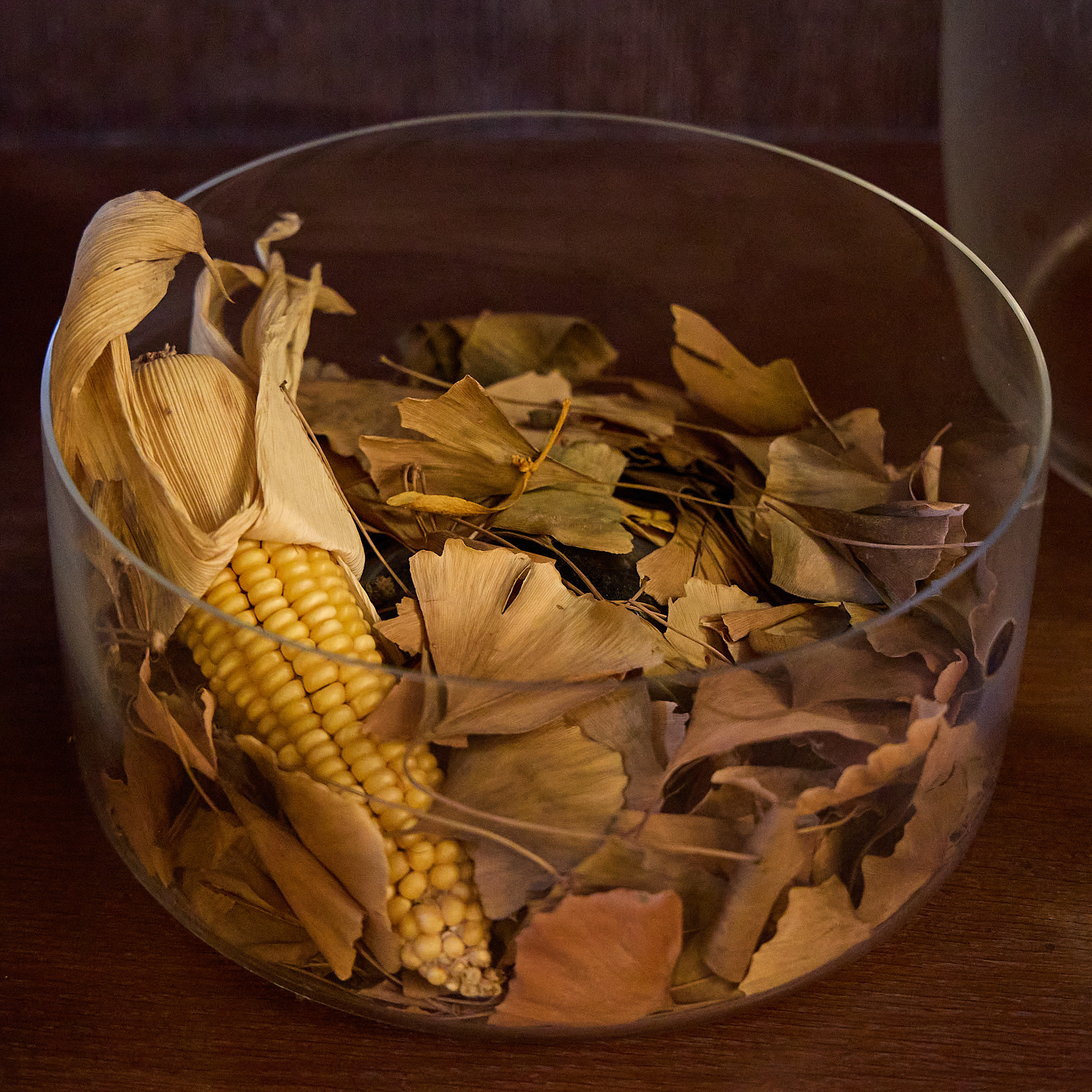
There is gold on the list as well. Aurum Potabile, Latin for drinkable gold, is made from herbs said to draw gold out of the soil they grow in. The alchemy, in other words, has been handed over to the plants. Whatever they manage is kept in 70 per cent alcohol, to be taken three drops at a time on a sugar cube.
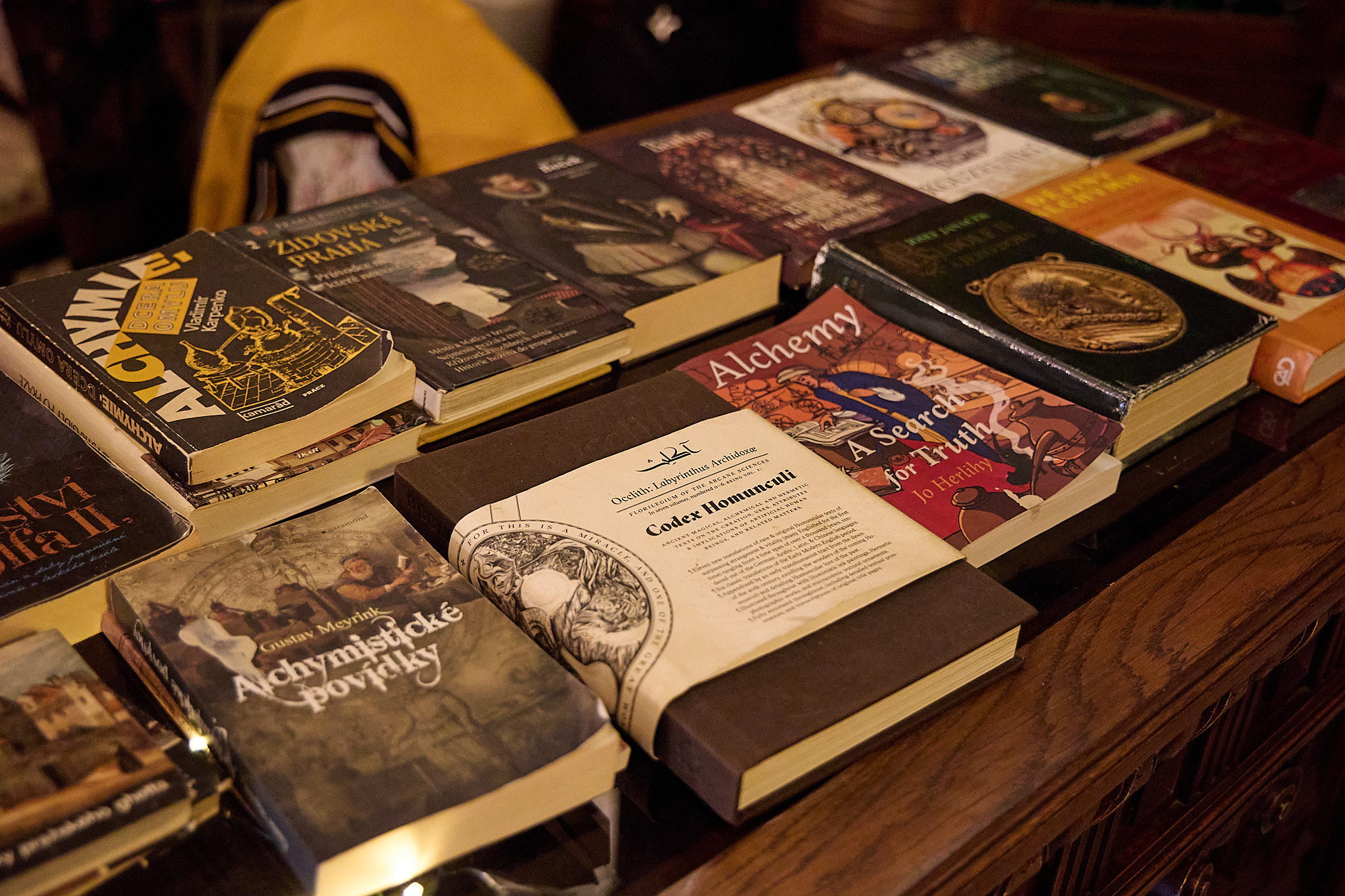
So, more than sixty years after the authorities decided against the bar, the house has spirits on its shelves again. The word comes by way of the alchemists. To them a spirit was a volatile substance, whatever the fire drove out of a thing and the glass caught again; by the late seventeenth century, English had narrowed “spirits” down to strong drink.
Nobody ever made gold at Haštalská 1. The spirit of alchemy, though, is alive and well, at up to 70 per cent.
Visit this place
Location
Speculum Alchemiae
On the corner of Haštalská and Kozí in Prague’s Old Town
Haštalská 1, 110 00 Prague 1 – Staré Město, Czechia
Practical Information
- Opening hours
- Daily, 10:00–18:00. Visits are by guided tour only (about 30 minutes), starting on the hour and half hour.
- Admission
- 200 CZK for adults; 150 CZK for students under 26 and visitors over 65; 70 CZK for children aged 7–14; 500 CZK for a family (two adults and two children).
Information last checked: November 20, 2026 (Opening hours, tour times and admission checked against Prague City Tourism (prague.eu). The museum’s own website does not list them.)
Conversation
Comments
Review pending commentsComments are reviewed before appearing. The internet already contains enough unattended surprises.
Loading comments…
Leave a comment