An Odd Day · Novi Sad, Serbia
An Odd Day in Novi Sad: A Walk through Serbia’s “New Garden”
A clock with its hands swapped, skulls beside a bus stop, and a schnitzel longer than its plate.
Published Updated
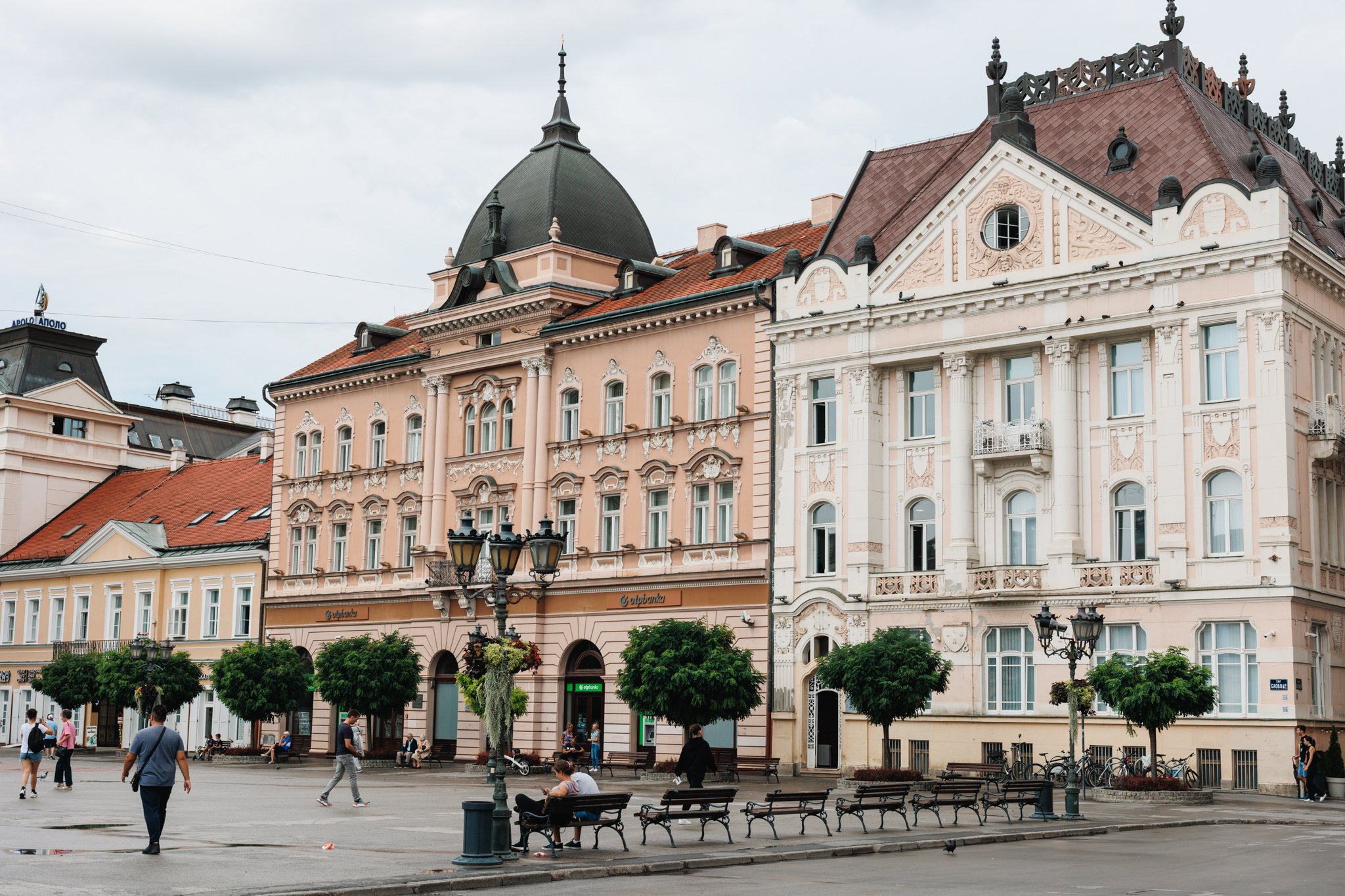
Novi Sad means “New Garden.” The city received its name when it became a free royal city in 1748. Almost three centuries later, “new” is being interpreted fairly generously.
On the ground, this is a city of broad river views, ornate façades and café tables spreading into pedestrian streets. A Habsburg fortress rises across the Danube; in the centre, Catholic, Orthodox and Jewish buildings stand within a short walk of one another. Lunch is Serbian, generous, and worth leaving time for.
Start at Petrovaradin Fortress, cross the Danube after lunch, and spend the afternoon on the riverbank and in the old town.
The day at a glance
Allow a full day, including lunch and a café stop. Treat the fortress and the old town as two parts of the day, joined by a river crossing. Local buses can shorten the transfers, but the riverside memorial adds a separate walk. The fortress approach includes a climb and stairs. Arrange synagogue access in advance if you want to see inside.
Start above the Danube
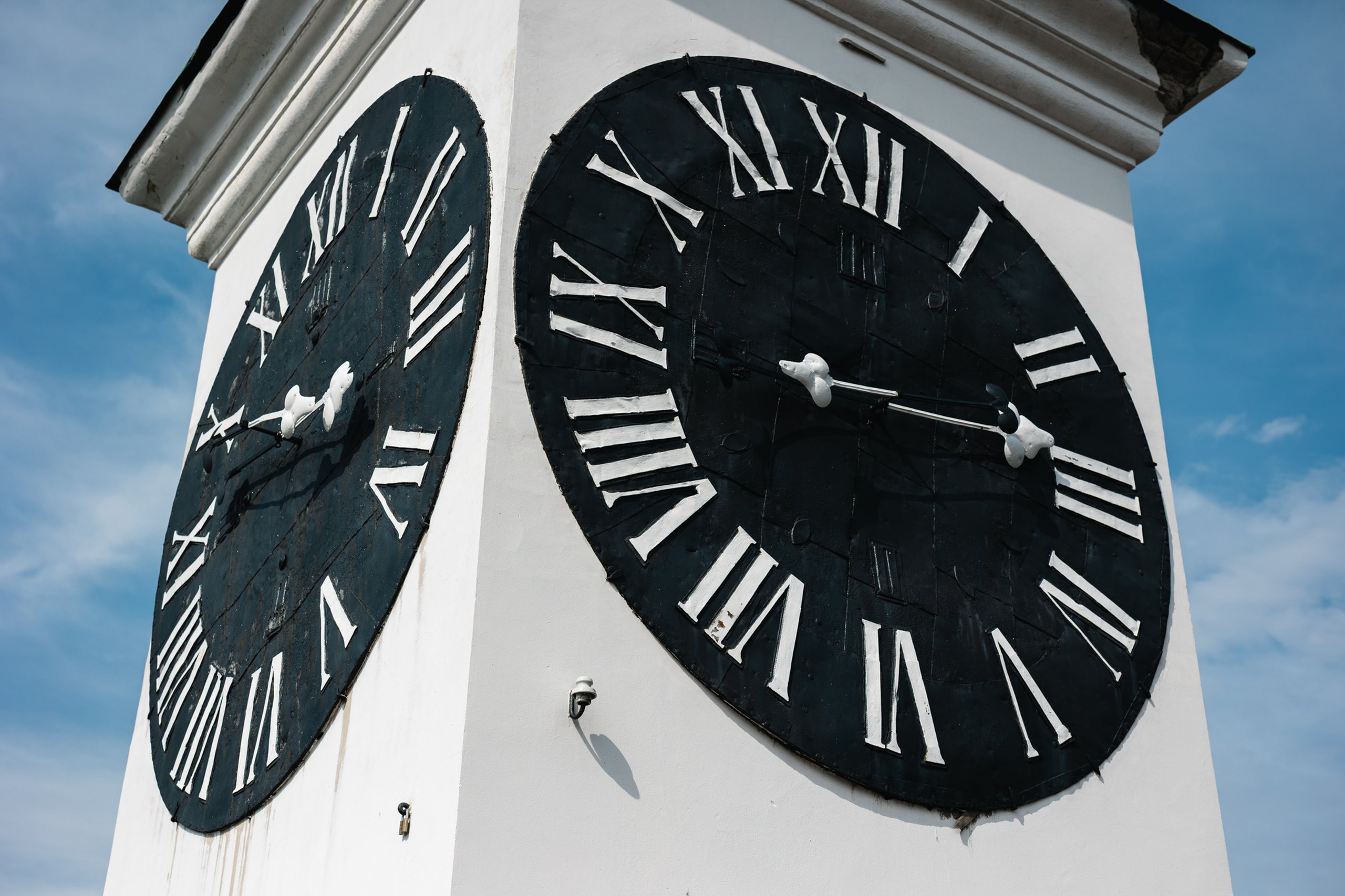
At Petrovaradin Fortress, the clock’s long hand tells the hour and its short hand tells the minutes. Before checking whether you are running late, check which hand you are looking at.
The arrangement helped boatmen read the hour from the Danube below. Its nickname, the Drunken Clock, is often attributed to a separate problem: temperature affects the mechanism, making it run fast or slow.
Use your phone for the return train.
The Habsburgs built the fortress between 1692 and 1780 to defend their southern frontier against the Ottoman Empire. There is enough brickwork here to make the military intention quite clear. Follow the ramparts away from the clock and the walls keep descending in layers towards the river.
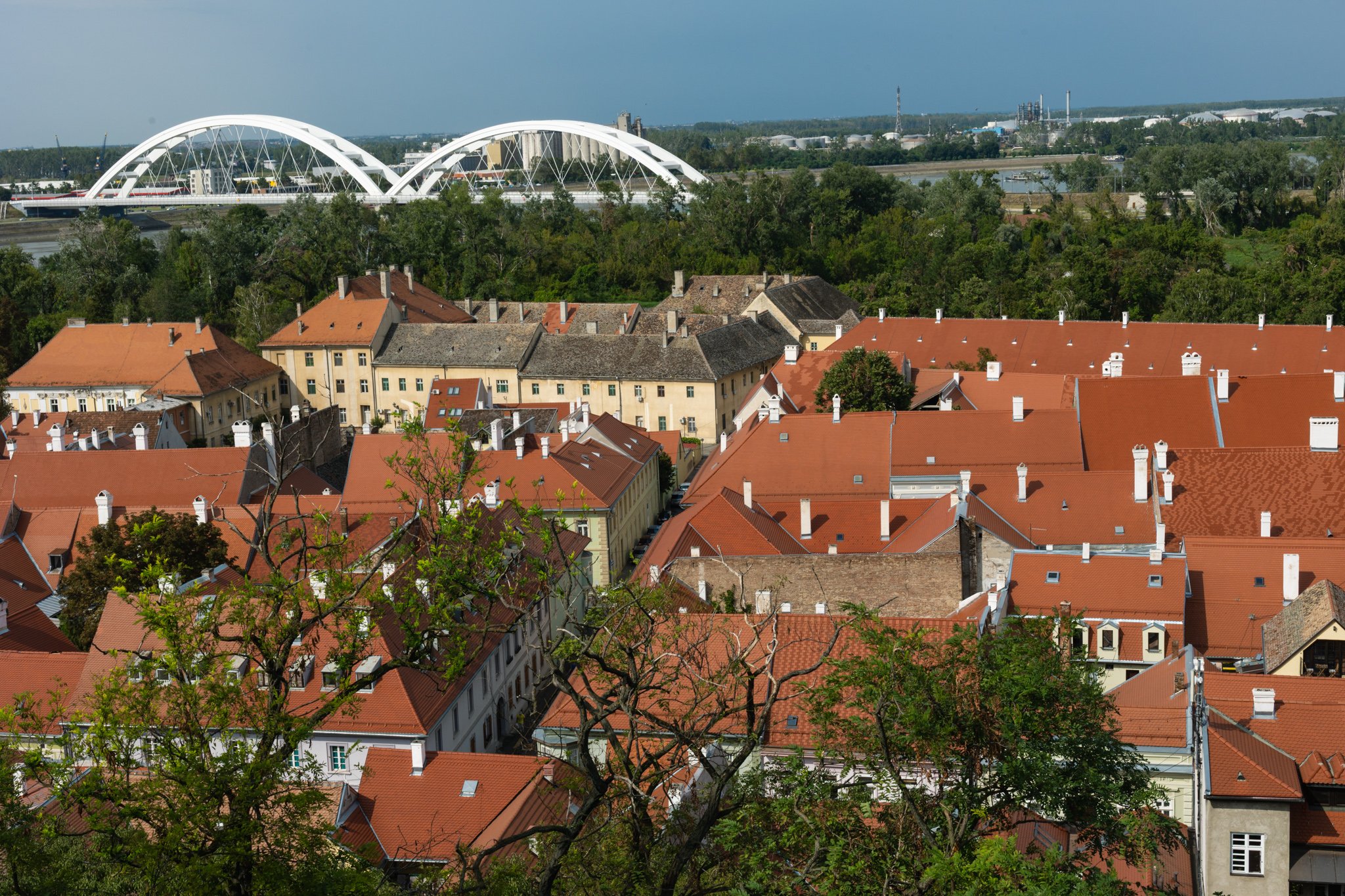
Below, red roofs pack together in Petrovaradin’s Lower Town. Across the water lies the flatter city you will spend the afternoon walking through.
Leave time for the paths behind the viewpoint, too. Artists have worked in former military spaces here for decades, and sculptures occupy the grass among the trees.
Lunch below the fortress
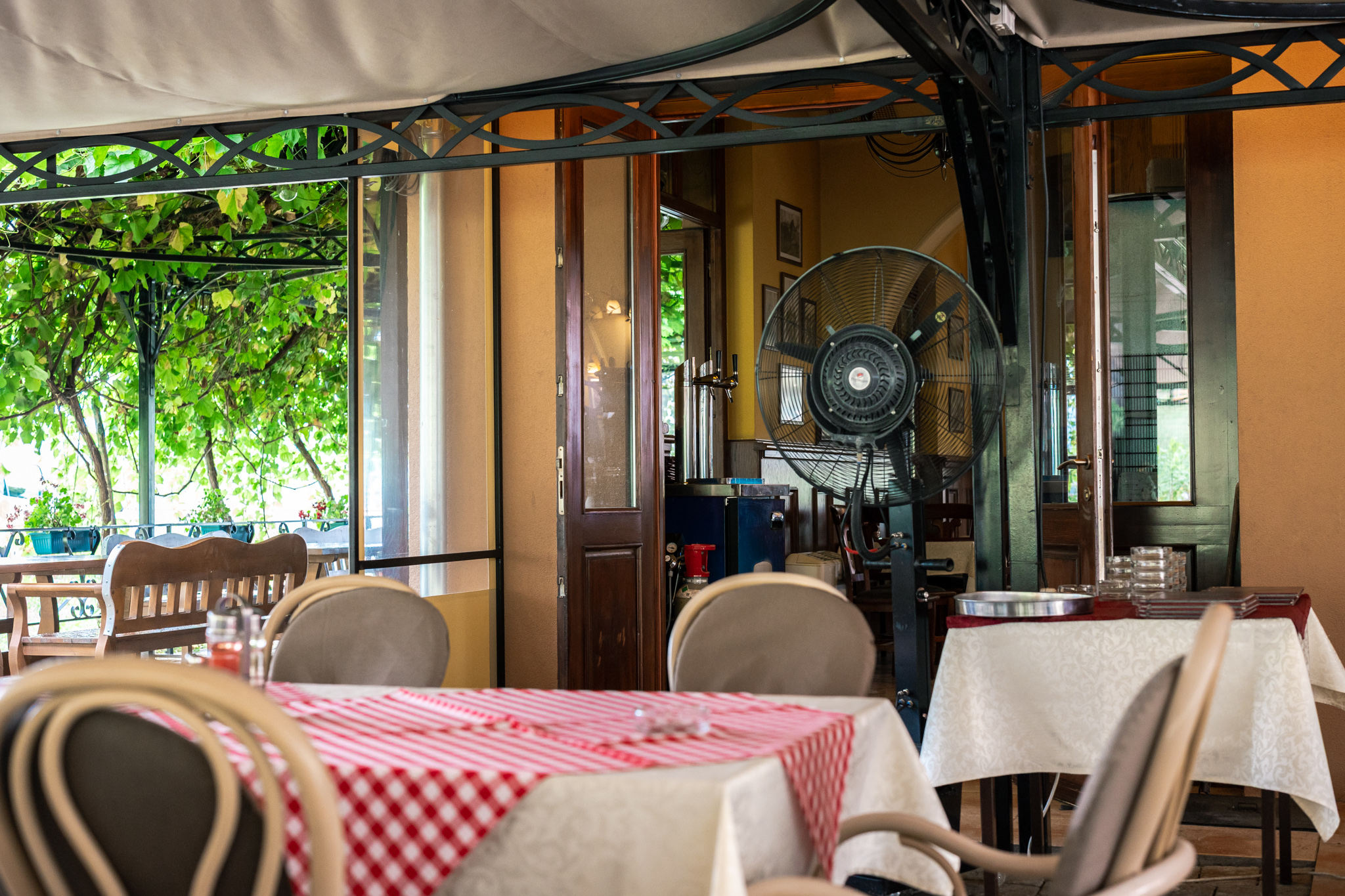
A friend brought me to Balkan Ekspres on my first visit to Serbia. It was my introduction to Serbian cooking: a leafy terrace, red-and-white checked tablecloths, and a breaded roll of pork that occupied a considerable length of plate.
Karađorđeva šnicla is built around kajmak, a rich dairy spread with something of clotted cream about it. In the version I ate, bacon joined the kajmak inside the pork before the whole thing was breaded and fried. Cutting through the crisp coating revealed how much had been fitted inside.
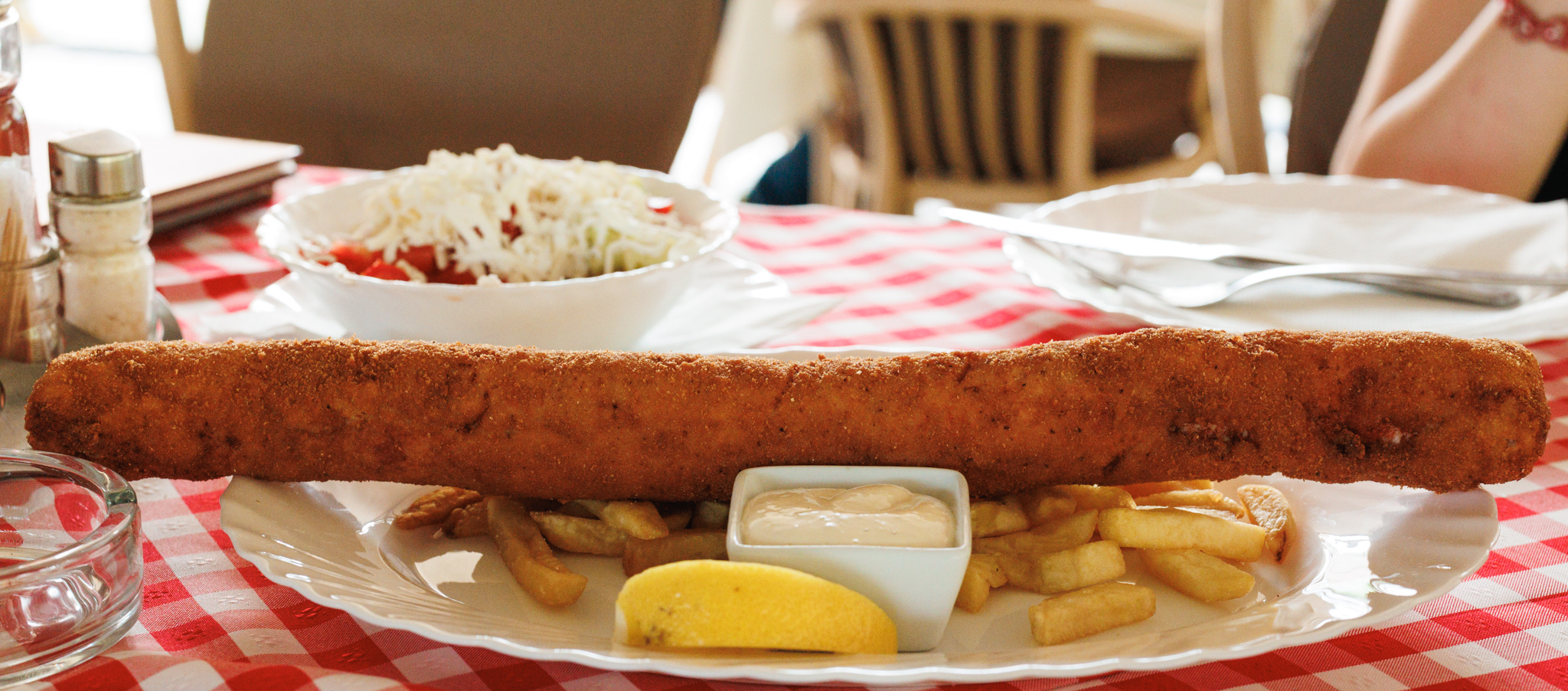
Alongside it, Shopska salad supplied chopped vegetables under a generous covering of grated white cheese. The tomatoes were particularly good. I had arrived in Serbia disliking raw tomatoes and was beginning to order them voluntarily.
Jelen, one of Serbia’s familiar beers, goes well with lunch.
A pause on the riverbank
Four slender bronze figures stand beside the Danube: two adults, a child and a baby. This is The Family, Jovan Soldatović’s sculpture at the Novi Sad Raid Memorial.
In January 1942, Hungarian occupying forces murdered more than a thousand people in the city, predominantly Jews and Serbs. Victims’ bodies were thrown into the Danube. The memorial stands beside that river; nearby plaques record names.
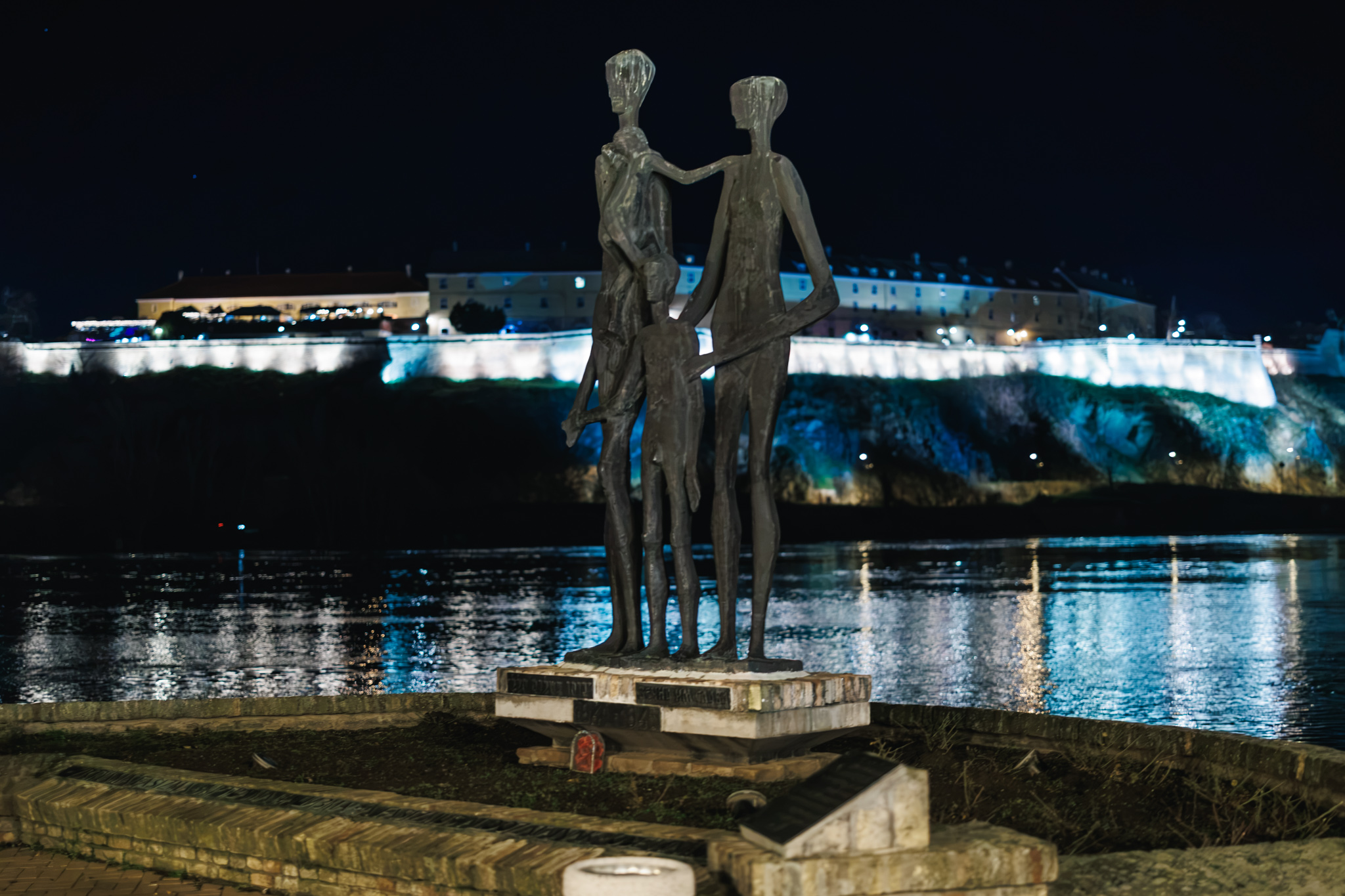
The fortress you started from now stands across the water.
Skulls beside the bus stop
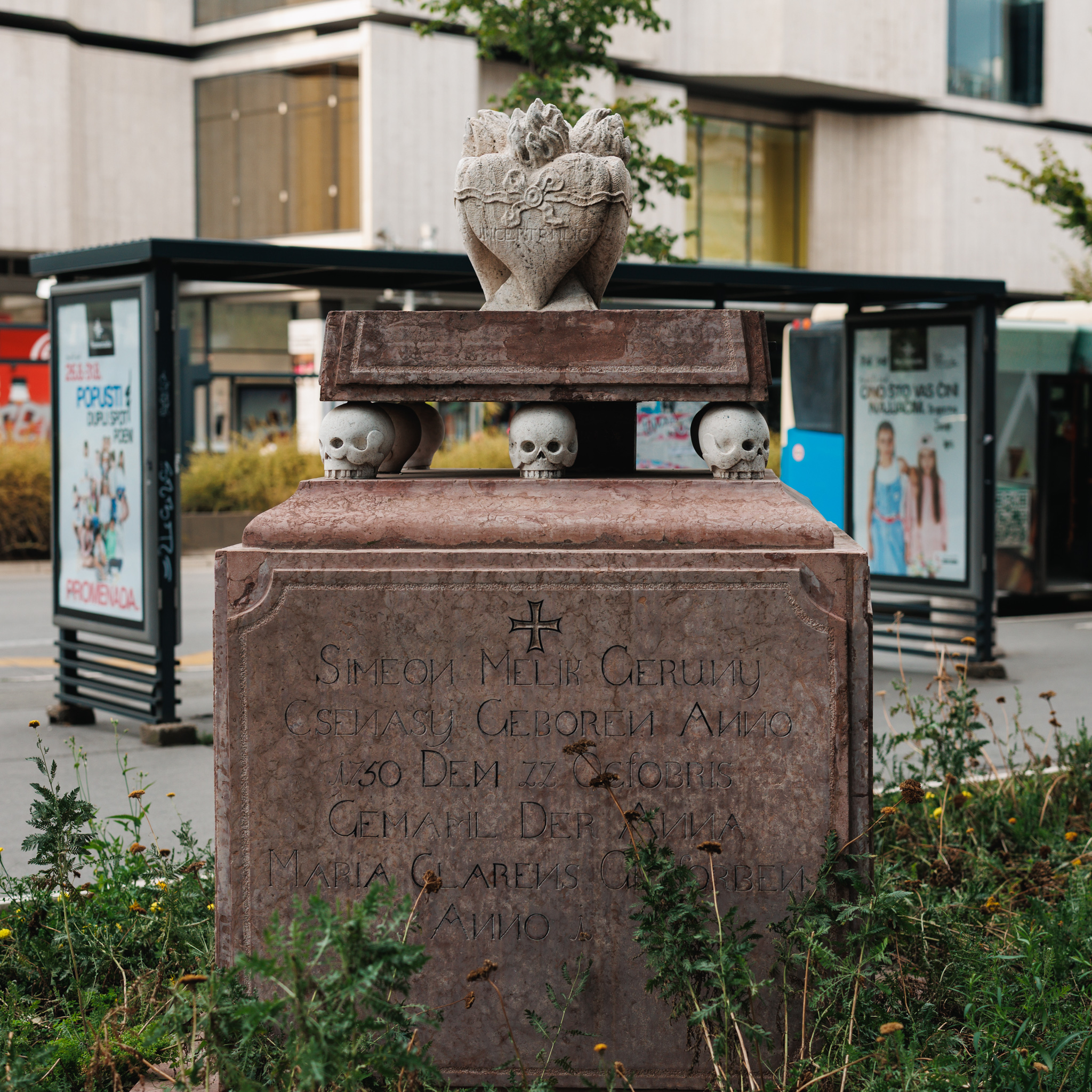
The tomb is pink marble, with carved white skulls beneath its slab and intertwined hearts above. Behind it, the street gets on with buses and currency exchange.
The Tomanović–Čenazi family monument dates from 1790. It belonged to the churchyard of Novi Sad’s Armenian Catholic church, demolished in 1963 to make way for the boulevard. The monument survived, was later restored, and remains a place of burial.
A nearby Armenian cross-stone, or khachkar, carries a more recent story. It commemorates seven Yugoslav aircrew killed while bringing earthquake relief to Armenia in 1988.
Allow a few minutes to look at both stones, keeping the bus stop clear.
Behind the synagogue doors
Novi Sad Synagogue opens into a tall hall of white arches, dark wooden benches and blue stained glass. Look up from the seating and the galleries lead your eye towards another circle of coloured glass overhead.
Completed in 1909 to a design by Lipót Baumhorn, it formed part of a complex with a Jewish school and community building. Today, a grand piano and music stands share the hall with its religious fittings.
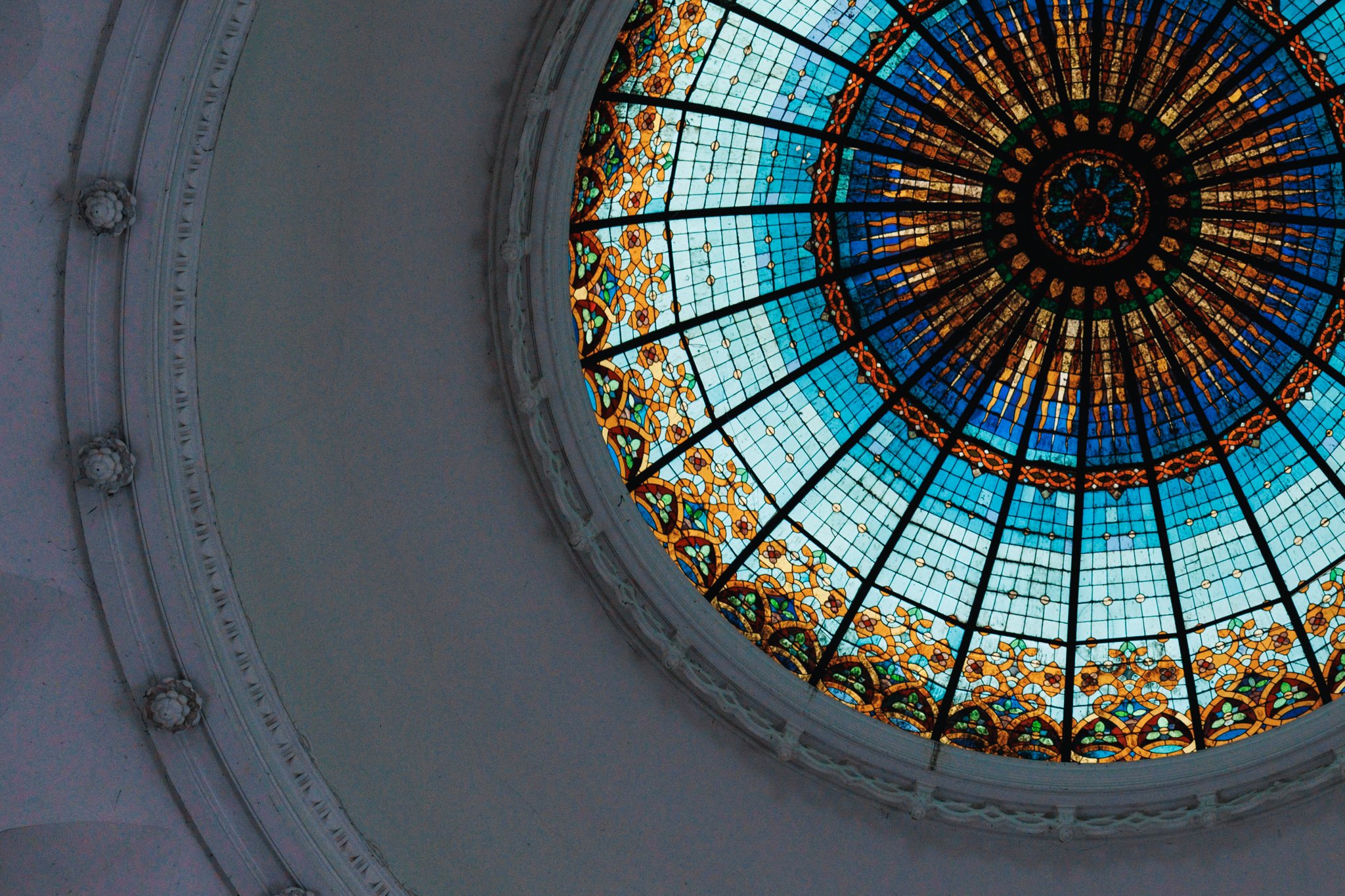
The building also holds painful history. A plaque records that Jews were forcibly gathered here in 1944 before deportation to death camps.
The synagogue now hosts concerts as well as heritage visits. Sightseeing access needs to be arranged with the Jewish Community; a performance listing does not mean the doors will be open that afternoon. If you cannot go inside, the exterior is still worth including on the walk.
The afternoon belongs to the streets
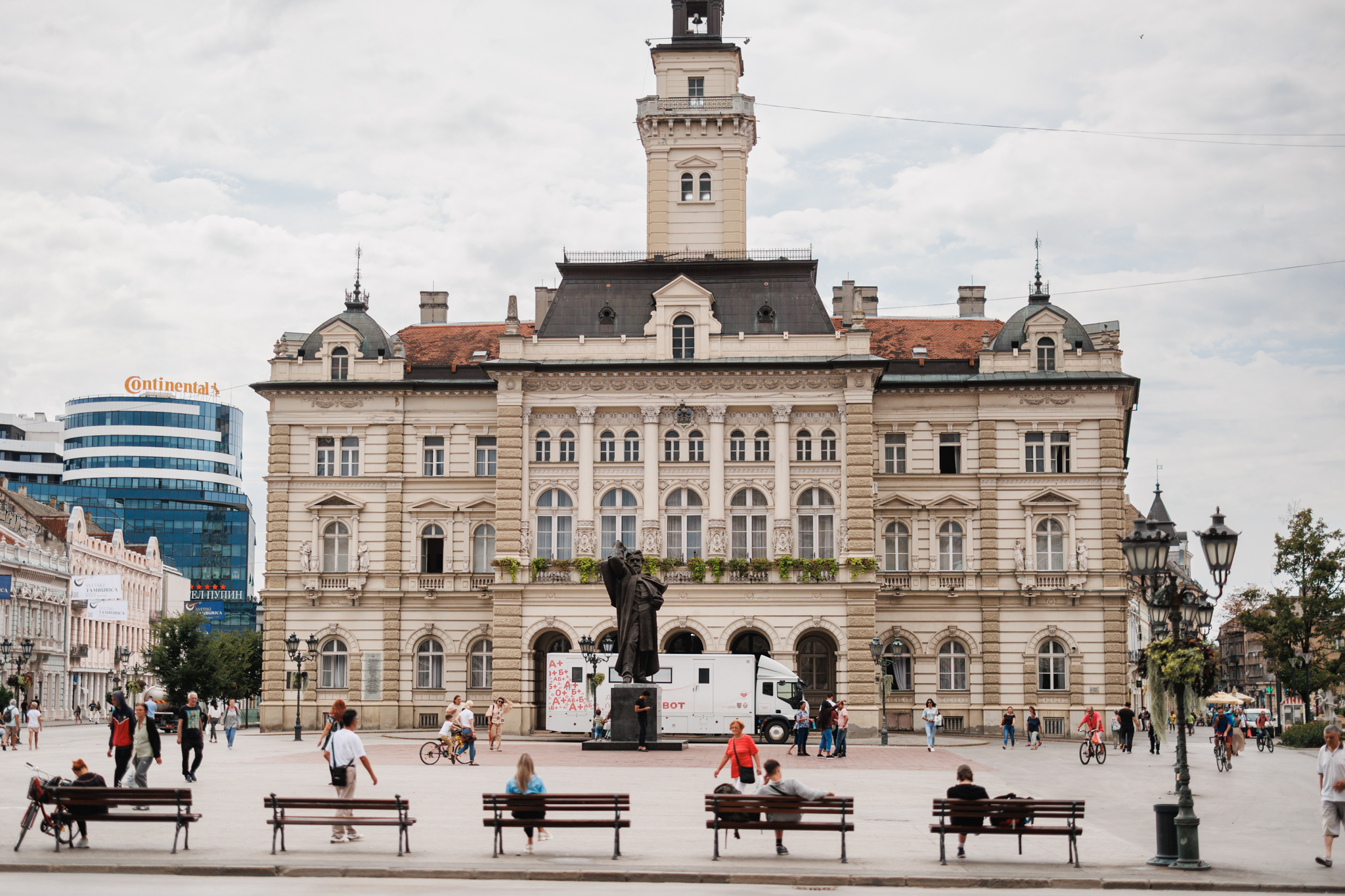
The two towers on Freedom Square do not look like the work of one architect. They are.
City Hall occupies one side, the Name of Mary Church another. The church rises in pale yellow brick towards a steep, patterned roof and spire. Both buildings were designed by György Molnár.
In front of City Hall, the bronze Svetozar Miletić has one arm raised. He served twice as mayor. Around his pedestal, people cross the square and rest on benches.
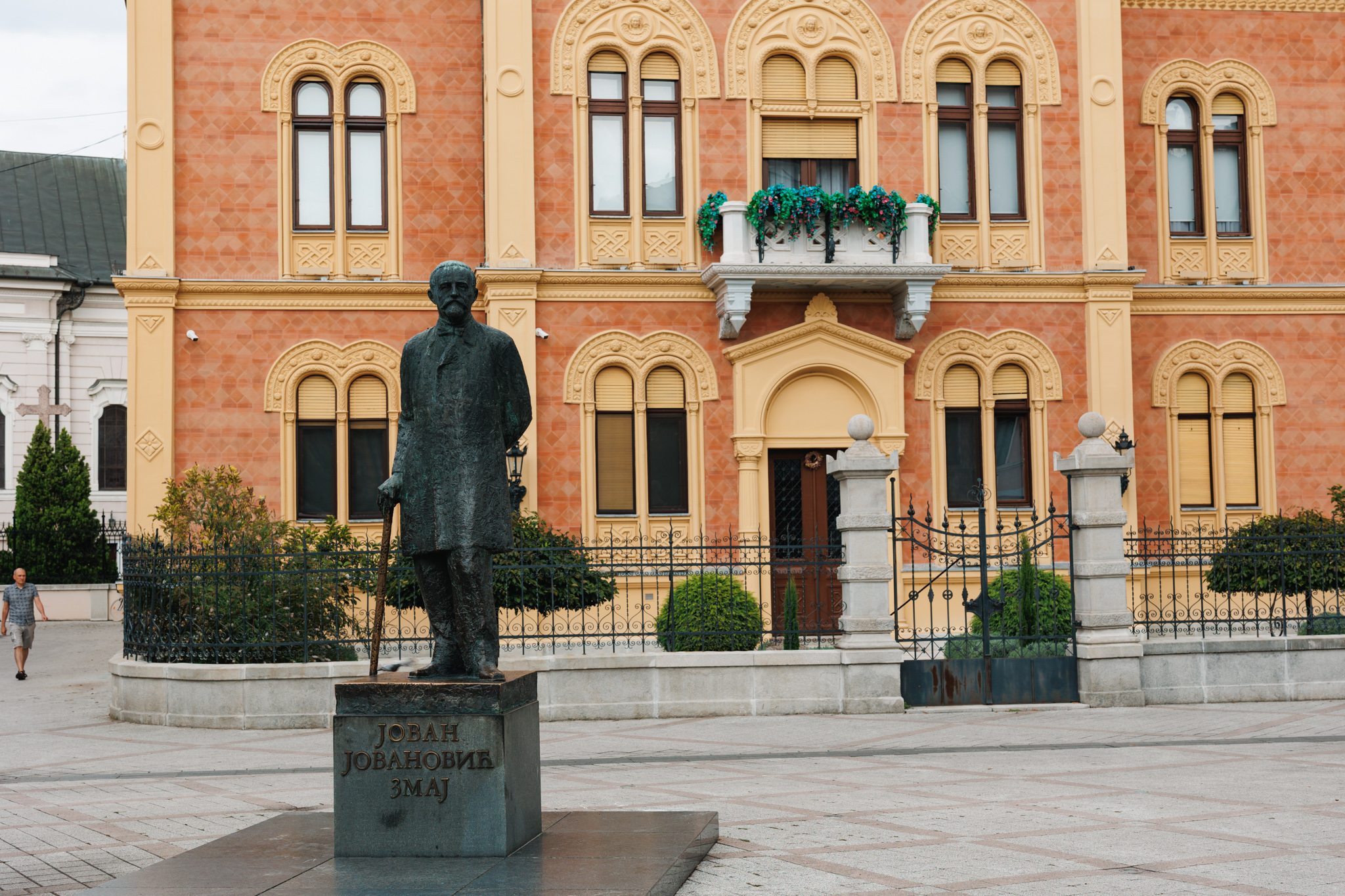
Follow Zmaj Jovina towards the Bishop’s Palace. Outside it stands Jovan Jovanović Zmaj, poet and physician, resting a hand on his cane at the end of the street named after him.
Zmaj means “dragon.” By the usual account, the name began as a date: he added “3. мај” (3 May) to his signature in honour of the Serbian assembly of May 1848, and one day left out the full stop. In Cyrillic, “3мај” looks very much like “змај.”
Continue into Dunavska, but give the passages between buildings some attention. The street frontage is only the first layer. Through an arch, the view can narrow to lamps, painted walls and a few people talking in the shade.
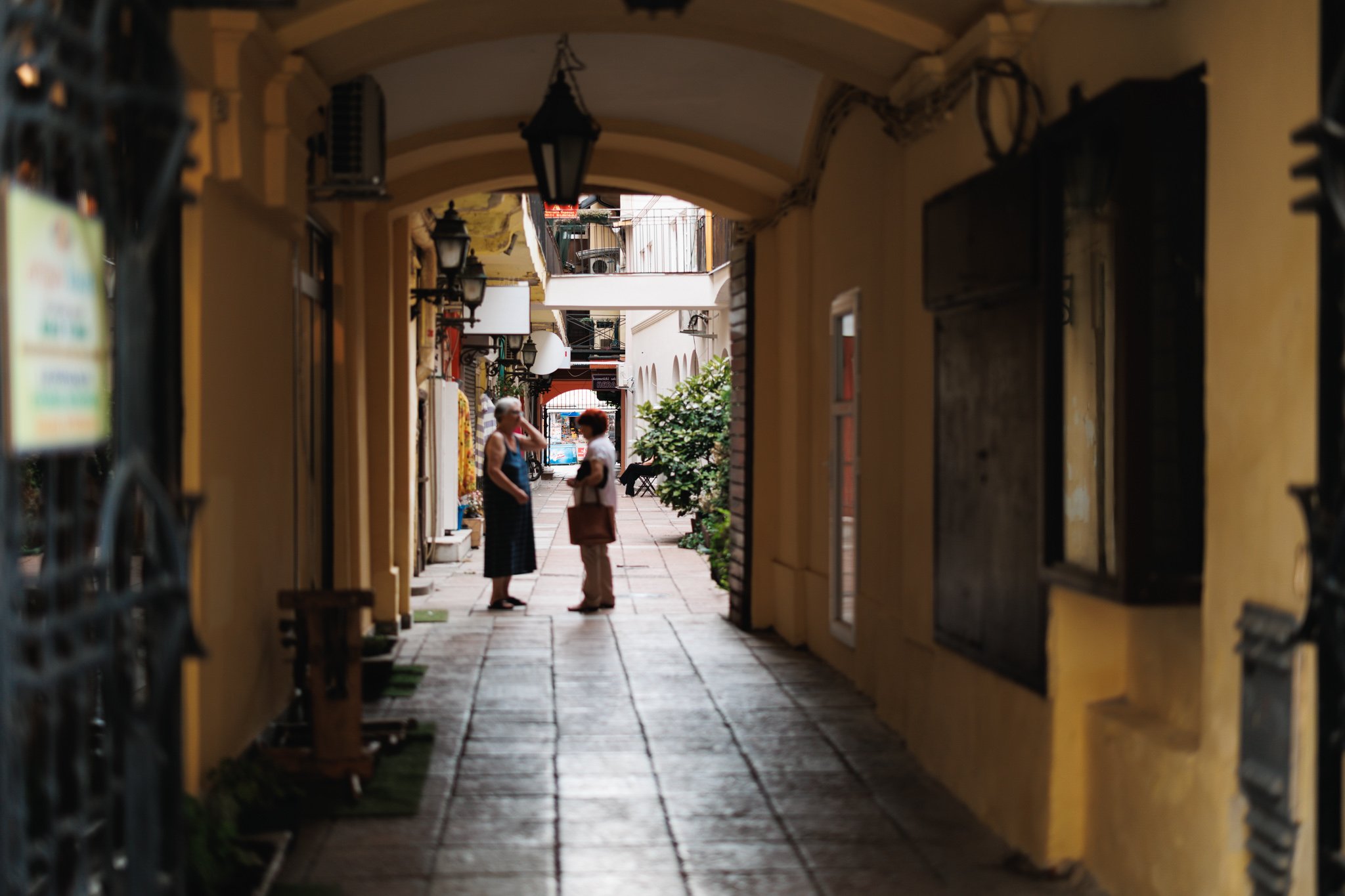
After that, the directions can stop. Have a coffee, look up at a roof you missed, or go back through a passage that caught your eye.
An Index for dinner
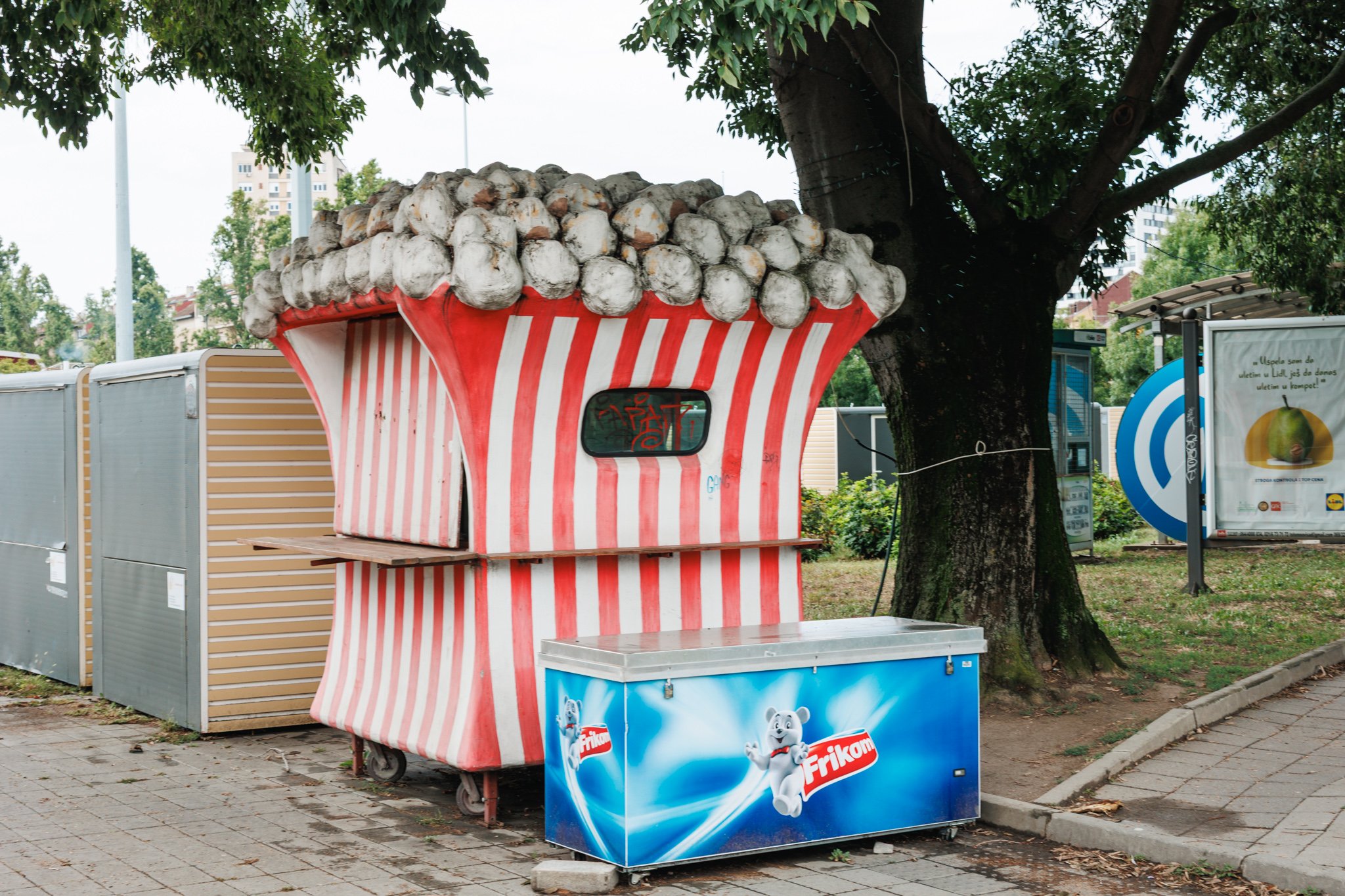
Dinner is a student invention. The Index sandwich appeared in 1984 at kiosks in Student City, the University of Novi Sad’s campus, and took its name from the indeks, the booklet in which students collect their grades. The reasoning was that the booklet holds a variety of marks, and the sandwich a variety of fillings.
The usual version brings ham, cheese and chopped mushrooms together in a toasted roll, with sauces and additions depending on the order.
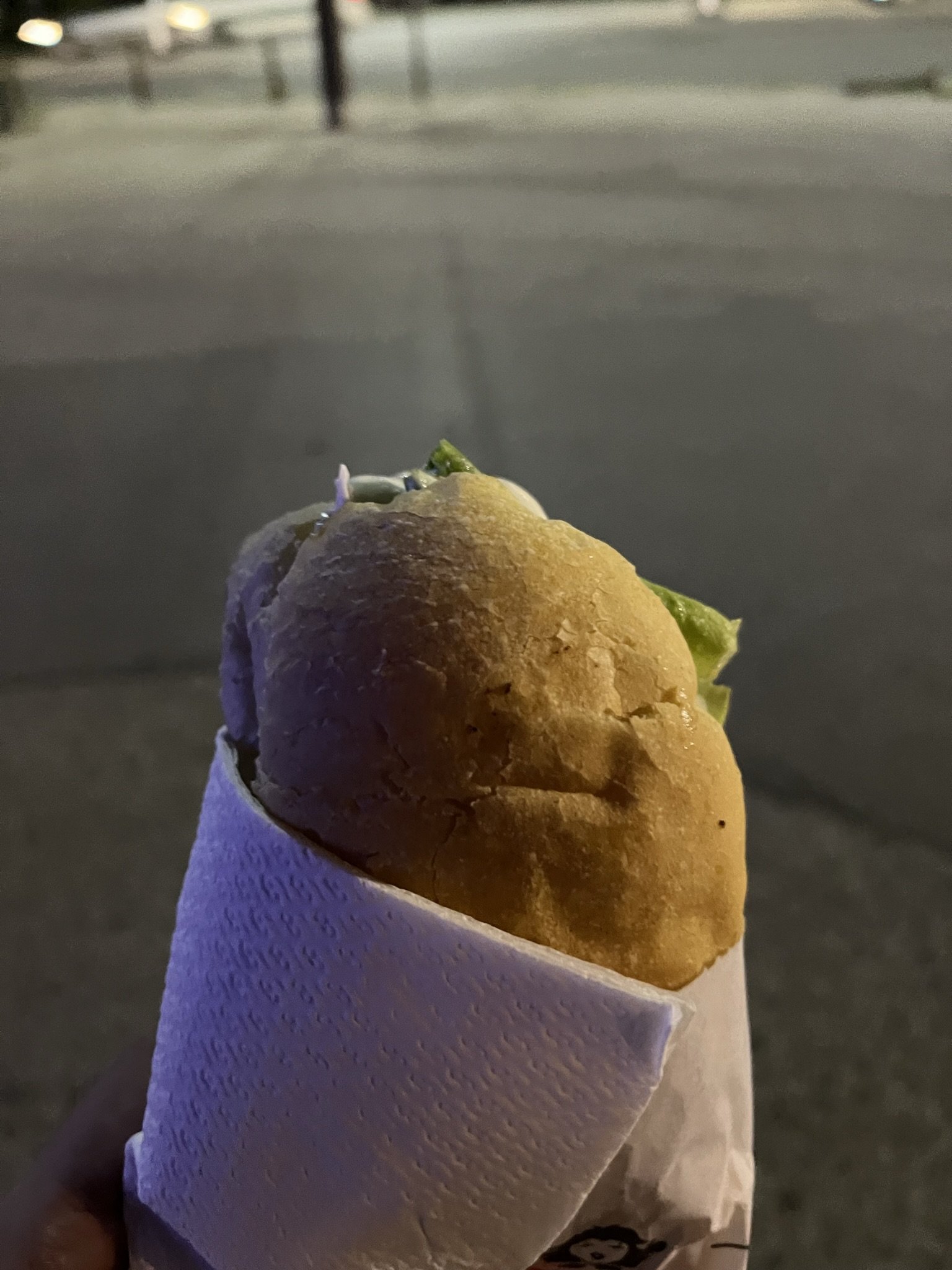
Index Mirjana has several branches. For this walk, its Ilije Ognjanovića address is convenient for the centre; check the branch hours before heading over.
The streets around Freedom Square are worth another turn after dinner. Or settle at a café table and watch people pass.
If you come in winter
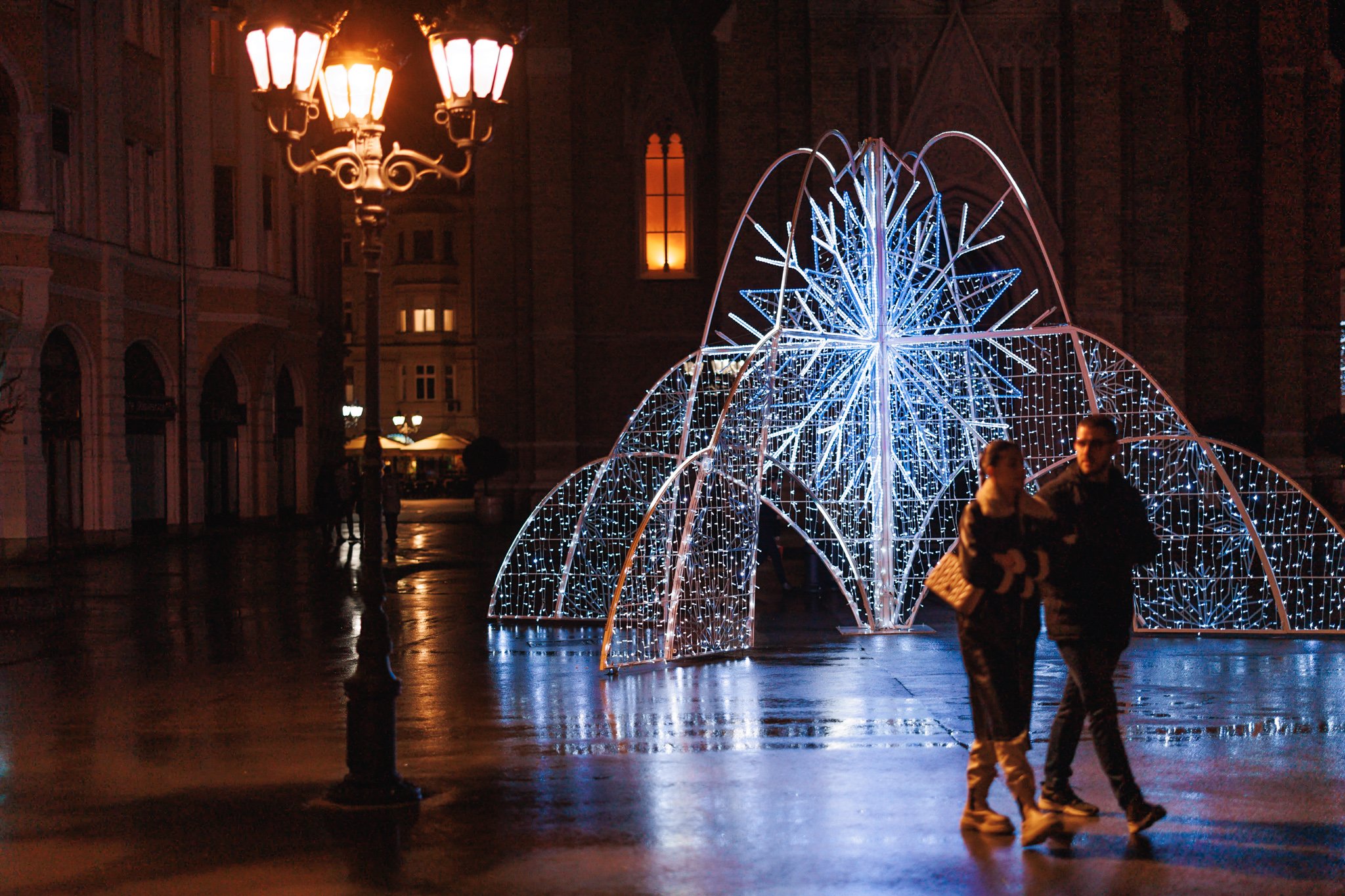
The same centre looks quite different after dark in winter. On my January 2024 visit, illuminated structures stood around the Name of Mary Church and coloured light reflected across the wet paving.
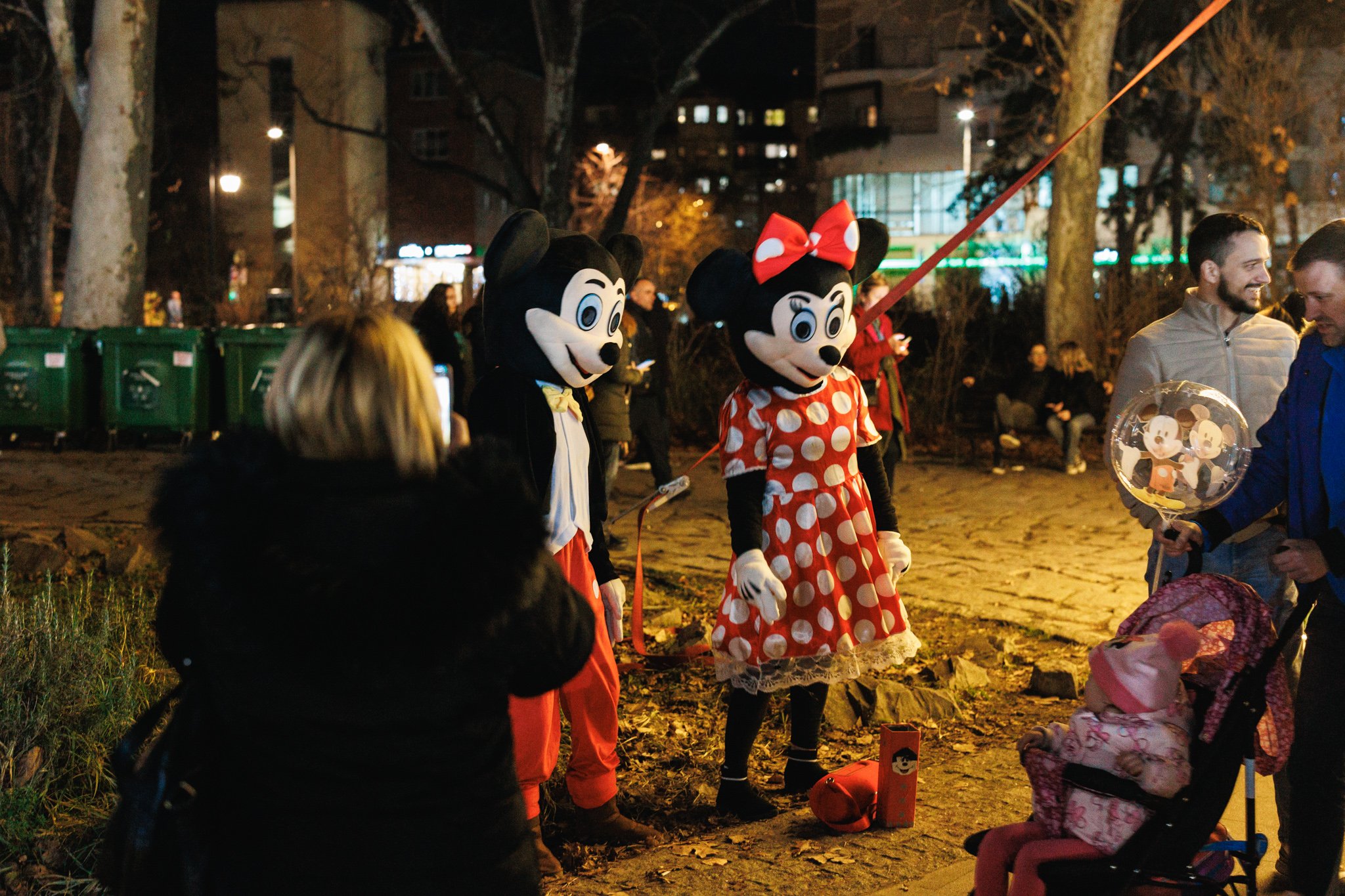
Not every figure in the centre was made of bronze: Mickey and Minnie were posing for pictures among families and balloons.
Seasonal displays and events change from year to year. Leave some time after sunset for a walk through the lights.
Stay another morning: Najlon Market
Plan this extension for a Friday, Saturday or Sunday morning: these are Najlon’s flea-market days, rather than a daily event.
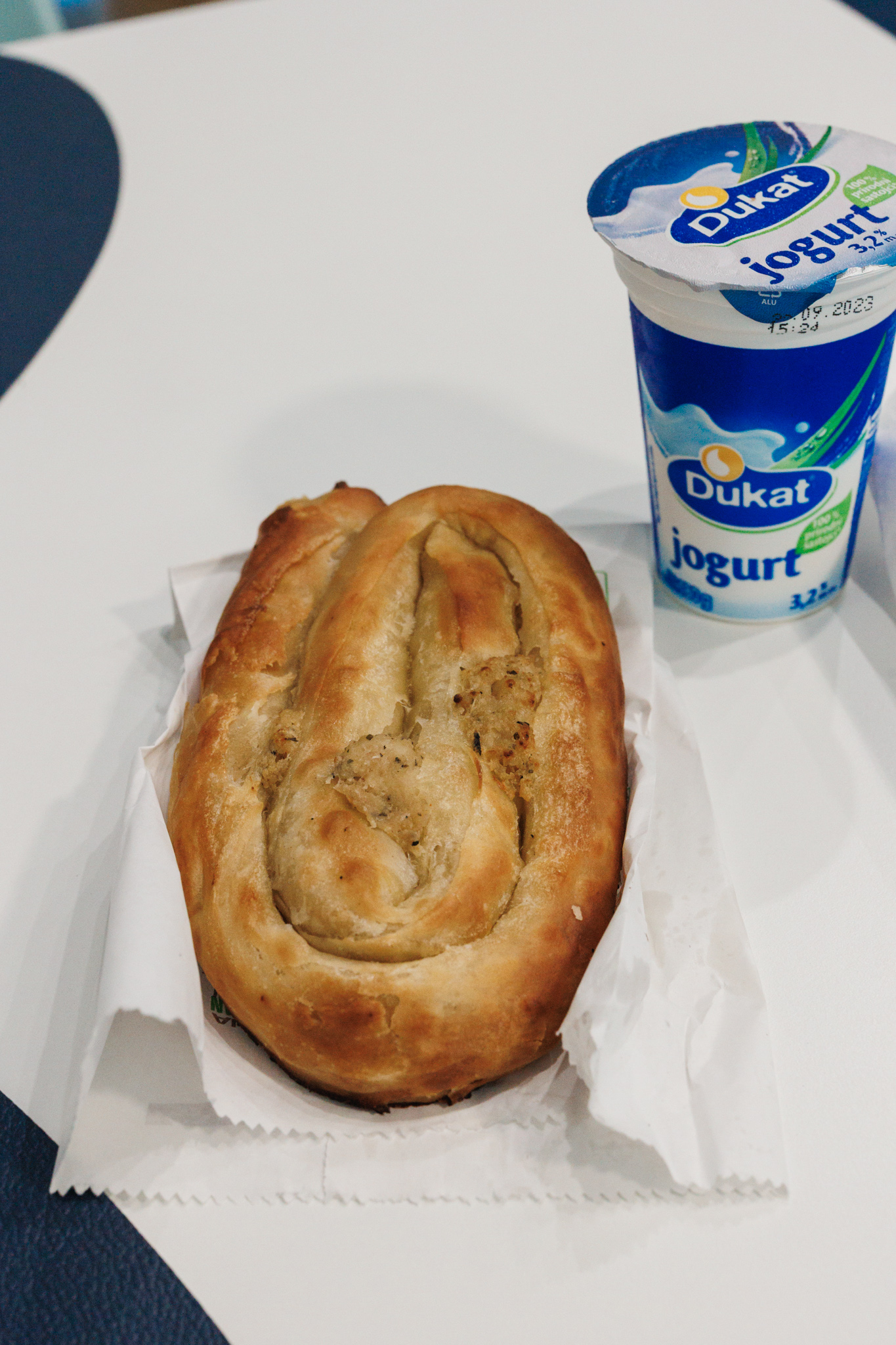
Start with burek and plain drinking yogurt. The hot pastry comes with fillings such as meat or cheese; the yogurt is there to drink alongside it. This is a breakfast worth finding near wherever you are staying.
Then head north to Najlon Market in Klisa. From the centre, take bus 5 towards Temerinski put from the Šafarikova stop on Jevrejska Street and get off at Najlon pijaca. For the return, use the opposite direction towards the centre. A taxi is another option. This is a separate outing beyond the old town; give the market a couple of hours of its own.
Here, guitars, crockery, clothes and miscellaneous household objects spread across stalls and the ground. The next box may require a closer inspection before you know what is in it.
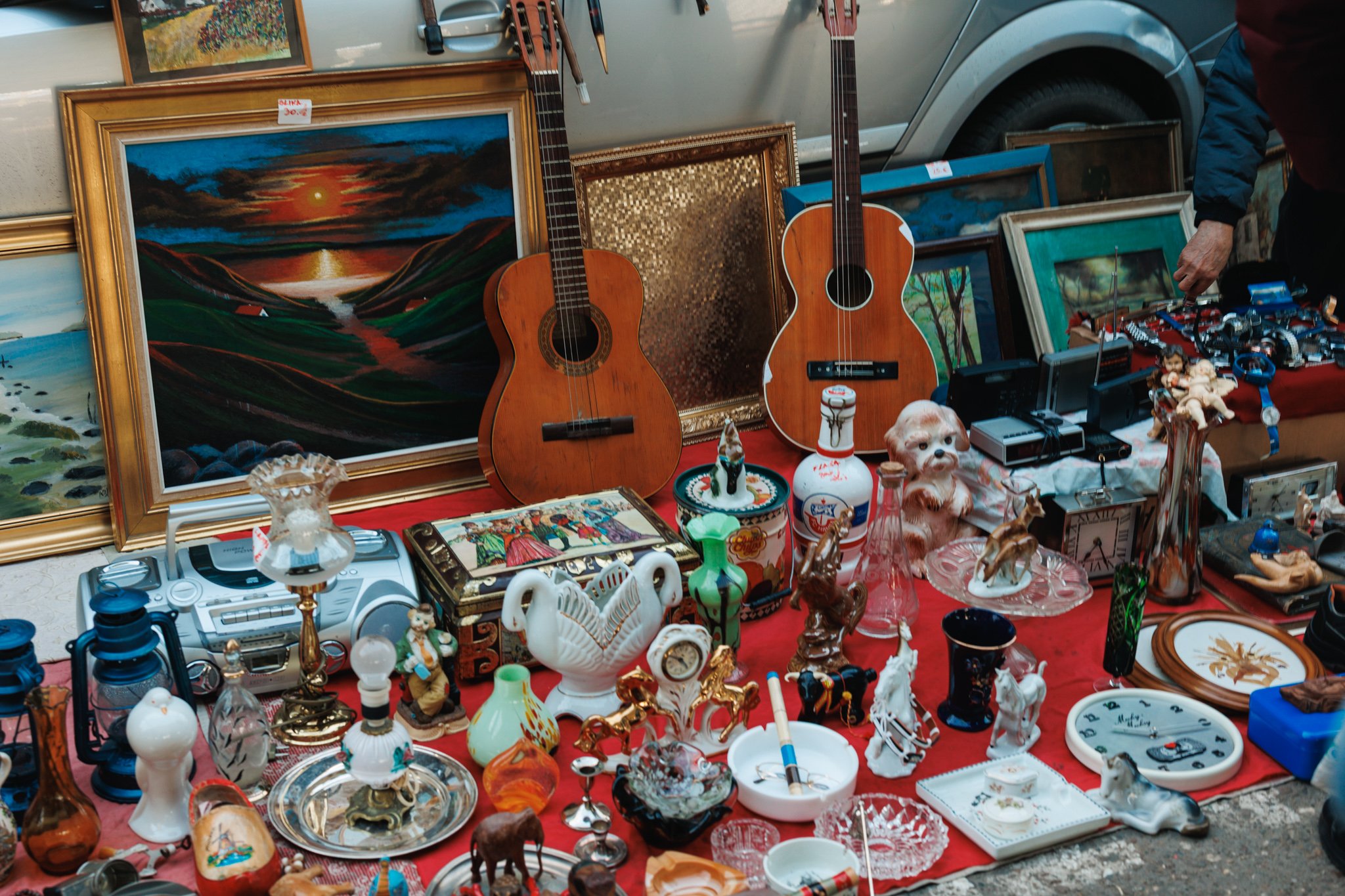
Friday and Saturday are particularly good for browsing second-hand goods; Sunday brings the traditional large fair. The pleasure is in arriving without a very precise shopping list. I went home with a small cup, which later found work in Japan as a rakija glass.
For a city called New Garden, Novi Sad is remarkably good at keeping old things in use.
Planning the walk
The map marks the stops, not a turn-by-turn walking route. Najlon is the optional Friday–Sunday extension north of the centre.
Includes stations and suggested stops. Opens in a new tab.
- 1 · Petrovaradin FortressGoogle Maps ↗
- 2 · Balkan Ekspres 021Google Maps ↗
- 3 · Raid MemorialGoogle Maps ↗
- 4 · Armenian memorialsGoogle Maps ↗
- 5 · Novi Sad SynagogueGoogle Maps ↗
- 6 · Old town — Name of Mary Church, Freedom SquareGoogle Maps ↗
- 7 · Index Mirjana — Ilije Ognjanovića 3Google Maps ↗
- Optional · Najlon Market — Friday–SundayGoogle Maps ↗
Getting here and around
Getting there: Allow roughly 30–55 minutes by train from Beograd Centar to Petrovaradin, depending on the service, plus travel to and from the stations. At the time of checking, trains from Belgrade use Petrovaradin station while Novi Sad’s main railway station is out of service. A free shuttle connects Petrovaradin station with the city centre. The station and fortress are separate places: allow an onward transfer if you want to start with the clock. Check Novi Sad’s current arrival advice and the Serbia Voz timetable for your travel date.
Station to fortress: From the Petrovaradin railway-station stop on Preradovićeva Street, take regular bus 3 towards Detelinara and get off at Beogradska–Vladimira Nazora in the Lower Town, before the bridge. Walk uphill to the clock from there. The free station shuttle is a connection to the city centre, not a substitute for this fortress stop.
Fortress to centre: After lunch, bus 3 towards Detelinara runs from Beogradska–Vladimira Nazora across the bridge to Dunavski park and then Pothodnik. Get off at Dunavski park for the riverside walk. The memorial is still roughly 15–20 minutes away on foot along the river; the bus does not deliver you to the statue. A taxi to the Raid Memorial is the simpler option if you want to avoid this longer leg. The statues around Freedom Square and Zmaj Jovina belong to the central walking section; they are not immediately below the fortress.
Walking: Even with a bus across the bridge, the full route involves several kilometres on foot. The centre is largely flat, but the fortress has steps and uneven paving. The walking times above are approximate planning allowances, excluding sightseeing and bus waits. If you have luggage, drop it at your accommodation first and consider reversing the walk.
Buses and the return train: Check JGSP’s route information and service notices before travelling. The line 3 stop list and line 5 stop list help with the names used here. For the return to Petrovaradin station, take bus 3 towards Petrovaradin from the Pothodnik stop on Bulevar Mihajla Pupina and get off at Železnička stanica, or use the station shuttle’s current city-centre departure point. Allow for the bus wait and station transfer as well as the train journey.
Places and opening days
Lunch: Balkan Ekspres 021 is on Kamenički put 1, below the fortress. Confirm opening hours directly when planning an early lunch.
Synagogue: Contact the Jewish Community of Novi Sad to arrange sightseeing. For an evening performance, consult the concert programme.
Index sandwich: The Index Mirjana website lists branches and their hours. Ilije Ognjanovića 3 is a convenient central option; hours differ between branches.
Najlon Market: Temerinski put 1, Klisa. For the flea market described here, visit on Friday, Saturday or Sunday morning. Do not assume the same stalls will be there on other weekdays. Check the market operator’s information for your intended morning and allow separate travel time from the centre.
If you have less time
A shorter day: Keep the fortress and lunch, then take bus 3 into the centre for the Armenian memorials, synagogue and old-town walk. Leave the separate riverside memorial leg and Najlon for another outing if you want less walking. Arrange the synagogue around the access available to you.
Practical information checked in September 2026.
Conversation
Comments
Review pending commentsComments are reviewed before appearing. The internet already contains enough unattended surprises.
Loading comments…
Leave a comment