Najlon Market: More Than Everything
I had been told that Najlon Market sold everything.
At this flea market in Novi Sad’s Klisa district, that began to seem less like an exaggeration than a summary.
Unlikely neighbours
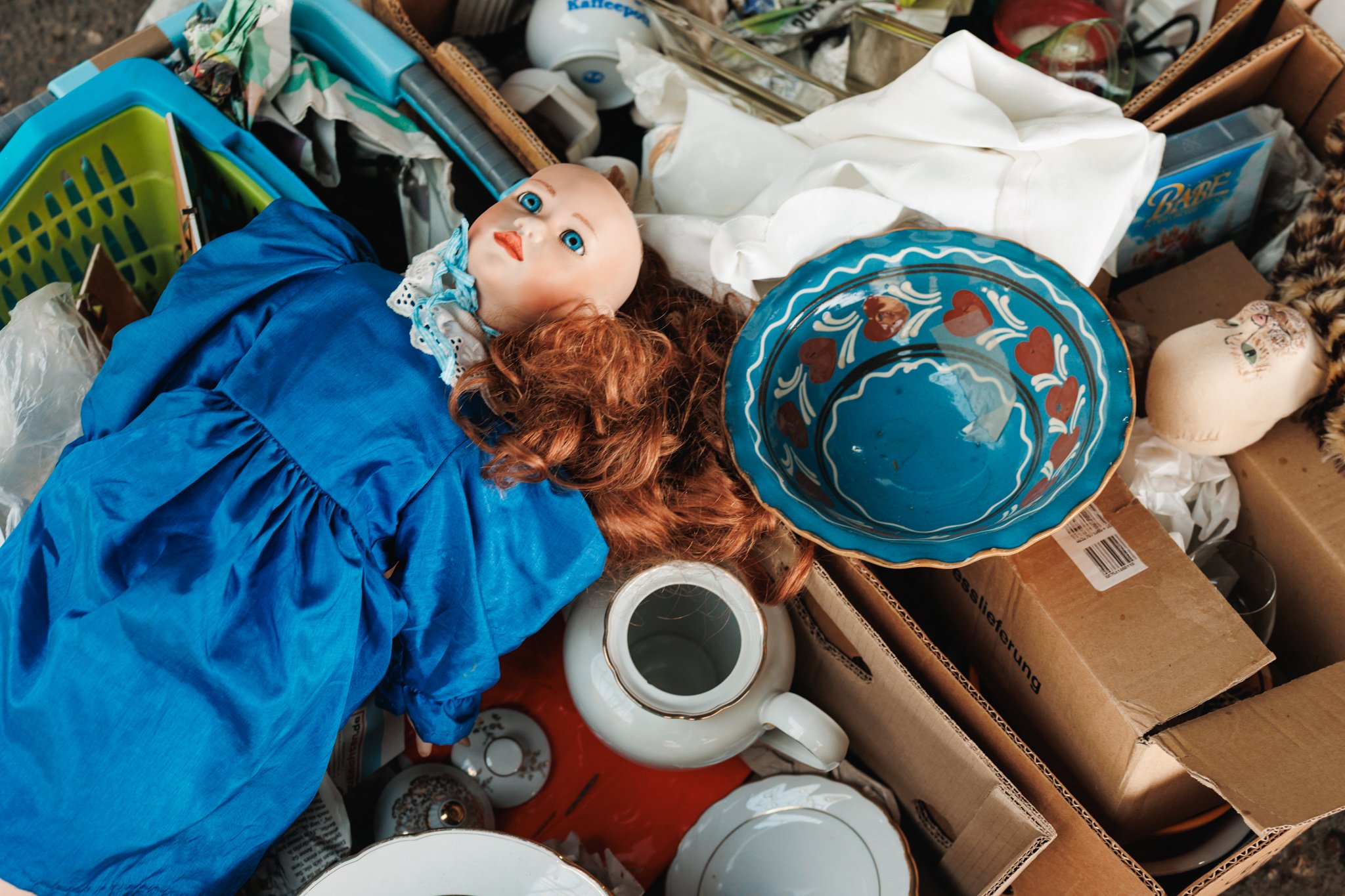
A doll in a blue dress lay among plates and a white teapot, her hair spread across the boxes. Beside her was a blue dish decorated with red hearts. The colours went together, even if the objects had arrived with rather different purposes. In a box nearby, another doll had come as a cloth head alone.
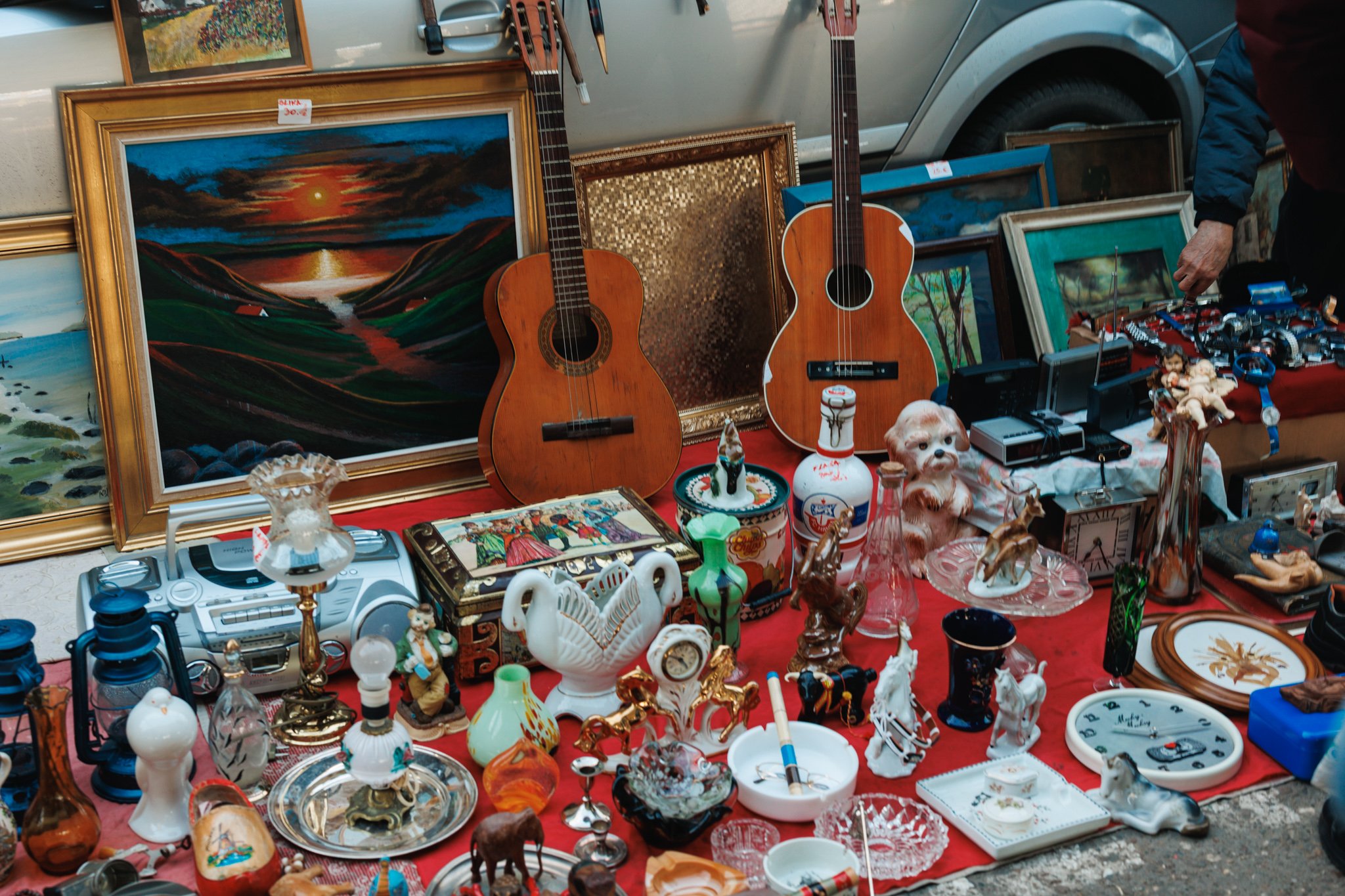
Elsewhere, two guitars leaned behind a table crowded with glassware, vases and ceramic animals. A framed sunset occupied much of the display. Even the view was available to take home.
Still at ground level
The market began in the late 1960s, when people laid out worn clothes, shoes, broken appliances and other second-hand goods on plastic sheeting and newspapers on the ground. Its name is generally traced to those sheets.
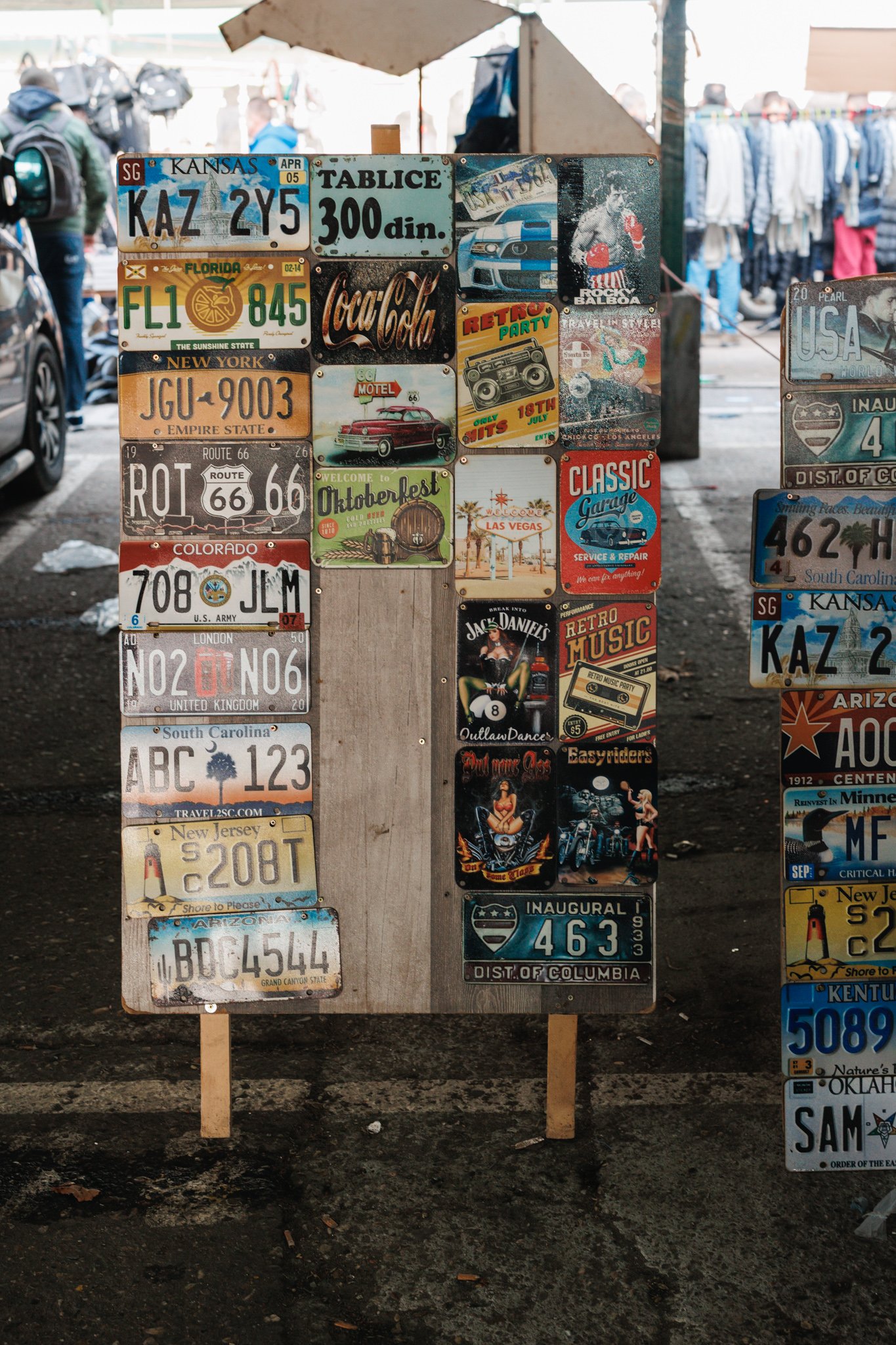
That approach was still recognisable in the rows of cardboard boxes at my feet. Cups and cables, plastic containers and pieces of household equipment filled them in combinations that rewarded a closer look. A box could contain several quite unrelated reasons to stop.
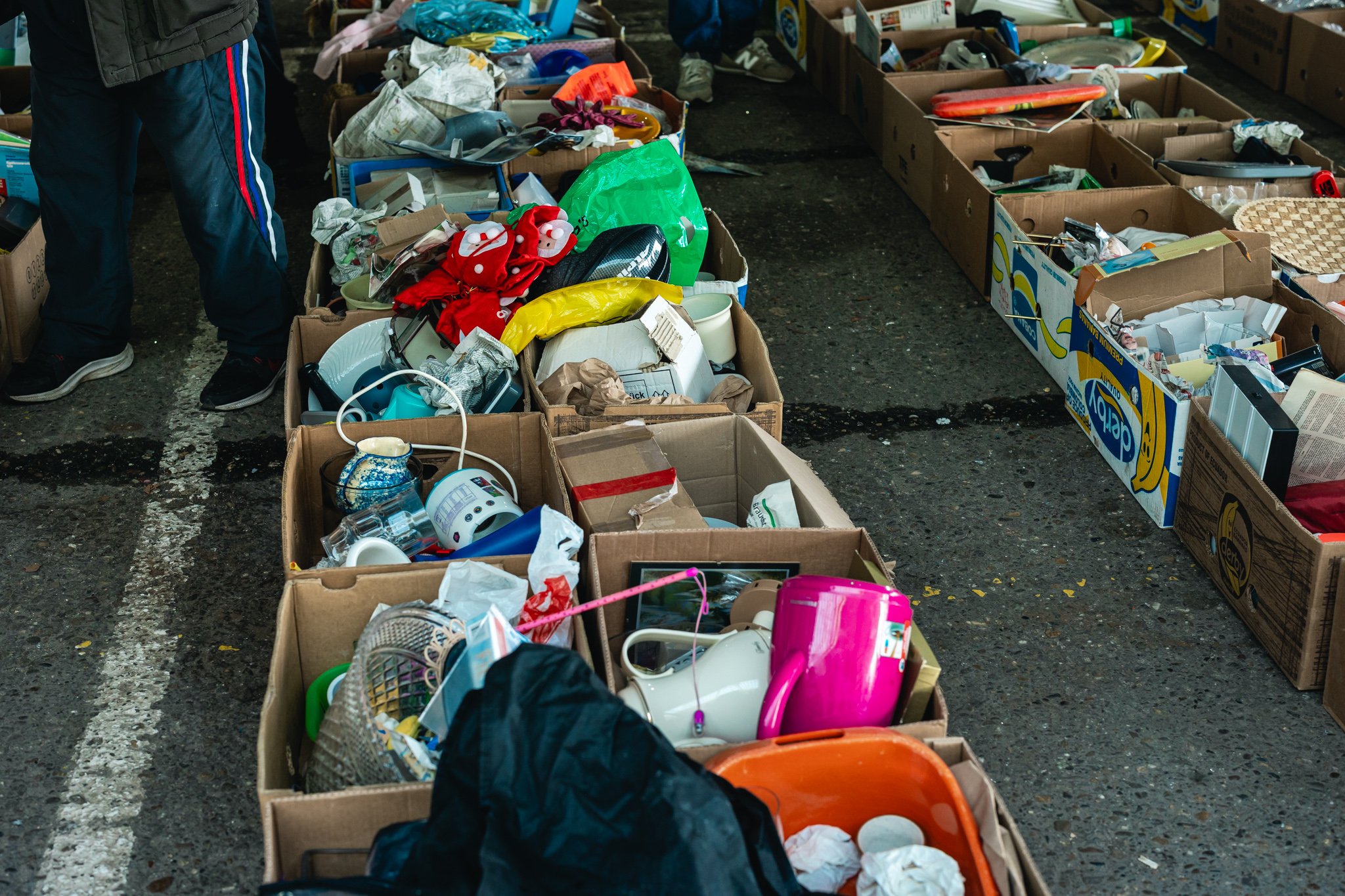
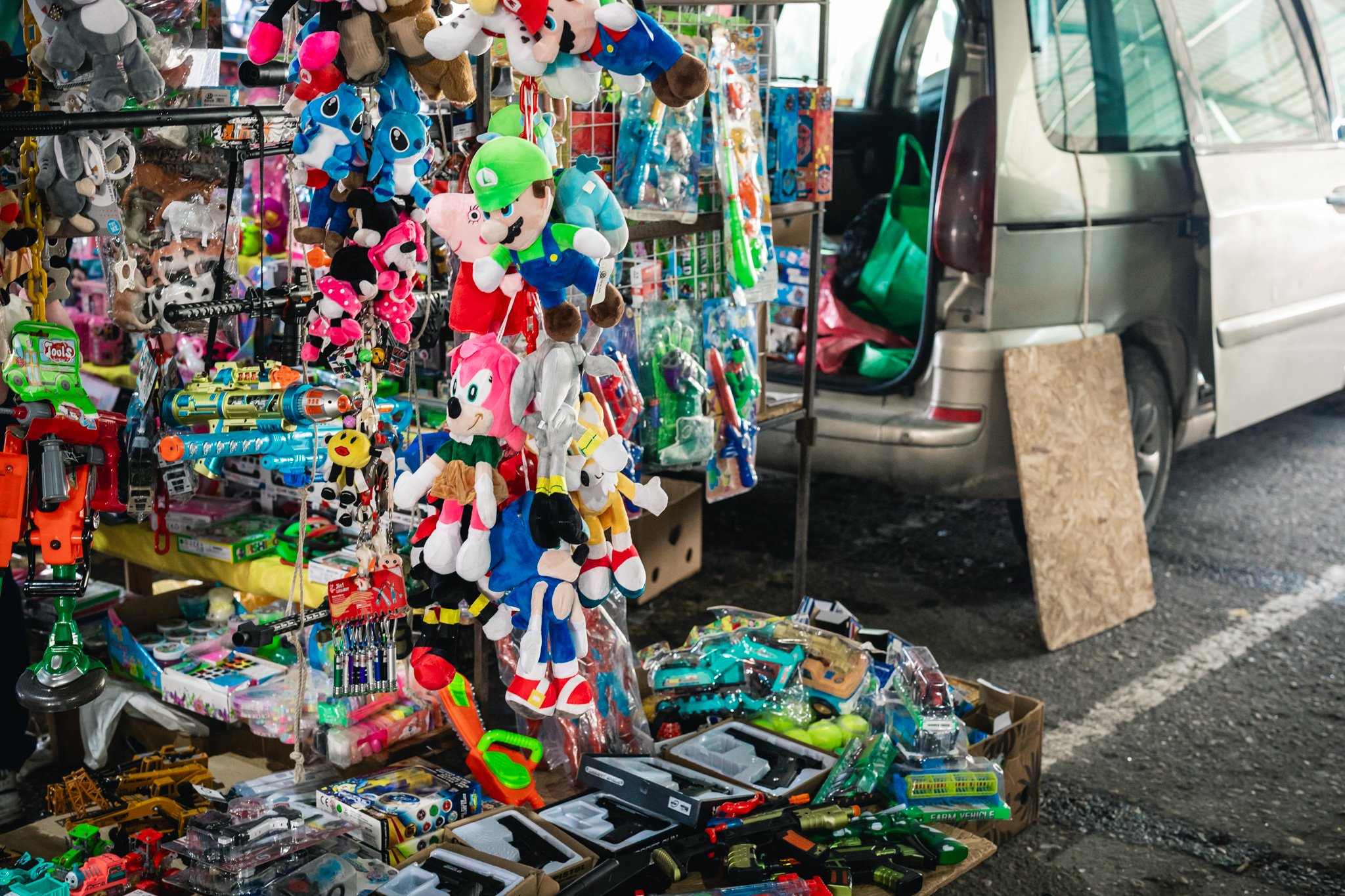
Those boxes were only part of the market: it also sold furniture, used cars, firewood and pets.
For the most handsome man
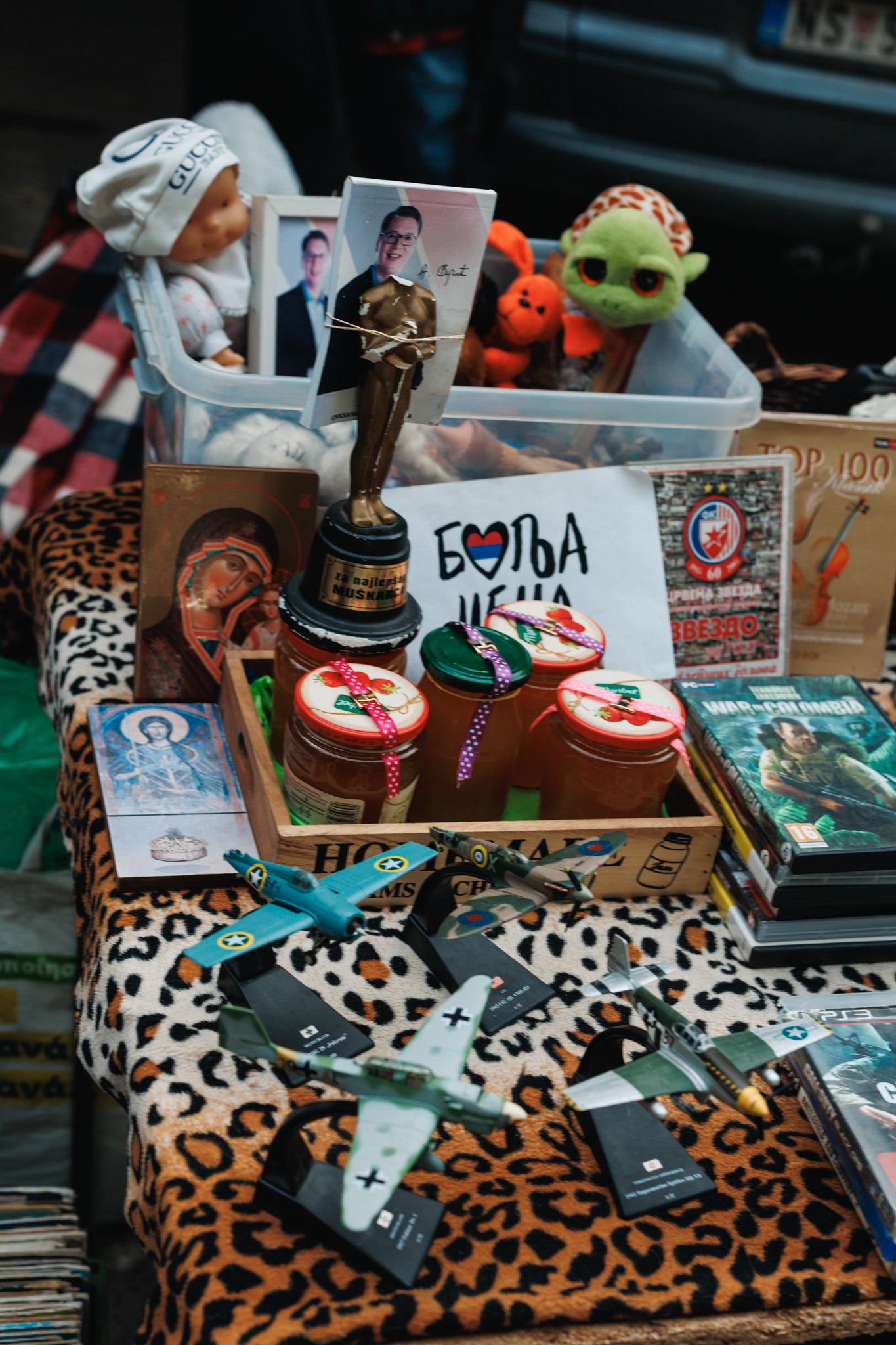
Back among the smaller objects, one table had been covered with a leopard-print cloth. At the front, model warplanes with German crosses, British roundels and American stars were parked side by side. Behind them stood jars of preserves, religious icons and a gold-coloured trophy.
The plaque on the trophy read za najlepšeg muškarca: for the most handsome man. The figure above it had lost its head. The cloth doll had kept only her head. This figure had kept everything else.
A loop of string ran across the figure and the photograph behind it. The photograph was of President Aleksandar Vučić, and bore his signature. From where I stood, his face appeared just above the figure’s shoulders.
Christmas, too
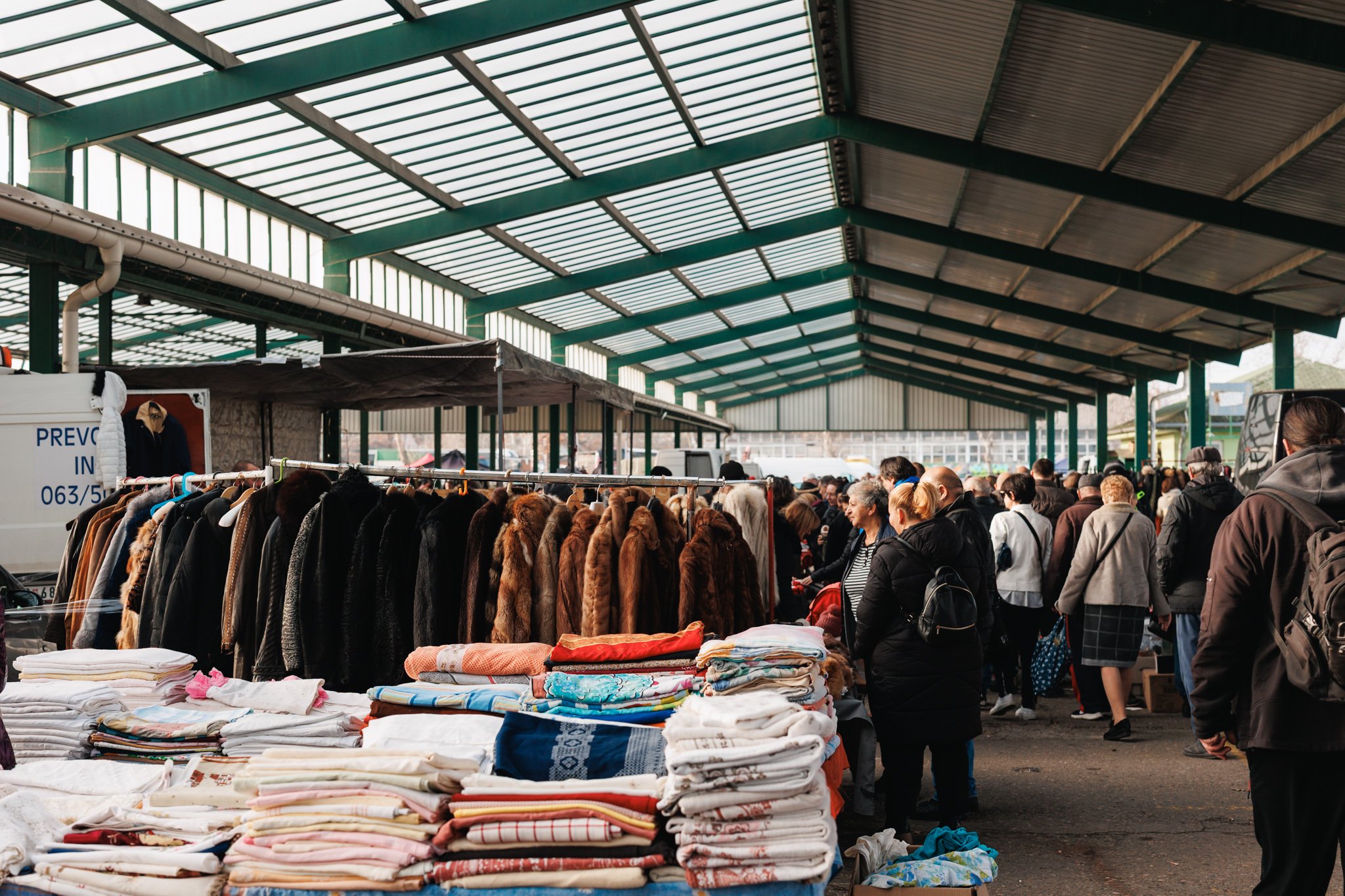
Among all these distractions were stalls with straightforward domestic purposes. Coats hung from rails beneath the roof, and folded linen formed substantial stacks along the aisle. There was plenty here for someone furnishing a home or simply replacing something worn out.
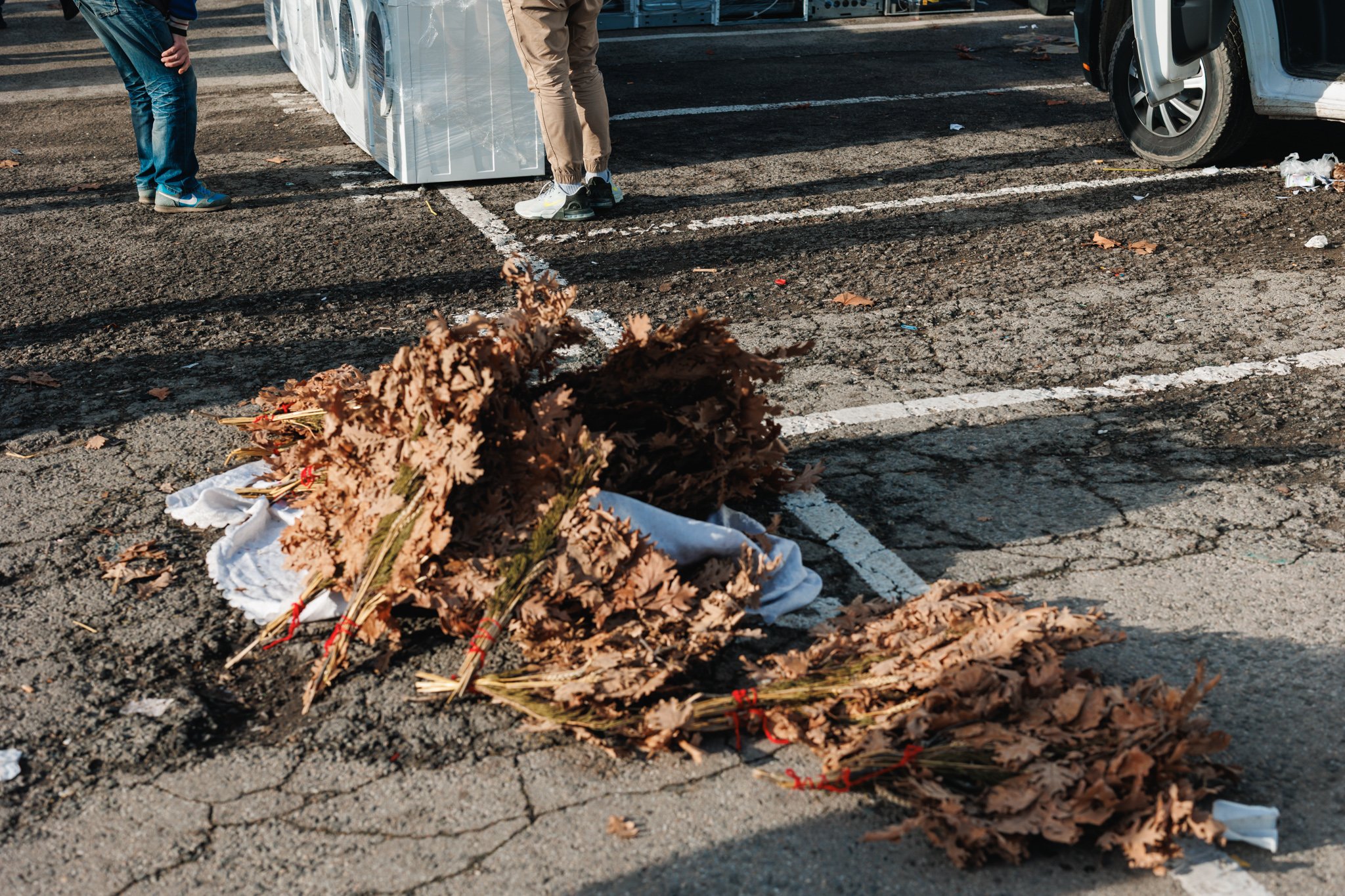
Some purchases had a more immediate date in the calendar. I visited on 5 January 2024, two days before Serbian Orthodox Christmas. Bundles of oak branches, their brown leaves still attached, were tied with red ribbon and laid out for sale. These were badnjak, used in Serbian Christmas celebrations. The traditional oak log is burned on Christmas Eve. In towns, smaller bundles of leafy twigs can decorate homes instead.
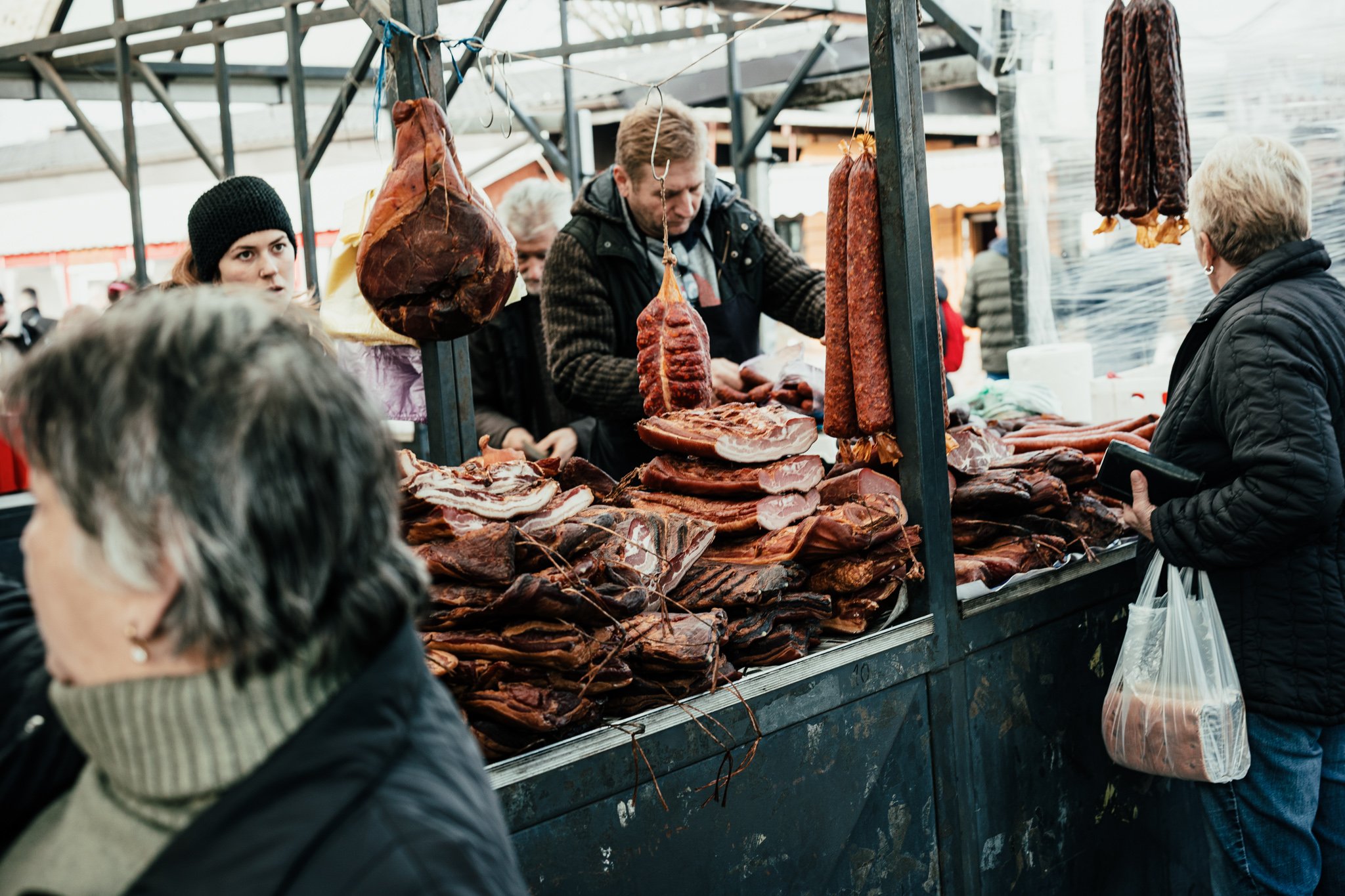
The market could also supply something for the table. At a meat stall, sausages and large cuts filled the counter, with more hanging overhead. It was quite possible to shop for the plates and their contents on the same visit.
Something to take home
My own purchase was small: a ceramic cup with blue stripes and a red flower.
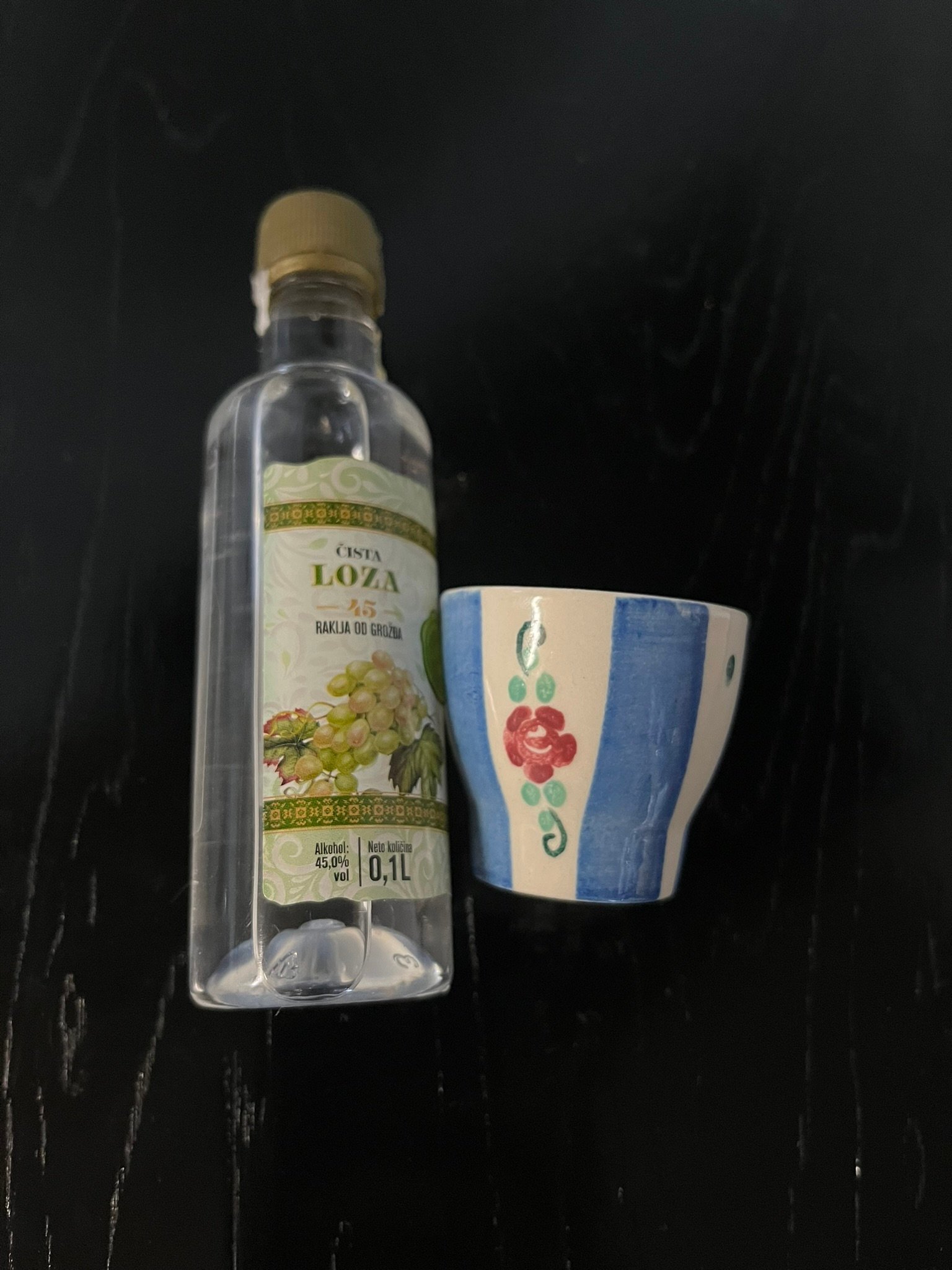
Back in Japan, I used it to drink the rakija I had brought home, and have continued using it for sake and other drinks since.
Picking out one little cup from a market that seemed to contain everything took a good eye.
Fortunately, I had brought mine.
Visit this place
Location
Najlon Market / Најлон пијаца
In Klisa, Novi Sad
Temerinski put 1, Novi Sad, Serbia
Practical Information
- Area
- Klisa, Novi Sad, Serbia
- Market days
- Usually Friday–Sunday
- Visitor note
- Confirm the current schedule with JKP Tržnica before visiting; opening times can change seasonally.
- Market enquiries
- +381 21 4808 555 (JKP Tržnica central office)
- Official website
- JKP Tržnica — market operator and current notices
- Tourism information
- Najlon Market — Novi Sad Tourism Organisation
Information last checked: September 25, 2026 (Usual market-day pattern, address and operator contact details checked; exact seasonal opening hours and pet-sale days unconfirmed.)
Conversation
Comments
Review pending commentsComments are reviewed before appearing. The internet already contains enough unattended surprises.
Loading comments…
Leave a comment