Petrovaradin Fortress: The Drunken Clock on Duty
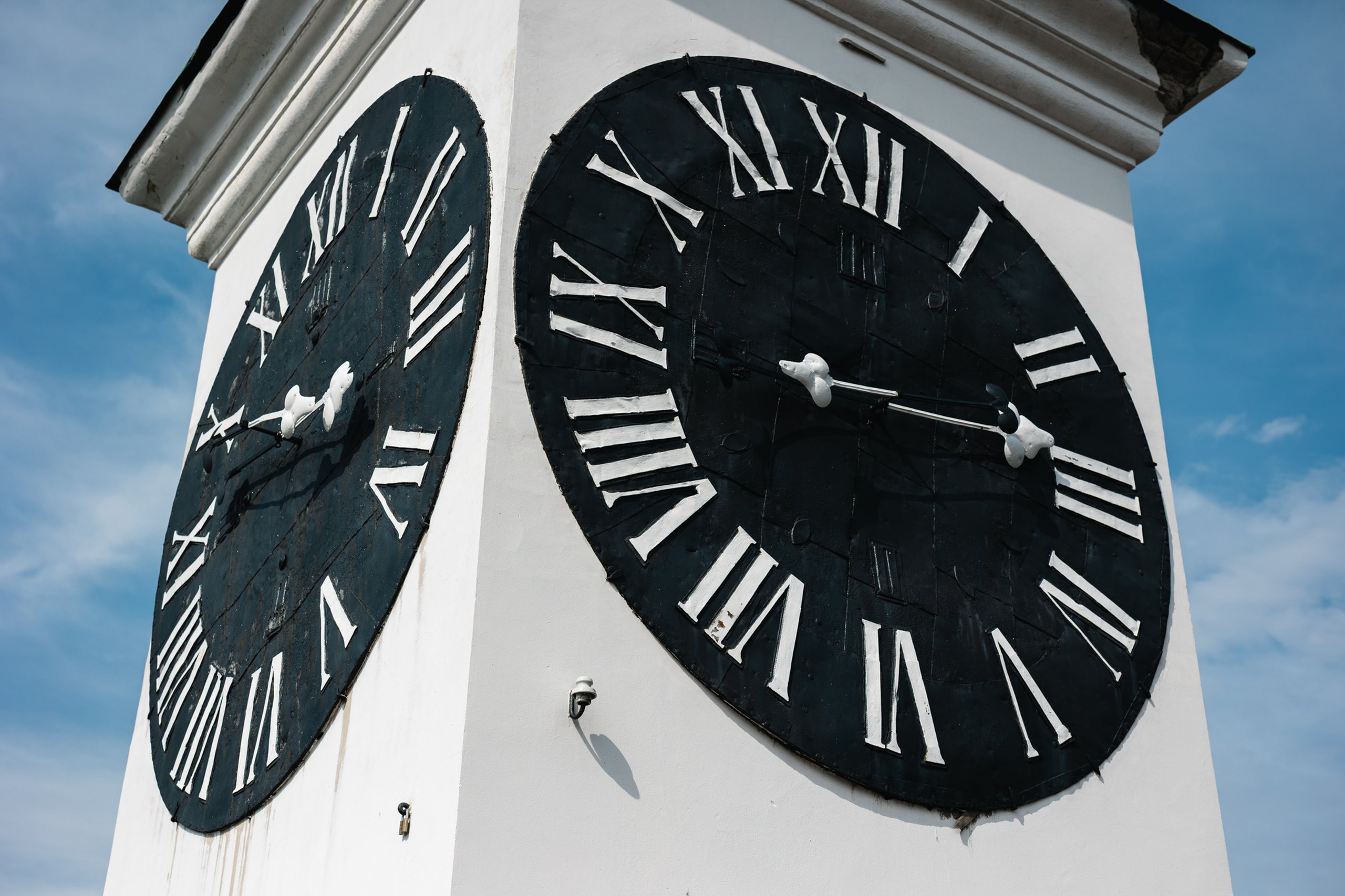
At Petrovaradin Fortress, the long hand tells the hour and the short hand tells the minutes.
A lifetime of reading clocks prepares you to get this one wrong.
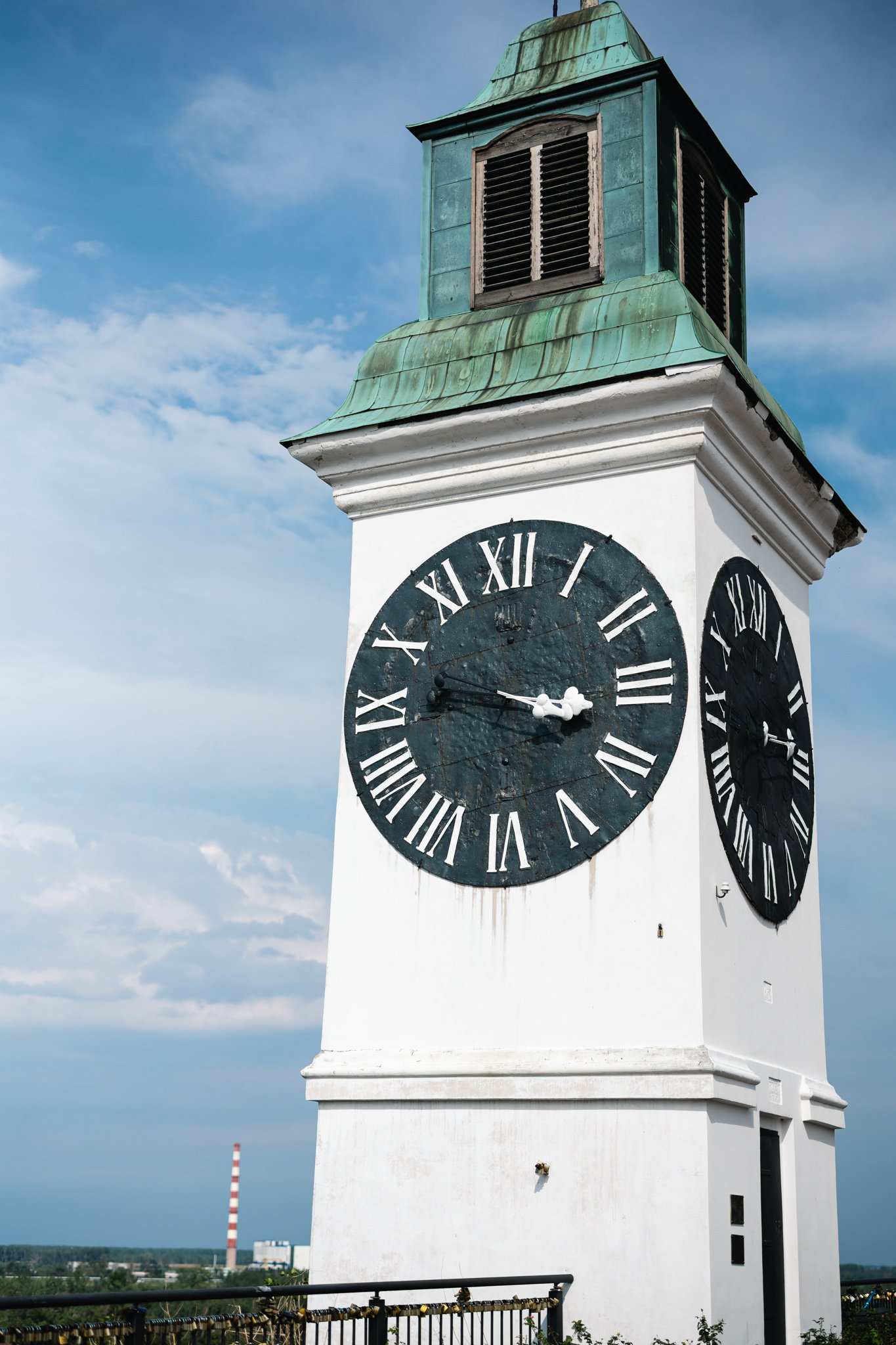
The clock stands in a white tower above the Danube in Novi Sad, Serbia. Its black faces carry large Roman numerals, and a weathered green roof rises above them. It looks perfectly respectable. The nickname “Drunken Clock” suggests otherwise, though rakija—Serbia’s traditional fruit brandy—is not to blame.
An audience on the river
There is a sensible explanation for the hands. Boatmen on the river below needed to be able to read the hour from a distance. Giving it the longer hand made it easier to pick out. The unfamiliar arrangement was a practical choice: the people closest to the clock were not its only audience.
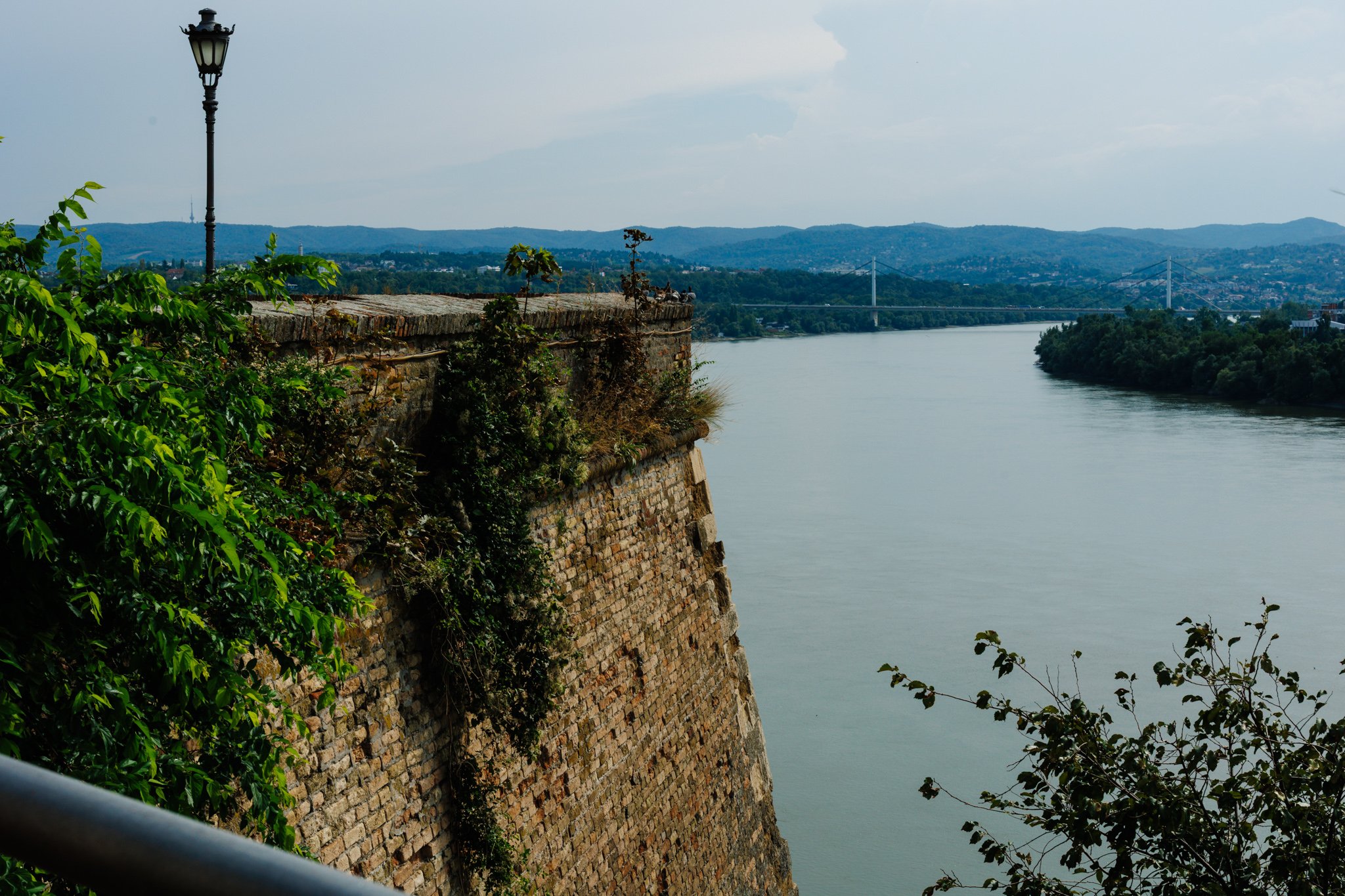
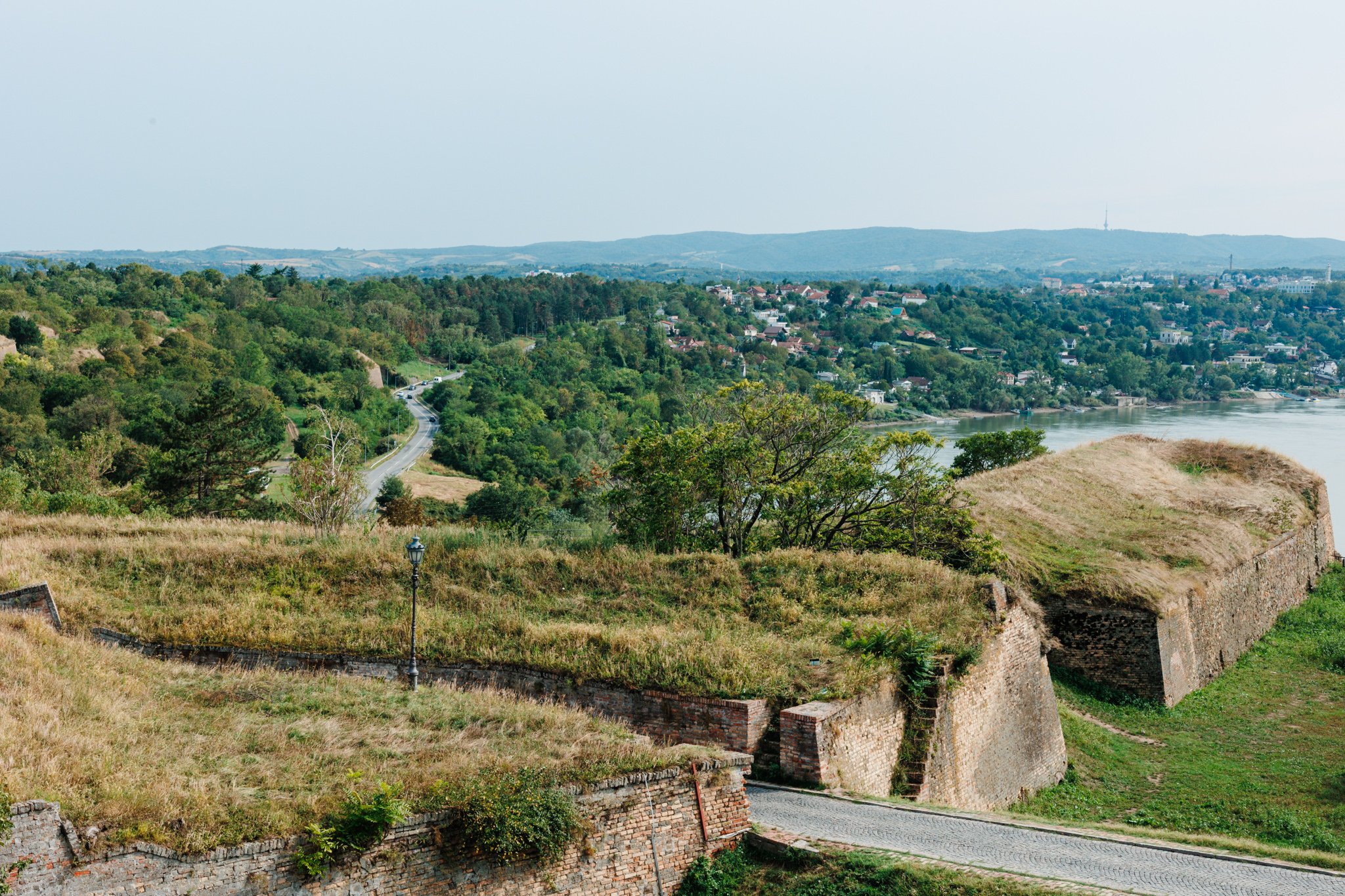
From the ramparts, the river fills much of the view. A bridge crosses it in the distance, while the brick walls drop steeply towards the water. Looking up at a clock from somewhere down there is a rather different task from checking one across a room.
Built to keep watch
The fortress made equally deliberate use of the setting. Built between 1692 and 1780 under the Habsburg Monarchy, it guarded the monarchy’s southern frontier against the Ottoman Empire. Its walls turn and overlap across the hillside, enclosing roads and grassy slopes in layers of brickwork. What makes a good viewpoint now once made a useful place to keep watch.
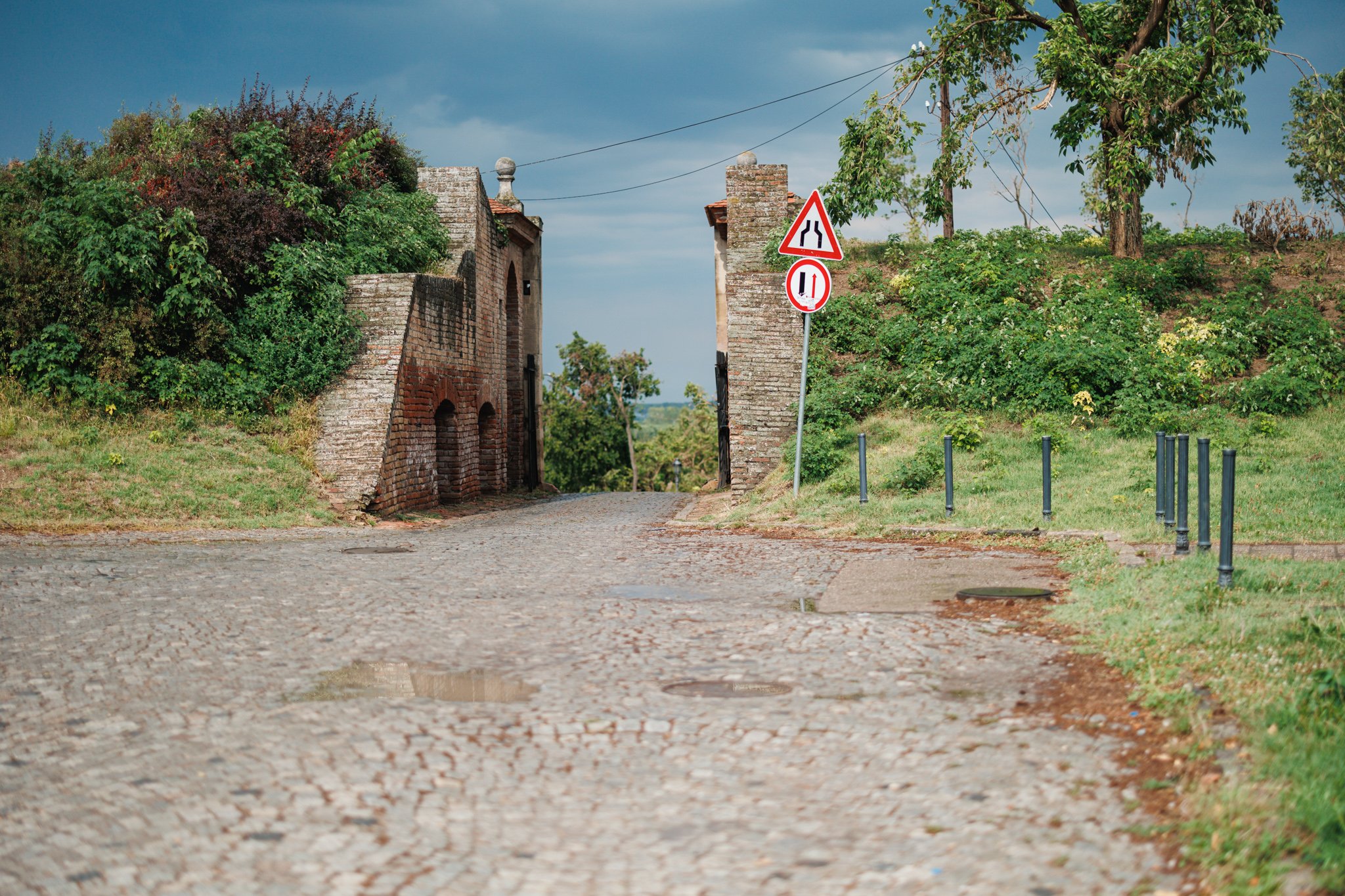
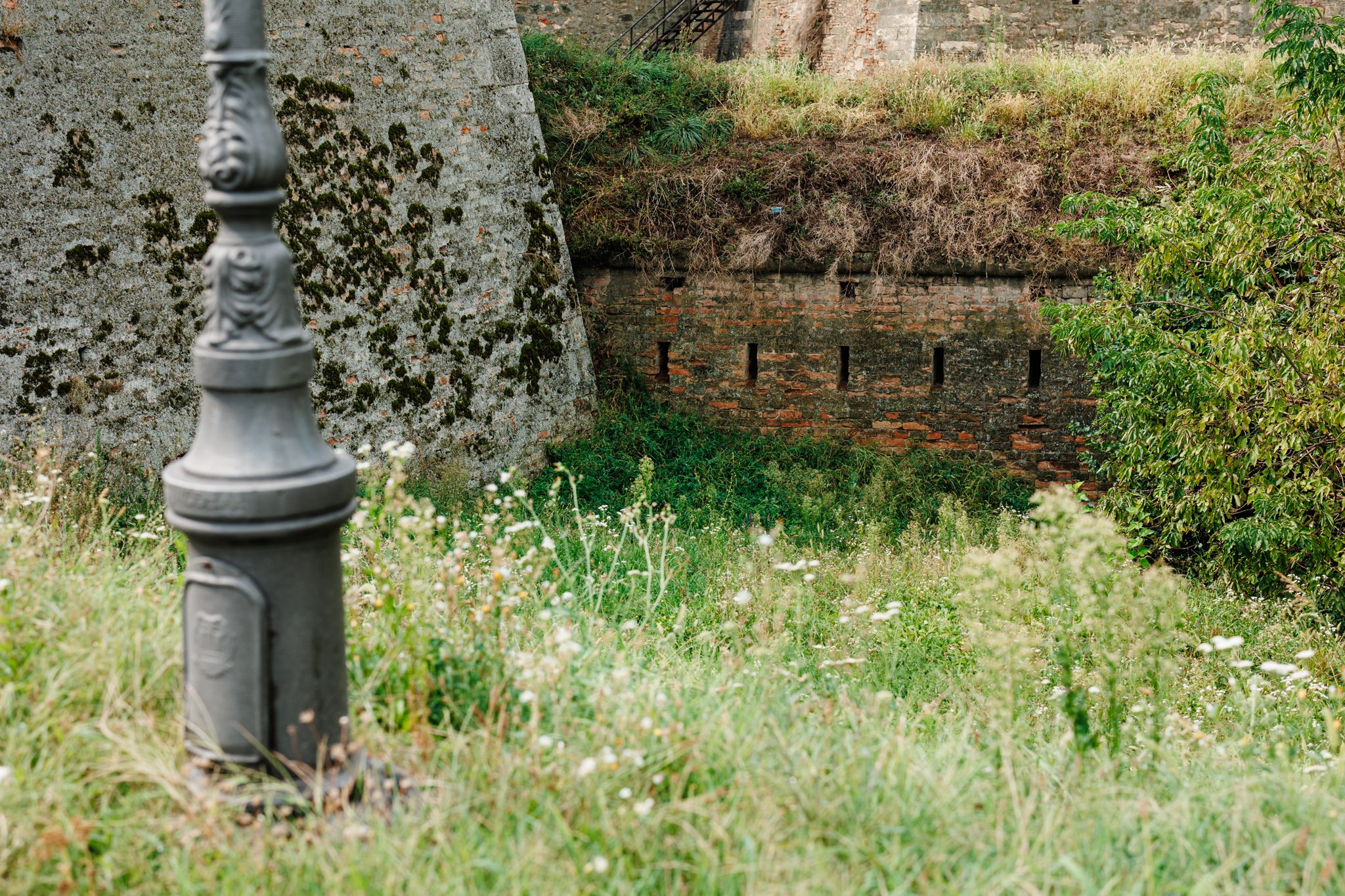
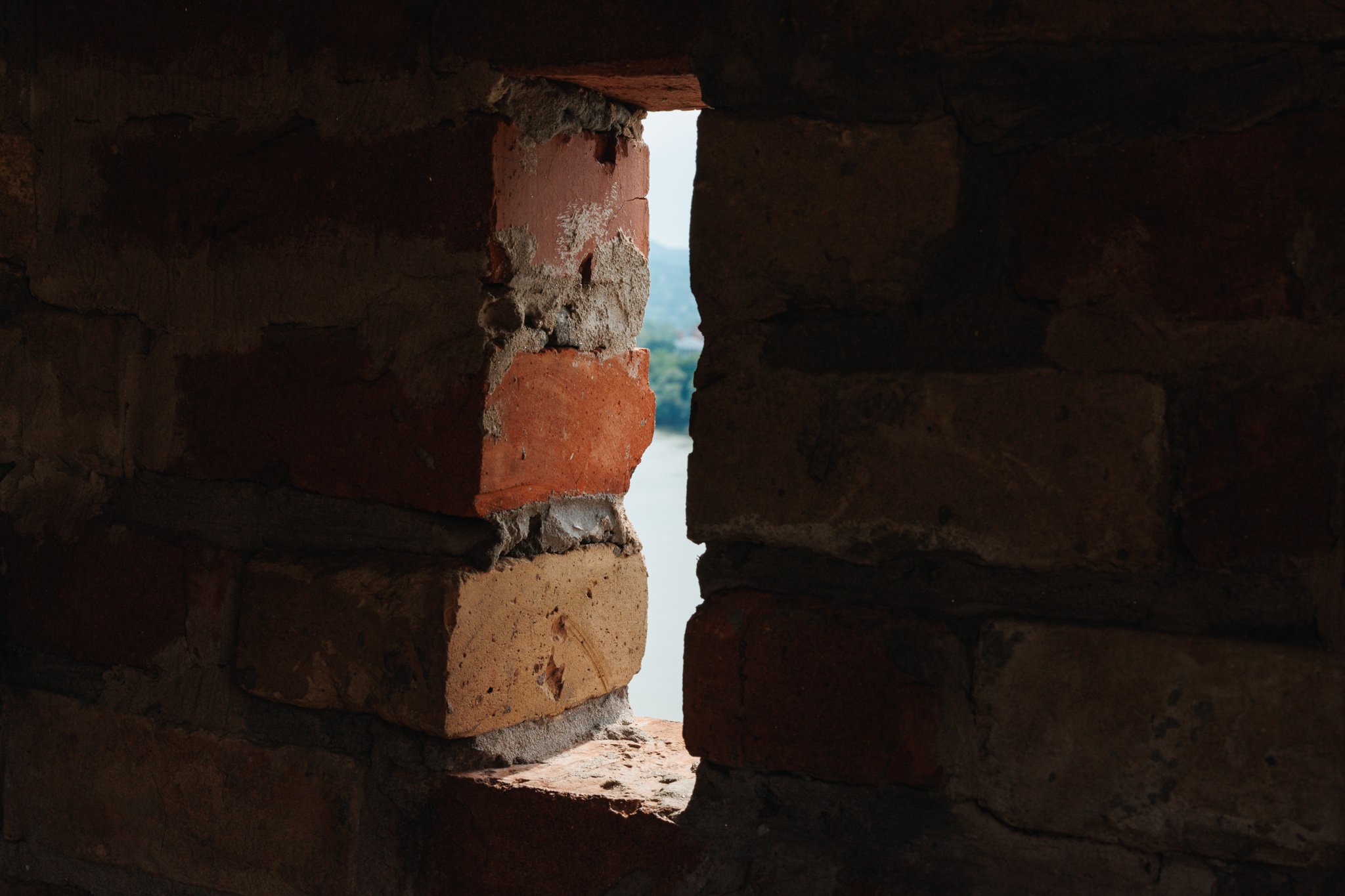
The scale becomes clearer away from the tower. One wall gives way to another below it; paths disappear around corners. Getting in was clearly not meant to be the easy part. Through a narrow opening, the broad river is reduced to a strip of water and light.
A question of timing
The clock’s reversed hands, then, are quite defensible. Its timekeeping is harder to explain away. Temperature affects the mechanism: it runs slow in winter and fast in summer, by a minute or so. Explanations for the local nickname, Pijani sat—the Drunken Clock—differ. Some blame the weather; others blame the hands.
Look again at the photo at the top of this page. The two faces in it disagree. On one, the hands sit together a little after three. On the other, they point in opposite directions, at about quarter to four.
Learning which hand to read solves only part of the problem.
This was once a service people paid for. Residents were charged a clock tax, known as satarina, for using it. A public clock made the time available beyond the small circle of people standing beneath its tower. Here, telling the hour mattered enough to warrant a longer hand, four clock faces and a tax. Even time passing could produce a bill.
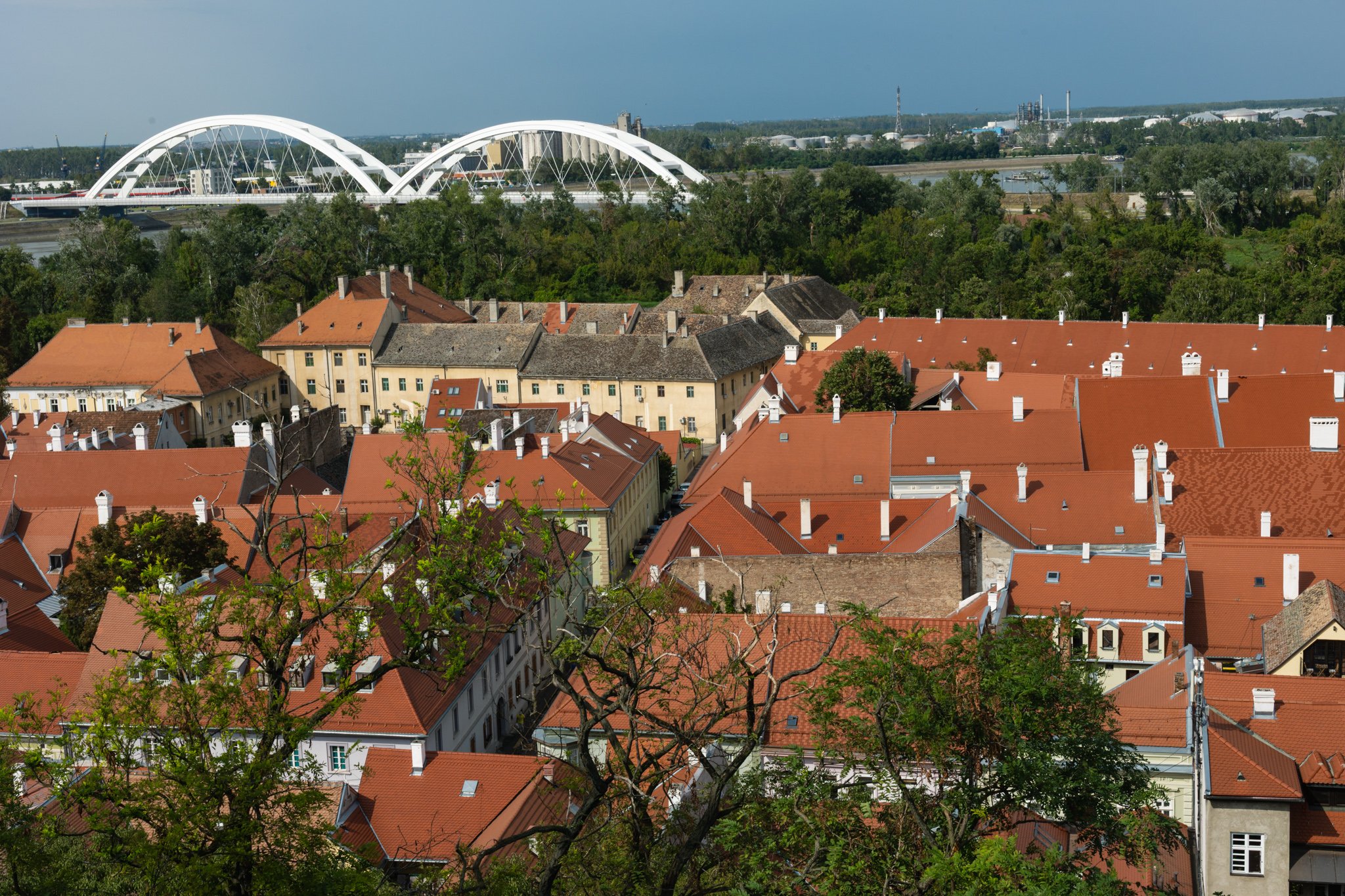
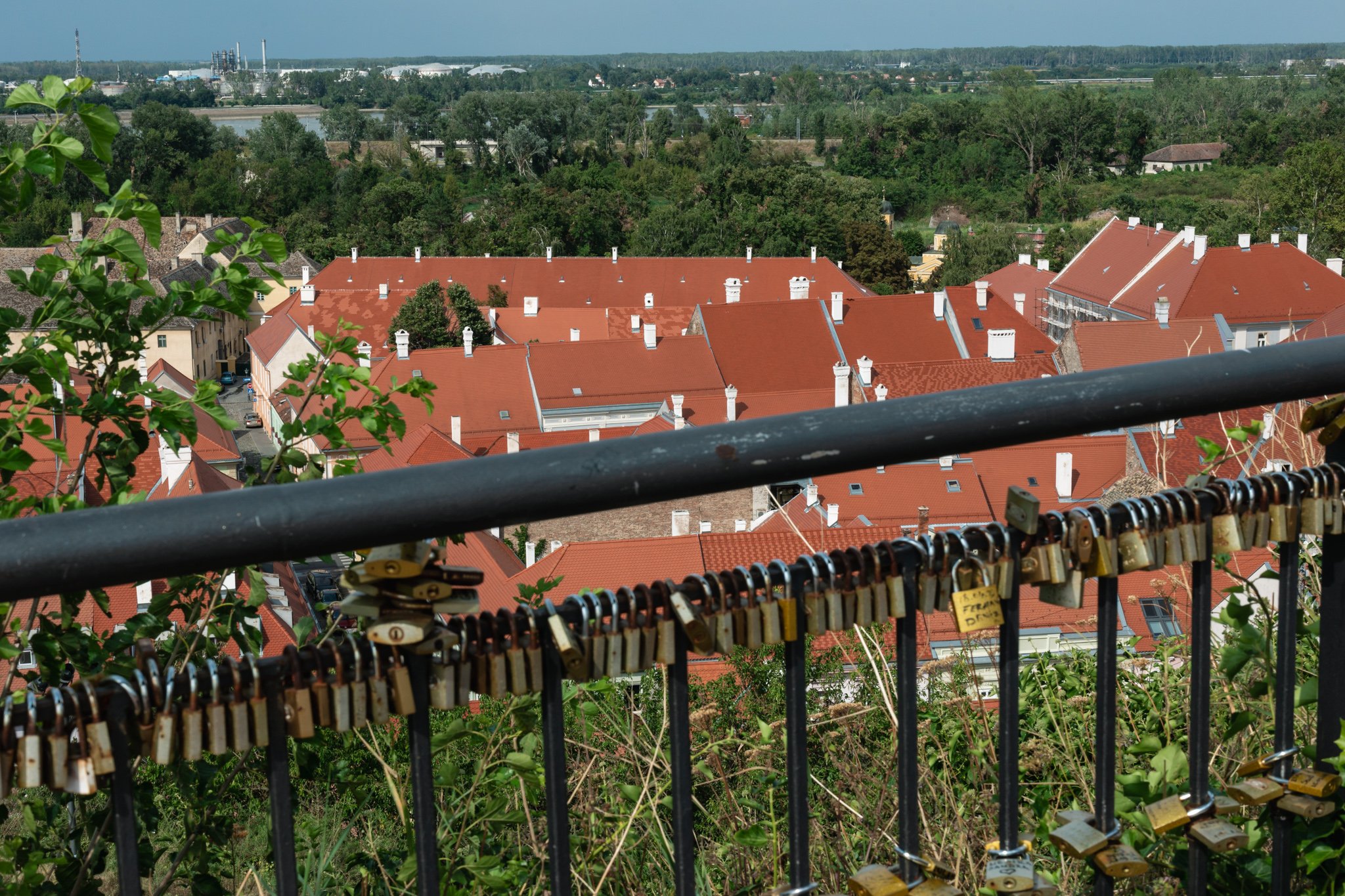
Below the terrace, red roofs crowd together, broken by pale chimneys and narrow streets. Along the railing, rows of padlocks add a smaller, shinier layer to the view.
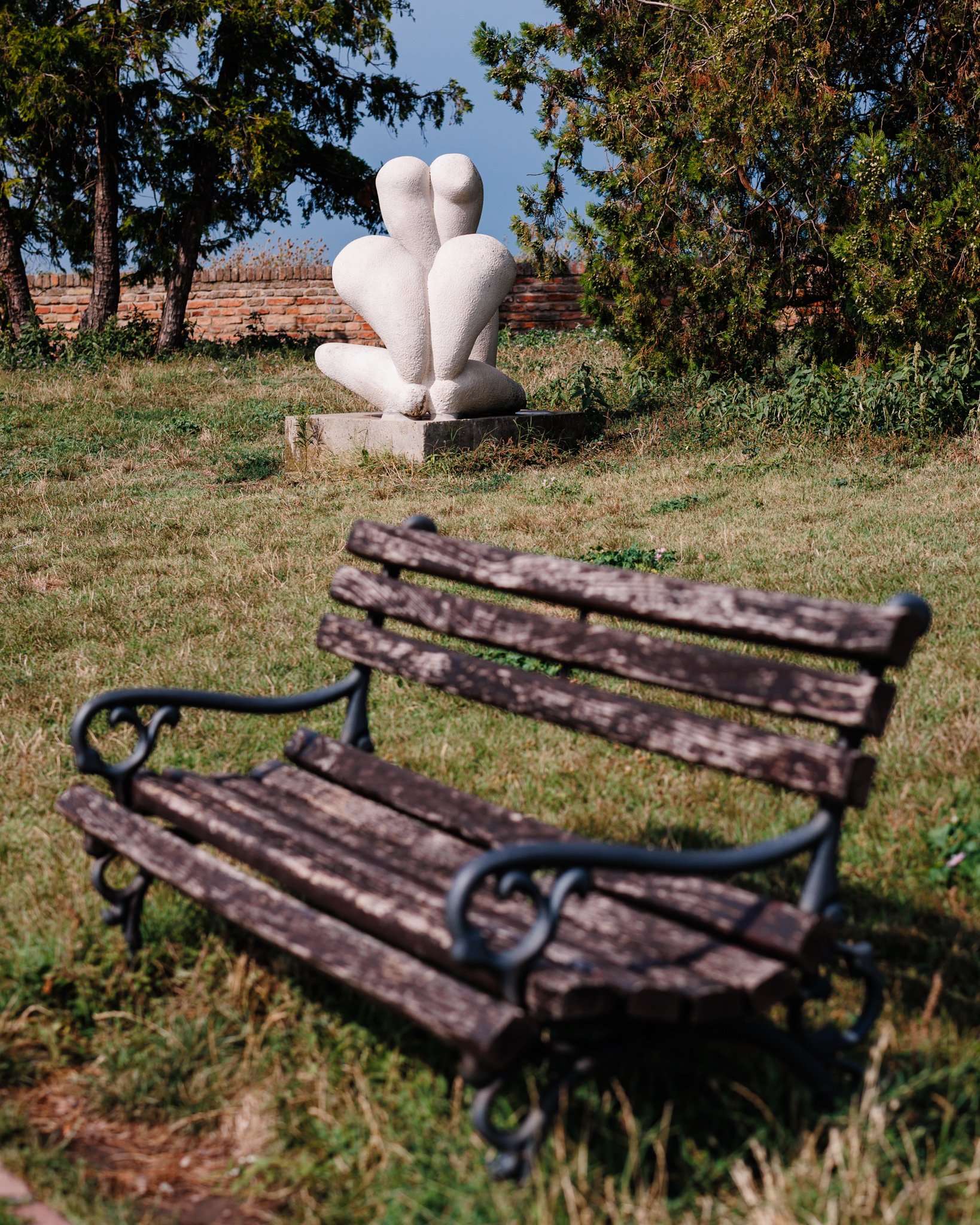
Elsewhere, benches face sculptures on the grass. The fortress has also become a place for making art: its Art Circle has brought together artists working here for decades. The brickwork provides a substantial backdrop to their less defensive activities.
For more than three decades, the clock had a keeper who was never formally hired. In 1988 Lajoš Lukači, a local metalworker, was asked to look at a fault. He replaced a worn gear, wound the clock and began checking on it every day, unpaid. By his own account, no one in authority ever told him whether he was allowed to.
Since 2016 a motor has lifted the clock’s three weights, each about 80 kilograms. The daily visits continued anyway.
The fortress’s drunken clock is still on duty. A minute or so either way—and for decades, someone was counting.
Visit this place
Location
Petrovaradin Fortress / Петроварадинска тврђава
On the right bank of the Danube in Petrovaradin, within the City of Novi Sad
Tvrđava, 21131 Petrovaradin, Novi Sad, Serbia
Practical Information
- Clock
- The Drunken Clock / Pijani sat / Пијани сат
- Location
- Petrovaradin, Novi Sad, Serbia
- Official information
- Petrovaradin Fortress — Novi Sad Tourism Organisation
- Clock tower information
- The clock tower — Novi Sad Tourism Organisation
Information last checked: September 18, 2026 (Current hours, admission, guided tours and underground access unconfirmed; check official tourism information before visiting.)
Conversation
Comments
Review pending commentsComments are reviewed before appearing. The internet already contains enough unattended surprises.
Loading comments…
Leave a comment