Svíčková: Whipped Cream and Berries, on Beef
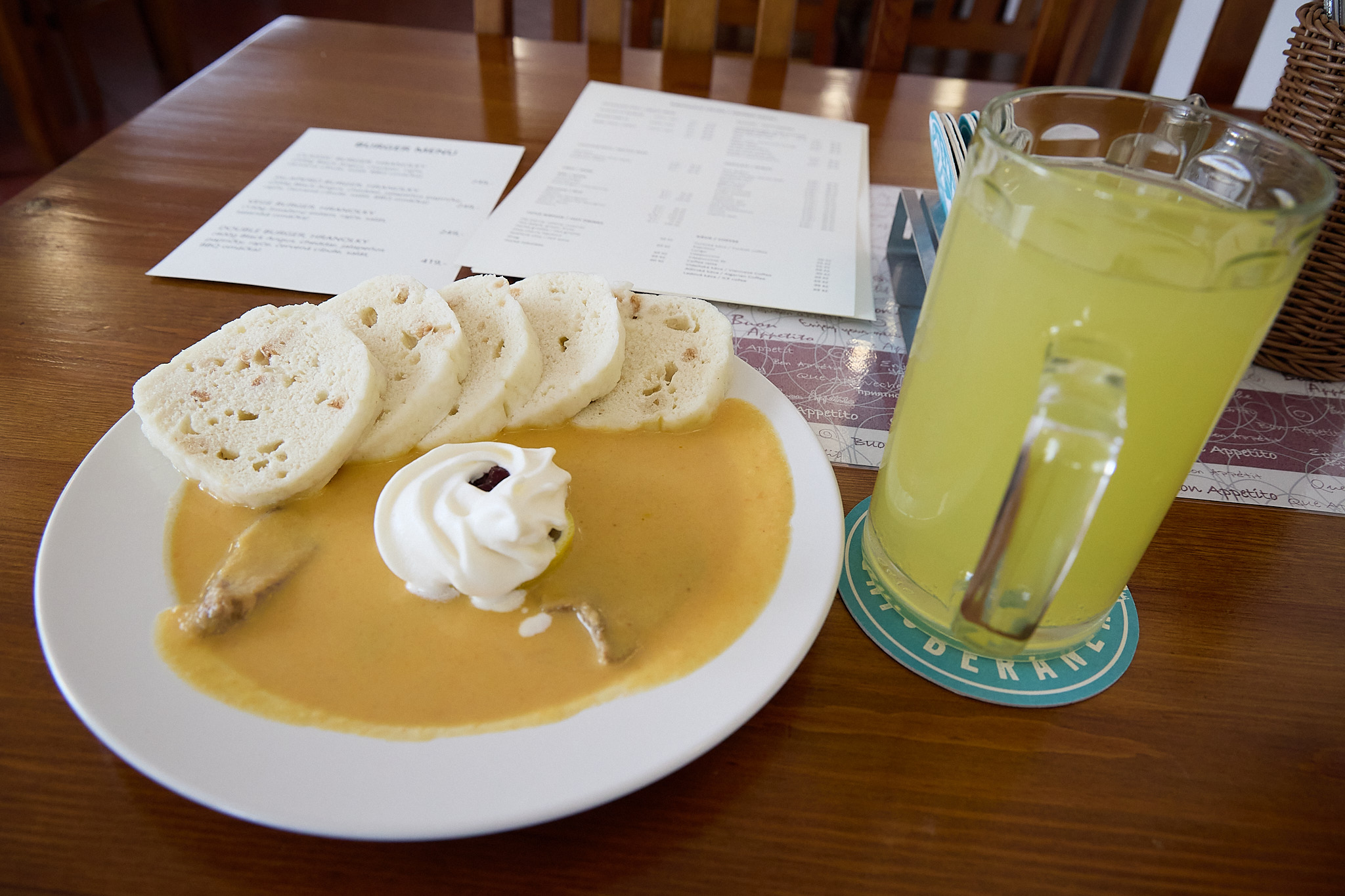
In the middle of my lunch was a target. A swirl of whipped cream sat on a slice of lemon, with dark red berries tucked into the hollow at the top. Around it lay beef in a smooth golden sauce, and along the rim of the plate, five slices of dumpling.
This was svíčková na smetaně, svíčková for short: beef in a cream sauce made from root vegetables, served with bread dumplings. Czechs have long brought it out for weddings and celebrations, and it turns up on ordinary lunch menus too. I had it for lunch on New Year’s Day, at Restaurace U Lišků, by the main entrance to Prague Zoo.
Adjust to Taste
The arrangement in the middle has a name, brusinkový terč: the lingonberry target. English menus often call the berries cranberries.
It looks like a dessert that has landed on the wrong plate. In fact it is there to be used. If the sauce is not quite to your taste, you correct it yourself, with cream to make it creamier, lemon to make it sharper and berries to make it sweeter. The kitchen sends out its sauce and, with it, the means to disagree.
I tried the target every way I could think of: stirred into the sauce, spread on a slice of dumpling, eaten with the beef. Every combination worked.
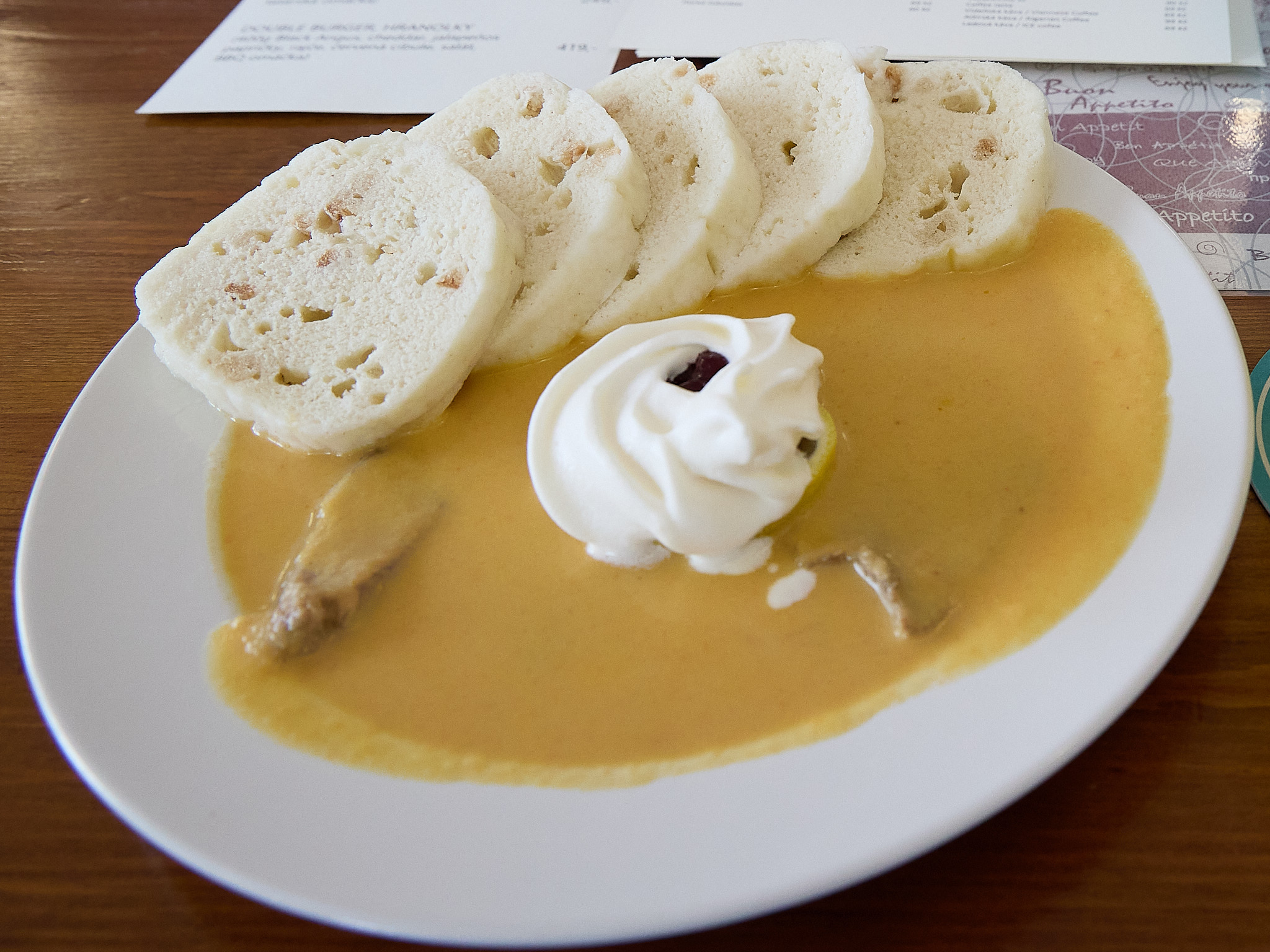
The sauce itself begins as vegetables. Carrot, celeriac, parsley root and onion are cooked with the beef, blended smooth with the cooking juices and finished with cream. It is often called the queen of Czech sauces, though the recipe has not always looked like this: one printed in 1826 already pairs the beef with cream, but leaves out the root vegetables.
On my plate the sauce took up most of the room, and it tasted complex and gentle at once. Svíčková is my favourite of all the Czech dishes I have eaten, and I have never come across it outside Czechia.
Five Slices
The five slices along the rim were not there for decoration either. They were houskový knedlík, the bread dumpling, which begins as a yeast dough with cubes of white bread roll worked into it. The dough is shaped into a log, boiled and sliced: bread dough with bread in it, cooked in water. A slice is soft and full of holes, and it exists to get sauce off the plate.
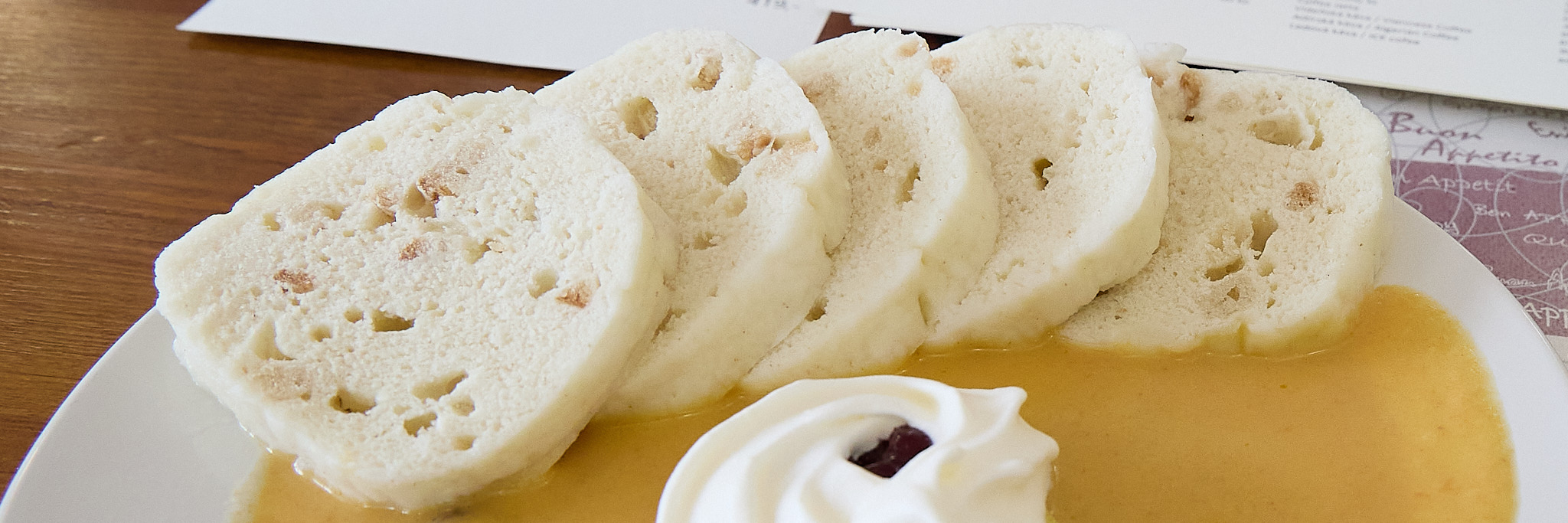
The word knedlík comes from the German Knödel, and so does the name of Serbia’s knedle. The resemblance is mostly in the name. Knedle are potato dough wrapped around a filling, usually a sweet one. A houskový knedlík is not sweet and has no filling, unless you count the bread.
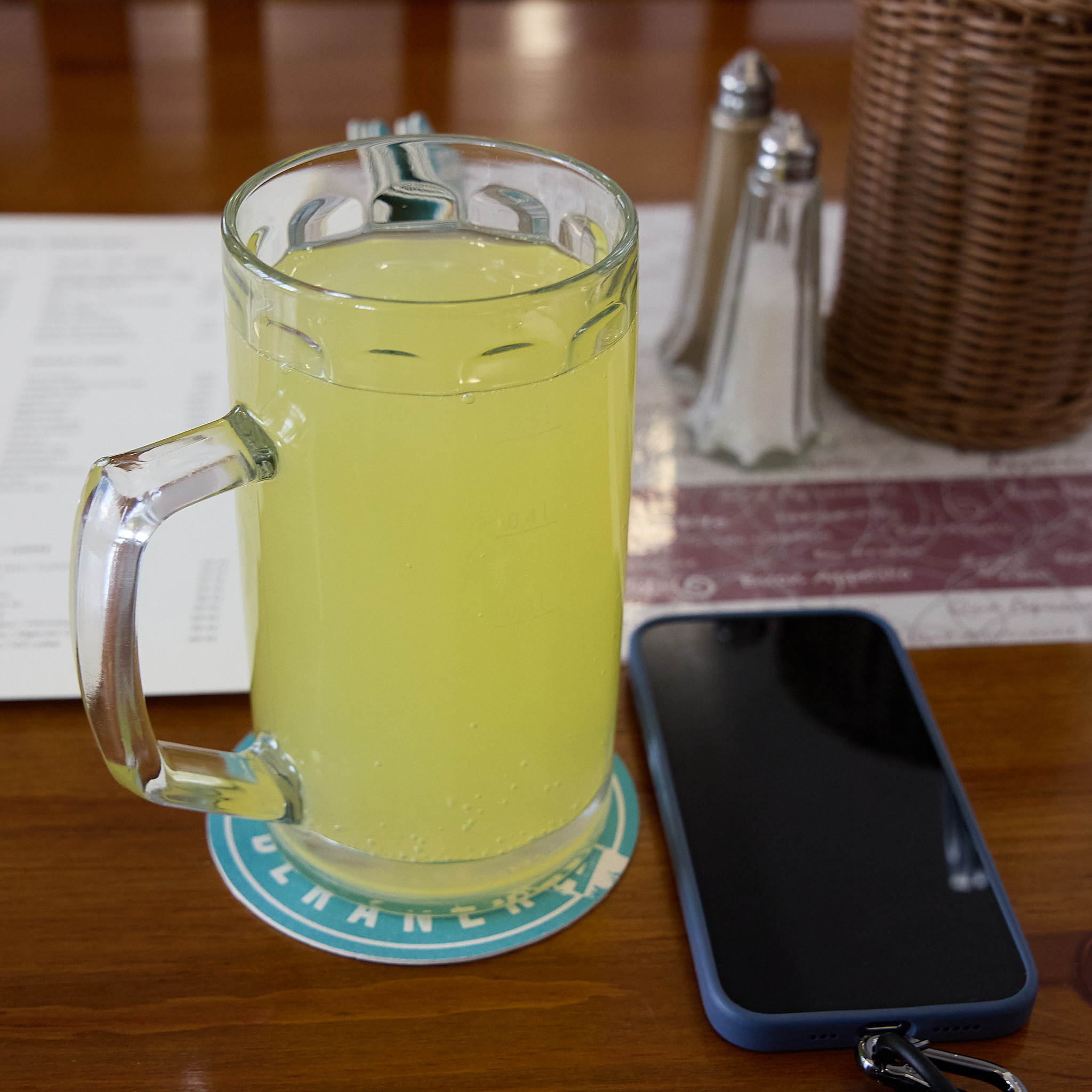
The only thing on the table with nothing to do with the sauce was my lemonade. In Czech restaurants limonáda is often made in-house, from fruit, herbs or flowers, and the name is no promise of lemons; mine was a pale yellow-green. It came in a heavy glass mug with a handle, of the kind beer arrives in, and it was a good deal bigger than I had expected.
Under the Sauce
The beef kept a low profile: two pieces showed above the sauce, one on either side of the target. That is a little awkward, given the name.
Svíčková is the Czech word for beef tenderloin, and the dish is usually made without it.
Tenderloin would be wasted on hours of slow cooking, so a tougher cut from the back leg or the shoulder goes in instead. A common choice is popularly known as falešná svíčková, false svíčková: even the stand-in goes by the original’s name.
Why a Candle
The name had already been borrowed once. Svíčková comes from svíčka, a candle, and it is not clear how a cut of beef came by it. The tenderloin is long and slender, like a taper. It is surrounded by fat, and candles used to be made of tallow. Or, the story goes, master butchers once had to give their journeymen a dinner by candlelight every year, and the roast took its name from the occasion.
Since then it has moved on again. On its own, svíčková can now mean the sauce, and Czech canteens serve a cheaper version with meatloaf in place of the beef. It is called sekaná svíčková: meatloaf svíčková.
Candle, beef, sauce, meatloaf: each has passed the light on to the next, and the name is still burning.
Location
Restaurant
Restaurace U Lišků
By the main entrance to Prague Zoo, in Troja
U Trojského zámku 35/9, 171 00 Prague 7 – Troja, Czechia
Practical Information
Temporarily closed — Restaurace U Lišků is listed as temporarily closed on Google Maps. Check its current status before making the trip.
- Dish
- Svíčková na smetaně — beef in a root-vegetable cream sauce with bread dumplings (eaten on 1 January 2023)
- Ordering note
- Whether svíčková is currently on the menu at U Lišků has not been confirmed.
Information last checked: November 25, 2026 (Listing status and address. Opening hours, phone number and current menu not confirmed.)
Conversation
Comments
Review pending commentsComments are reviewed before appearing. The internet already contains enough unattended surprises.
Loading comments…
Leave a comment