Dancing House: Cheek to Cheek
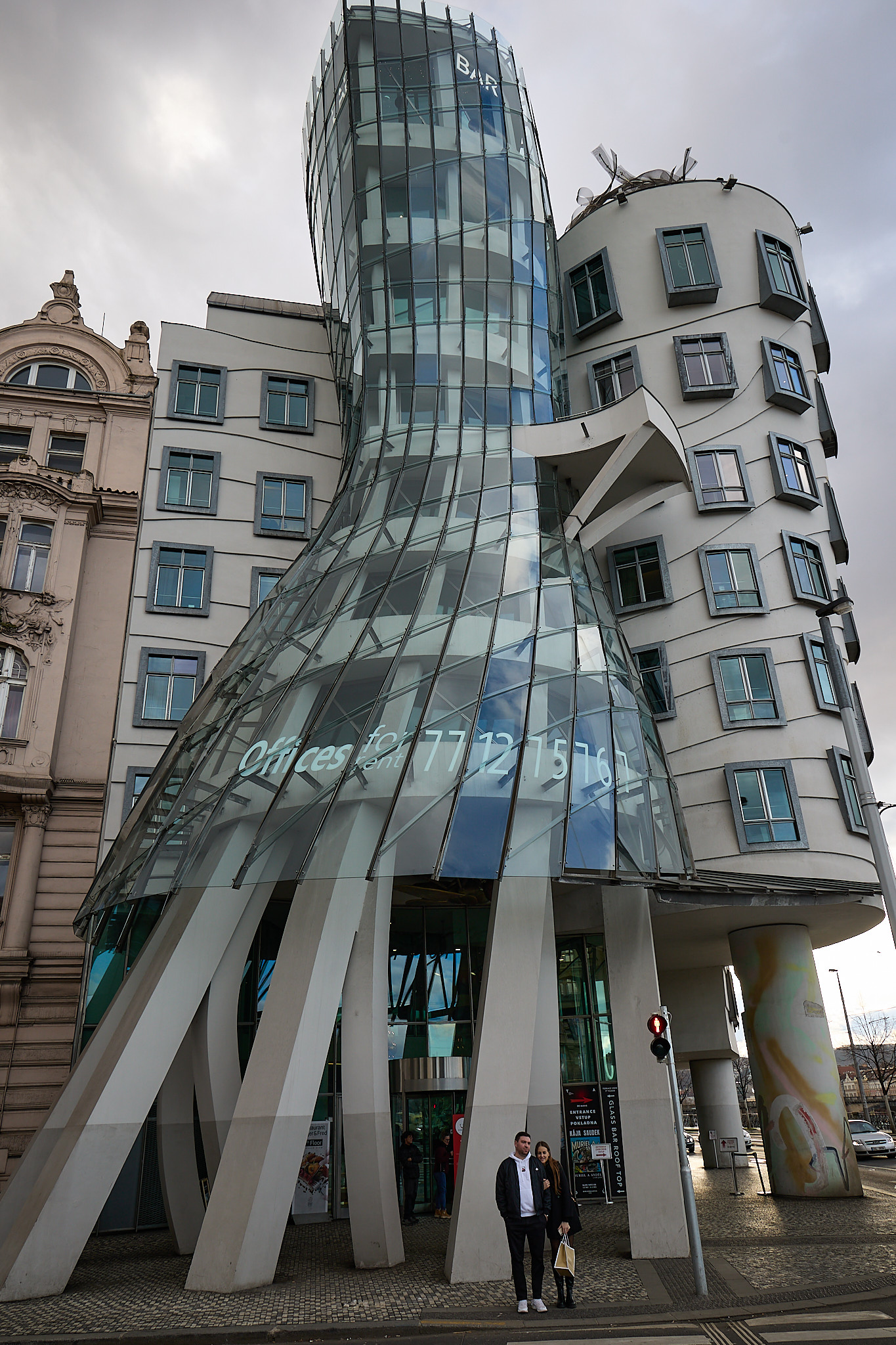
In 1986, Václav Havel asked the architect who lived under the same roof to divide the family flat on the Vltava embankment in two: one half for himself, one for his brother Ivan. Havel was a playwright and a dissident, three years away from becoming president.
The architect was Vlado Milunić, who said he had ended up living there by pure chance. The conversion went ahead with, in his words, the assistance of the secret police, which he was lucky to come through.
Next door was a gap. The house that had stood there was destroyed on 14 February 1945, when American bombers hit Prague. By their own account, they thought they were over Dresden. The ruins were cleared away, and for decades the corner stayed empty.
While the flat was being converted, the two men talked, naively in Milunić’s own word, about how wonderful it would be if a house given over entirely to culture stood on that corner.
Love letters
Three years later the regime fell, and Havel became president. A casual remark of his turned into a commission, and Milunić found himself designing a cultural building for the corner after all. He made it in two parts, one static and one dynamic. He later called it a dance over the end of totalitarianism.
In 1992 the plot was sold to the Dutch insurer Nationale-Nederlanden, which had offices in mind rather than culture. The insurer also pushed for a star partner for Milunić, and got Frank Gehry. The two architects sent models to each other by post across the Atlantic. Milunić called them love letters.
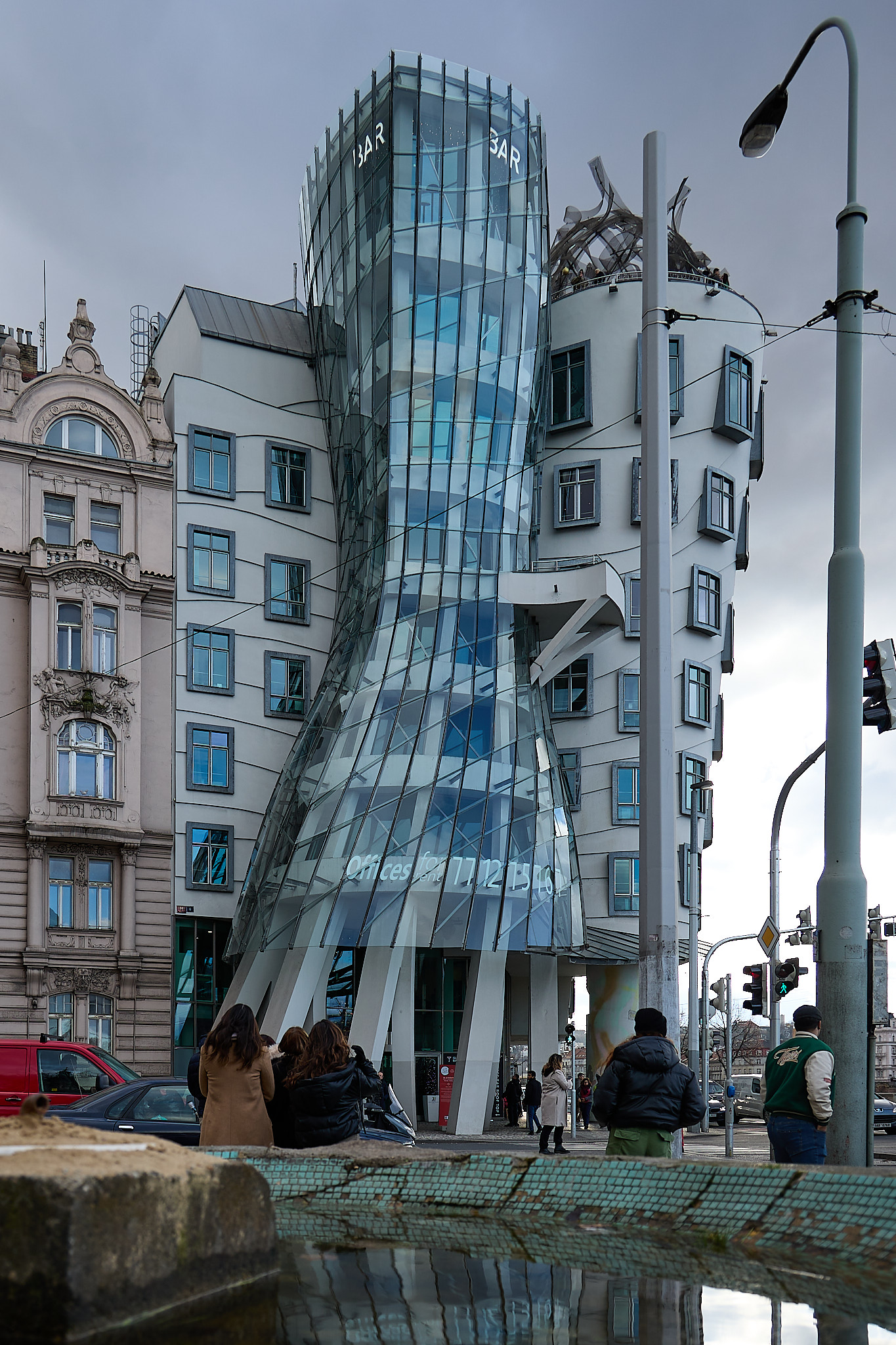
The building was finished in 1996. That December, TIME put it first among the year’s best designs and reported its nickname: Fred and Ginger, after Fred Astaire and Ginger Rogers. Ginger is the glass tower, all curves. Fred is the concrete one, who stands up straight. Neither of the original couple lived to see it.
Making room
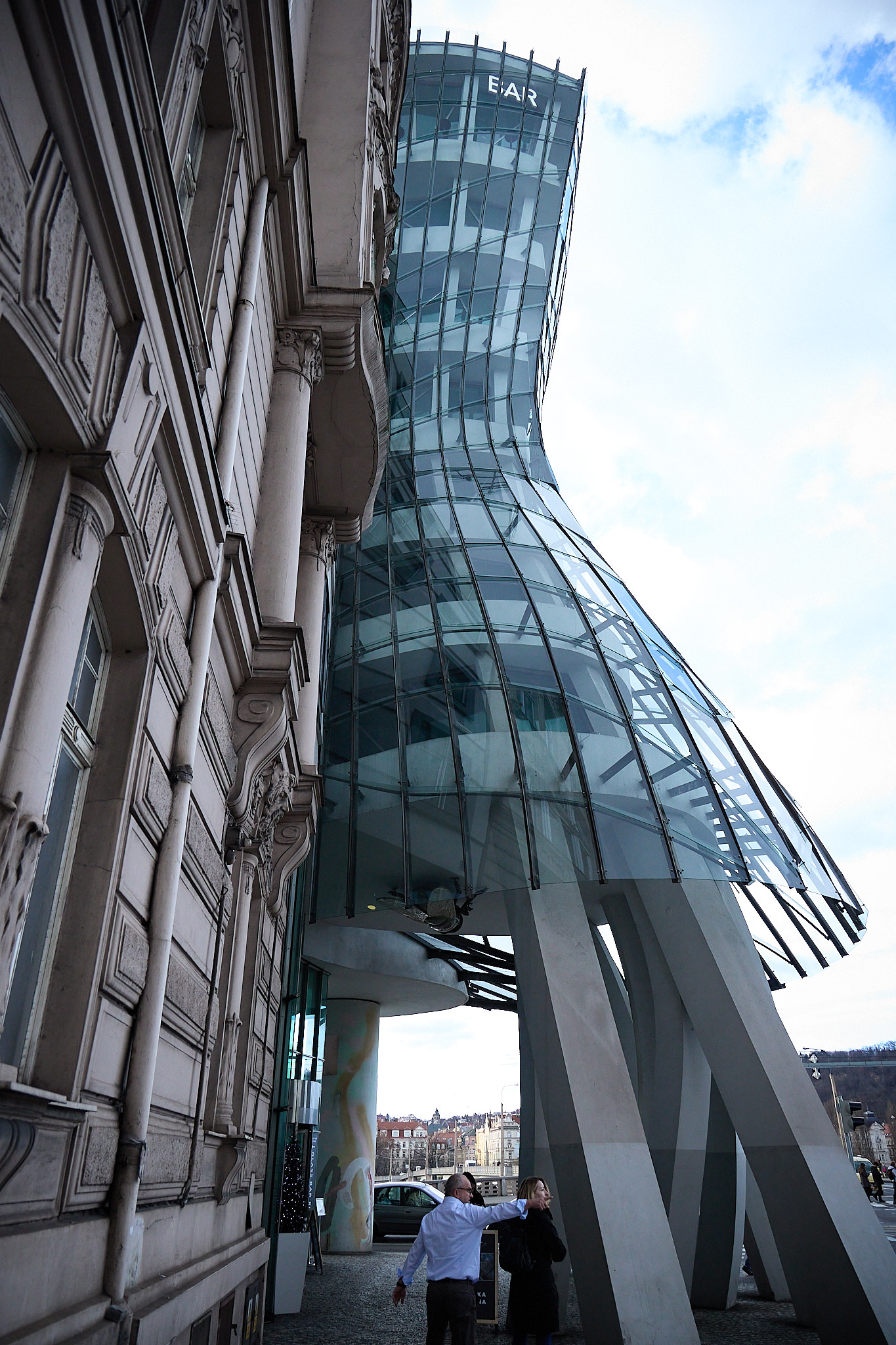
Ginger’s waist was not entirely her own idea. Neighbours complained that the building would block their views, and the design had to be reworked. TIME explained the result: “Ginger isn’t twirling like that just for fun.” The pinch in her waist kept the view of Prague Castle from a neighbouring apartment house largely clear.
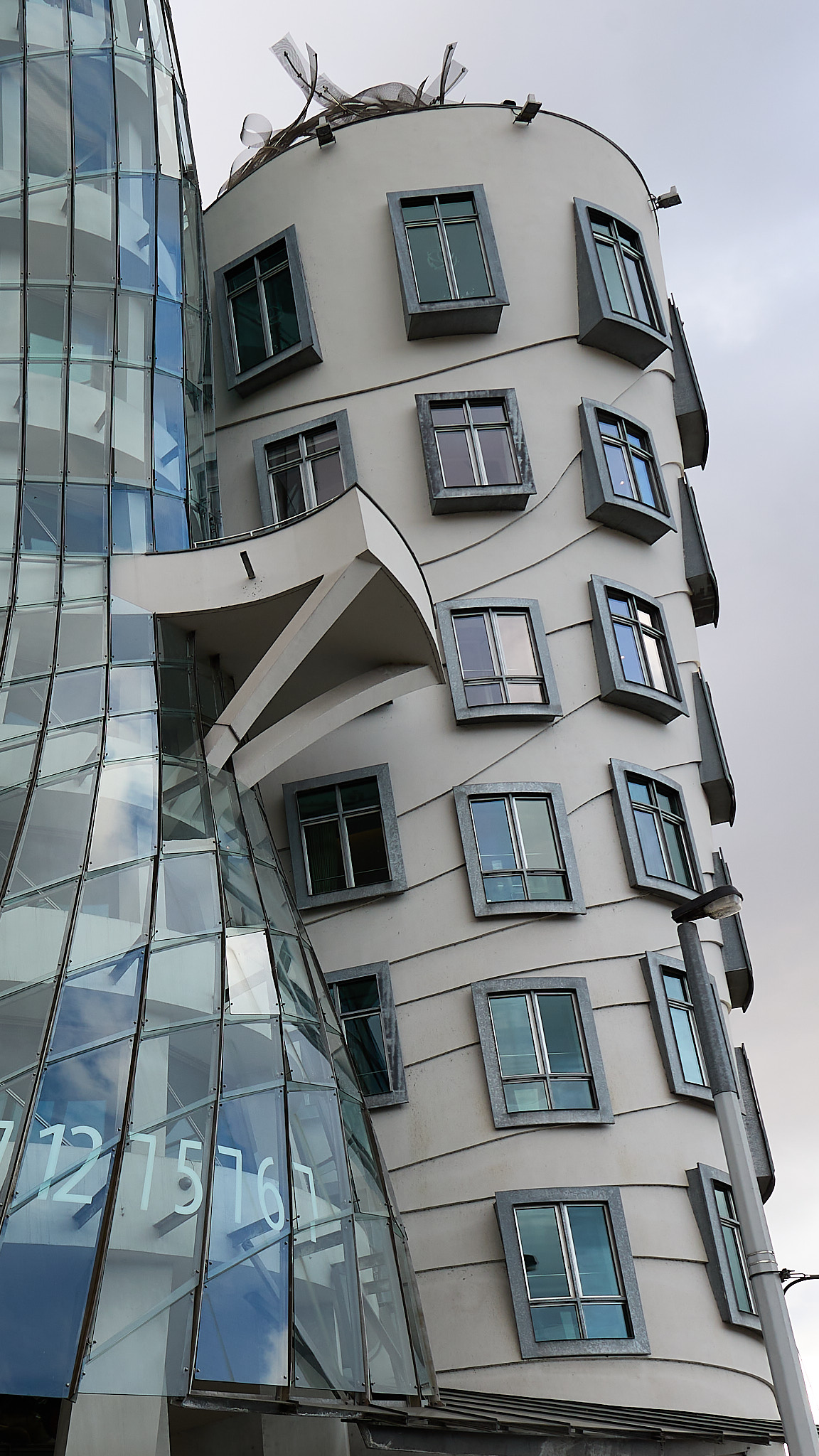
Fred, for his part, has windows that refuse to line up, set in frames that stand out from the wall, with wavy lines running between the floors. TIME saw an echo of the older row houses next door in all that wobble. The concrete facade is made of 99 panels, no two of them alike.
A house of culture
Milunić got his dance. He did not get his house of culture. He later wrote that he very much regretted how it had turned out: a building full of offices the public could not enter, with an expensive restaurant on the top floor.
In 2013 the building was sold to a Prague property company, PSN, and some of it has since opened up. There is now a gallery on the ground floor and below, a café, a hotel, the restaurant, and a glass-walled bar at the top, with a terrace around Fred’s crown. On the January afternoon I walked by, a banner at the entrance advertised a comics exhibition in the gallery, and a tall sign announced the bar on the roof. Across Ginger’s glass, in large white letters, ran a third notice: Offices for rent.
Across the road
In the small park on the other side of the street sits an older neighbour. Alois Jirásek, a writer of historical novels, lived in the house on the corner of the square from 1903 until his death in 1930. The square and the bridge are both named after him. His bronze, pen in hand and notebook on his knee, has been sitting here since 1960, 36 years before Fred and Ginger moved in.
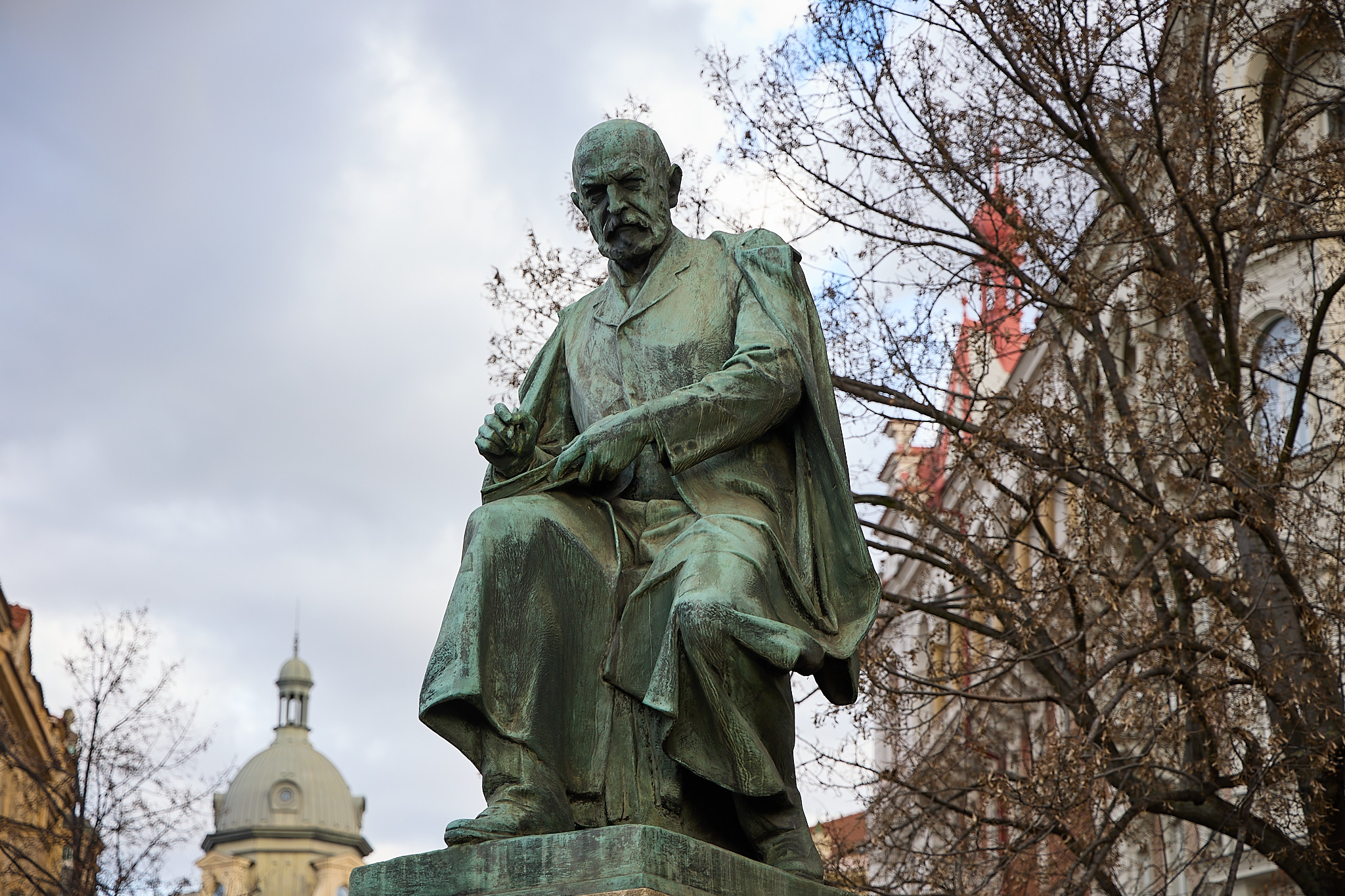
These days he has a second job. The usual way to get a photo with the Dancing House, it seems, is to climb onto Jirásek and pose as if about to kick the building away. The lawn around him is replanted regularly. It never lasts.
The city has a plan for the square: pave part of the lawn, repair the fountain, which no longer works, and move Jirásek a few metres towards the middle of the park. One of the designers argues that the Dancing House has shifted the whole square’s centre of gravity. Not everyone agrees that he should move.
Fred and Ginger have never needed a third dancer. People keep auditioning anyway, from the top of Jirásek.
Visit this place
Location
Dancing House / Tančící dům
On the Vltava embankment at Jirásek Square, at the New Town end of Jirásek Bridge
Rašínovo nábřeží 80 / Jiráskovo náměstí 6, 120 00 Prague 2, Czechia
Practical Information
- Admission
- Free to view from the street and from Jirásek Square
- Visitor note
- The building houses offices, a hotel, a restaurant, a gallery and the Glass Bar on the top floor, with a roof terrace. This story covers the exterior. Jirásek Square is due to be redesigned, and the Jirásek statue may be moved a few metres.
- Official website
- Dancing House
Information last checked: November 21, 2026 (Building facilities checked against the Dancing House website (tancicidum.cz).)
Conversation
Comments
Review pending commentsComments are reviewed before appearing. The internet already contains enough unattended surprises.
Loading comments…
Leave a comment