Museum of Vojvodina: Window Shopping in the Past
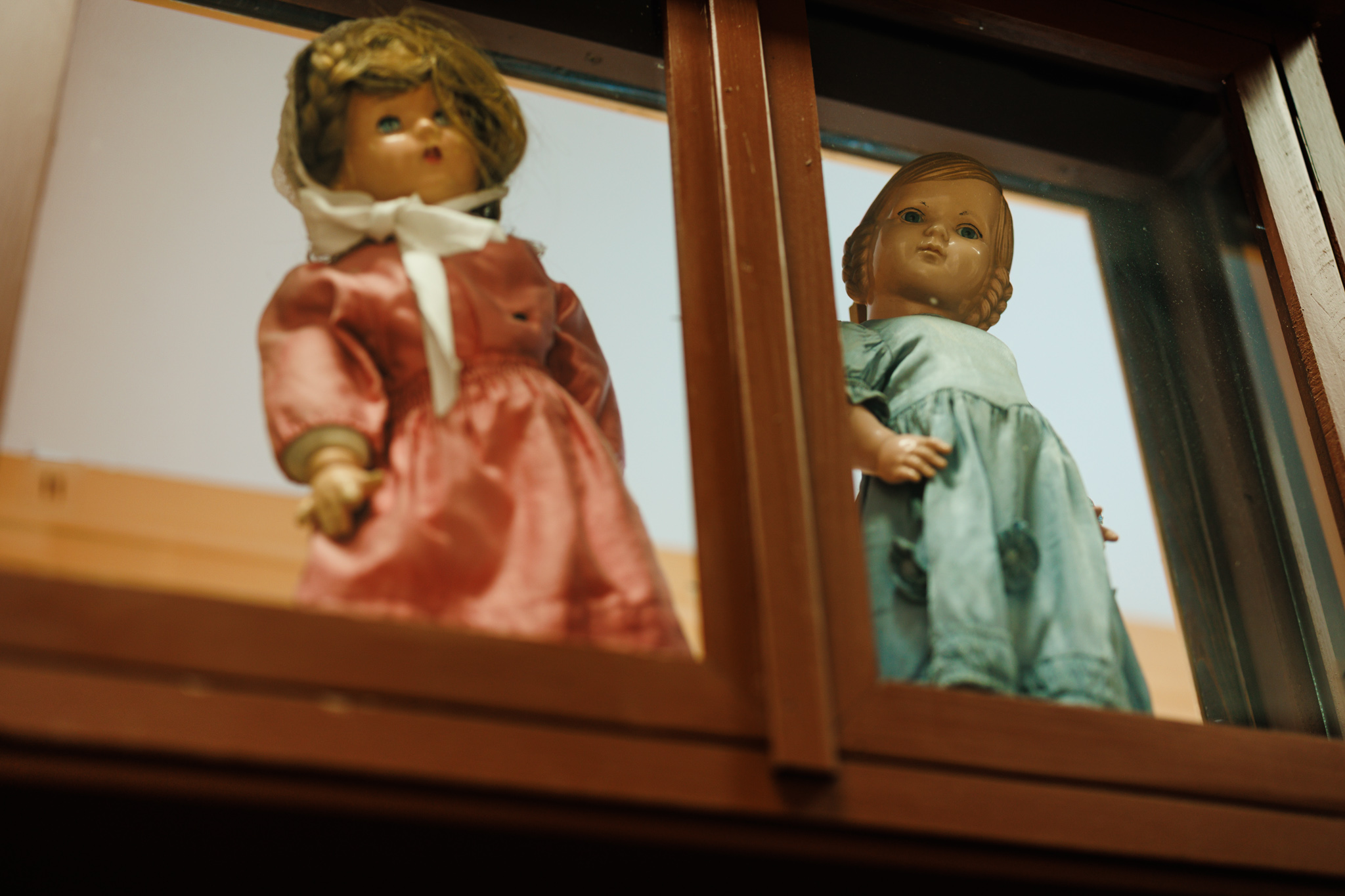
The doll in pink wore a large white bow beneath her chin. Beside her, another in pale blue rested a hand across her stomach. Both looked down at me through the glass.
This was the Museum of Vojvodina in Novi Sad, northern Serbia. Its collections cover the region’s archaeology, history and traditional life, and even a shopping street. I had come to look at history and found myself browsing shop windows.
There was quite a lot of history to get through before reaching the shops.
Before the shop windows
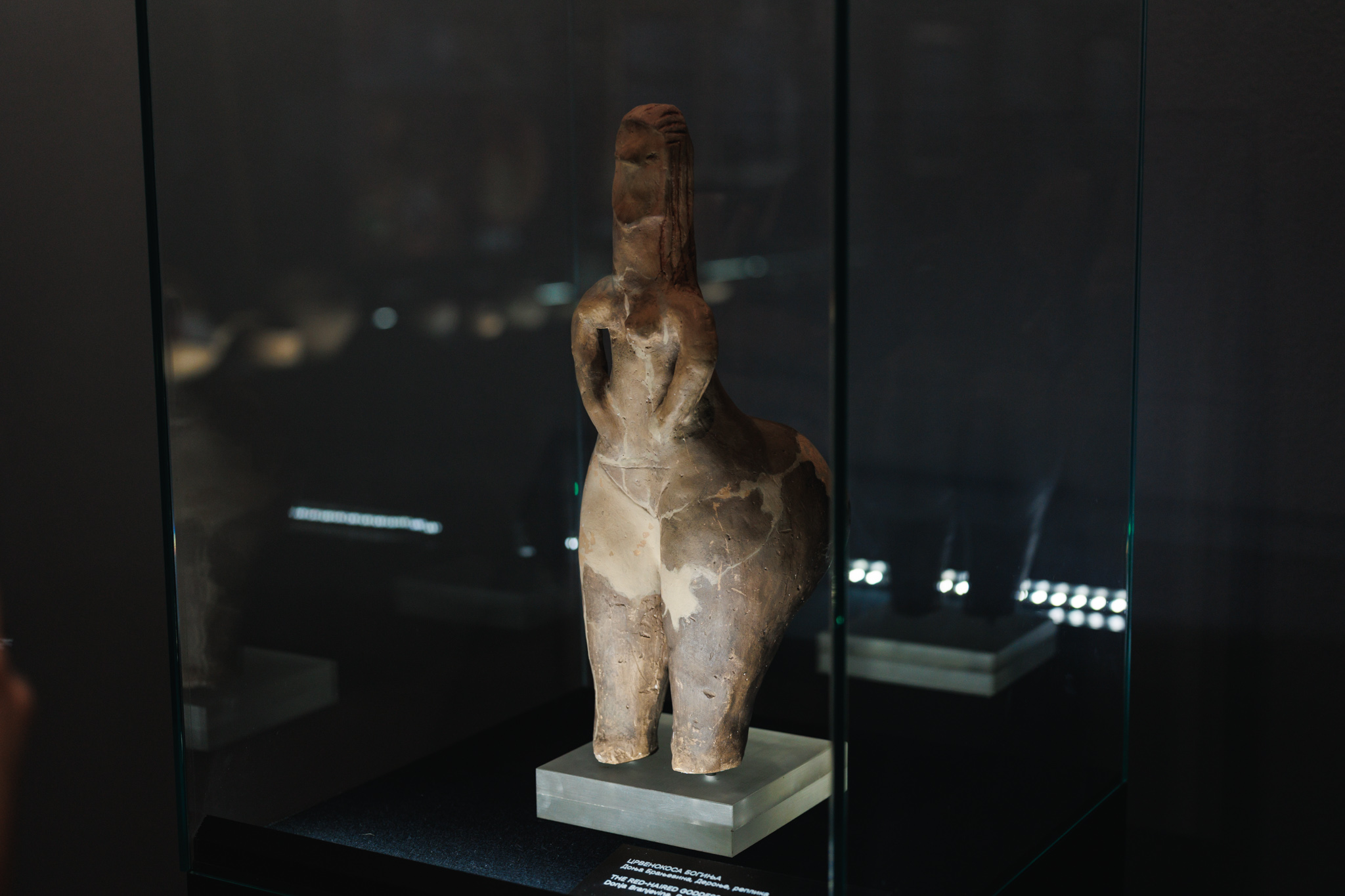
A long, narrow head rose above a small face. Arms bent across the chest, while the hips spread sharply outwards. The figure standing in the display case was known as the Red-haired Goddess.
The original was discovered in 1989 at Donja Branjevina, an archaeological site in northern Serbia. About 7,500 years old and 38 centimetres tall, it belonged to a community of early farmers. The museum displays a replica, its outline distinctive even from across the room. The original belongs to the public library in Odžaci, which kept it in a local bank’s safe for almost thirty years. An unusual place for a fertility goddess, if a secure one. In 2019 it went on long-term loan to the National Museum in Belgrade.
Her name comes from traces of red colouring on her hair. The pronounced bodily features have been interpreted as symbols of fertility, connecting the figure with the concerns of people who cultivated land and raised livestock. A successful harvest mattered long before there was a shop window in which to display its results.
A well-decorated table
Much later in the collection came something intended for the table.
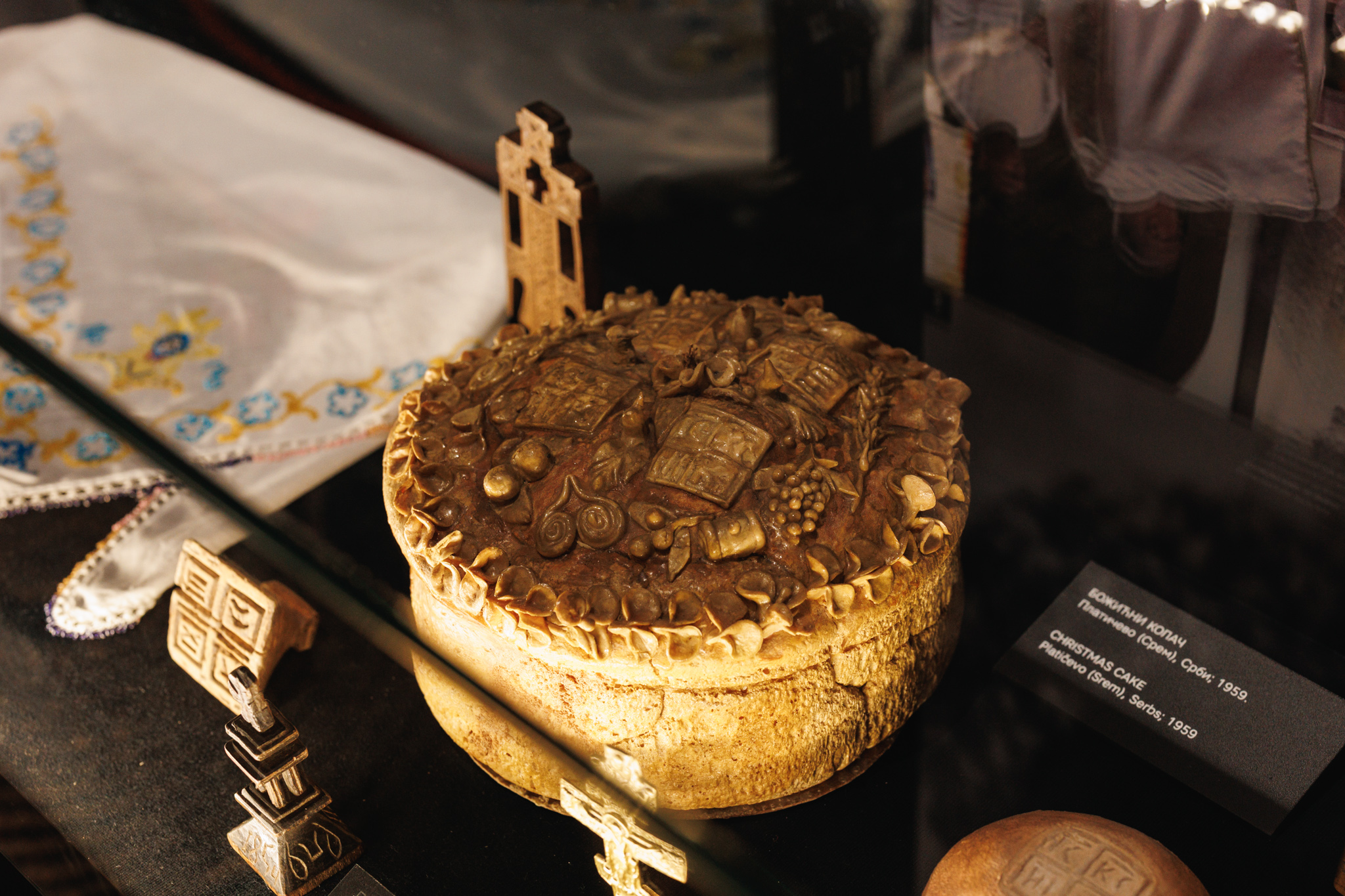
Birds and crops made from dough covered the top of a round loaf. A tall ornament stood up at the back, rising above smaller shapes and impressed patterns. There was enough on the surface to reward a slow look around it before anyone considered a knife.
The label called it a Christmas cake—božićni kolač—from the Serbs of Platičevo, in the Srem region, dated 1959. In Serbian, kolač covers festive breads like this one as well as cakes. The collection record describes four birds, representations of crops and four impressions made with a bread stamp.
Such breads had a special place in Christmas celebrations in Vojvodina. Dough could be shaped into crops, fruit and farming tools, carrying wishes for fertility and abundance. The decorations brought the things that sustained a household onto its festive table.
Since 1959, nobody seems to have settled on where to cut.
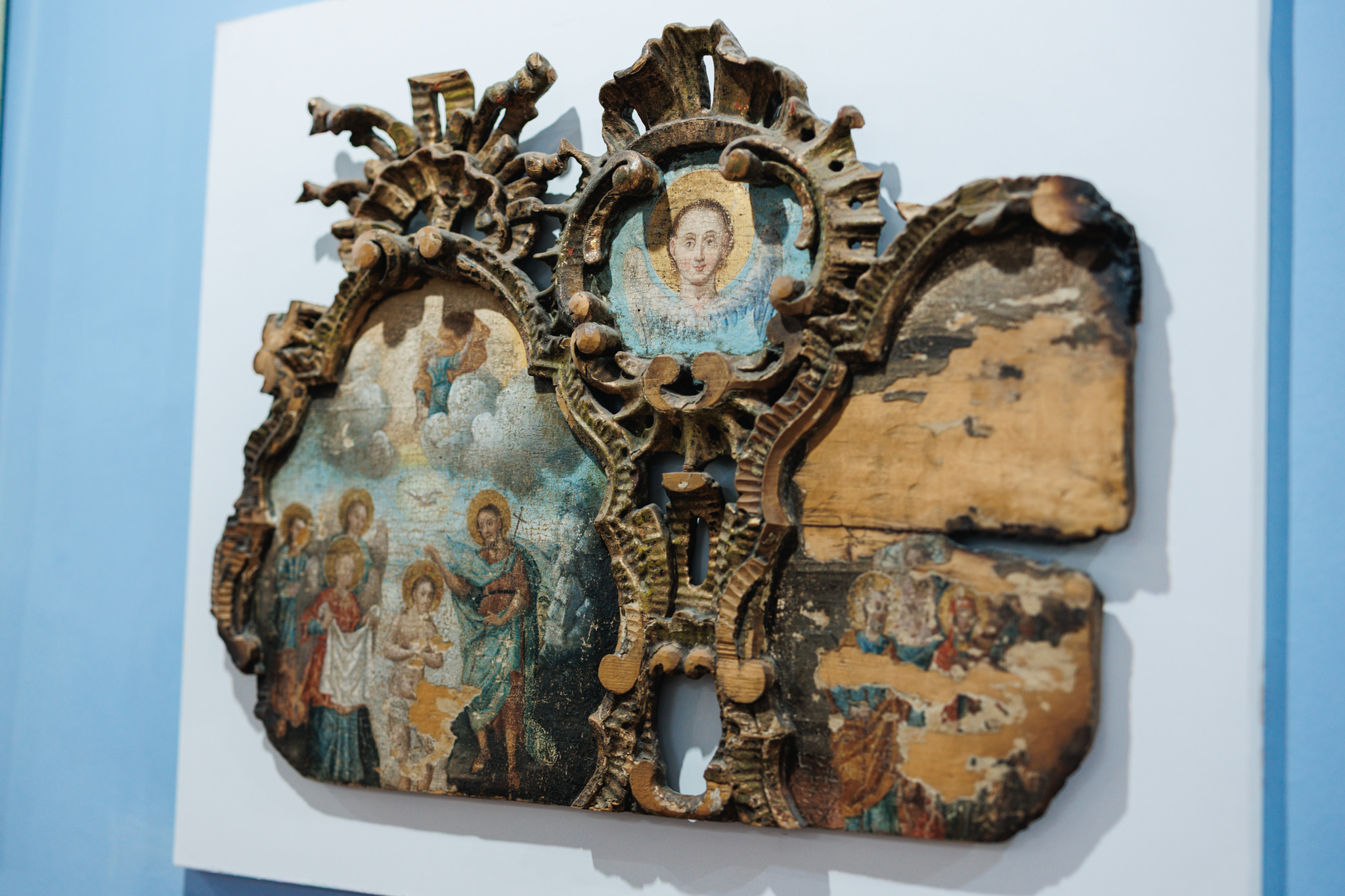
Not everything nearby was meant for the table. Religious paintings looked out from frames of curling woodcarving.
Window shopping
Along a long museum corridor, shopfronts stood beneath projecting awnings. Wooden-framed windows lined the passage, with an APOTEKA sign marking the pharmacy at the far end.
The street brings together trades and businesses from the mid-19th to the early 20th centuries. A fashion shop from Novi Sad, a tailor and a toy workshop from Zrenjanin, and a pharmacy from Odžaci, the town whose library owns the Red-haired Goddess, help furnish it. Errands that once required travelling around Vojvodina could now be considered within a single corridor.
Outside the photographic studio, a life-size panel showed a moustached postman saluting. He carried letters in one hand and a large bag over his shoulder. The shops had been supplied with someone to deliver their mail. His bag was marked Mitrovica. Even the post had come from out of town.
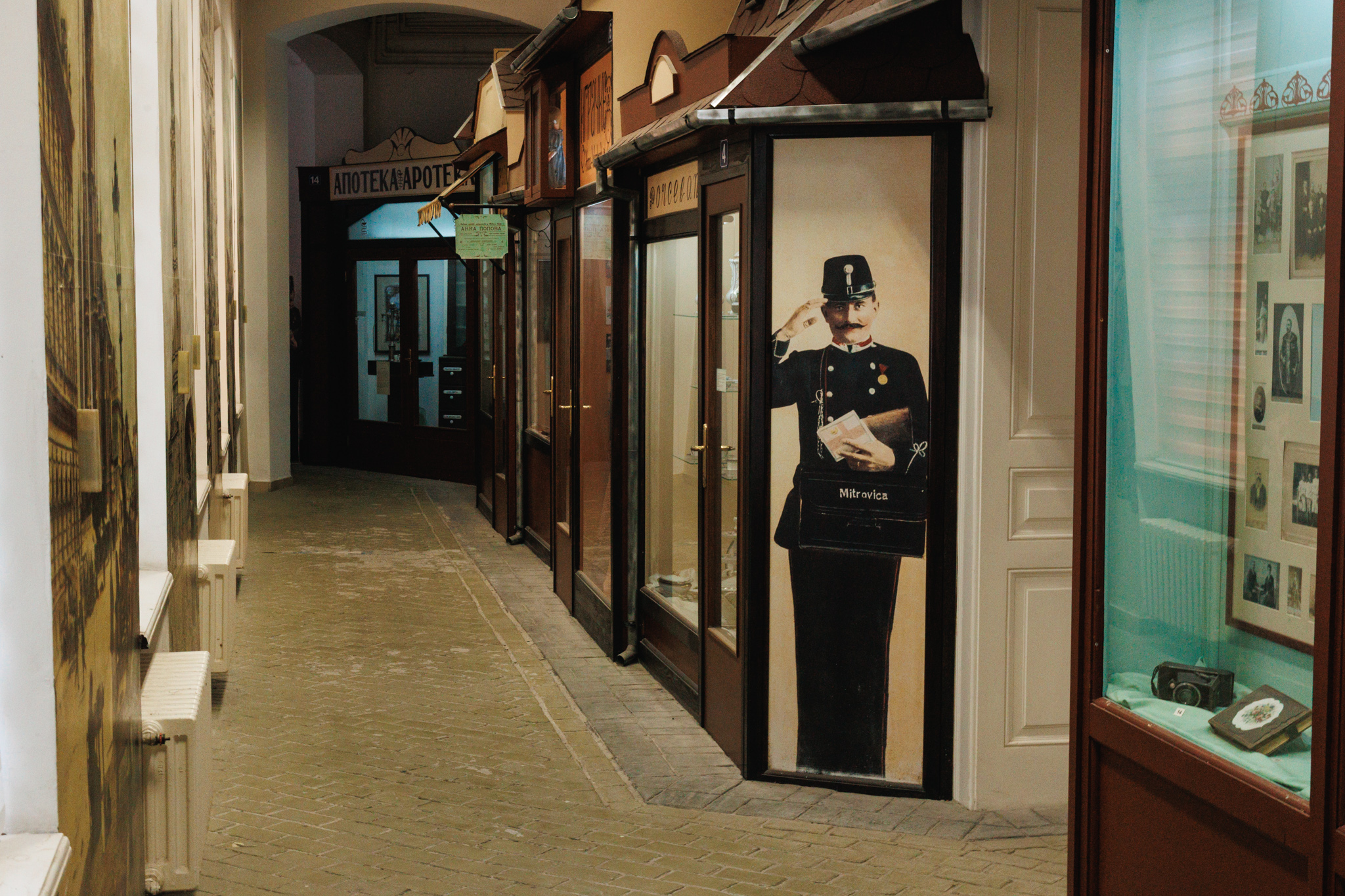
Portraits and an old camera filled the studio’s window. I stopped with my own camera in hand, rather late for an appointment.
The dolls in the opening photograph belonged among these shop windows. The sheen of the pink dress, the white bow and the gathers in the pale blue fabric gave them the dressed-up appearance of toys still waiting to be chosen.
It was easy to imagine someone wanting one. Whatever had changed since these shops did business, the habit of stopping at a window to look at something appealing was still working.
Outside the window
The outdoor displays occupied rather more space. A Sherman tank stood beside the museum building, with green artillery pieces nearby. Tracks, wheels and thick metal plates replaced the finer details of the shopfronts. Other details had been added since: graffiti tags covered the tank’s hull.
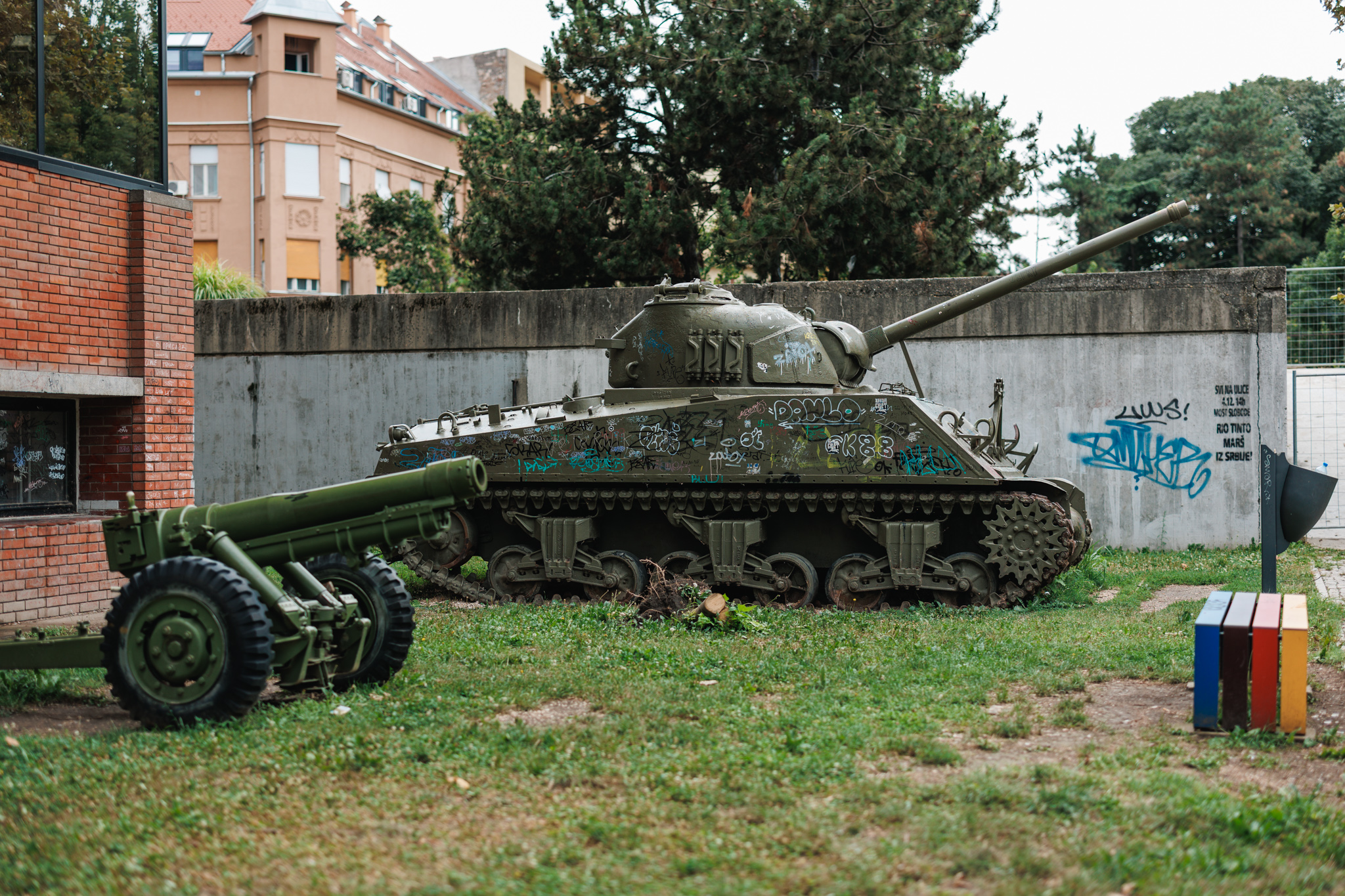
One of the guns had something bright blue in its muzzle.
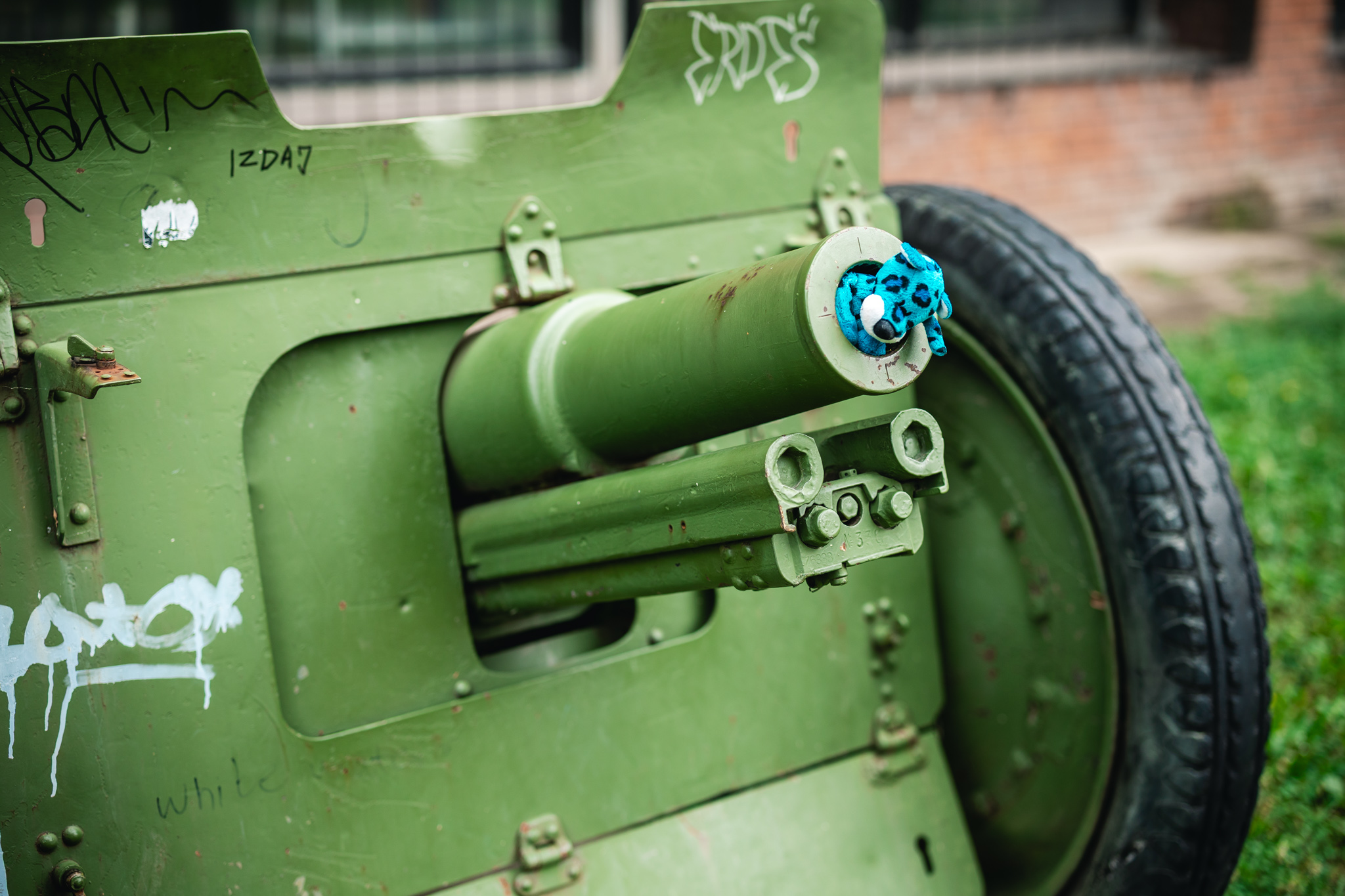
A blue, black-spotted animal had been tucked into the barrel, its face and a paw protruding from the opening.
It was a lot of hardware for one soft toy.
Visit this place
Location
Museum of Vojvodina / Музеј Војводине
The historic collections and reconstructed shopping street are in the building at Dunavska 35; see the current-access notice below.
Dunavska 35–37, 21101 Novi Sad, Serbia
Practical Information
This article records a visit in August 2023. The permanent exhibition at Dunavska 35 closed on 16 July 2026 for preparations for renovation. Temporary exhibitions and other programmes continue, as does the permanent exhibition at Dunavska 37. A reopening date for Dunavska 35 has not been confirmed; check with the museum before travelling for the displays featured here.
- Regular opening hours
- Tuesday–Friday 09:00–19:00; Saturday–Sunday 10:00–18:00. Closed Monday. These general hours do not override the Dunavska 35 closure above.
- Ticket sales
- Until 18:00 Tuesday–Friday and 17:00 Saturday–Sunday.
- Regular admission
- Adults RSD 300; students and visitors over 60 RSD 200. The regular ticket covers the exhibitions at Dunavska 35 and 37 and the Museum of Unification; availability is affected by the closure above.
- Accessibility
- The buildings are not fully accessible to wheelchair and pushchair users. Contact the museum at least one day ahead to arrange assistance with the freight lift: pedagoska.sluzba@muzejvojvodine.org.rs.
- Visitor information
- Official visitor informationMuseum website and notices
Information last checked: September 26, 2026 (Current access, regular opening hours, ticket sales, admission, accessibility and museum map pin.)
Conversation
Comments
Review pending commentsComments are reviewed before appearing. The internet already contains enough unattended surprises.
Loading comments…
Leave a comment