Cu Chi Tunnels: Long, Low and Lived-In
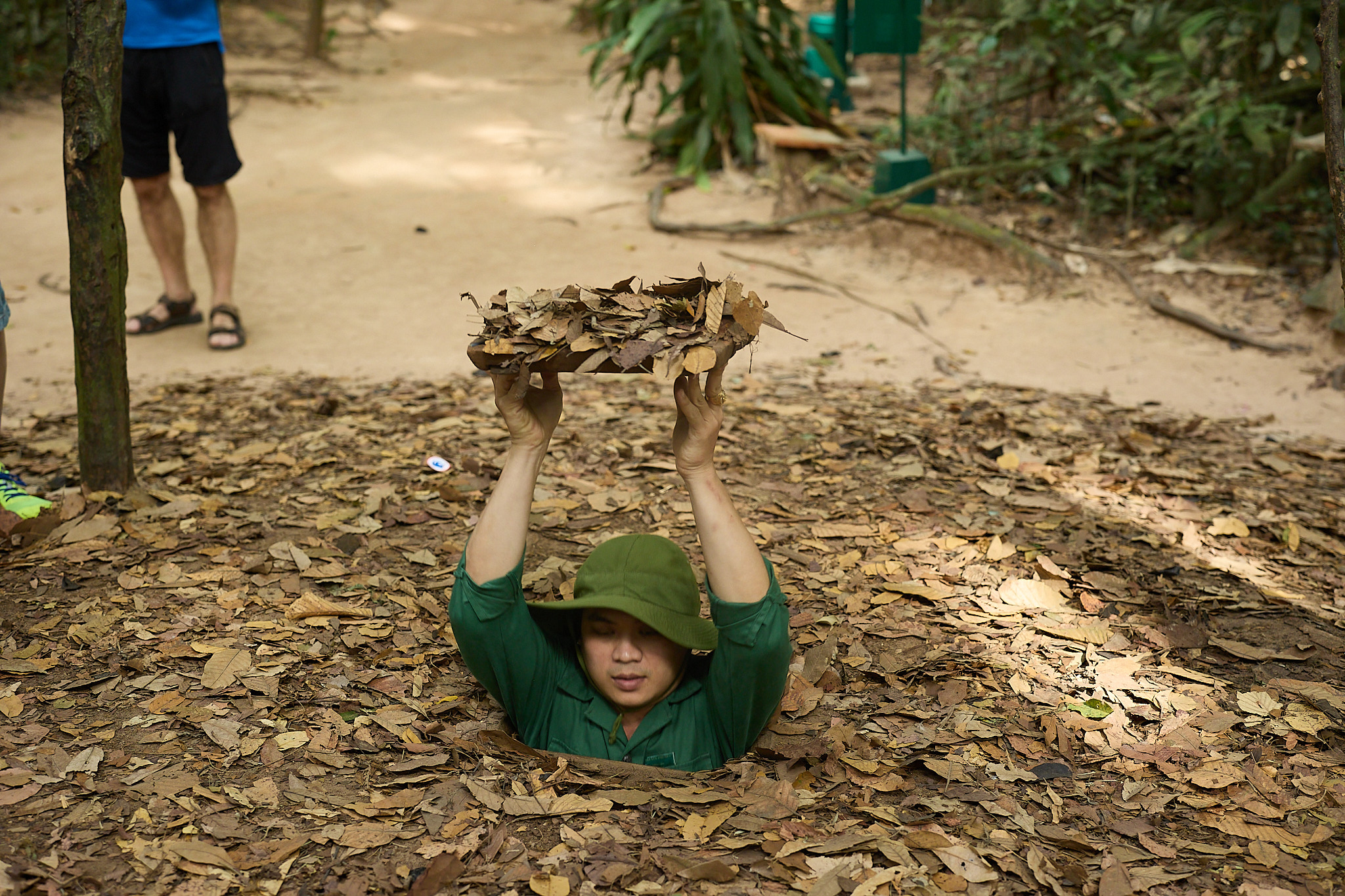
A man in a green uniform sweeps the dead leaves aside. Underneath is a small wooden lid, and under the lid, a hole barely wider than he is. He steps in, sinks to his chest and raises the lid over his head. Then he lowers it, and himself, out of sight. Where he was standing, there are only leaves.
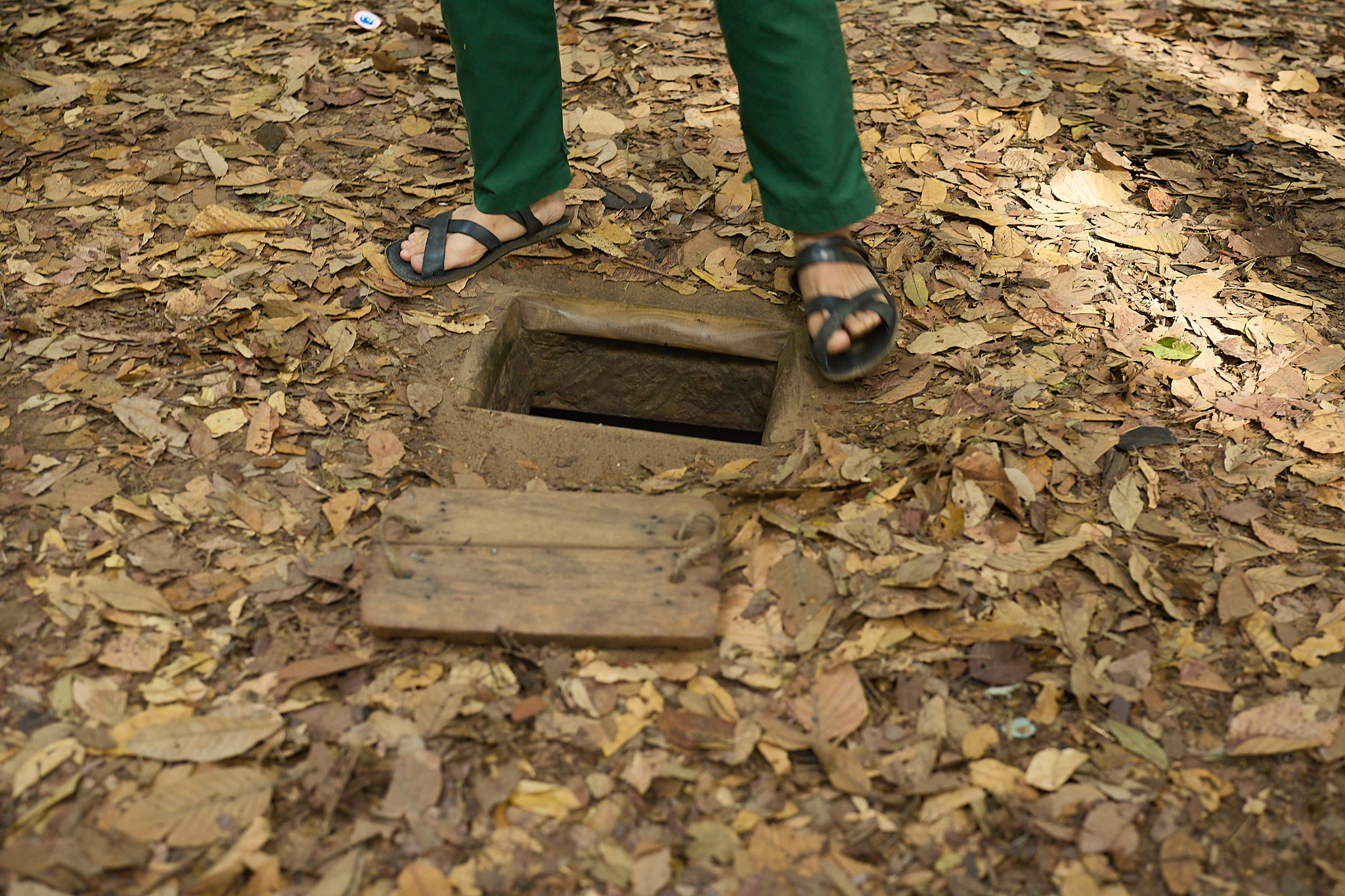
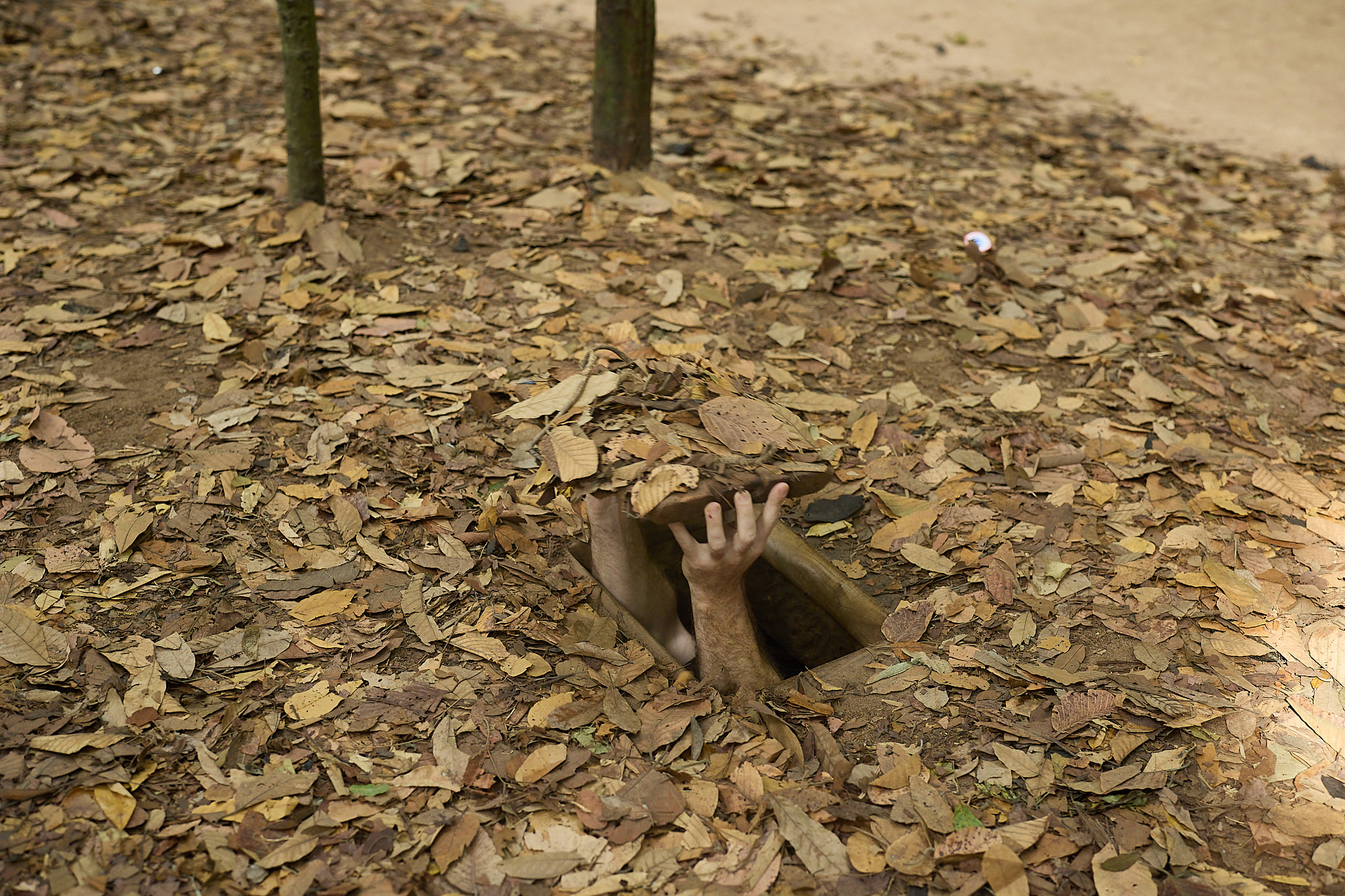
For the people of Củ Chi, disappearing was a way of fighting. This district north-west of Ho Chi Minh City, then Saigon, spent nearly thirty years, on and off, at war with forces far larger and better armed than its own: first the French, then the government in Saigon and its allies, led by the United States. People began digging beneath their villages in the 1940s, and in the 1960s the tunnels grew into a network running under much of the district. Two stretches are preserved for visitors, at Bến Đình and Bến Dược. I went to Bến Dược, where the tunnels once sheltered the command of the military zone around Saigon.
Long
In a room with a flag, a portrait of Ho Chi Minh and a small altar, two framed certificates on the wall agree: THE LONGEST TUNNELS. One gives the length as 250 kilometres and says the record “was set by Cu Chi Tunnels in Vietnam Between 1948 and 1975”. The dates are, near enough, those of the wars. The other, from the Asia Book of Records, is made out to the site’s management. Neither says who did the digging: the villagers and fighters of Củ Chi, mostly with hand tools.
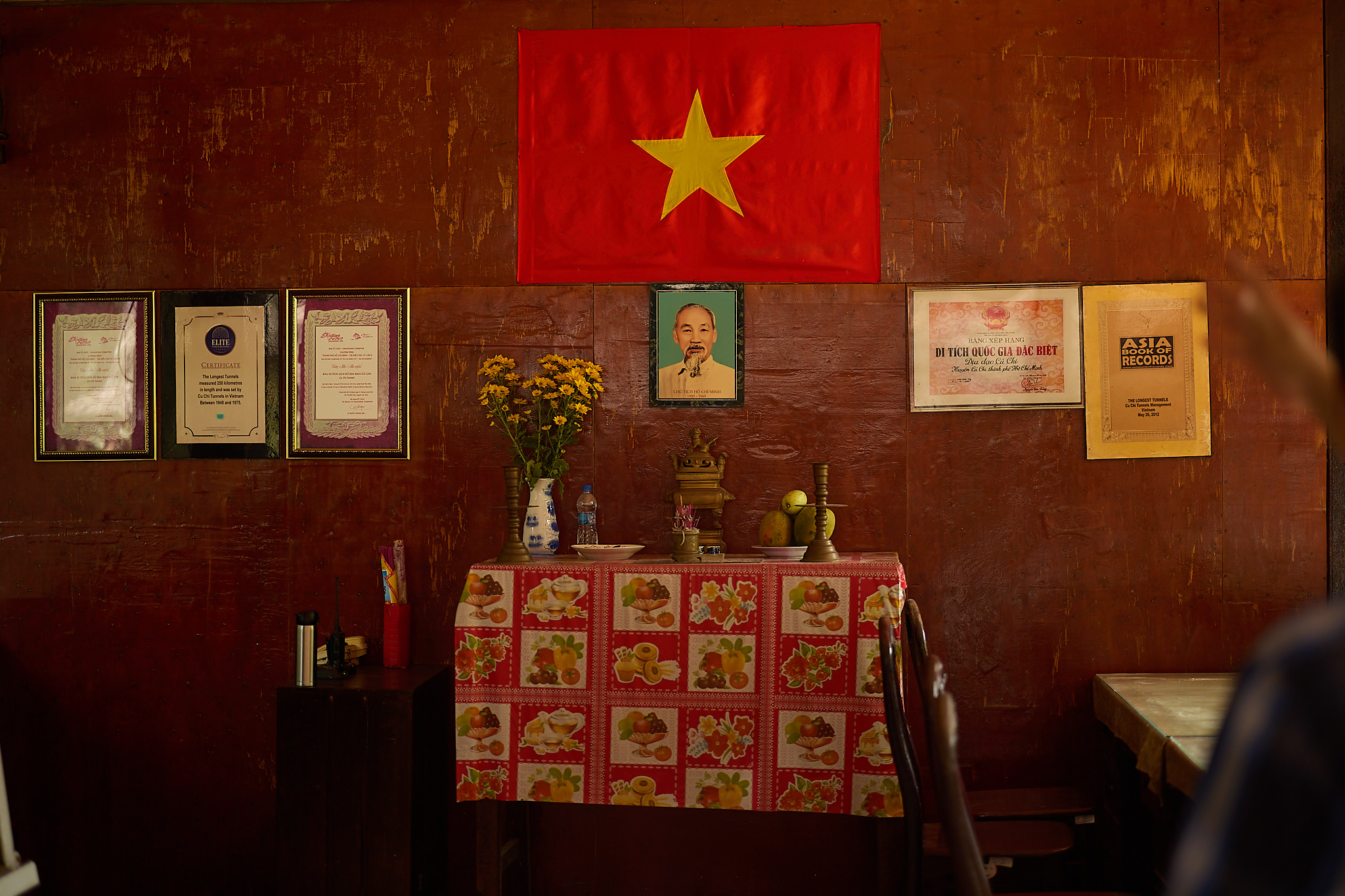
The figure depends on whom you ask; other accounts say more than 200 kilometres. About four kilometres is preserved at the two sites, and the stretch visitors crawl through is a short part of that.
Overhead
Above ground, the site displays a tank, a transport plane and bomb and shell casings by the shedful. One pile is labelled THE SHELLS AND BOMBS OF US ARMY ON THE CU CHI LAND.
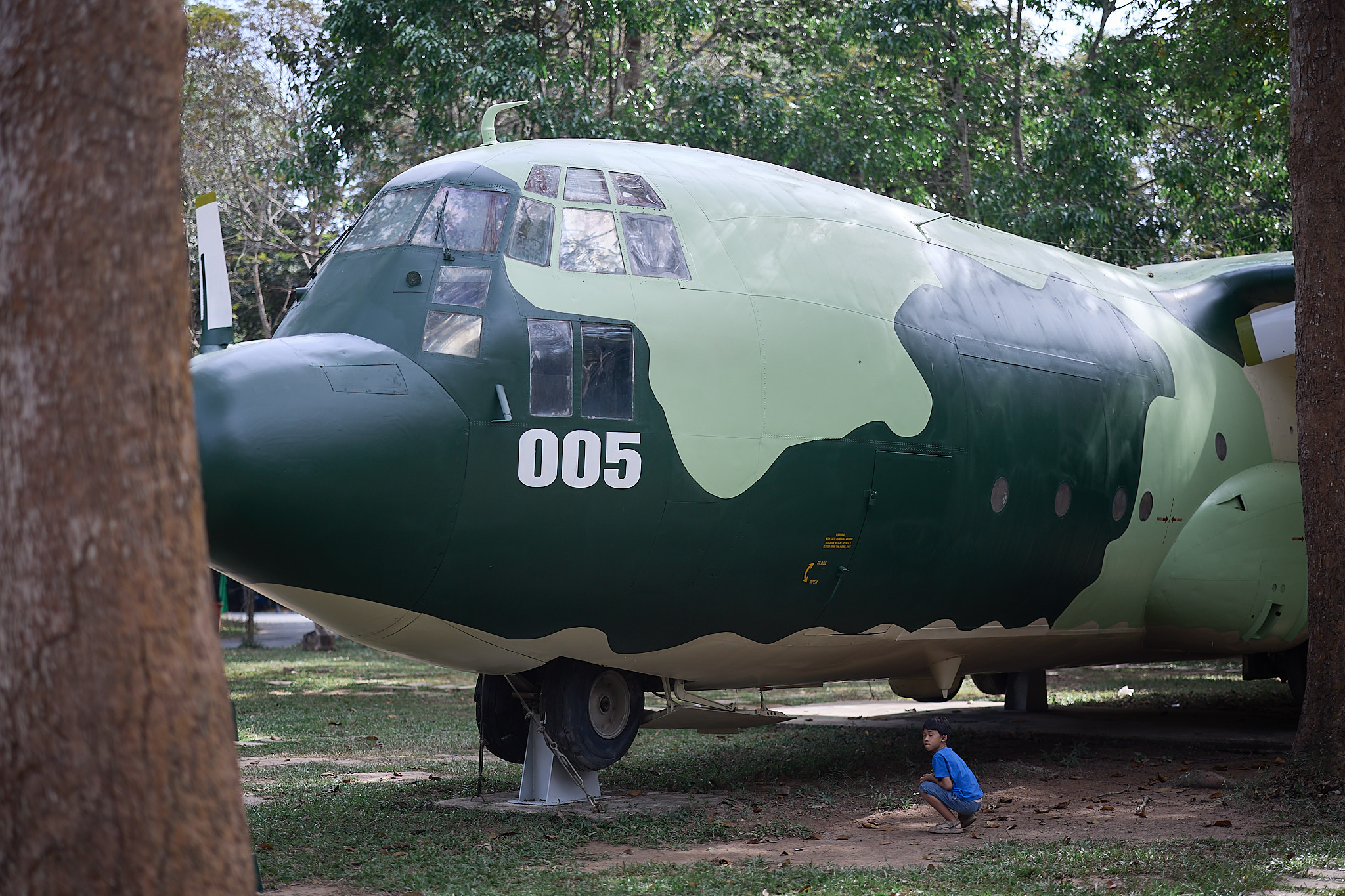
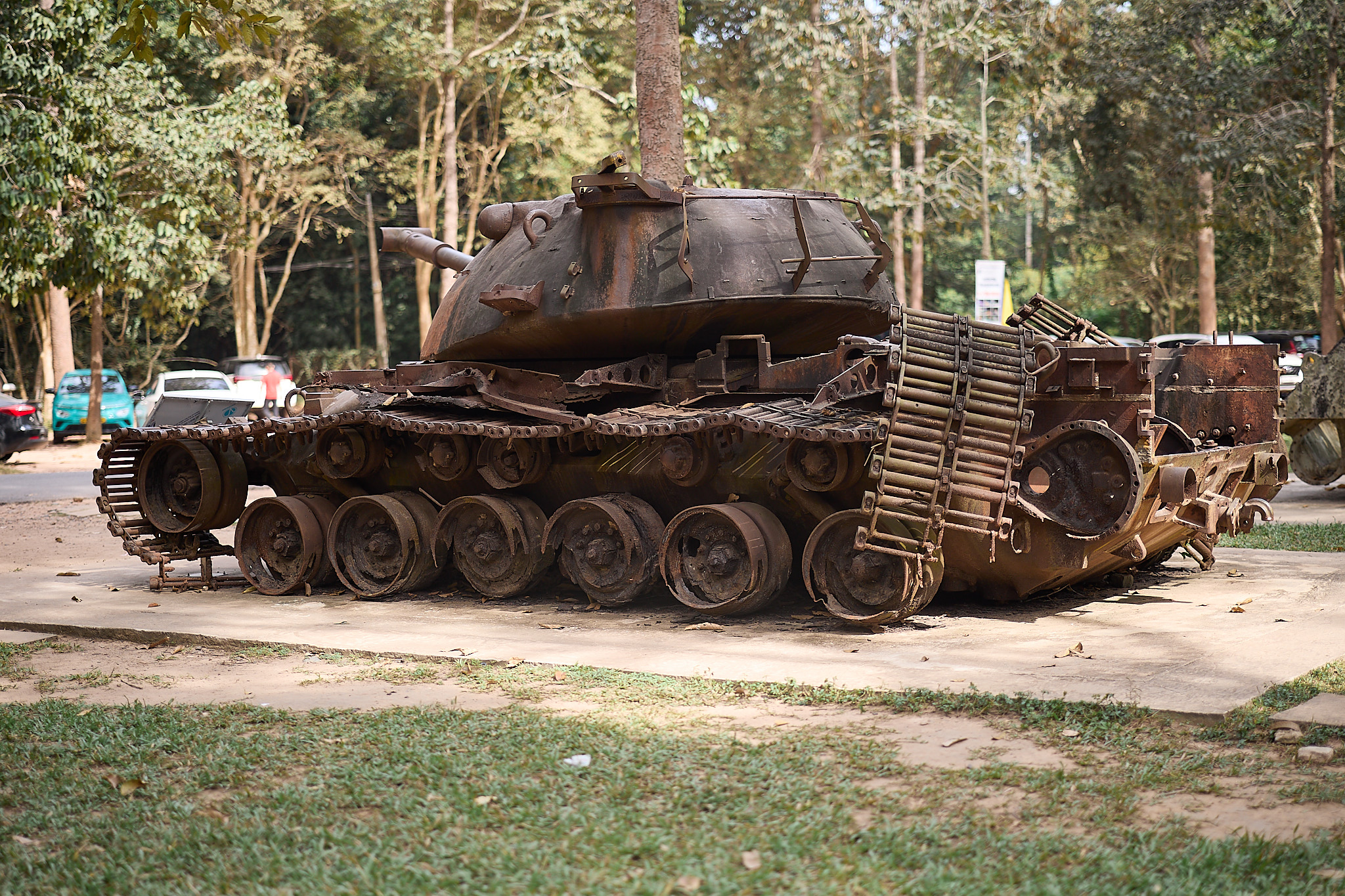
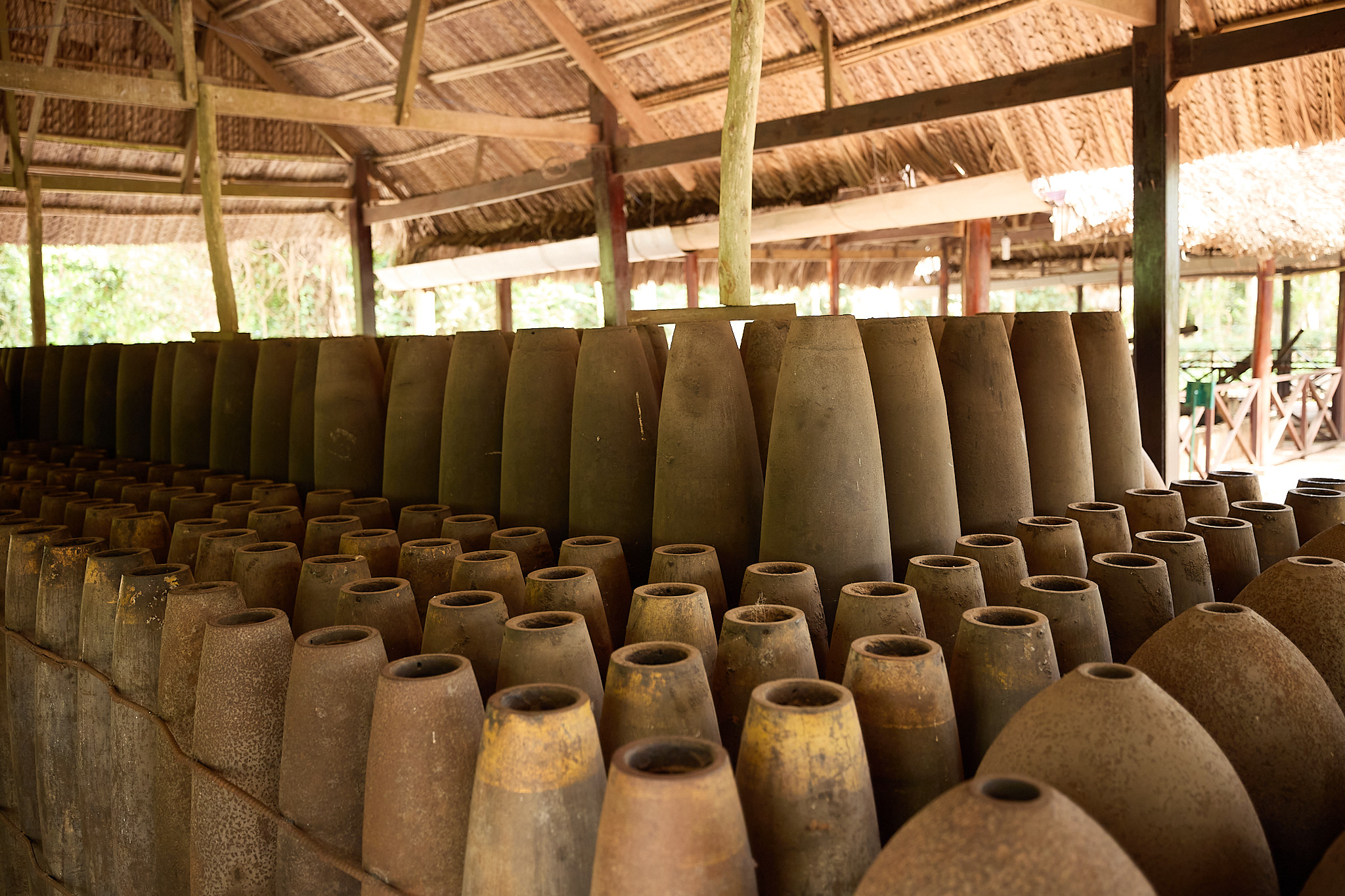
In January 1966, B-52s bombed the area, and some 8,000 American and Australian troops swept through it in Operation Crimp. They found tunnels, but most of the fighters had already disappeared into them.
That same year, the US 25th Infantry Division set up its headquarters in Củ Chi district, on a base camp built near the tunnels and, in places, on top of them. The neighbours downstairs had been there first.
A year after Crimp, Operation Cedar Falls brought 30,000 troops to Củ Chi and the neighbouring Iron Triangle, where people were moved out and their villages destroyed. Within months, the fighters were back, and in early 1968 the tunnels served as a base for the Tet Offensive’s assault on Saigon. From 1969, B-52s carpet-bombed the area. Sections of the tunnels caved in, and by some accounts the bombing finally made them uninhabitable.
Low
The tunnels’ own defences started at ground level. Their entrances were often guarded by traps, among them pits of sharpened stakes hidden under the forest floor. Several kinds are on display here.
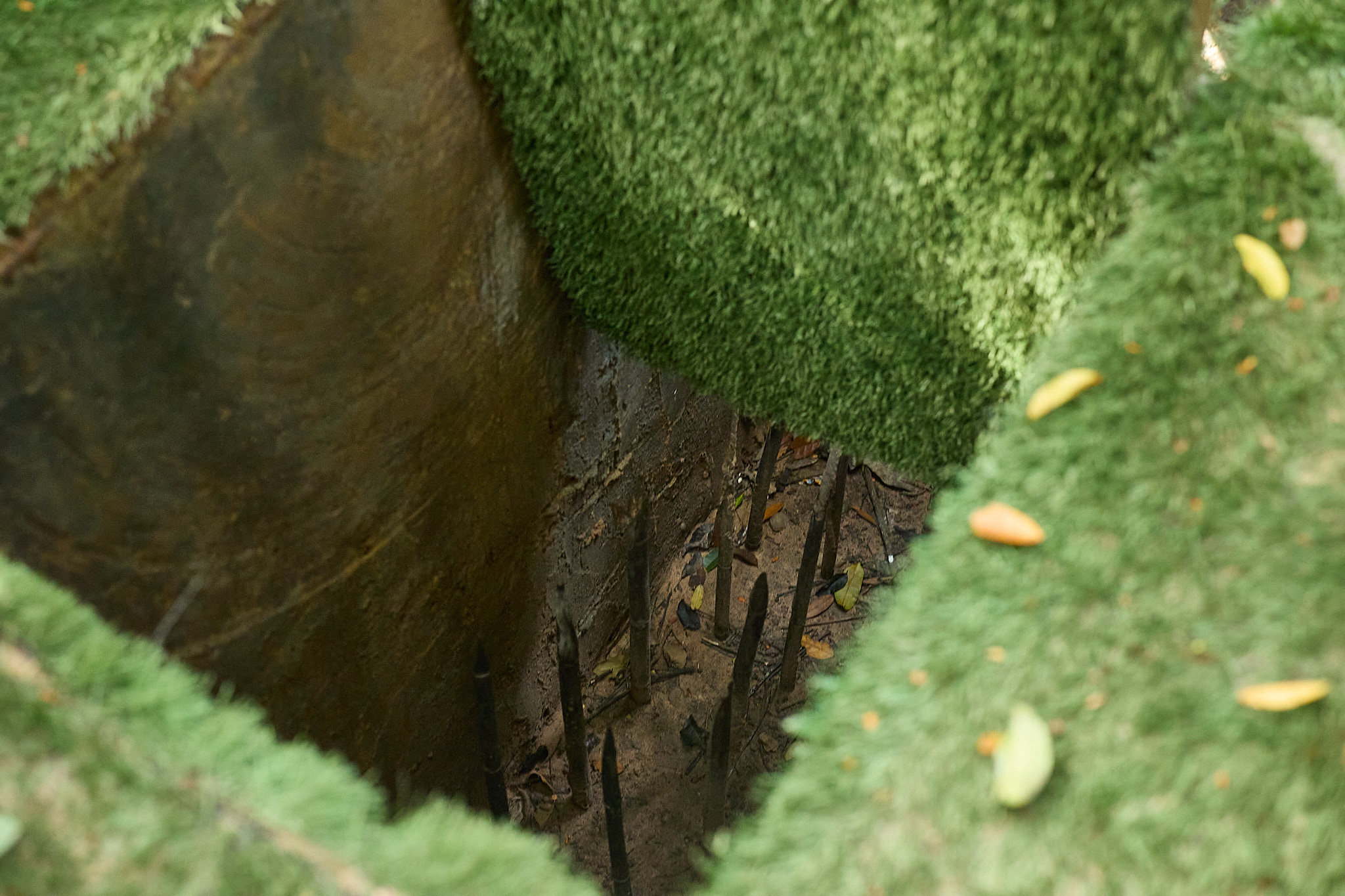
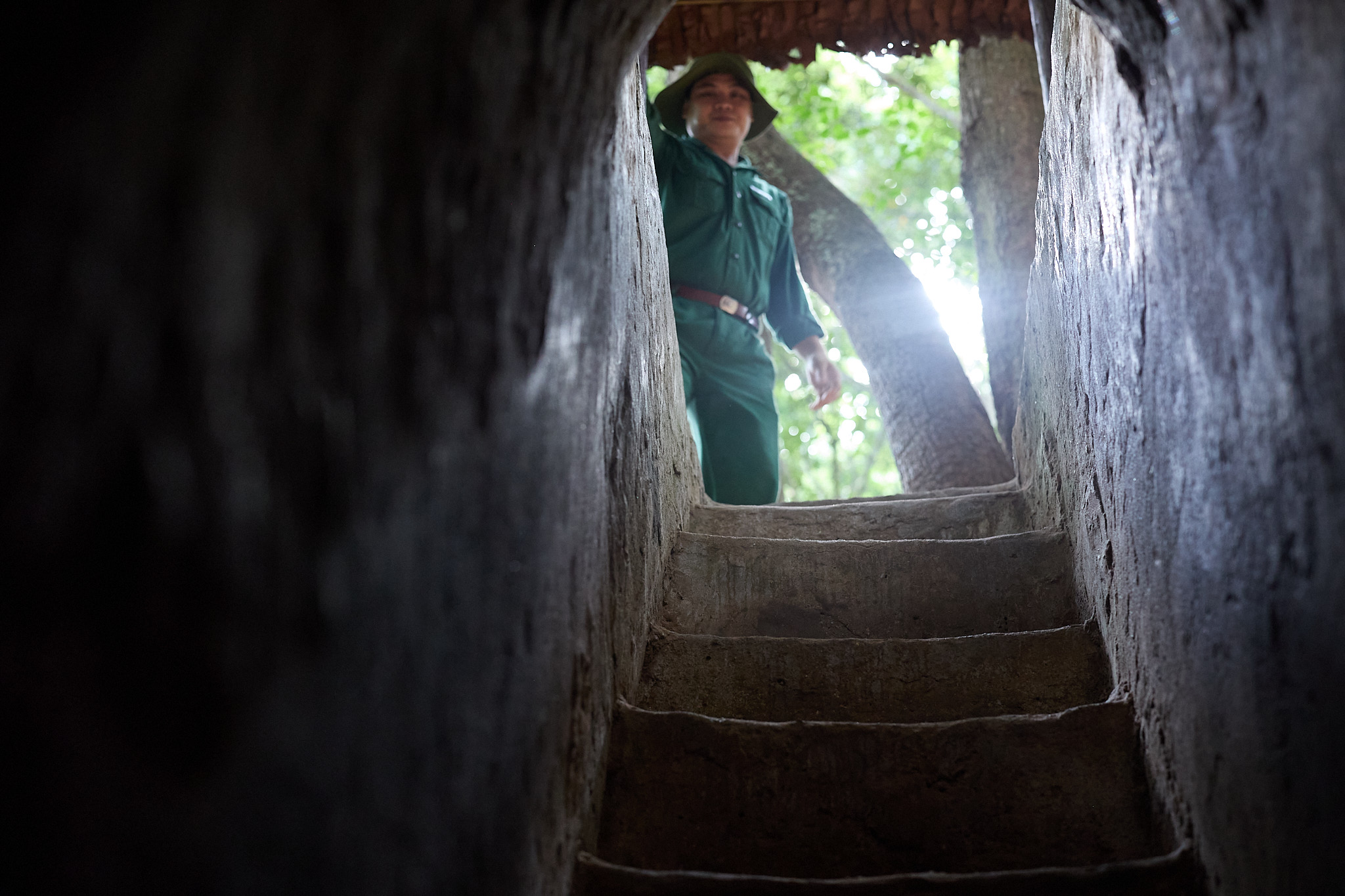
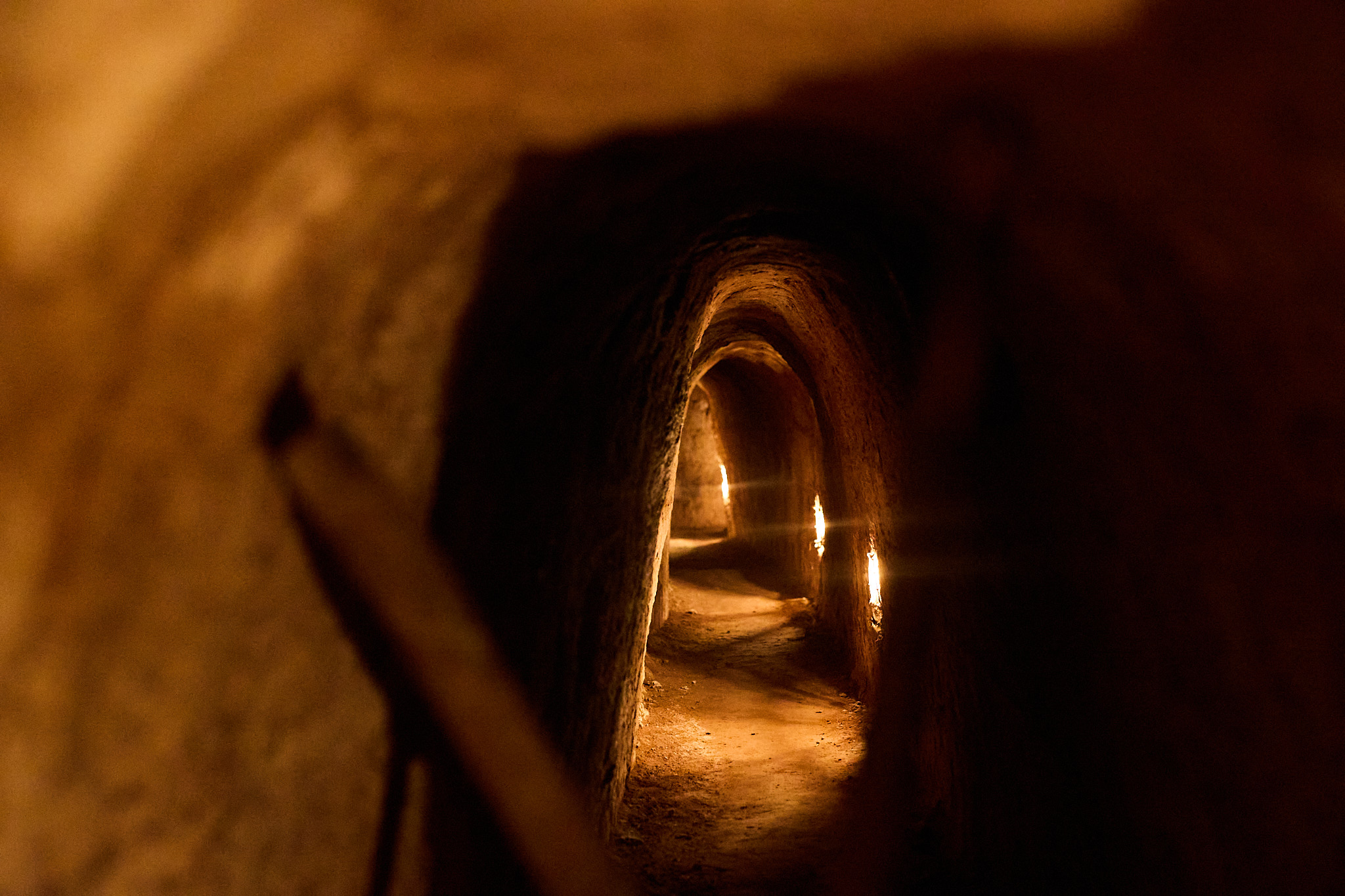
Below ground, size was a defence too. At Bến Dược, the main tunnel on the first level is an upturned U, 62 centimetres wide and 104 high. Only one person fits at a time, bent double or on hands and knees. Tunnels like these were big enough for the fighters who dug them, and cramped for the larger American and Australian soldiers who came after them. They also turned at sharp angles, so that blasts and bullets could not carry far.
The US Army’s answer was volunteers small enough to follow. Known as tunnel rats, they went in alone, with a pistol, a knife and a torch.
I went down the steps into a tunnel, and afterwards into the hidden entrance as well. At my height, both were a tight fit, and I came out covered in dirt. And that was the version made easier for visitors, with some of the hatches enlarged.
Lived-in
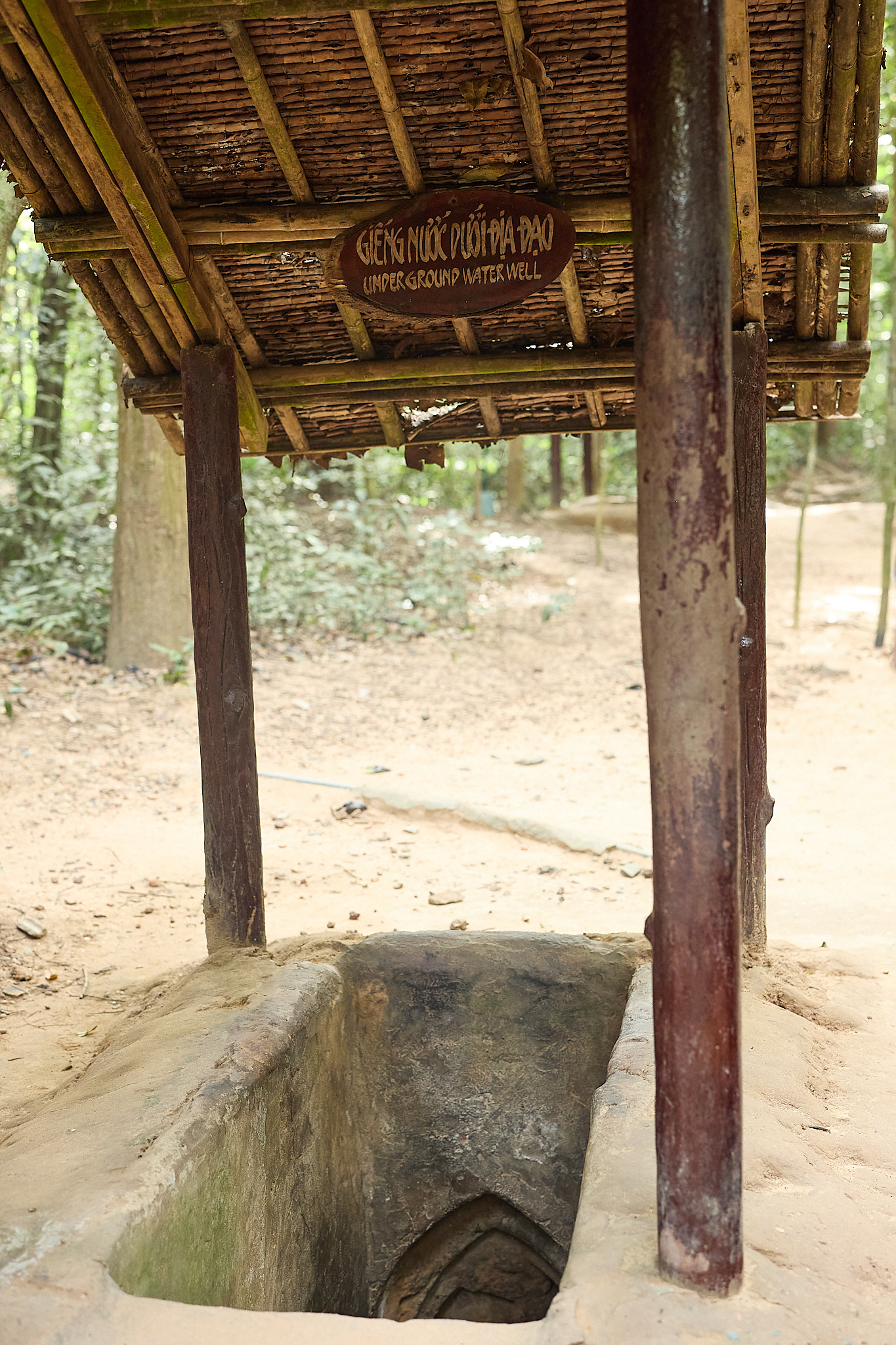
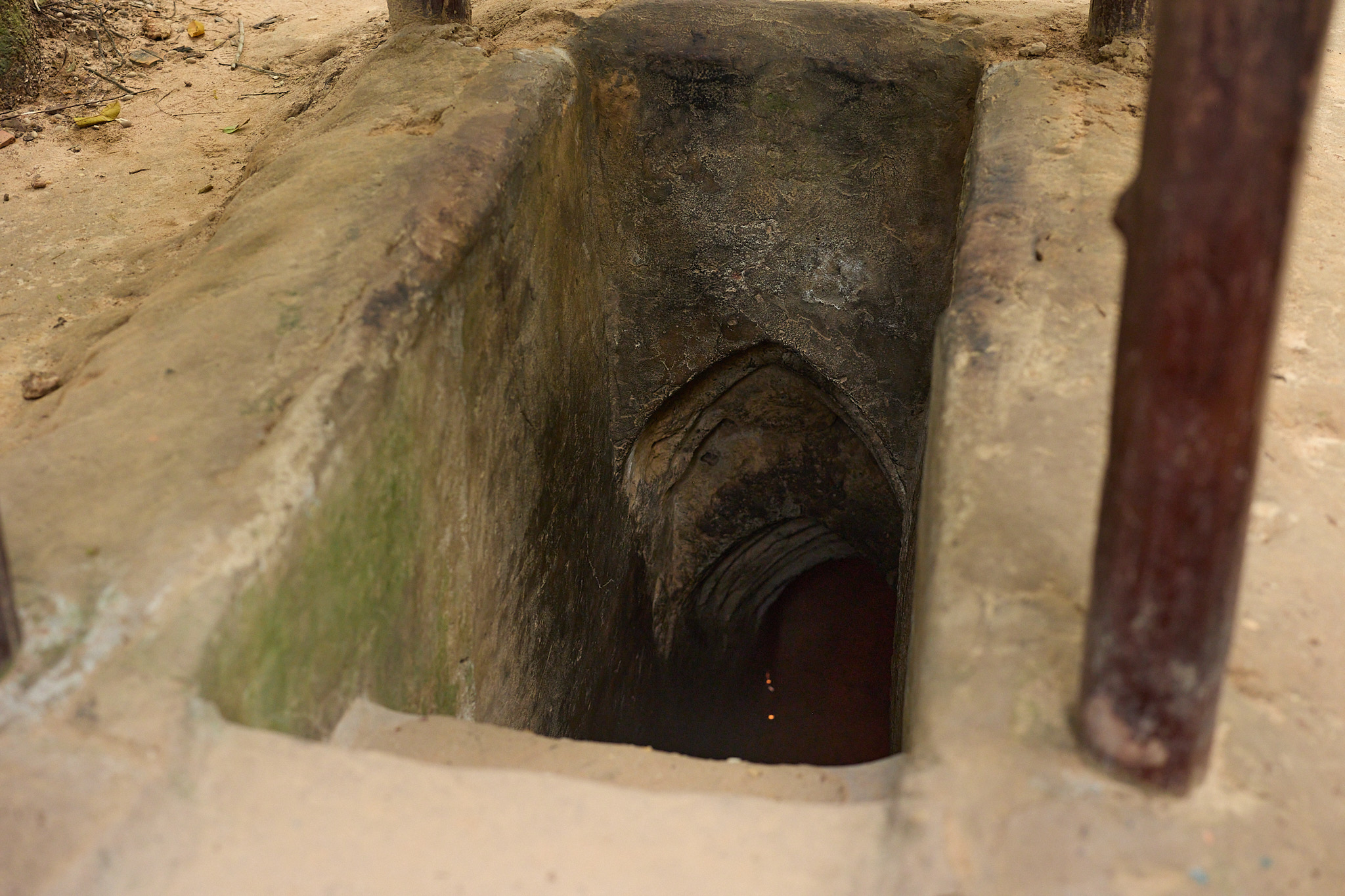
Hiding was only half of it. To hold out, people had to live down there, and below ground there were dining chambers, kitchens, food stores, wells and infirmaries for the sick and wounded. Here, a sign marks an underground water well.
It was a hard life. Air, food and water were scarce. The tunnels were shared with ants, centipedes, scorpions and snakes, and disease was everywhere, malaria above all. When the bombing was heavy, people could stay underground for days at a time.
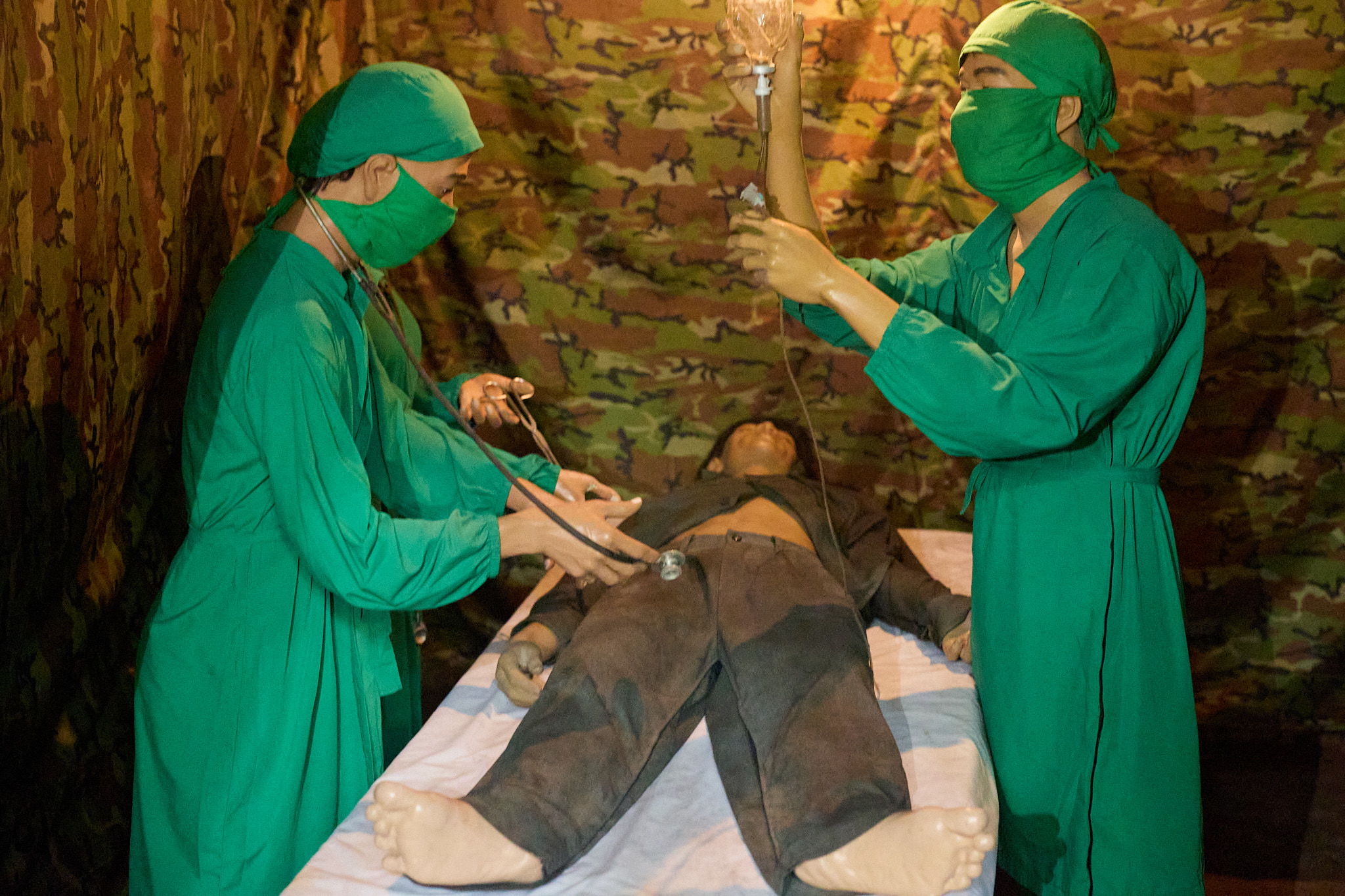
Some of the underground rooms have been opened from above and roofed over, so that visitors can look in on scenes of life below. In one, figures in surgical masks treat a patient.
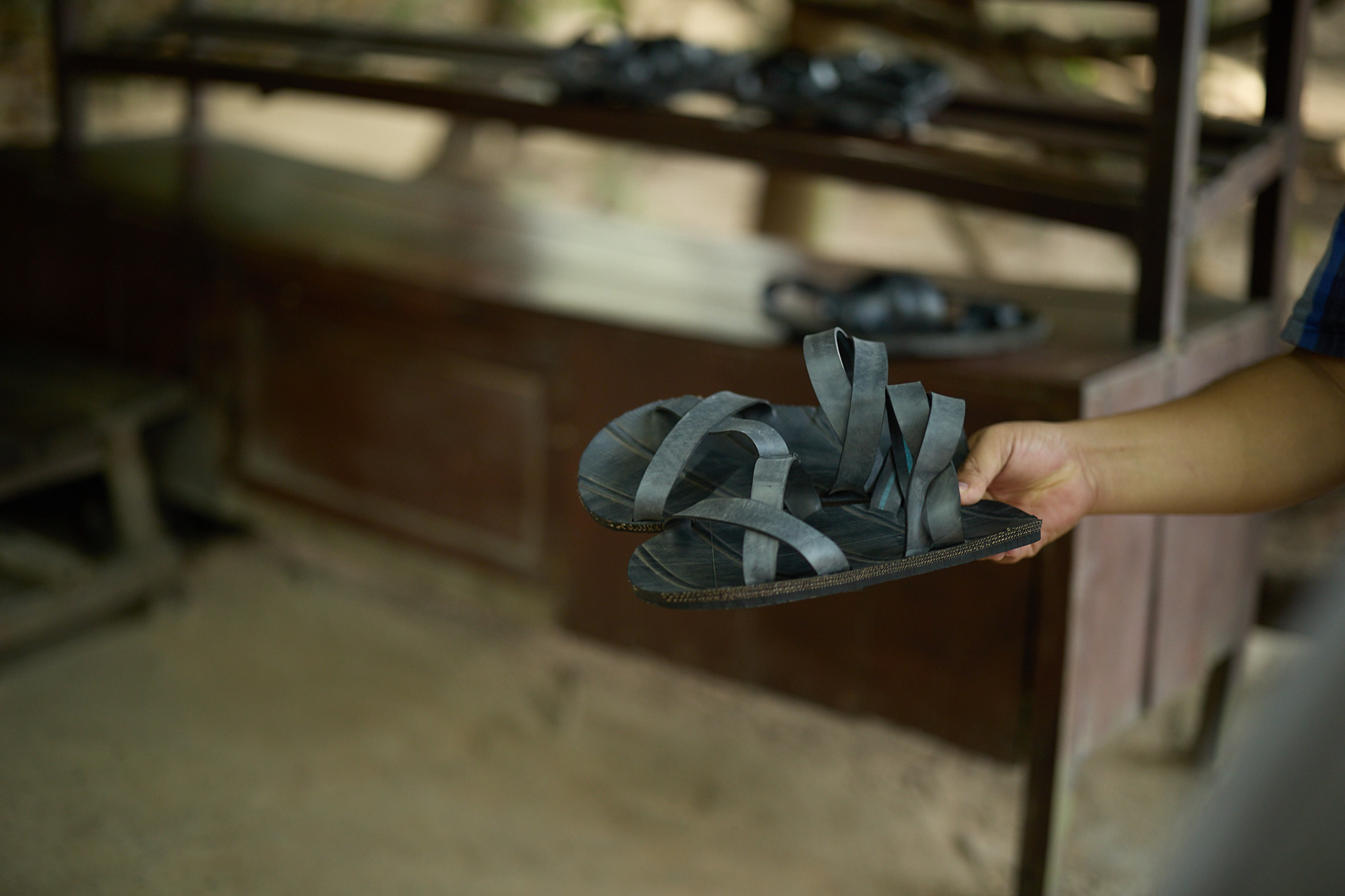
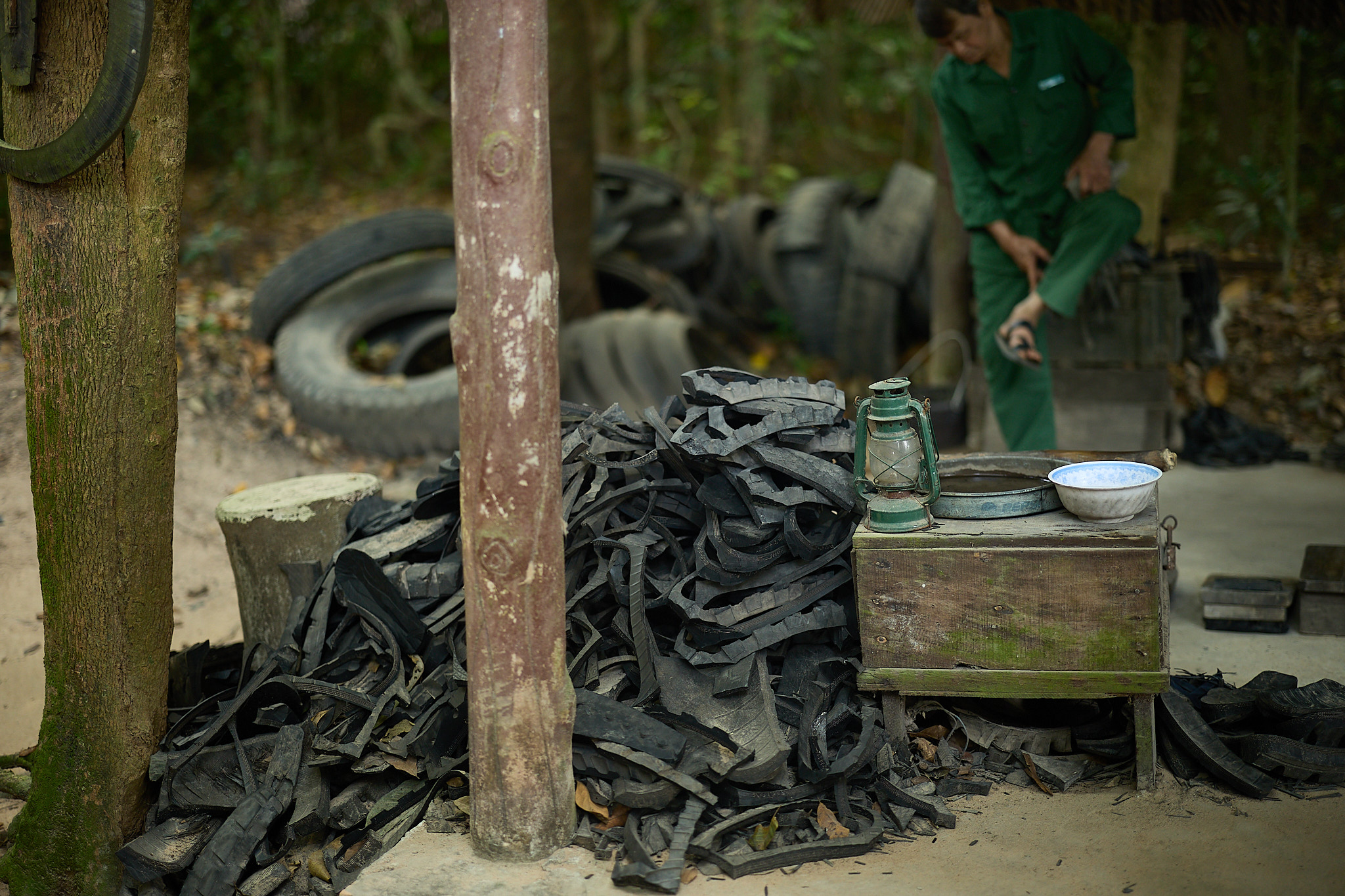
Footwear was improvised. During Operation Crimp, Australian engineers went into a tunnel system in Củ Chi district and brought out weapons, food, documents and sandals cut from old tyres: an oval of tyre for each sole, tread side down, with straps of inner tube threaded through slots. The Australian War Memorial in Canberra still has them, catalogued as “Ho Chi Minh sandals”.
Here, the tyres are still piled up, waiting their turn.
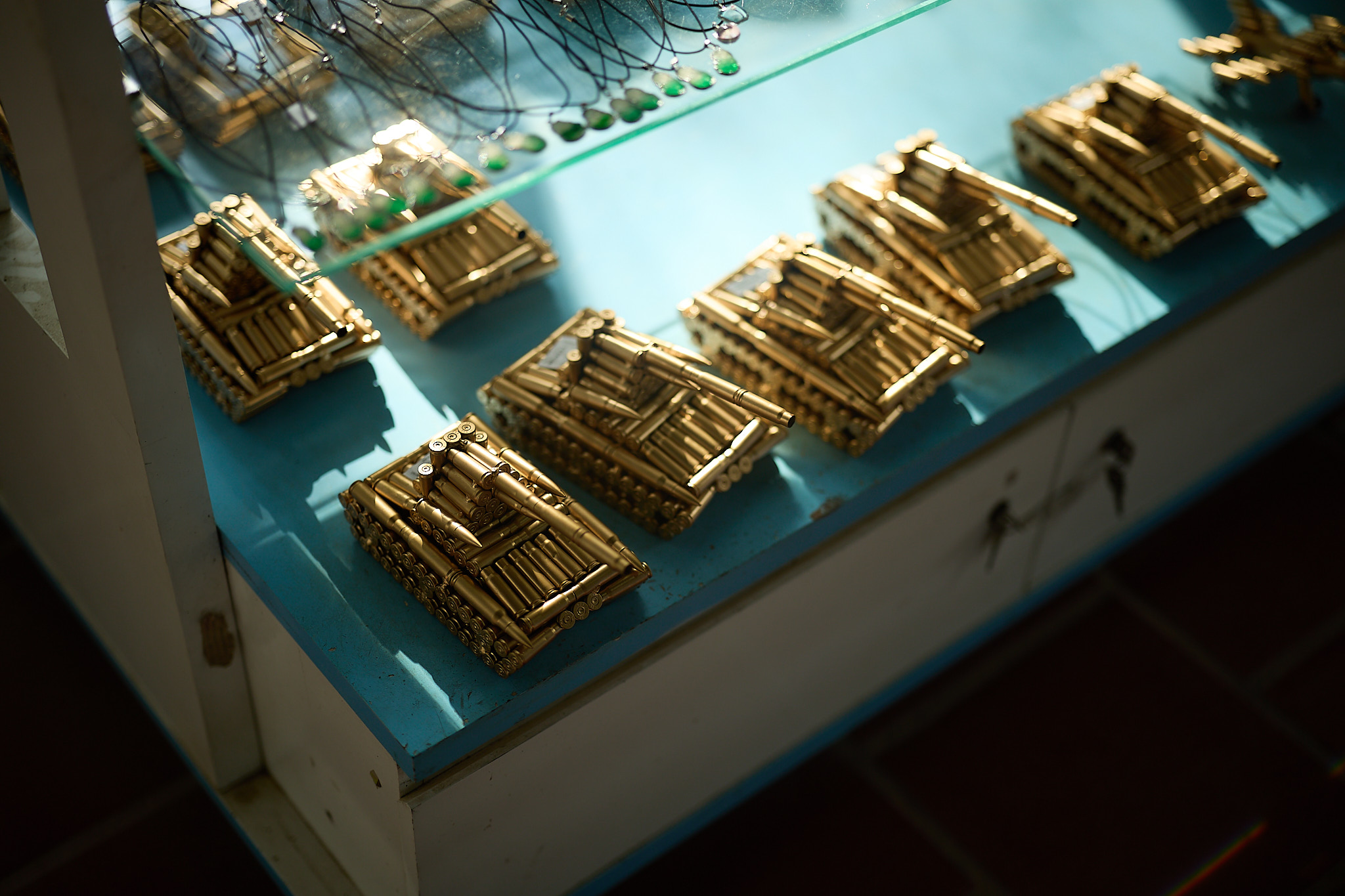
In a glass case elsewhere, the recycling has reached the ammunition.
Cassava
On the table: pale sticks of cassava, a cup of tea, and a little dish of crushed peanuts and, I think, sugar for dipping. It was plain, and better than I expected.
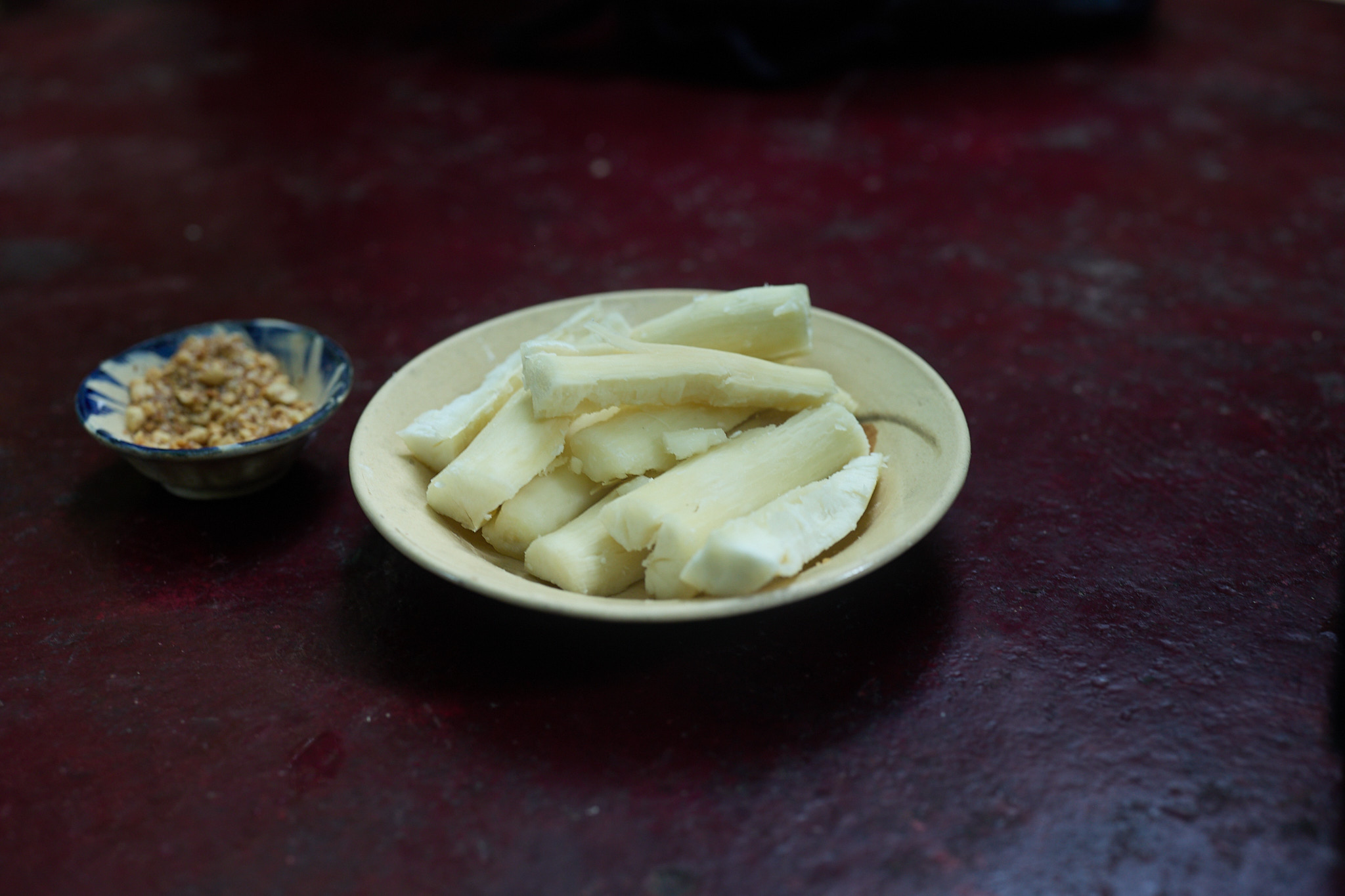
During the war, cassava was a staple for the people of Củ Chi, and it saved the fighters from going hungry. It is also good at waiting. Left in the ground, a cassava root keeps for months, as a reserve against hard times. Dug up, it starts to spoil within days. So it stays underground until it is needed.
At Củ Chi, so did an army.
Visit this place
Location
Cu Chi Tunnels — Bến Dược site (Địa đạo Bến Dược)
About two hours by road north-west of central Ho Chi Minh City. The other preserved site, Bến Đình, is about 13 km away and is where most tours go; this article is about Bến Dược.
Phú Hiệp hamlet, An Nhơn Tây, Ho Chi Minh City, Vietnam
Practical Information
- Opening hours
- Open daily, 7:00–17:00.
- Admission
- Admission is charged; foreign visitors’ tickets include a site guide. Published prices differ between sources, so check the current price at the site.
- Shooting range
- A shooting range operates as a separate, paid service. Its conditions and prices are unconfirmed.
- Getting there
- Most visitors come on a day tour from central Ho Chi Minh City, about two hours each way by road. Check that the tour goes to Bến Dược rather than Bến Đình.
- Visitor note
- The tunnel sections open to visitors are short and have been enlarged, but they are still tight. You do not have to go into the narrow parts; follow the staff’s directions. Wear clothes you don’t mind getting dirty.
Information last checked: November 24, 2026 (Tunnel-site location and published hours checked. Admission prices differ between the city’s tourism page and recent guides, so no figure is given.)
Conversation
Comments
Review pending commentsComments are reviewed before appearing. The internet already contains enough unattended surprises.
Loading comments…
Leave a comment