B-52 Victory Museum: Some Assembly Required
Hanoi has a museum named after an American bomber. It is not a museum of the bomber. The B-52 Victory Museum celebrates shooting it down.
It opened in 1997, twenty-five years after B-52s bombed Hanoi for twelve days and nights in December 1972. In Vietnam, those days are remembered as a victory.
At the gate
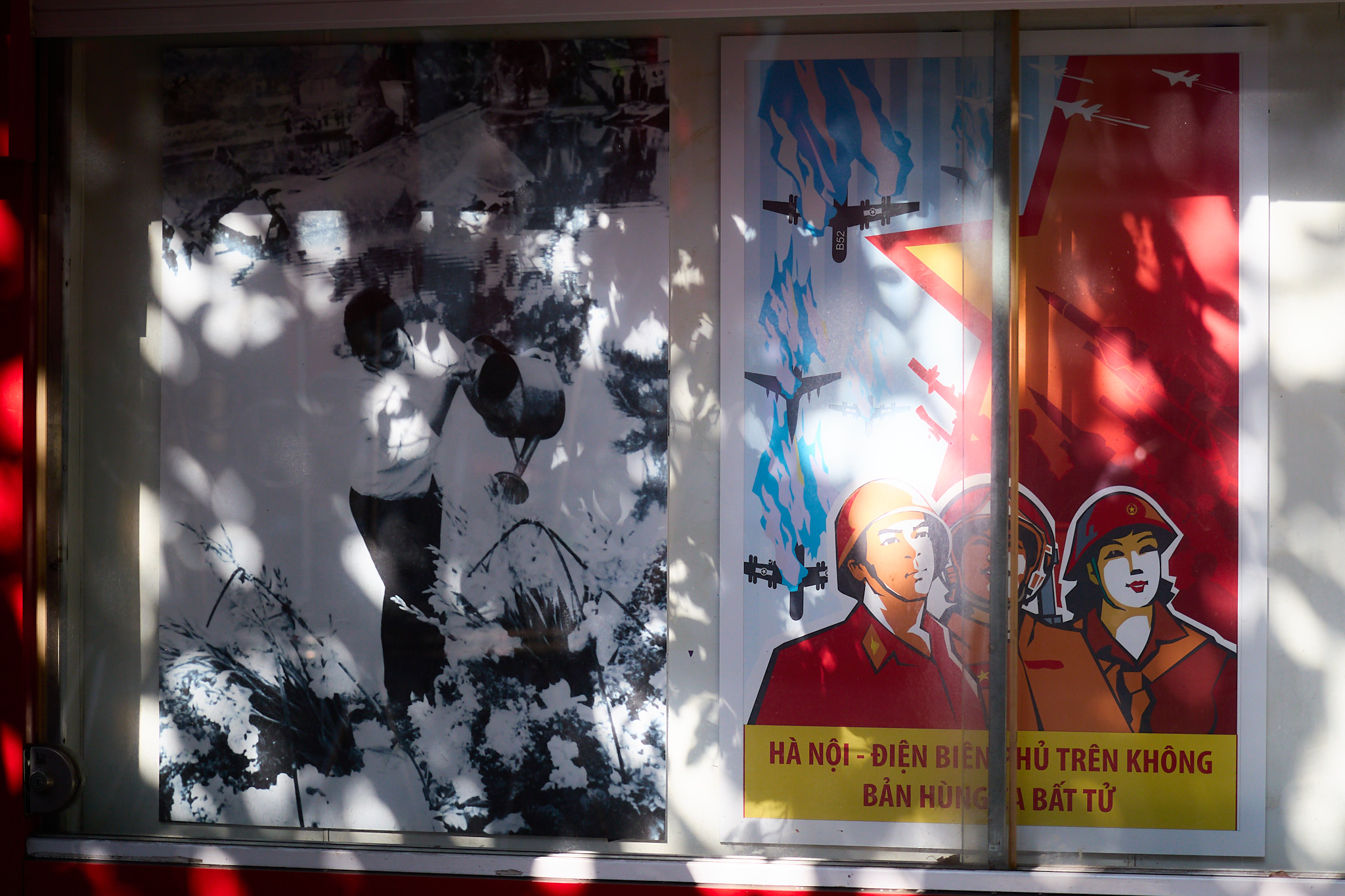
By the gate, behind glass, hangs a black-and-white photograph: a young woman in a white shirt watering flowers, and behind her, in a lake, something large and broken. It is probably the famous one taken by the lake a short walk from here, the morning after a B-52 came down. Beside it is a poster: three figures in helmets, a sky of burning bombers and the words “Hà Nội – Điện Biên Phủ in the air. An immortal epic.”
The garden
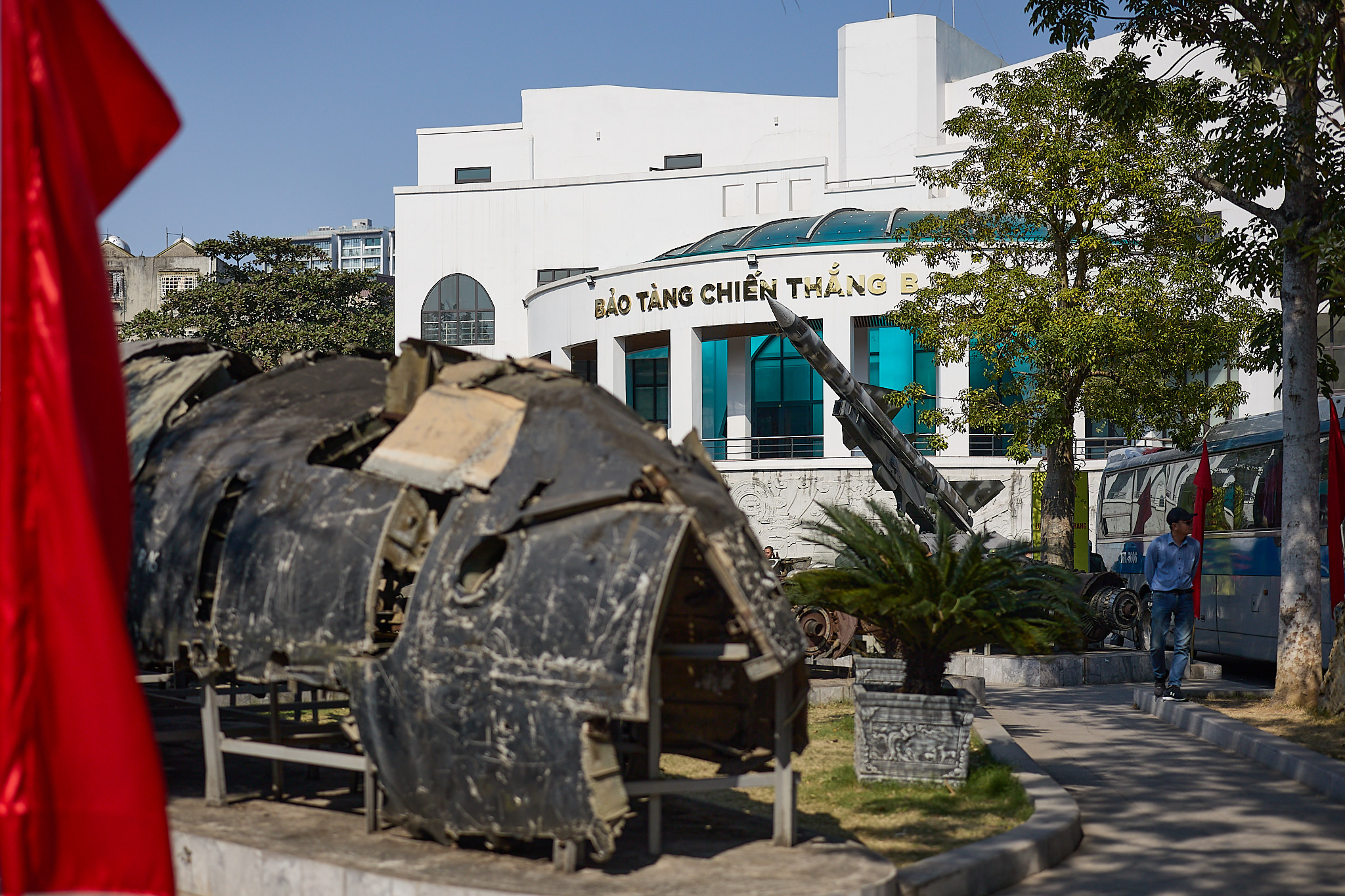
The B-52 in the garden did not come down here. The museum’s staff collected pieces from B-52s shot down in different places and put them together in the shape of a bomber. Part of the fuselage sits on a steel frame, with a red flag beside it and a missile on its launcher behind.
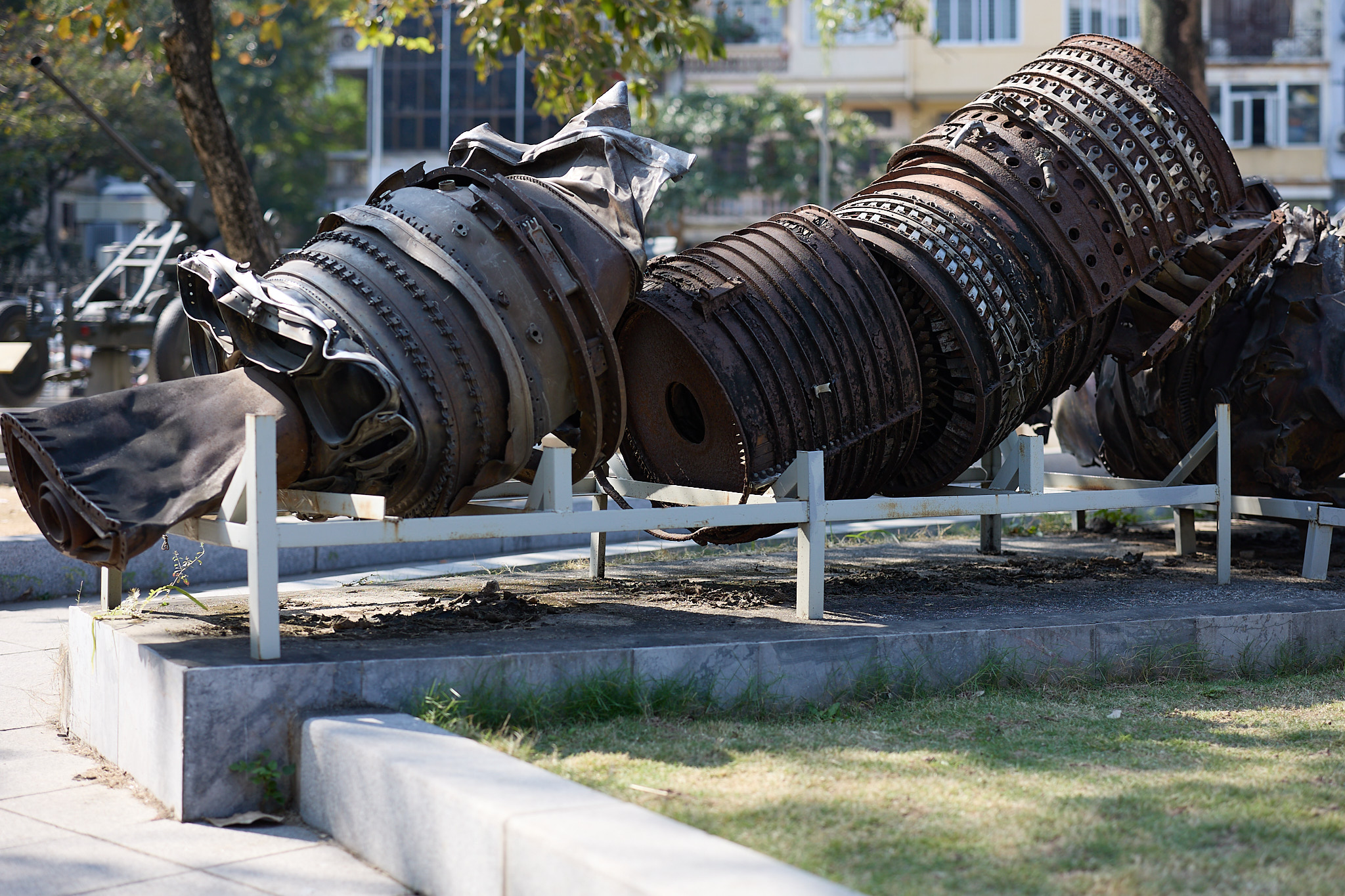
Nearby lies an engine, its casing gone and its insides on show, disc after disc. A B-52 had eight of them, on a wingspan of more than fifty metres.
In front of the building, green bomb casings lie in rows on stands. Behind them, missiles point at the sky. What came down and what went up share the same lawn, a few steps apart.
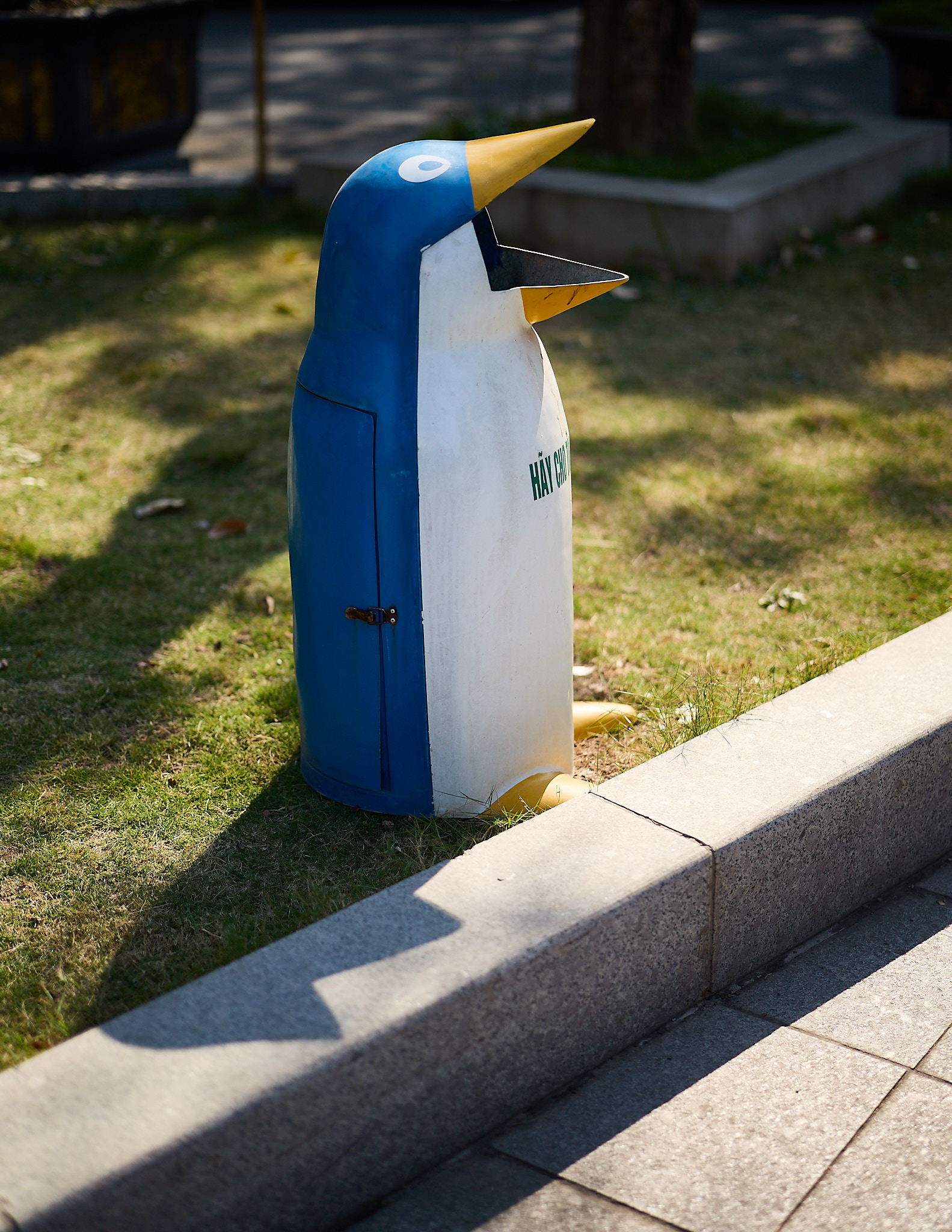
At the edge of the lawn stands a penguin, blue and white with a yellow beak, its mouth open. It is a rubbish bin. The bomber is in pieces; the penguin is intact, and would like your wrapper.
The other side
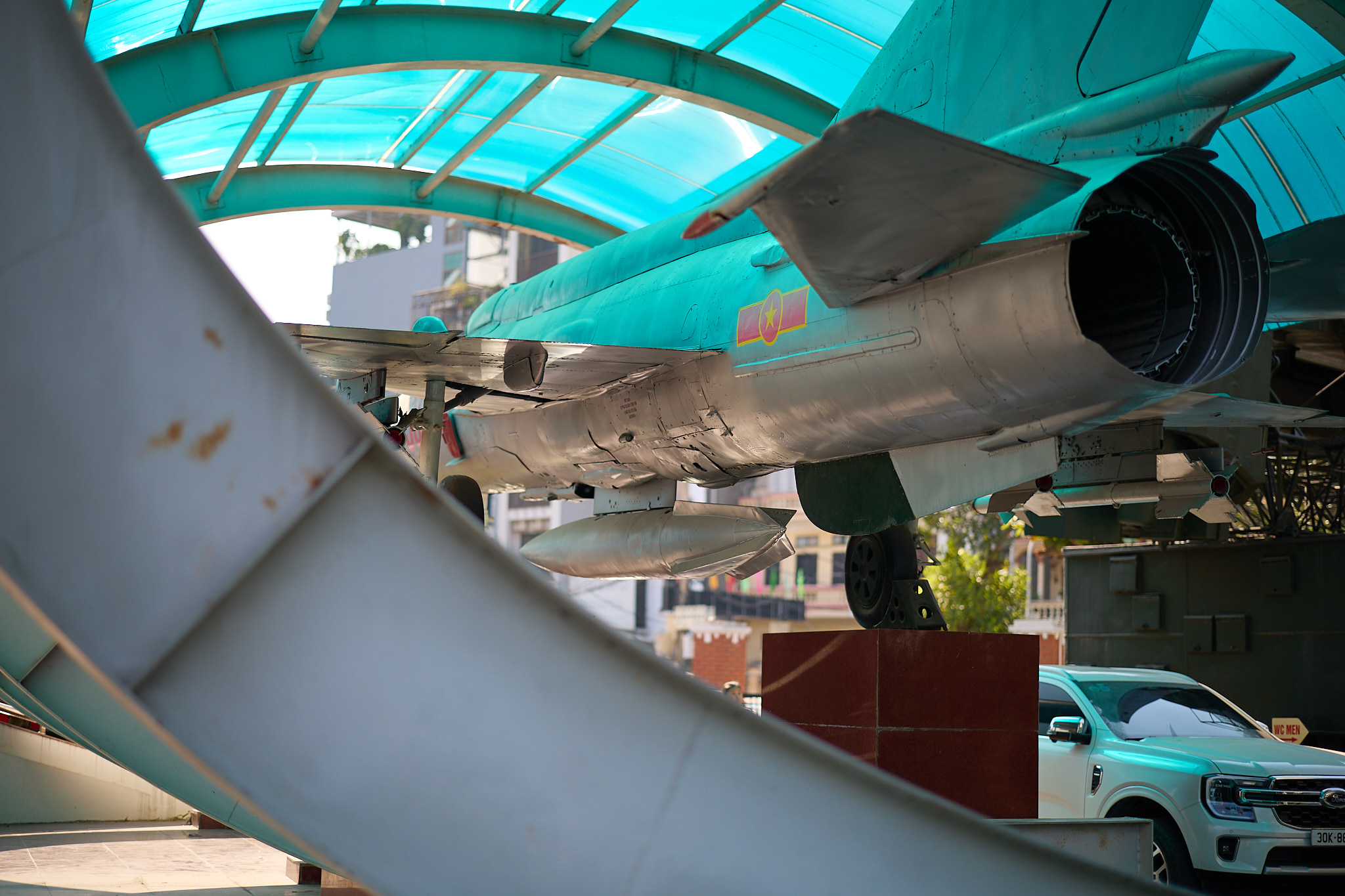
Under a turquoise roof stands a MiG-21, a Soviet-built fighter flown by North Vietnam. Seen from behind, it is all tail, exhaust and drop tank, on a dark red plinth, with a white pick-up parked beside it.
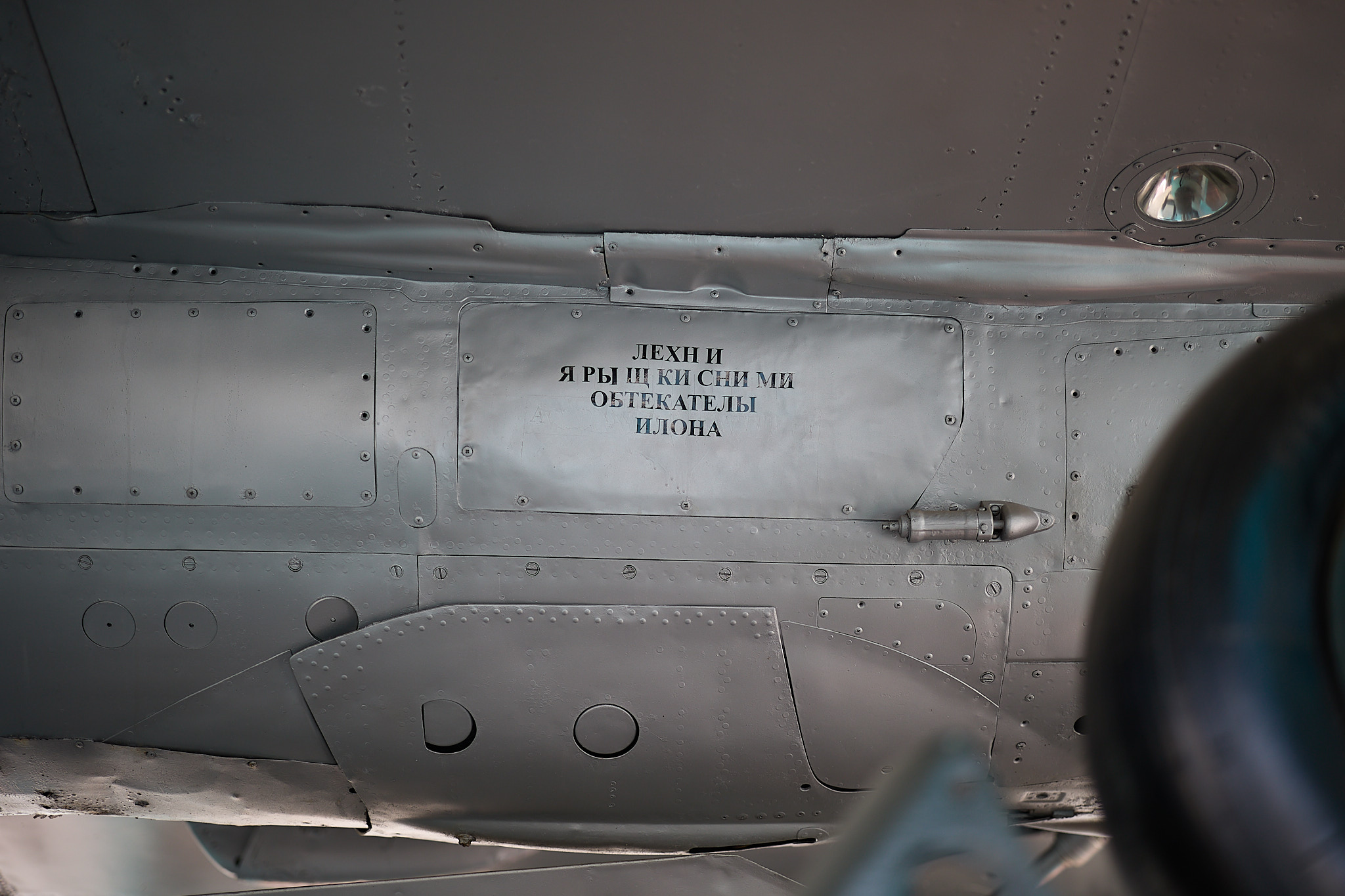
The Russian stencils underneath look as if they have been repainted, and not every letter made it. The last line was probably ПИЛОНА, “of the pylon”. Without its first letter, it reads ИЛОНА: Ilona, a woman’s name.
Indoors
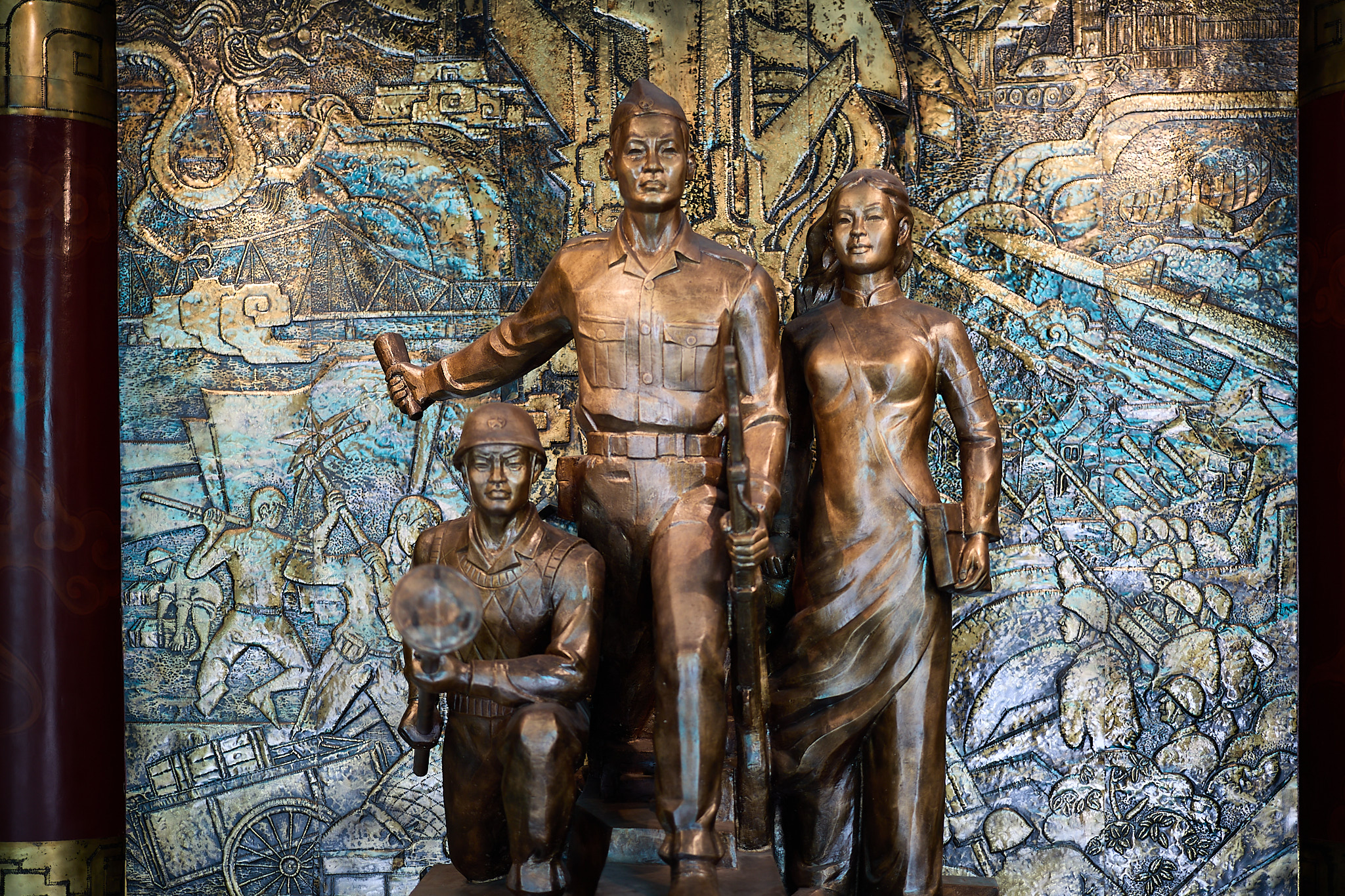
Inside, three bronze-coloured figures stand in front of a relief wall: a soldier with a rifle, a kneeling man in a helmet holding up what looks like a lamp, and a woman in an áo dài with a book in her hand. Behind them, a dragon, a bridge and the city are worked into the relief.
On another wall, under a relief of two flags, one with a hammer and sickle and one with a star, hang six medals.
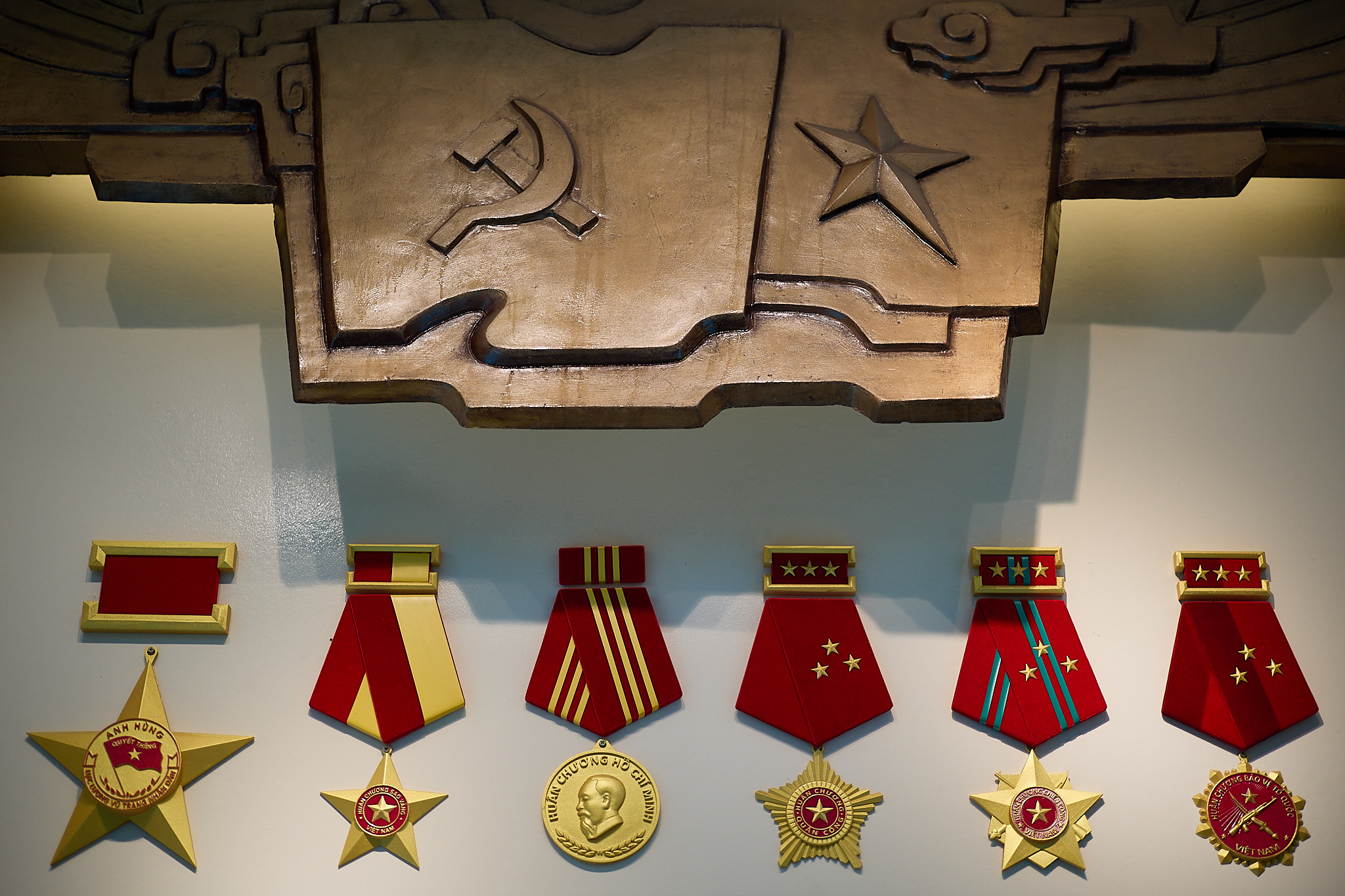
Here, even the medals are larger than life.
Visit this place
Location
B-52 Victory Museum (Bảo tàng Chiến thắng B-52)
On Đội Cấn Street in Ba Đình, a short walk from B-52 Lake
157 Đội Cấn, Ba Đình, Hanoi, Vietnam
Practical Information
- Status
- Closed for repairs from 10 June 2026; the museum has announced its reopening from 10 November 2026.
- Opening hours
- Tuesday, Wednesday, Thursday, Saturday and Sunday, 8:00–11:00 and 13:30–16:30.
- Admission
- Free, according to Vietnam Airlines’ travel guide. The museum’s own website does not list a fee.
- Visitor note
- The description in this story is from a visit in December 2024, before the repairs; displays may have changed.
Information last checked: November 24, 2026 (Reopening notice and opening hours checked on the museum’s website. Admission is not confirmed by the museum itself.)
Conversation
Comments
Review pending commentsComments are reviewed before appearing. The internet already contains enough unattended surprises.
Loading comments…
Leave a comment