Niš’s Red Cross Camp: The Name on the Sign Is a Date
On Google Maps, Niš has a pin labelled Nazi Concentration Camp “Red Cross”.
It sounds like a cover story, and the Nazis had form. In June 1944, Red Cross delegates visited the Theresienstadt ghetto. In preparation for the visit, the Nazis tidied up the ghetto and deported thousands of its inmates to Auschwitz so that it would look less crowded. The delegates went away and wrote positive reports. A camp called Red Cross looks like more of the same.
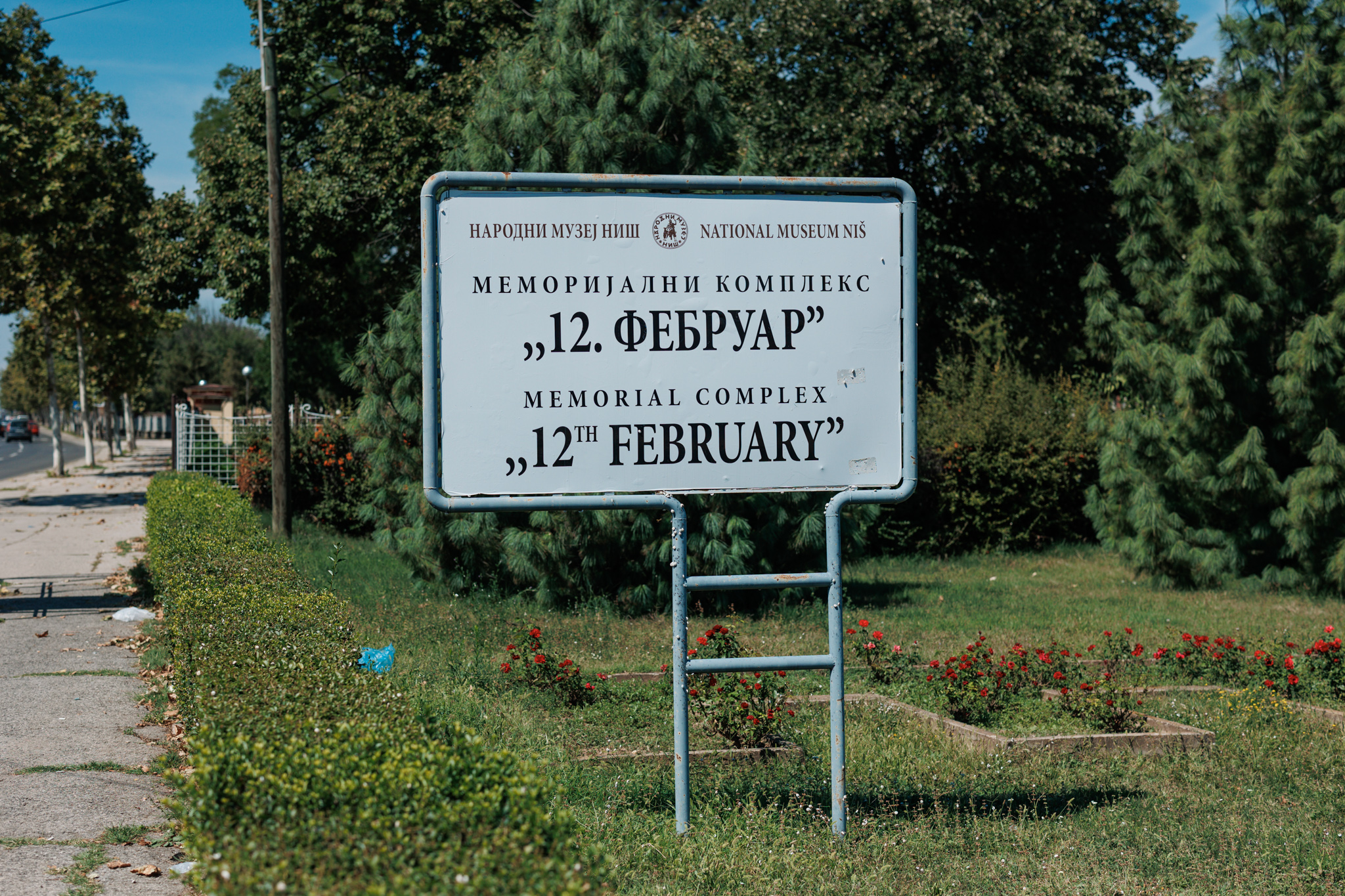
The museum on the site goes by another name. Its sign by the road, white and neat among red flowers, says MEMORIAL COMPLEX “12TH FEBRUARY”.
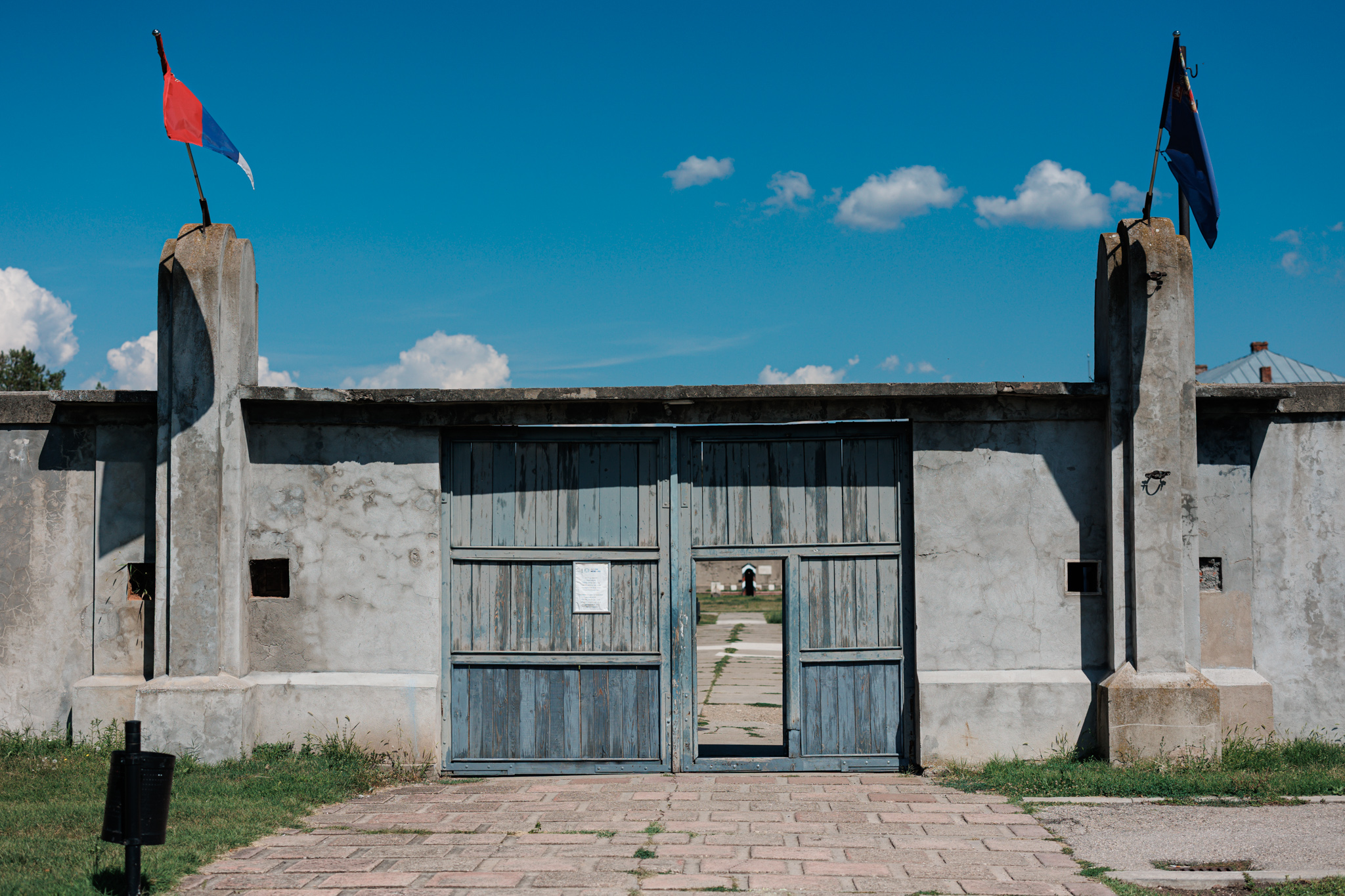
Behind the sign runs a long grey wall with a wooden gate in weathered blue paint. Through a gap between the two halves of the gate, I could see a strip of the yard on the other side.
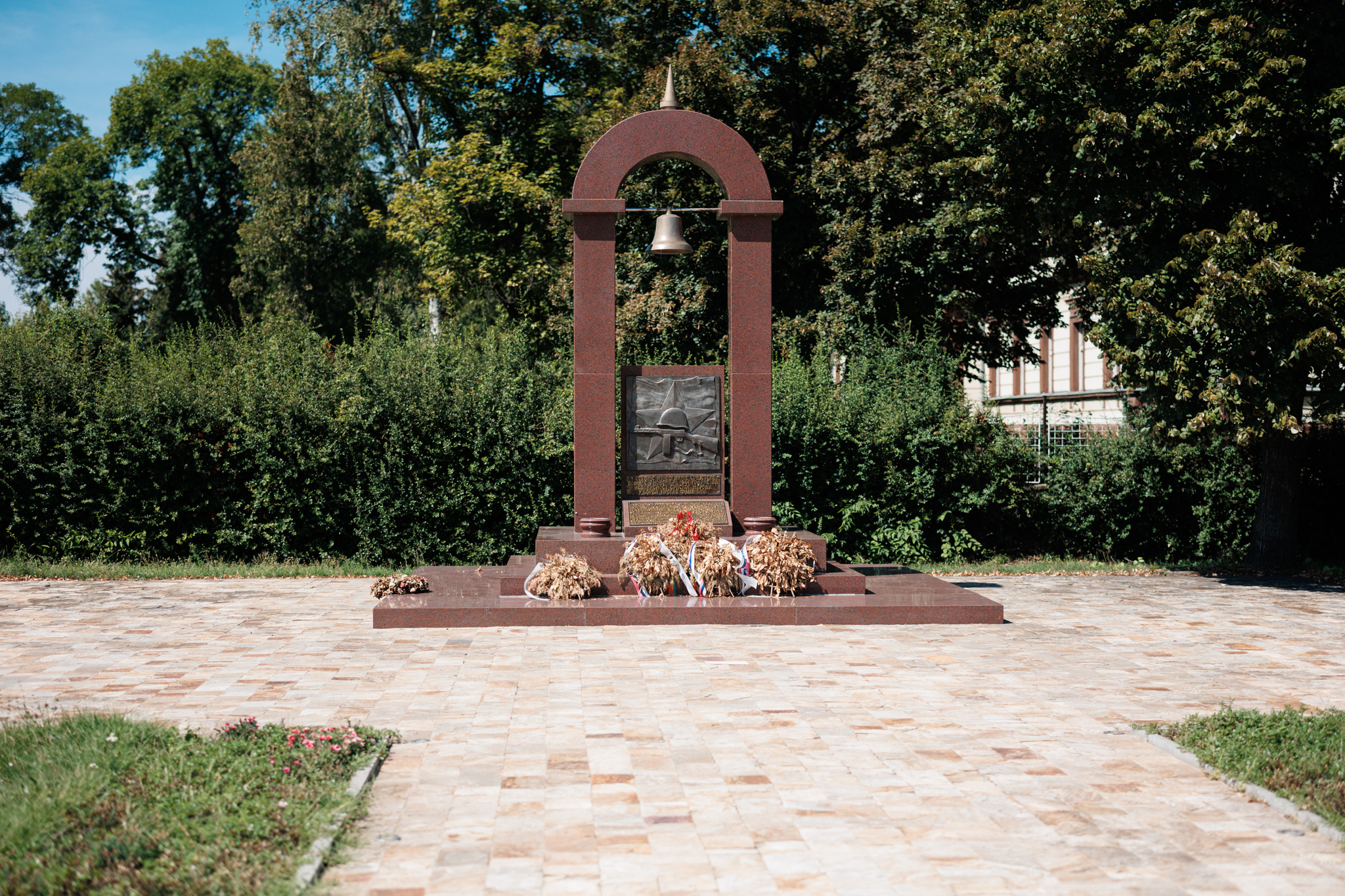
The name came first
Crveni Krst — Red Cross — was part of Niš before it was a camp. The Balkan Wars at the start of the twentieth century showed the Serbian Red Cross what a war could need, and its branch in Niš put up barracks on the edge of town to store medical supplies. A railway station was built nearby, so that the wounded could be moved more quickly.
The name stayed with the area. One of Niš’s city municipalities still carries it.
So the name is not a disguise. It is an address.
In 1930, buildings for the First Cavalry Regiment “Obilić” went up on the same ground. One of them, a warehouse standing a little apart from the rest, is the building you walk towards from the gate: pale plaster, rows of small-paned windows, a double wooden door.
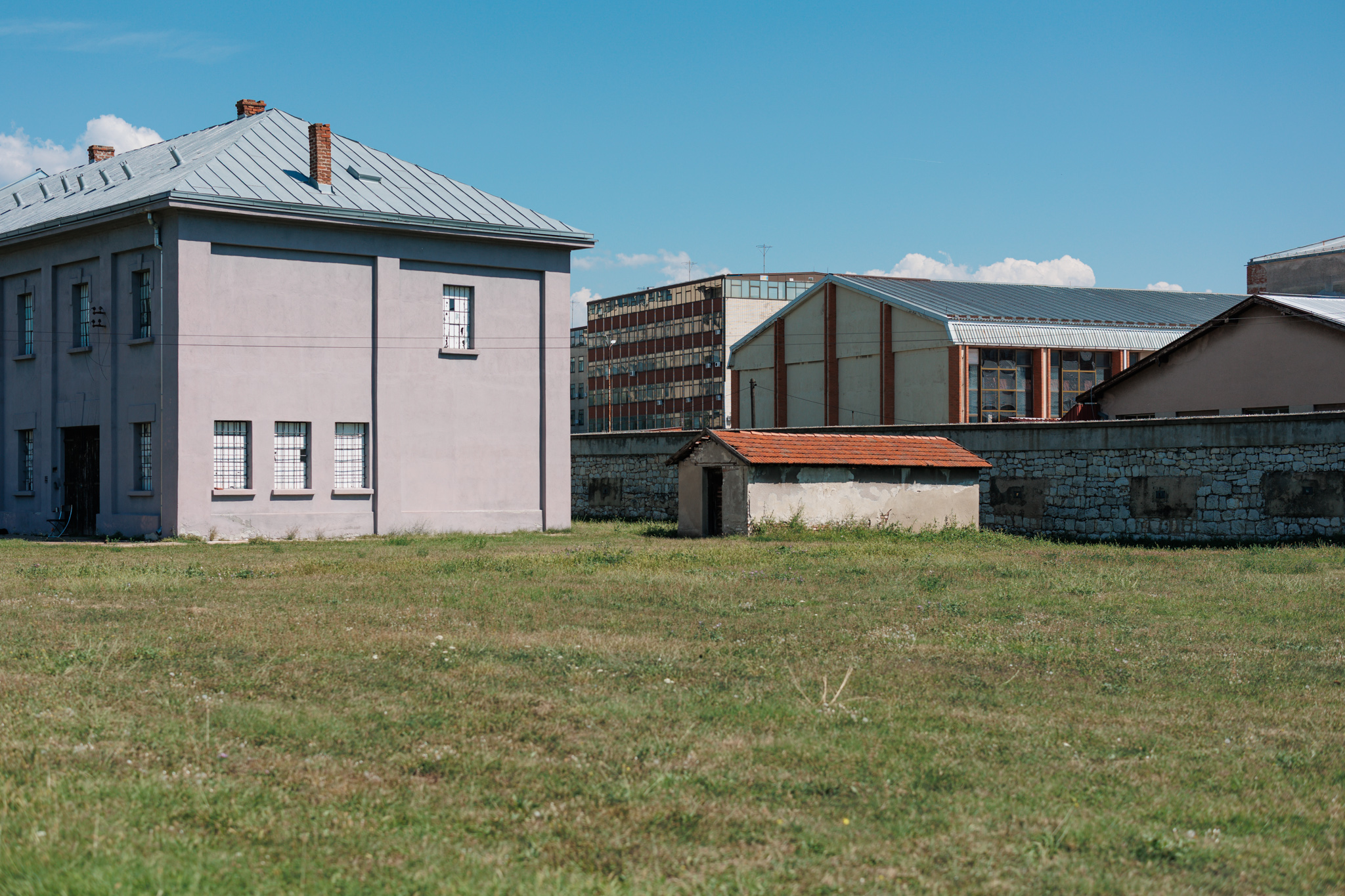
At the start of the Second World War, the warehouse held prisoners of war. From September 1941 it was the main building of a German camp. The Germans called it Anhaltelager Nisch, the Niš detention camp. That name has not lasted nearly as well as the neighbourhood’s.
About 30,000 people passed through it. The museum describes them as patriots “regardless of their political orientation”, along with a large number of Jews and Roma. More than 10,000 are estimated to have been shot on Bubanj, a hill on the edge of the city. Others were sent to Germany, Austria, Poland and Norway as forced labour.
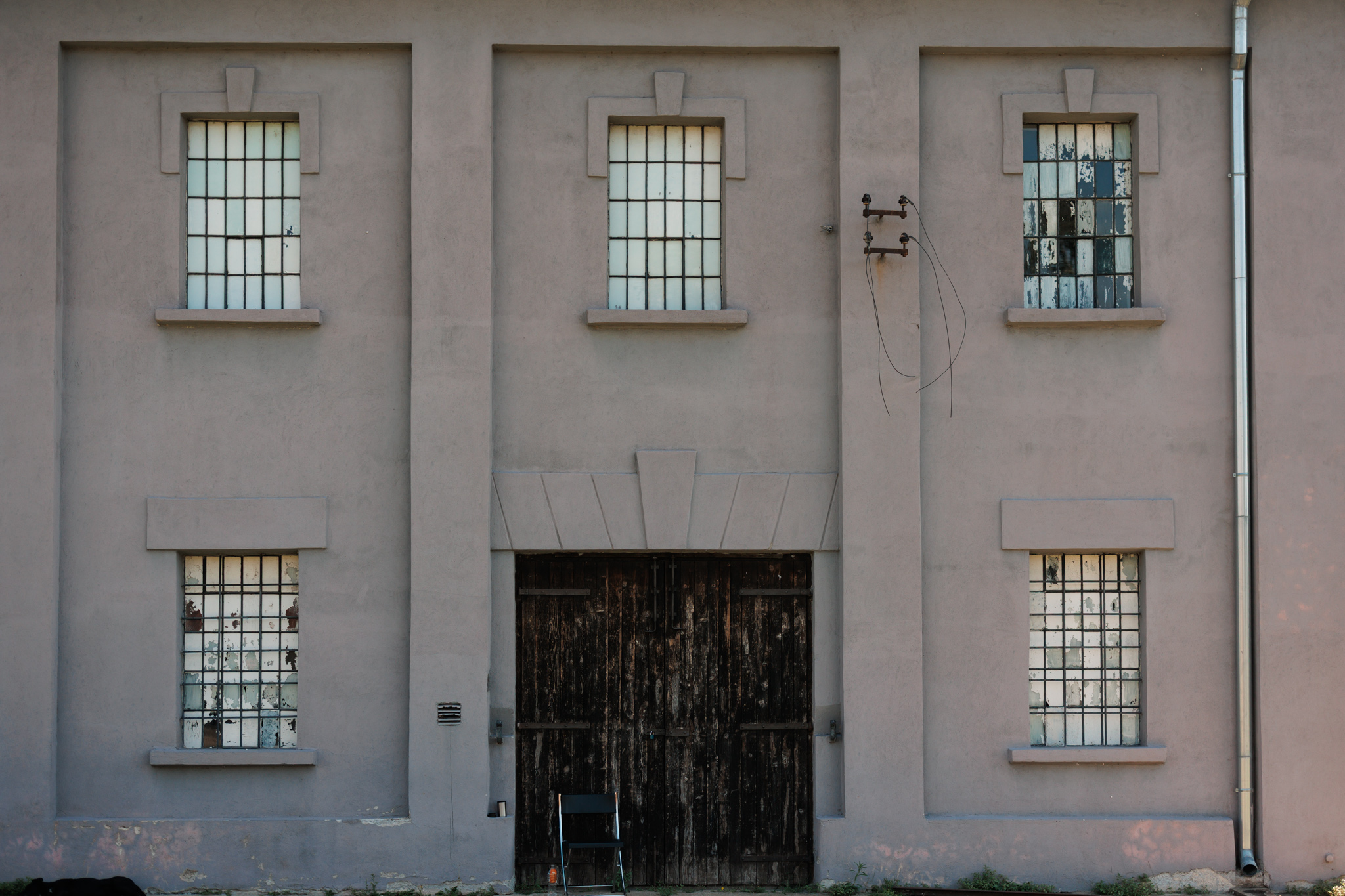
Pencil on the walls
Inside, the rooms are dim. Light comes in through panes of clouded glass. In one room, a machine gun stands on a wooden crate behind sandbags. In another, straw covers the floor along the wall.
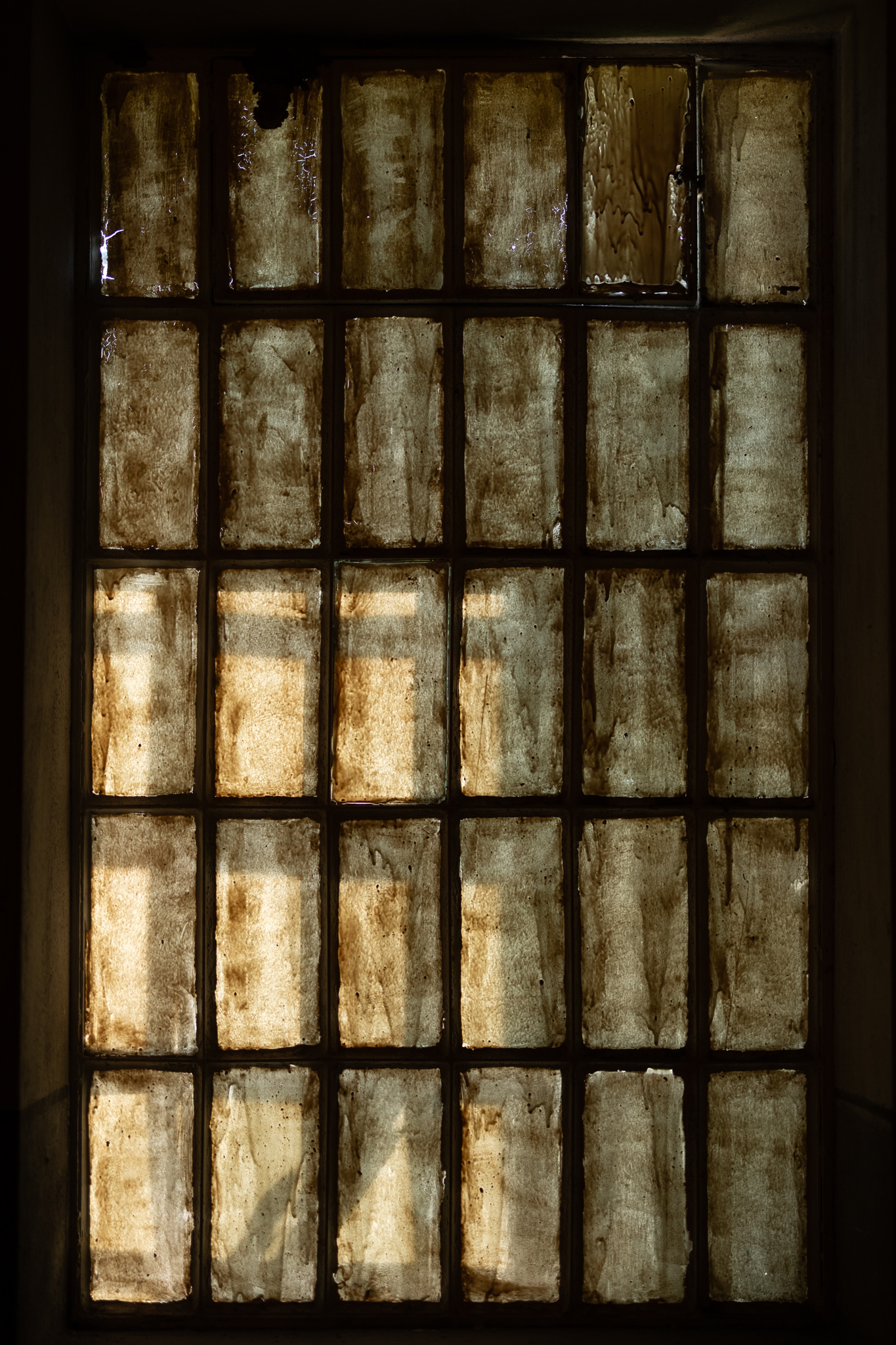
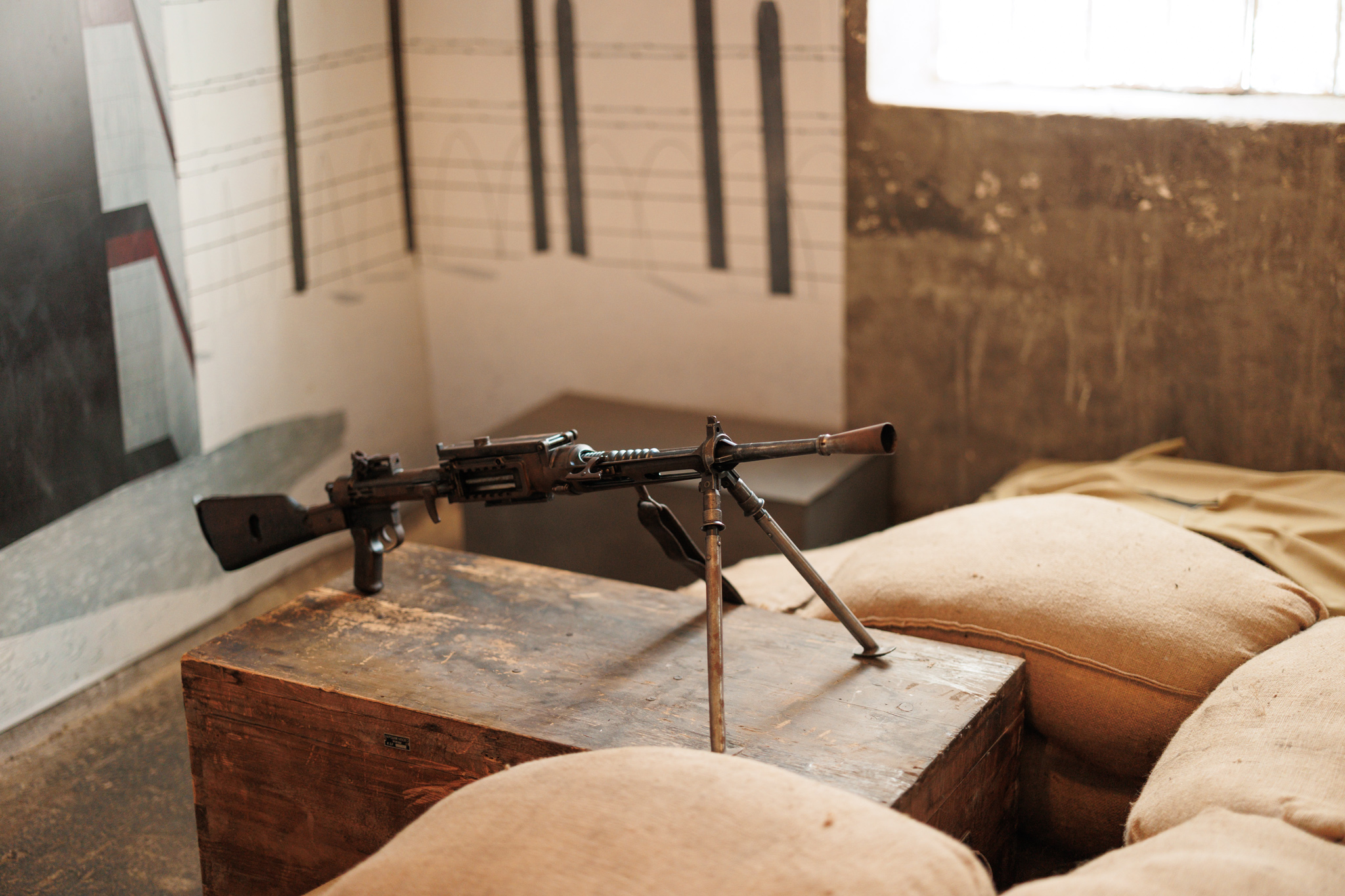
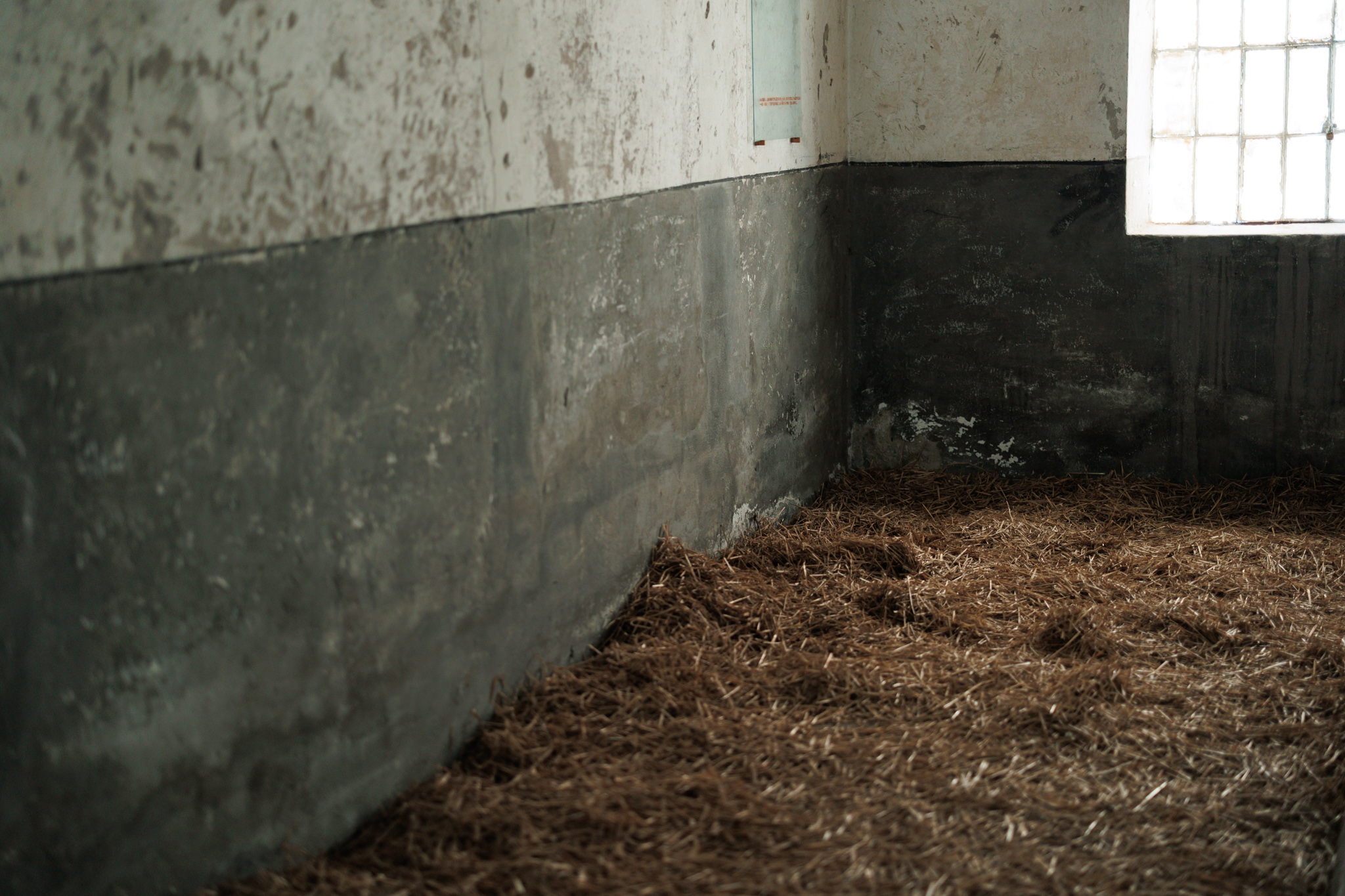
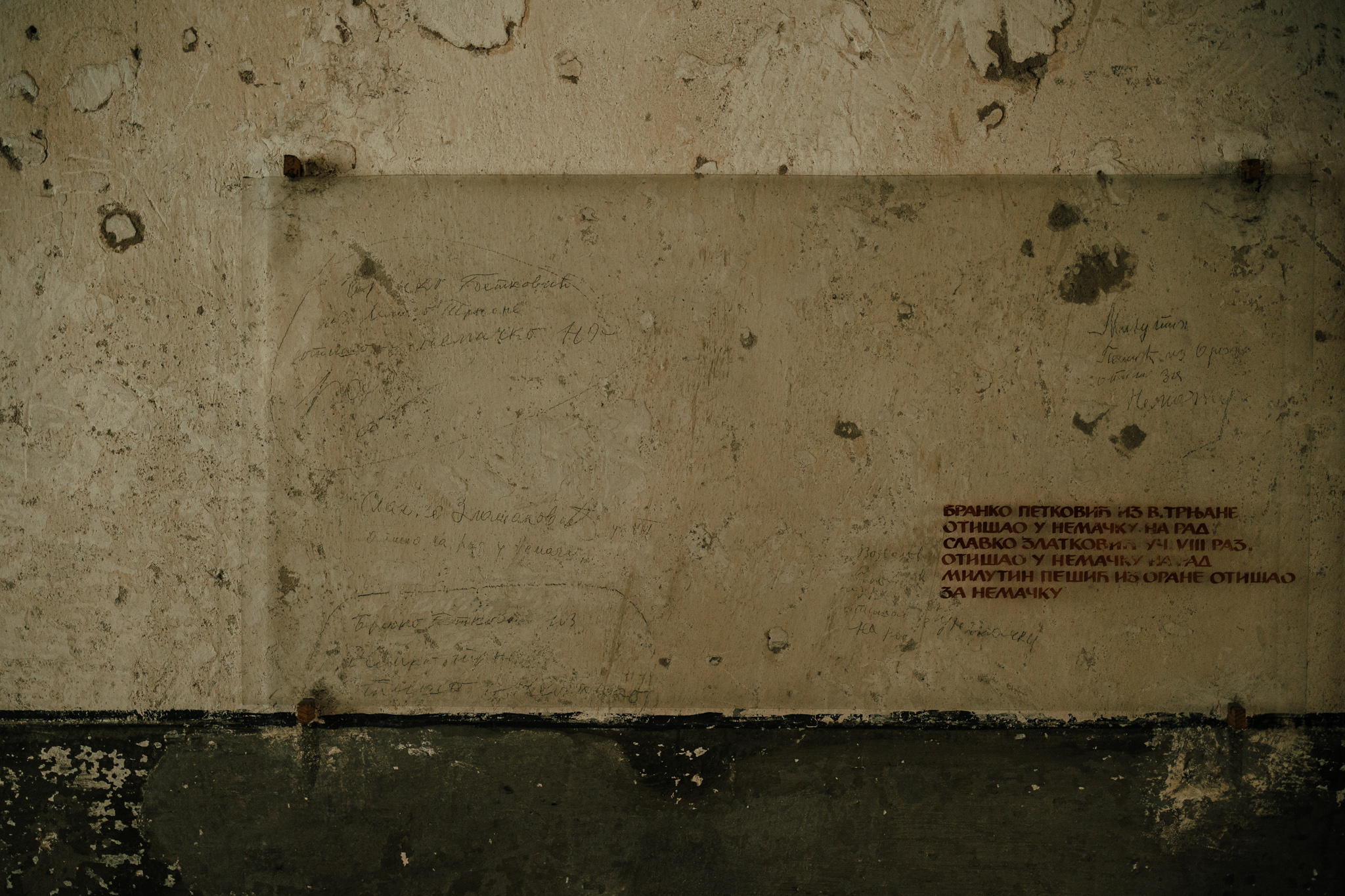
On one wall, a sheet of glass covers a patch of old plaster. Under it are faint lines in pencil. Beside them, the museum has copied some of the words out in red:
Branko Petković from V. Trnjane went to Germany for work.
Slavko Zlatković, pupil, class VIII, went to Germany for work.
Milutin Pešić from Orane went to Germany.
A name, a village or a school class, a destination. Nothing else.
Two names and a label
In a glass case are two yellow armbands. One carries a Star of David above the letter Ž. The other is printed JUDE in German and ЈЕВРЕЈИН in Serbian: “Jew”.
Beside them is a folded identity paper, also in both languages. It was issued in Niš on 24 September 1942 by the local office of the German Security Police. Its text begins with two words: Die Jüdin, “the Jewess”. Then comes the name: Stojiljković Ljubica, née Grünberger Lilli, born 13 November 1910 in Bijeljina, living in Niš. With the office’s permission, it says, she may remain in Niš.
The paper calls her a category before it calls her by name. Then it gives her two.
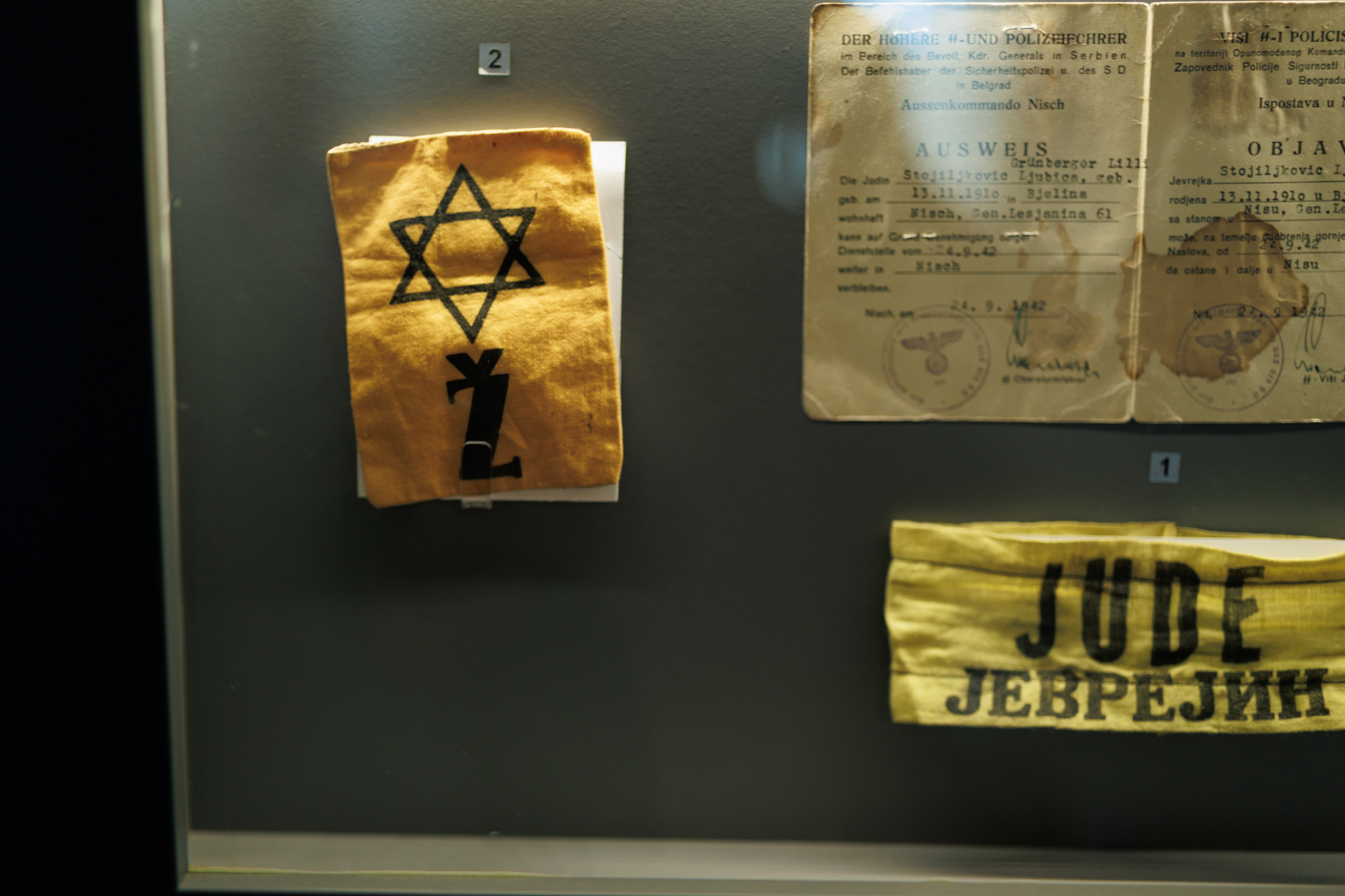
By the date on that paper, the Jewish women and children held at Crveni Krst had already been taken away. In 1942 they were sent to the Sajmište camp in Belgrade, where they were murdered in gas vans. Why Ljubica Stojiljković was allowed to stay, the paper does not say.
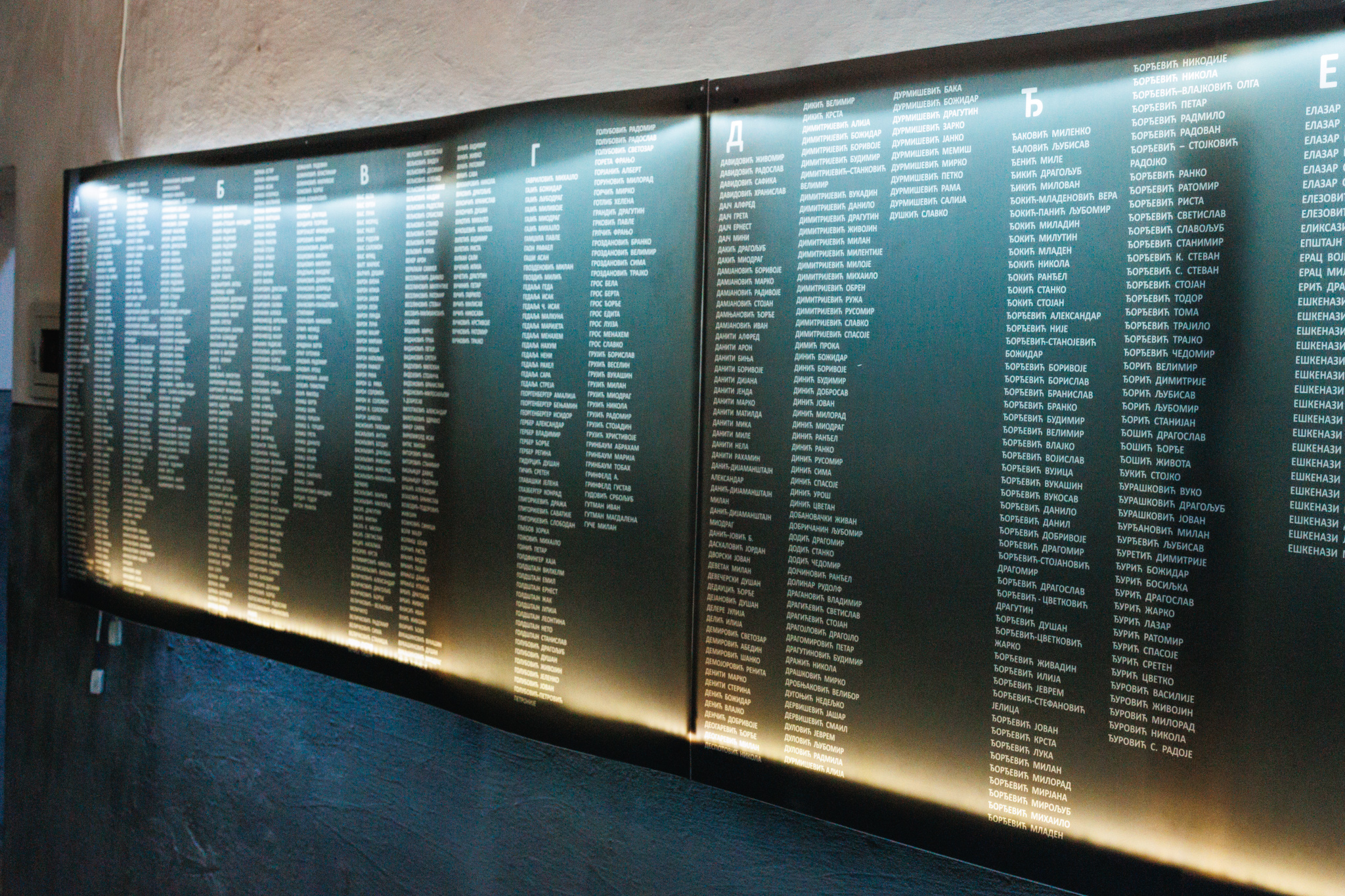
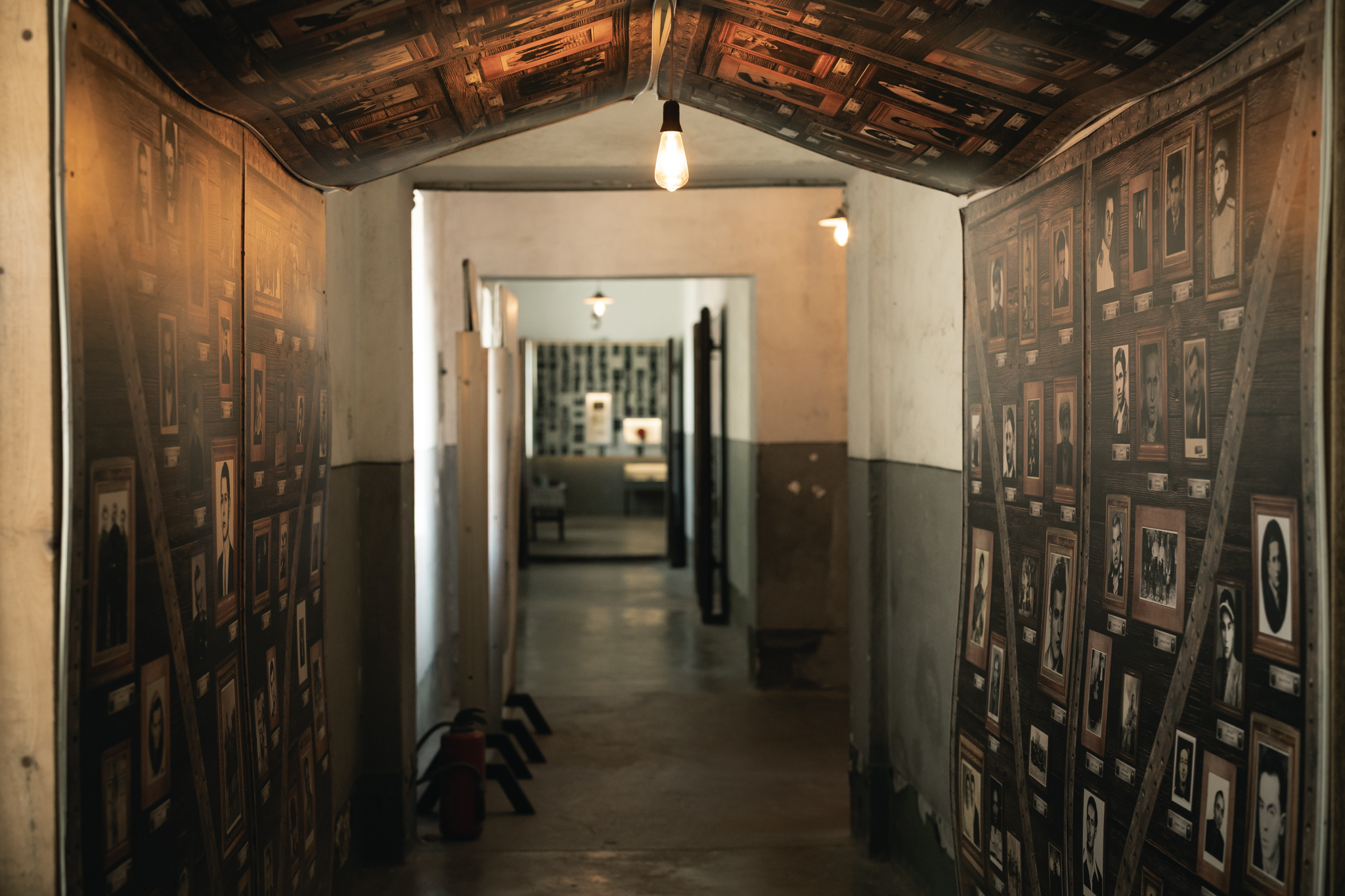
Further on, a backlit wall lists names in Cyrillic, in alphabetical order, column after column. A corridor is lined with portraits.
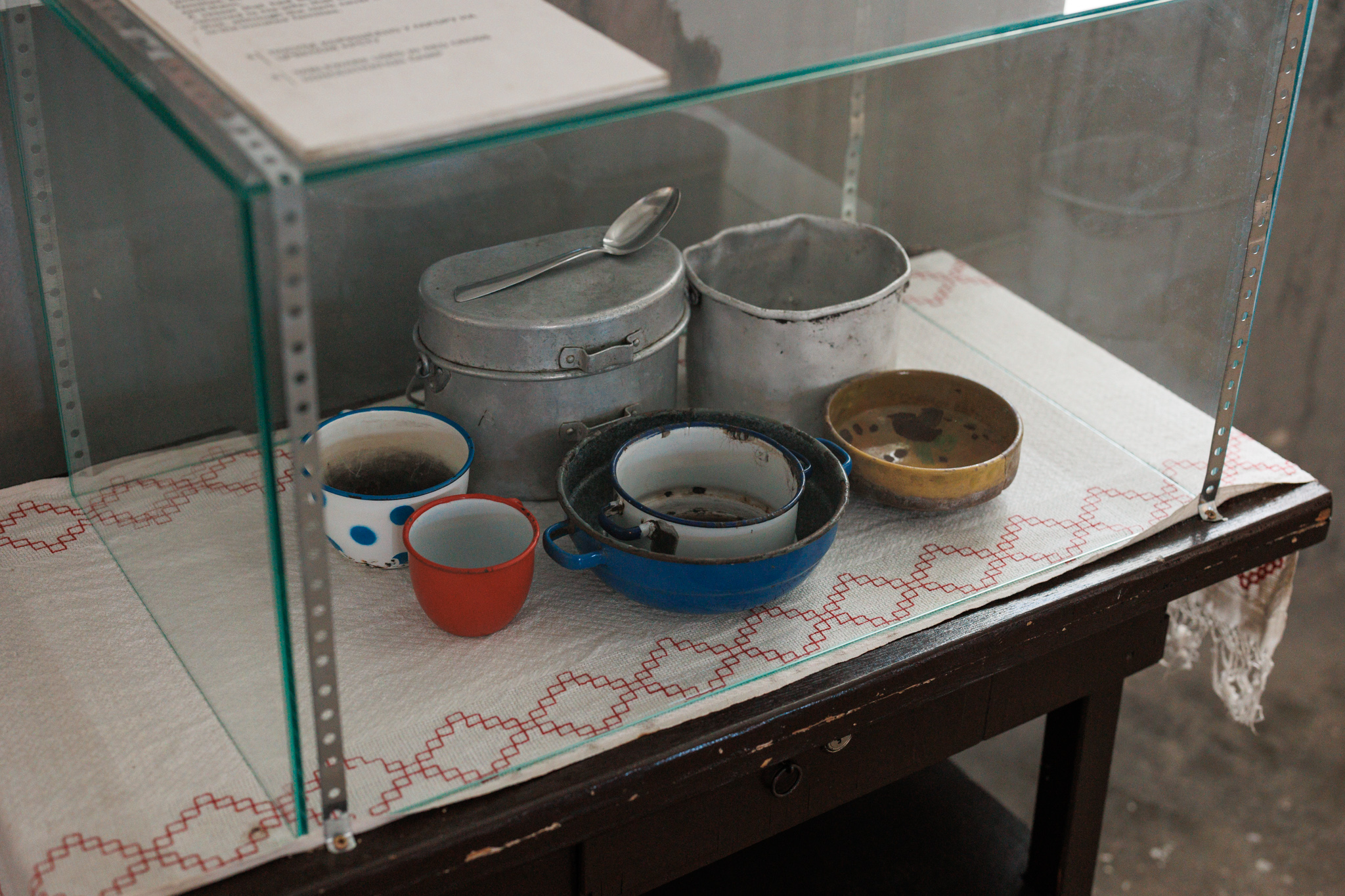
12 February 1942
The camp had been open for five months when 147 of its prisoners tried to leave.
On 12 February 1942, the prisoners were let out into the yard. One survivor put the time at around five o’clock, and remembered the bitter cold. The yard was fenced with two rows of barbed wire. The inner row was about two to two and a half metres high, the outer row three to four metres. Between them lay coils of wire known as “hedgehogs”.
The prisoners went for the guards with their bare hands, and then for the wire. The memories collected afterwards include a shout, “We’ve been betrayed, brothers — forward!”, and a guard by the latrine who opened fire and alerted the others.
Of the 147, 105 got through and 42 died on the wire.
The National Museum Niš calls it the first organised escape from a camp in occupied Europe. The Germans answered with executions on Bubanj.
Under the roof
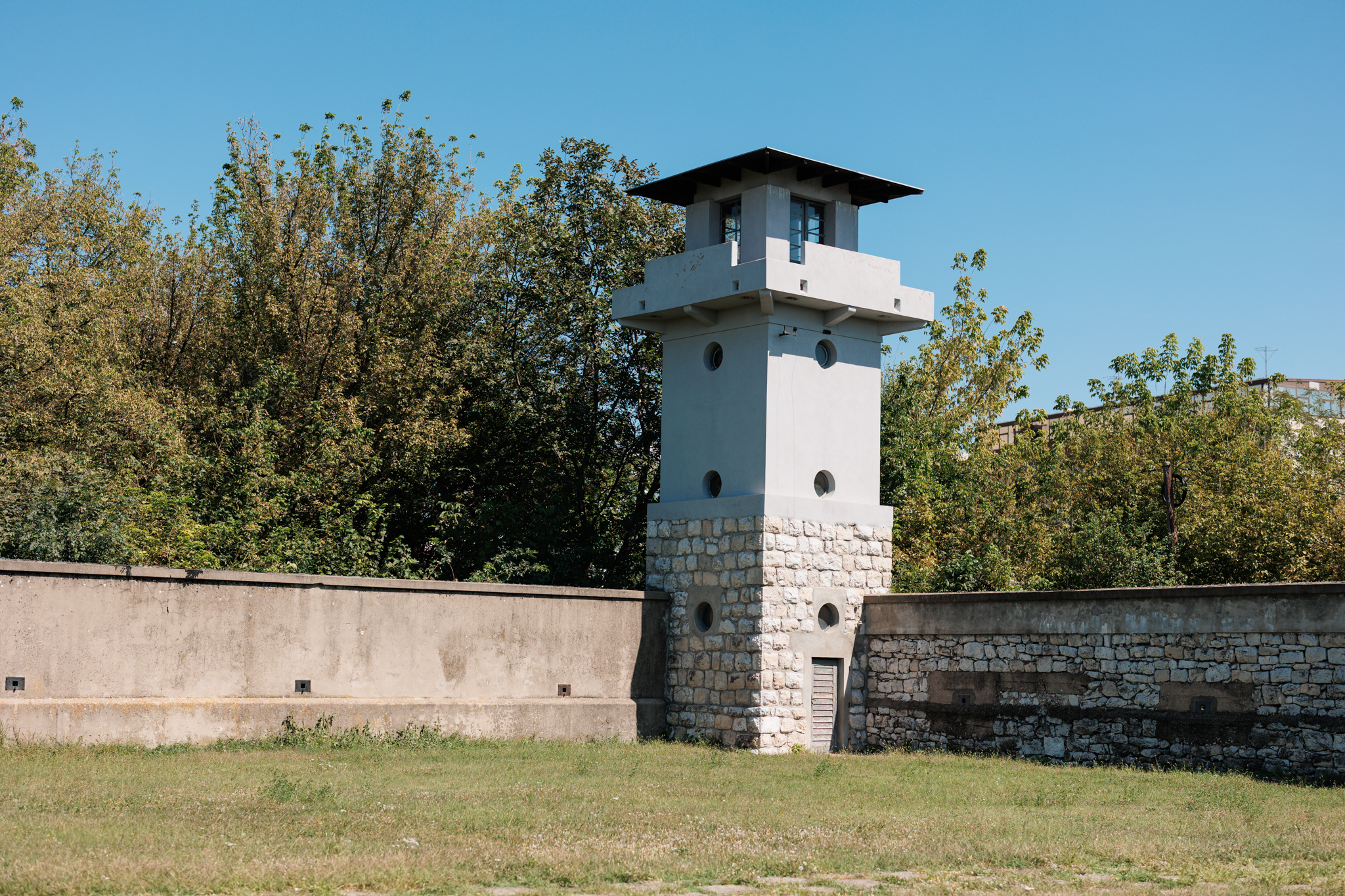
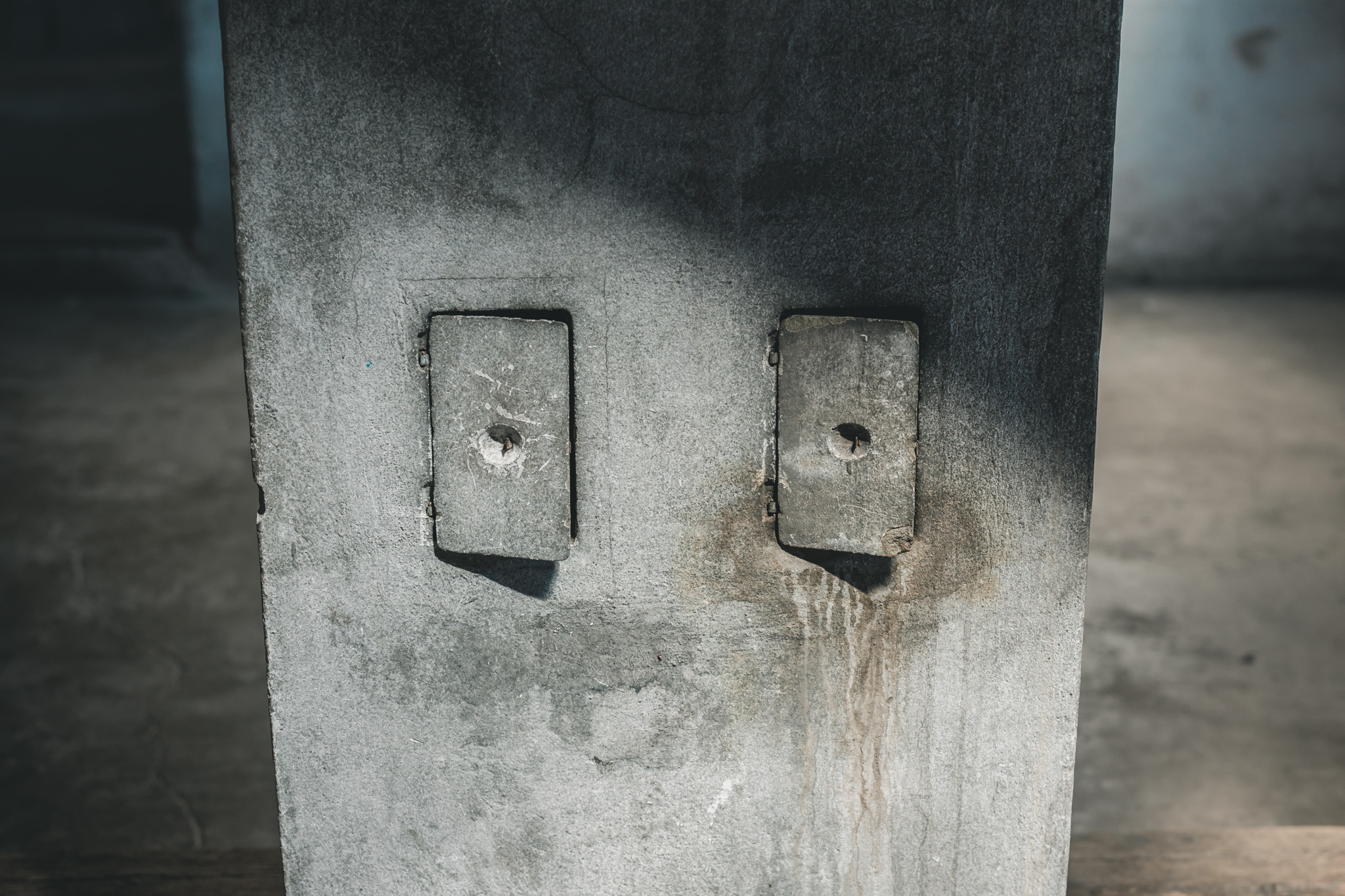
A staircase leads up to the attic. On the wall beside it is a large mosaic of grey and white stones: angular figures, and along the bottom, a Star of David, two triangles and two numbers, 74164 and 27553. Downstairs, the walls are full of names. The mosaic has numbers instead.
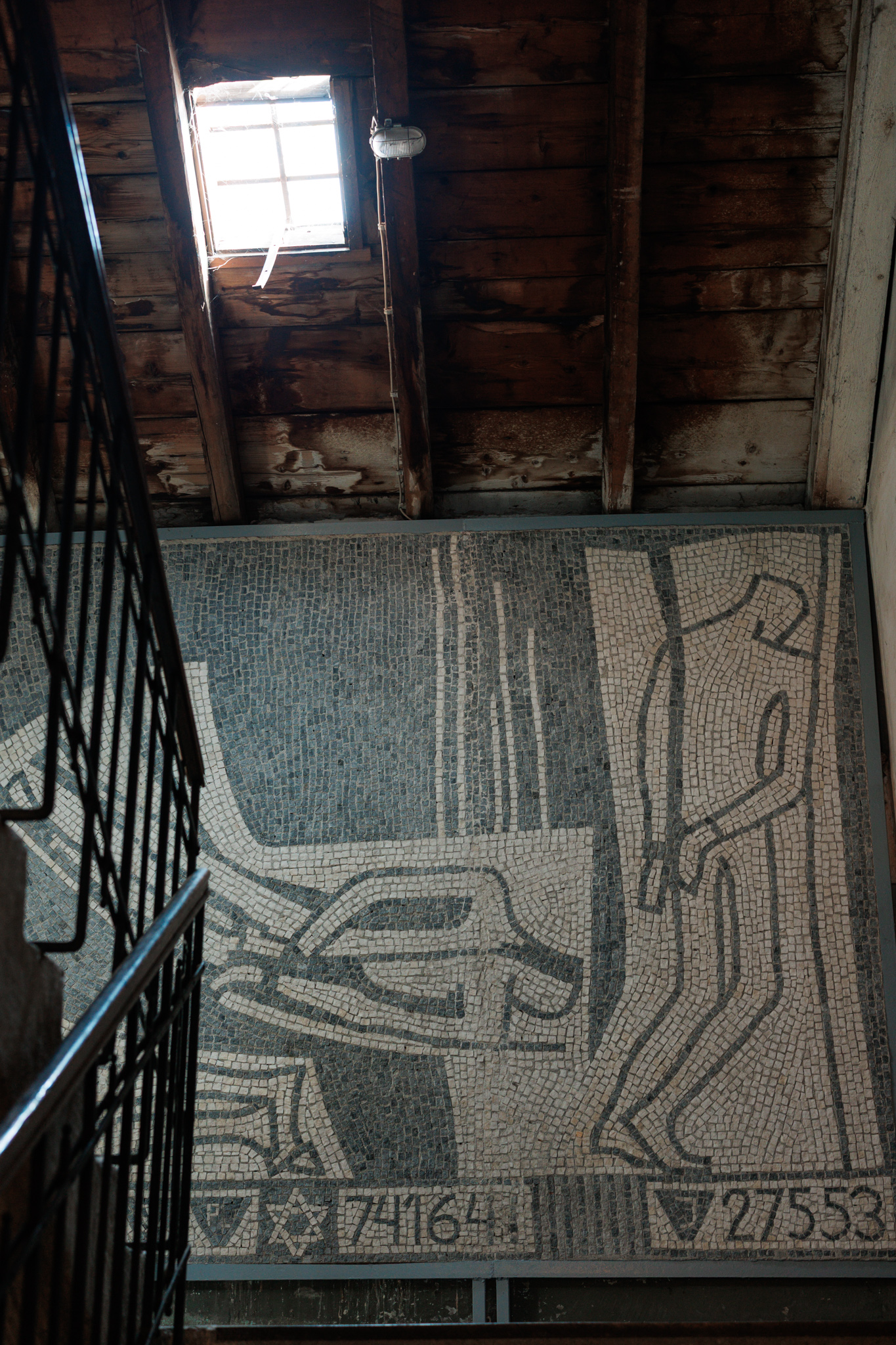
The solitary cells are up here, under the roof: a row of barred wooden doors along a corridor beneath the beams. One account of the camp describes the attic cells as the worst place in it to be held.
The day the Gestapo left
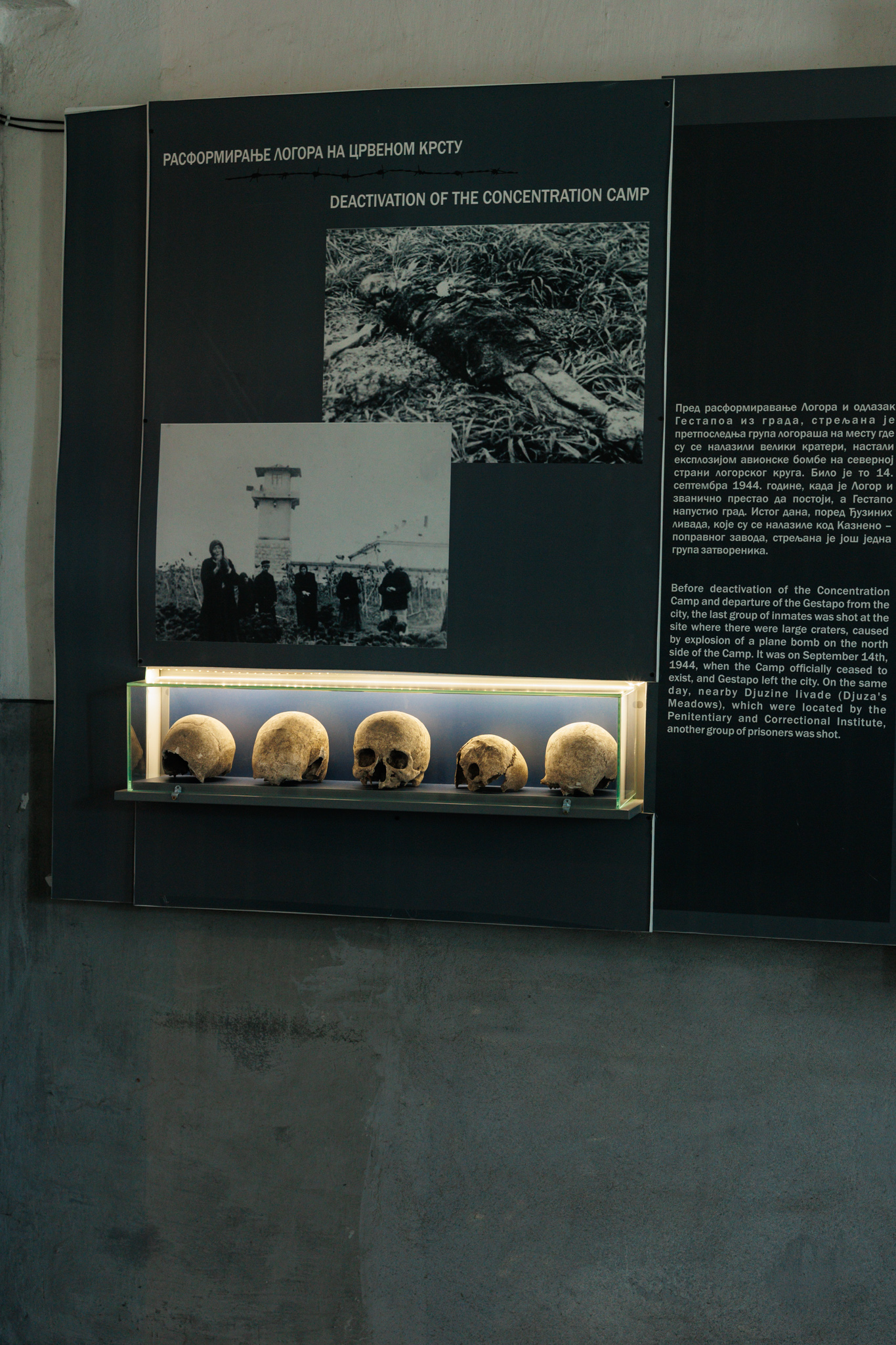
Back downstairs, a panel headed “Deactivation of the Concentration Camp” describes the end. On 14 September 1944, the camp officially ceased to exist, and the Gestapo left the city. Before they went, prisoners were shot beside large bomb craters on the north side of the camp grounds. The same day, another group was shot in a meadow near the town’s penitentiary.
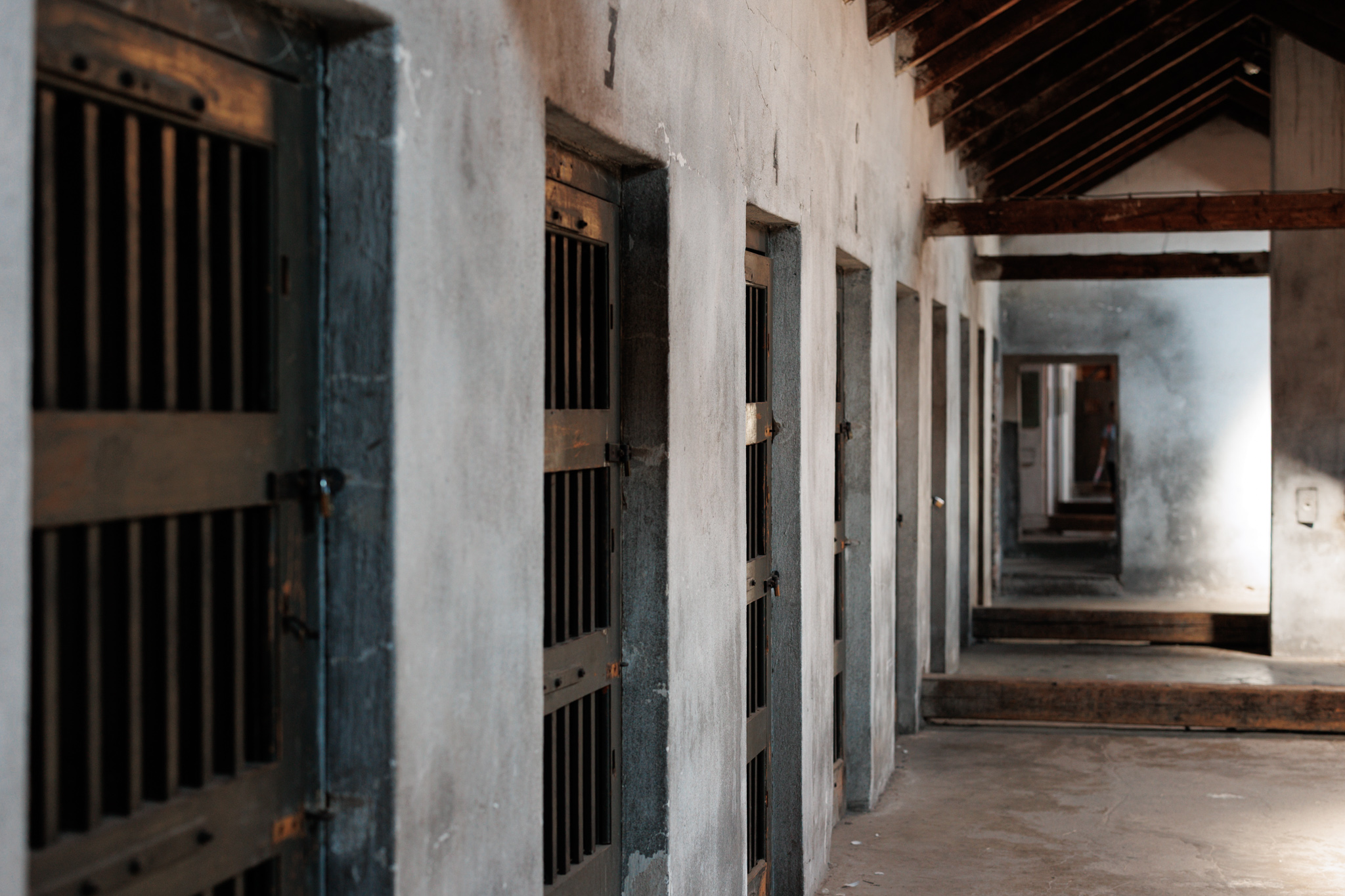
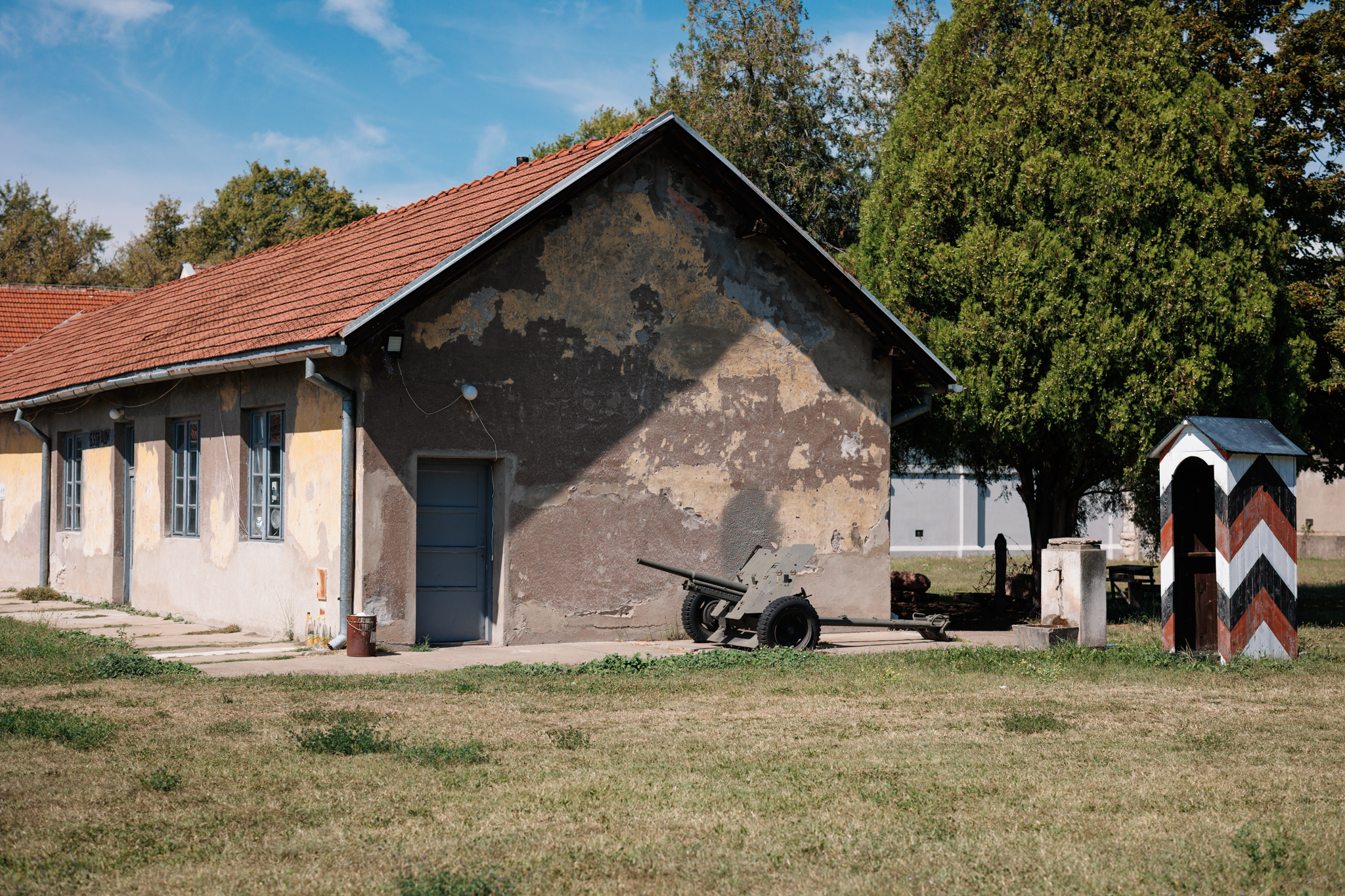
Outside, the afternoon was bright. A small field gun stood on the grass beside one of the low auxiliary buildings, next to a sentry box painted in black, white and red chevrons.
On 12 February 1967, twenty-five years after the breakout, the memorial museum opened in the former camp building.
The camp ended with the Gestapo’s departure from Niš. The museum is named for another departure: the day 105 prisoners escaped.
Visit this place
Location
Memorial Complex “February 12” (Crveni Krst camp) / Меморијални комплекс „12. фебруар”
In the Crveni Krst district, north of central Niš
Bulevar 12. februara 71, Niš, Serbia
Practical Information
- Area
- Crveni Krst, Niš, Serbia
- Opening hours
- Tuesday–Friday 9:00–16:00; Saturday–Sunday 9:00–15:00; closed Monday. Last entry 30 minutes before closing.
- Admission
- 300 RSD; reduced 250 RSD. A combined ticket for all National Museum Niš sites is 1,200 RSD (reduced 1,000 RSD).
- Visitor note
- This is a memorial site at a former concentration camp; please keep your voice down.
- Official information
- National Museum Niš — Memorial Complex “February 12”
Information last checked: October 4, 2026 (Opening hours and admission checked on the National Museum Niš website. Photography rules inside not confirmed.)
Conversation
Comments
Review pending commentsComments are reviewed before appearing. The internet already contains enough unattended surprises.
Loading comments…
Leave a comment