Šumarice Memorial Park: Answers to a Hundred for One
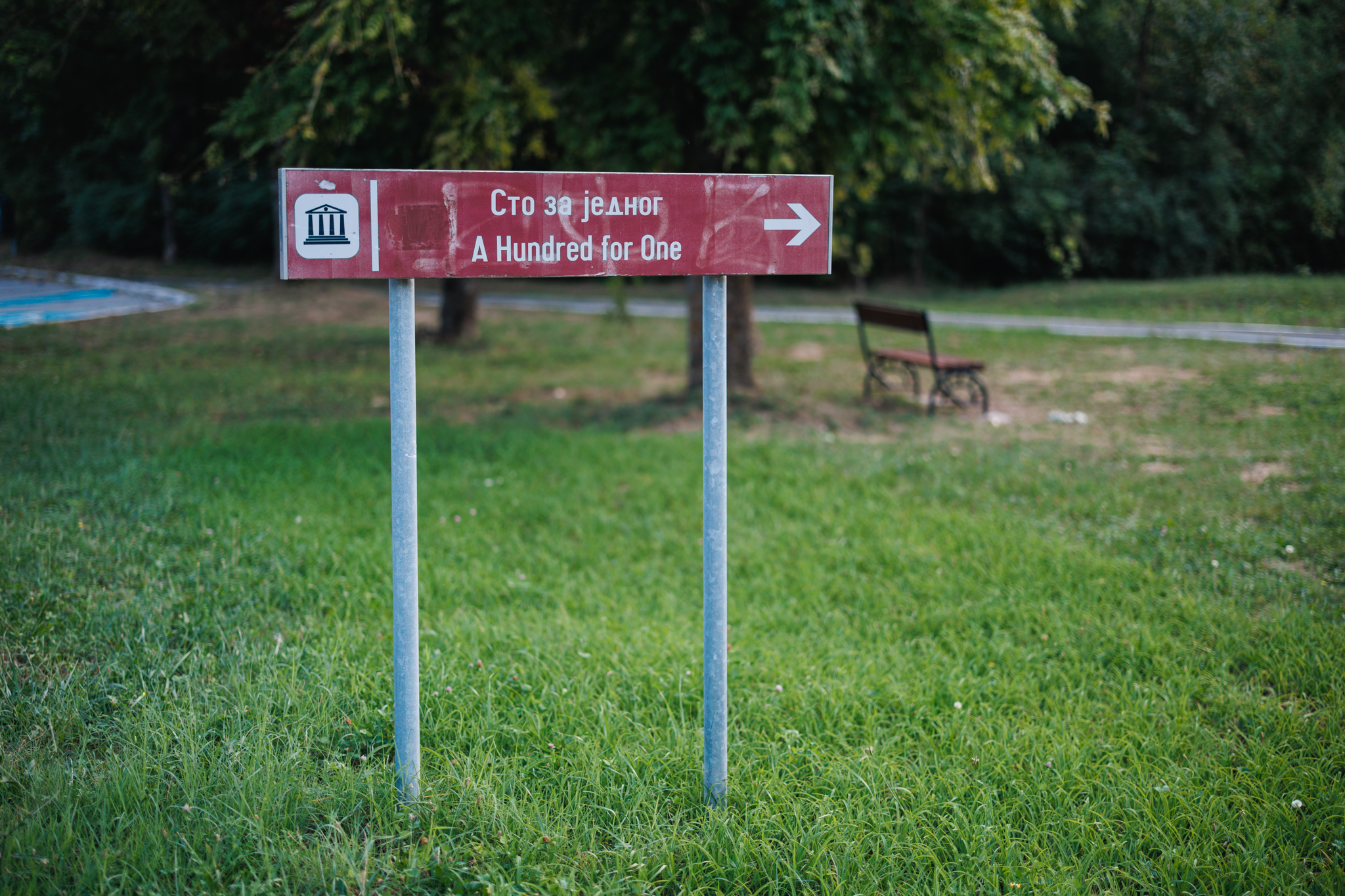
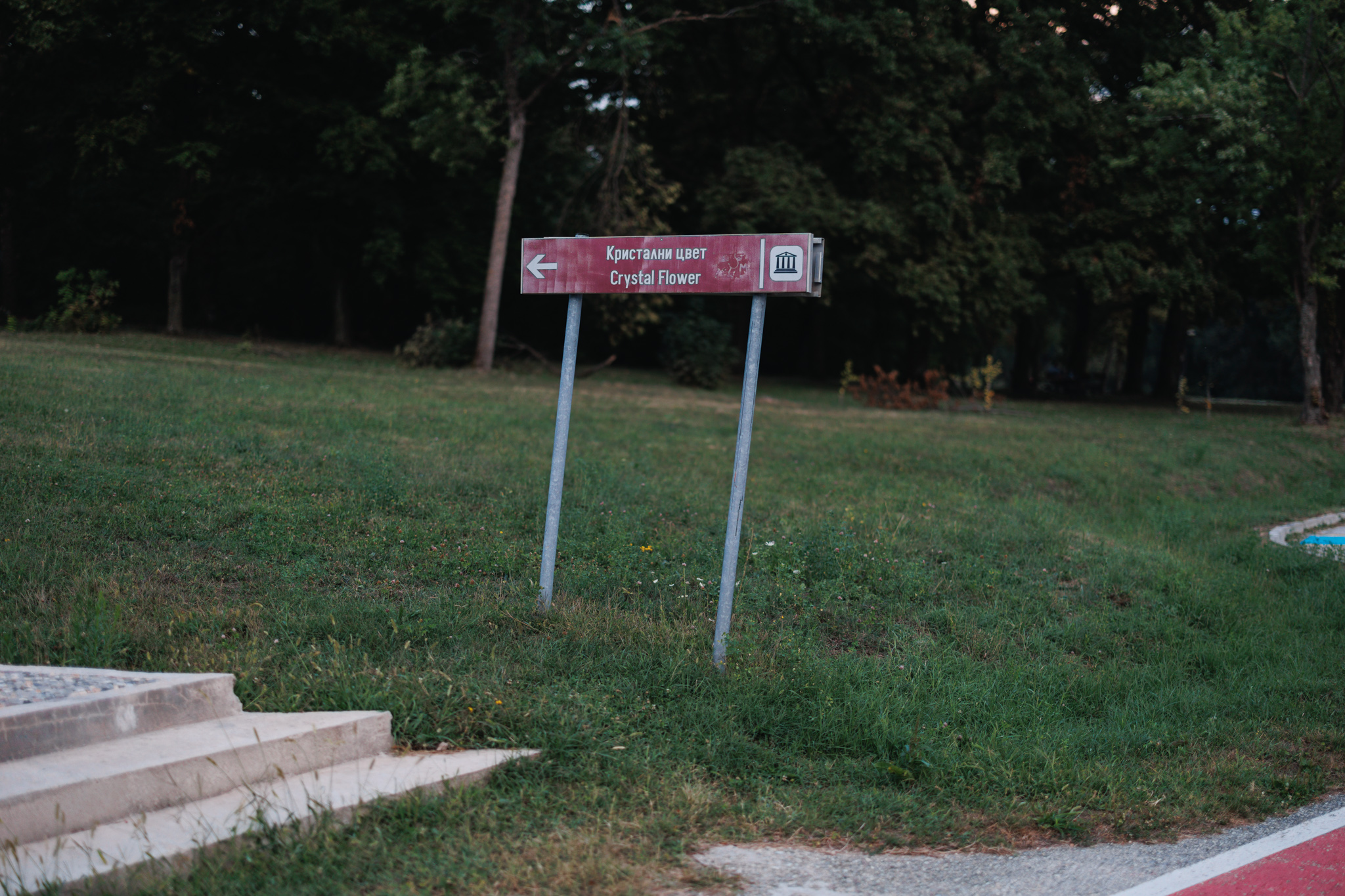
A red signpost in Šumarice points across the grass with an arrow and a ratio: Sto za jednog, A Hundred for One.
As wayfinding, it is perfectly clear. Understanding the destination takes longer.
The ratio is not the sculptor’s invention. In 1941, the German command had fixed a rate for reprisals in occupied Serbia: for every German soldier killed, a hundred civilians were to be shot; for every one wounded, fifty.
That autumn, ten German soldiers were killed and twenty-six wounded in fighting with the resistance. Applied to Kragujevac, the rate came to 2,300 people.
Researchers who have since collected the victims’ names count about 2,800 people killed in the town and the villages around it over three days that October. Many were shot and buried here, on the edge of town. Šumarice holds some thirty mass graves.
It is now a memorial park. Over the decades, its monuments have answered the ratio in very different ways.
A tree of bodies
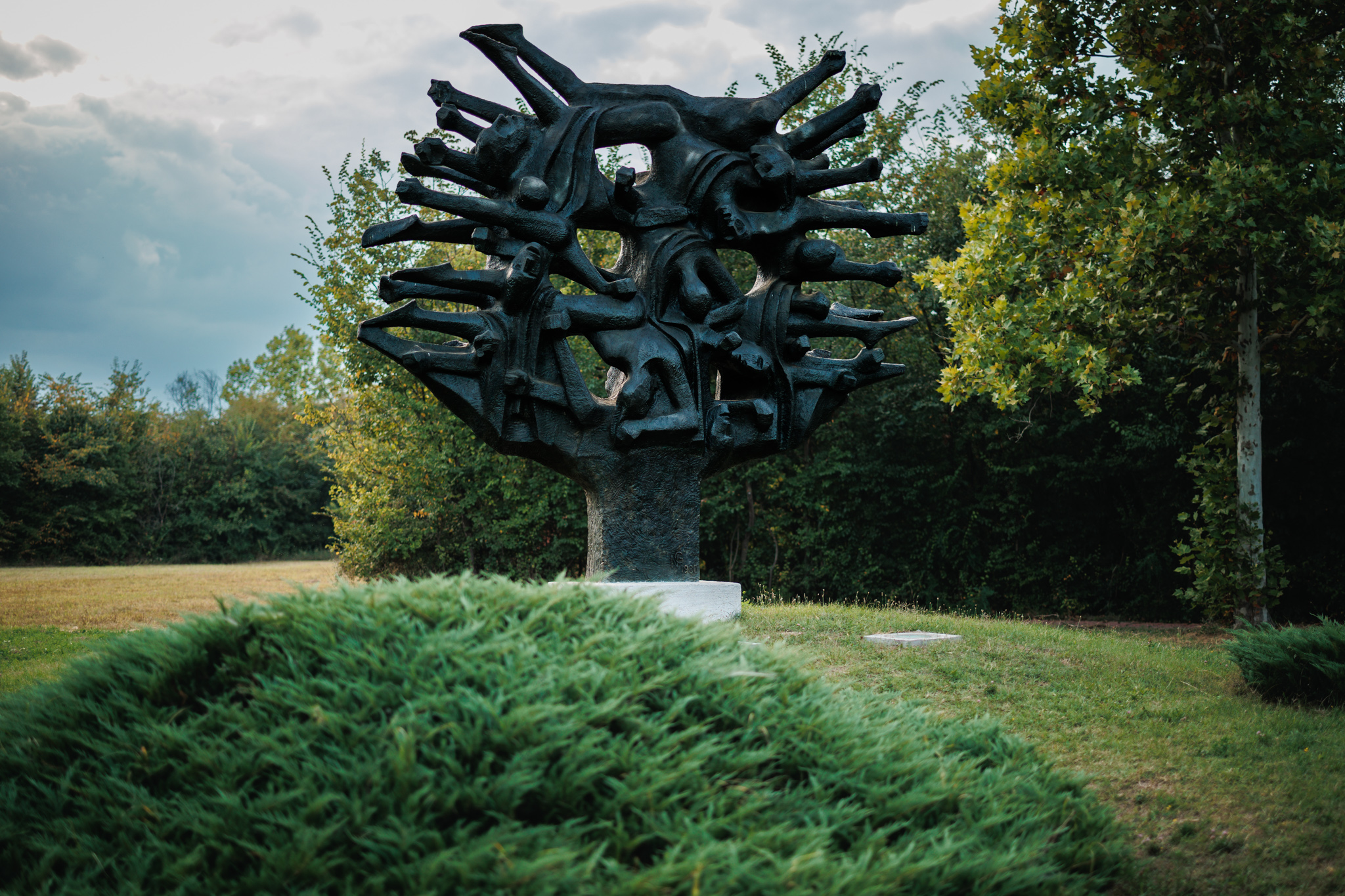
The sculpture the sign points to is by Nandor Glid, in bronze. Bodies twist into one another, arms and legs reaching outward, until the whole mass becomes the crown of a tree. The local heritage institute reads it as a symbol of life. There are real trees behind it. The bronze joins their outline, though its branches are people.
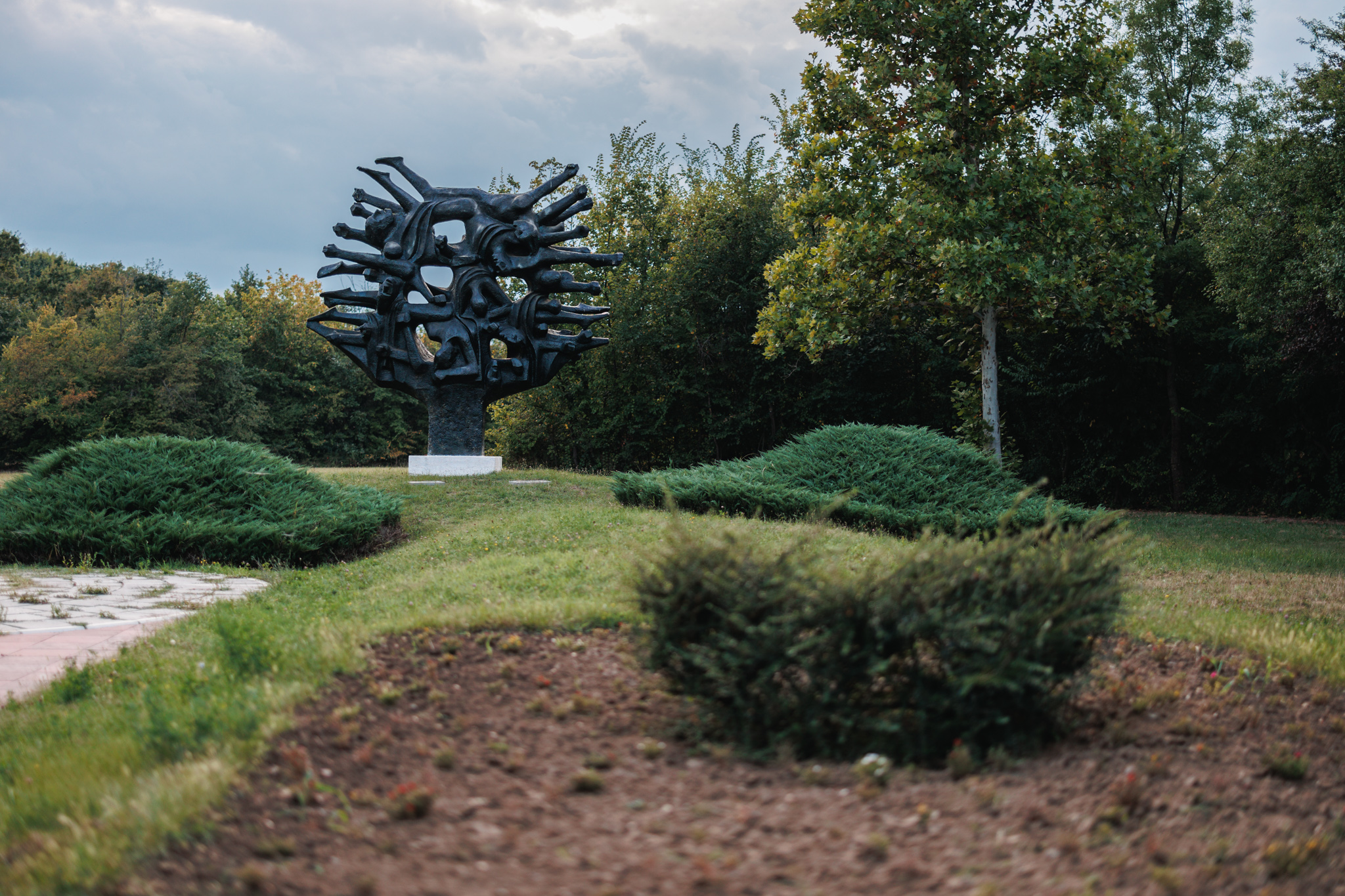
The title gives a number. The sculpture does not: there is no telling where one body ends and the next begins.
Named, not counted
The rate did not ask who anyone was. The dead were Serbs, Jews, Roma, Muslims, Slovenes and others. Several of the memorials that came later answer with who.
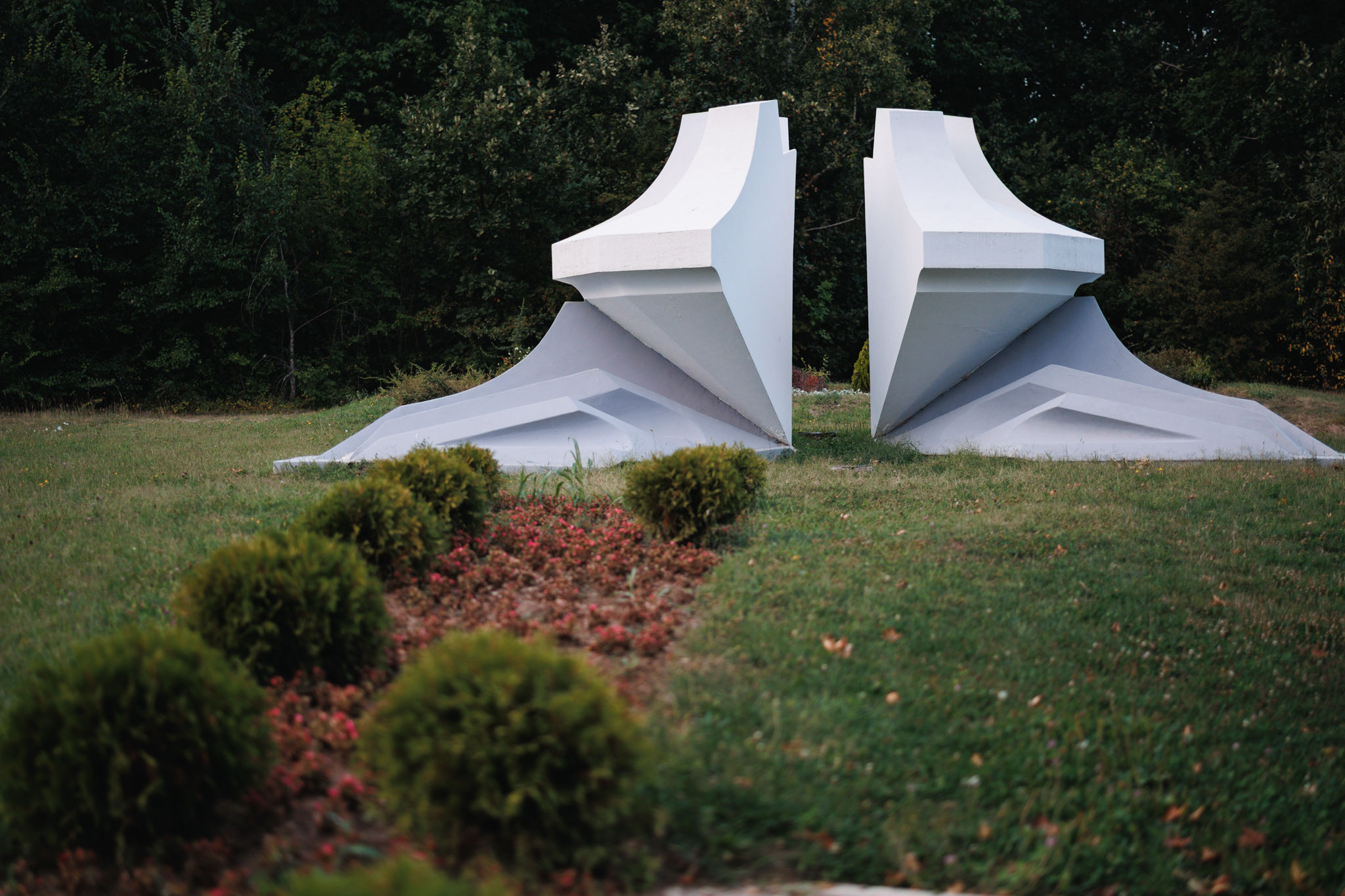
Crystal Flower remembers the Roma children who were killed. It is usually called the monument to the shoeshine boys. Roma in Kragujevac have often objected to that, a Serbian Holocaust research centre notes: not all the children had worked shining shoes.
The flower itself names no trade. It is a white blossom split down the middle, with a gap left between the halves.
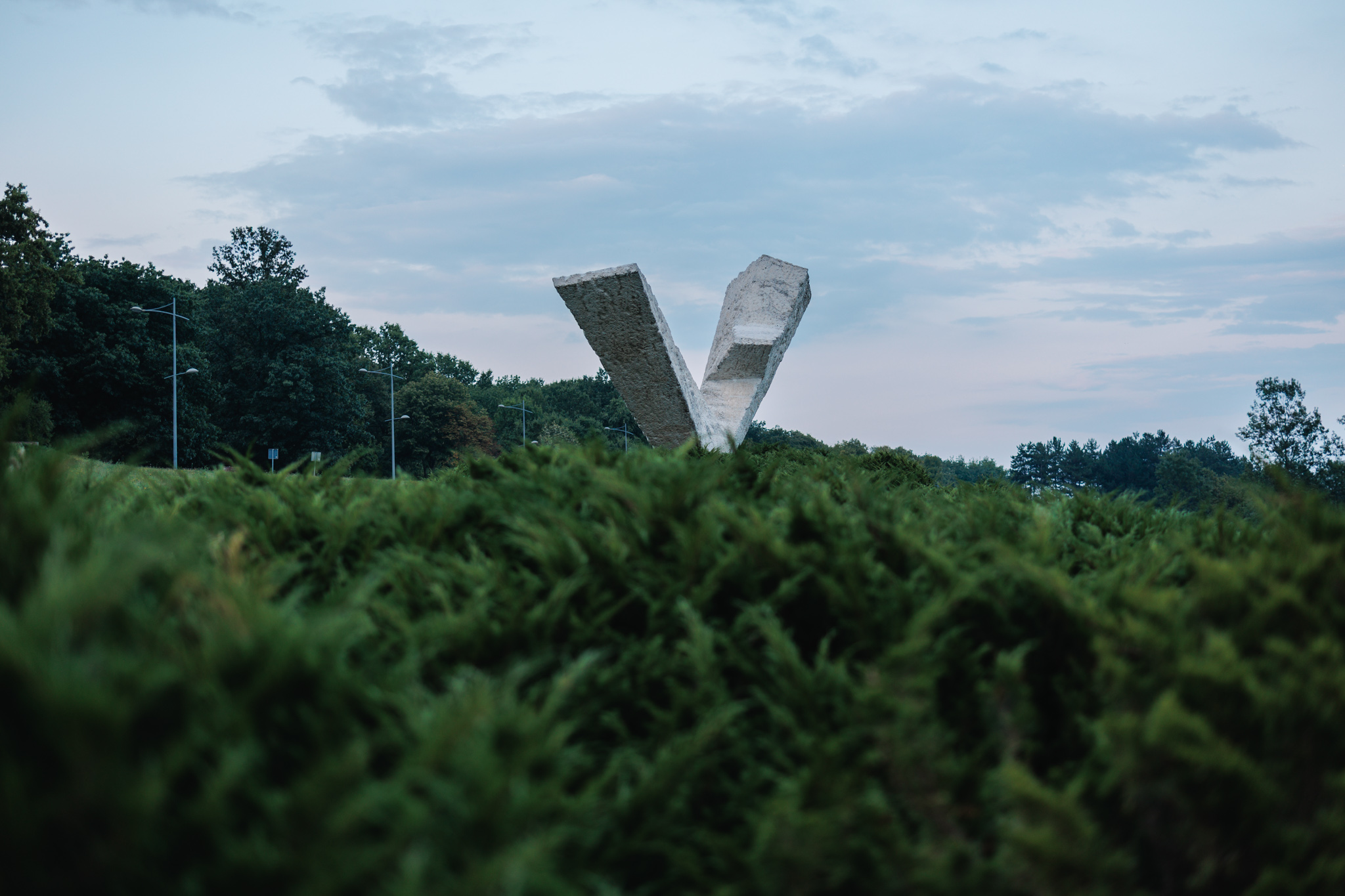
Elsewhere in the park, a white V stands where pupils and teachers taken from the town’s schools are buried. What the V stands for is a story of its own.
Counting from the Creation
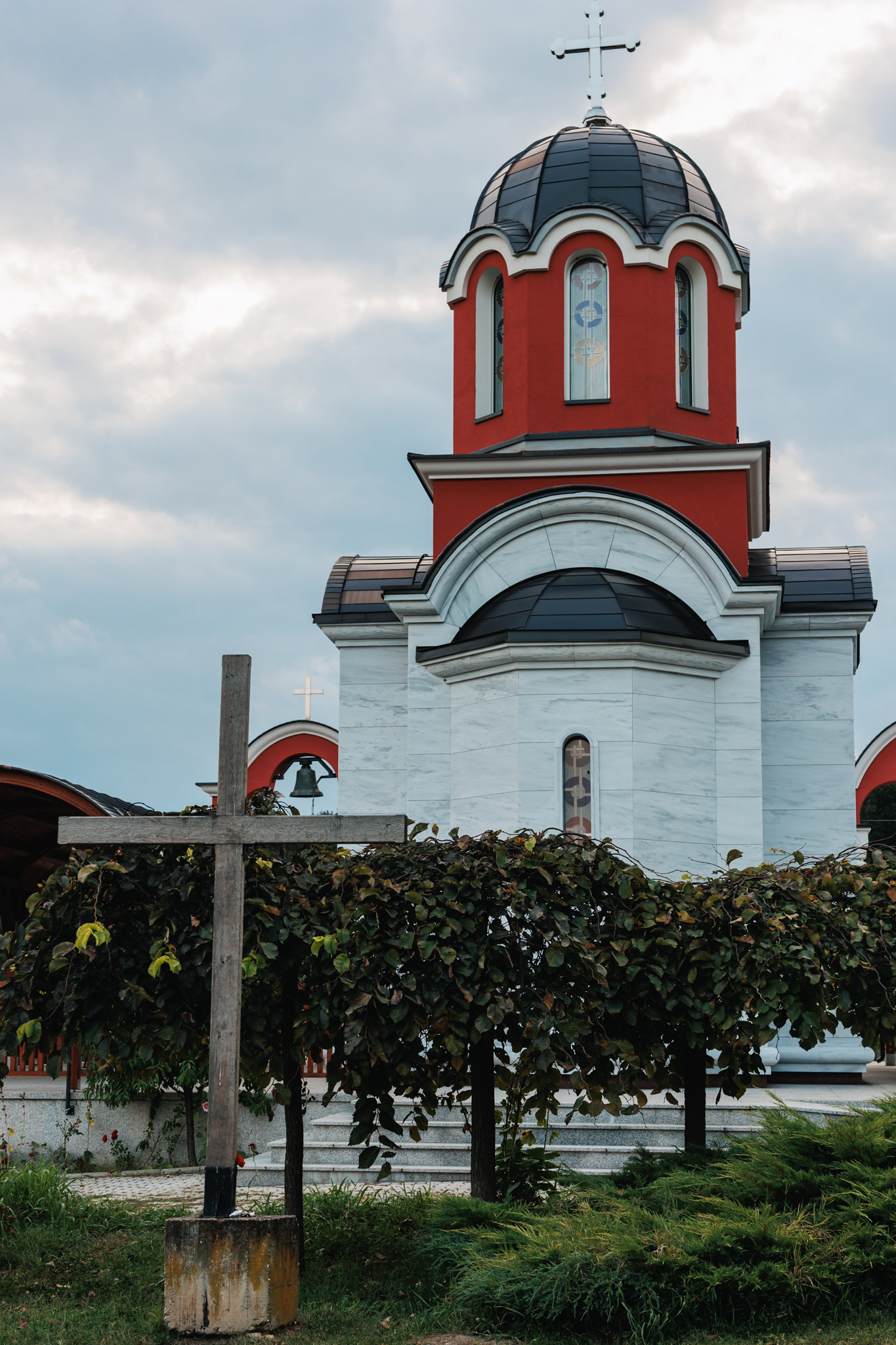
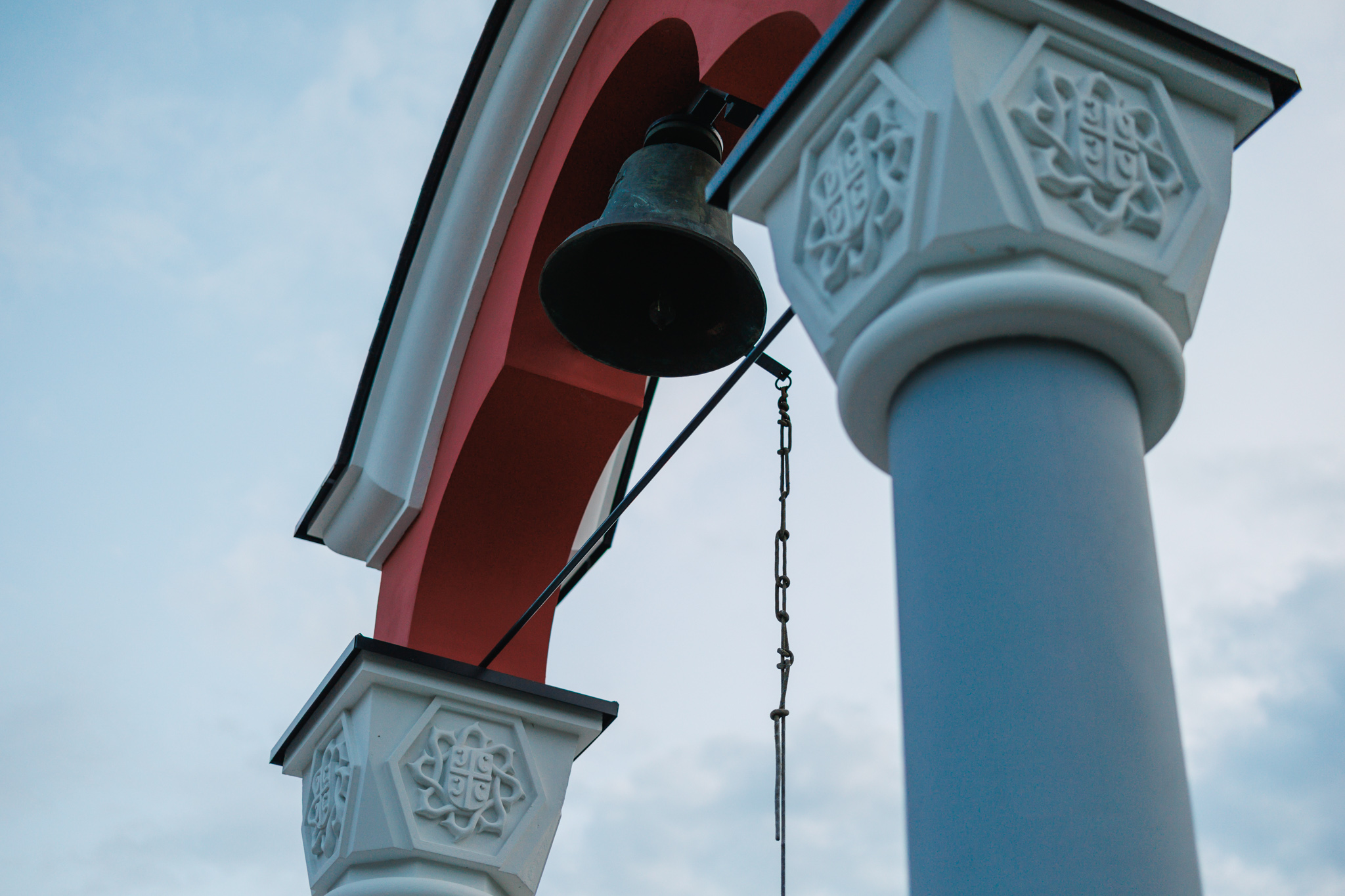
Between the memorials stands a white church with a red tower, dedicated to the Holy New Martyrs of Kragujevac.
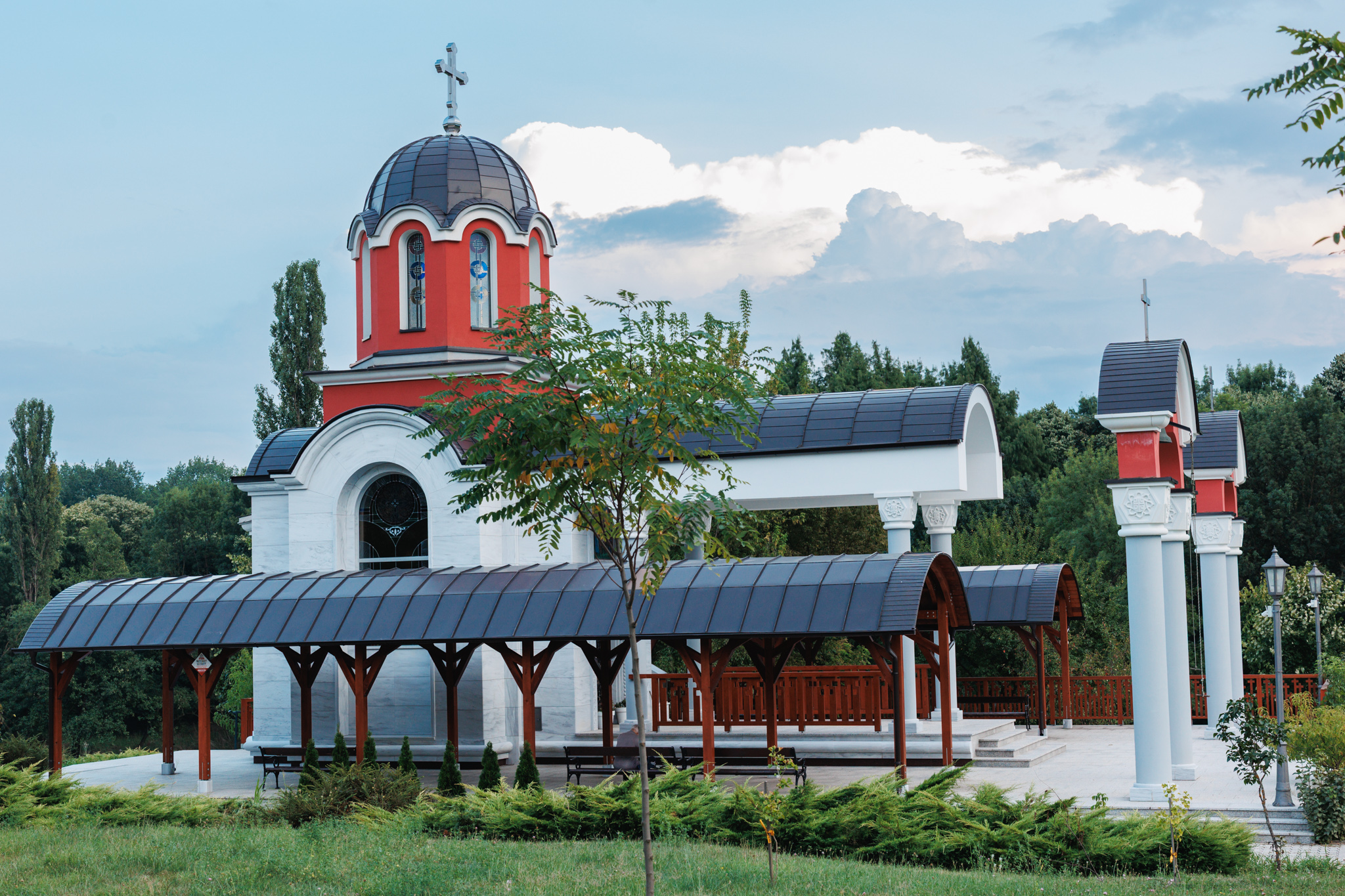
Its board does its counting on a larger scale. In red hand-drawn capitals, it announces the building and dates it twice: in the year 7510 from the creation of the world, and 2002 from the birth of Christ.
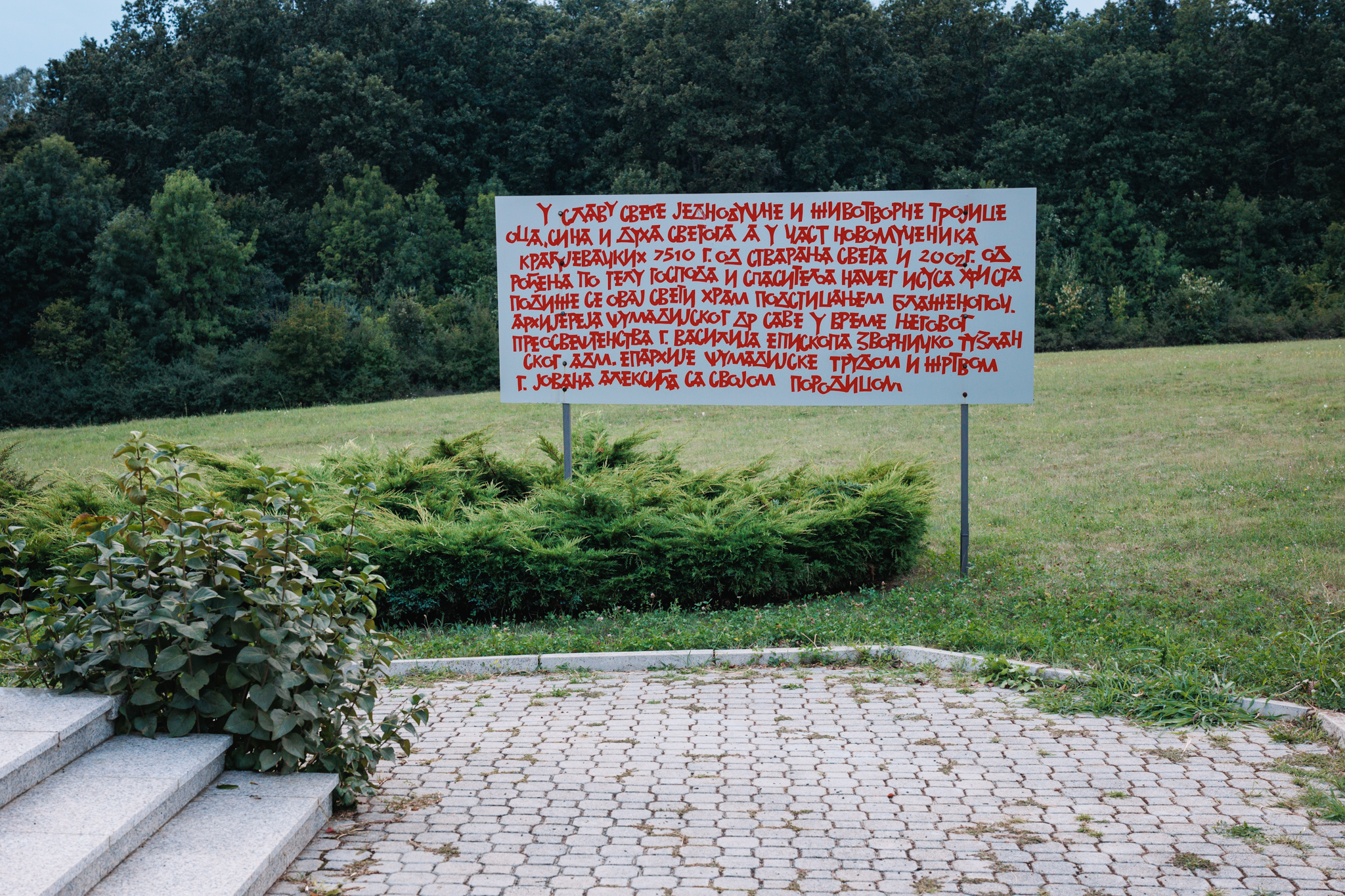
The board says the church is being raised. When I passed, in August 2023, it looked finished. It was consecrated the following June.
By the board’s first calendar, that was the year 7532.
One at a time
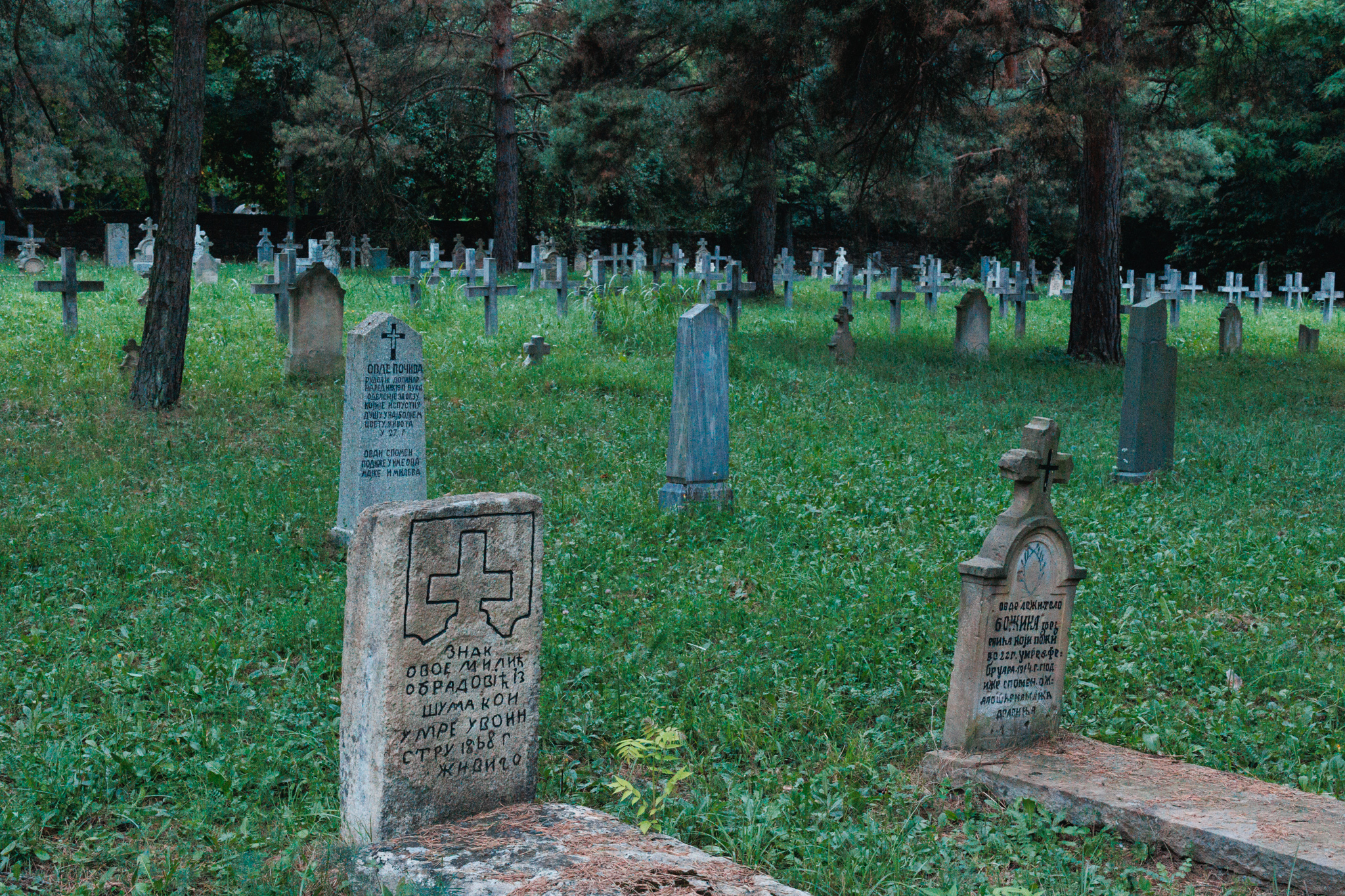
Deeper among the trees is an older cemetery. Šumarice was a burial ground long before 1941. Soldiers were buried here after the wars of the nineteenth century and the Balkan Wars, and the cemetery grew during the First World War, when wounded and sick soldiers brought to Kragujevac died in large numbers.
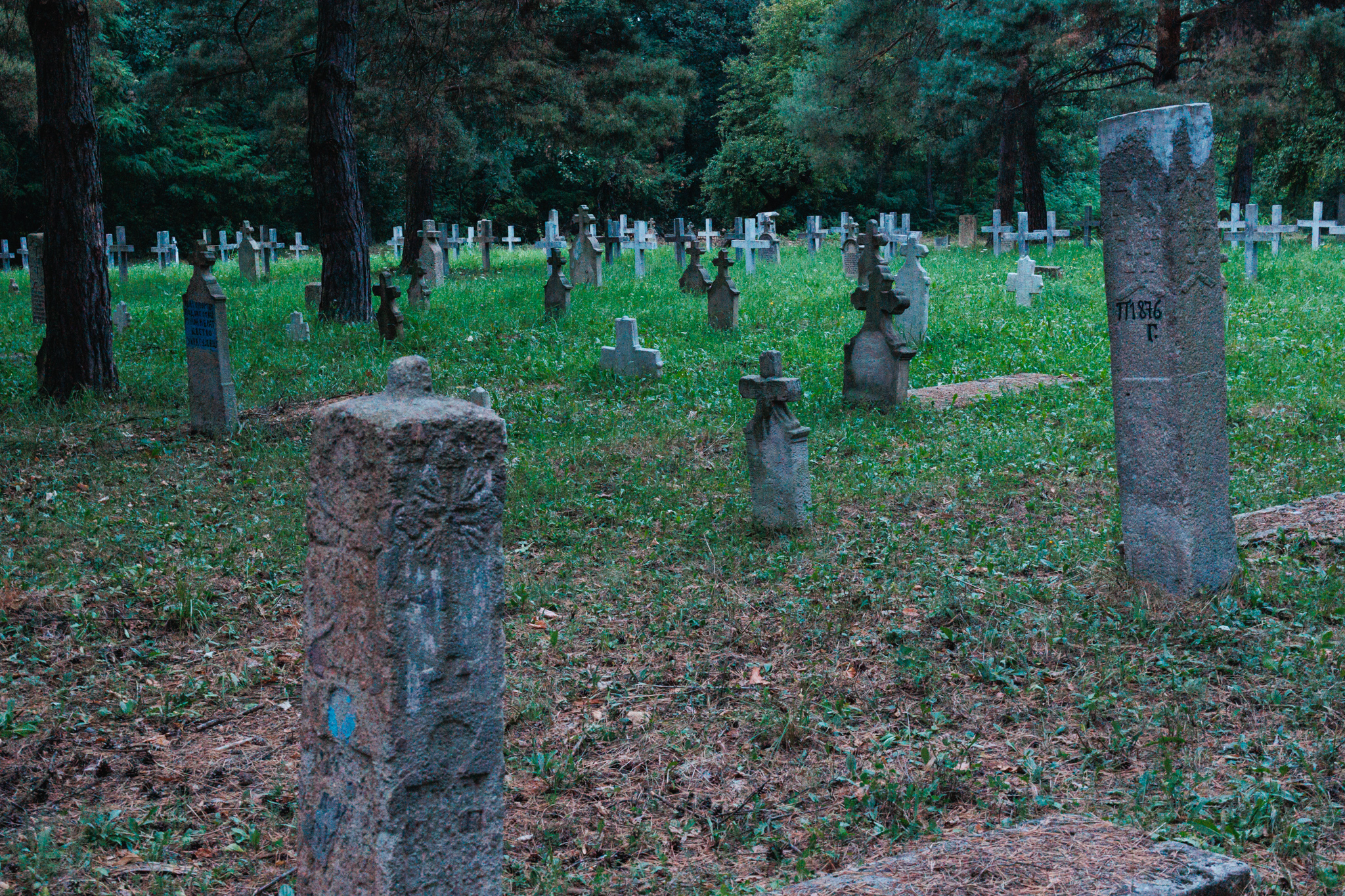
After the big memorials, the scale changes. Here the graves go one at a time, a few steps apart. One stone records a man who lived twenty-two years and died in February 1914.
On the way to the museum, between the houses, stands something smaller still. Its plaque calls it a zadužbina, a pious foundation: a well for thirsty travellers, put up by a couple for the soul of their only son, an engineer, who died in the house behind it.
The travellers are now offered two wicker chairs and a stool. On the gate beside it, a sign warns of the dog.
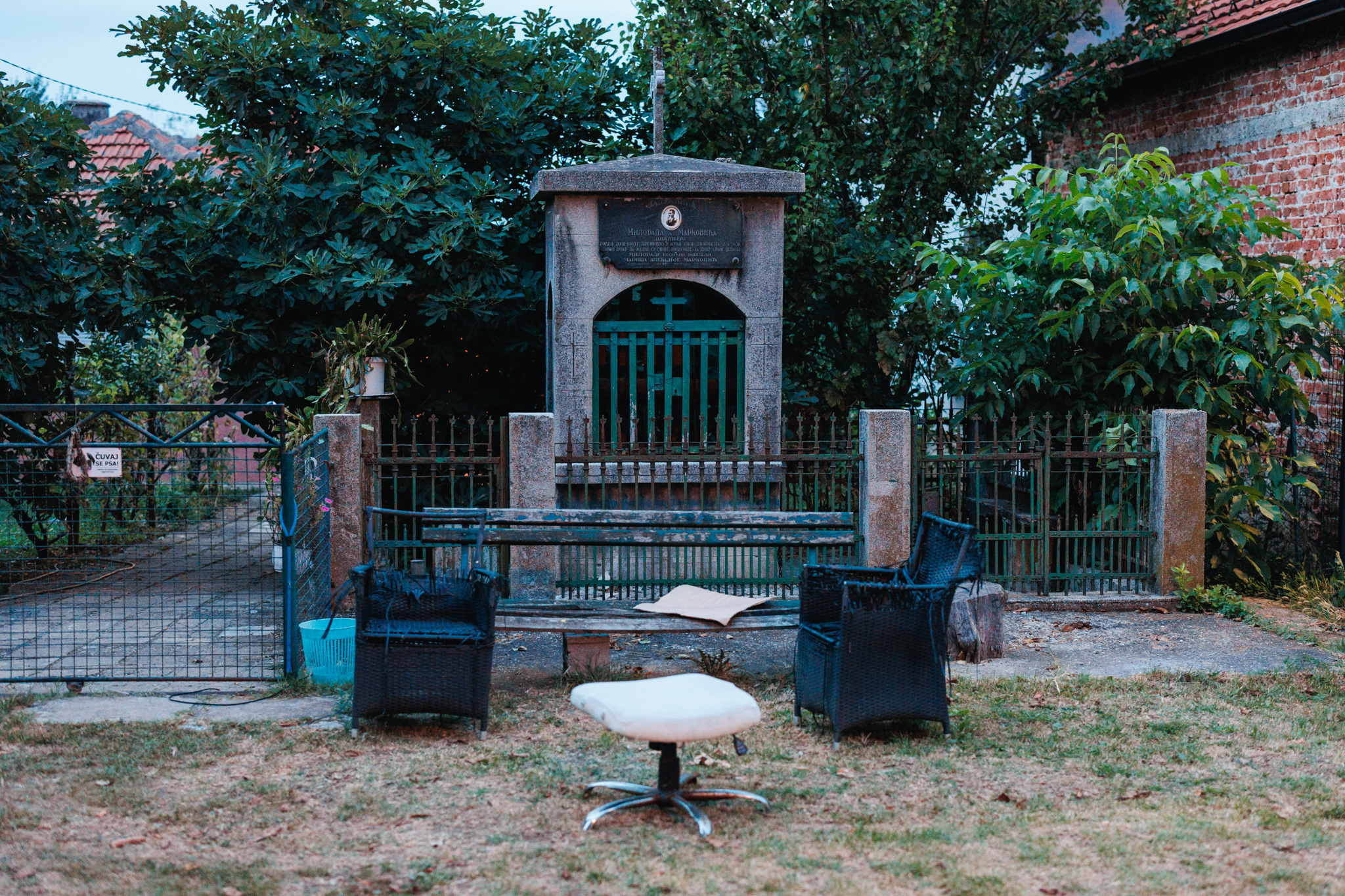
The occupiers’ rate was a hundred for one. Here, two parents built a well for one.
After hours
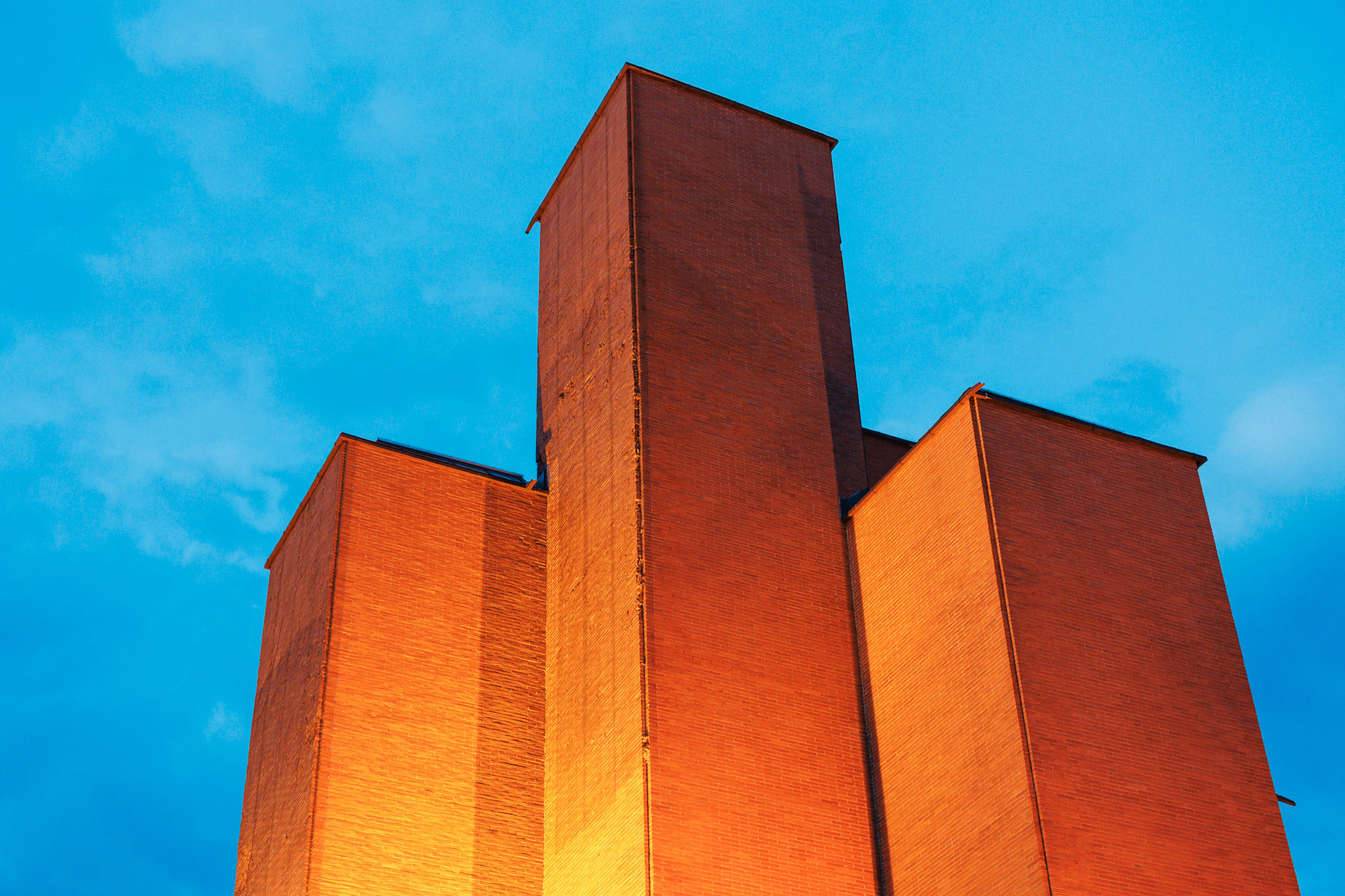
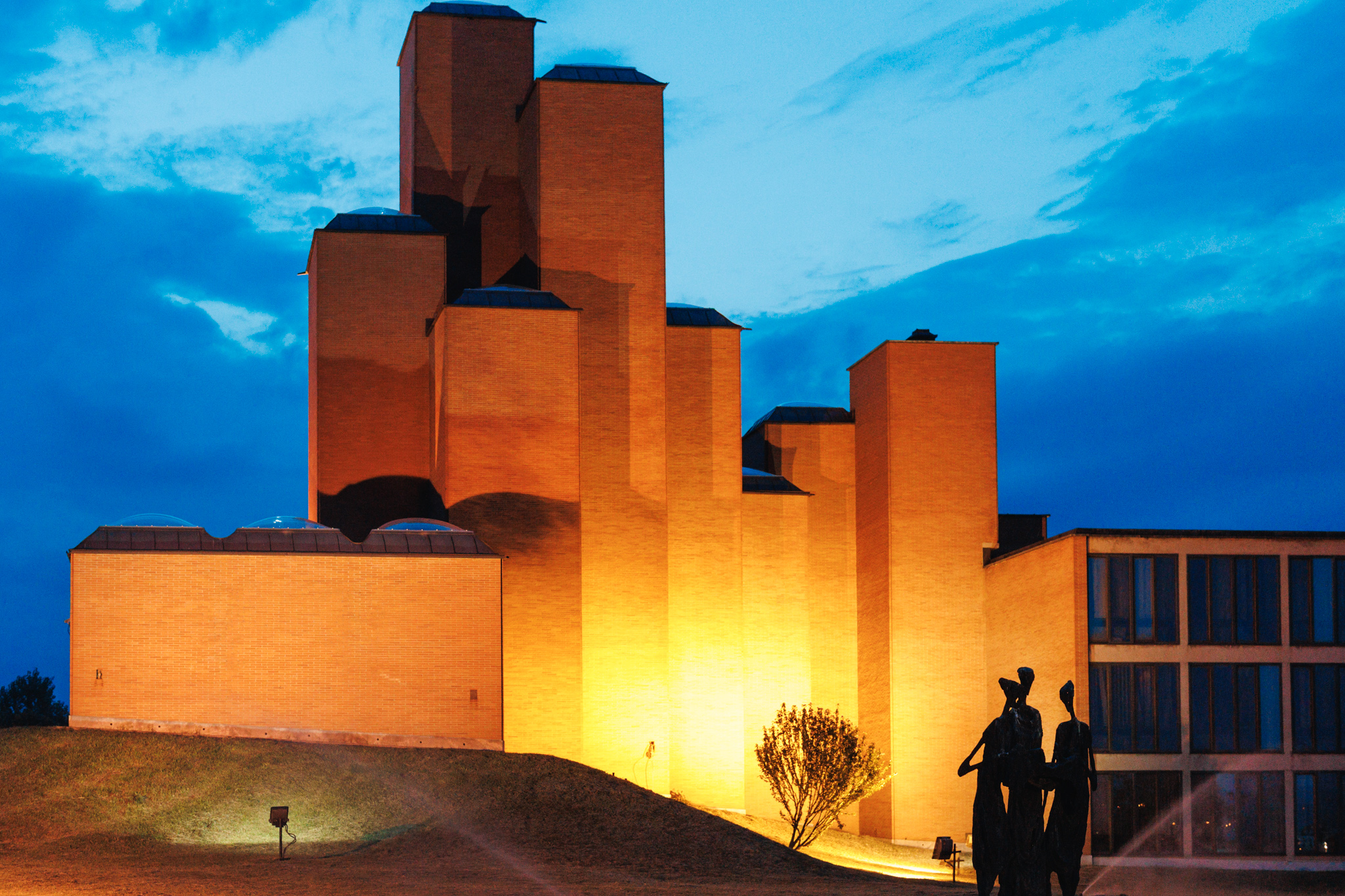
By the time I reached the museum, it had closed. It is called the 21 October Museum, after the day of the killings rather than the day it opened. Its red-brick towers rise to different heights, lit orange against the evening sky. From outside, the building offers more brick than explanation.
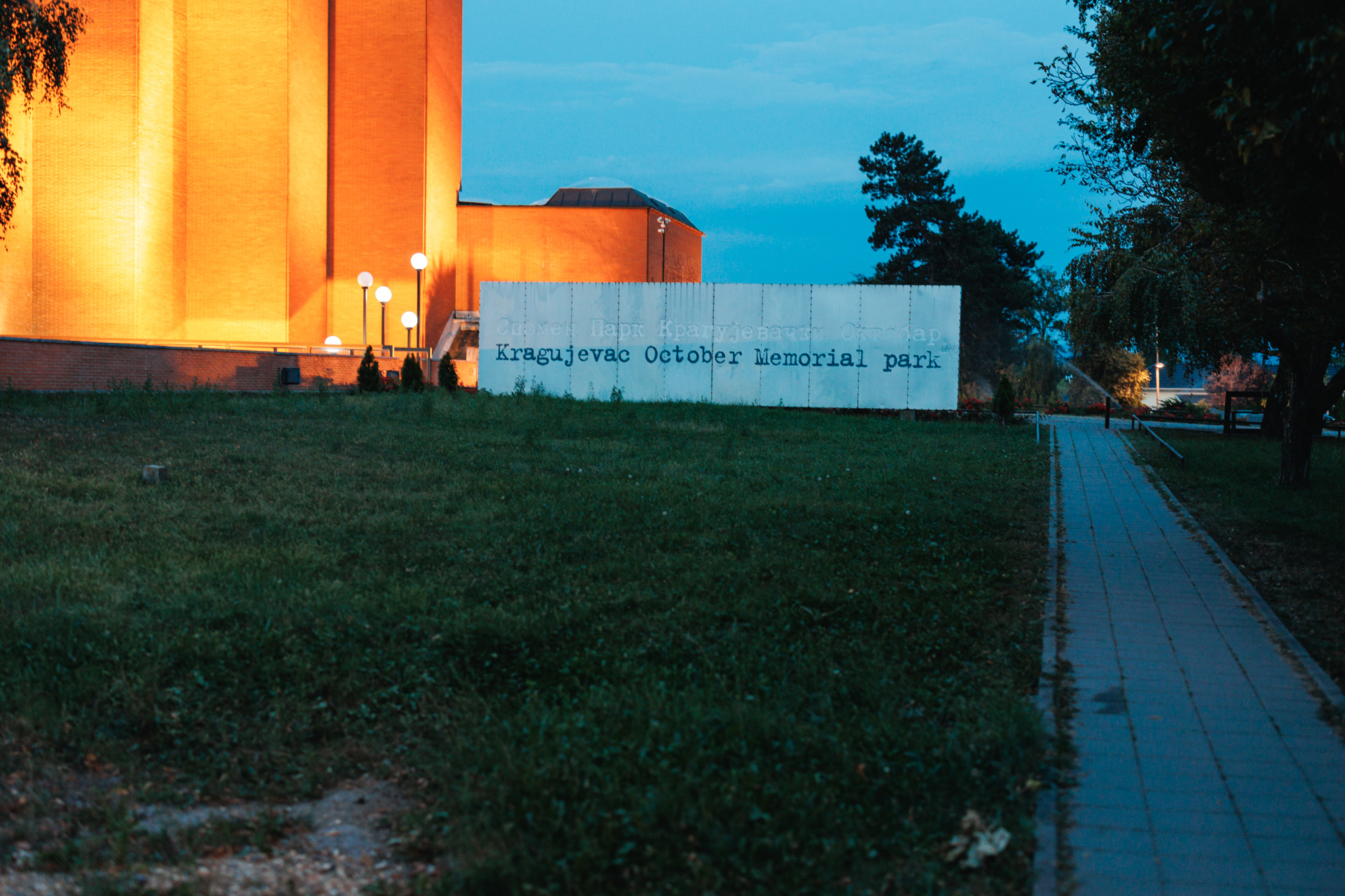
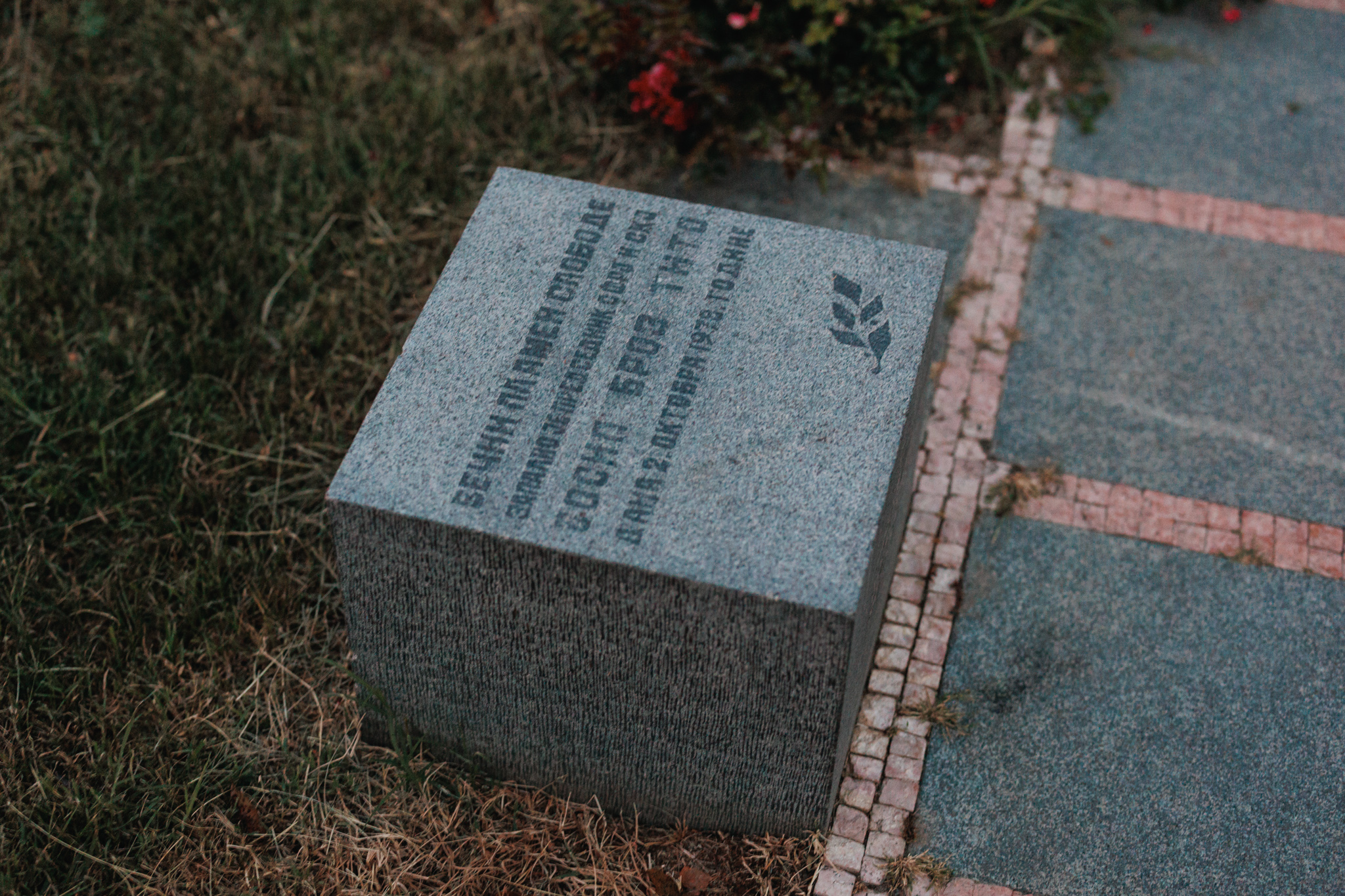
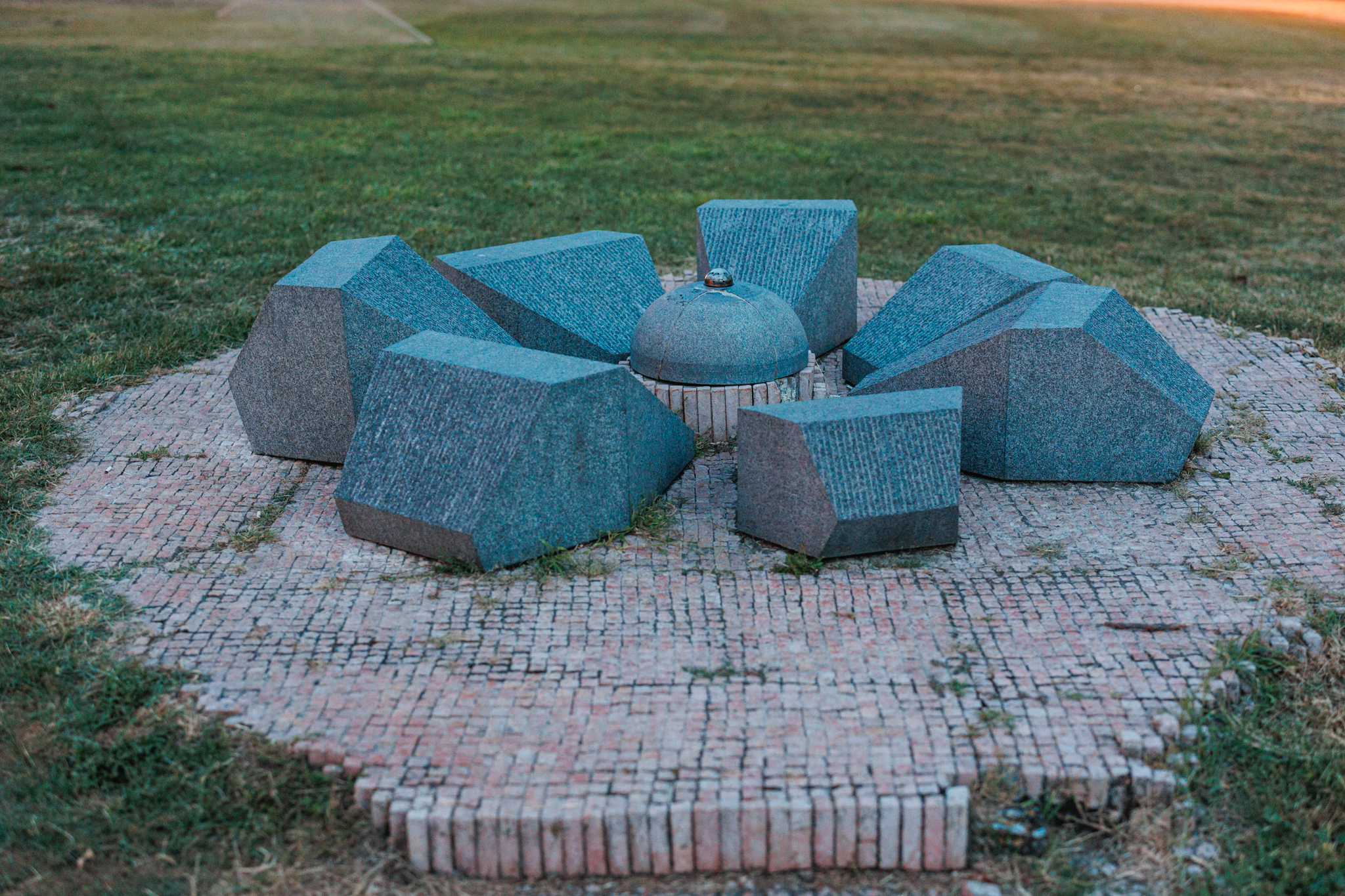
In front of it is the Eternal Flame of Freedom. A stone beside it records that Tito lit it in 1978. It has had to be lit again since. When I passed, it was out.
Three women
Near the museum stand three thin bronze figures by Jovan Soldatović. They are the Suđaje. In Slavic folk belief, the suđaje are three women who come to a newborn child and decide its fate. In Soldatović’s sculpture, they hold a newborn between them.
Soldatović’s answer was a wish: that on the graves of “our executed children”, the suđaje would from now on grant all the children of the world a peaceful, equal, happy and humane life.
Visit this place
Location
Šumarice Memorial Park / Spomen-park „Kragujevački oktobar“
On the edge of Kragujevac, around the 21 October Museum
Desankin venac bb, 34000 Kragujevac, Serbia
Practical Information
- Place
- Šumarice Memorial Park (Spomen-park „Kragujevački oktobar“)
- Museum opening hours
- 15 April–31 October: Monday–Saturday 08:00–18:00; Sundays and public holidays 09:00–16:00. 1 November–14 April: Monday–Friday 08:00–16:00; Saturdays, Sundays and public holidays 09:00–16:00. Arrive at least 45 minutes before closing.
- Closing days
- The museum is closed on 1 and 7 January.
- Museum admission
- 100 dinars (individual visit, with audio guide). Organised groups: 150 dinars, including a guided museum visit and a bus tour of the park.
- Visitor note
- The opening hours and admission above are for the 21 October Museum. The official website does not publish hours or a fee for the open-air park. Memorials stand among lawns and woods; allow time to walk between them.
- Official website
- Spomen-park „Kragujevački oktobar“
Information last checked: October 5, 2026 (Museum opening hours, closing days, last-arrival rule and admission checked on the official park website; no hours or fee are published for the open-air park.)
Conversation
Comments
Review pending commentsComments are reviewed before appearing. The internet already contains enough unattended surprises.
Loading comments…
Leave a comment