Mactan Shrine: Spanish Glory, Filipino Victory
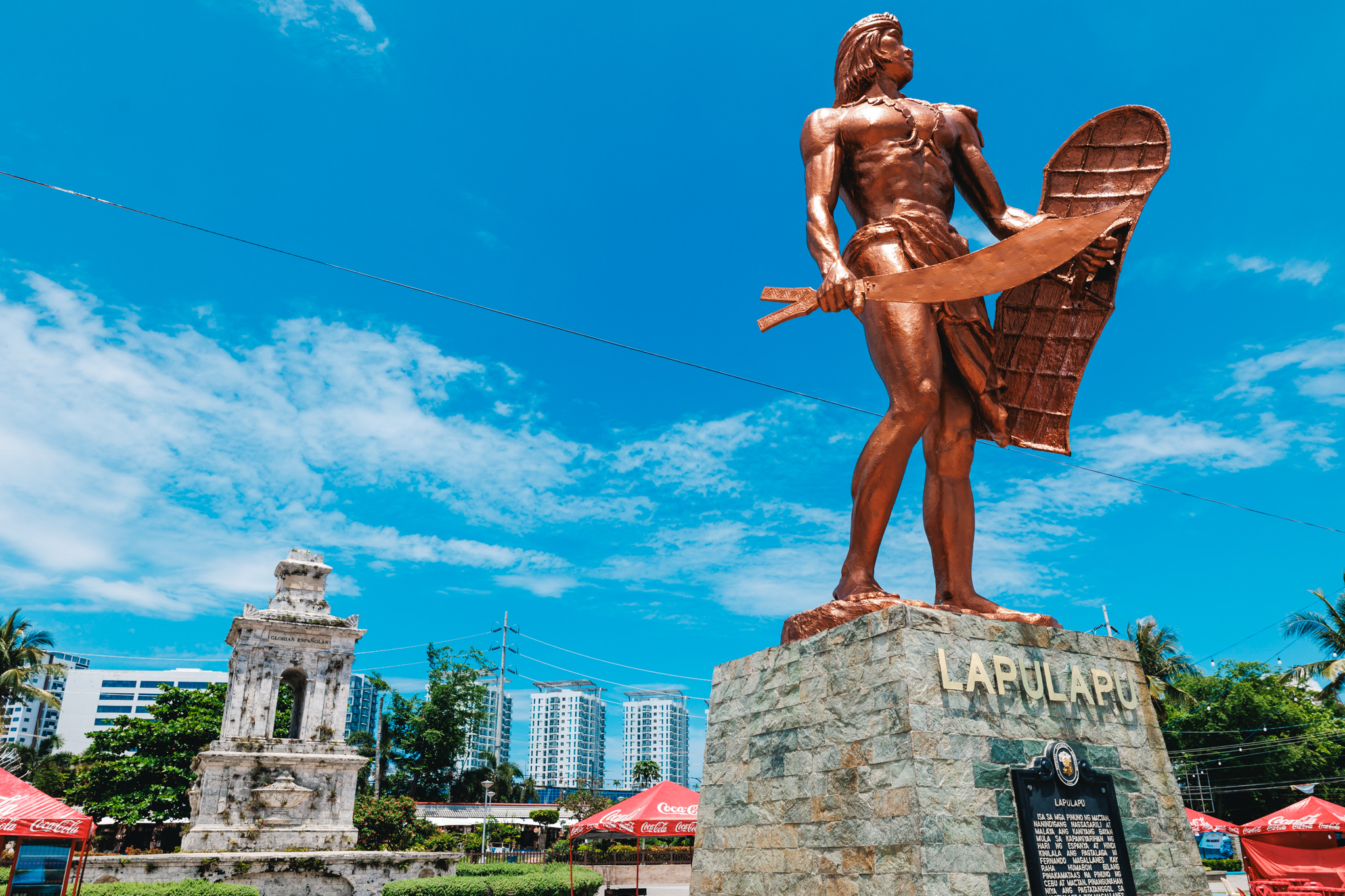
My guide at Mactan was also my taxi driver. As we walked around the shrine, I asked him about something that puzzled me. Magellan had come here as an invader. Why was he honoured in the same place as Lapulapu, the hero who defeated him?
The Spanish had brought Christianity, he said, and for that, at least, he was very grateful.
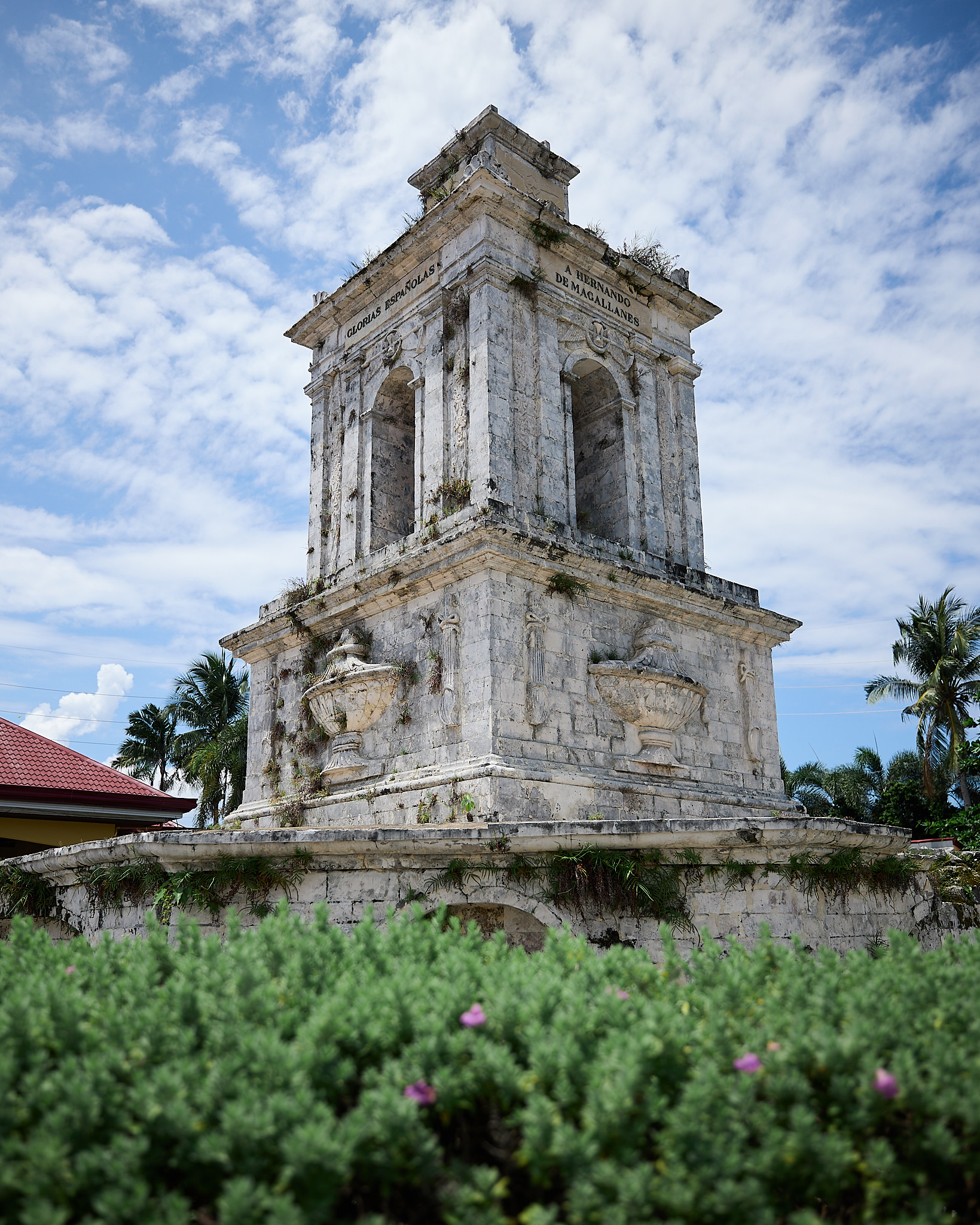
Lapulapu, the chief whose men killed Magellan in 1521, has a statue here. Magellan has an obelisk, put up in 1866, under Spanish rule. Near its top are two words: Glorias españolas, “Spanish glories”.
Two weeks after the baptisms
Magellan’s Spanish expedition had reached Cebu, just across the water, in April 1521. Cebu’s ruler, Rajah Humabon, was baptised along with many of his people. Mactan was told to submit too: to obey the King of Spain, accept Humabon as its sovereign and pay tribute, or find out how Spanish lances wounded.
Antonio Pigafetta, who sailed with Magellan, recorded Mactan’s answer. If the Spanish had lances, Mactan had lances of bamboo and stakes hardened in fire. And would they please not attack straight away, but wait until morning, when there would be more men? Pigafetta suspected a trick.
The landing party went in at daybreak on 27 April. Humabon had come along and would have helped, but Magellan told him to stay in his boat and watch how the Spaniards fought. Rocks kept the boats off the shore, so the men had to wade in, and the defenders went for their bare legs. Magellan was hit in the right leg by a poisoned arrow, then surrounded and killed. Pigafetta called him “our mirror, our light, our comfort, and our true guide”.
His body was never returned.
On this spot
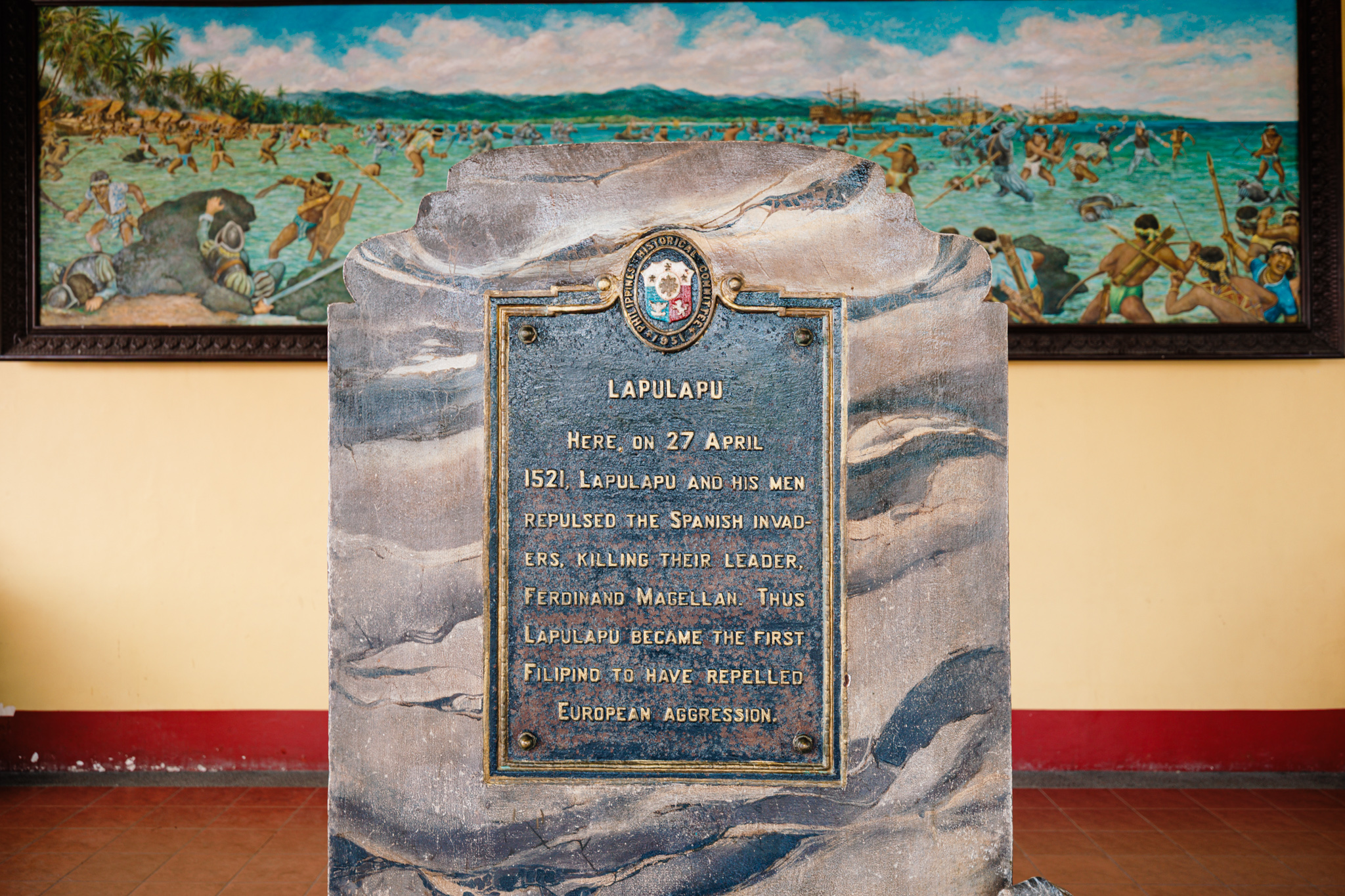
In a small open pavilion, two plaques from the Philippines Historical Committee describe the battle.
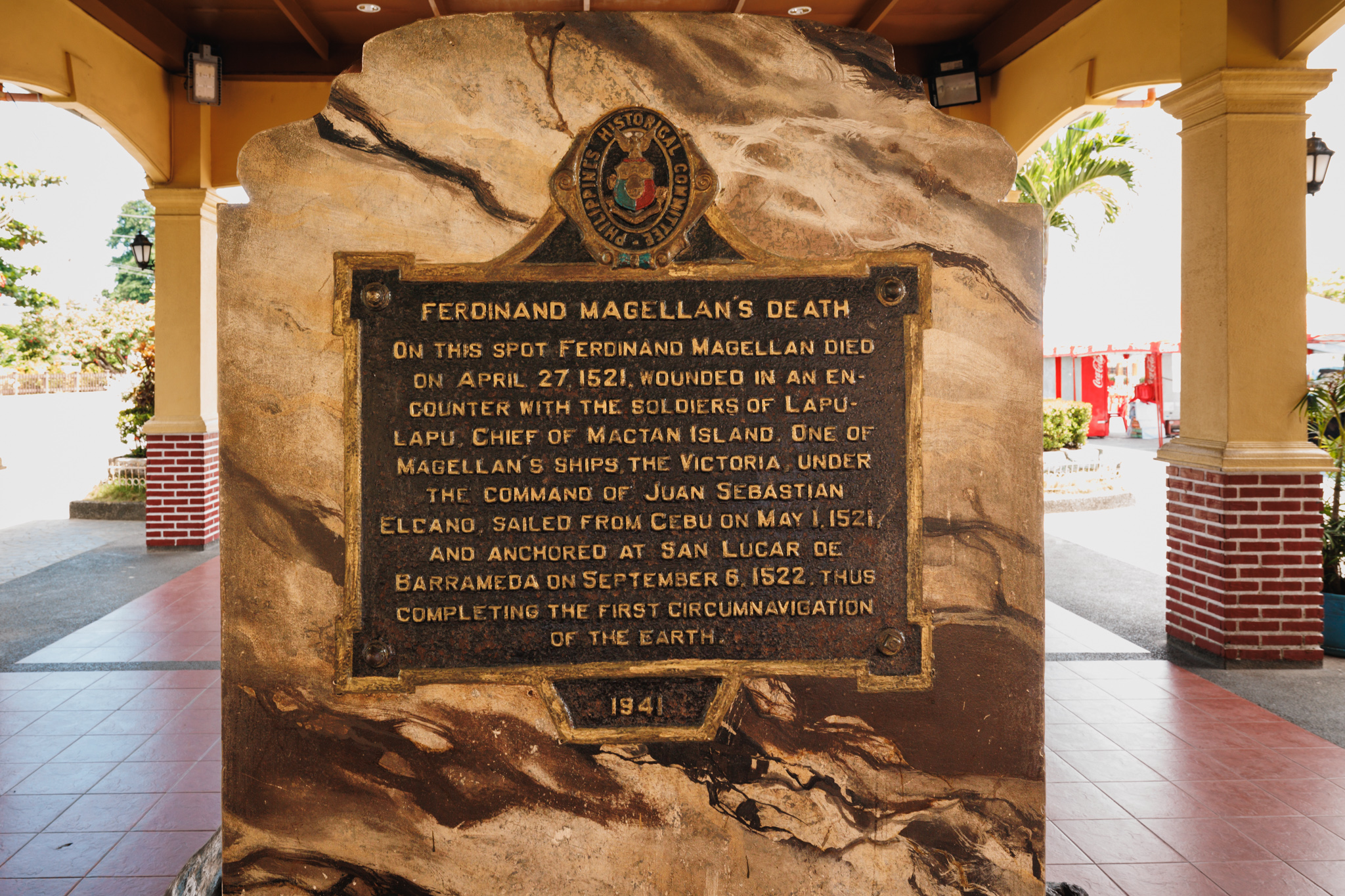
The 1941 plaque is headed “Ferdinand Magellan’s Death”. On this spot, it says, Magellan died; one of his ships, the Victoria, then sailed on to Spain, “thus completing the first circumnavigation of the earth”.
The 1951 plaque is headed “Lapulapu”. Here, it says, Lapulapu and his men “repulsed the Spanish invaders”, and he became “the first Filipino to have repelled European aggression”.
Same battle, same committee, ten years apart. In between, the Philippines had become independent.
Both plaques are sure of the spot. The 1969 law that made this a national shrine is less so.
It calls the site “the approximate place” of the battle.
The hero out front
The law took in the obelisk as part of the shrine, and called for a monument to Lapulapu. The statue went up in 1981.
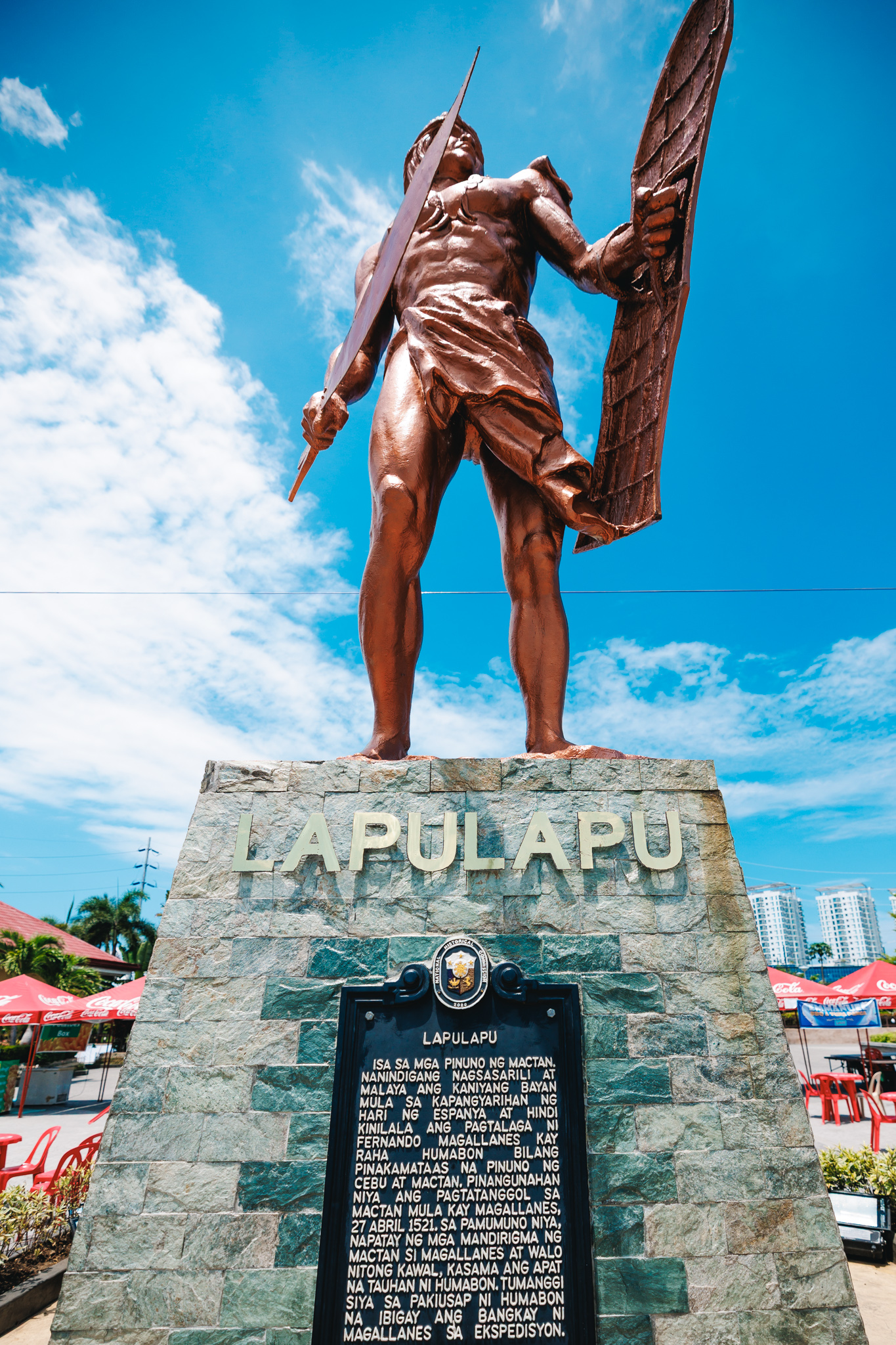
He is young, bare-chested and heroically muscled. No one knows what Lapulapu looked like; a new portrait presented by the National Historical Commission of the Philippines in 2020 shows him as an old man.
The statue nearly went. In 2019, the commission’s chairman announced that it would be moved into a museum and replaced by a monument to the battle as a whole. Lapulapu, he said, is not recorded as the man who killed Magellan: “It was a collective effort.” In Cebu, a petition went round to keep the statue. In 2020, the committee organising the anniversary confirmed that the existing statue would not be replaced. It is still there.
A name in demand
The name itself has needed attention. In December 2021, a presidential order told government offices to spell it without a hyphen, as Lapulapu, noting that the earliest rendering in the Latin alphabet was “Cilapulapu”. The city around the shrine, Lapu-Lapu City, was allowed to keep its hyphen, because its name had been fixed by law. A bill to remove it passed the House of Representatives in 2023.
The name has also been on menus. In Tagalog, lapu-lapu is a fish: grouper. In 2019, the congresswoman for Lapu-Lapu City filed a bill to stop the practice, and to give the fish back its Visayan name, pugapo. Her camp’s position was simple.
Pugapo must be cooked as a pugapo, not as Lapu-Lapu.
The House committee that heard it settled for urging an information campaign.
Five hundred years
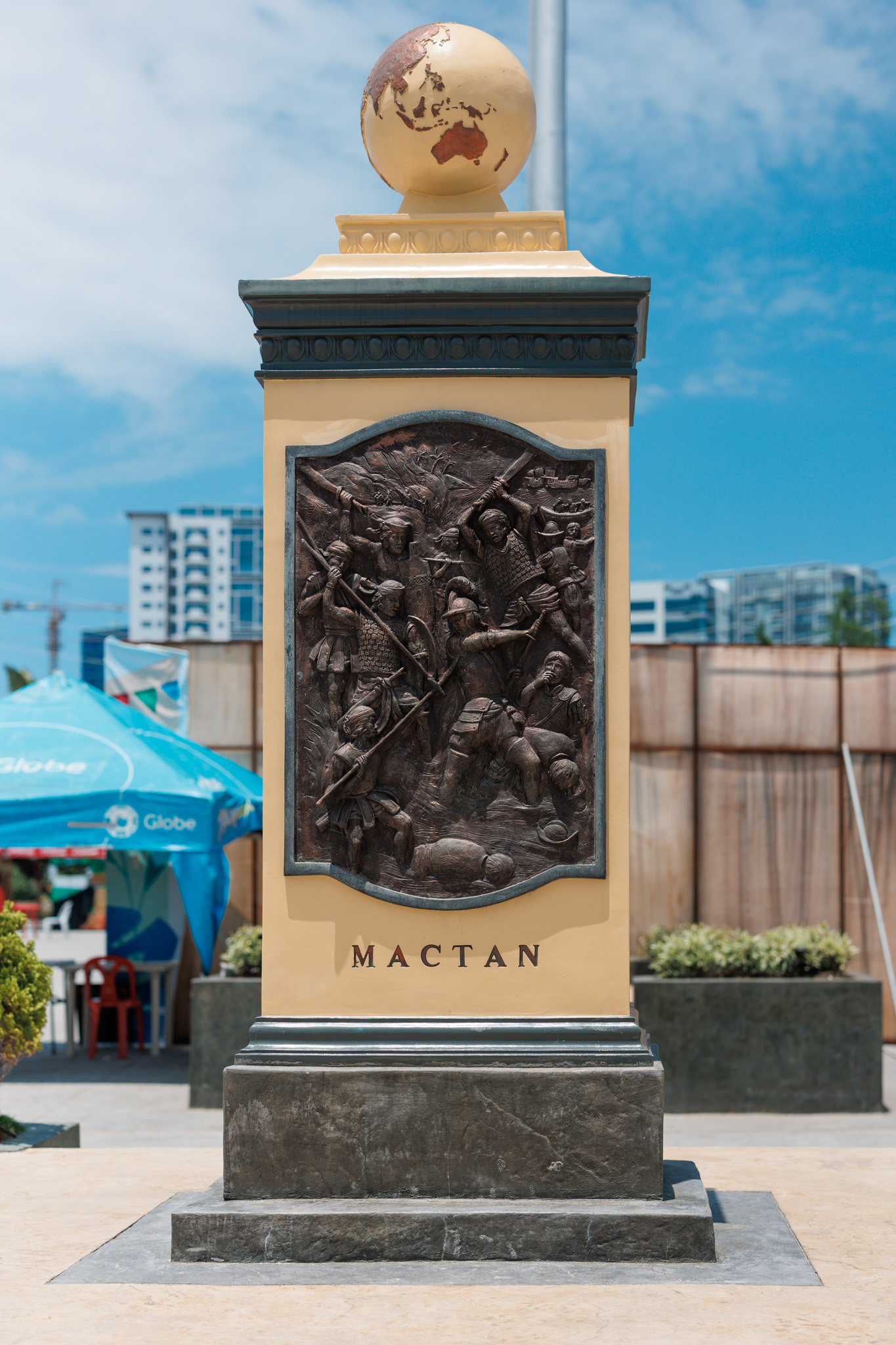
For the 500th anniversary in 2021, a column topped with a globe was put up nearby. The Philippine Space Agency checked the tilt of the globe’s axis. On the column’s face, the battle is a crowd, with no single hero. Every 27 April, the fight is staged again at the shrine by actors, and Magellan dies again.
That year, the anniversary had two names. The government commemorated the Victory at Mactan. The Catholic Church celebrated 500 years of Christianity in the Philippines. Ahead of it, one bishop said the Church would be celebrating “not colonialism but the Christian faith”.
Bigger and higher
In March 2021, ahead of the anniversary, the commission finished conserving the obelisk to Spanish glories. Lapulapu was repainted.
The following January, the then president, Rodrigo Duterte, said in a televised address that he was “very uncomfortable” to see the statue of Lapulapu smaller than Magellan’s. “I want Lapulapu bigger and higher than Magellan,” he said.
A month earlier, Typhoon Odette had broken the top off the obelisk.
Visit this place
Location
Mactan Shrine
On the shore of Mactan Island at Punta Engaño, in Lapu-Lapu City, about 30 minutes by road from Mactan–Cebu International Airport.
Punta Engaño Road, Lapu-Lapu City, 6015 Cebu, Philippines
Practical Information
- Admission
- Free
Information last checked: October 16, 2026 (Admission and airport access per Suroy.ph. Opening hours vary between sources and are not stated.)
Conversation
Comments
Review pending commentsComments are reviewed before appearing. The internet already contains enough unattended surprises.
Loading comments…
Leave a comment