Bubanj Memorial Park: Fists Breaking Through the Grass
In 1944, on German orders, grass was sown on a hill at the edge of Niš and, by one account, a small tank was driven over it until the ground was flat.
It was not landscaping.
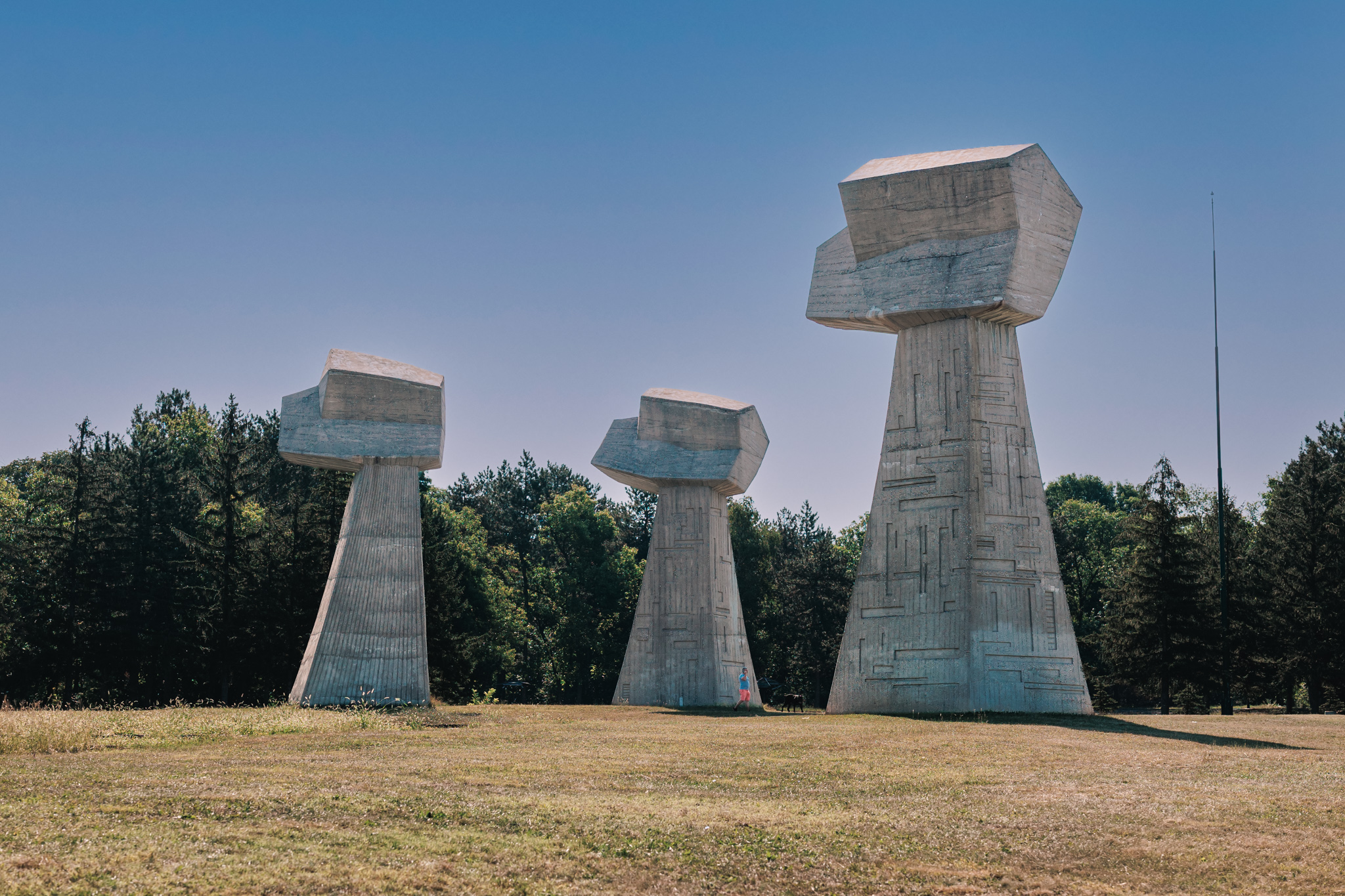
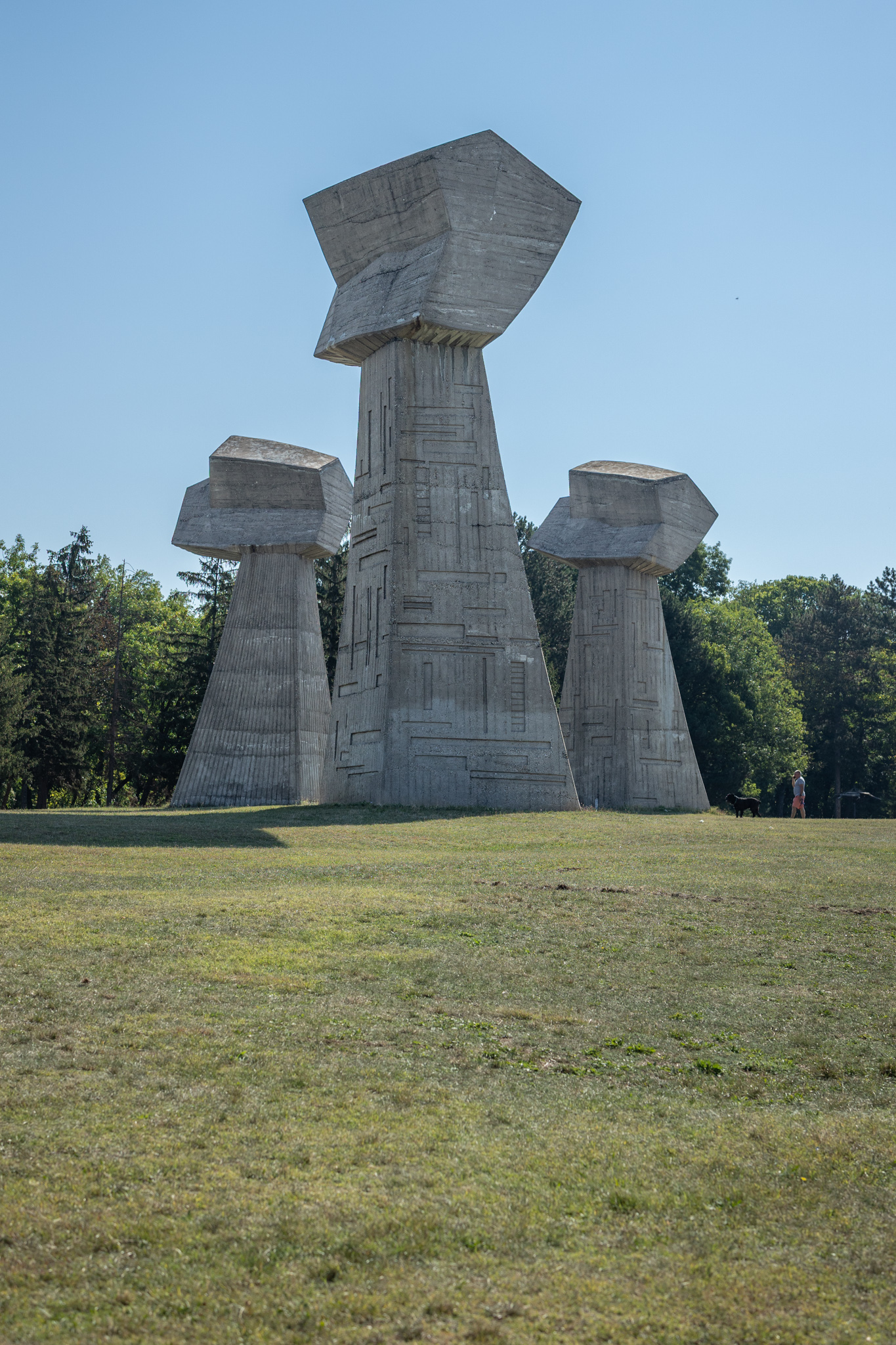
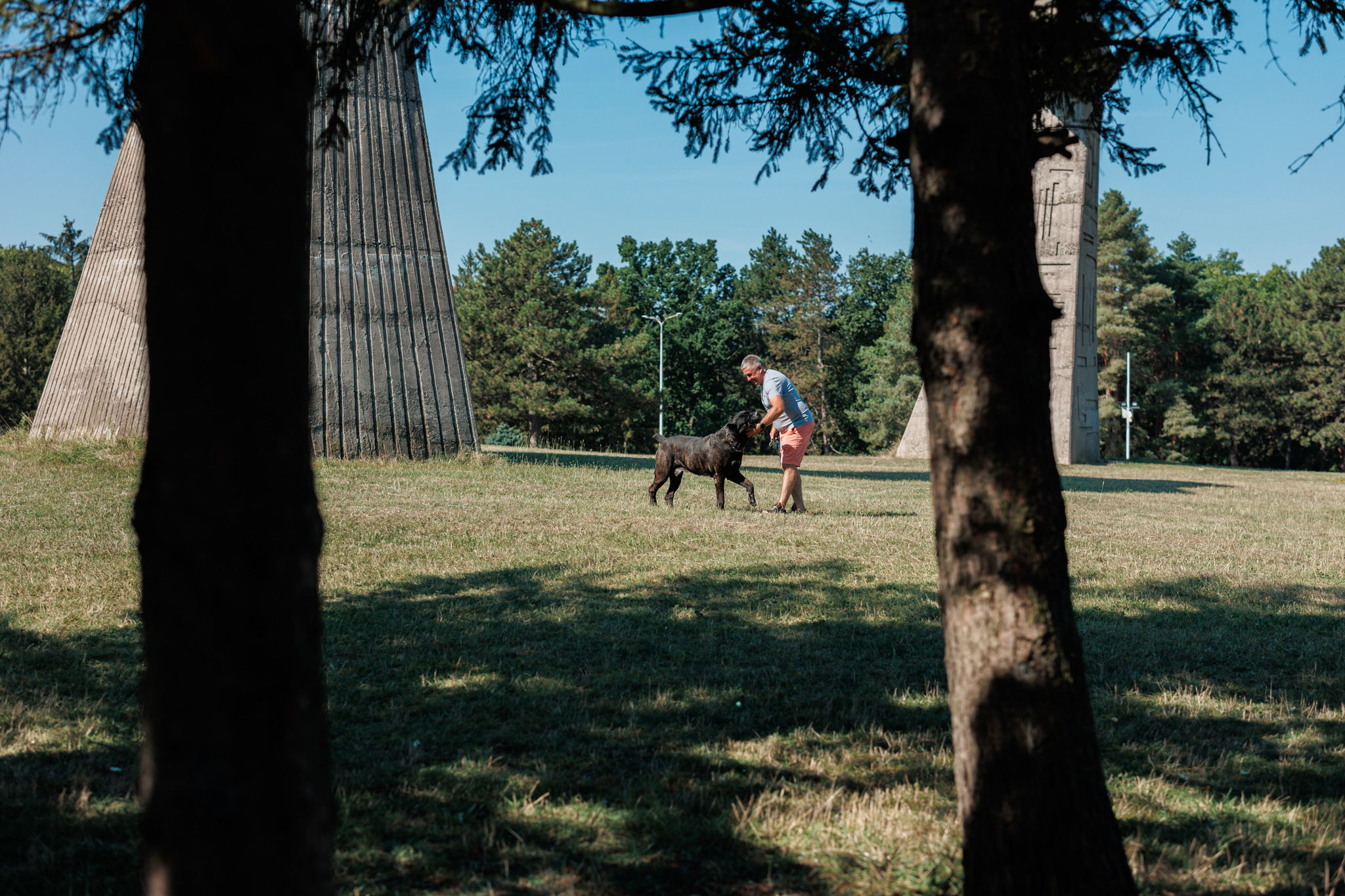
The hill is called Bubanj. Today it is a park, and standing in its mown lawn are three concrete fists.
Three fists
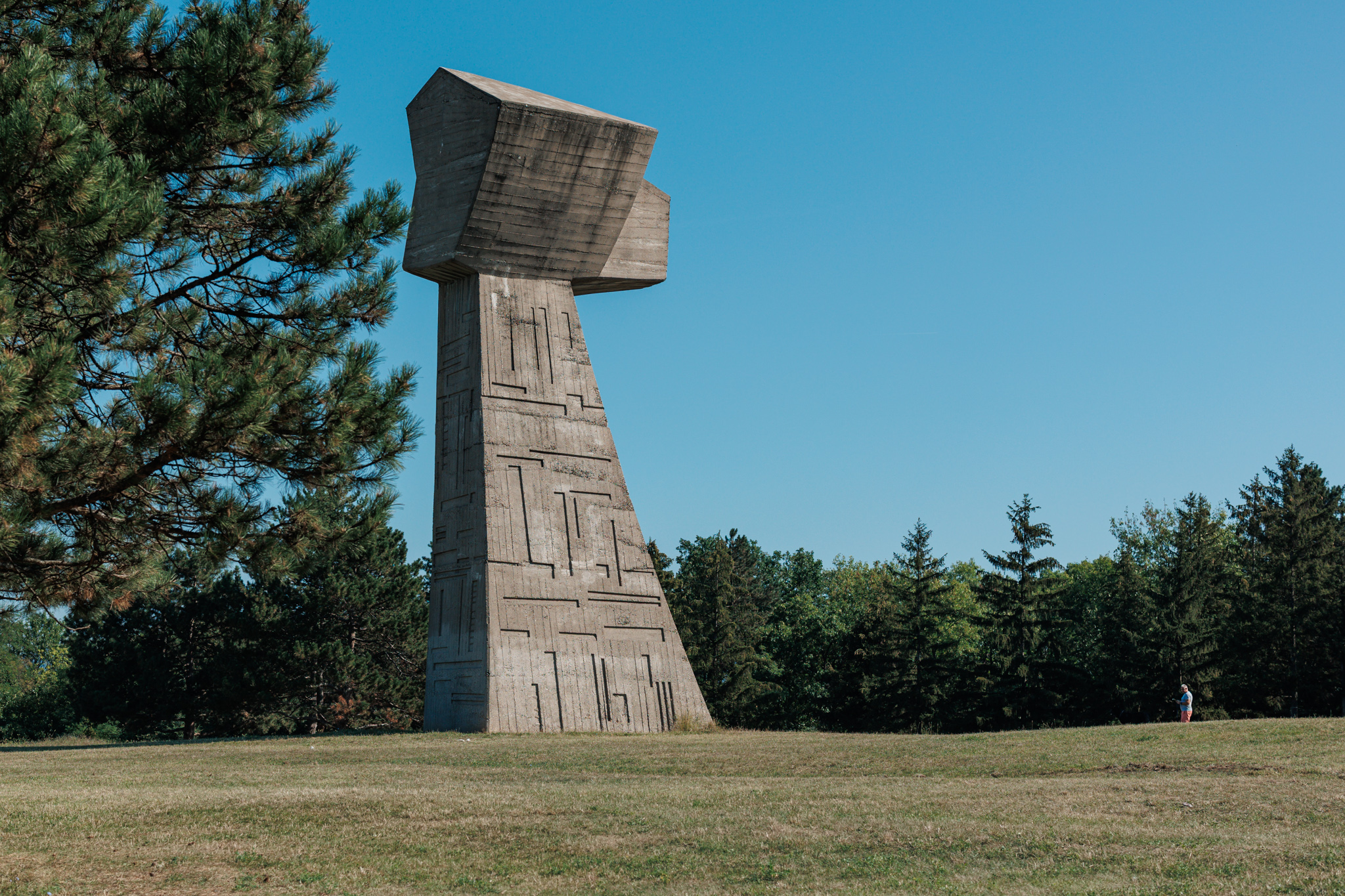
They are not a matching set. Each is a different size, and they are usually read as the fists of a child, a woman and a man. Close up, the forearms are covered in shallow, angular lines, like a circuit board or a maze. They are also hollow: shells of concrete thirty to forty centimetres thick.
The image is said to come from a prisoner who, about to be shot on this hill, raised his fist.
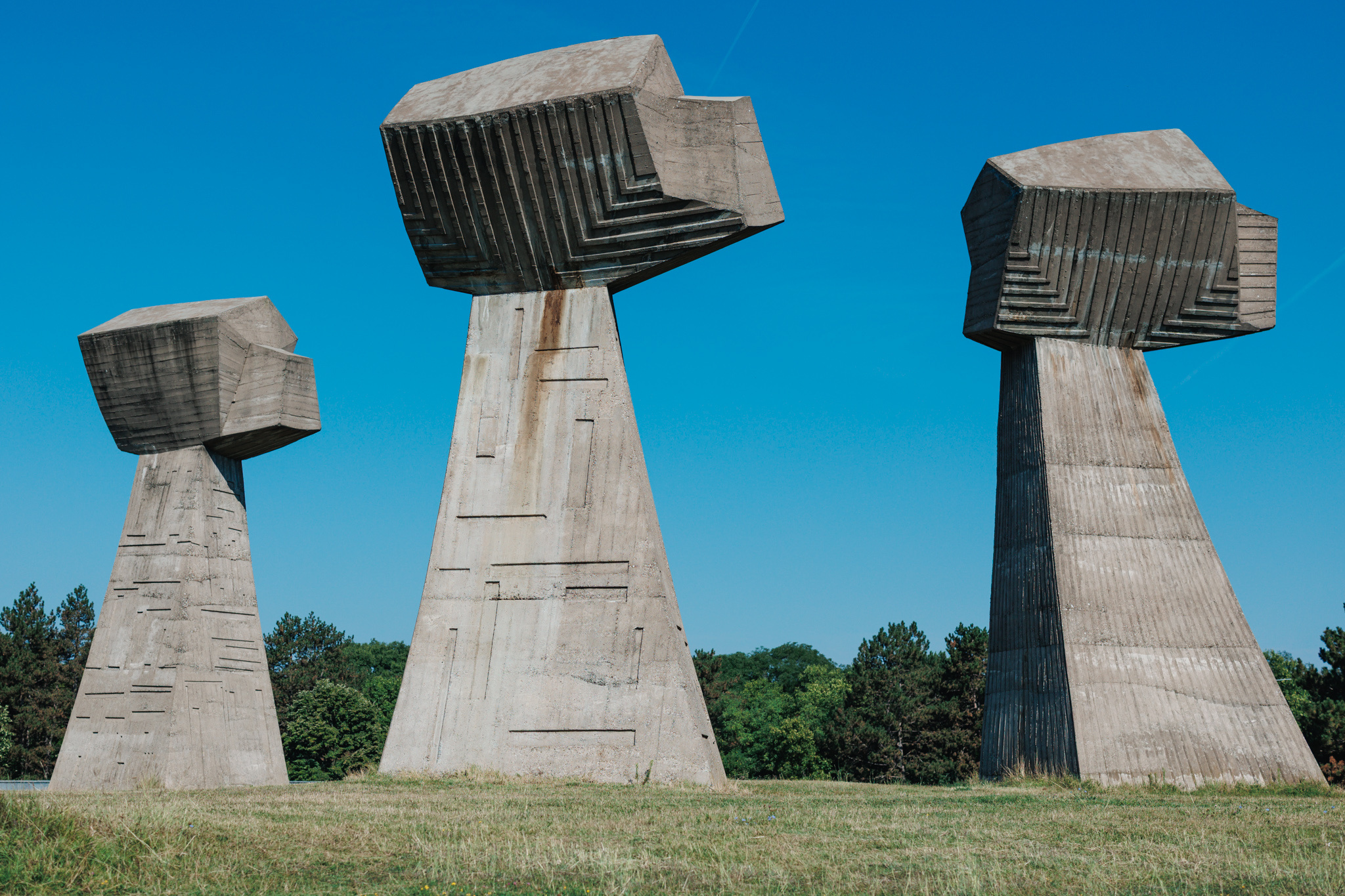
The sculptor, Ivan Sabolić from Zagreb, did not start with fists. A first competition, in 1953, produced no design that anyone thought good enough. Sabolić’s own first idea was a massive structure raised off the ground and covered in reliefs, which was too expensive. A second, a female figure in several parts, did not get through either. The fists were his third attempt, made for a reduced budget, as a symbol that would not date.
The economy version is sixteen metres tall.
A hill set aside
At the end of 1941, the Gestapo in Niš needed a place to shoot prisoners from the Red Cross concentration camp across town. The site it had been using was too small. Bubanj, a former army training ground, was chosen instead. Six hectares of woodland were cut down, so that the guards could see anyone who tried to run. Boards at the site carried a warning: anyone caught idle on Bubanj would be shot.
Prisoners were brought up in groups and shot at the edge of trenches, mostly in the back of the head. The killing went on from 1942 until September 1944. The largest killing came in reprisal for the escape from the camp on 12 February 1942, when about a thousand people died here.
Seeds and a tank
In November 1943, the German Security Police in Belgrade set up a special unit to remove the evidence of the mass killings carried out under the occupation across Serbia. In 1944, a hundred prisoners were brought to Niš to do the work at Bubanj, with Germans watching over them. Most of the prisoners were Italian soldiers, taken prisoner after Italy’s surrender in 1943.
They dug up the pits and burned the bodies on a pyre of steel grates set on concrete posts, two hundred and fifty to three hundred at a time. Witnesses said the burning alone took twenty-one days, and that the flames rose more than twenty metres. The ashes were sieved, and anything of precious metal was boxed up and sent to Berlin.
This is where the grass comes in. It was sown over the filled-in pits, and the ground was levelled. When the work was done, the Germans shot the prisoners who had done it and burned them as well.
The traces were meant to disappear. One result is that nobody can say how many people died here. Estimates for Bubanj run from five thousand to twelve thousand.
The site was marked in 1945. In 1950, a small stone pyramid went up. On 14 October 1963, the anniversary of the day Niš was liberated, the fists were unveiled.
Morning in the park
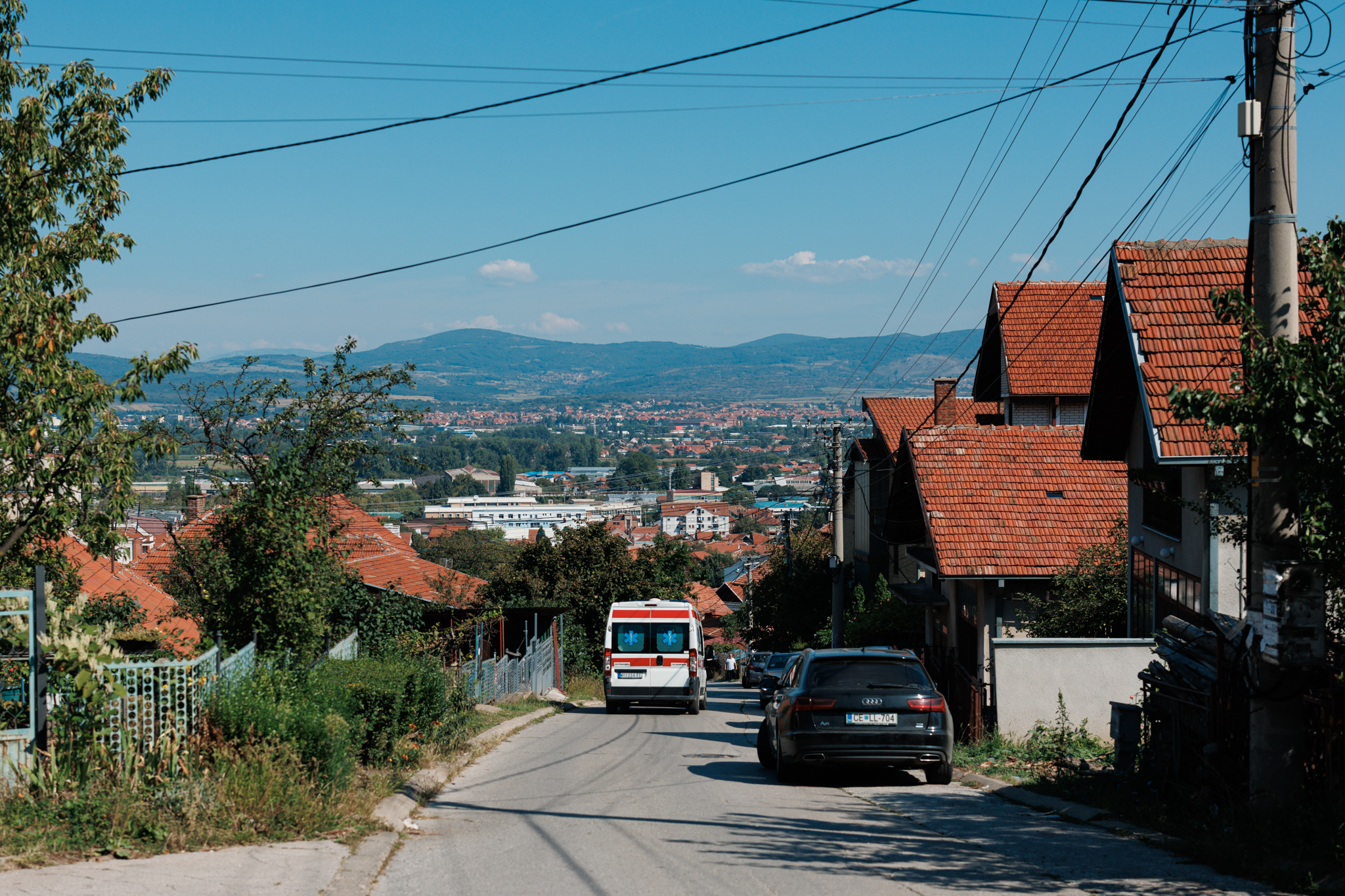
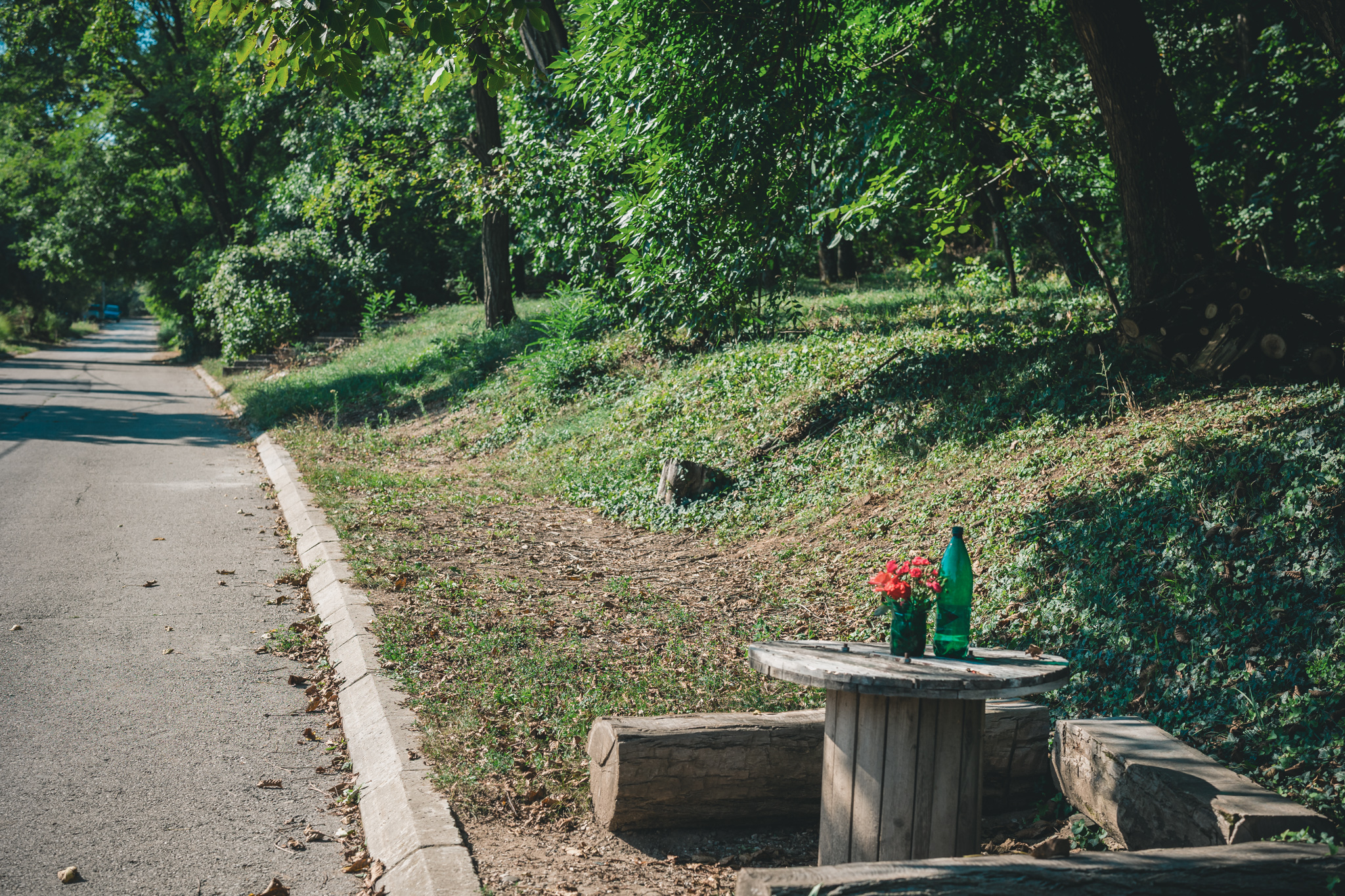
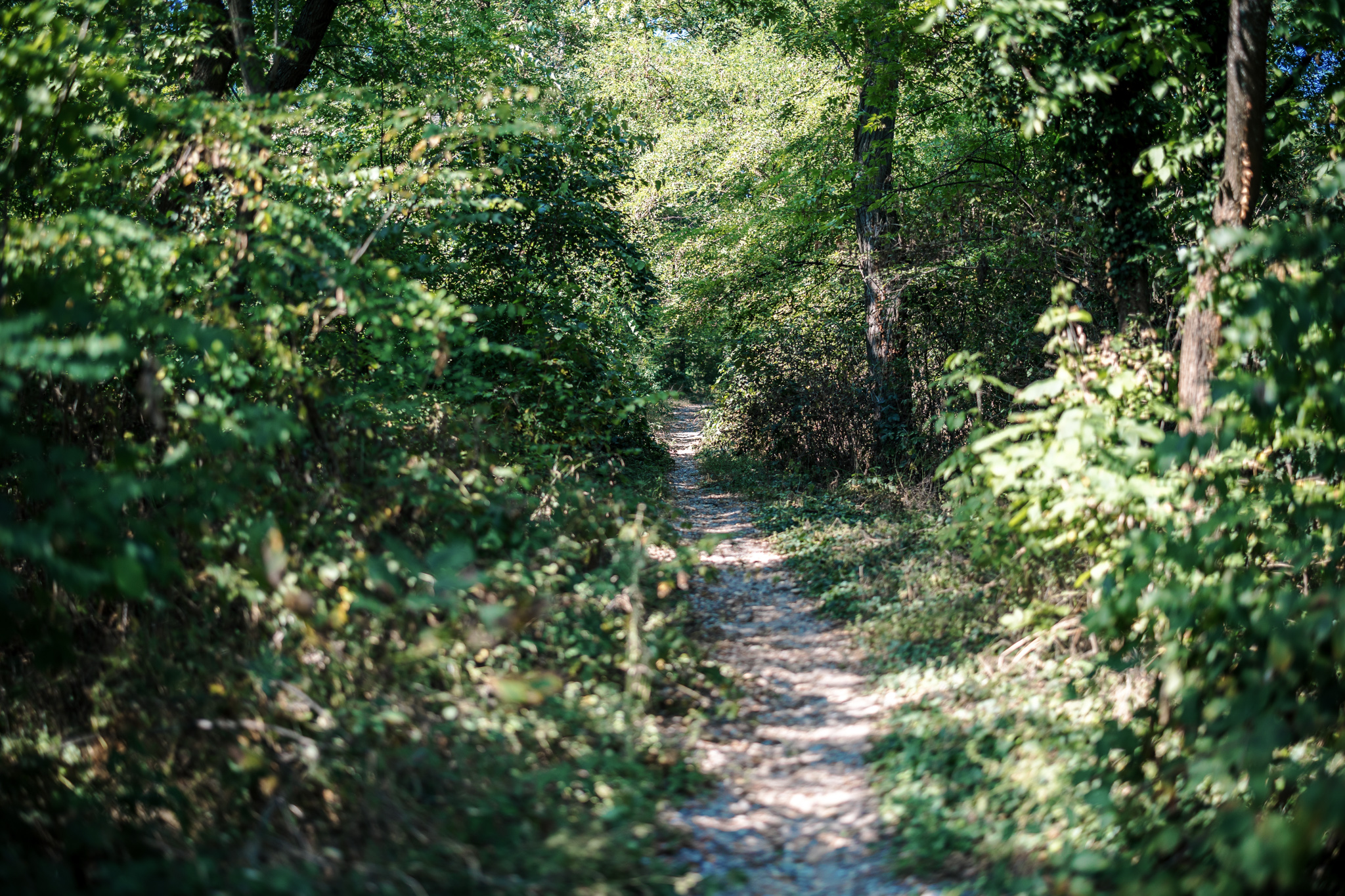
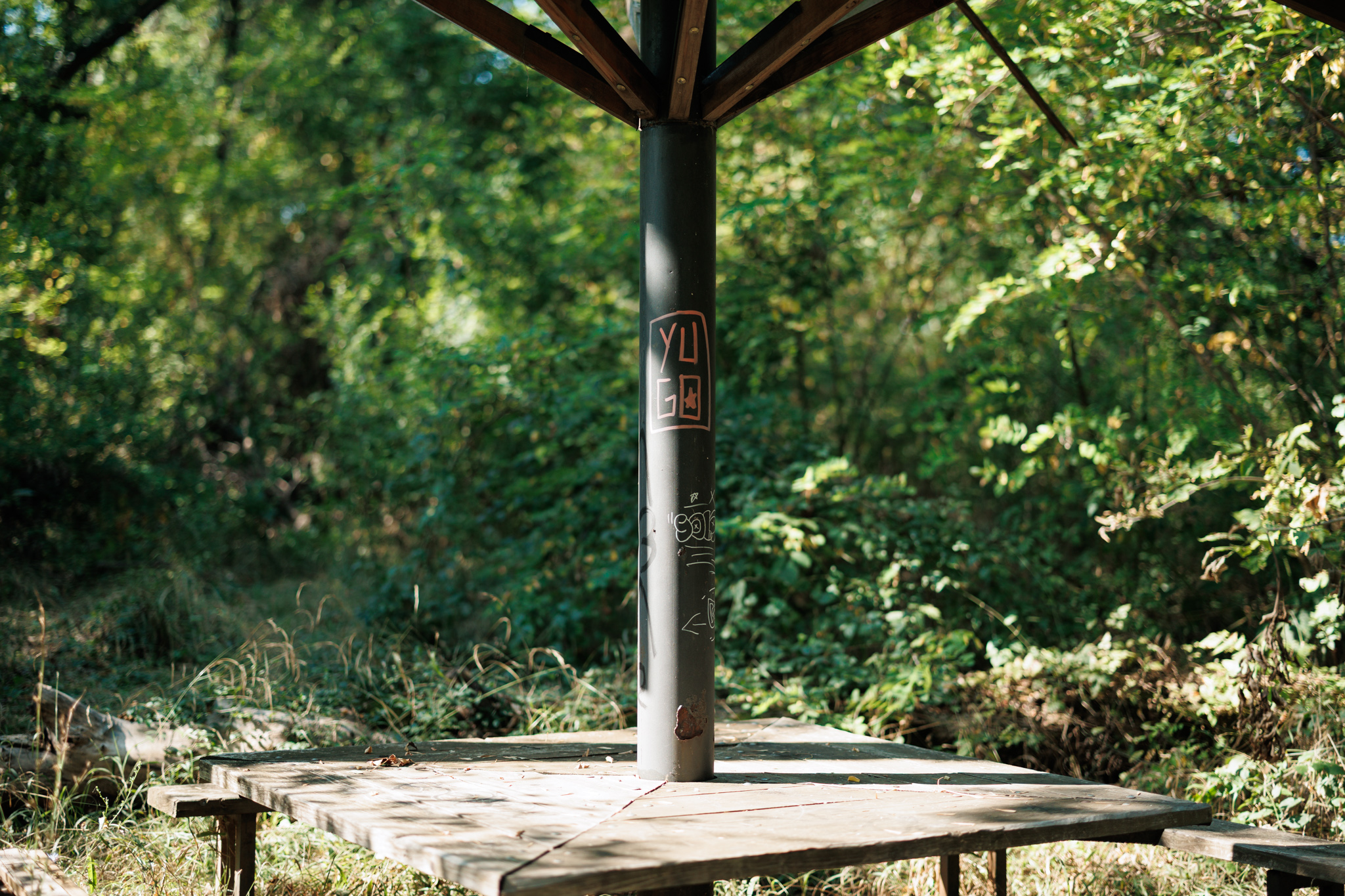
I came up through the trees from a quiet road below. Beside the road, someone had turned an old cable drum into a table, rolled two logs up to it as benches, and set out a bottle and a vase of red flowers. Further up, the path passed a wooden shelter whose pole somebody has decorated with the word YUGO and a five-pointed star.
On the lawn, a man in salmon-coloured shorts was playing with a large dog. The hill where idling once carried a death warning is now somewhere to spend a morning with a dog.
Words on the wall
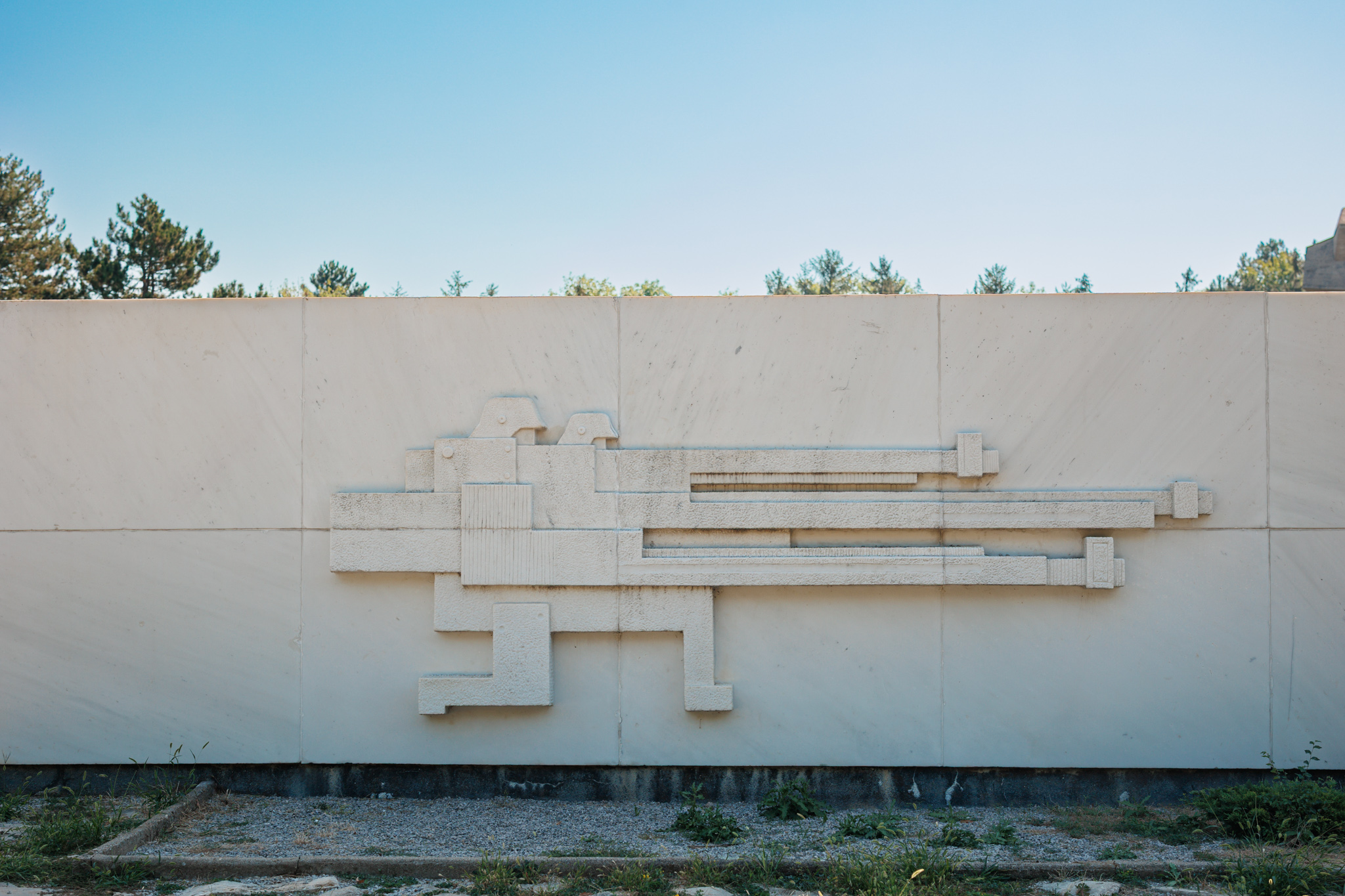
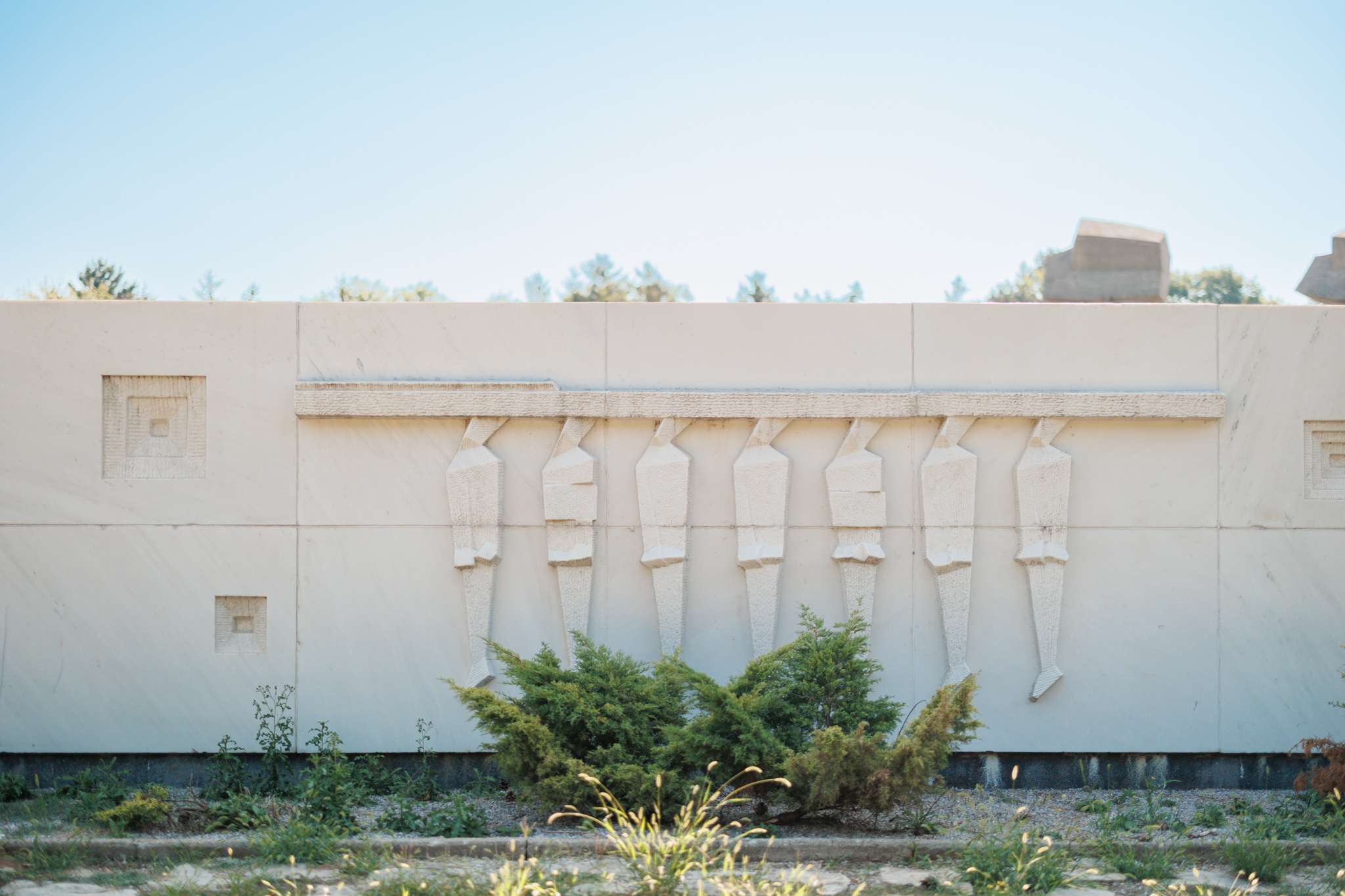
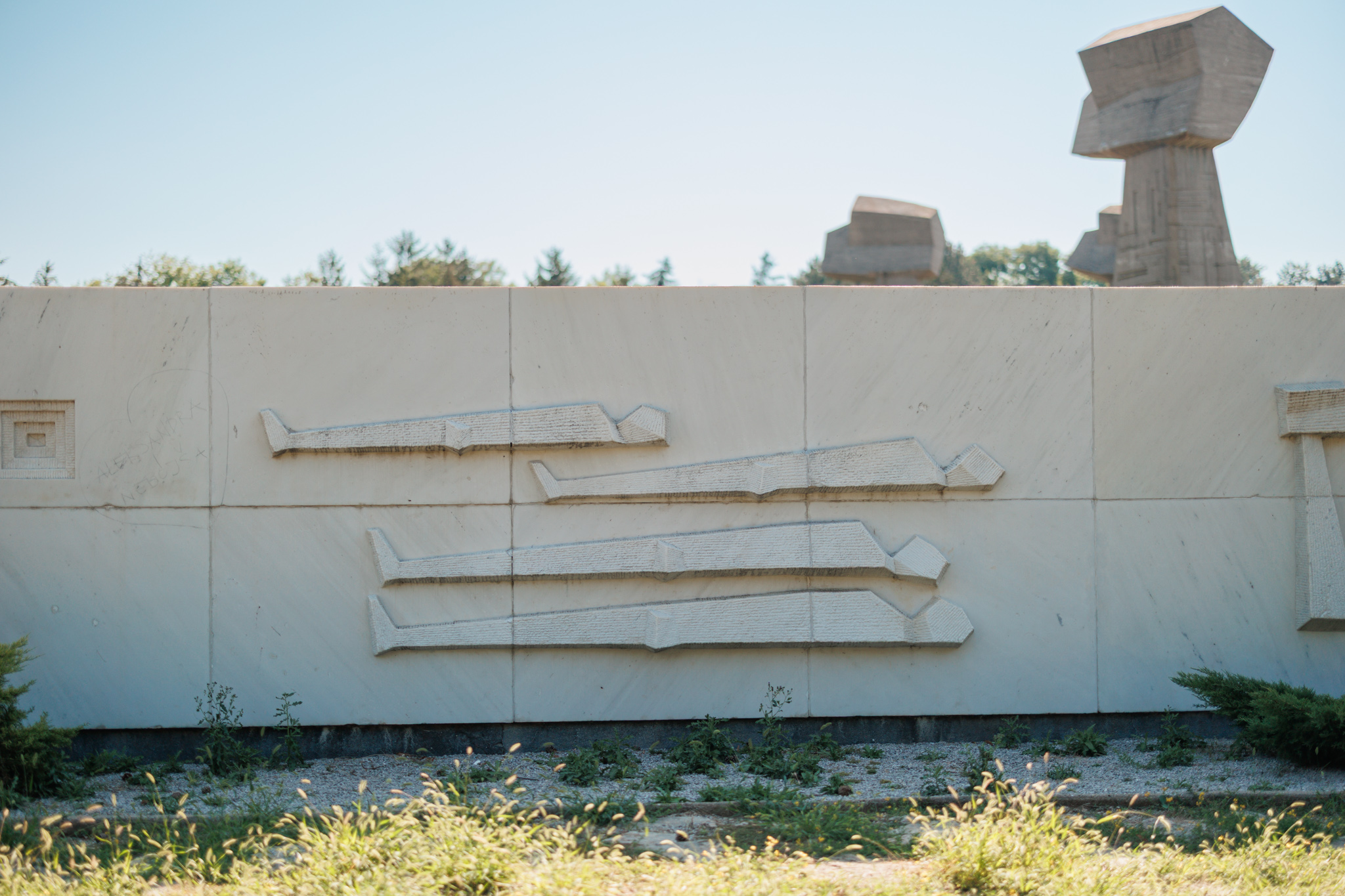
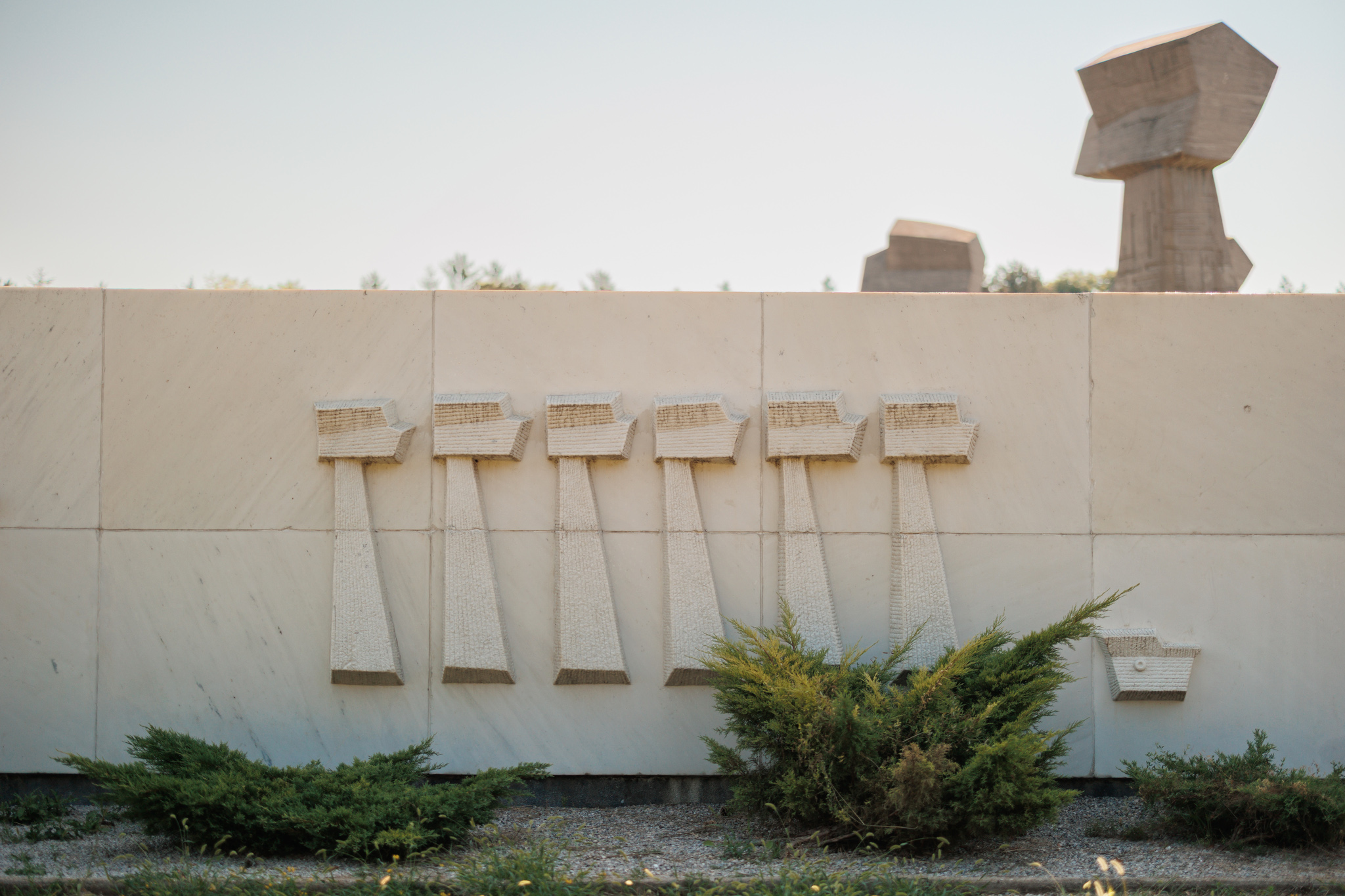
Near the fists runs a wall of white marble, about twenty-three metres long, carved with five scenes. They read from left to right: a rifle, laid out in blocks; seven narrow figures in a row beneath a bar, heads bowed; bodies lying in rows; then the fists rising; and finally a poem by the Niš poet Ivan Vučković.
Swipe to explore
Tap to enlarge
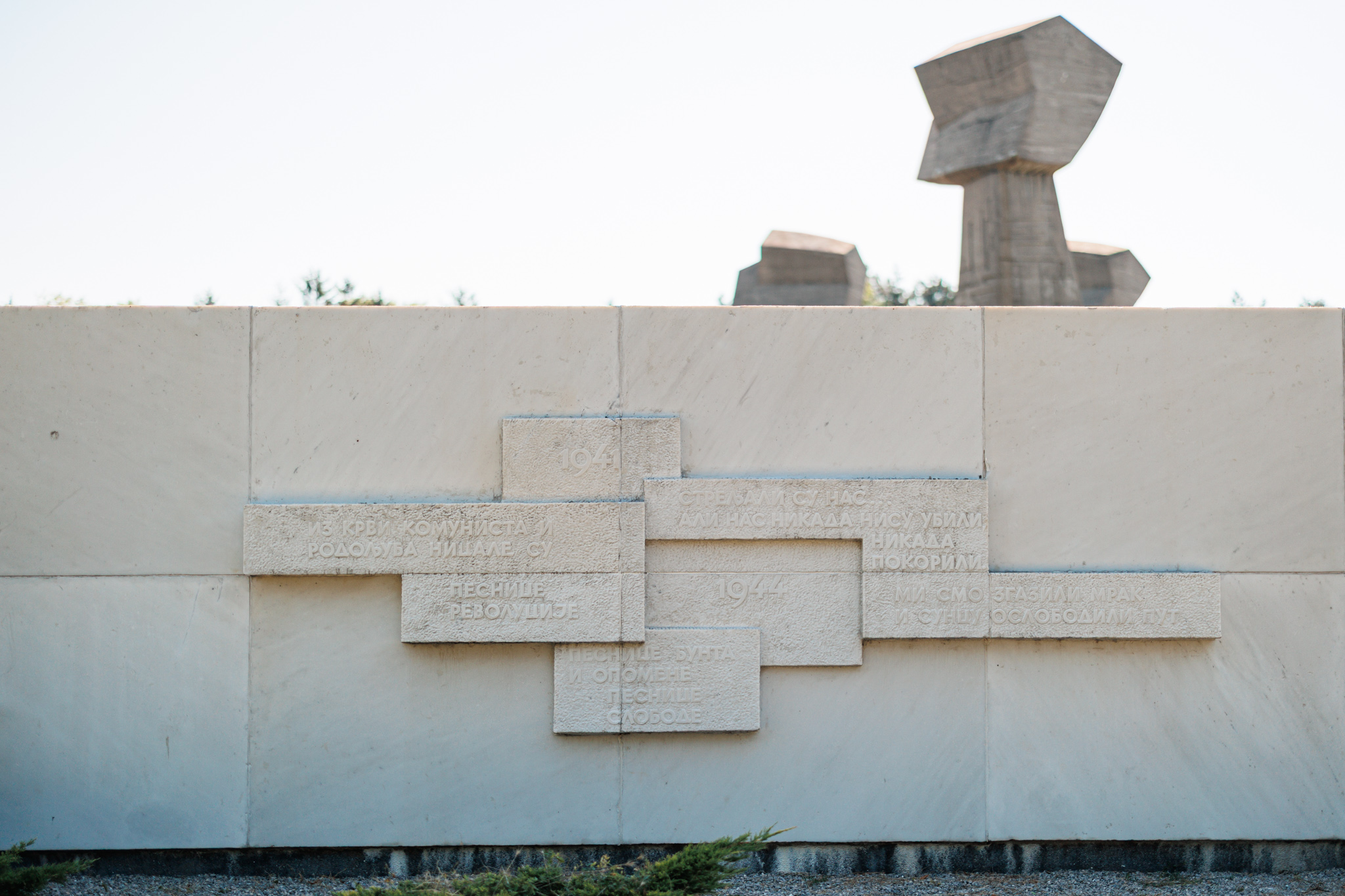
The poem is set into the marble alongside the years 1941 and 1944. Its fists, it says, grew from the blood of communists and patriots: fists of revolution, of rebellion and warning, of freedom.
Then:
They shot us… but they never killed us, never subdued us.
We trampled the darkness and cleared the way for the sun.
The names of 3,550 people shot on Bubanj have been identified. The poem gives no count.
That afternoon, I went to the Red Cross camp across town. In one of its rooms, names run along the walls in Cyrillic, in alphabetical order, lit from behind. Between Љ and М hangs a photograph of the three fists.
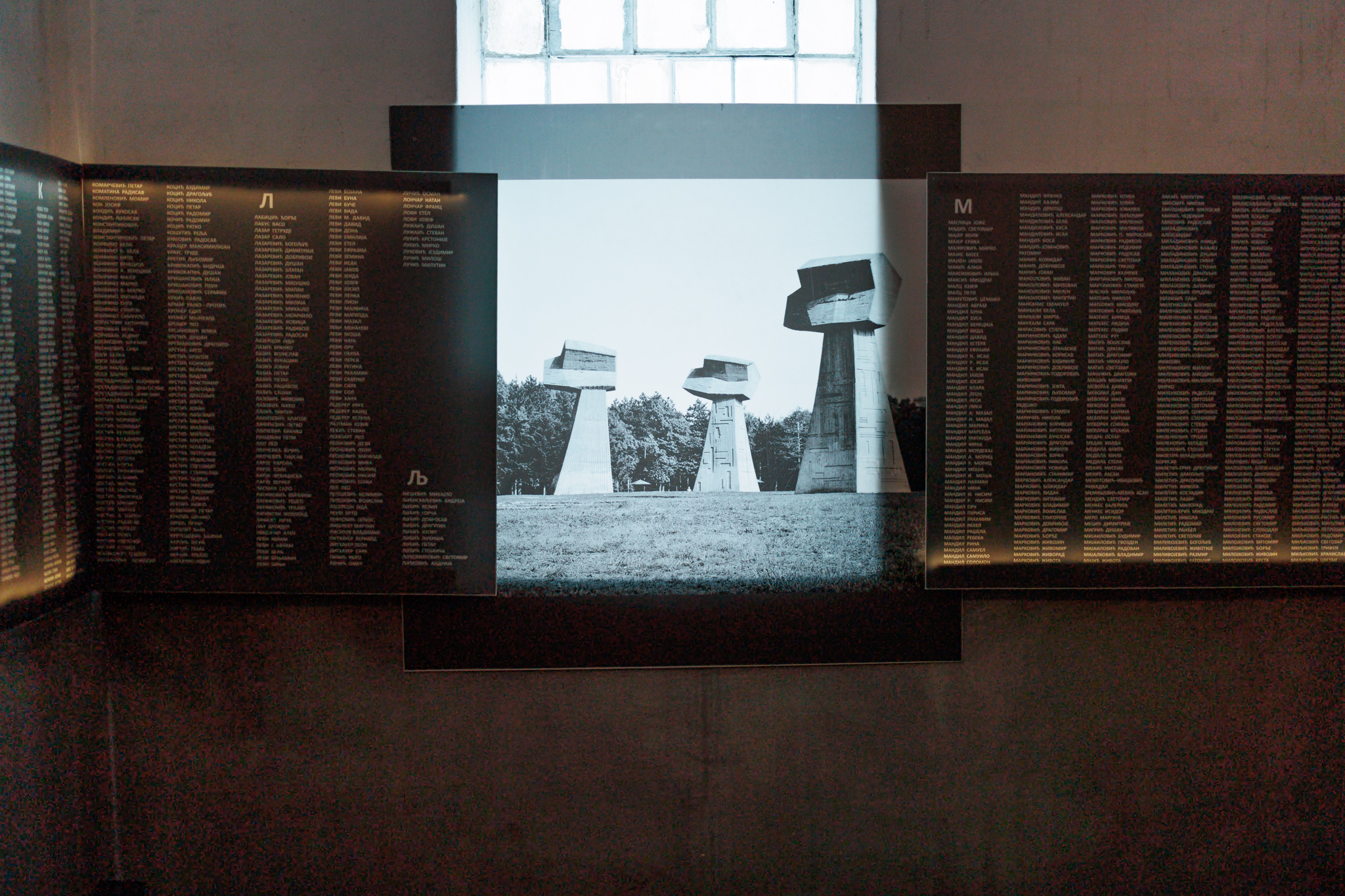
On the hill, the poem says “us”. Across town, a wall gives names, one letter at a time.
Visit this place
Location
Bubanj Memorial Park / Спомен-парк Бубањ
On Bubanj hill, on the edge of Niš, about 3 km from the city centre
Vojvode Putnika, Niš, Serbia
Practical Information
- Area
- Vojvode Putnika, Niš, Serbia
- Admission
- Free
- Visitor note
- An open-air memorial park on the site of wartime executions; please be respectful around the monument.
- Official information
- Visit Niš — Bubanj Memorial Site
Information last checked: October 4, 2026 (Location and free admission checked on Visit Niš. Opening hours not published; not stated.)
Conversation
Comments
Review pending commentsComments are reviewed before appearing. The internet already contains enough unattended surprises.
Loading comments…
Leave a comment