Niš’s Two Squares: Who’s on the Horse?
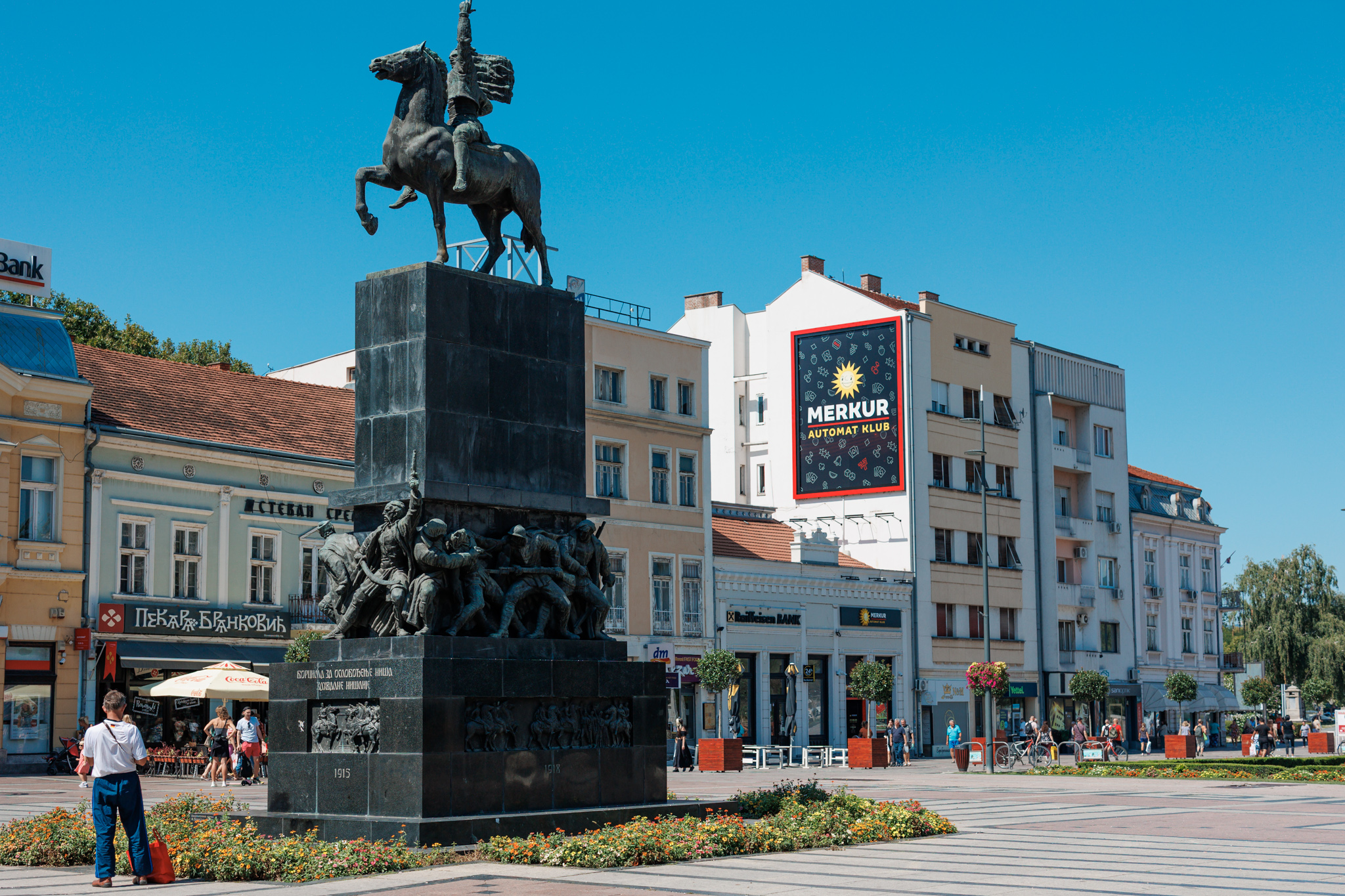
King Milan Square is the main square of Niš, and in the middle of it is a man on a horse. The horse rears. The rider holds one arm high, a flag streaming behind him. Given the name of the square, it would be reasonable to assume that this is King Milan.
It is not. The rider has no name. He is known as the Herald of Freedom, and he stands for the ordinary Serbian soldier. He has come with news: Prince Milan Obrenović is about to arrive.
The square is named after King Milan. The man on the horse is there to announce that Milan is on his way.
Lower down
The monument, by the Croatian sculptor Antun Augustinčić, went up in 1937. It commemorates the wars that freed Niš: from Ottoman rule, and again in the First World War. Beneath the herald, a crowd of bronze fighters surges forward. Among them is Stevan Sinđelić, the rebel commander at Čegar in 1809, whose fighters’ skulls went into Skull Tower. Nearby, Kole Rašić calls on the people of Niš to rise up.
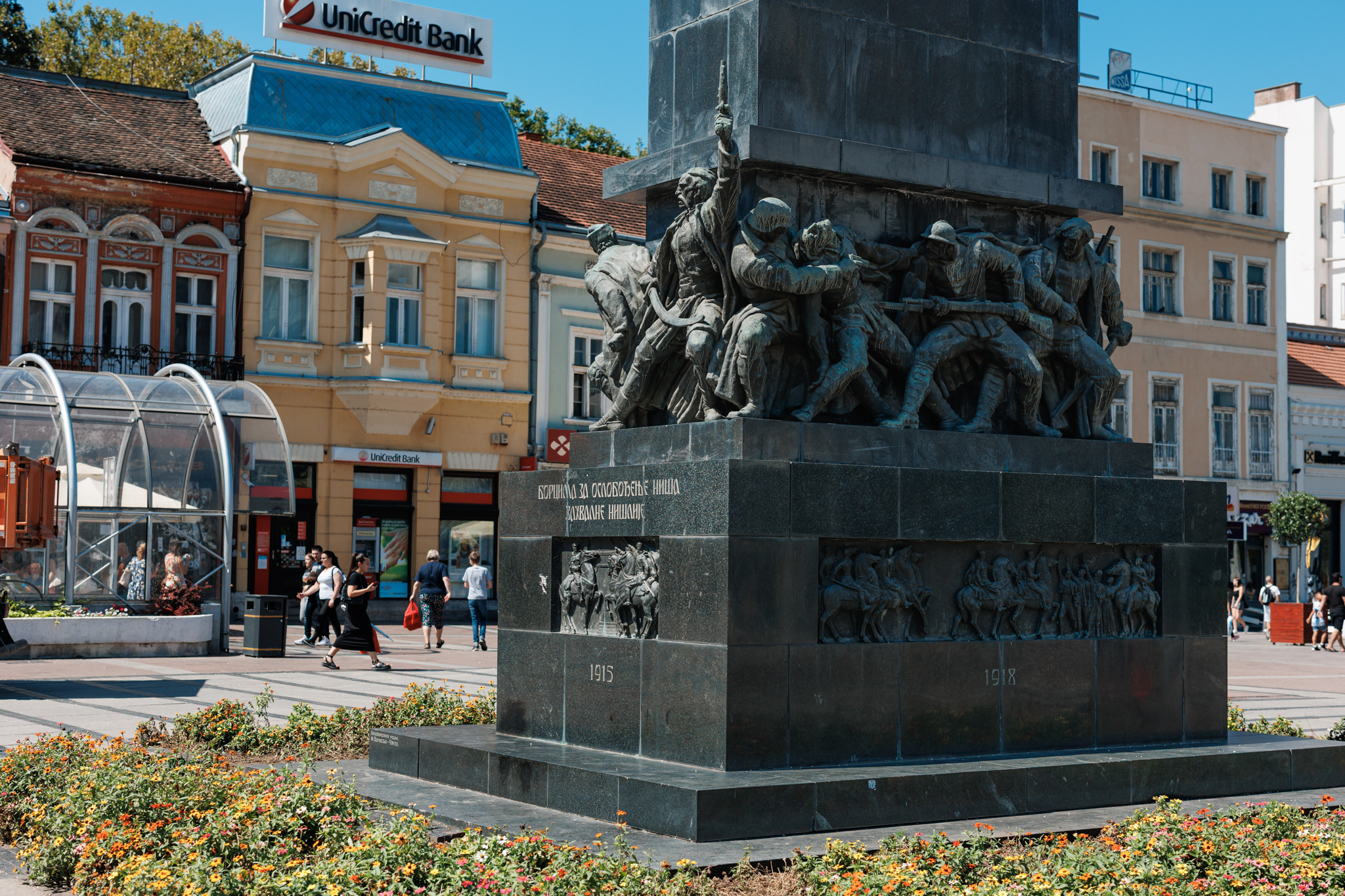
Milan does arrive, but lower down. Around the base are four smaller reliefs, one on each side. On one, Prince Milan enters Niš. On another, King Peter I and his son, Regent Aleksandar, enter the city during the First World War. The inscription reads: “To the fighters for the liberation of Niš — the grateful people of Niš.”
When the Ottomans left Niš in 1878, Milan was a prince. He became king in 1882. The square calls him king. The monument shows him as a prince.
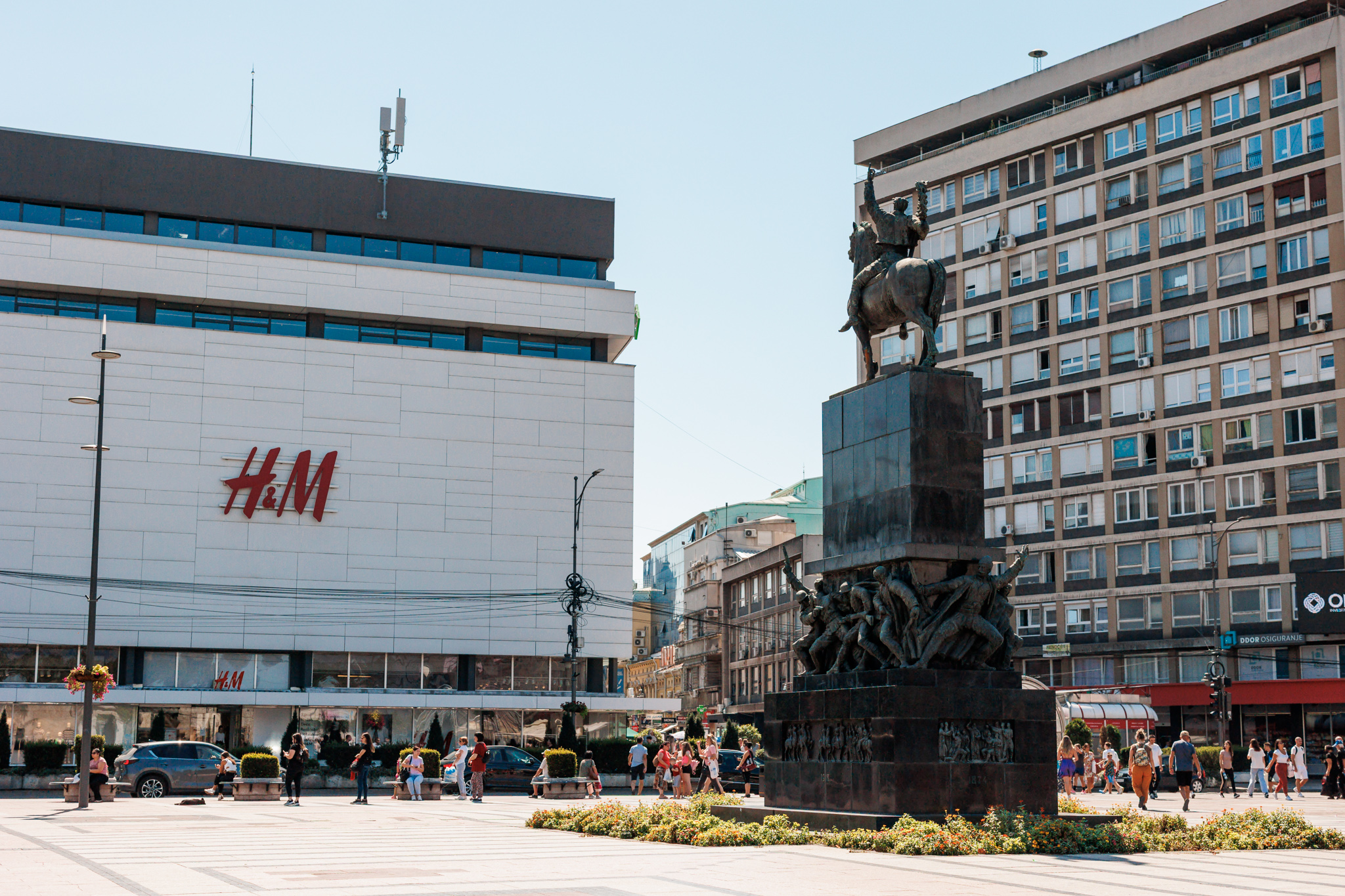
The square around the monument is thoroughly commercial, with banks, a bakery and a large H&M. A few more statues with stories of their own stand a short walk away, in the park by the Nišava.
Making room
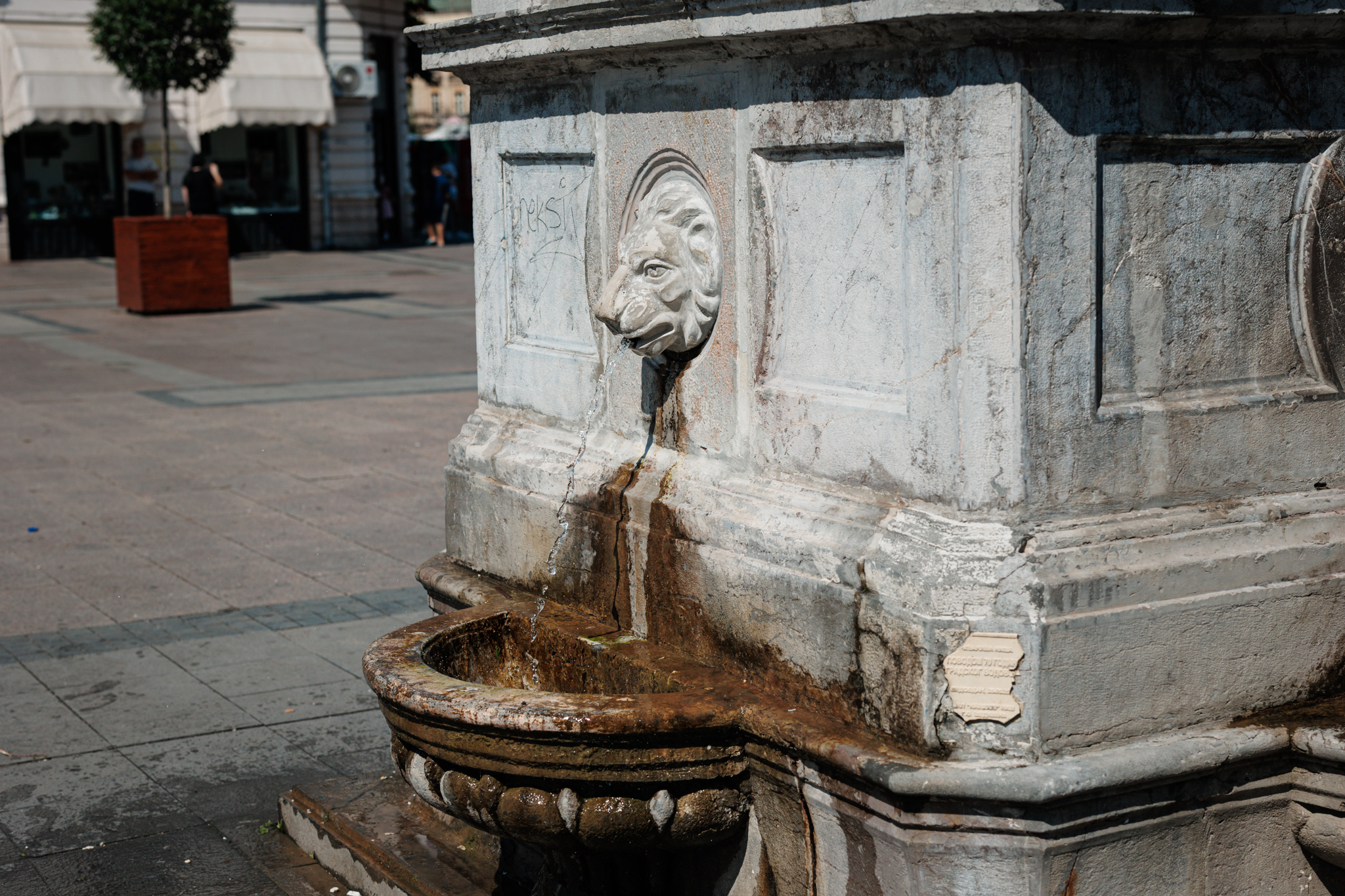
The monument needed space. Since 1903, this spot had belonged to a public fountain: fluted columns under a small pediment, with water running from lions’ mouths on its sides. In 1935, to clear the site, the fountain was moved to Čair Park.
It stayed there until 2007, when it was brought back to King Milan Square, to a spot north of the one it had left.
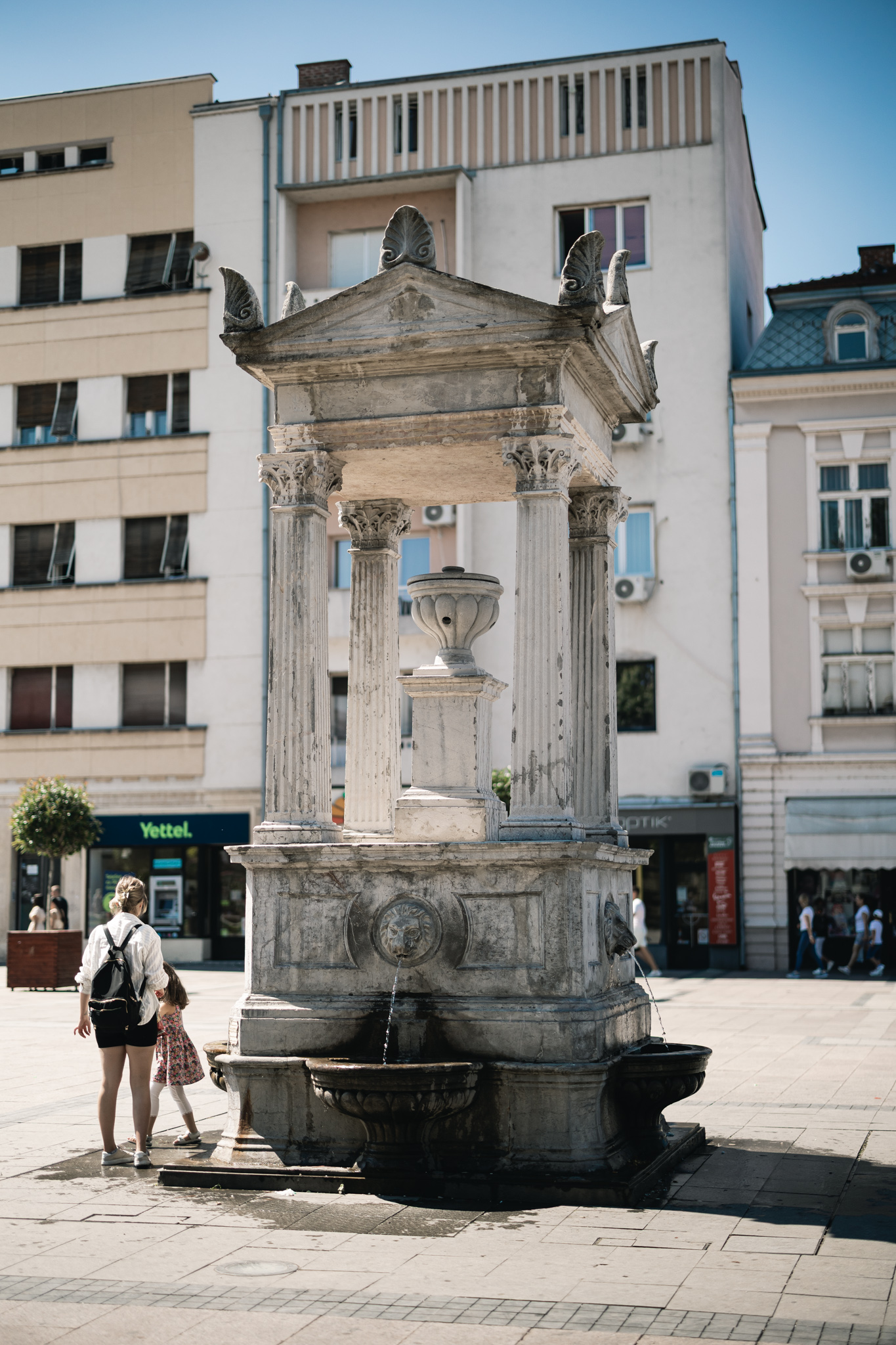
Today it is known as the Čair Fountain.
It carries the name of the park it was sent away to.
When I visited, the lions were still at work.
The other king
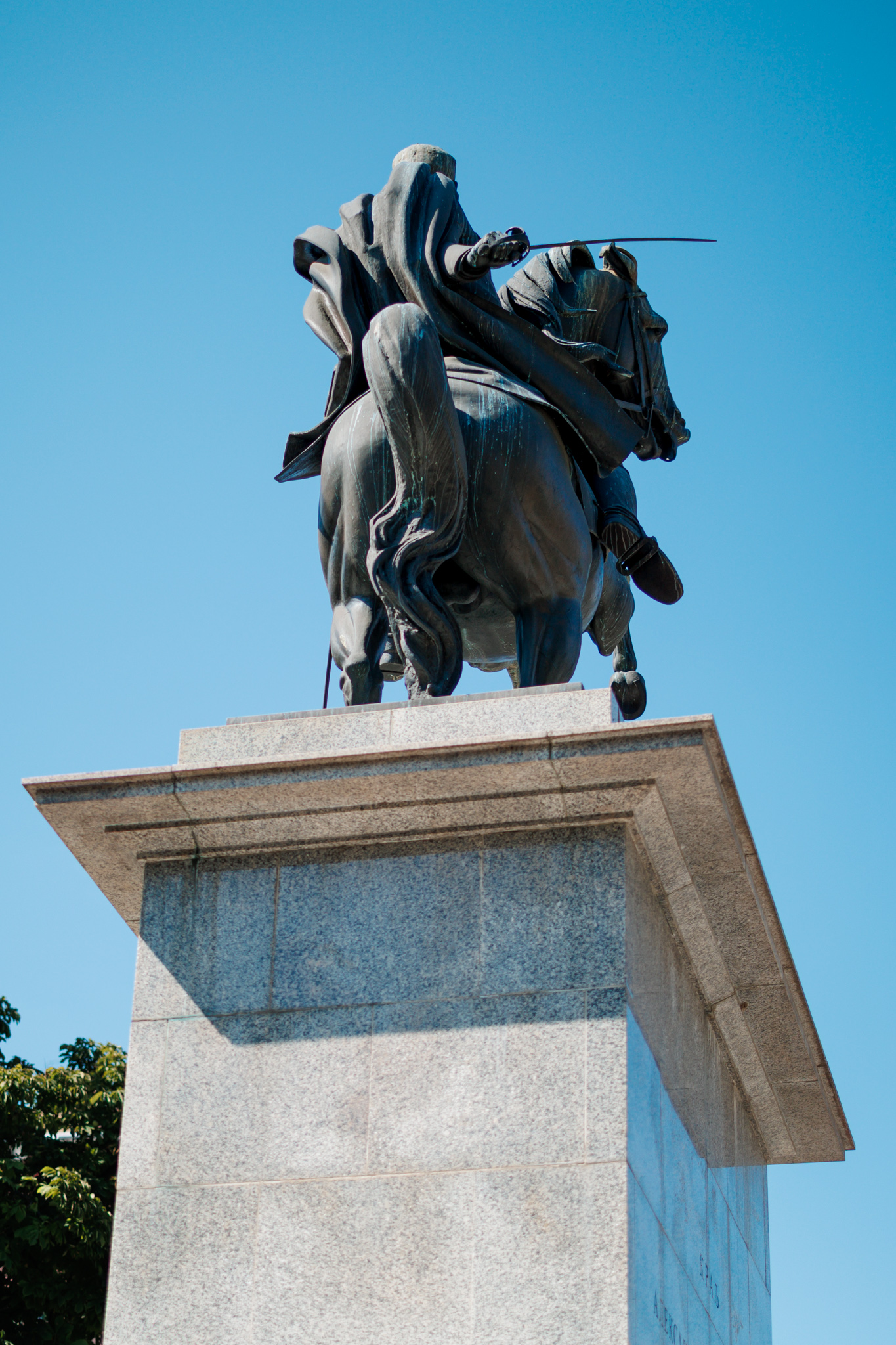
Niš has a second square named after a king. On King Aleksandar Square, the man on the horse really is the king: Aleksandar I Karađorđević, sabre drawn, his cloak spread over the horse’s back.
This is his second statue here. The first went up in 1939. In 1946, early in Communist rule, it was taken down and destroyed. The statue standing today, by the Belgrade sculptor Zoran Ivanović, was put up in 2004.
On King Milan Square, the herald with no name has been in place since 1937. In this city, the anonymous soldier has proved more durable than the king.
Two stones
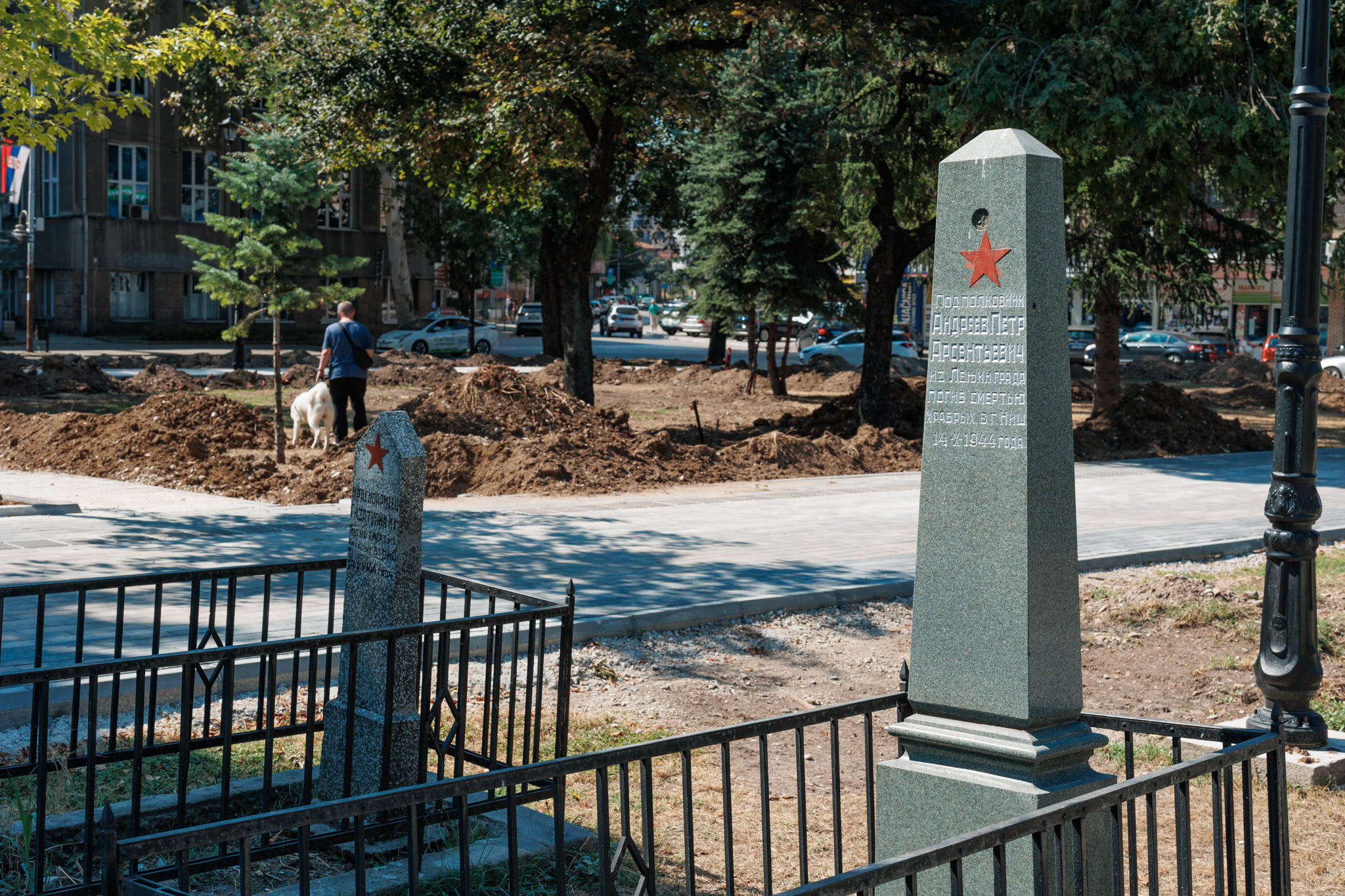
Near the king, inside a low iron fence, stand two grave markers with red stars. The taller one is inscribed in Russian: Lieutenant Colonel Pyotr Andreev, from Leningrad, who “died the death of the brave in the city of Niš” on 14 October 1944. The smaller one names a Red Army soldier, Gizatullin.
Both men were killed in the fighting for Niš that day, and were buried in the park here. Gizatullin fell in street fighting close to the spot where he was buried, a few hours before the city was freed.
In 1966, their remains were moved to a communal grave in Jagodina, a town to the north. The stones stayed. They now mark the place where the two men were buried, not where they lie.
Staying put
Back on King Milan Square, scaffolding went up on the monument in September 2026. The bronze had been corroding, and the stone blocks of the pedestal had shifted out of place over time.
The fountain was moved away, the king’s first statue was destroyed, and the soldiers’ remains were taken elsewhere. Through all of it, the herald has stayed where he was put in 1937, announcing that Prince Milan is about to arrive.
Milan arrived in January 1878.
The news was nearly sixty years old when he started delivering it.
Visit this place
Location
Monument to the Liberators of Niš
In the middle of King Milan Square, the main square of central Niš. King Aleksandar Square, with the King Aleksandar I monument and the two Red Army grave markers, is a short walk south-west.
Trg kralja Milana, Niš, Serbia
Practical Information
- Čair Fountain
- On King Milan Square, north of the Liberators monument. Water was running when photographed in 2023; whether it is safe to drink has not been confirmed.
- King Aleksandar Square
- The King Aleksandar I monument and the two Red Army grave markers are on King Aleksandar Square, about 500 m south-west of King Milan Square. Google Maps — Kralj Aleksandar
- Admission
- Free. Both are public squares.
- Visitor note
- Restoration of the Liberators monument began in September 2026, with scaffolding on the monument; parts of it may be covered. The Red Army markers are grave memorials; please be respectful around them.
Information last checked: October 10, 2026 (Locations and map pins verified in the October 9 handoff; restoration reports rechecked. Completion date and current access around the monument not confirmed.)
Conversation
Comments
Review pending commentsComments are reviewed before appearing. The internet already contains enough unattended surprises.
Loading comments…
Leave a comment