Niš’s Park of Heroes: The Hero in Football Boots
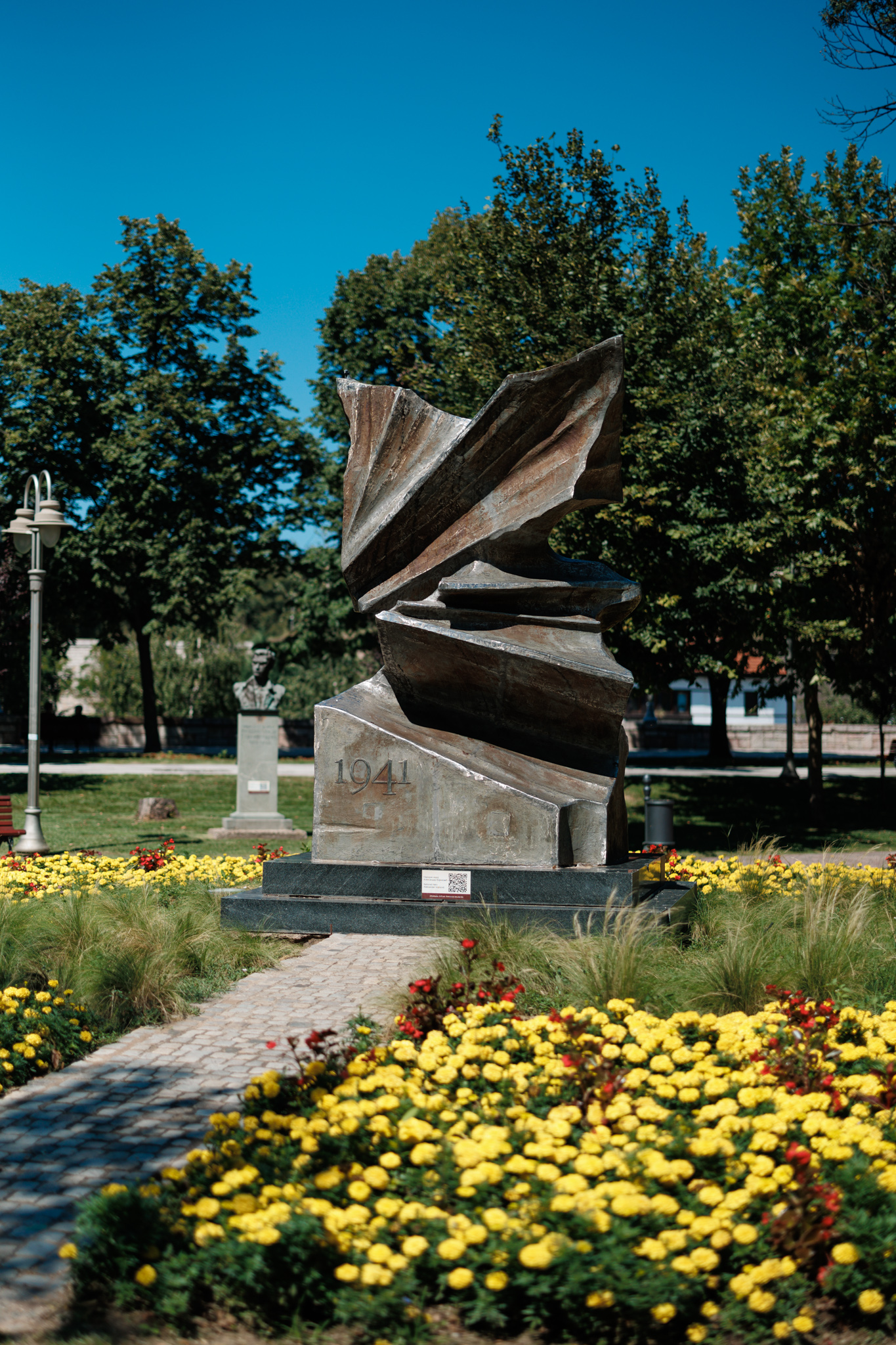
On the evening of 3 August 1941, a nineteen-year-old named Aleksandar Vojinović threw a bomb into the main hall of the Hotel Park in Niš, where German officers were billeted. As he ran, he threw a second one at the men chasing him.
The monument to that evening stands in a flowerbed in the park by the river. It is called the Spark of Freedom: what look like folded, splintered sheets of metal, rising from a block marked 1941. They could pass for flames, or for wings.
According to the local account, they are the hotel’s broken glass.
People’s Heroes
The park on the Nišava embankment, just north of King Milan Square, was long known as 7 July Park, and often still is. In 2014, the city moved three busts here to join three already standing near the Spark of Freedom, and opened the Park of Heroes.
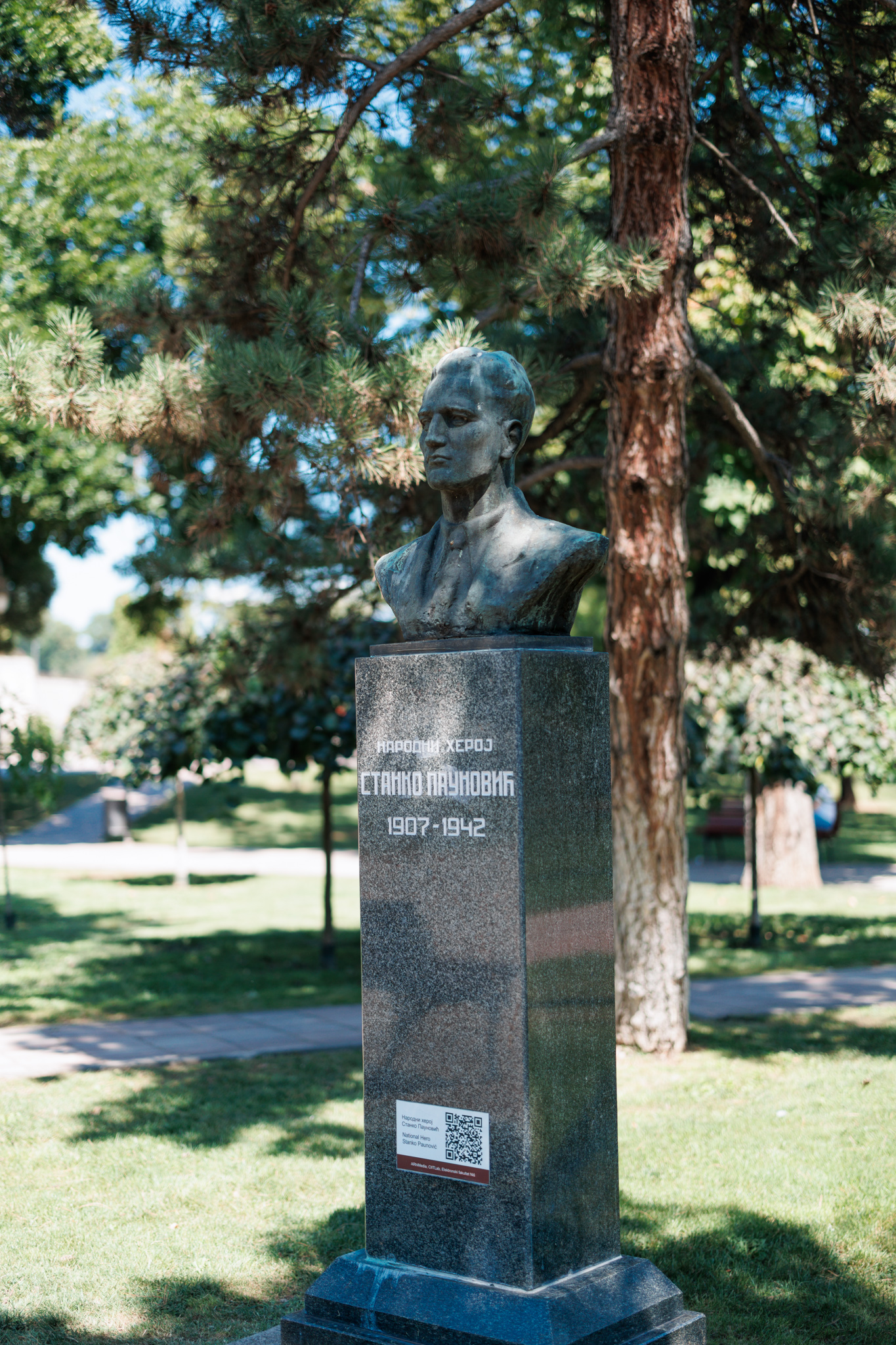
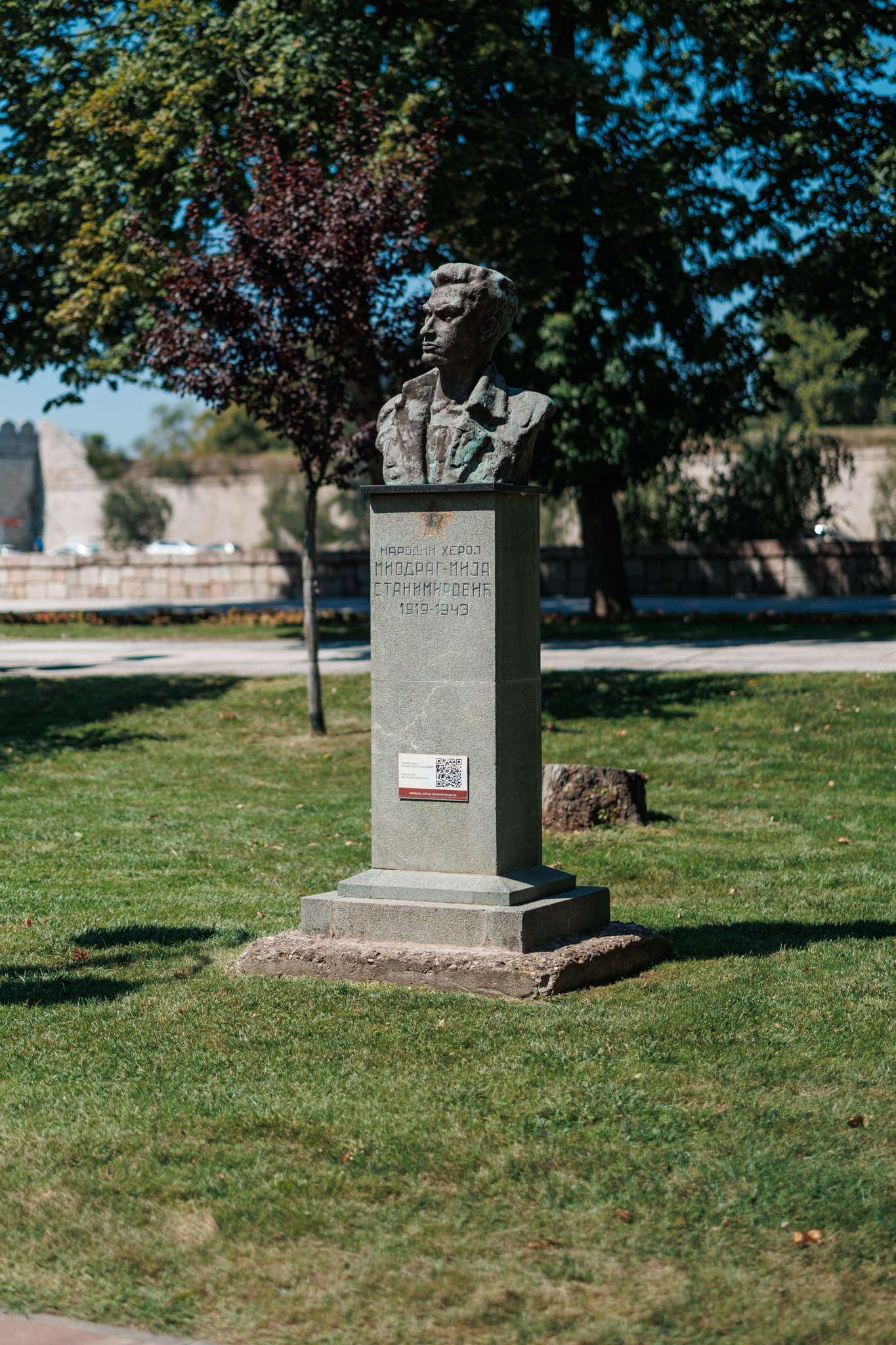
Two of the busts carry the same title on their pedestals: НАРОДНИ ХЕРОЈ, People’s Hero, the honour Yugoslavia gave for heroism in the Second World War.
Stanko Paunović came to Niš in 1924 to study at the railway school, then worked in the railway workshops. In 1941 he escaped from prison, joined the partisans on Fruška Gora, and was killed there the following year.
Miodrag “Mija” Stanimirović is the only one of the six who was born in Niš. His parents worked in the same railway workshops, and so, as a very young man, did he. He was killed fighting the Chetniks at the age of 24.
The railway workshops of Niš account for at least a third of the busts in the Park of Heroes.
The field marshal
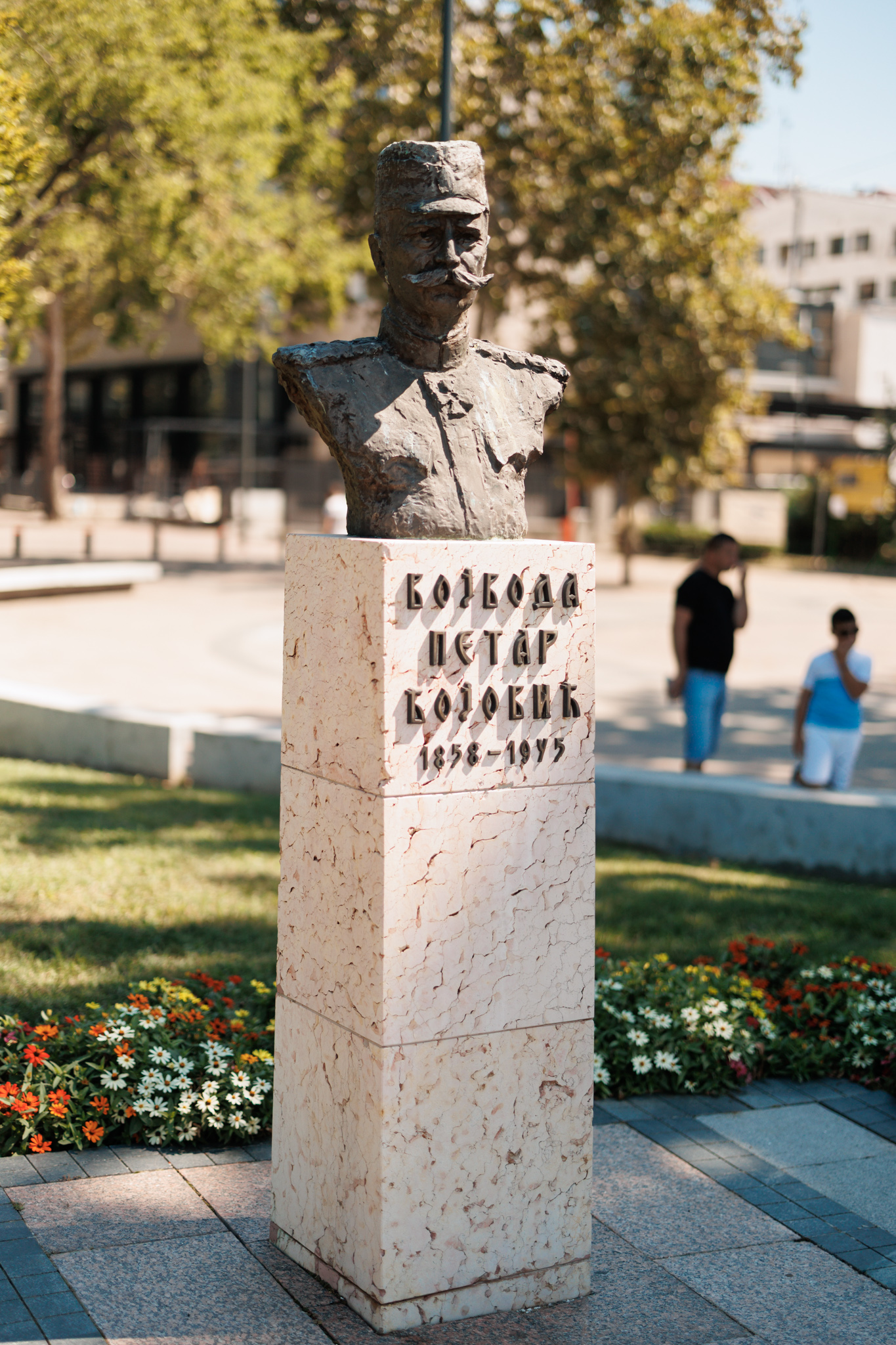
A short walk away, in front of the City Assembly, Petar Bojović wears a peaked cap and a moustache of considerable span.
His pedestal outranks the busts in the park. It says ВОЈВОДА: field marshal, the highest rank in the Serbian army. In 1918, Bojović led the First Army through the Salonika Front. Wreaths have been laid here on the anniversary of the city’s liberation in the First World War.
The man with the ball
Back in the park, on a small block in the grass, a young man is about to kick a ball. Unlike the others, he is a full figure, in shorts and socks, one leg drawn back.
He is Ljubomir Jakovljević, who played for the local club, Sinđelić. In the winter of 1926, a boy fell into the Nišava, icy and swollen, and Jakovljević went in after him. The boy survived. Jakovljević drowned.
The next year, at the club’s initiative, the Belgrade sculptor Živojin Lukić made him in bronze. He has stood in this park ever since. He had been here for 87 years when the park was named after its heroes.
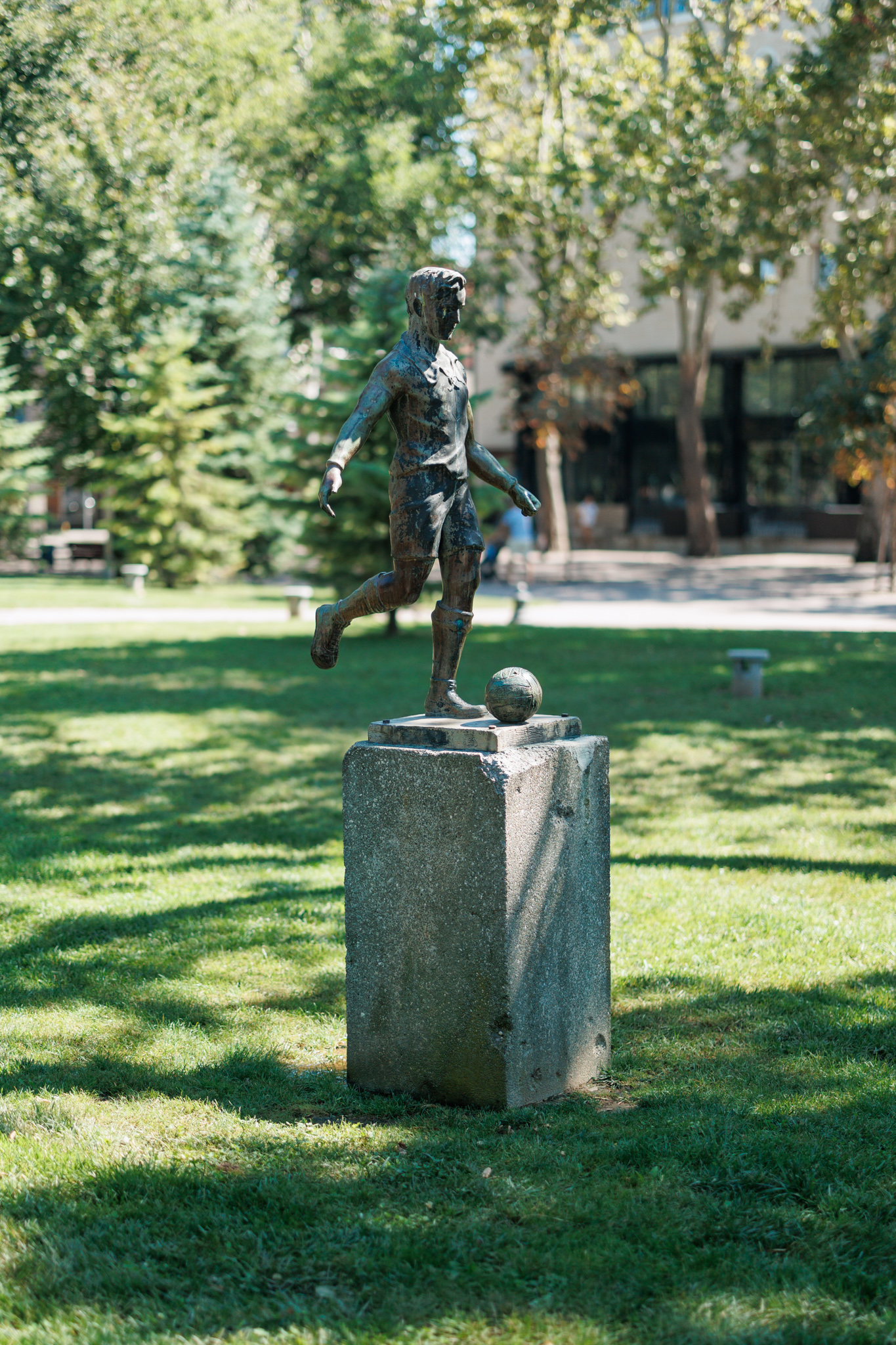
The inscription on his pedestal gives his name, his nickname, Maki the Macedonian, and his club. It also gives his occupation, clerk, and his rank as a reserve army officer.
In the park and nearby, pedestals bear titles like People’s Hero and Field Marshal.
His, the oldest of them, says clerk.
Visit this place
Location
Park of Heroes (Парк хероја НОБ-а)
On the Nišava embankment, about 200 m north of King Milan Square in central Niš.
Niš, Serbia
Practical Information
- Footballer statue
- On the lawn about 80 m west of the Spark of Freedom. Google Maps — Споменик фудбалеру
- Bojović bust
- In front of the City Assembly building, a short walk from the park.
- Admission
- Free. Public park.
- Visitor note
- The park is also known by its older name, 7 July Park (Park 7. juli).
Information last checked: October 10, 2026 (Locations and map pins. Opening restrictions not applicable (public park); current condition of individual monuments not confirmed.)
Conversation
Comments
Review pending commentsComments are reviewed before appearing. The internet already contains enough unattended surprises.
Loading comments…
Leave a comment