Ho Chi Minh Mausoleum: He Asked to Be Cremated
Ho Chi Minh died at 9:47 on the morning of 2 September 1969. For twenty years, the official date of his death was the third.
The second of September is Vietnam’s National Day. On that date in 1945, on a square in central Hanoi, he had stood on a wooden platform wrapped in cloth and read out the country’s declaration of independence. The leadership did not want a day of mourning to fall on the day the whole country celebrated, so they announced the next one. The real date was made public only in 1989.
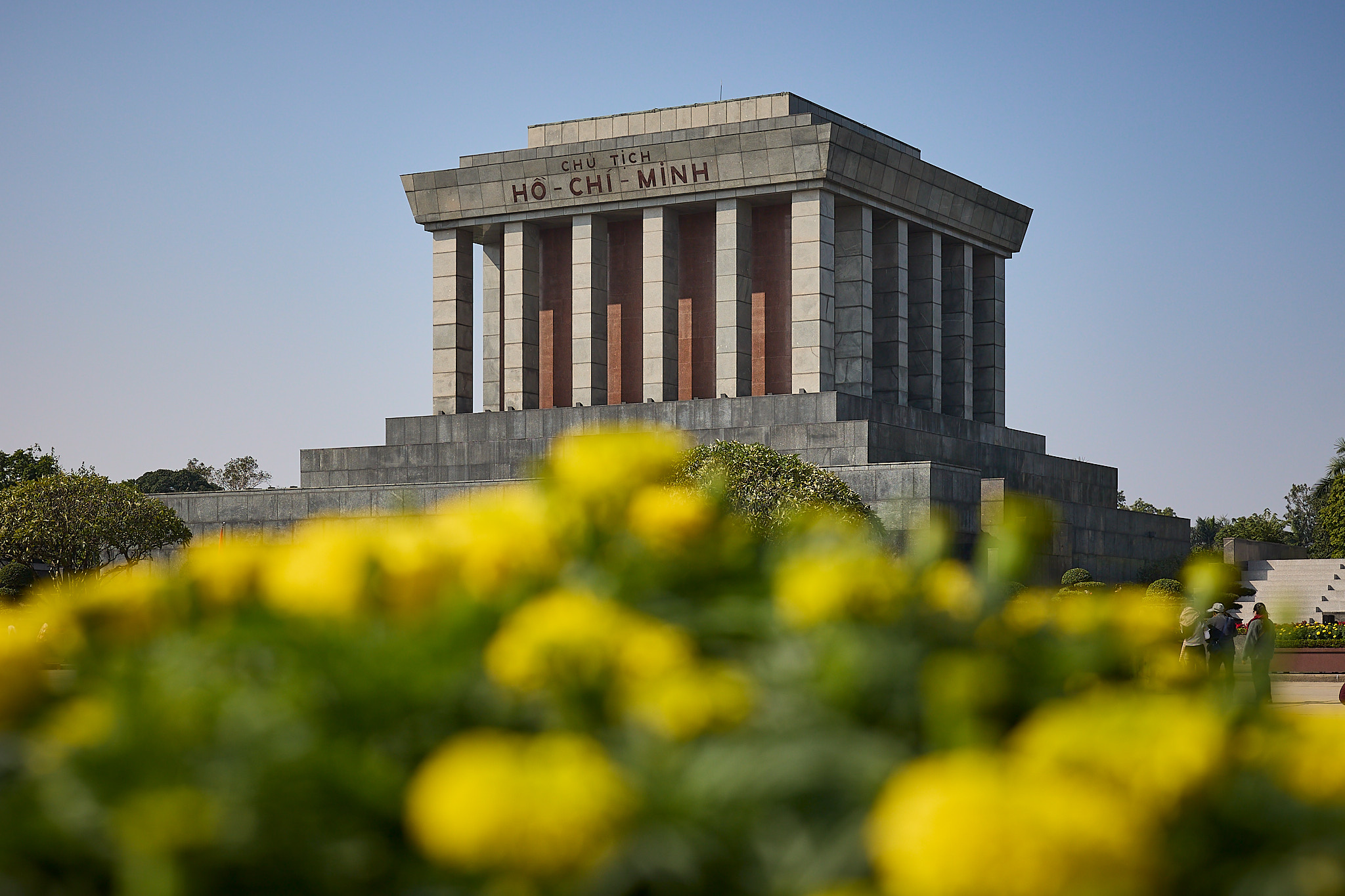
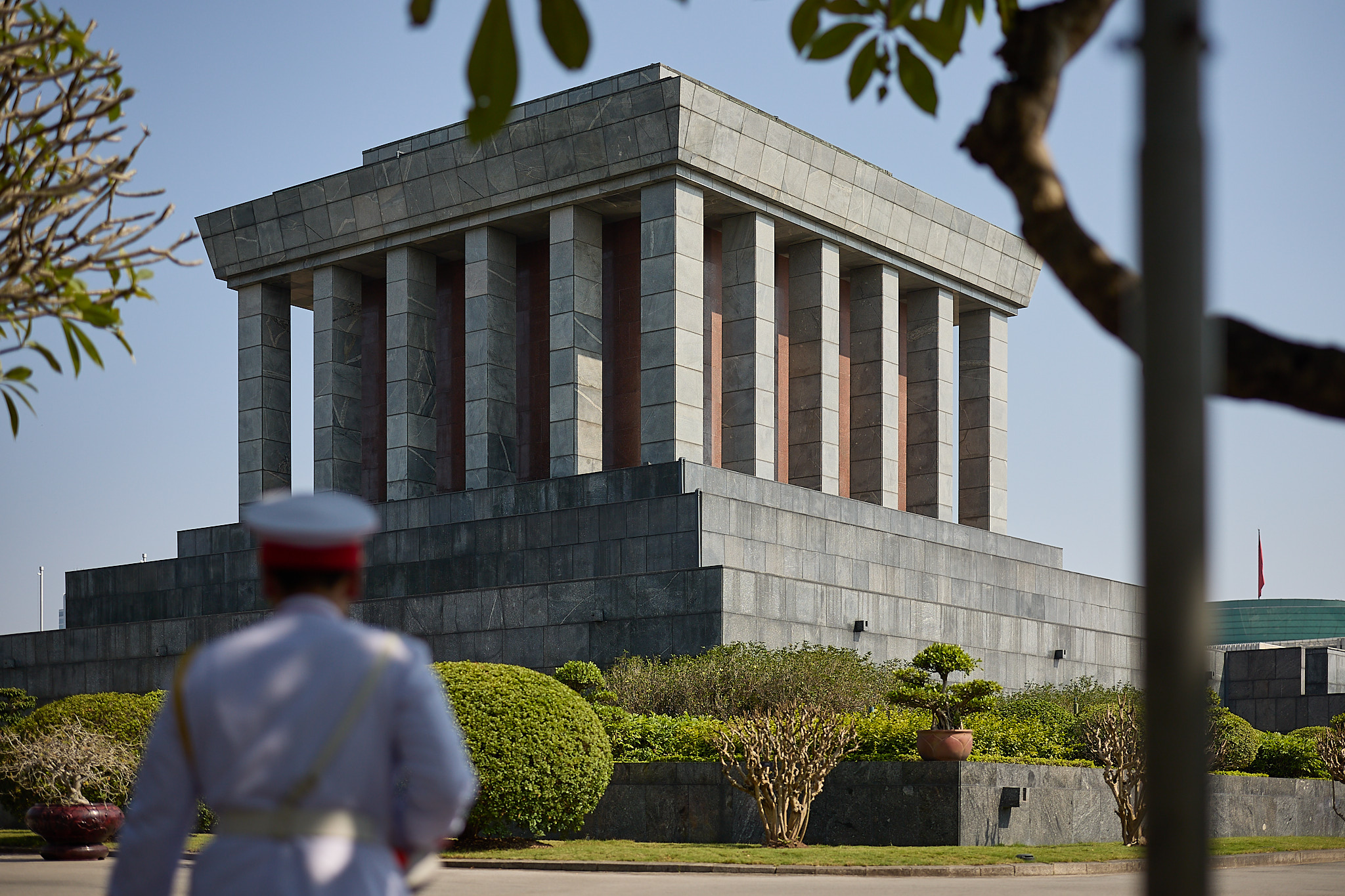
The square is Ba Dinh. Under French rule it had carried the name of a French missionary. The wooden platform is long gone. What stands on the square now is a block of dark grey granite, 21.6 metres high, with his name across the top.
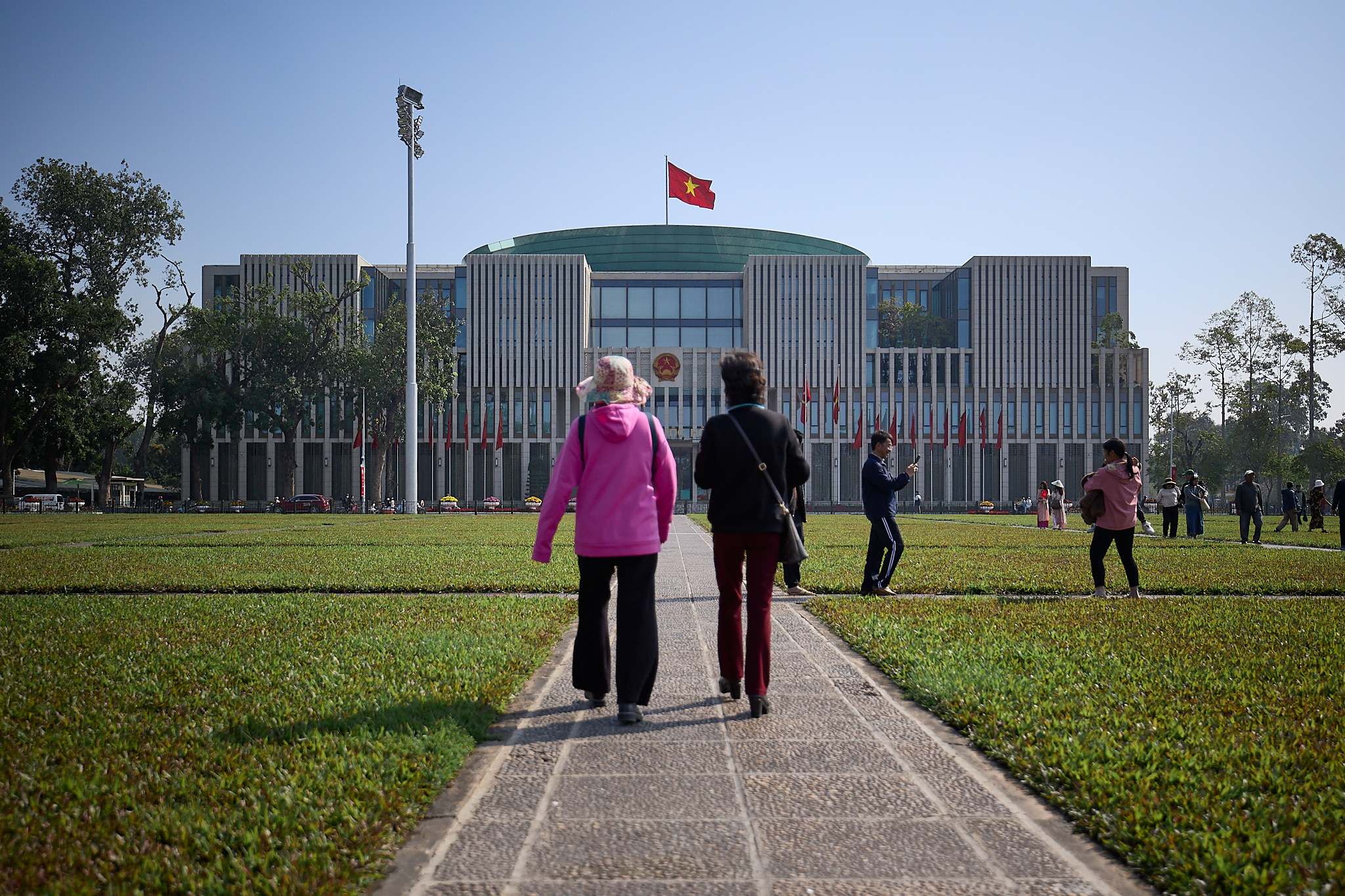
On the far side of the lawns is the National Assembly, a pale cube finished in 2014. The country’s parliament and its most solemn building face each other across the square where independence was declared.
A simple house
In 1968, a year before his death, he went back over his will. One passage dealt with his funeral.
“I ask that my body be burned, that is, cremated,” he wrote. It was better for the hygiene of the living, he explained, and it would not take up farmland. Once the country had plenty of electricity, electric cremation would be better still.
The ashes were to be divided into three ceramic boxes: one for the North, one for the Centre, one for the South. The people of each region should choose a hill and bury a box there. There should be no stone stele and no bronze statue on the grave. Instead, a simple house, spacious, sturdy and cool, so that people who came to visit would have somewhere to rest. Trees should be planted on and around the hills, and anyone who came could plant one or two in memory. And there should be no grand funeral, so as not to waste the people’s time and money.
When the will was published after his death, this passage was left out.
His body was preserved instead. The Politburo gave its reasons in 1989, in the same statement that restored the real date of his death. The people’s feelings, it said, had called for it, and the body had been kept so that people from all over the country, especially in the South, and friends from abroad could come one day and pay their respects. In 1969, the country was still divided by war.
From Moscow
The method came from Moscow. On the morning he died, Soviet specialists were already at the military hospital in Hanoi, led by the director of the institute responsible for Lenin’s body.
The connection went back to his early political life. In Paris in July 1920, the young Nguyễn Ái Quốc, as he then called himself, read Lenin’s theses on the national and colonial questions in L’Humanité. He later wrote that from then on, he believed in Lenin completely. He reached Moscow in 1923, while Lenin was gravely ill. When Lenin died in January 1924, he joined the queue of mourners in the Moscow winter, and is said to have come back with his hands and feet numb and his face raw. He wrote an article for Pravda: “Lenin and the Colonial Peoples.”
Forty-five years later, the institute that had preserved Lenin’s body sent specialists to do the same for Ho Chi Minh.
Work on the mausoleum began on 2 September 1973, and it was inaugurated a few days before the same date in 1975. More than 200 designs had been proposed. Twenty-four were put on show in five cities, and around 745,000 people came to look at them. The Soviet Union helped again, with technical advice, some 20,000 pieces of polished granite and marble, and the design for the air conditioning. Cement, sand and timber came from different parts of Vietnam. The letters of his name on the roof are inlaid with stone from Cao Bằng, the northern province where he crossed back into Vietnam in 1941.
The queue
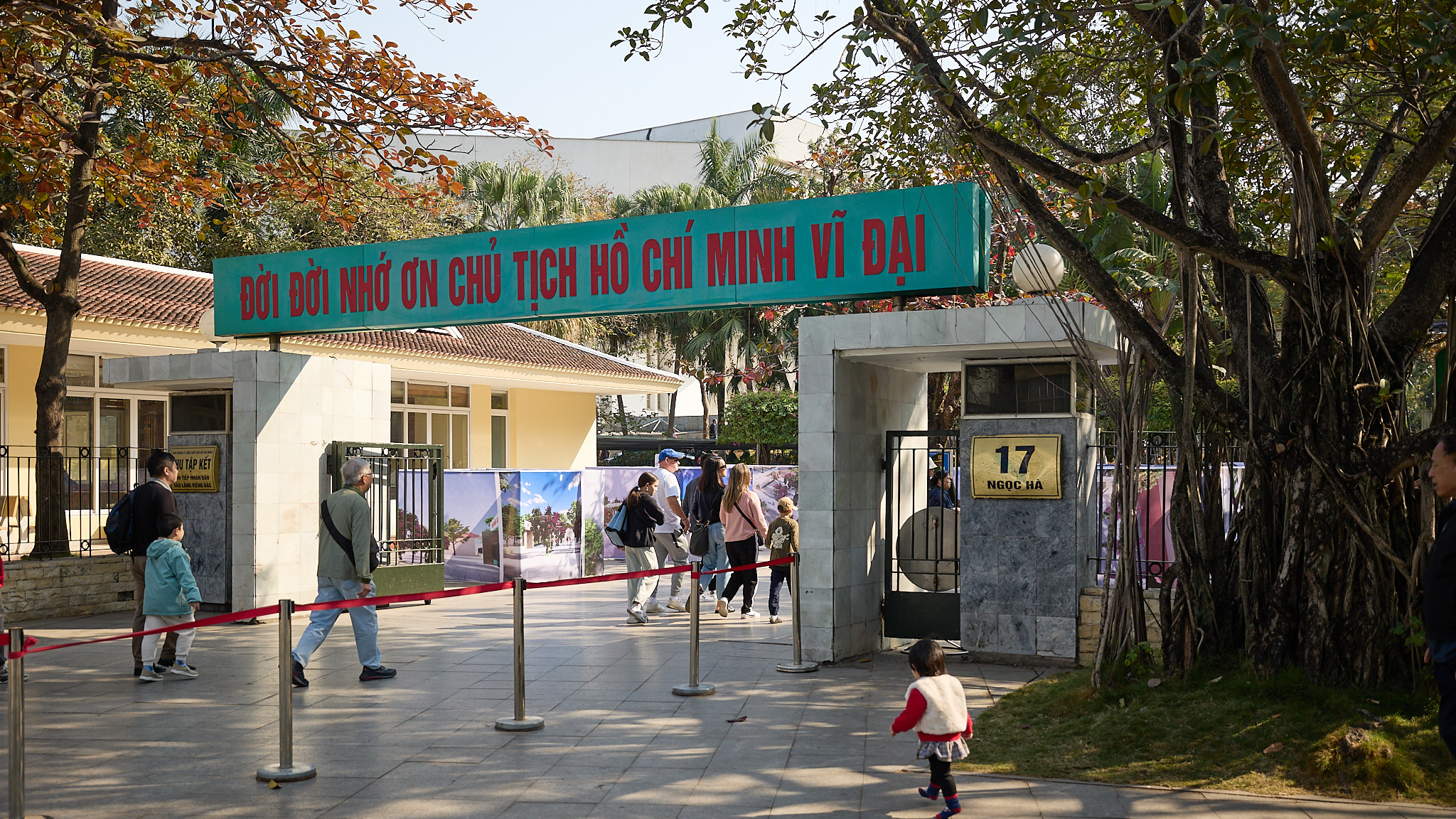
The way in was through a gate on Ngọc Hà Street, under a green banner that read “Forever grateful to the great President Ho Chi Minh.” Bags were checked, and my camera had to be handed in.
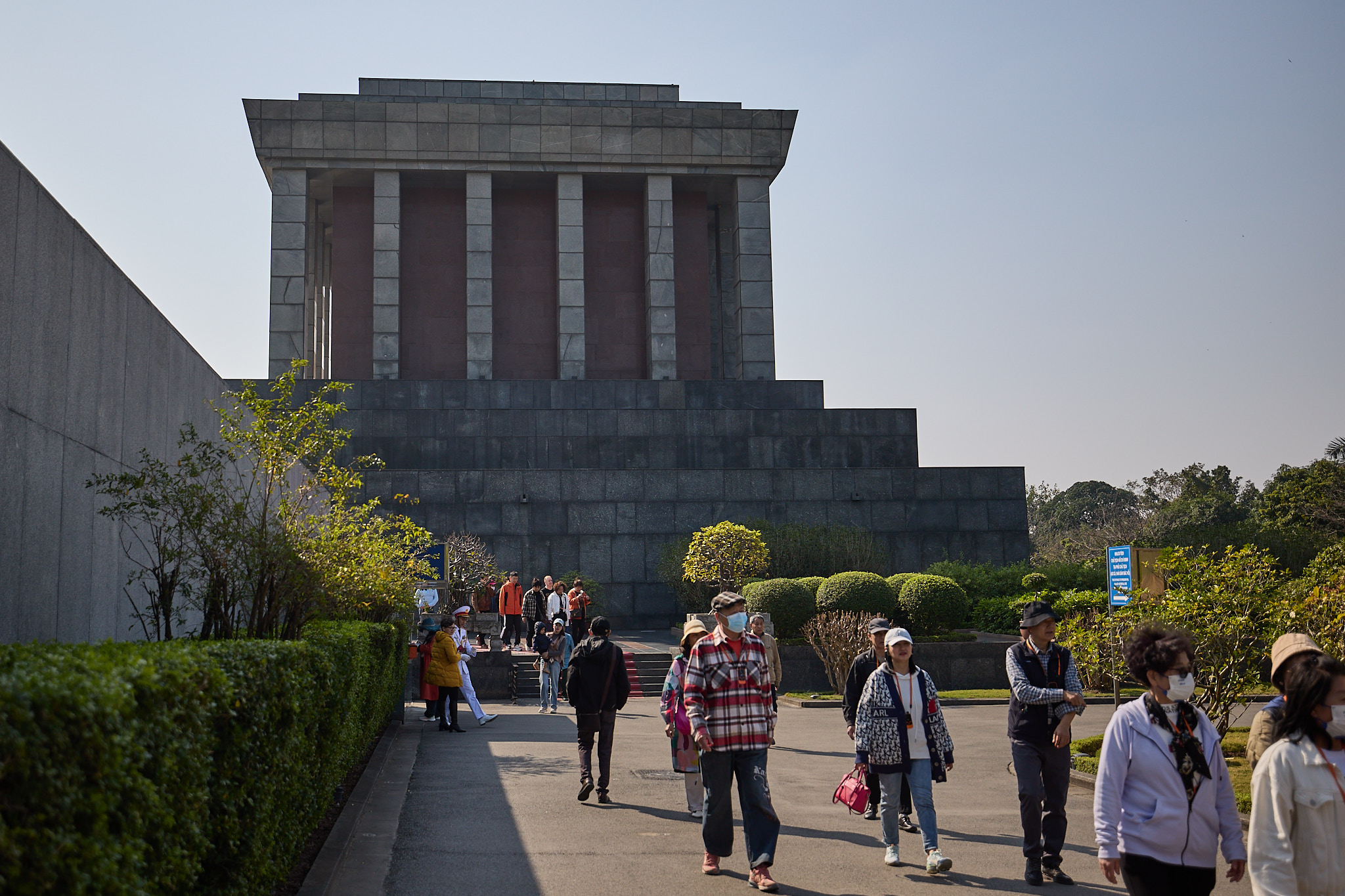
The queue was enormous. It also moved far more smoothly than a queue that size should. The staff had the calm of people who do this every morning.
There are no photographs of what came next. Photography is not allowed inside, and my camera was waiting for me at the other end.
On the way out
The way out led past clipped hedges, potted trees and guards in white. Beyond them lie the grounds of the Presidential Palace, where he spent his last fifteen years.
The mausoleum closes every year for about two months of maintenance. In 2019, the Prime Minister set up a state council of eleven medical scientists, four of them from Russia, to assess the condition of the body after some fifty years and to propose how to go on preserving it. Keeping him as he is has been continuous work for more than half a century.
Of the room itself, I wrote down only two things.
He looked beautiful. So beautiful that it was somehow unsettling.
And there was an aura about him, the aura of a symbol.
Visit this place
Location
President Ho Chi Minh Mausoleum
On Ba Dinh Square in central Hanoi
1 Hùng Vương, Ba Đình, Hanoi, Vietnam
Practical Information
- Opening hours
- Mornings only, Tuesday–Thursday and Saturday–Sunday; closed Monday and Friday. April–October: 7:30–10:30 (weekends and holidays until 11:00). November–March: 8:00–11:00 (weekends and holidays until 11:30).
- Admission
- Free
- Annual closure
- Closed for about two months each year for maintenance; dates are announced in advance. In 2026: 4 September–2 November, reopening on 3 November.
- Visitor note
- Large bags and professional cameras must be left at the deposit counter. No photography or phones inside. Shoulders and knees covered; hats off; keep silent.
Information last checked: October 26, 2026 (Hours and annual closure checked against Vietnamese government notices; admission and visitor rules checked against Vietnamese news and tourism guidance. The Mausoleum Management Board’s site could not be reached.)
Conversation
Comments
Review pending commentsComments are reviewed before appearing. The internet already contains enough unattended surprises.
Loading comments…
Leave a comment