Simala Shrine: A Castle for Mama Mary
Green is for exams. Blue is for promotions. Orange is for making peace with a sweetheart, a wife, a husband, an enemy, or the family. The enemy comes after the husband.
That was the list where the candles are sold, on a hill in the south of Cebu, at a place everyone calls Simala. Officially it is a monastery, the Monastery of the Holy Eucharist, and officially it is not in Simala at all but in Lindogon, the next village along. Simala is the village you drive through to get there, and the name stuck.
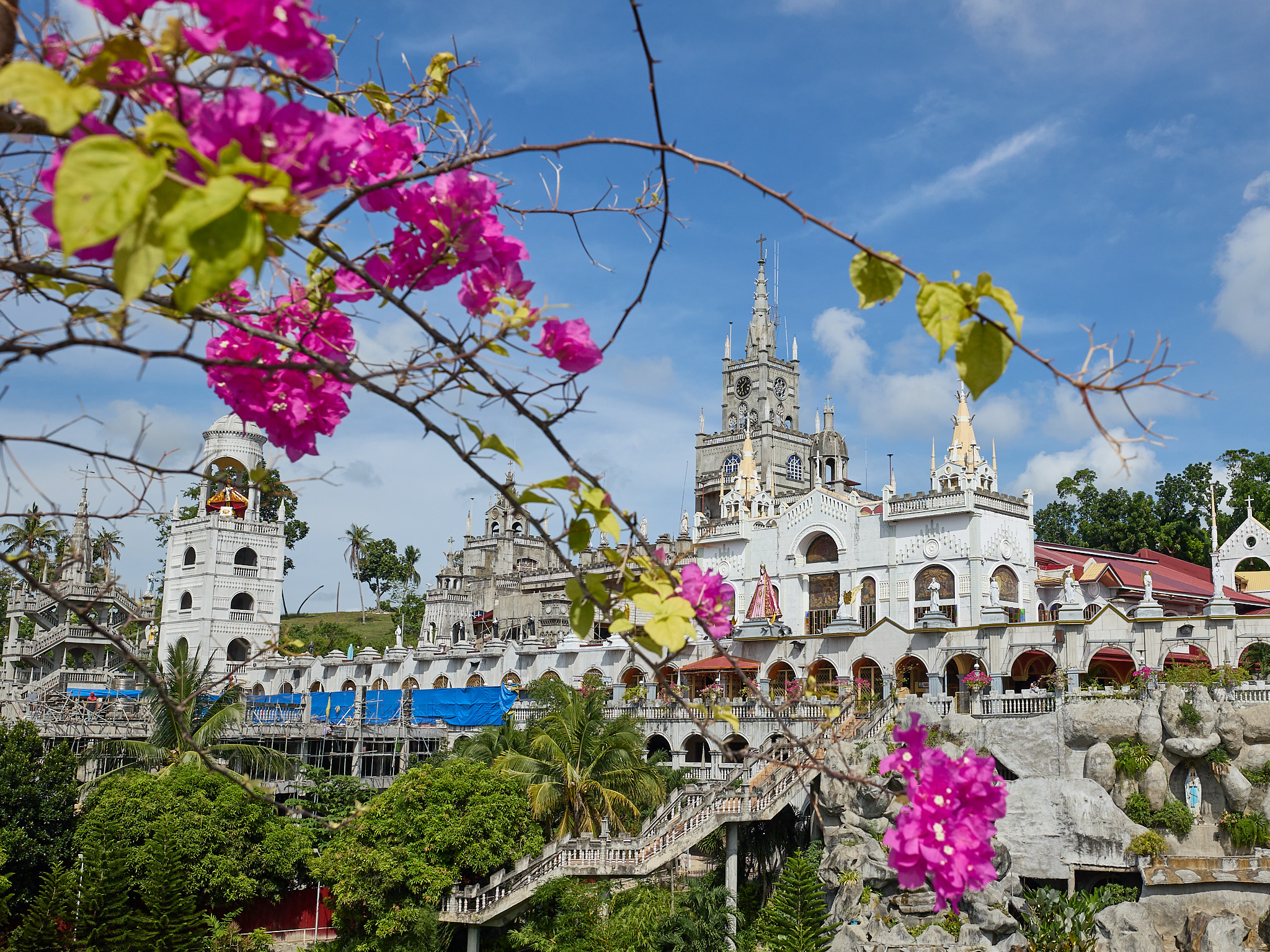
From the road, what you see is a castle. Spires, a clock tower, tiers of arcades stacked up the slope, outside staircases, and, over one gateway, a golden crown the size of a small car.
Mama Mary
The castle is not old. Monks came to this hill in the late 1990s and, by their own account, cleared it by hand. Within a few years there was a shrine; within ten, crowds. The building has been growing on donations ever since. When I visited, part of it was still in scaffolding.
The story goes that in 1998, when dengue struck the area, there were nine days of rosary processions, and the image of the Virgin the monks had brought with them wept. The sick recovered. People started coming, and they have not stopped.
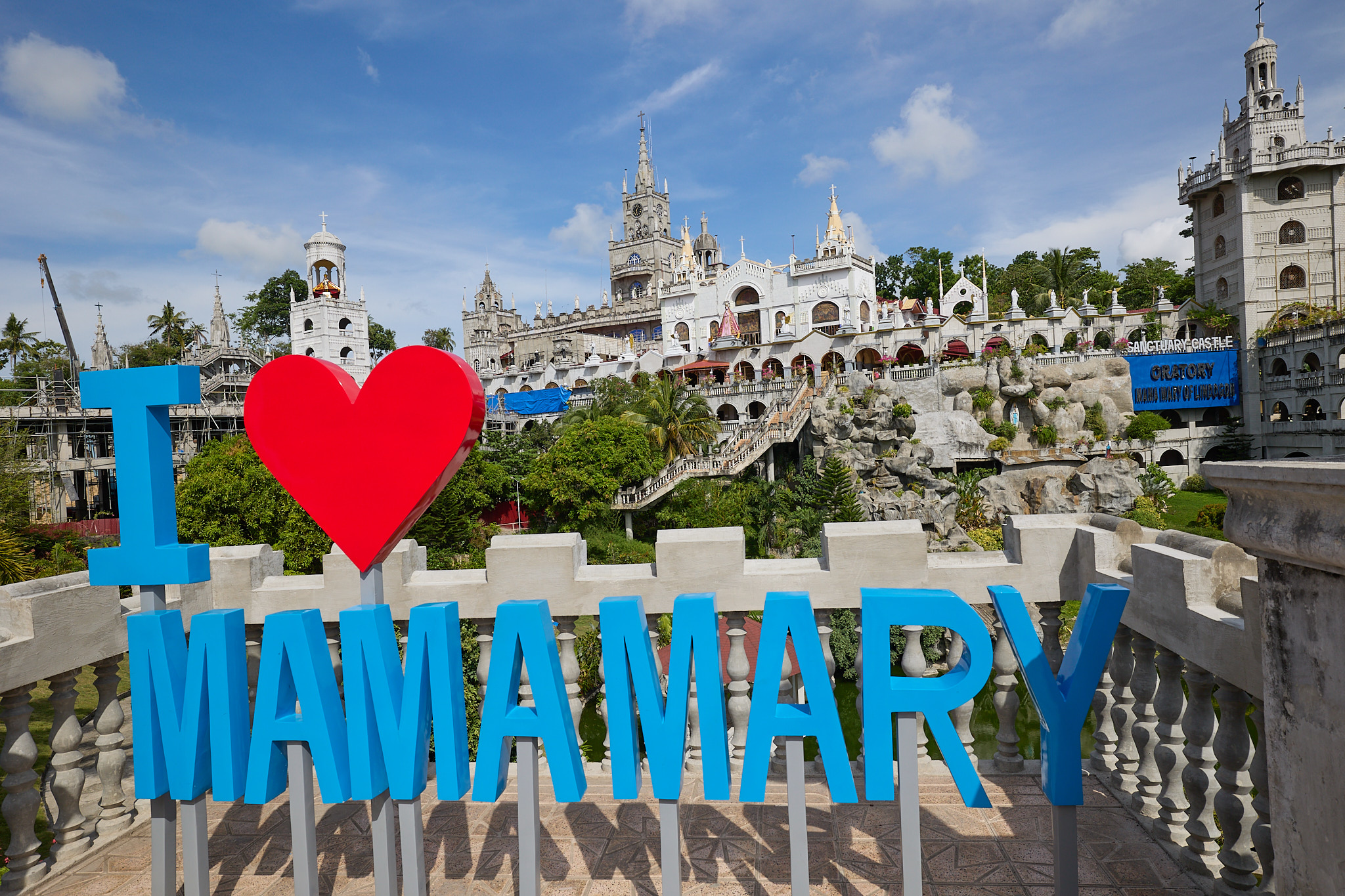
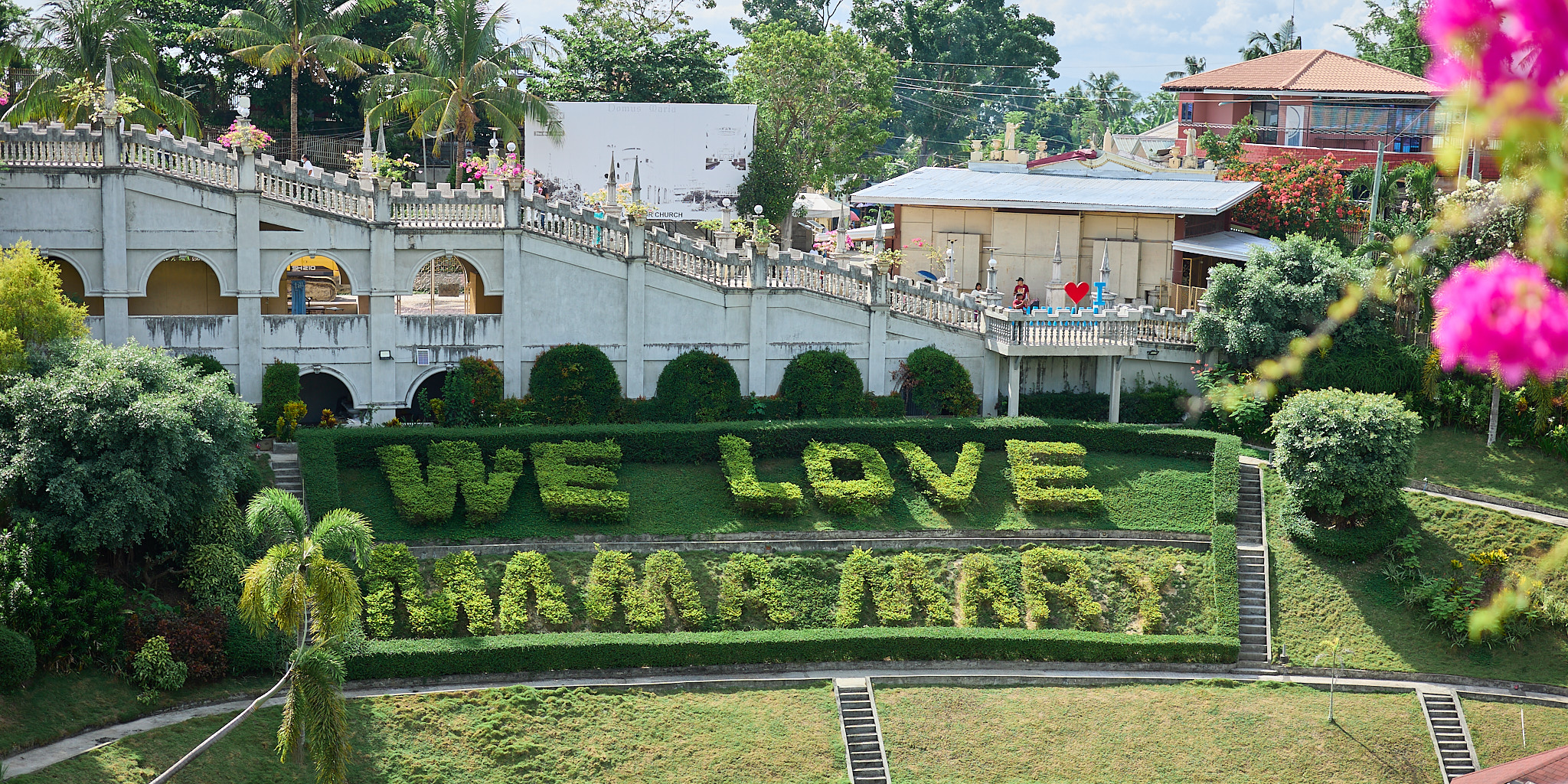
Who they come to see is written on the wall in blue: SANCTUARY CASTLE, ORATORY, MAMA MARY OF LINDOGON. It is written again in giant letters on the terrace, with a red heart, and once more in the hedge, where a slope of clipped shrubs reads WE LOVE MAMA MARY. The monk in charge calls the whole building the Sanctuary Castle of Mama Mary.
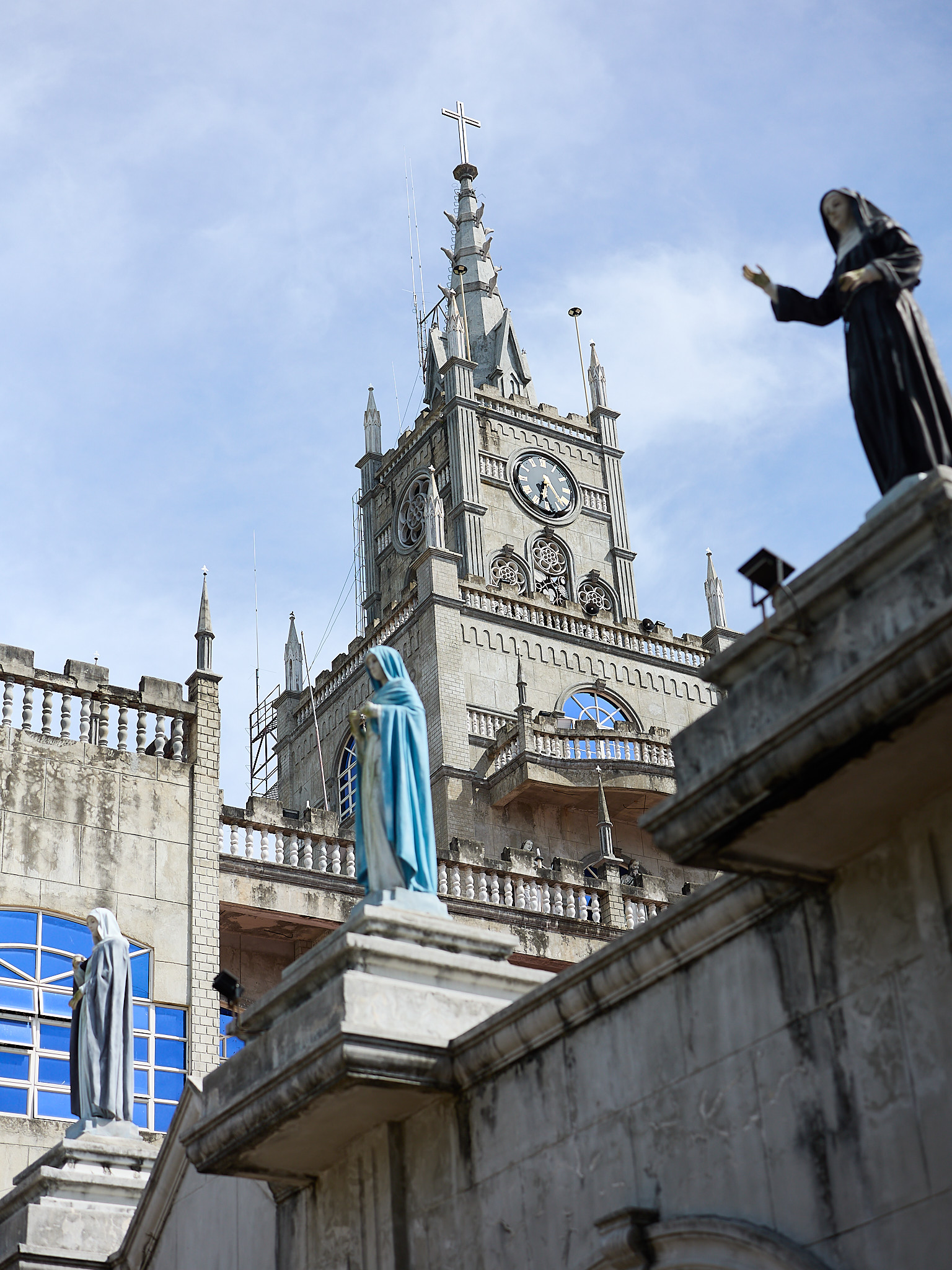
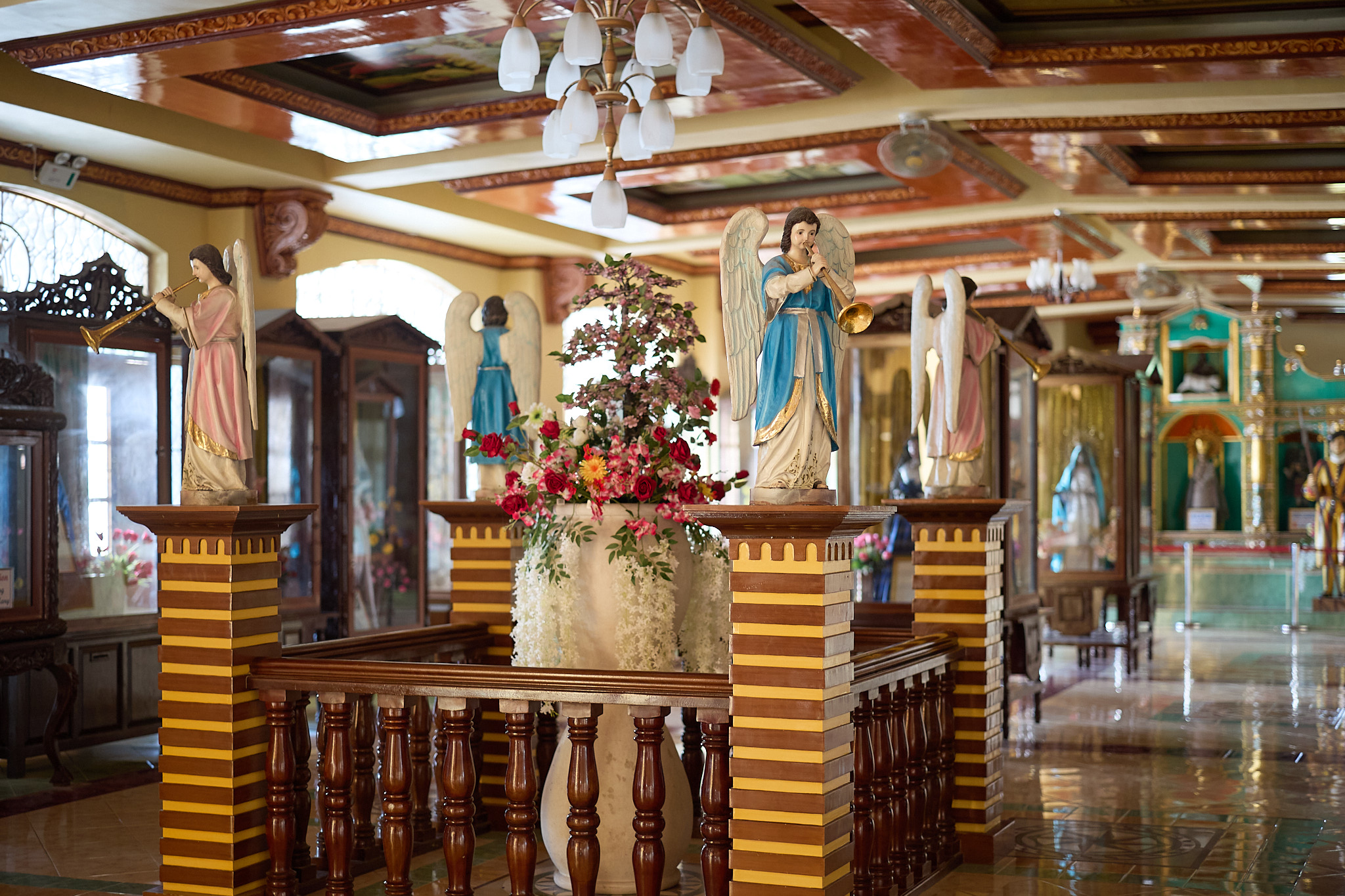
She has company. There is a statue on almost every ledge: saints along the arcades, angels with trumpets on the stair towers, figures in white along the roof. The clock tower has a Virgin on the balcony and more figures below her.
Thirteen colours
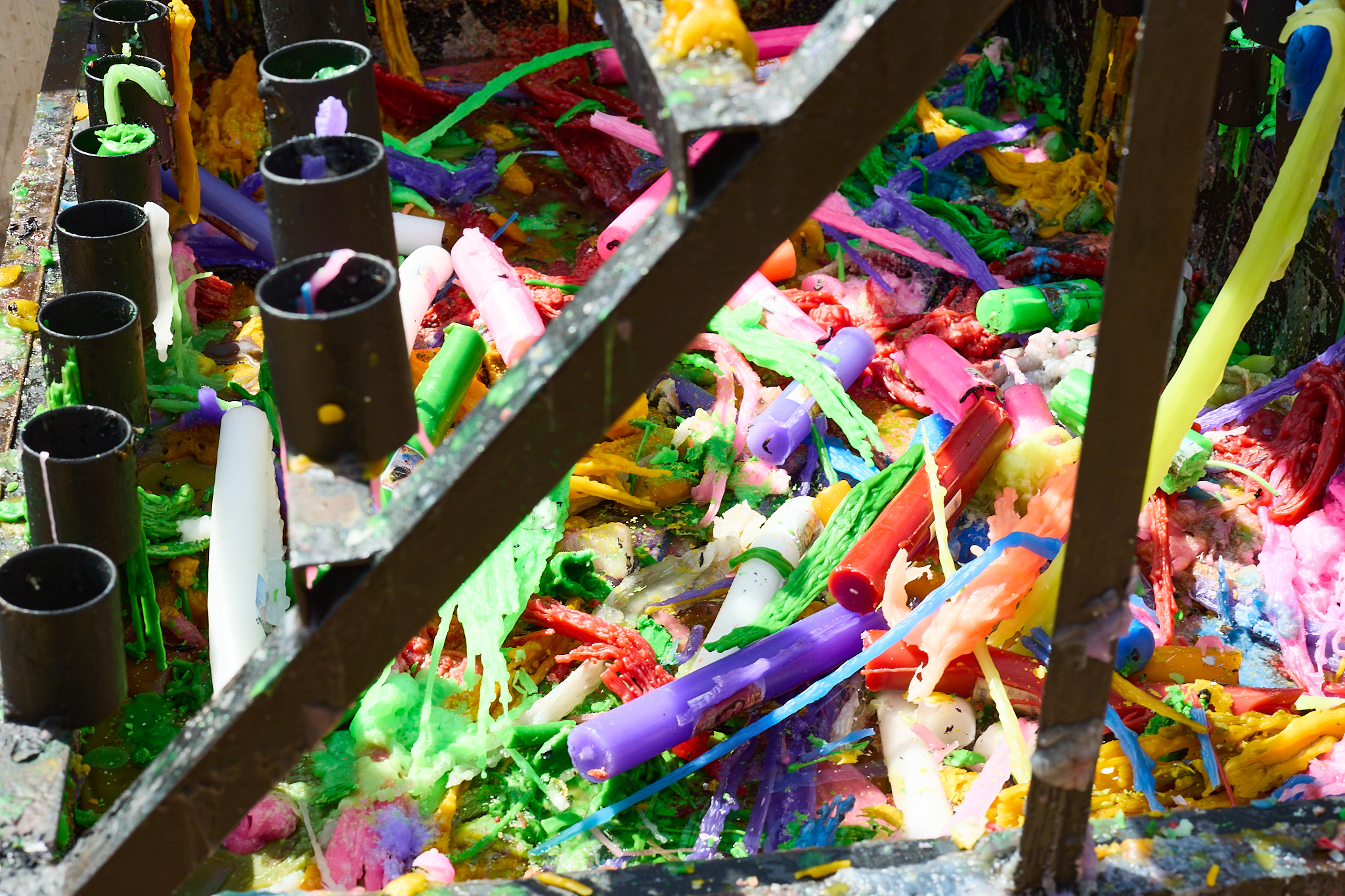
The sign by the candles listed thirteen colours. Gold was for healing. Red was for love, engagements included. Gray was for deliverance from bad ways, things and spirits. Black was for souls. Brown was for vocation: marriage, the service of God, or the single life. For the undecided, presumably.
Coloured candles have been sold here for years. The list is this shrine’s, not the Church’s, and it is thorough.
The candles burn in black metal holders, and the wax runs down into a tray.
In the tray, the exams, the promotions and the enemies had all run together.
Letters attached
Inside, a glass case is labelled HEALING Testimonies. In it are wheelchairs and a walking frame. In the next case are crutches, dozens of them, standing in rows. Many have a letter tied on.
They were left by people who believe Mama Mary got them back on their feet. Most people who no longer need their crutches put them in a cupboard. Here, they bring them back to her, with a note.
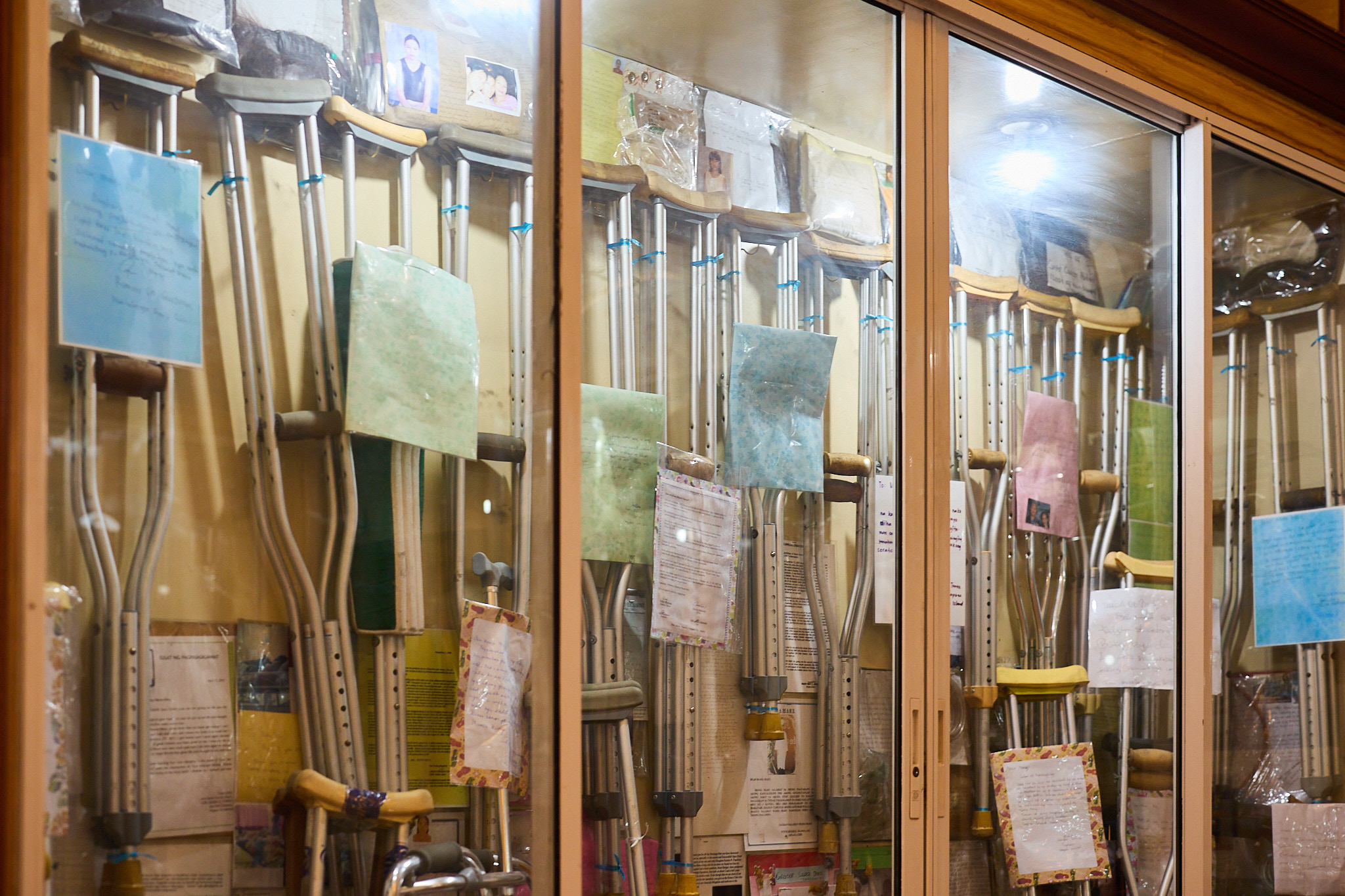
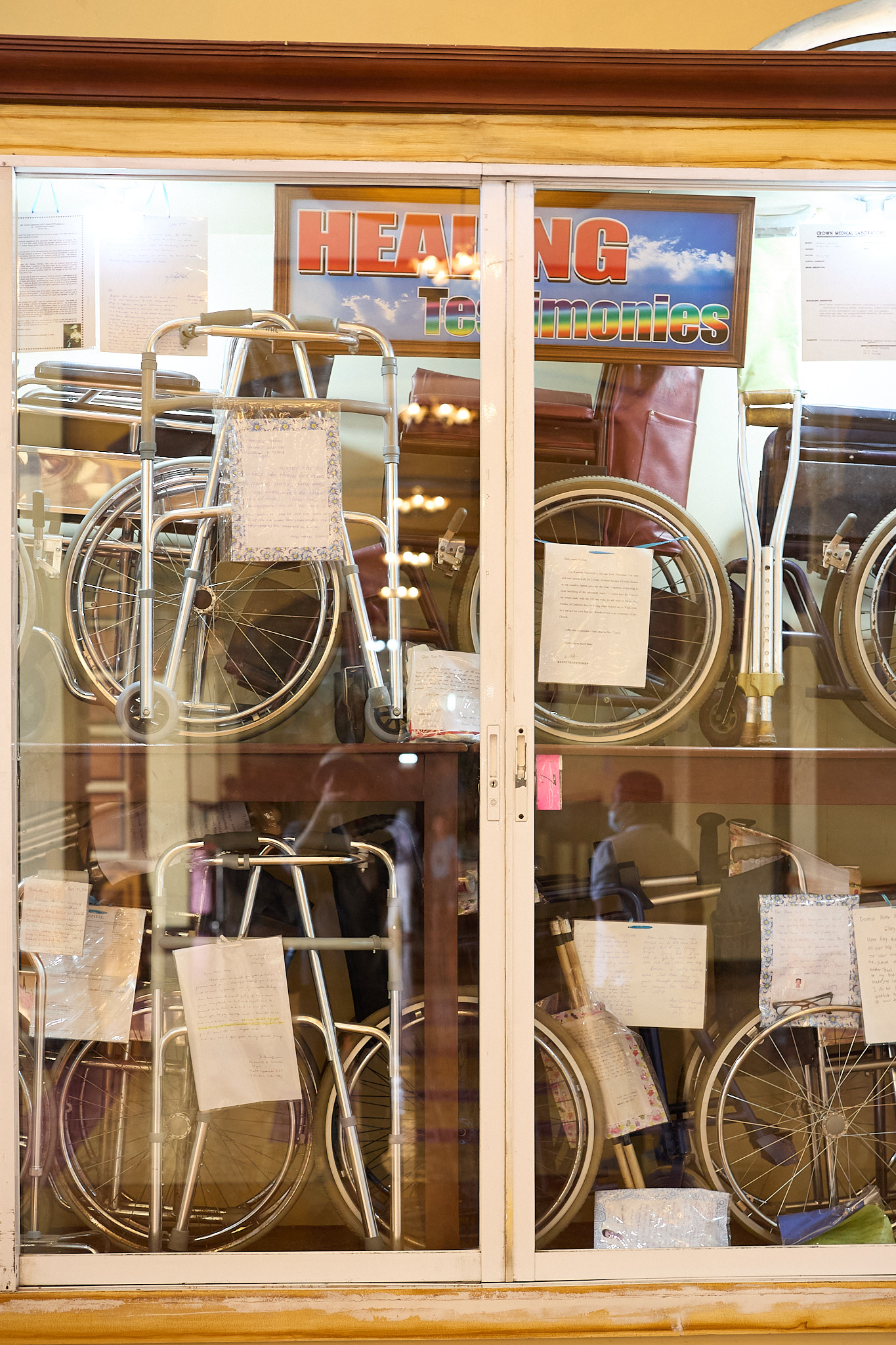
The monks say the thank-yous are not only about illness. People write about a job, or school.
You can also write to her first. There is paper, and a box. I did. I asked for my work to go well. I write music.
How that went, I leave to you.
The museum
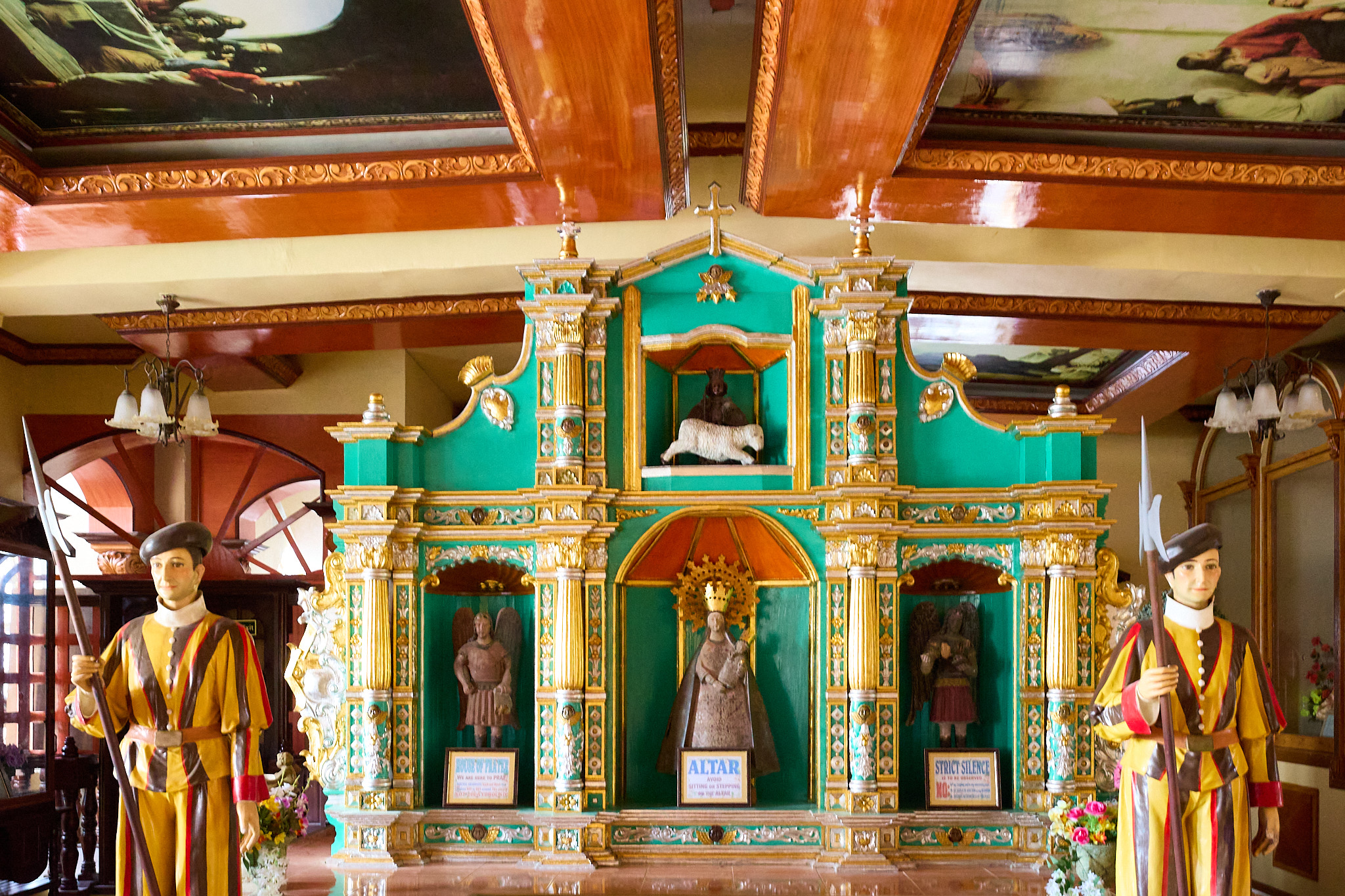
Further in is a museum, and in it is an altar, green and gold, guarded on either side by a figure dressed as one of the Pope’s Swiss Guards. The real Swiss Guard protects the Pope. These two protect three signs: HOUSE OF PRAYER, STRICT SILENCE, and a request not to sit or step on the altar.
Then the Marys. The room is lined with wooden cases, and in each one is a Virgin, and no two are dressed alike. One is in pink lace with a turquoise rosary. One is in white and midnight blue, with a halo of stars. One is dark-skinned, in red, with a child in yellow. One wears a geometric print in brown, blue and gold, and holds a small brass horn.
Why the horn, I can’t tell you.
Swipe to explore
Tap to enlarge
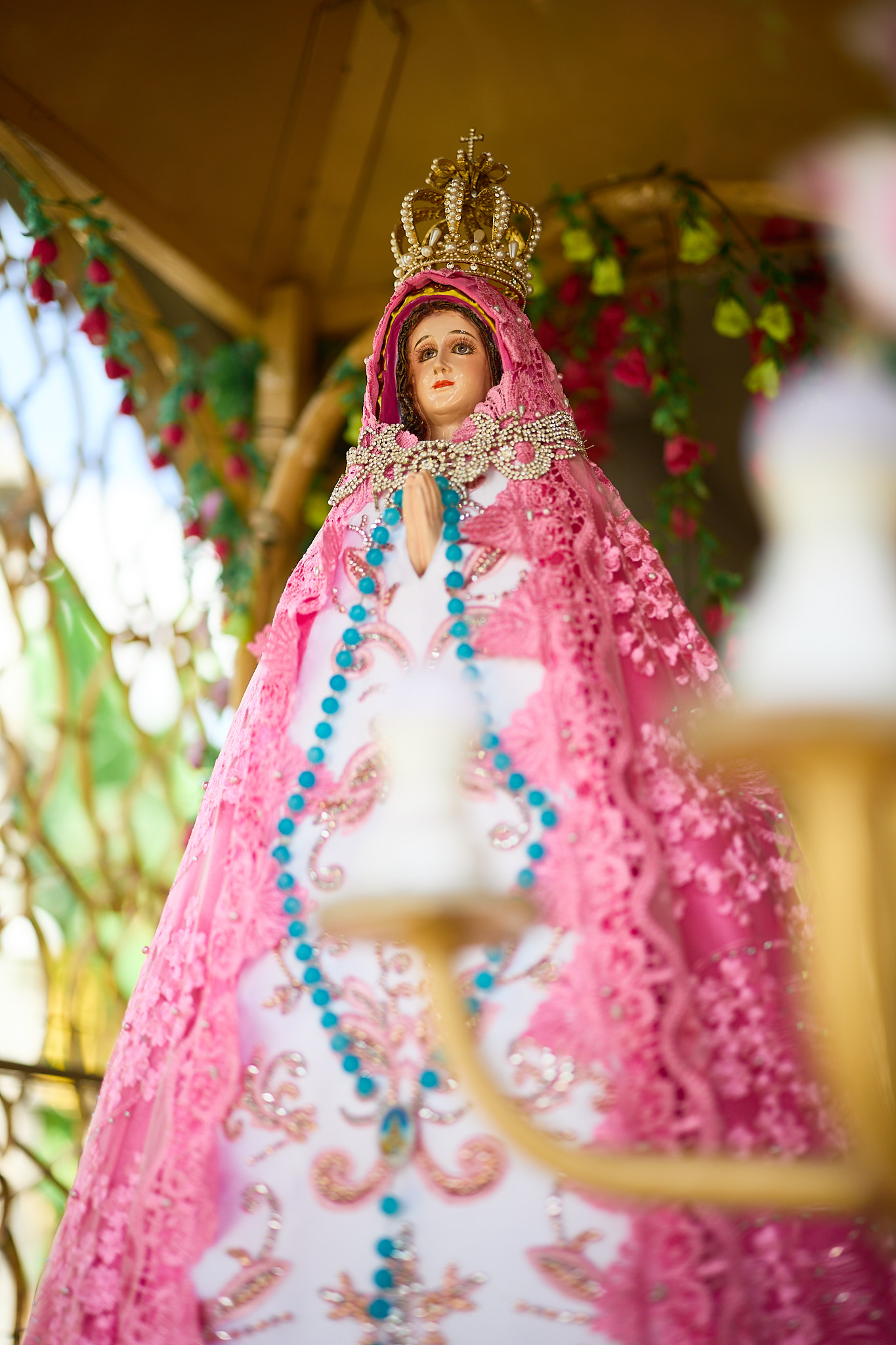
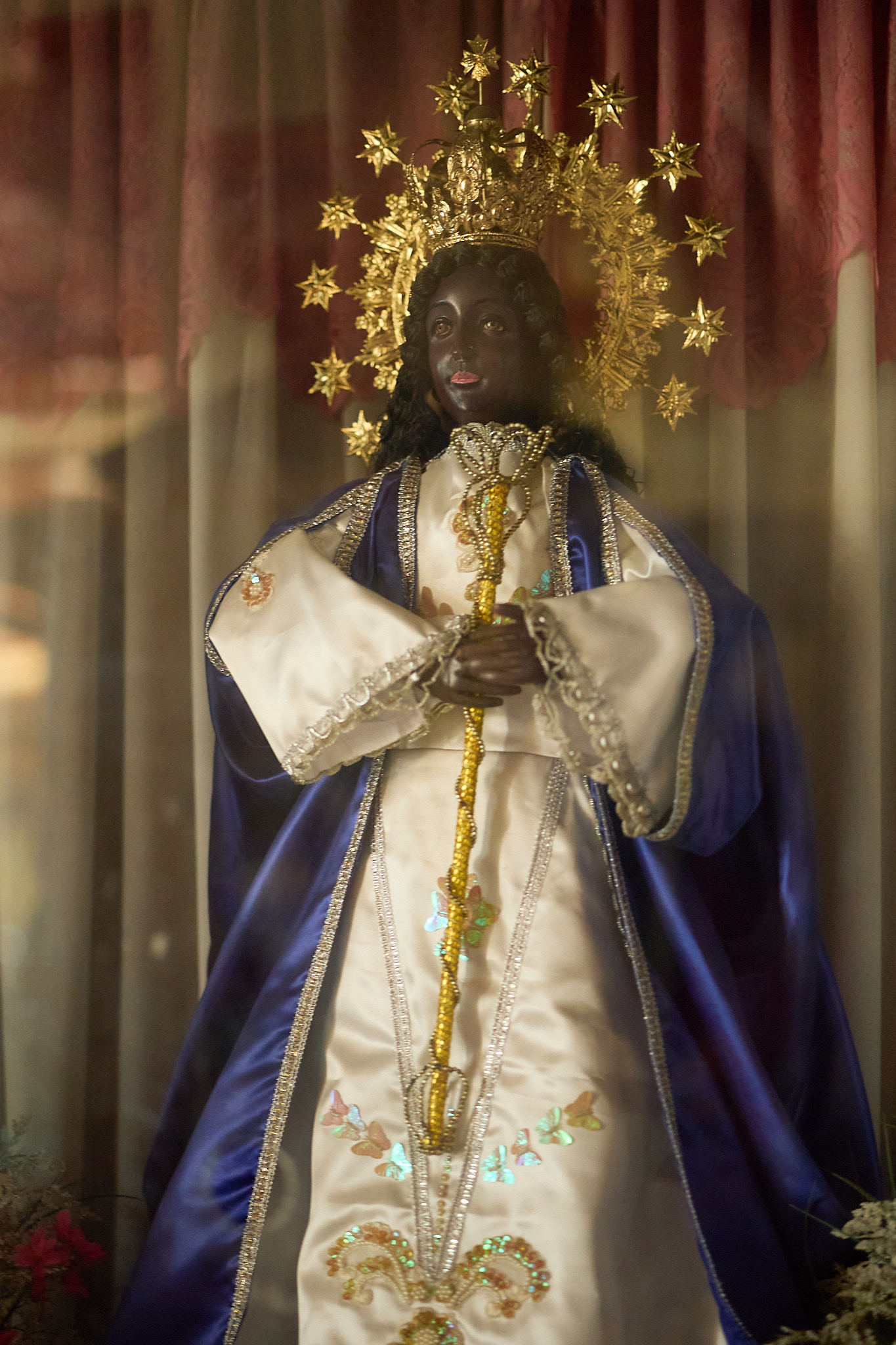
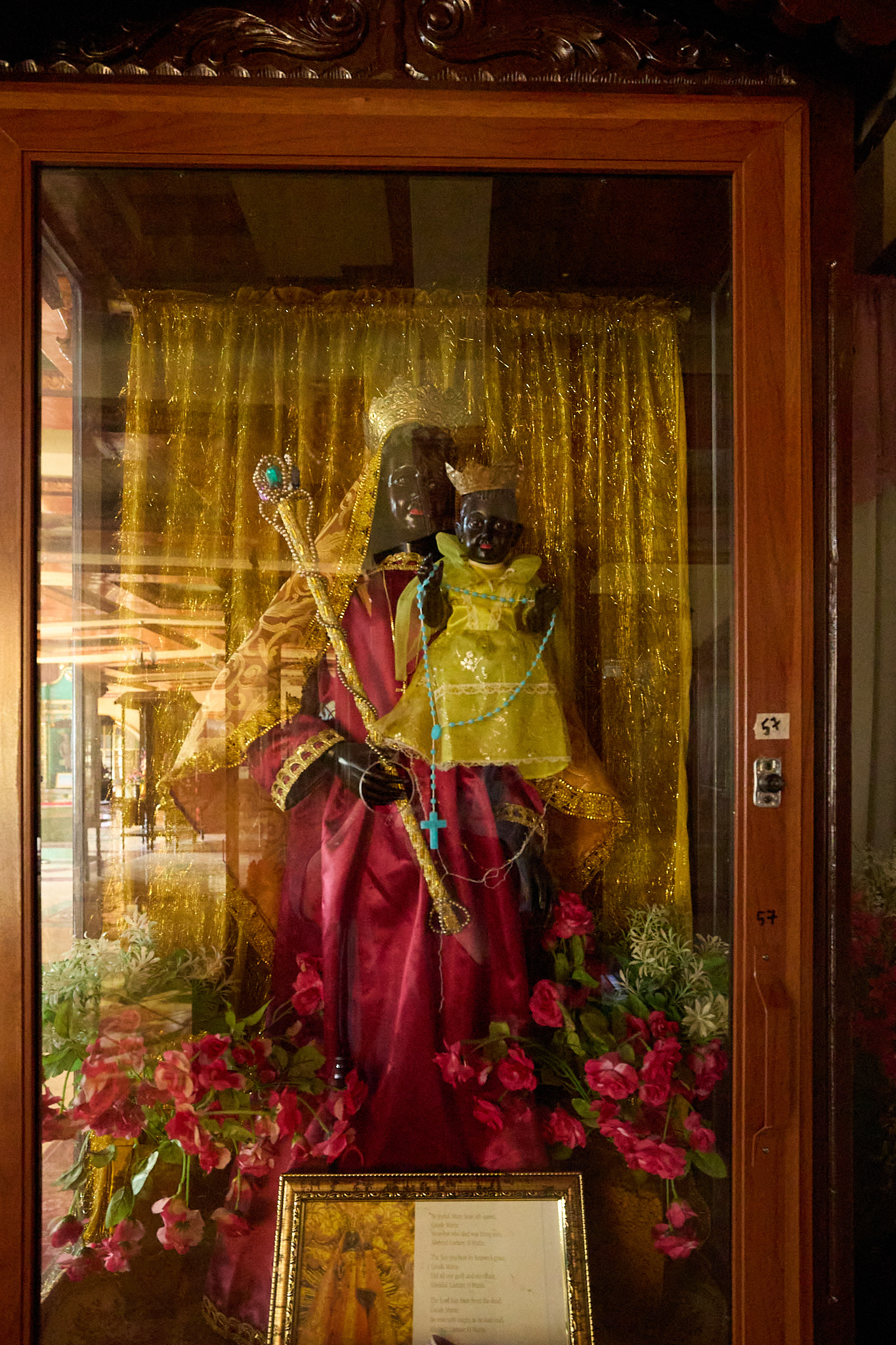
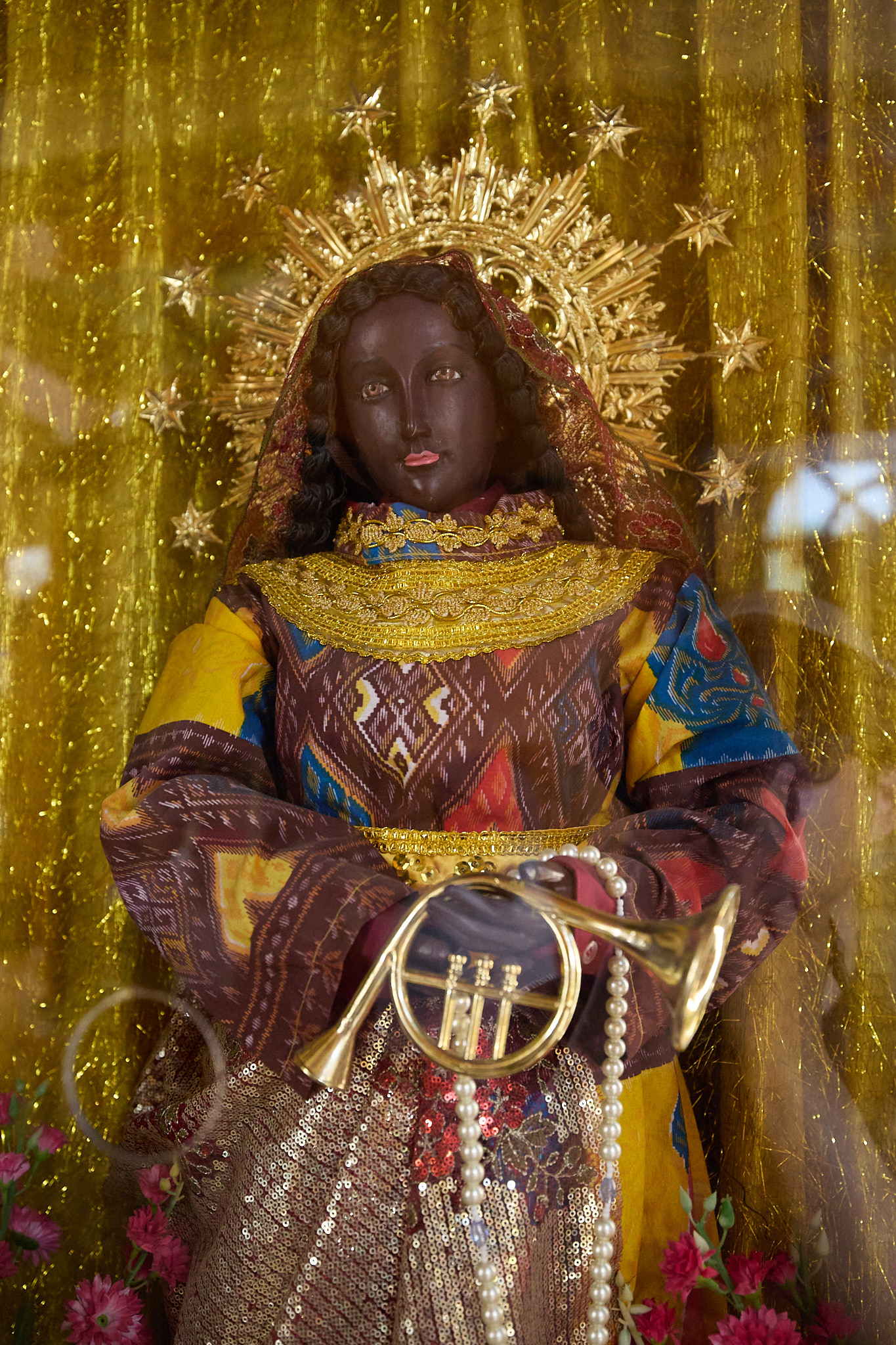
The collection is said to bring together Marys from many countries, in their local dress. In the Philippines, holy images are made to be dressed, and here the wardrobe is international.
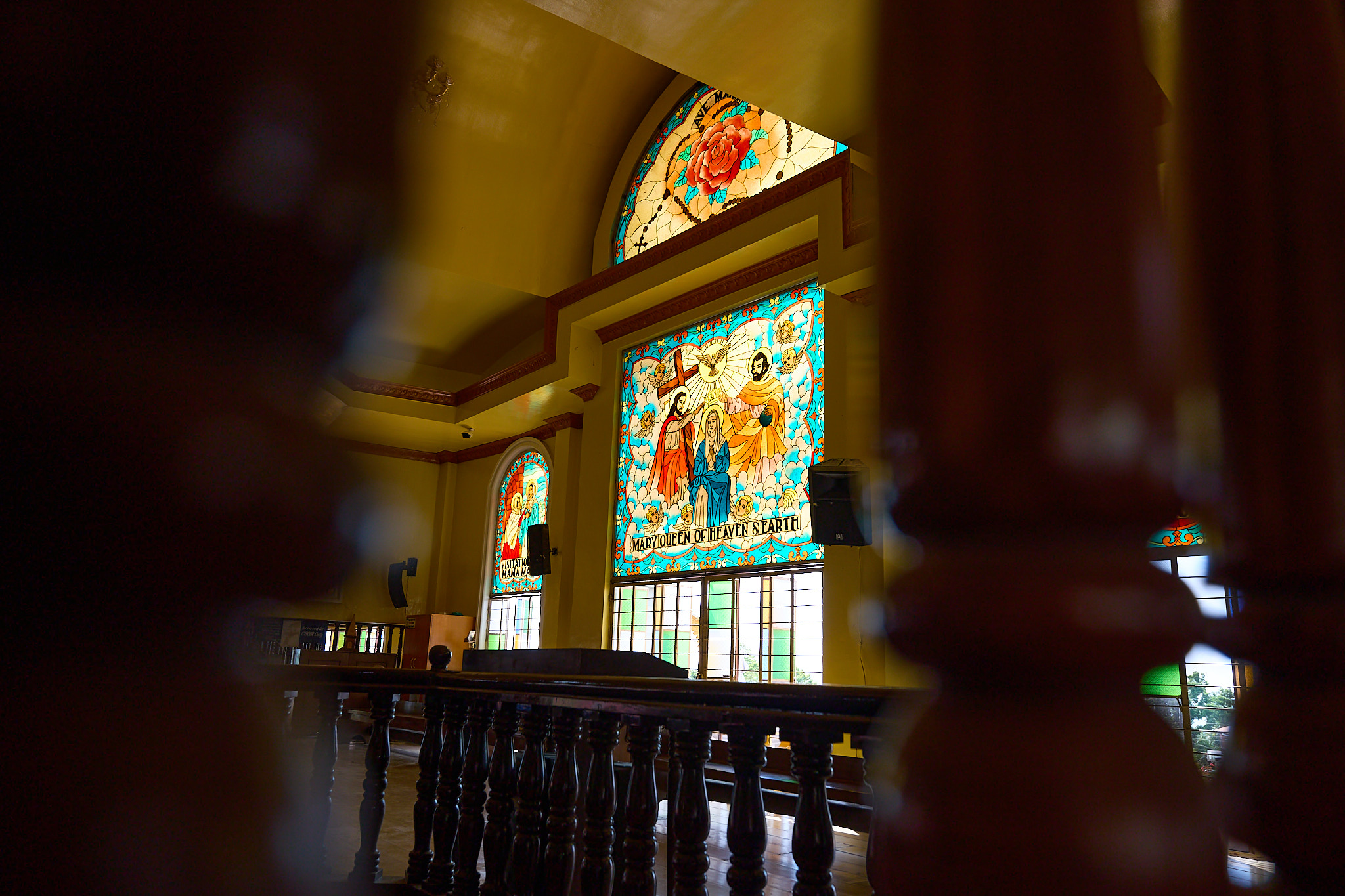
Elsewhere, in a stained-glass window, Christ and God the Father set a crown on Mary’s head, under a dove. MARY QUEEN OF HEAVEN & EARTH, says the glass. The gateway outside wears a crown too, and so do nearly all the statues.
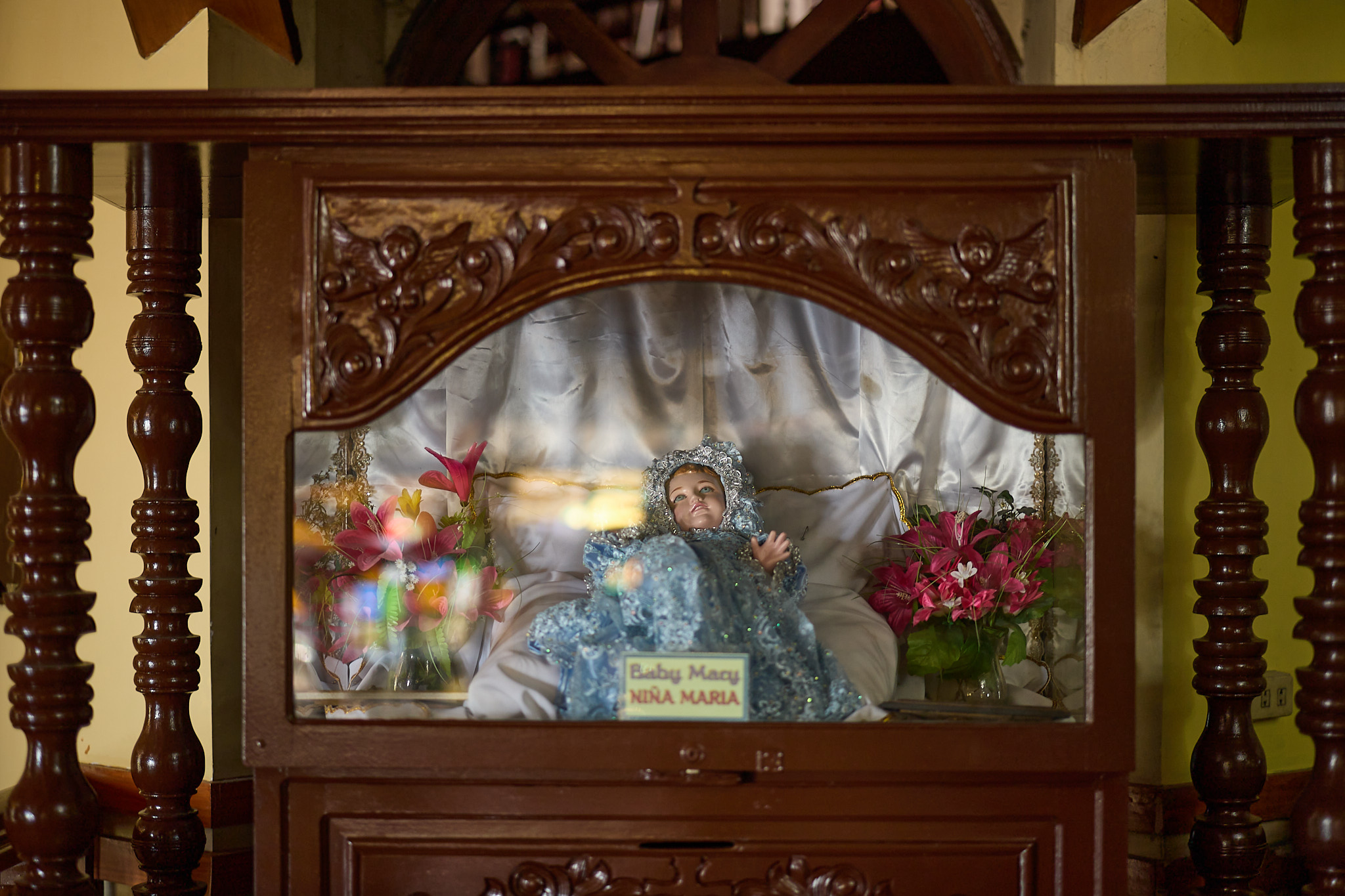
One case is different. In it, on white satin, lies a baby in blue lace. The label reads Baby Mary. This is Mary before she was anyone’s mother, and before she was anyone’s Mama. In the church calendar her birthday is 8 September, which is also, the story goes, the day the image on this hill wept.
Land of the Rising Sun
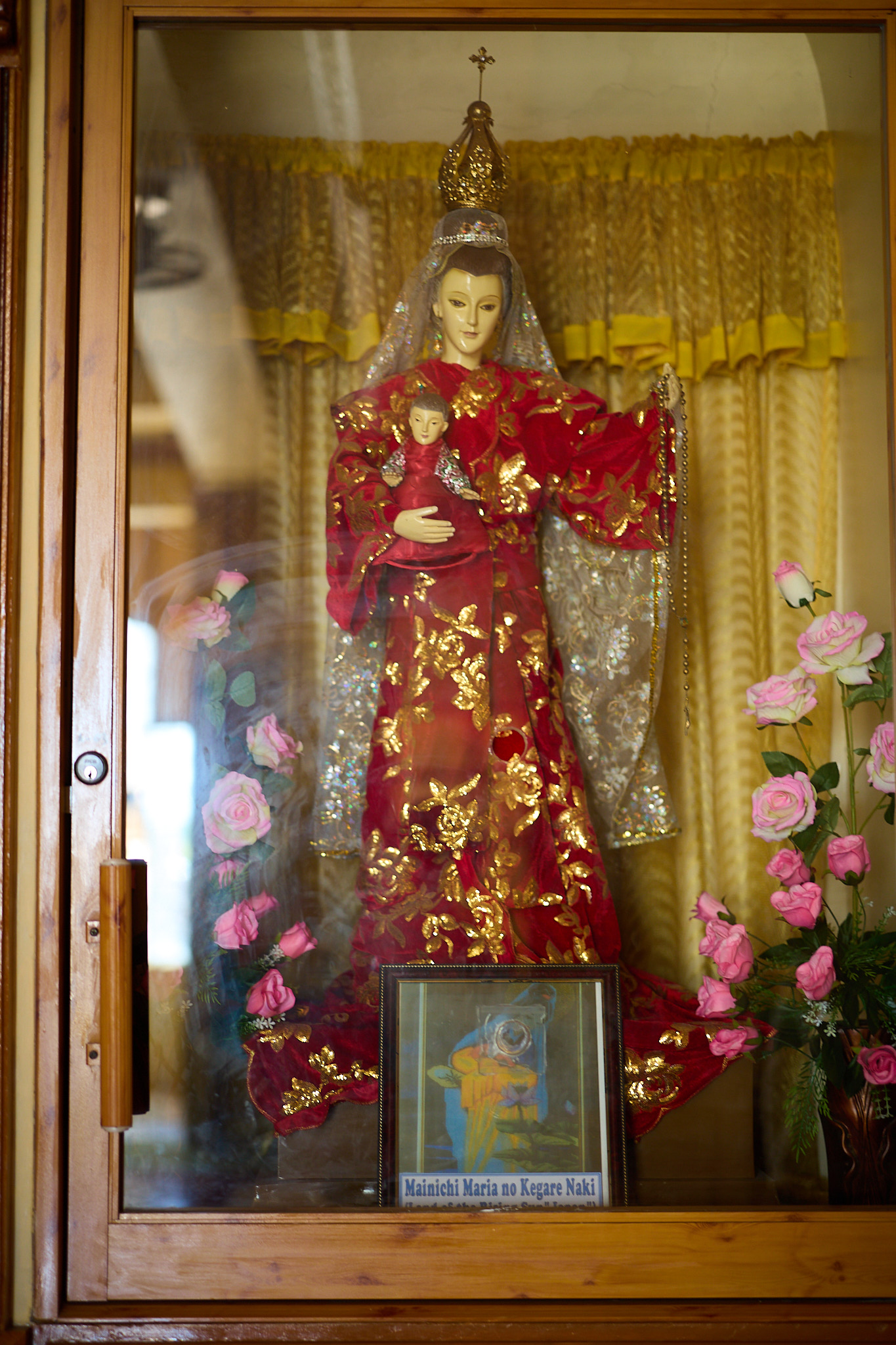
Then there was one I could read. A Virgin in red and gold, a veil over her crown, a child on her arm, and a label: Mainichi Maria no Kegare Naki, and underneath, Land of the Rising Sun, “Japan”.
It is Japanese, in Roman letters. Mainichi means every day. Maria no kegare naki comes out as “Mary’s immaculate”, and there the label stops, without saying immaculate what.
It leaves the ending to you. So, earlier, did I.
Visit this place
Location
Monastery of the Holy Eucharist (Simala Shrine)
On a hilltop in Lindogon, Sibonga, reached by the road through Simala, in the south of Cebu
Lindogon, Sibonga, Cebu, Philippines
Practical Information
- Visiting
- An active Marian shrine and monastery. Keep quiet in the prayer areas and follow the posted signs, including those asking for strict silence.
Information last checked: October 25, 2026 (Location checked on Google Maps. Opening hours, Mass times and dress rules are not stated.)
Conversation
Comments
Review pending commentsComments are reviewed before appearing. The internet already contains enough unattended surprises.
Loading comments…
Leave a comment