Lake Palić: Art Nouveau on Holiday
Earlier that day in Subotica, I had visited a synagogue by two Budapest architects, Marcell Komor and Dezső Jakab. I assumed that was the last I would see of them.
They had beaten me to Lake Palić by a little over a century.
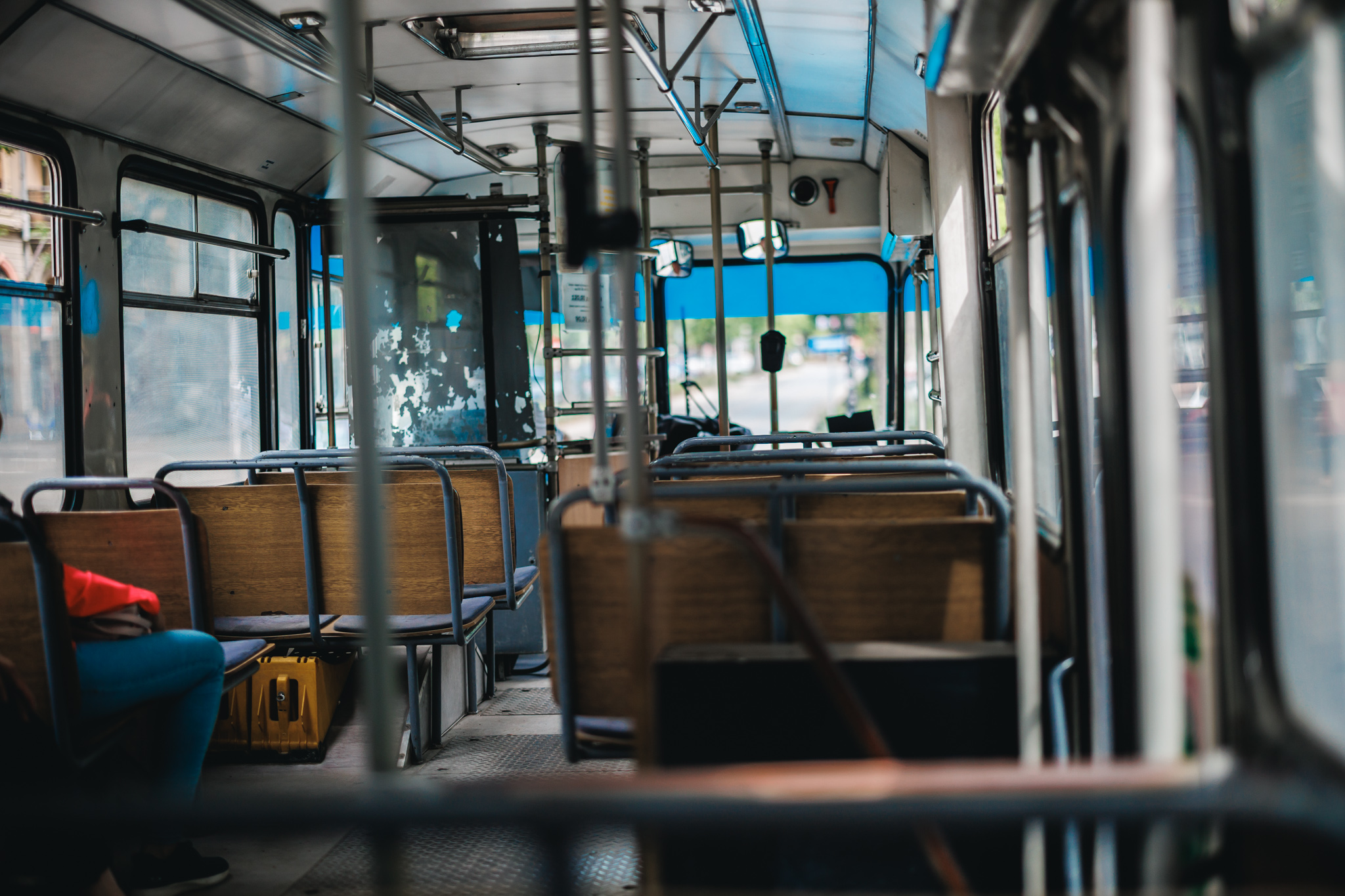
From Subotica, the bus takes about half an hour. The seats were wooden.
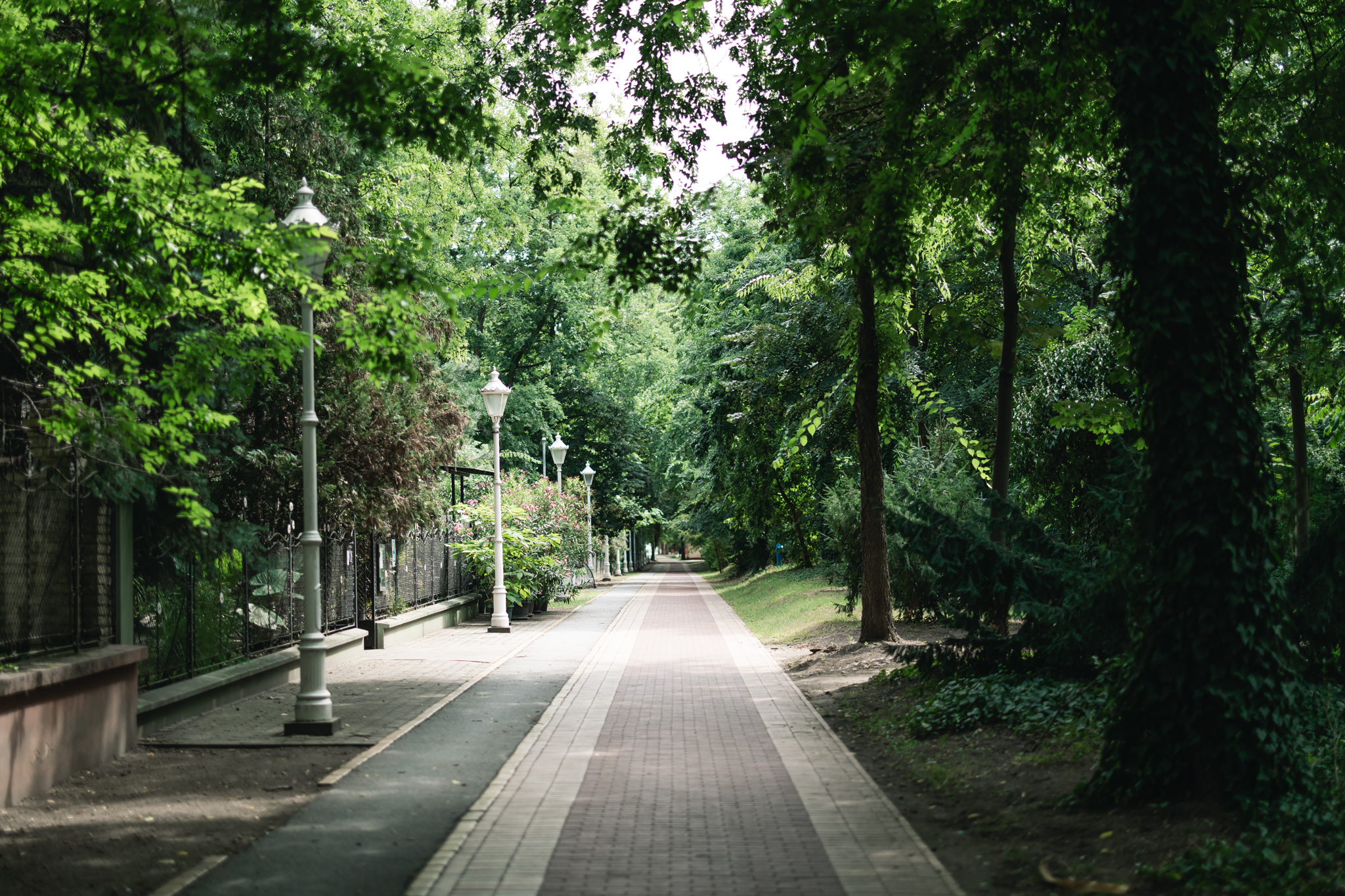
At Palić, a long avenue ran under the trees, lined with white lamps. Nobody needed to tell me which way the water was.
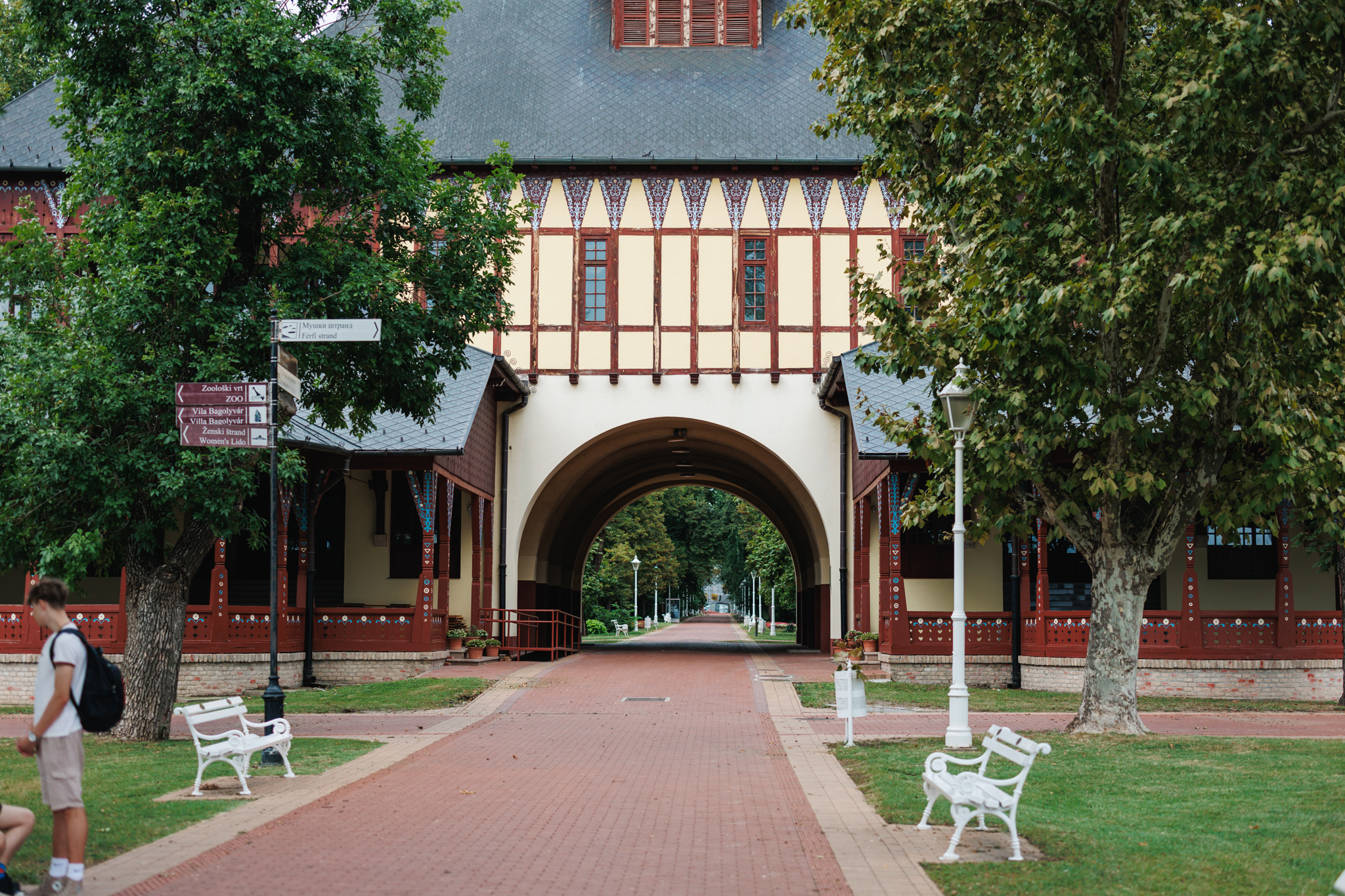
Men this way, women that way
Beside a large half-timbered building near the shore, a signpost sends men and women in opposite directions. The men’s beach is to the right. The Women’s Lido is to the left.
The arrangement dates from Palić’s long career as a place to get into the water. Its water and mud were thought to be good for you, and a warm bath opened here in 1845. Men and women were not allowed to bathe together, so they were given separate beaches. The women’s beach stood on piles over the lake, its row of cabins closed towards the shore to hide the swimmers from curious men.
I had about twenty minutes, and followed neither arrow.
The architects, off duty
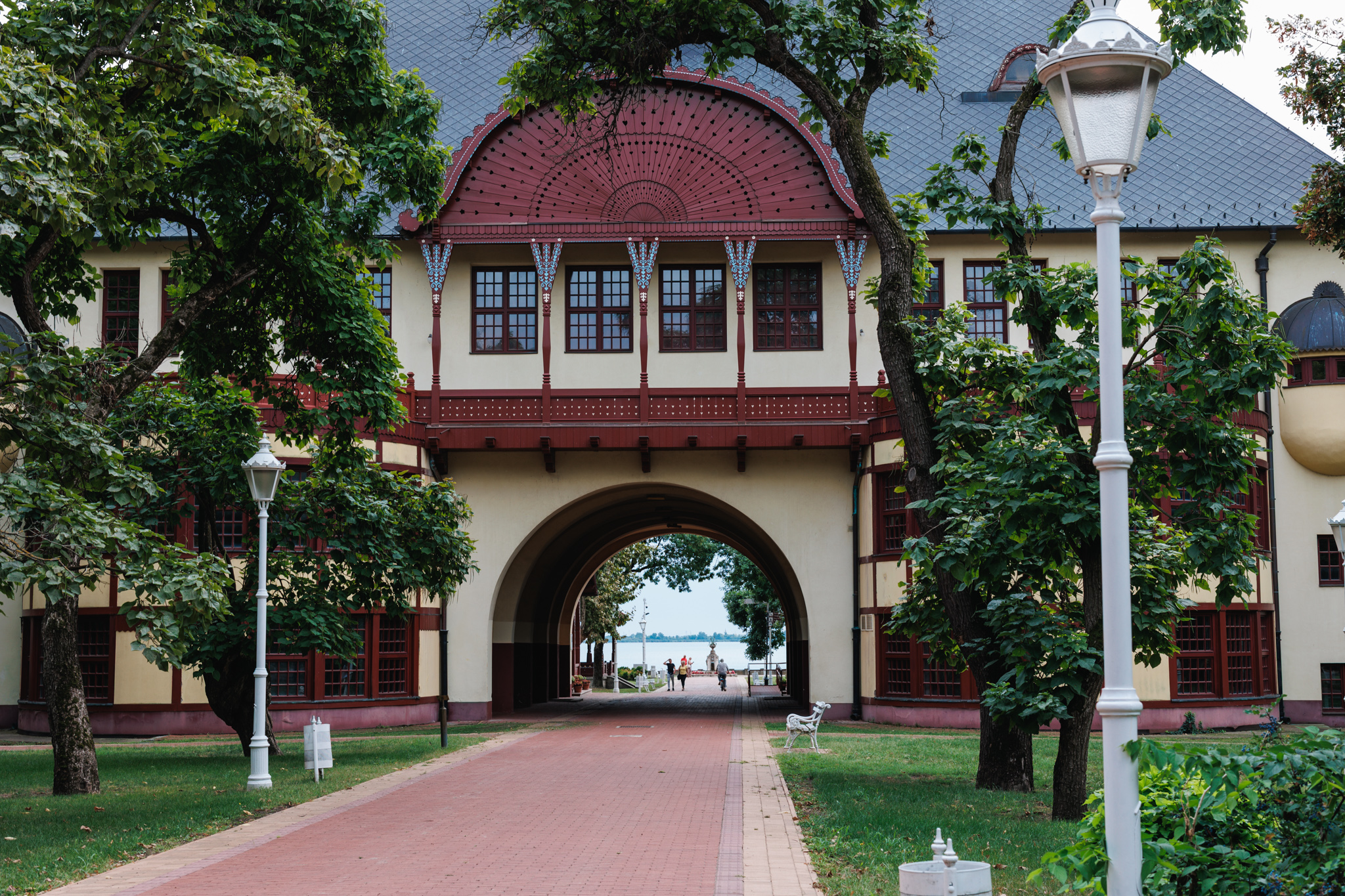
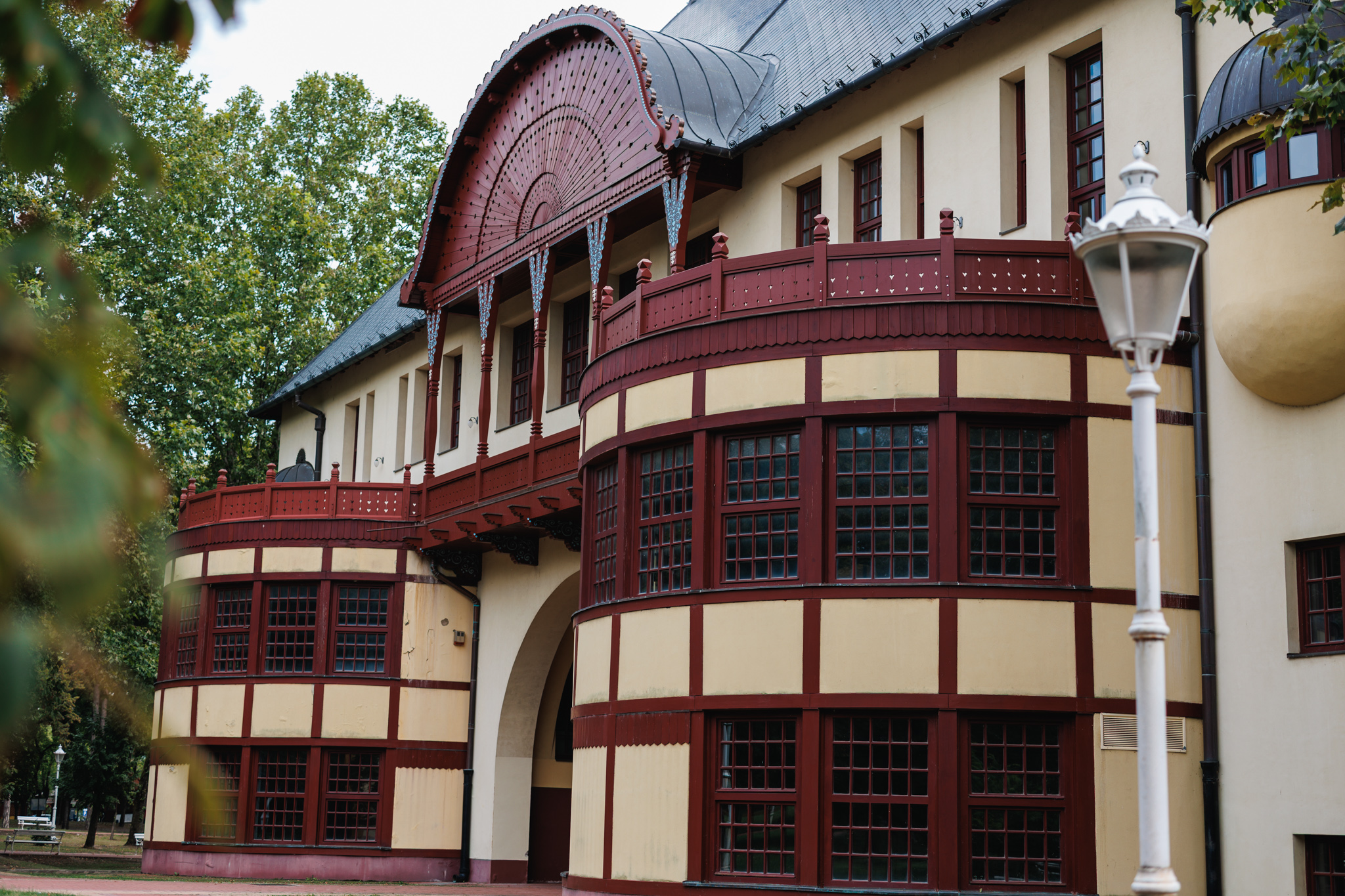
The building beside the signpost is the Grand Terrace, completed in 1912. Its architects were Komor and Jakab: the pair behind Subotica’s synagogue and its City Hall, now home to a rather decorative McDonald’s. The style is the same too. Hungarian Art Nouveau looked for its ornament in village embroidery and woodcarving rather than in palaces abroad. Even the timing matches: the City Hall’s interior was finished in 1912, the year the Grand Terrace was completed.
At Palić, the pair designed the water tower, the Grand Terrace, the women’s beach and a memorial fountain. Until 1974, a tram ran out here from Subotica, and the water tower doubled as its station and as the gateway to the spa. The architects had designed the front door for visitors from town as well.
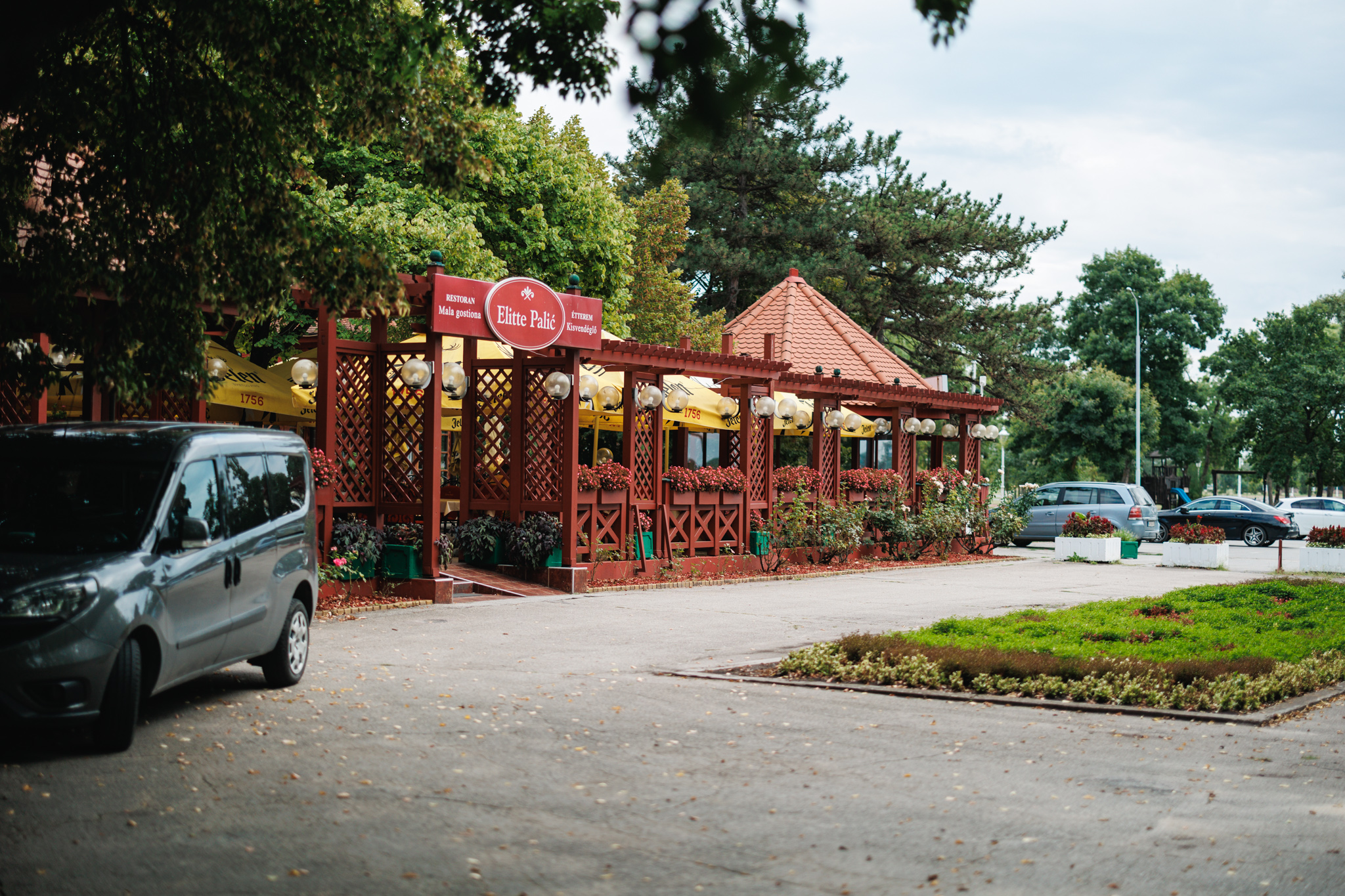
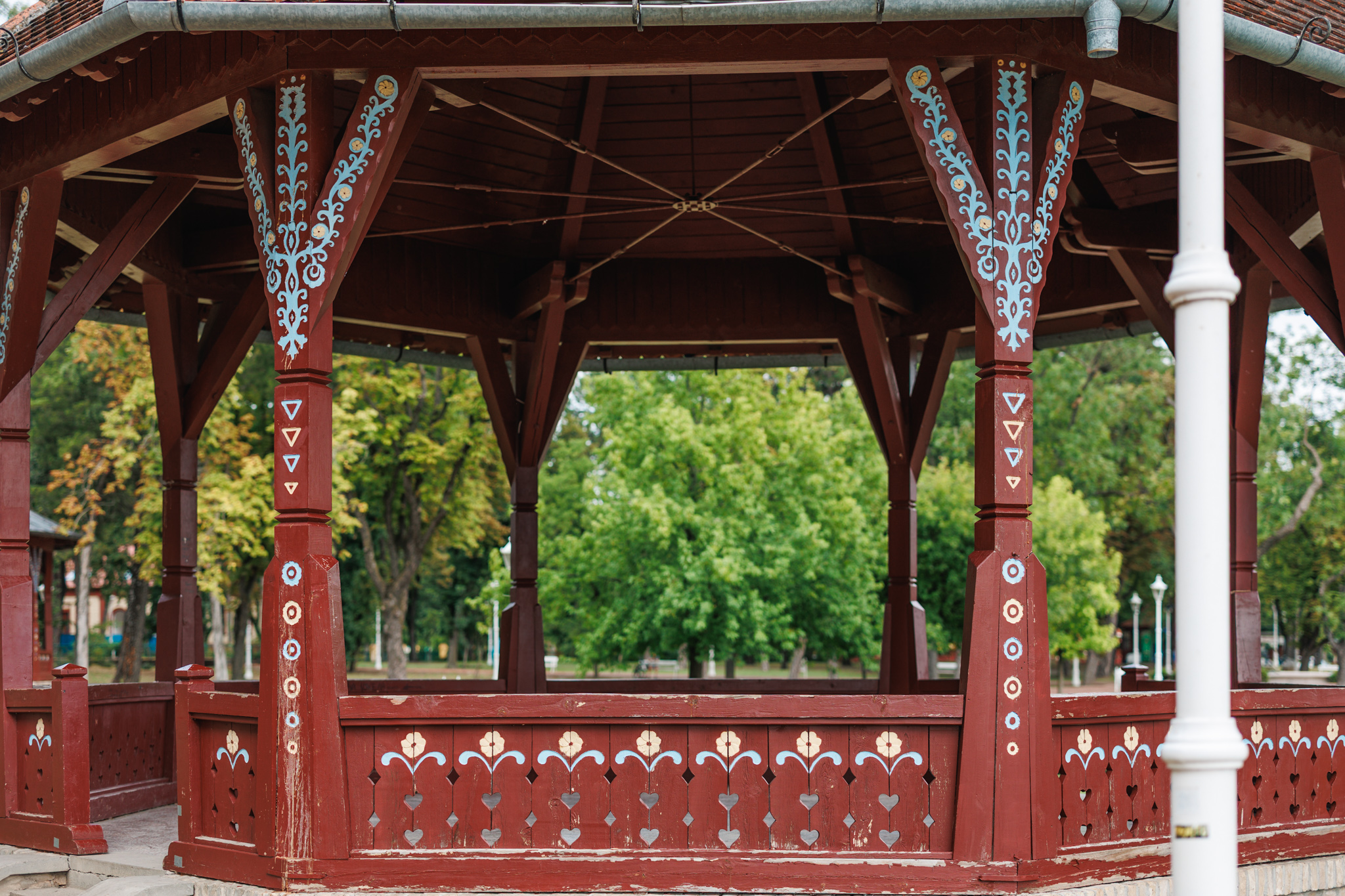
What changed was the material. In Subotica, they worked in brick, stone and Zsolnay ceramics. Here, they turned to wood, painted a deep red that became the resort’s colour, and took their cues from village houses and the timber buildings of Transylvania. Carved gables fan out above the windows, and pale blue flowers climb the brackets. In the Music Pavilion next door, hearts are cut into the railings. Back in Subotica, the fence around the synagogue is a pattern of hearts.
Same architects, same style, half an hour down the road. This time, the client was the weekend.
The Grand Terrace is now a congress centre with three conference halls. A building designed for summer holidays is used for conferences, which is also one way of spending a summer.
A short history, in stone
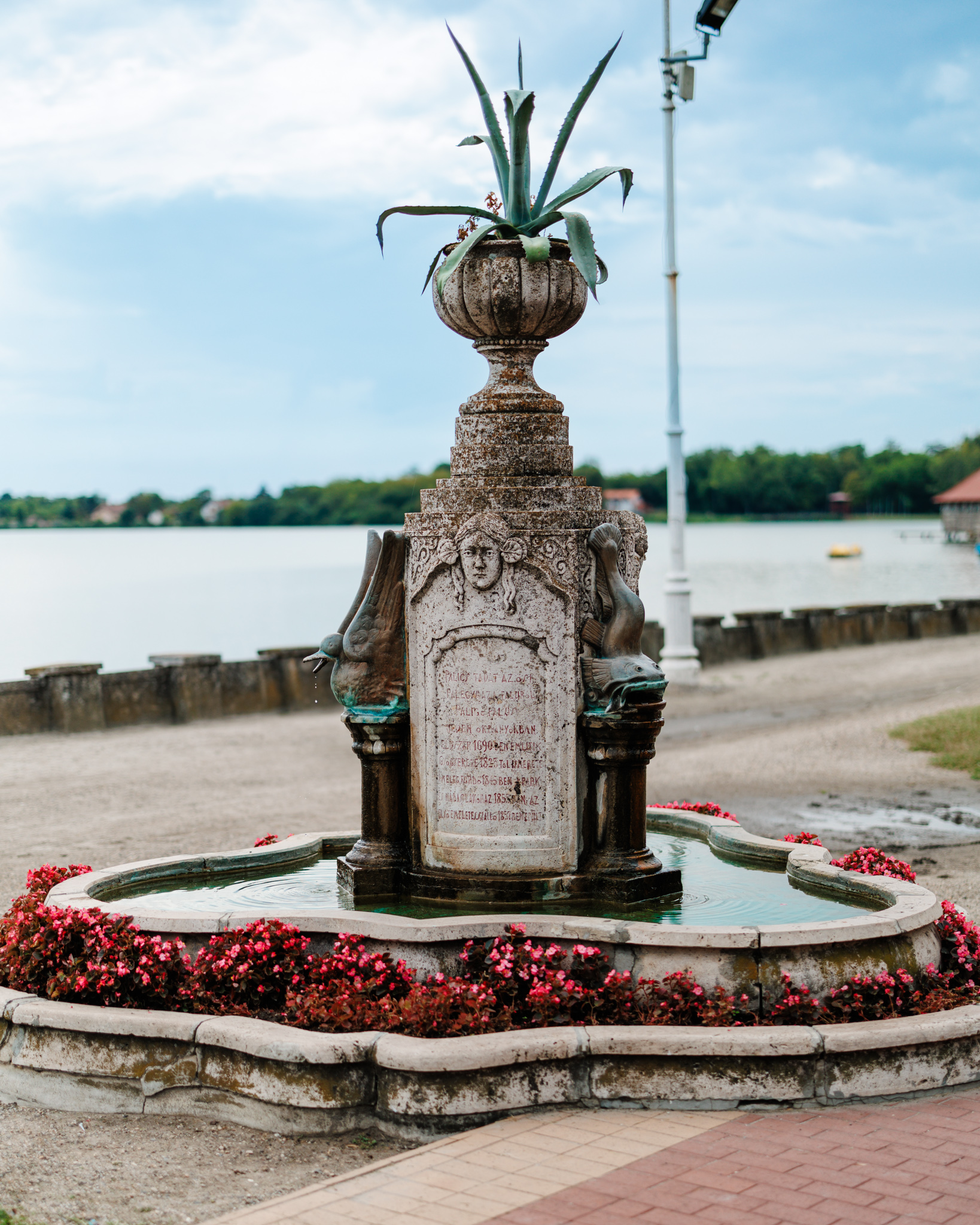
On the shore in front of the Grand Terrace stands a memorial fountain. Komor and Jakab designed it in 1912 to mark the completion of Palić’s new buildings and of Subotica’s City Hall. The town and its lake were finished together, and one fountain was asked to celebrate both.
It was meant to be grander. One design had a lake fairy standing on top. The budget won, and the fairy became a stylised jar of flowers. When I visited, the jar held an agave, a plant famous for needing very little water.
The fountain once carried lines by Dezső Kosztolányi, a poet born in Subotica. When I visited, they had been removed, leaving a history of Palić so brief it read like a telegram. The side facing me was in Hungarian. The fountain’s timeline began with Paligo Palus in 1690, followed by healing waters in 1823 and a warm bath in 1845. A bronze catfish and two bronze birds supply the water.
Local legend offers a more emotional history. A shepherd called Pál lost his sheep and cried so hard that his tears became the lake, which is why the water is salty. Geologists date the lake to about 10,000 years ago. It averages around two metres deep, which, for one shepherd, would still be a great deal of crying.
Best admired from the shore
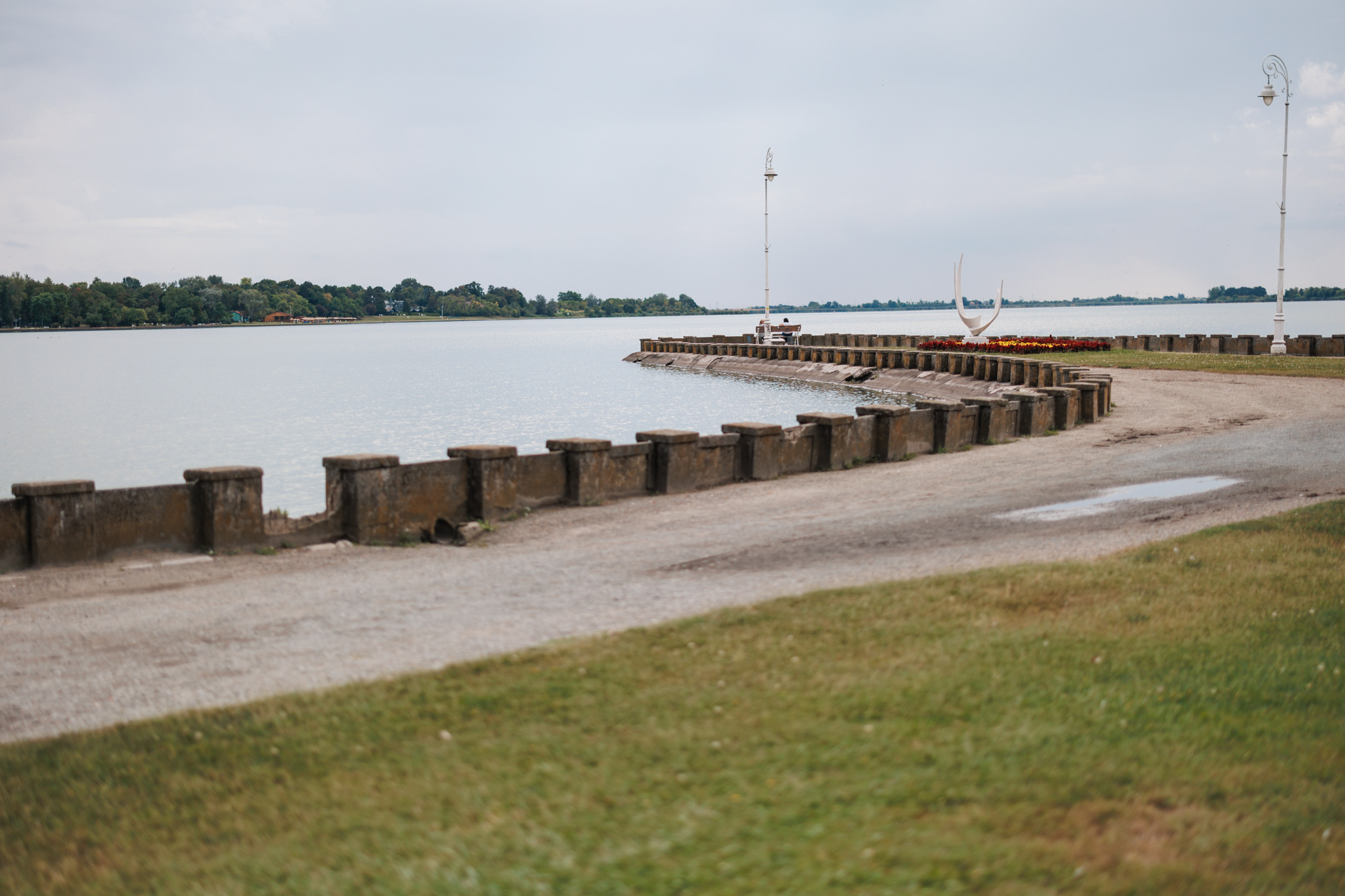
For all its gateways and fountains, the lake itself has had a difficult century. As nutrients built up in its shallow water, algae took over. In 1970, the process reached its peak, and almost all the life in the lake died. It was drained in 1971, its sludge dredged out, and refilled in 1976. In the following decades, it was polluted again. The water has improved in recent years, but swimming is still not recommended.
So people come to the edge, and stop there.
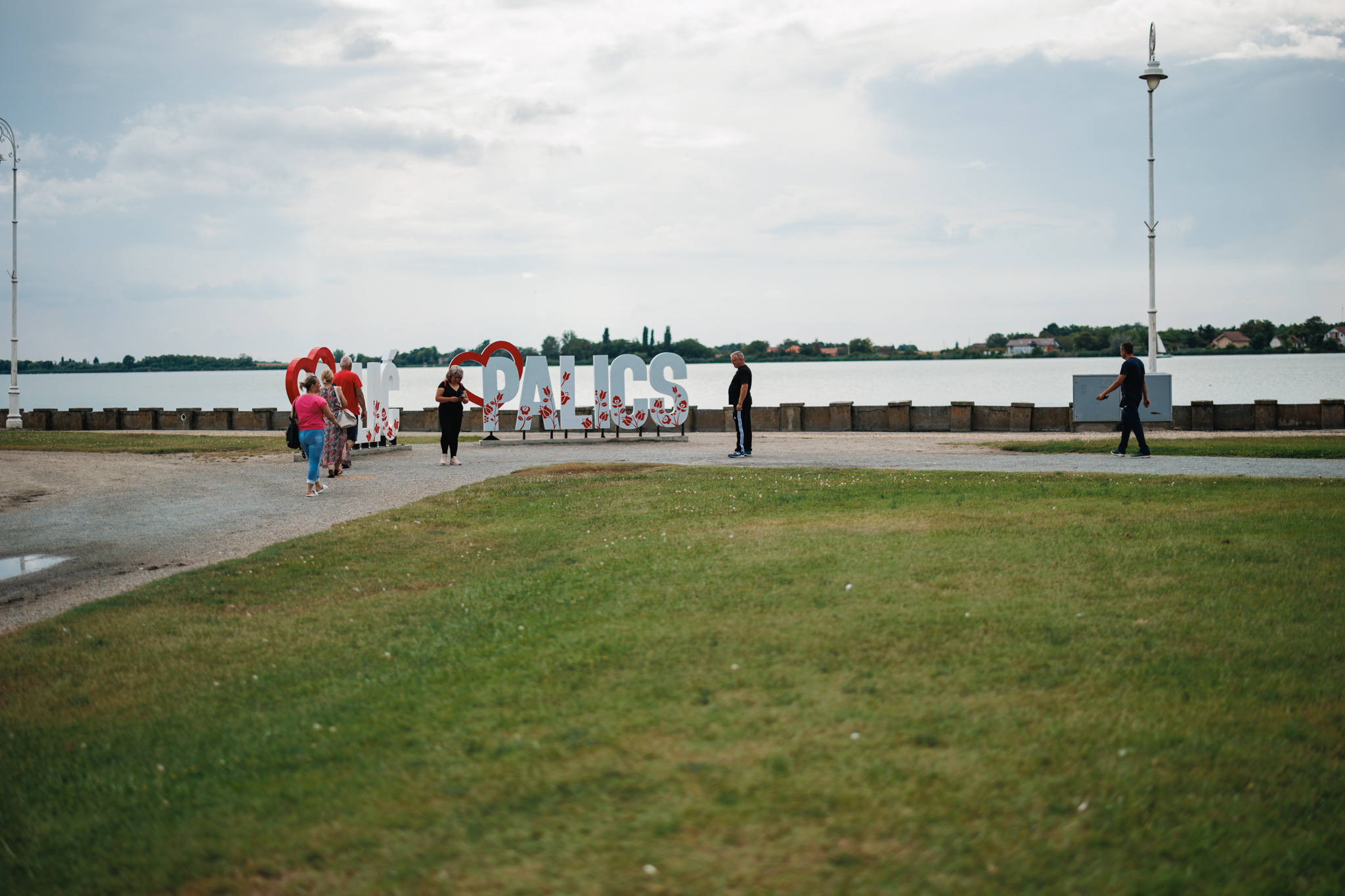
On the shore, visitors took turns posing in front of two sets of large white letters: PALIĆ and PALICS, the lake’s Serbian and Hungarian names, painted with red tulips. A century after the architects carved tulips into wood, the flower has found new work as a photo backdrop.
A paddle steamer lay moored against the concrete wall, with two funnels, a wheelhouse and stairs to the upper deck. It did not look as if it was going anywhere. A pedal car for four rolled along the promenade.
The only one swimming was a young swan.
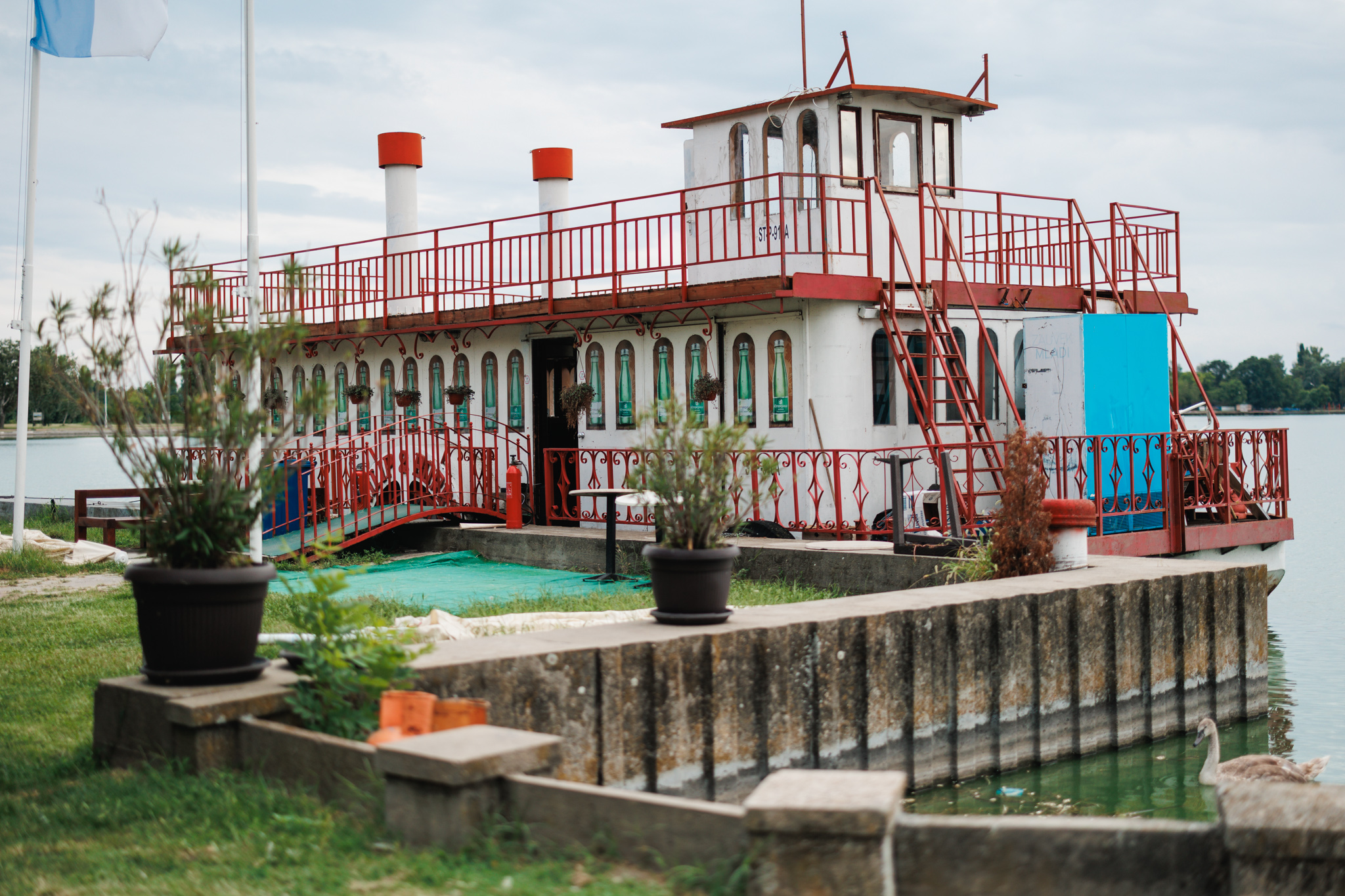
The beaches once kept men and women apart. These days, everyone meets on the promenade.
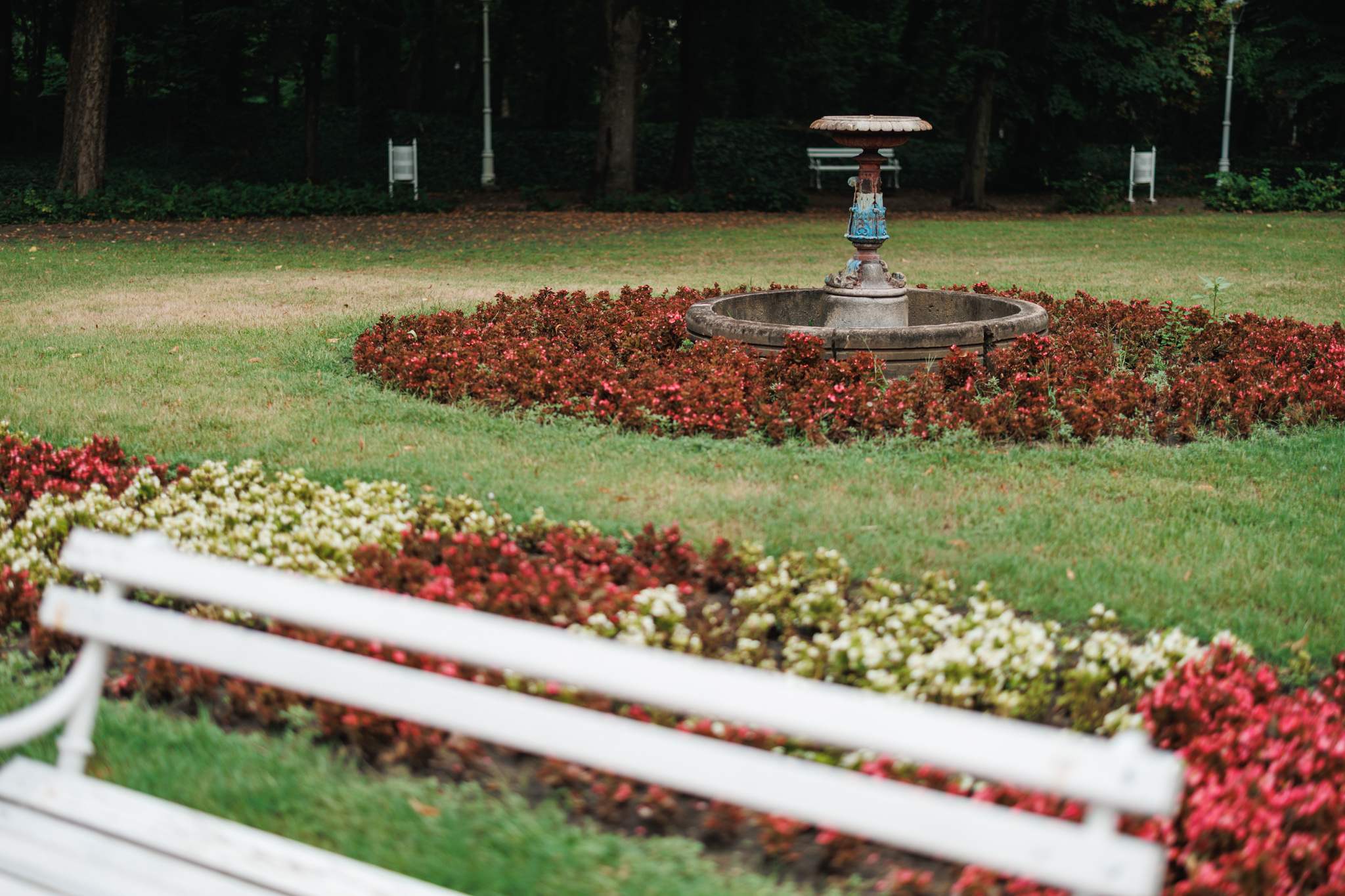
Back in the park, a fountain stood in a ring of flowers with an empty basin, its blue paint peeling. Not every fountain at Palić was on duty.
I had a bus to catch. On the way, I looked back through the arch of the Grand Terrace. At the end of the passage, framed by the architects, was the lake.
Every path at Palić still leads to the water. The last step is up to the lake.
Visit this place
Location
Lake Palić — Grand Terrace / Велика тераса
On the lakeshore at Palić, about half an hour from central Subotica by city bus
Obala Lajoša Vermeša, 24413 Palić, Serbia
Practical Information
- Place
- Lake Palić — the Grand Terrace, Music Pavilion and memorial fountain stand together on the lakeshore
- Getting there
- City bus 6 from Subotica; about half an hour
- Visitor note
- The park and lakeside promenade are outdoors. The Grand Terrace is now a congress centre; the passage through it and the exteriors can be seen from the promenade.
- Swimming
- Swimming in the lake is not recommended.
- Tourism information
- Visit Palić
Information last checked: September 29, 2026 (Location, bus route, outdoor access and swimming advice)
Conversation
Comments
Review pending commentsComments are reviewed before appearing. The internet already contains enough unattended surprises.
Loading comments…
Leave a comment