Church of the Descent of the Holy Spirit: One Ox Hide, Cut Thin
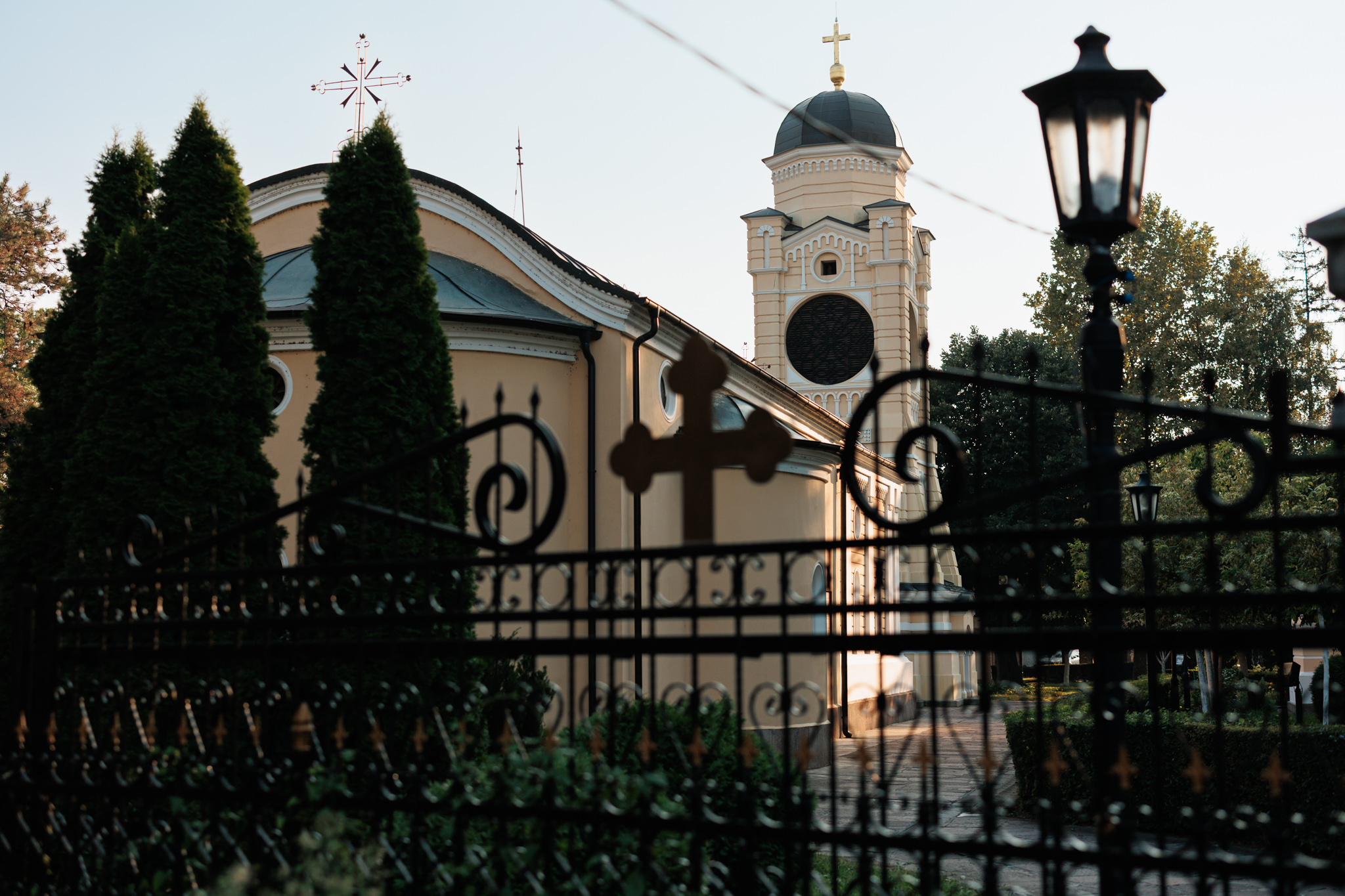
Prince Miloš Obrenović, the story goes, was allowed to build a church in Kragujevac on one condition. The Ottoman pasha ruled that it was to be no larger than the hide of an ox.
Miloš had the hide of a large ox cut into a single thin strip. Stakes were driven into the ground, and the strip was stretched between them.
The condition specified the hide. Nobody had specified how thin.
When the pasha heard how big the church would be, he ordered it pulled down. The prince replied that he had only done what the pasha had decided. The pasha let it be finished.
The trick was not new. The same account says Miloš had heard it as a child, as a story about an ancestor who outwitted an aga. Some eighteen centuries earlier, Virgil had given a version of it to Dido, who founded Carthage on as much ground as a bull’s hide could enclose.
Fourteen metres by seven
The church was largely finished in the autumn of 1818. Kragujevac had just become the capital of Miloš’s Serbia, and this was his court church. It stands by the Lepenica river and was once joined by a wooden bridge to his residence on the other bank. It also became the seat of the metropolitan, the head of the Serbian church in the principality.
It is dedicated to the Descent of the Holy Spirit on the Apostles, but in Kragujevac it is simply the Old Church, Stara crkva. It also goes by the Church of the Holy Trinity, since Orthodox churches keep the feast of the Descent as Trinity Day.
It was not, by most standards, large. A local history gives its original size as fourteen metres long, seven wide and eight high, with room for a little over a hundred people. Without the scissors, it would have taken a remarkably large ox.
The same history records a different tradition, in which the prince planned something much bigger and the sultan had it cut down to the size of a mosque. The traditions disagree about which way the measuring went.
The church has no dome. A single nave ends in a rounded apse, with two more rounded bays bulging from its sides.
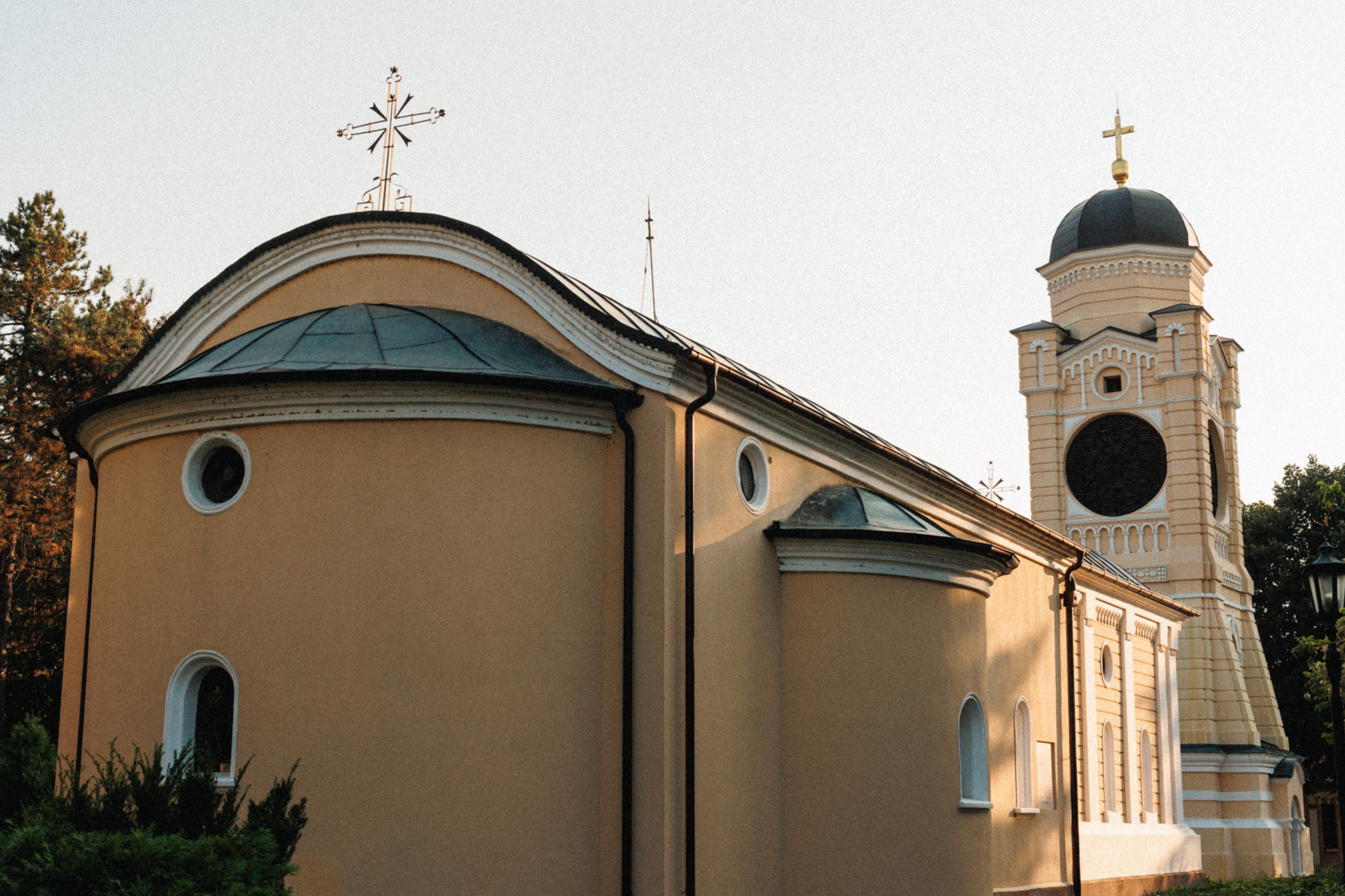
The church grew lengthwise. A wooden porch was added on the west side in 1835. In 1907, King Petar I paid for the wooden parts to be replaced with solid ones. Petar was a Karađorđević, from the dynasty that had long been the Obrenovićs’ rival; the church’s own history describes his gift as a sign of reconciliation between the two.
The height came at around the same time. The bell tower, designed by the architect Jovan Ilkić, dates from around the turn of the twentieth century; sources disagree on the exact year.
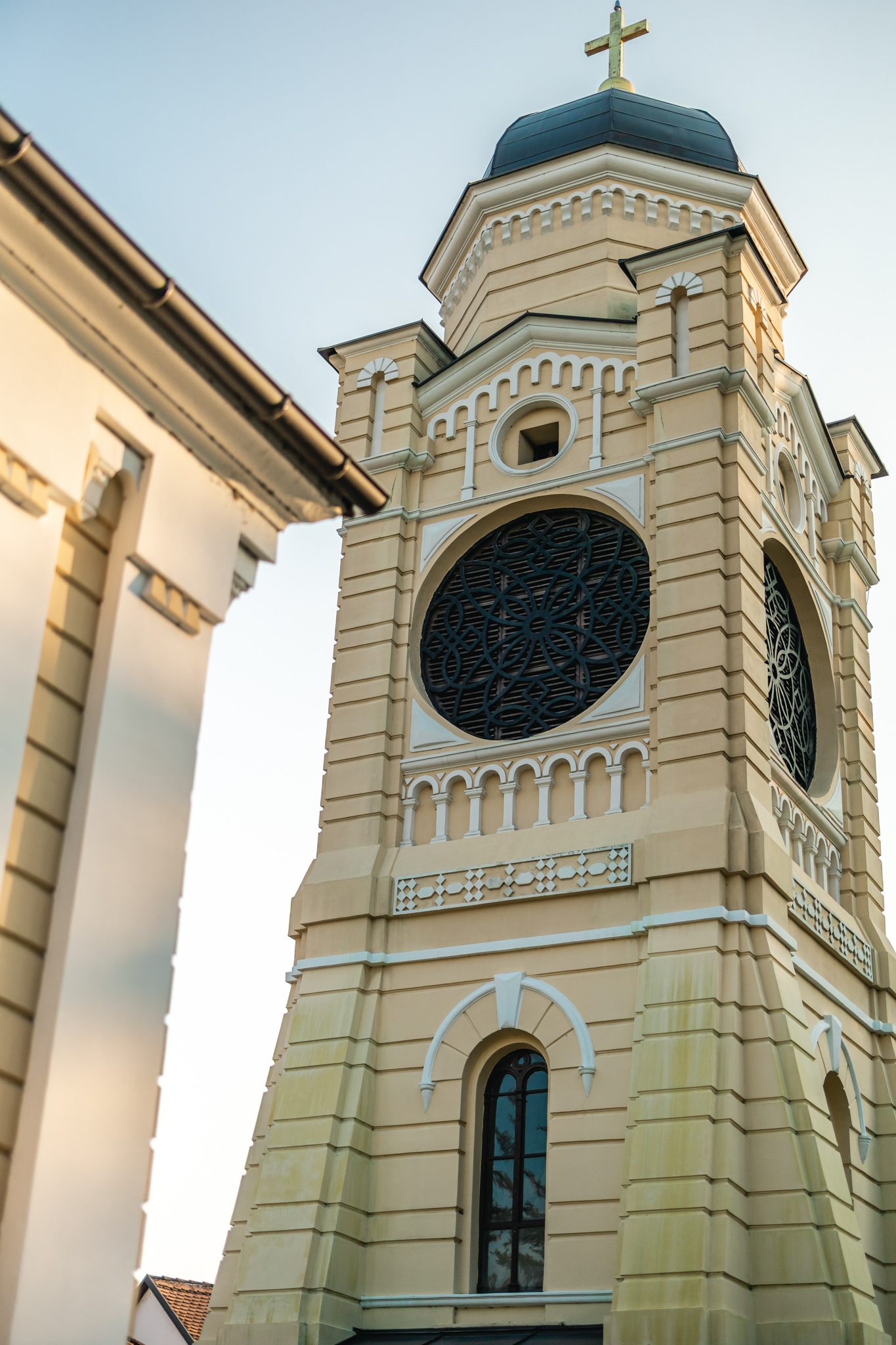
The first bell to ring here had spent years underground. It dated from the time of Karađorđe, who led the first uprising against Ottoman rule in 1804, and it had been buried to wait for liberation. It rang on Christmas Eve, 1829.
Parliament in the yard
The national assemblies held in Kragujevac first gathered in this churchyard, in the open air. There was a covered porch for bad weather and a raised stone platform for the prince. Each session began and ended with prayer in the church.
In 1835, the assembly that met here at Sretenje, the feast of the Presentation, adopted Serbia’s first constitution. It declared, among other things, that any slave who set foot on Serbian soil would become free.
It lasted about two weeks in practice. Fifty-five days after its adoption, it was formally repealed.
In 1859, the assemblies got the building that still stands, in the same churchyard. Kragujevac hosted thirty-five of them in the nineteenth century.
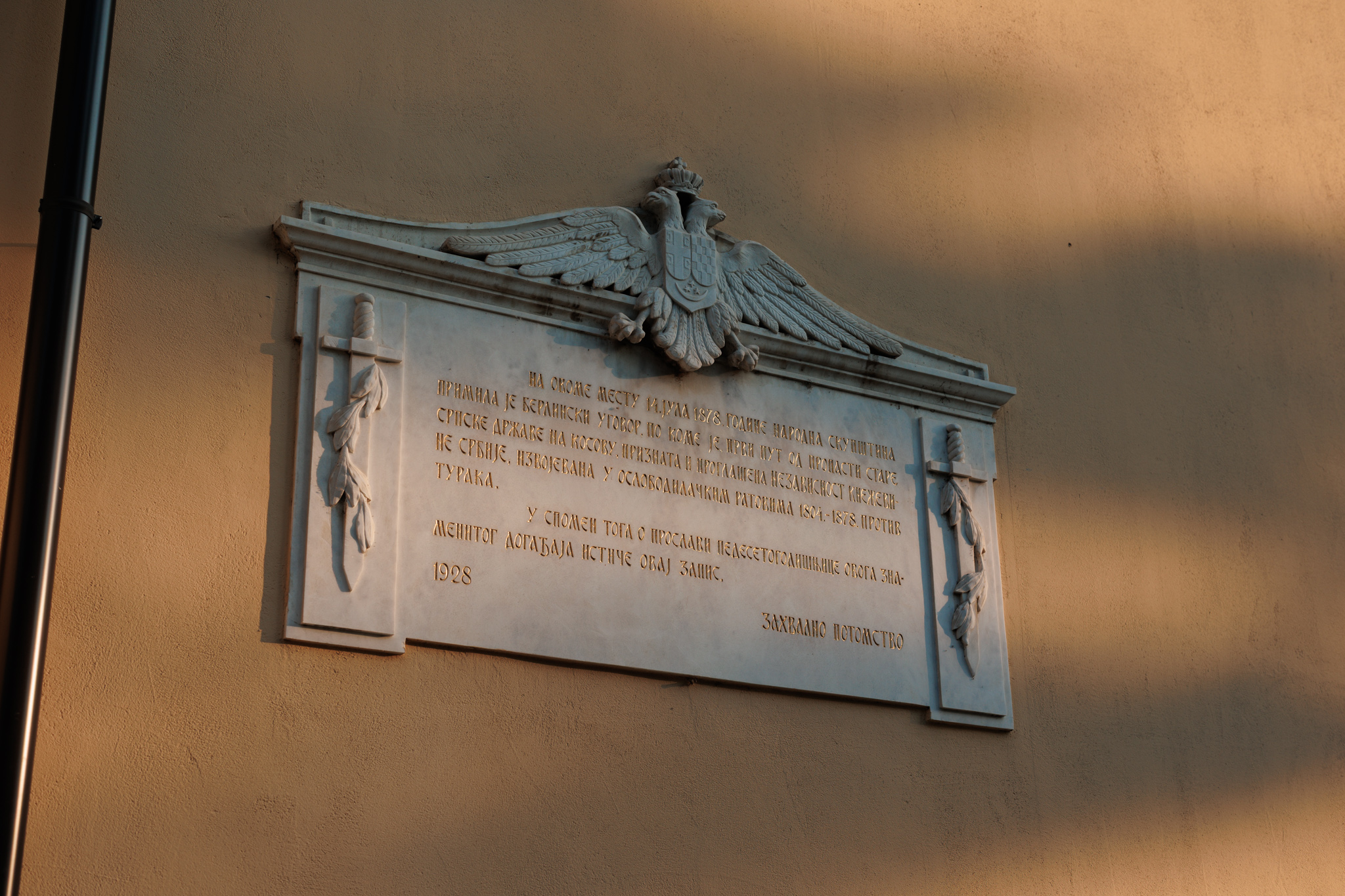
In 1928, a marble plaque went up on the church wall, beneath a crowned double-headed eagle. On this spot, it says, on 14 July 1878, the National Assembly received the Treaty of Berlin, under which the independence of the Principality of Serbia was recognised “for the first time since the fall of the old Serbian state at Kosovo”. The plaque marks the fiftieth anniversary and is signed: Grateful posterity.
Posterity was less attentive to the assembly building. It was used for storage and then as housing, and under socialism it was nearly demolished to make room for a car park. It survived, and since 1979 it has been protected together with the church.
Not only the prince’s
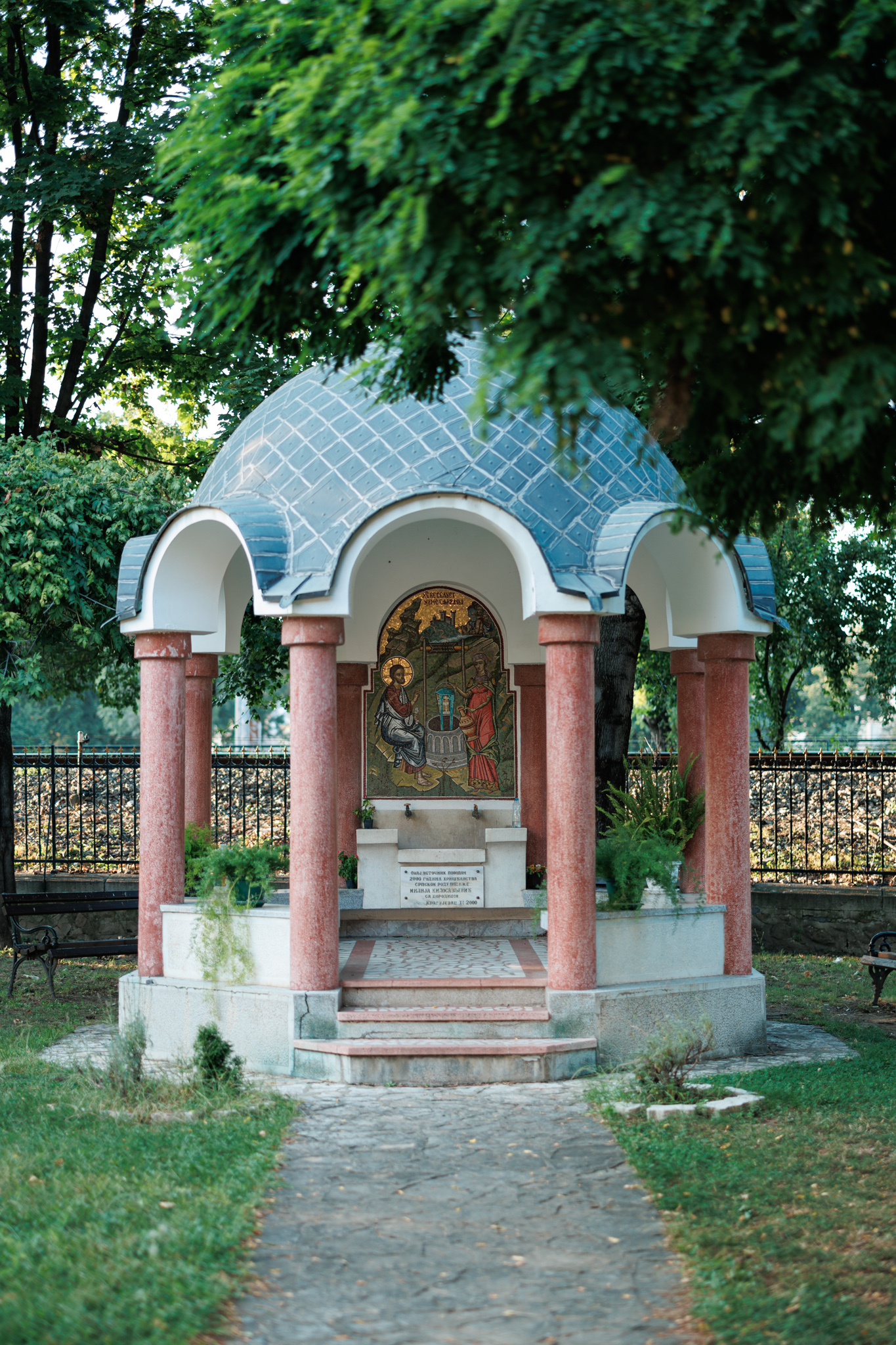
Others have added to the prince’s church. In the churchyard stands a small domed fountain. Its plaque says it was put up in November 2000 by a man and his family, for the Serbian people, to mark two thousand years of Christianity.
Its mosaic shows Christ at a well, talking with a Samaritan woman. In the Gospel, the conversation turns from well water to the “living water” he offers. Here, the scene hangs above two taps.
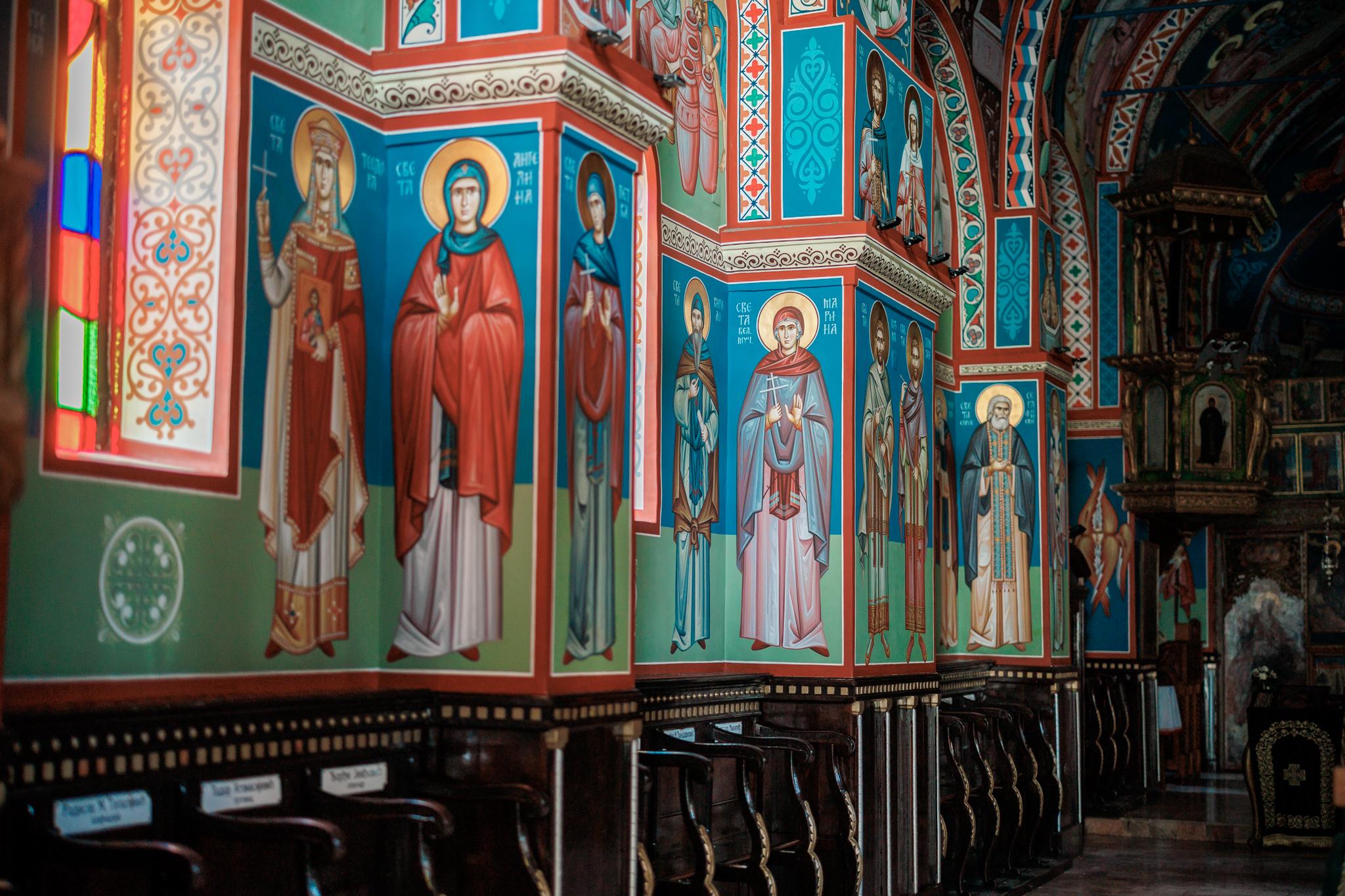
When I went in, the church was empty. The seats along the walls still had names on them. According to the parish priest, interviewed in 2022, they are the names of Kragujevac’s former notables: craftsmen, merchants, kafana keepers, officials, doctors and officers. The town’s guilds, he said, gave icons too, among them the candle and soap makers, the blacksmiths, the tailors and the potters.
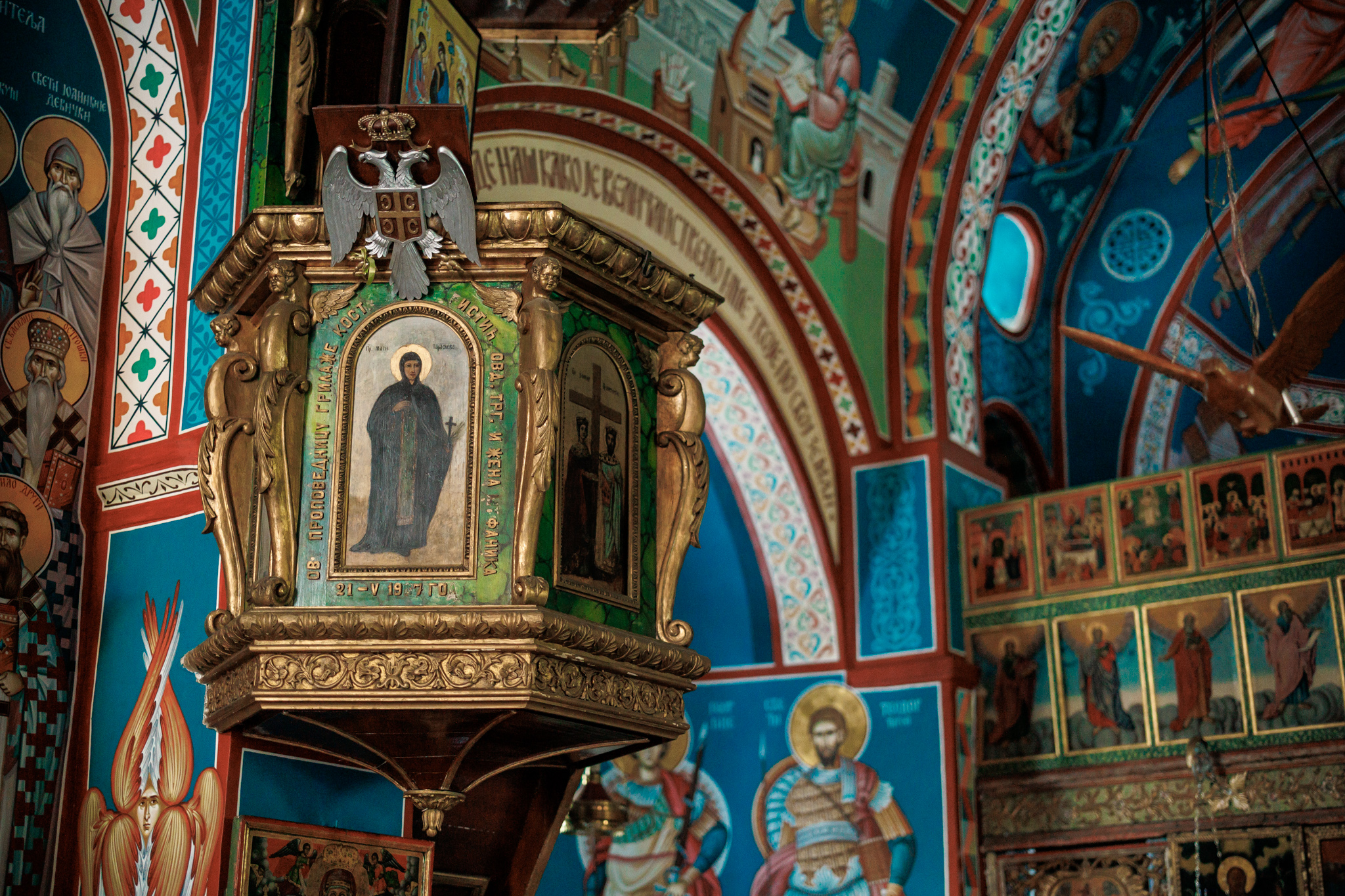
The pulpit, raised on the wall, states in gilt letters who gave it: a local merchant and his wife. Parts of both names are hard to make out, and so is one digit of the date. It reads 21 May, 19-something-7.
Its central panel shows St. Paraskeva, better known in Serbia as St. Petka.
The prince arranged his own side of the church to suit himself. According to the priest, Miloš had his patron saint, St. Nicholas, placed on the side where he sat, and St. John the Baptist, traditionally shown in a rough garment of camel hair, put on the other. He had looked at the naked and the barefoot quite enough in his life, he is said to have explained.
The priest also pointed out the prince’s throne. Above the Serbian coat of arms carved on it sits the sultan’s turban, a sign, he explained, of the authority that stood over it.
Outside, the wall celebrates independence. Inside, the turban is still on the throne.
The decision of 1907
In 1907, the year of King Petar’s gift, it was also decided that the inside of the church should be painted. The decision was not carried out. Over time, candle soot blackened the walls, and in 1998 they were cleaned and painted white.
Preparations began in 2016, and the painting in 2017. The painters were Ekaterina Kudrjaceva Miletić, born in Gomel in Belarus, who moved to Serbia from St Petersburg in 1992, and her husband, Miljan Miletić, born in Niš. The couple ran an icon-painting workshop in Kragujevac. The new murals were consecrated on 2 October 2018, in the church’s bicentenary year.
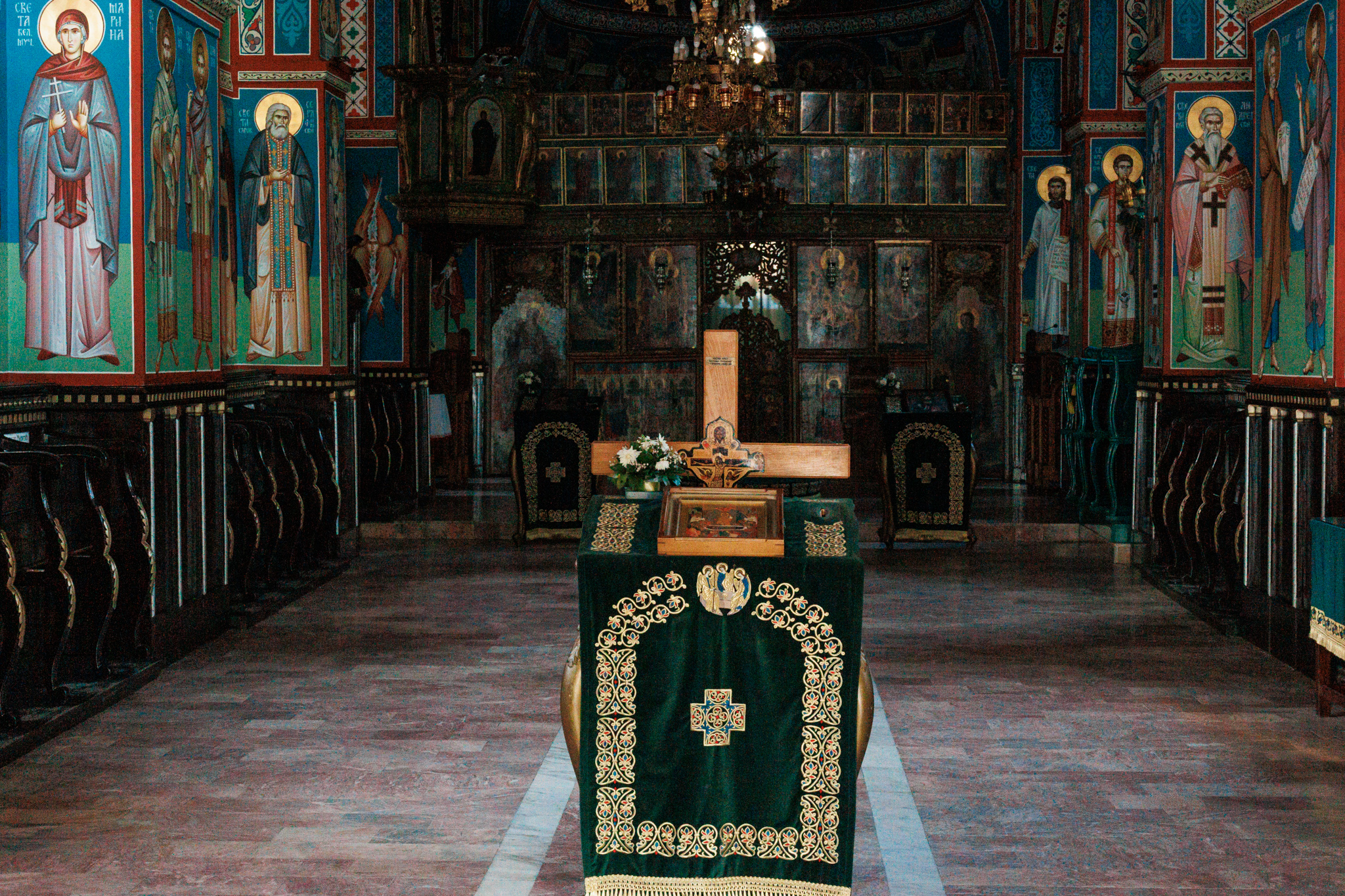
Among the new saints, according to the priest, are the Holy New Martyrs of Kragujevac, those shot at Šumarice in 1941.
Under the vault, two angels hold up a cloth bearing the face of Christ. Its label reads НЕРУКОТВОРЕНИ ОБРАЗ, the Image Not Made by Hands. In church tradition, the original appeared on the cloth with no painter involved. This one waited a hundred and ten years for its painters.
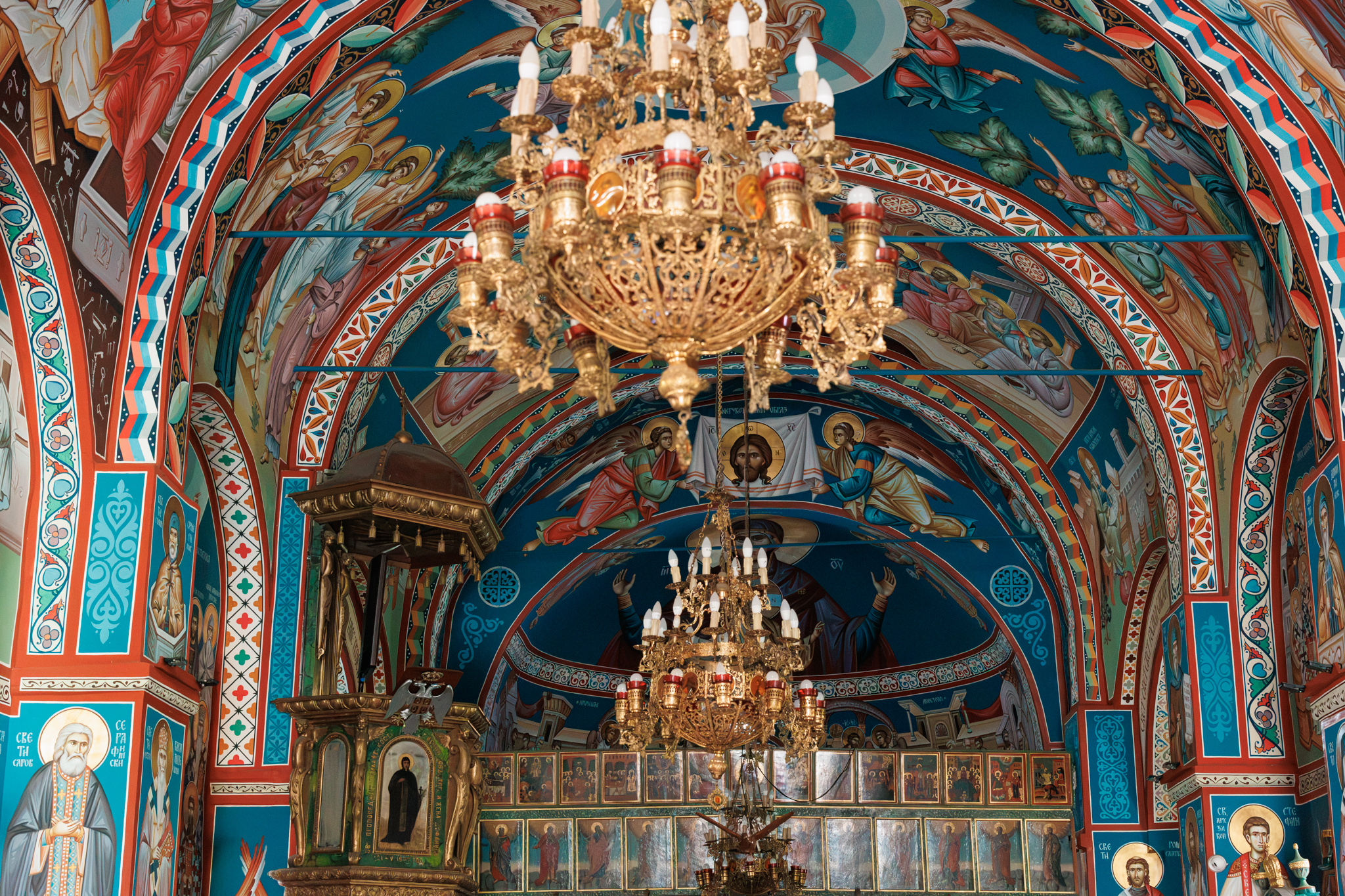
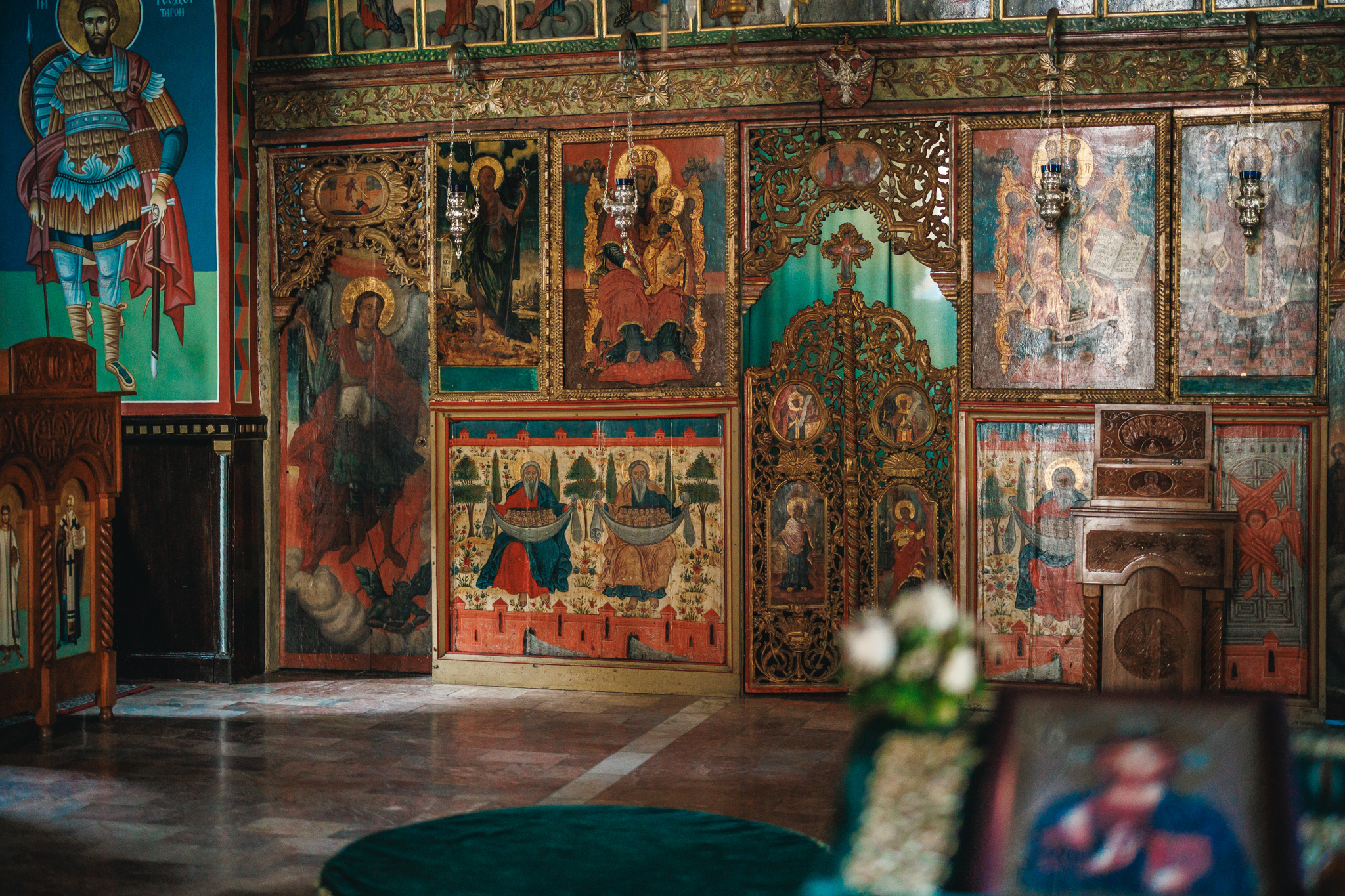
The iconostasis is older. Its icons were painted in stages between 1818 and 1822, mainly by Aleksije Lazović and Janja Moler.
Low down on either side of the central doors, bearded figures sit in a walled garden, each holding a cloth full of small figures. This appears to be the bosom of Abraham: the patriarchs in paradise, holding the souls of the righteous. The doors split them two to one.
On the vault is the scene that gives the church its name: the Descent of the Holy Spirit on the Apostles. The apostles sit in a curve. Below them, in a dark arch, a crowned old man holds out a white cloth. The letters beside him read КОСМОС: Kosmos, the world. In Orthodox iconography, he is the world in darkness, holding twelve scrolls, the apostles’ teaching.
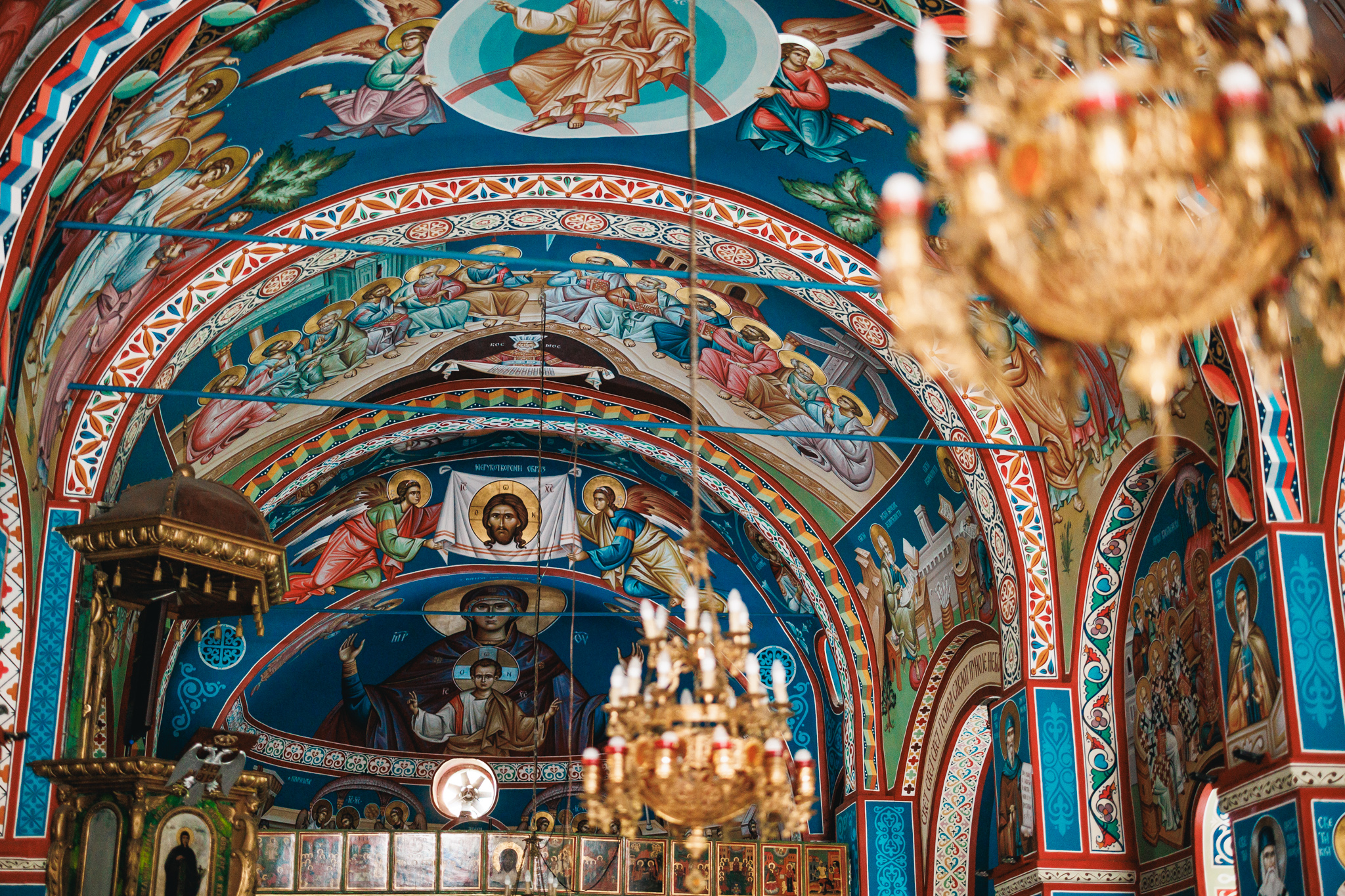
It was allowed, they say, one ox hide. On the ceiling, it has made room for the world.
Visit this place
Location
Old Church / Стара црква (Church of the Descent of the Holy Spirit)
By the Lepenica river in central Kragujevac, in the same churchyard as the Old Assembly building
Kosovska 2, 34000 Kragujevac, Serbia
Practical Information
- Nearby
- The Old Assembly building stands in the same churchyard.
- Services
- The Diocese of Šumadija publishes dated service announcements. Check its latest schedule before visiting. Diocese of Šumadija (Serbian)
- Visitor note
- This is an active place of worship. Keep quiet inside and avoid disturbing services or prayer.
- Tourism information
- Tourist Organisation of Kragujevac — Churches
Information last checked: October 9, 2026 (Address checked against the Diocese of Šumadija’s visitor leaflet, and dated service announcements checked on its website. Regular opening hours, admission and photography rules were not confirmed.)
Conversation
Comments
Review pending commentsComments are reviewed before appearing. The internet already contains enough unattended surprises.
Loading comments…
Leave a comment