Yap-Sandiego Ancestral House: The Clothes Make the Saint
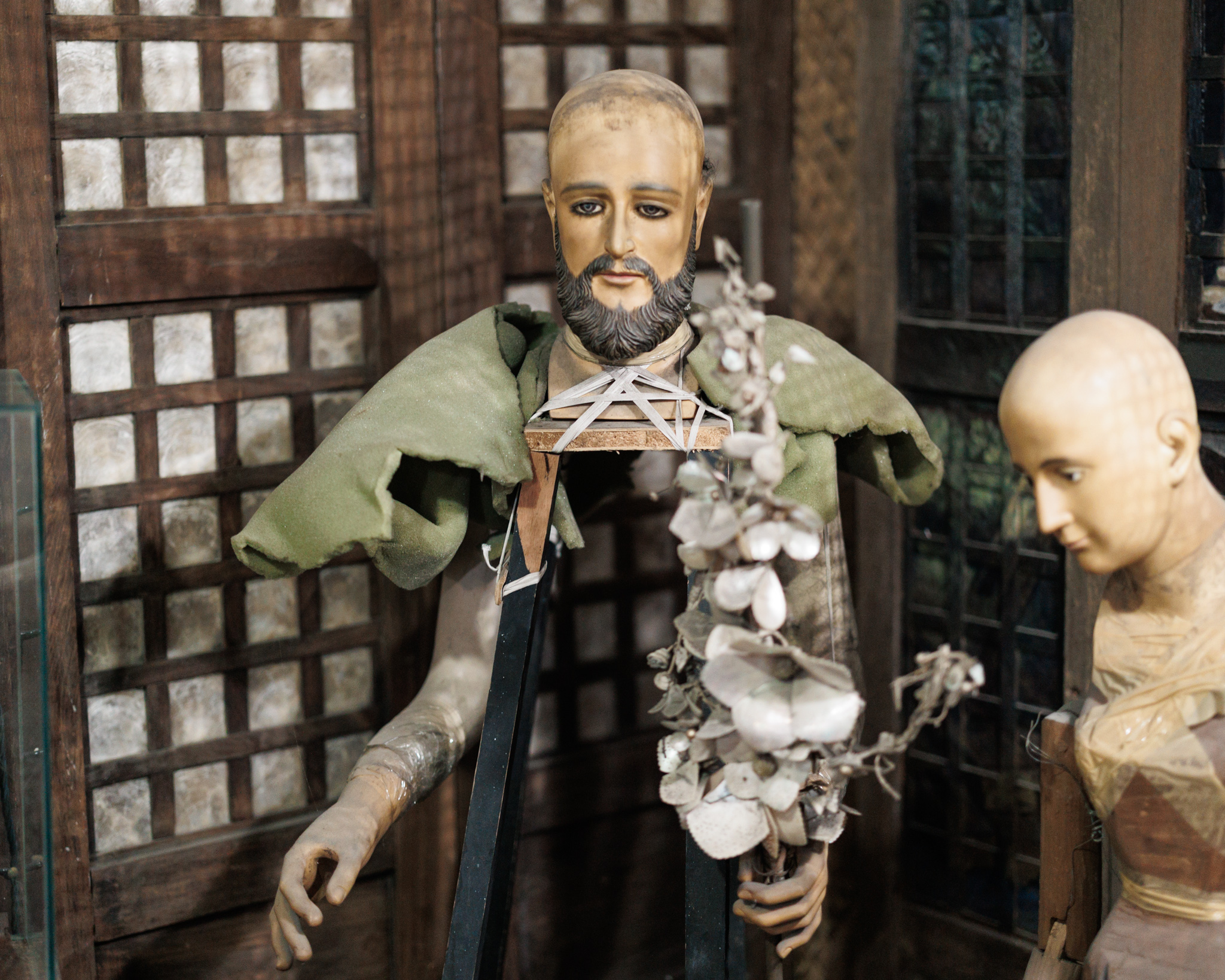
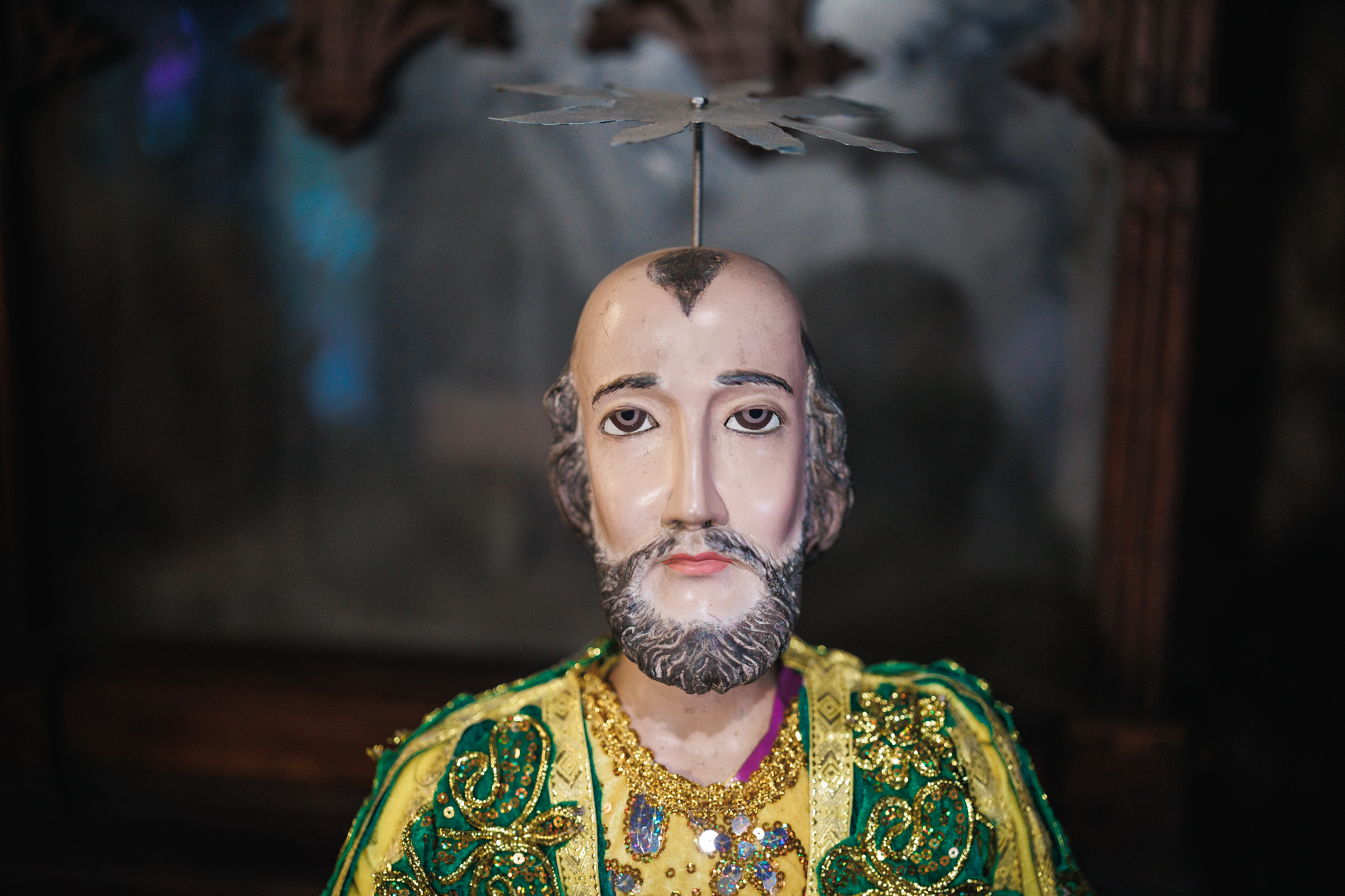
One of the saints in the Yap-Sandiego Ancestral House has a bearded face, two hands and a green cloth over his shoulders. Between them, where the rest of him should be, there is a stick.
He has not lost his body. He was probably never given one.
Images like him were made to be dressed. Only the head and arms were finished as sculpture. The rest was a frame, and the clothes did the work. This one has nothing on but the green cloth, so the frame is showing.
The finished parts were the parts worth spending on. Sometimes that meant ivory, and in this house, it is said, that is how some of the saints lost their hands. They were stolen, or sold.
Across the road
My driver came with me across the road from the Heritage of Cebu Monument. The house on the other side is built of coral stone and several hardwoods—kamagong, molave and mahogany—and is thought to date from the late seventeenth century. It was built by Chinese merchants, and is considered one of the oldest houses still standing in the Philippines.
Downstairs was for business. The family lived upstairs. The name came later, with a marriage: the eldest daughter of the Yap family married a Sandiego, a local headman in Parian, and the house has come down through the Sandiegos ever since.
It has had some notable visitors. A large mirror in the house is said to have been used, on several occasions, by Leon Kilat, who led the uprising against the Spanish in Cebu in 1898. What he was checking is not recorded.
The family restored the house in 2003 and later opened it to visitors, though they still stay the night now and then. When Typhoon Odette hit Cebu in 2021, they opened it up again, this time to share water from its well with anyone who needed it.
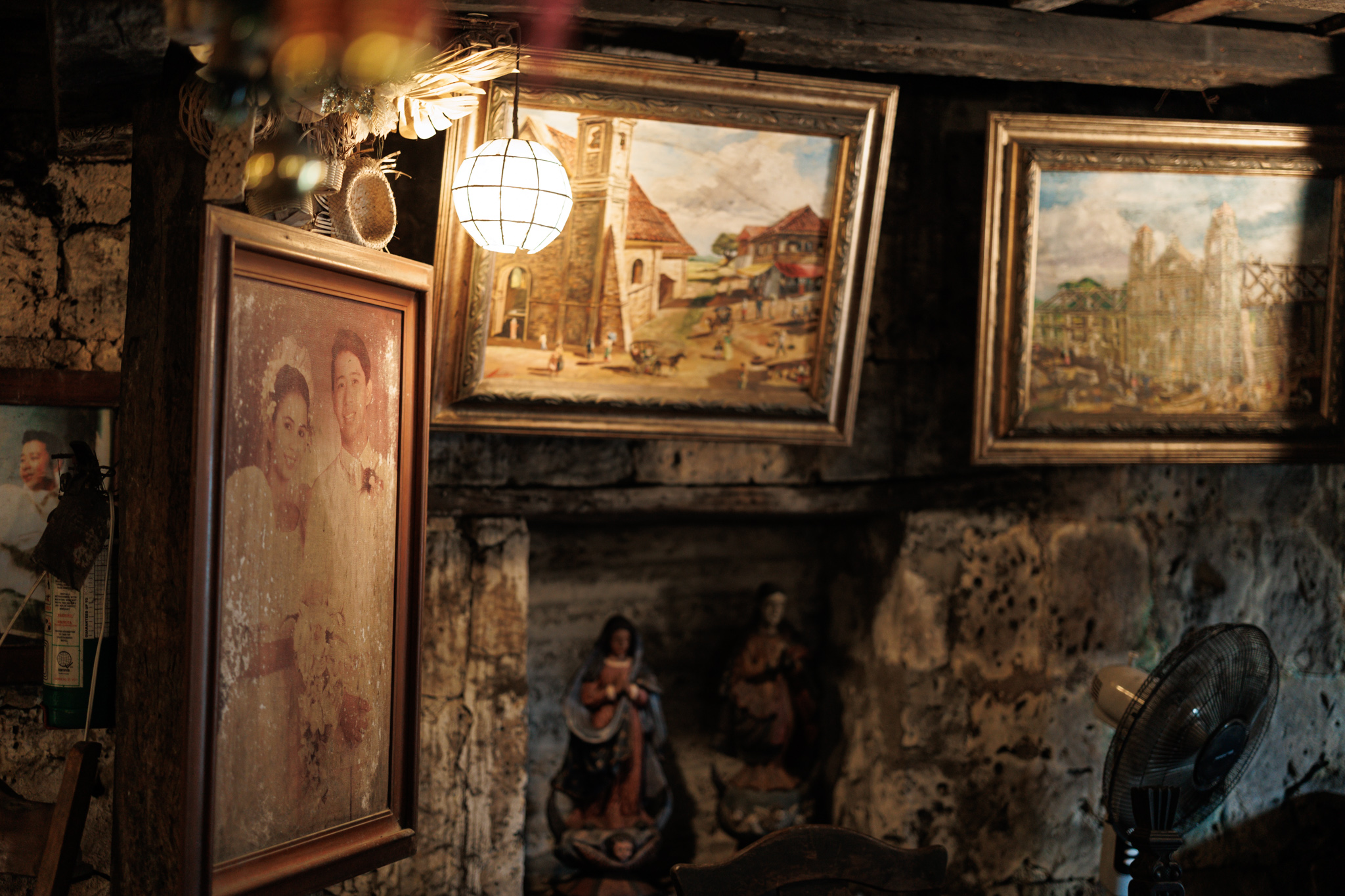
According to the owner, almost all of the roof and walls are original. The things inside are another matter. Most of them are said to be far younger than the house, and there are a great many of them: photographs, furniture, paintings, and saints in every corner. The admission fee comes with a history of the house. The saints come without one.
Three ways to dress a child
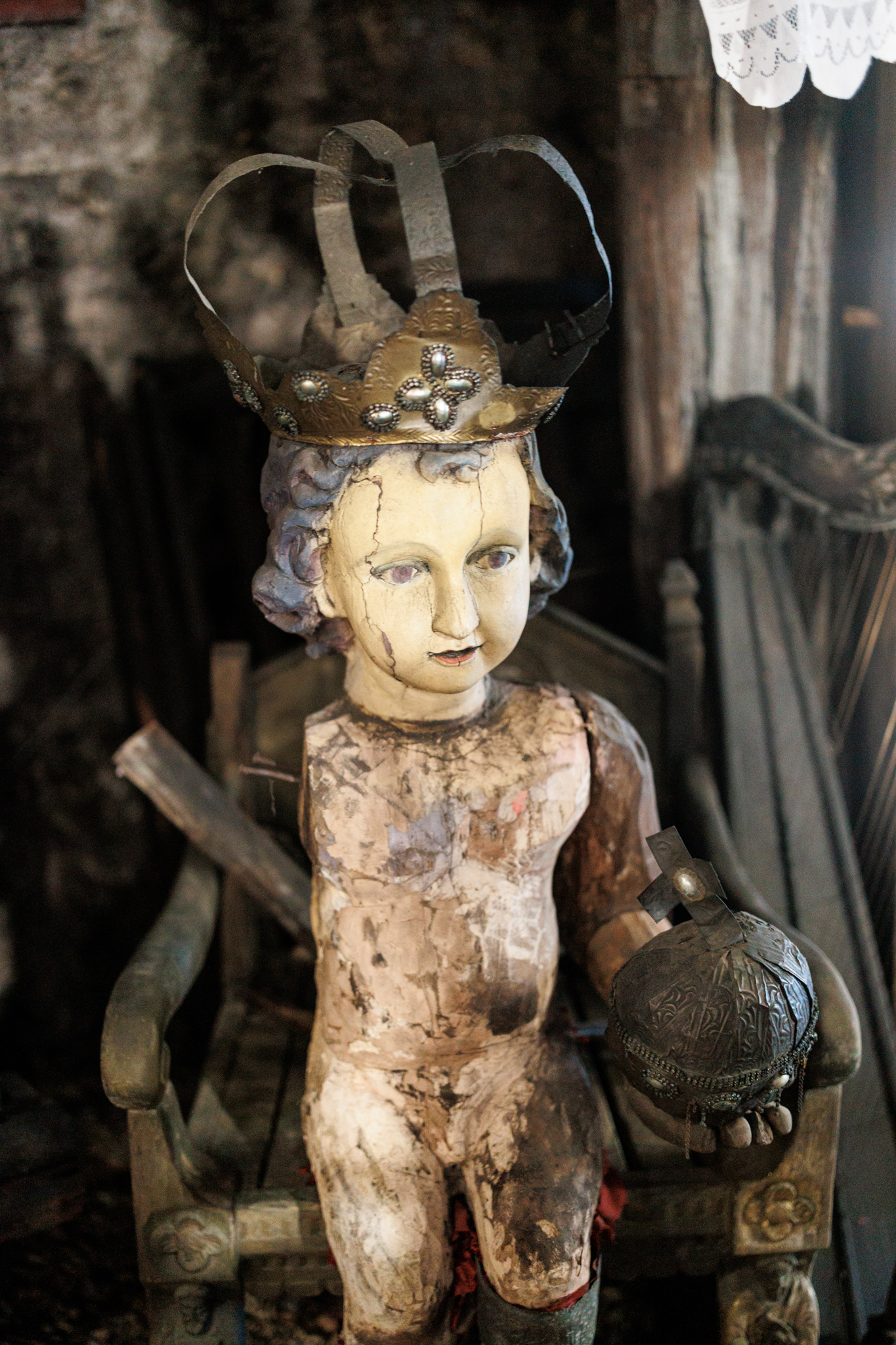
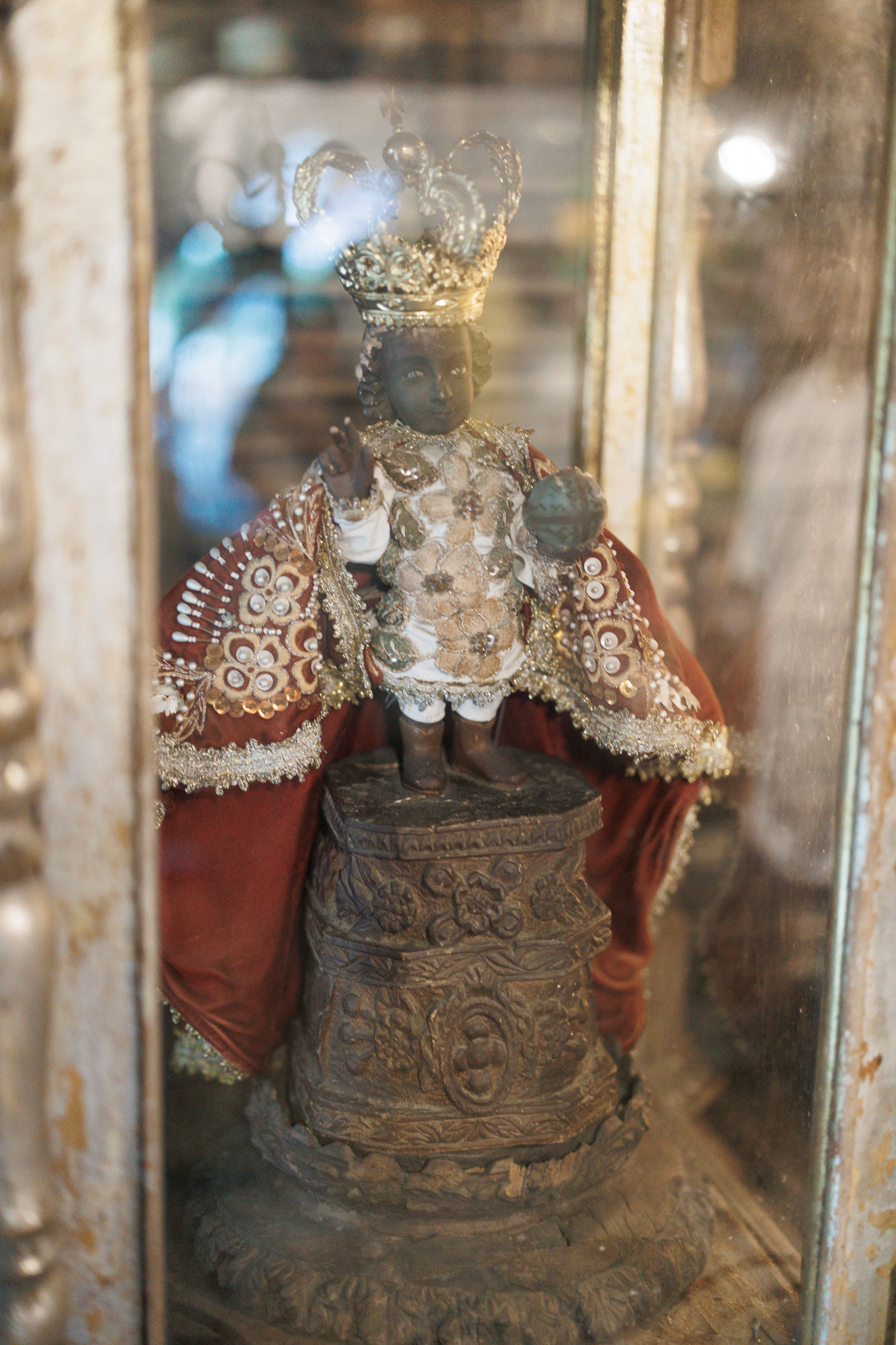
Three of the figures are the same child: the Child Jesus, three times over.
One wears a crown and holds an orb topped with a cross, and nothing else. His paint is flaking.
One is fully dressed, in a red cape thick with gold embroidery, behind glass, much like the Santo Niño in the basilica a few minutes’ walk away.
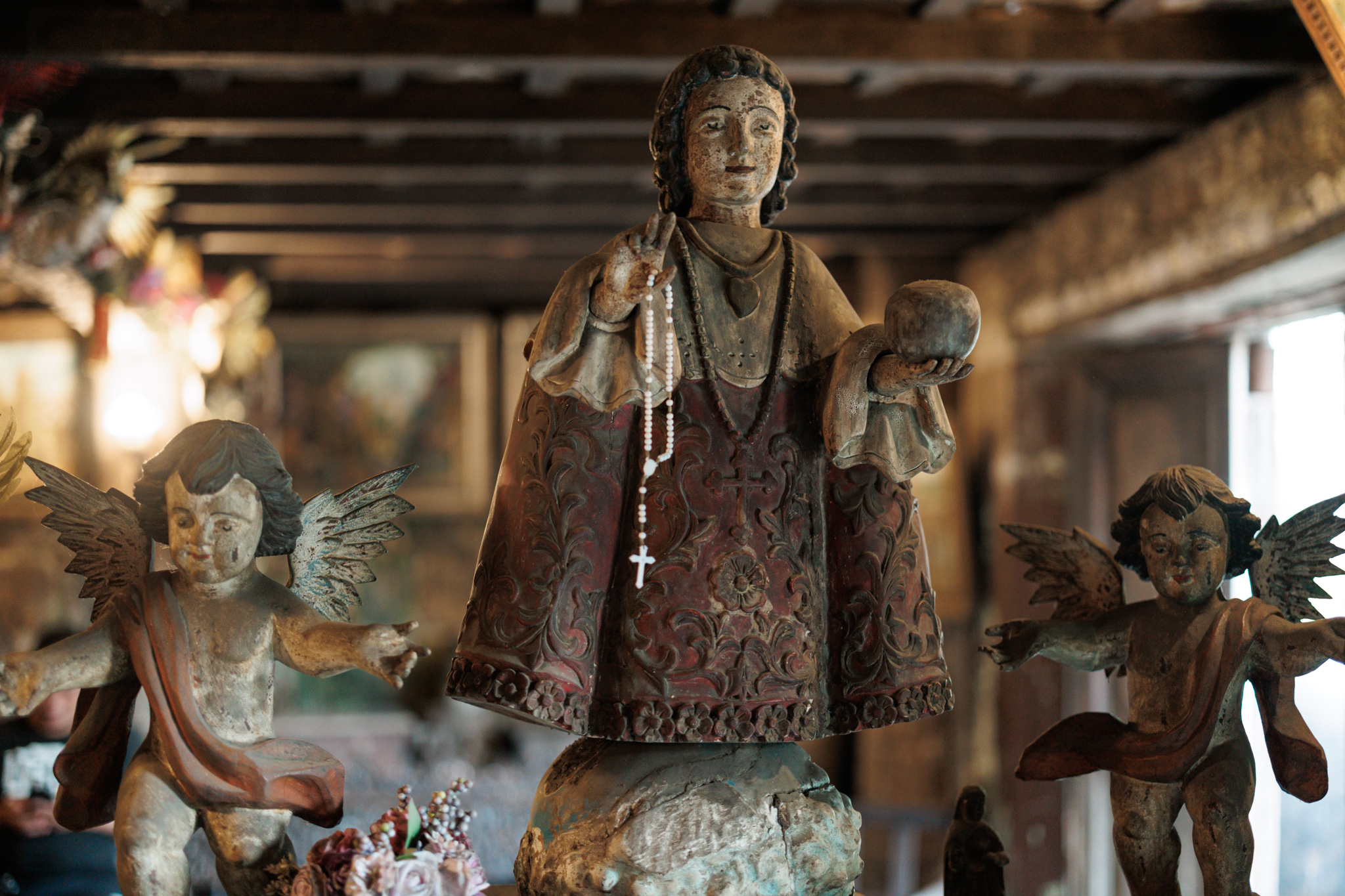
The third has his clothes carved on, folds, flowers and all. He should never need dressing. Someone has hung a rosary over his hand anyway.
Swipe to explore
Tap to enlarge
The saints get the same treatment, plus accessories. One wears his halo on a rod stuck into the top of his head.
Windows
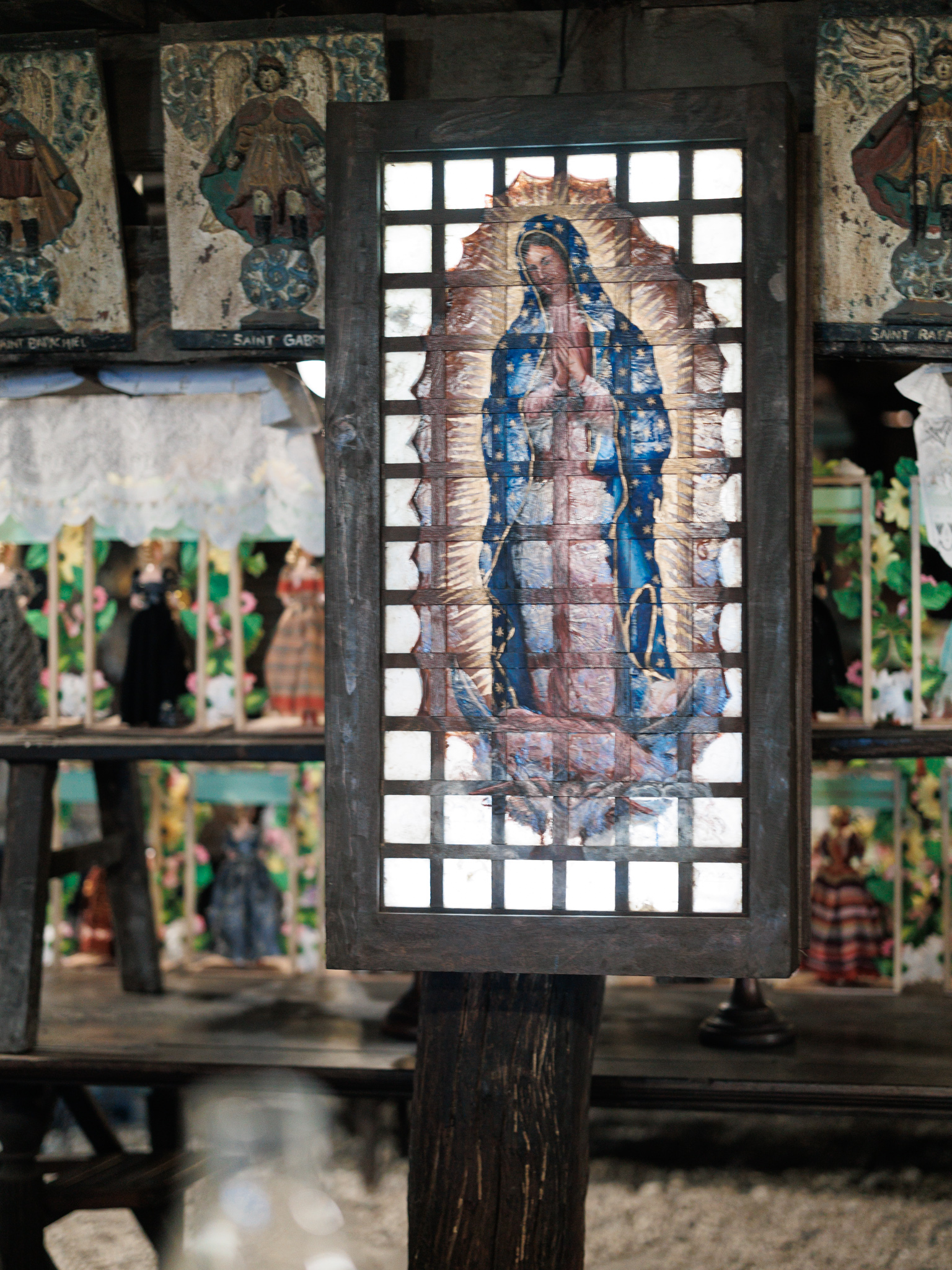
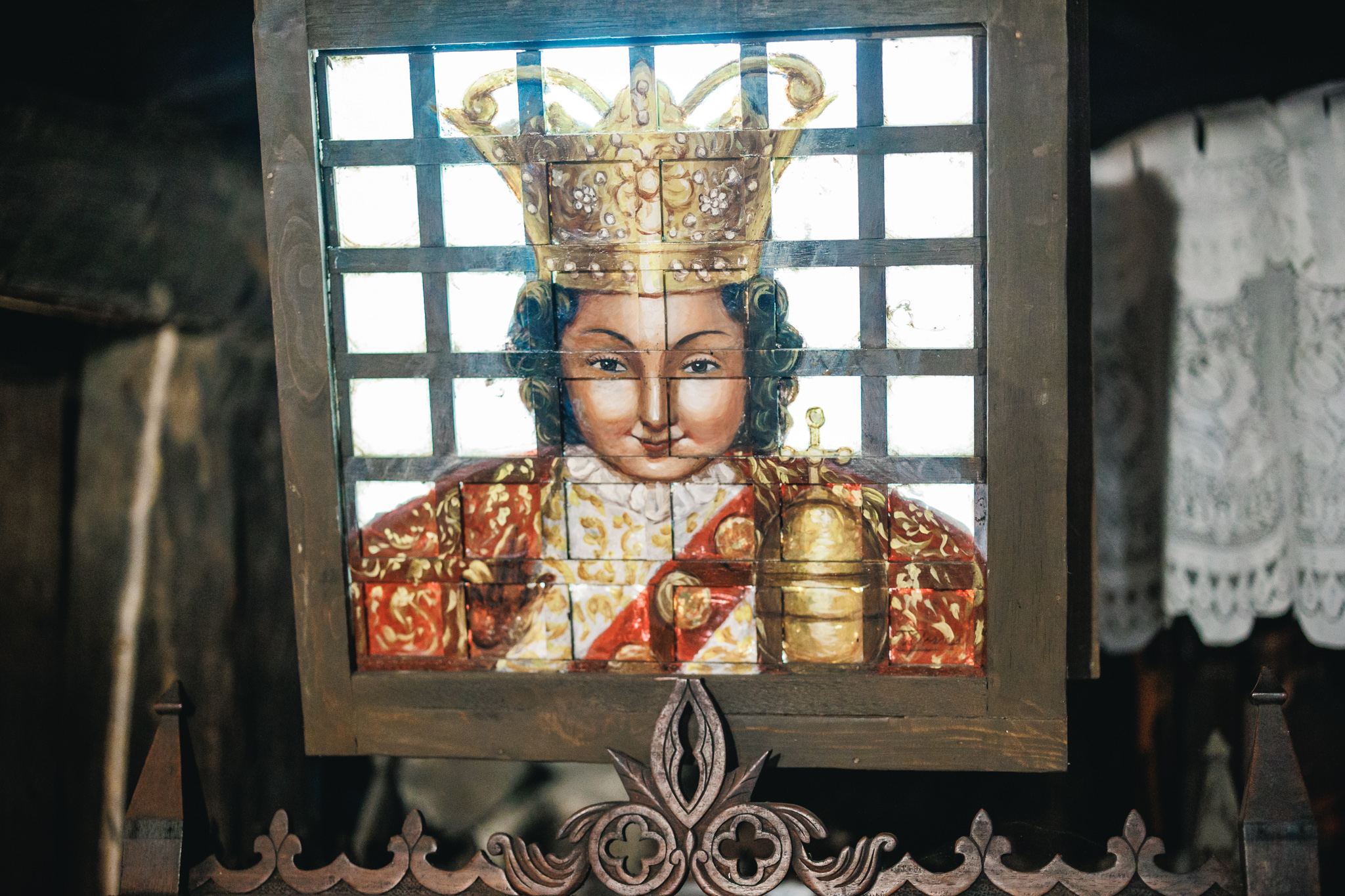
Not all of them are statues. Some are painted on panels made like windows: a wooden lattice filled with small, pale squares that look like capiz, a flat shell that lets light in but not the view.
Mexico’s Our Lady of Guadalupe stands on one, in her blue cloak full of stars. The Child stands on another, crown and all. Light comes through the squares from behind, and through the Virgin and the Child with it.
Upstairs
The floor upstairs was extraordinarily slippery. I do not know why.
In one bedroom, behind a canopy bed hung with lace, there is a painting of the Virgin and Child with angels playing to them on the violin. It is Song of the Angels, by the French painter William-Adolphe Bouguereau, first shown at the Paris Salon in 1881. The house is nearly two centuries older than the painting.
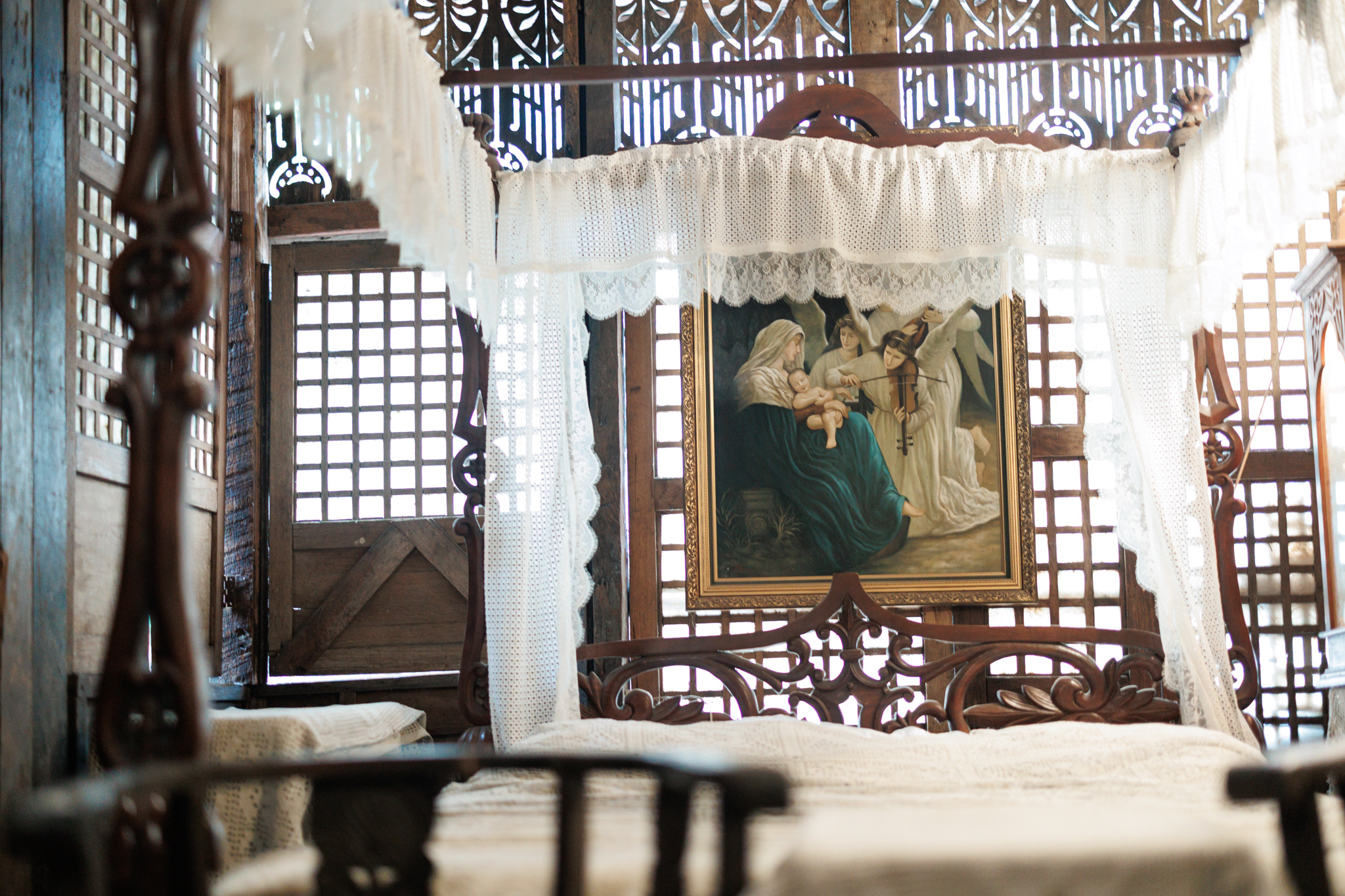
This is a copy. The original has been at Forest Lawn, in Glendale, California, since 1940. Forest Lawn is a cemetery.
Two panels
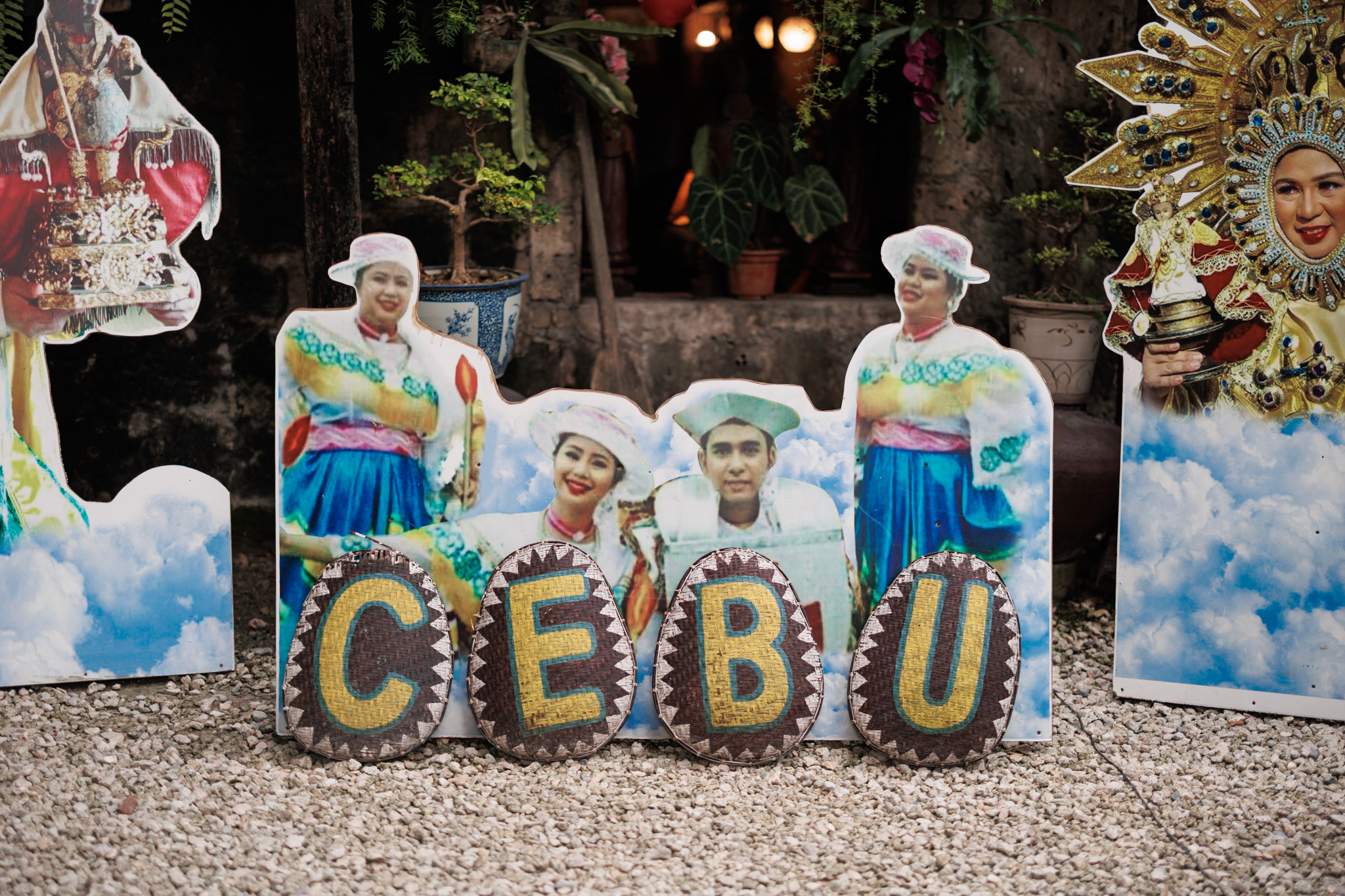
The man who keeps the house is a choreographer. In the garden, the letters C, E, B and U stand in front of a row of dancers in costume, every one of them a cut-out photograph: all front, no back.
Out by the street, the house explains itself on a sign in two panels. The top one is about the house. The bottom one is about the family, from the earliest known occupants to the couple who keep the house now. The only date you can see on it is the 1880s, attached to the Sandiego who married into the Yaps.
Between the building of the house and then, the sign gives no dates at all.
It cannot show all of the family, either. In front of the bottom panel stands a weathered statue in a crown, hands together in prayer, covering the middle of it.
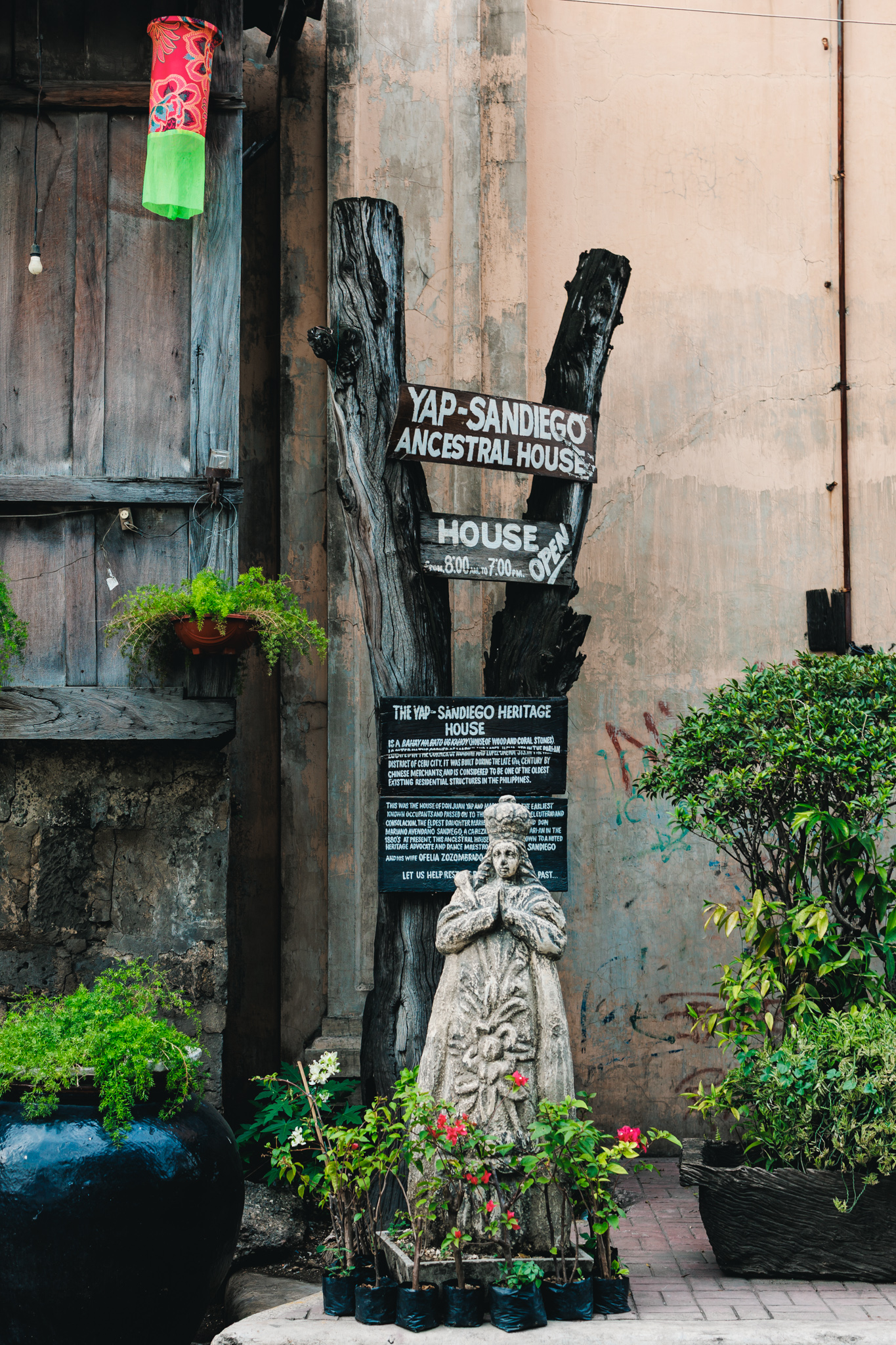
It is praying with its back to them.
Visit this place
Location
Yap-Sandiego Ancestral House
In Parian, across the road from the Heritage of Cebu Monument
Mabini Street, Parian, Cebu City, Cebu, Philippines
Practical Information
- Visiting
- A family-owned ancestral house open to visitors. An admission fee is charged.
These photographs were taken in May 2023. The house was reported damaged in the September 2025 earthquake; check current access before visiting.
Information last checked: October 18, 2026 (Post-earthquake reports checked; current access, opening hours and admission prices could not be independently confirmed.)
Conversation
Comments
Review pending commentsComments are reviewed before appearing. The internet already contains enough unattended surprises.
Loading comments…
Leave a comment