Fort San Pedro: Founded 1565, Reformed 1833
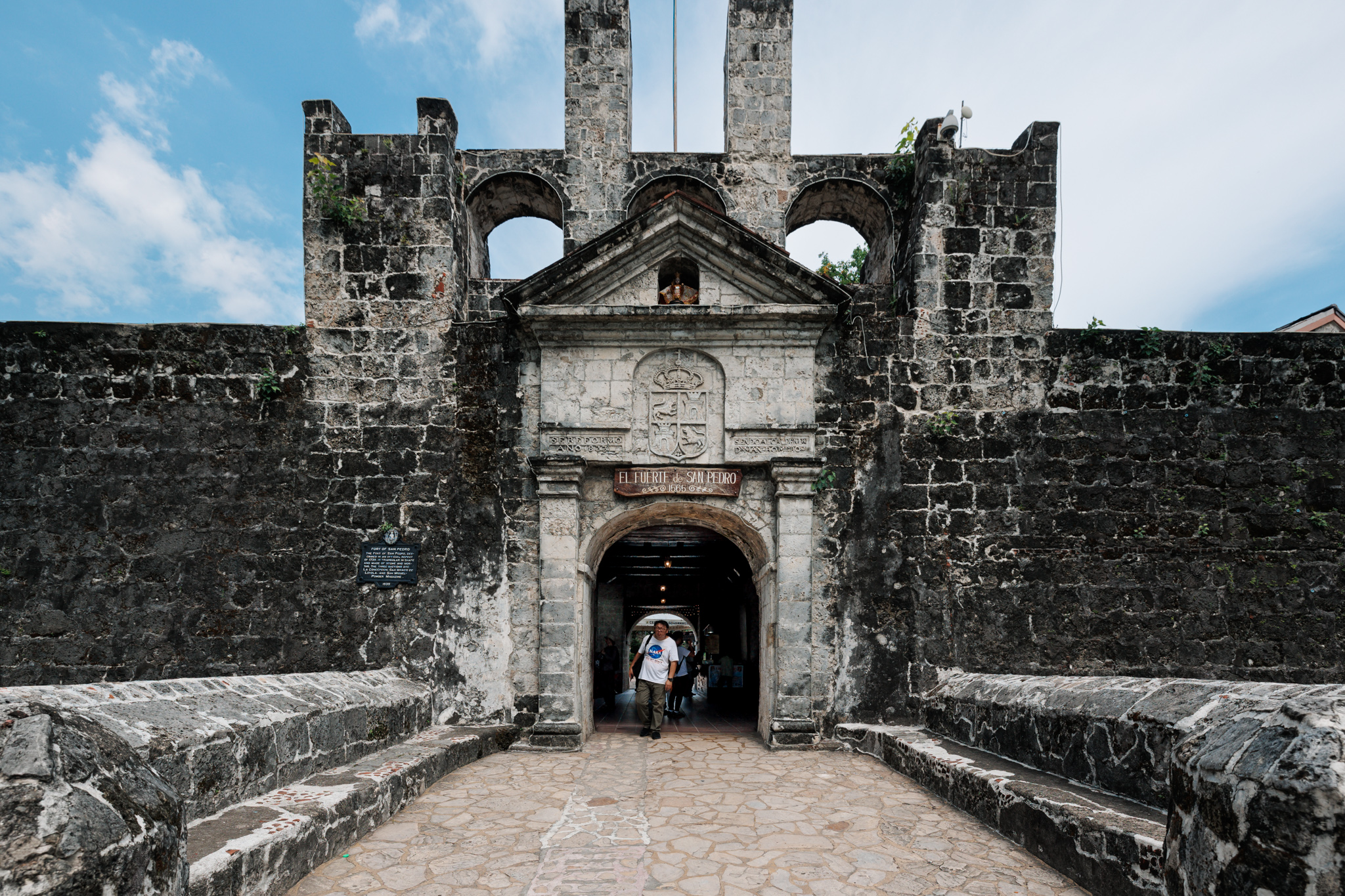
Over the gate of Fort San Pedro hangs a wooden sign: EL FUERTE de SAN PEDRO, 1565. Carved into the stone above it is a later date: Se reformó año 1833, “Reformed in the year 1833”, beside the name of the official in charge at the time, the alcalde mayor Don Manuel Romero. On the wall to the left, an old plaque begins with a third. The fort, it says, was “described in an official report of 1739”.
Fort San Pedro is often called the oldest fort in the Philippines. Of the three dates at its door, the oldest is the one on the wooden sign.
The wooden sign has its facts right. In 1565, a Spanish expedition under Miguel López de Legazpi arrived in Cebu and began a fort here, in logs and earth. When it turned to stone is harder to say: the dates on offer are spread across two centuries. Romero is credited with finishing it in coral stone, which is why his name is over the door.
Under new management
After that, the fort changed hands about as often as it changed its dates.
When Spanish rule ended, it passed to Cebuano revolutionaries. Under the Americans it became part of a barracks, and later a school. Accounts of the Second World War do not agree on what it was used for: a Japanese camp, a garrison, a school, a military hospital. After the war it was an army camp, then a garden club’s miniature garden, then a zoo. A mayor of Cebu City once planned to pull the whole thing down for a new city hall, and dropped the idea after objections. Restoration came, the zoo moved out, and the Department of Tourism moved in.
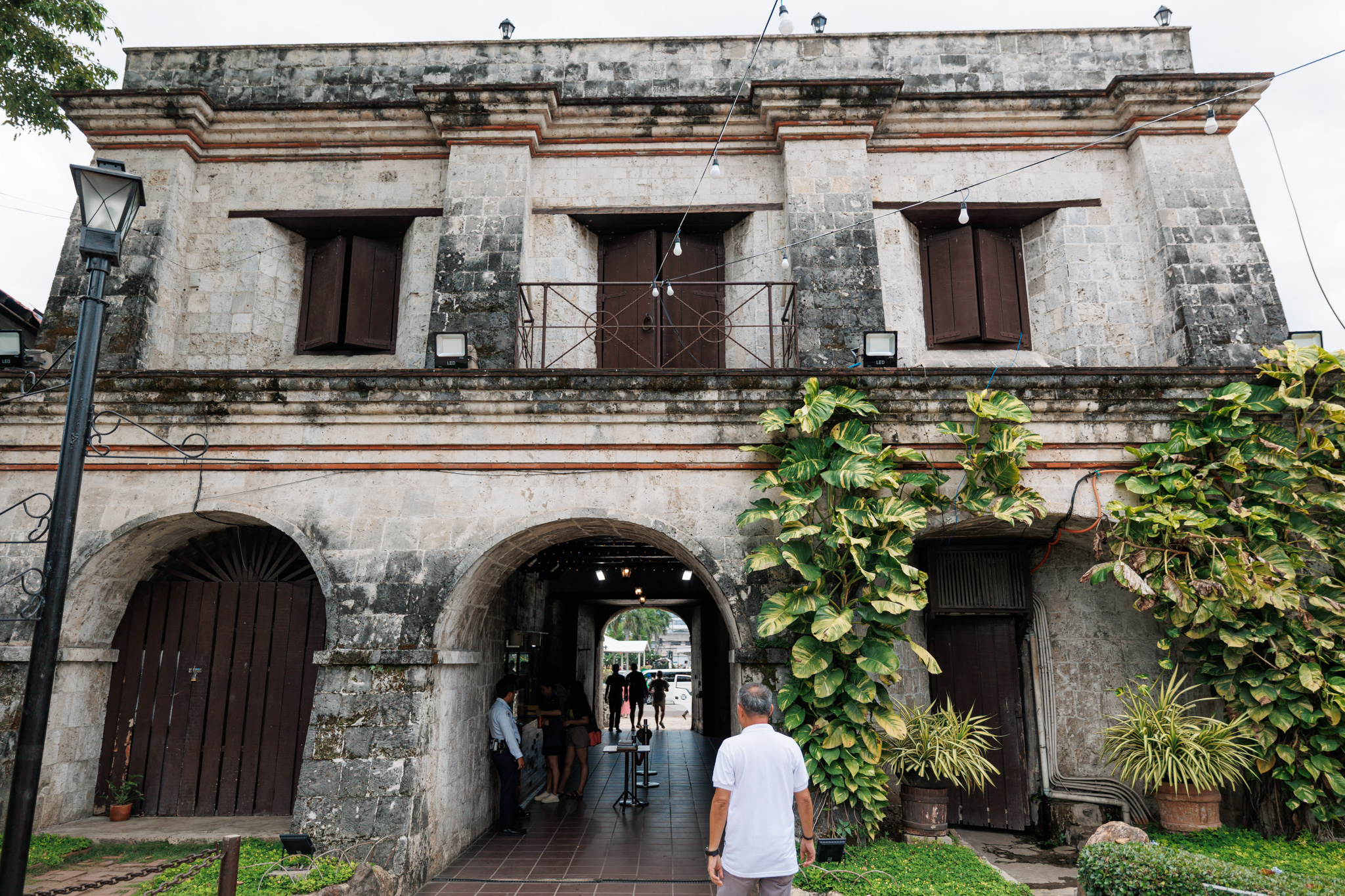
When I visited, it was a historical park with a small museum.
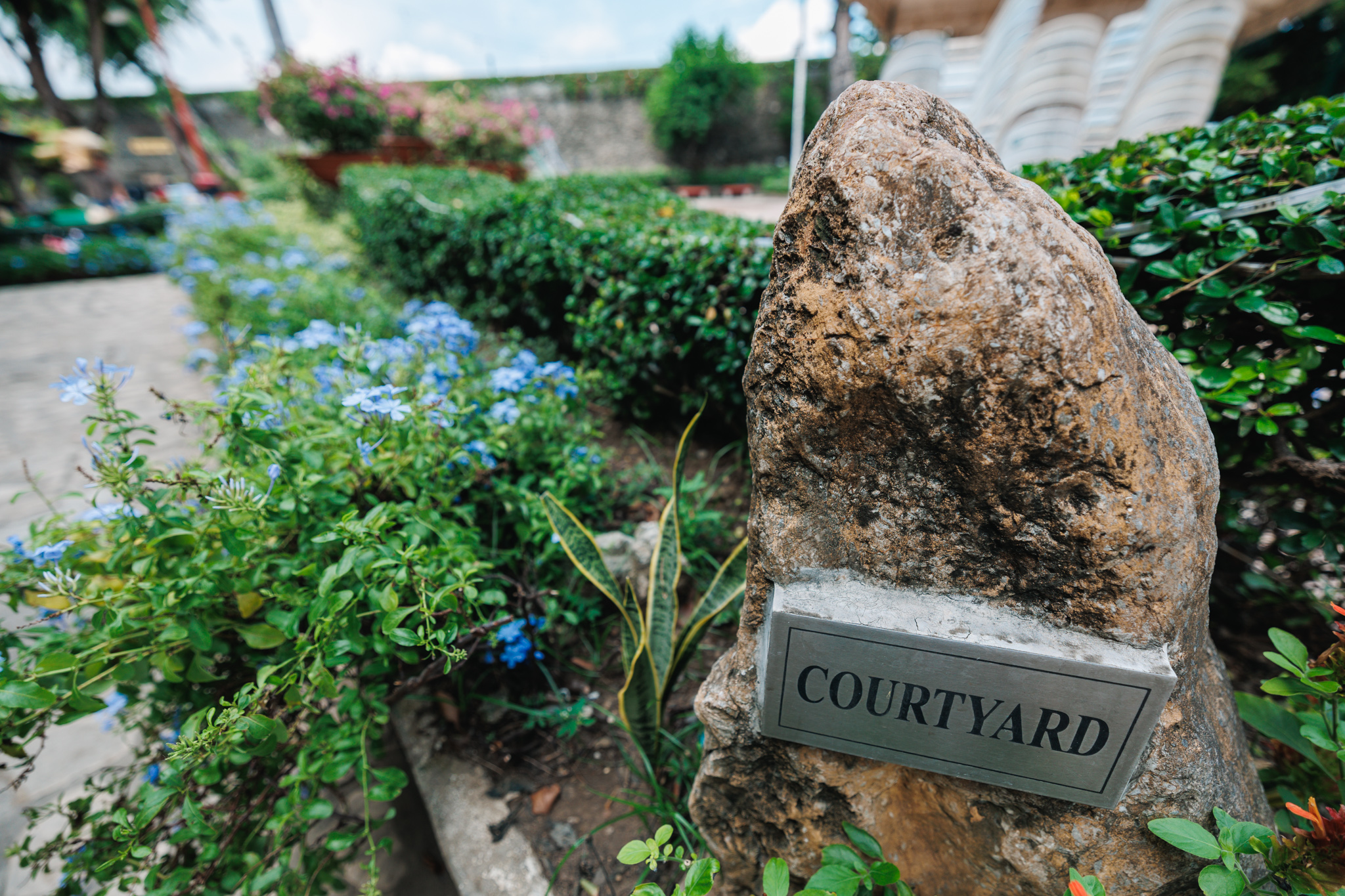
Our Lady of the Fort
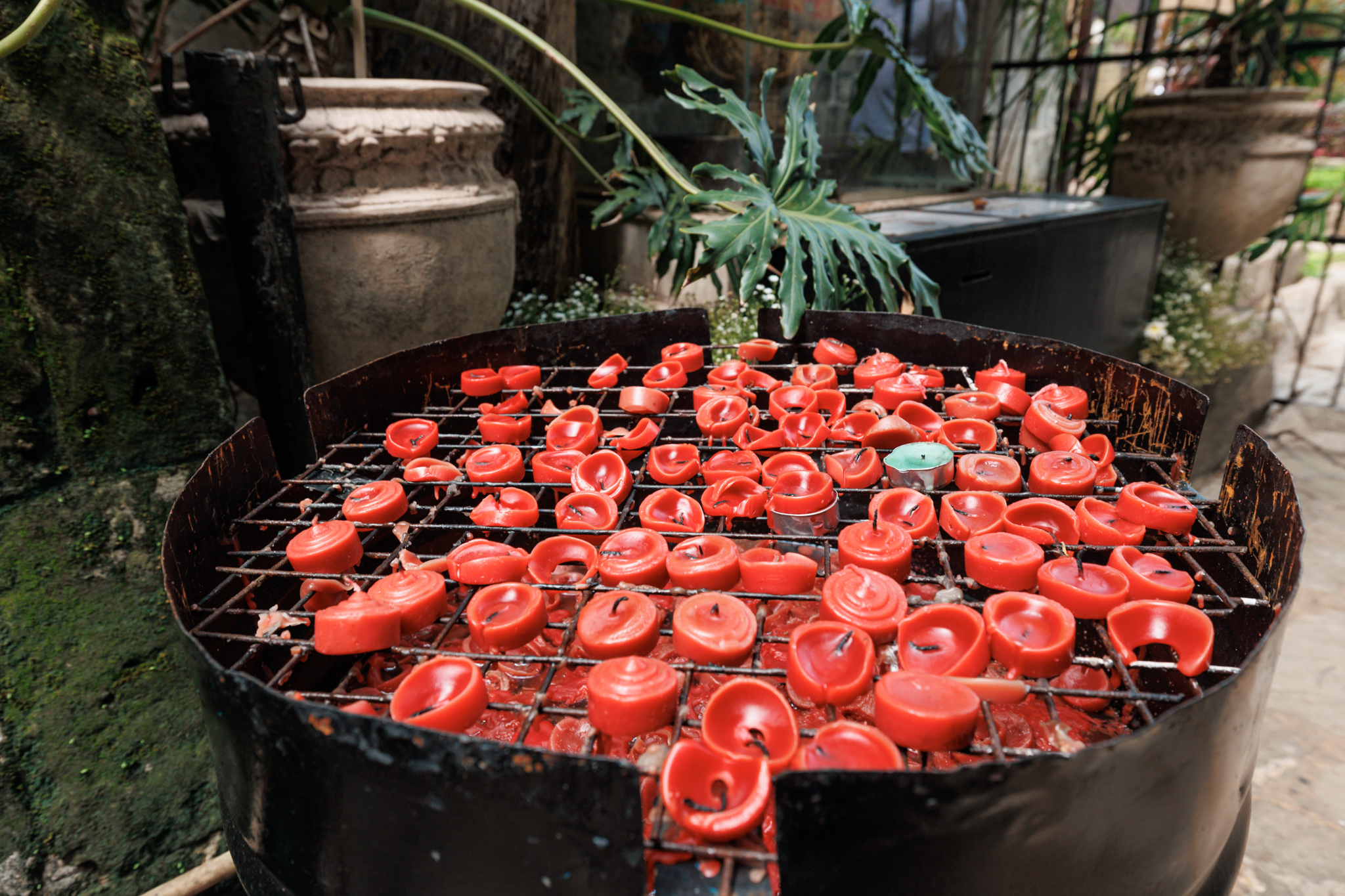
The fort had its first miracle within ten years of its founding. According to Cebuano tradition, a small statue of the Virgin Mary was found in a well inside the walls, and its water was said to cure the sick. The statue, Our Lady of the Fort, was later moved to Cebu’s cathedral.
A brass plaque in the garden gives two answers to where she is now. The upper half, quoting an old book, says she is in the cathedral. The lower half says she was lost in the Second World War. A new image has since been given to the fort.
The other side
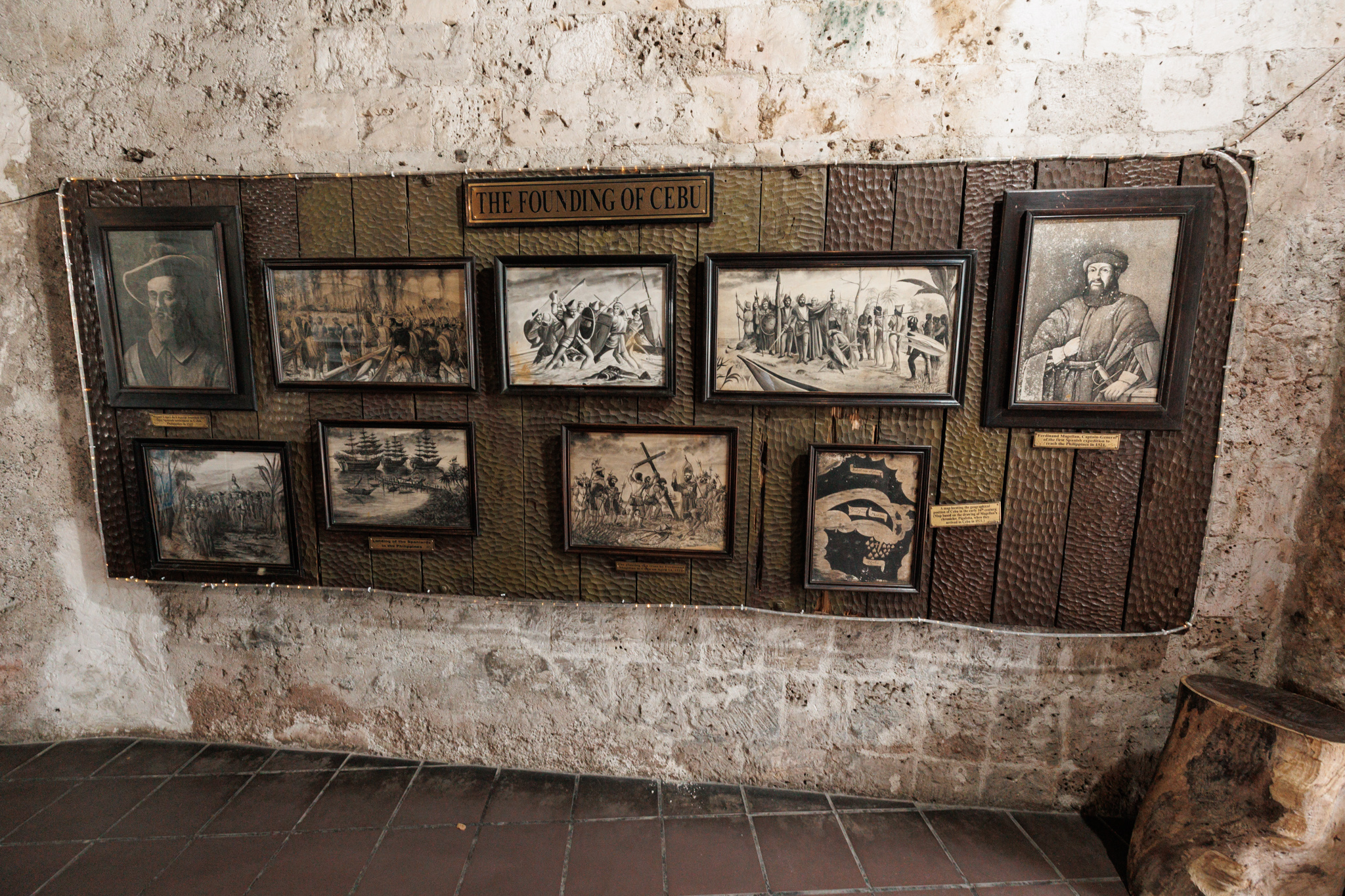
The museum begins the story where Spain would. A panel headed THE FOUNDING OF CEBU holds nine pictures in dark frames: ships at anchor, a landing, a fight, a cross, an old map, and Magellan himself, “Captain-General of the first Spanish expedition to reach the Philippines”.
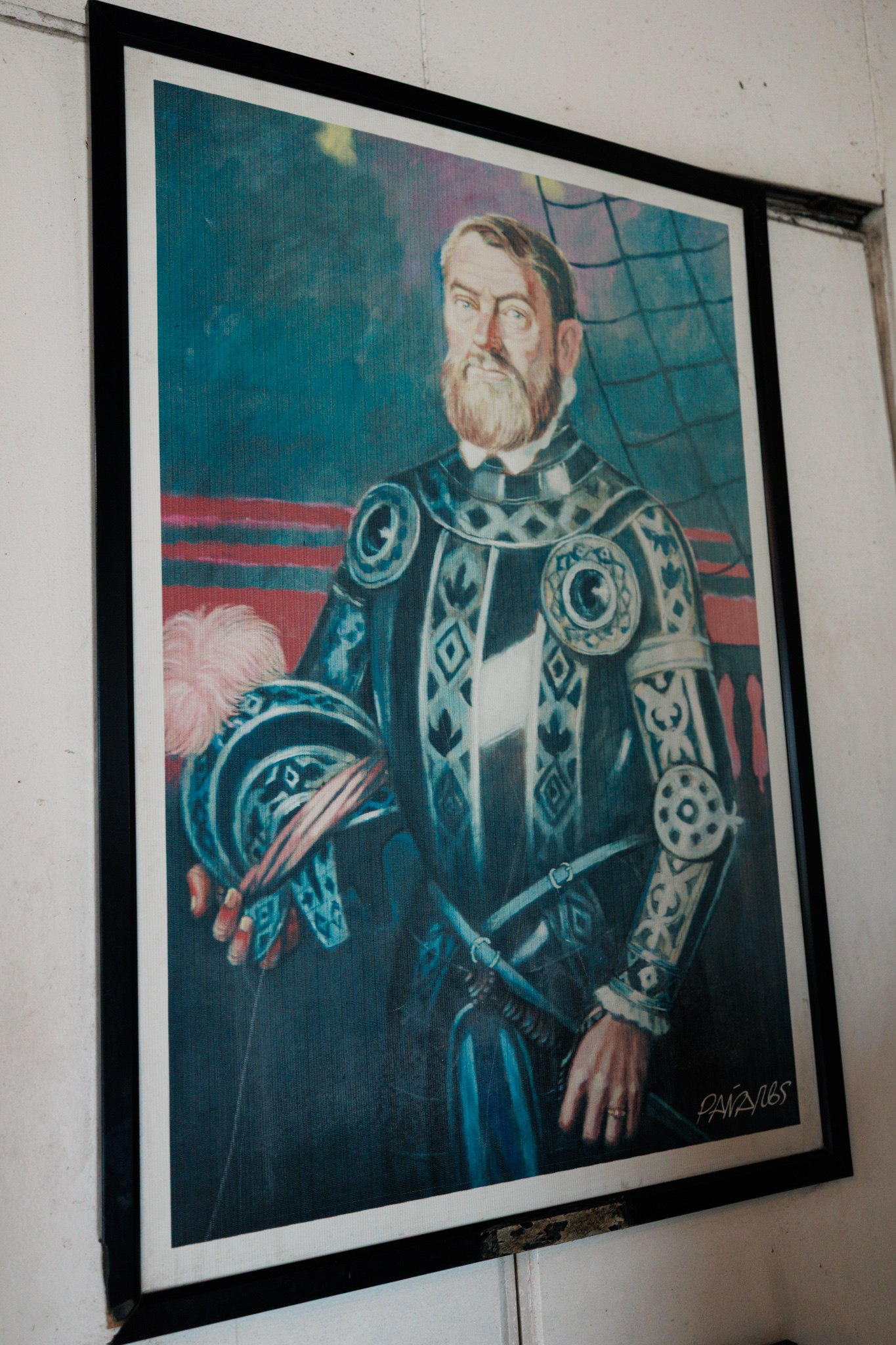
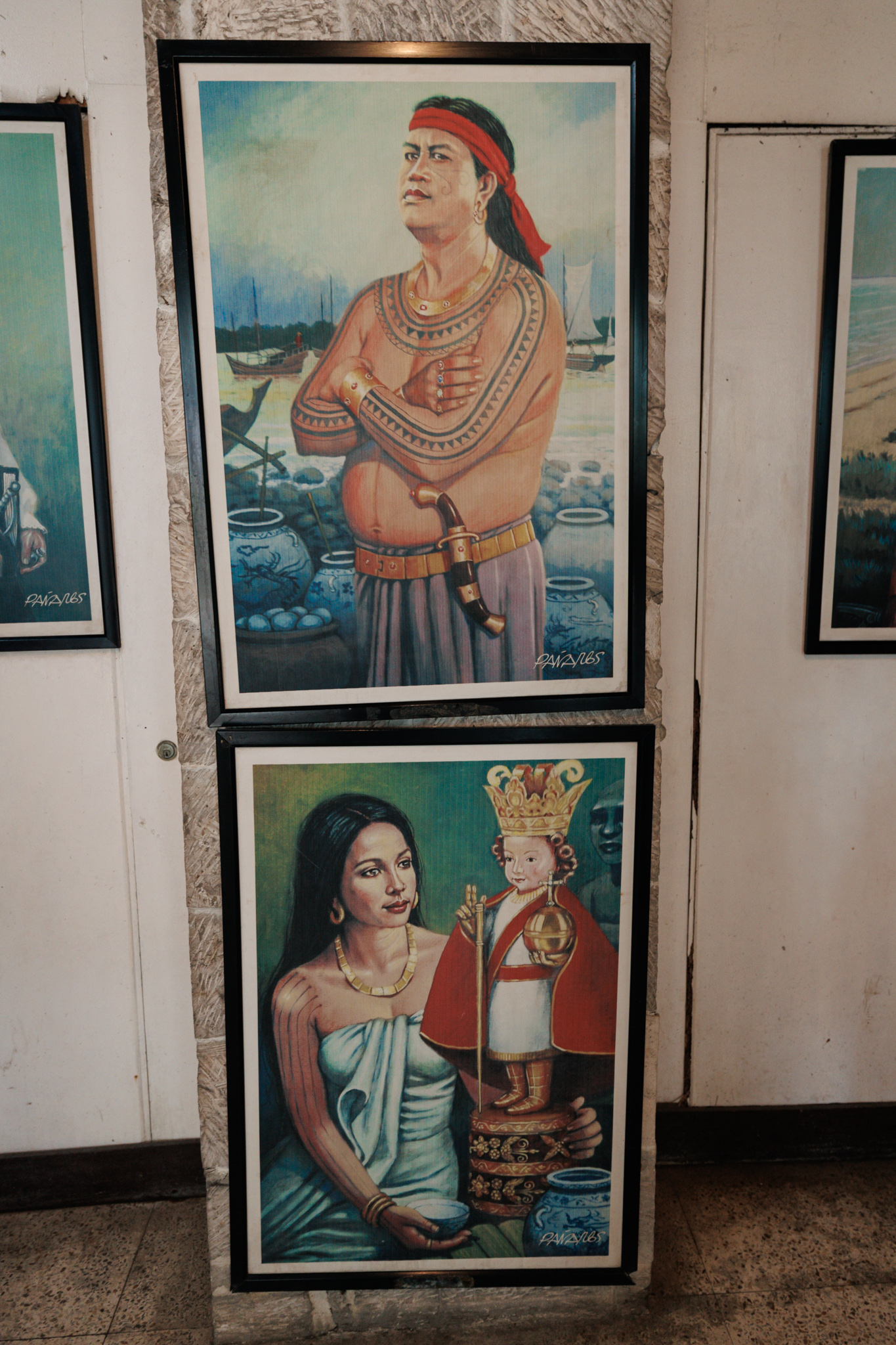
Further in, the story changes sides. The walls are hung with bright paintings signed Pañares. In one, Spanish soldiers in armour are going down in the shallows, and a boat stands off with a musketeer in it. In the middle, a warrior in a white headband brings a long sword down on a fallen captain.
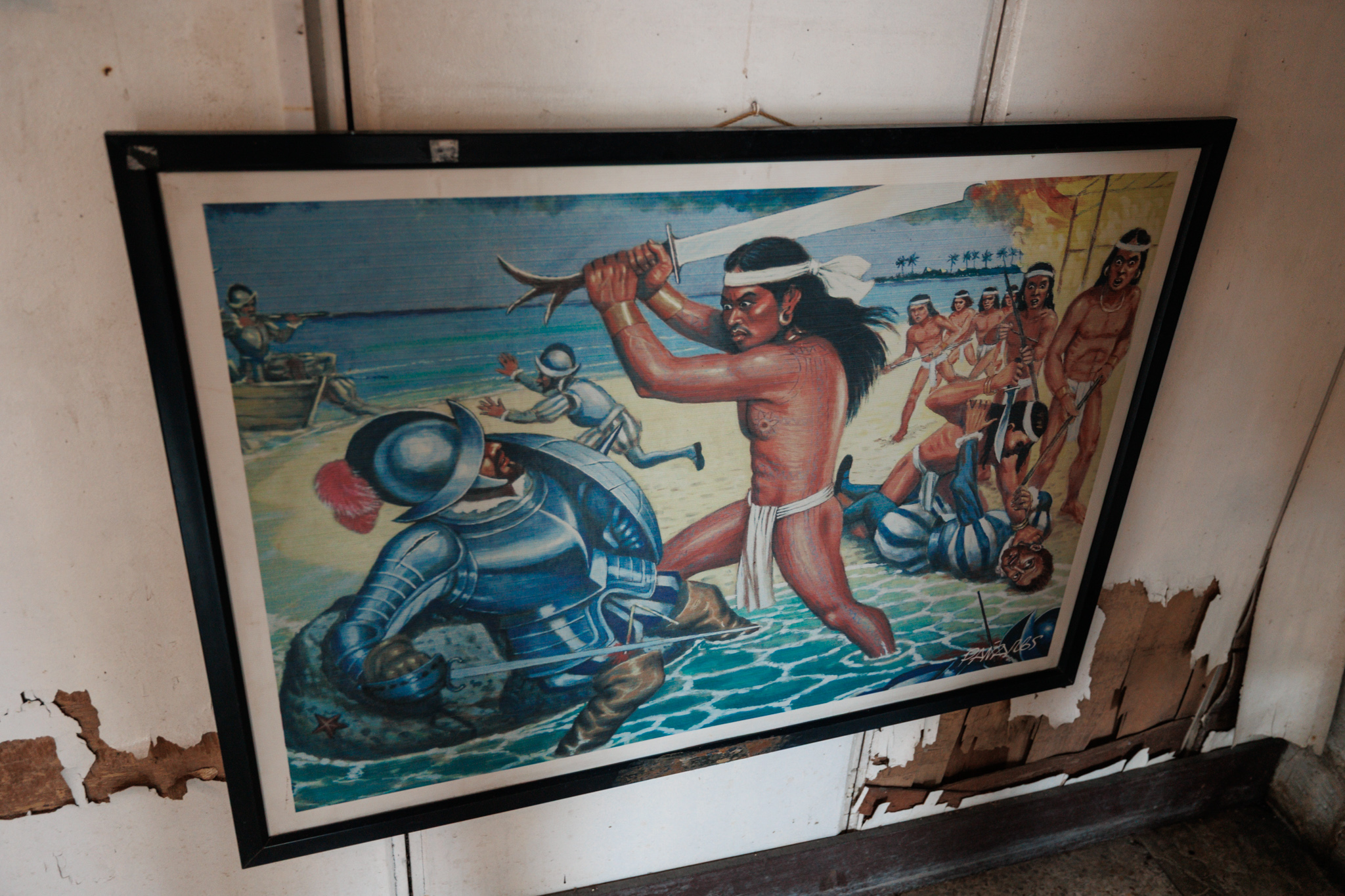
It is the Battle of Mactan, where Magellan was killed by the men of Lapulapu, a chief of the island. The earliest account of the battle does not say who struck the fatal blow.
In the fort the Spanish built, the painting gives the credit to one man.
In the same room, in a glass case, on a square of tatami, stood a suit of Japanese armour, its helmet topped with two tall horns.
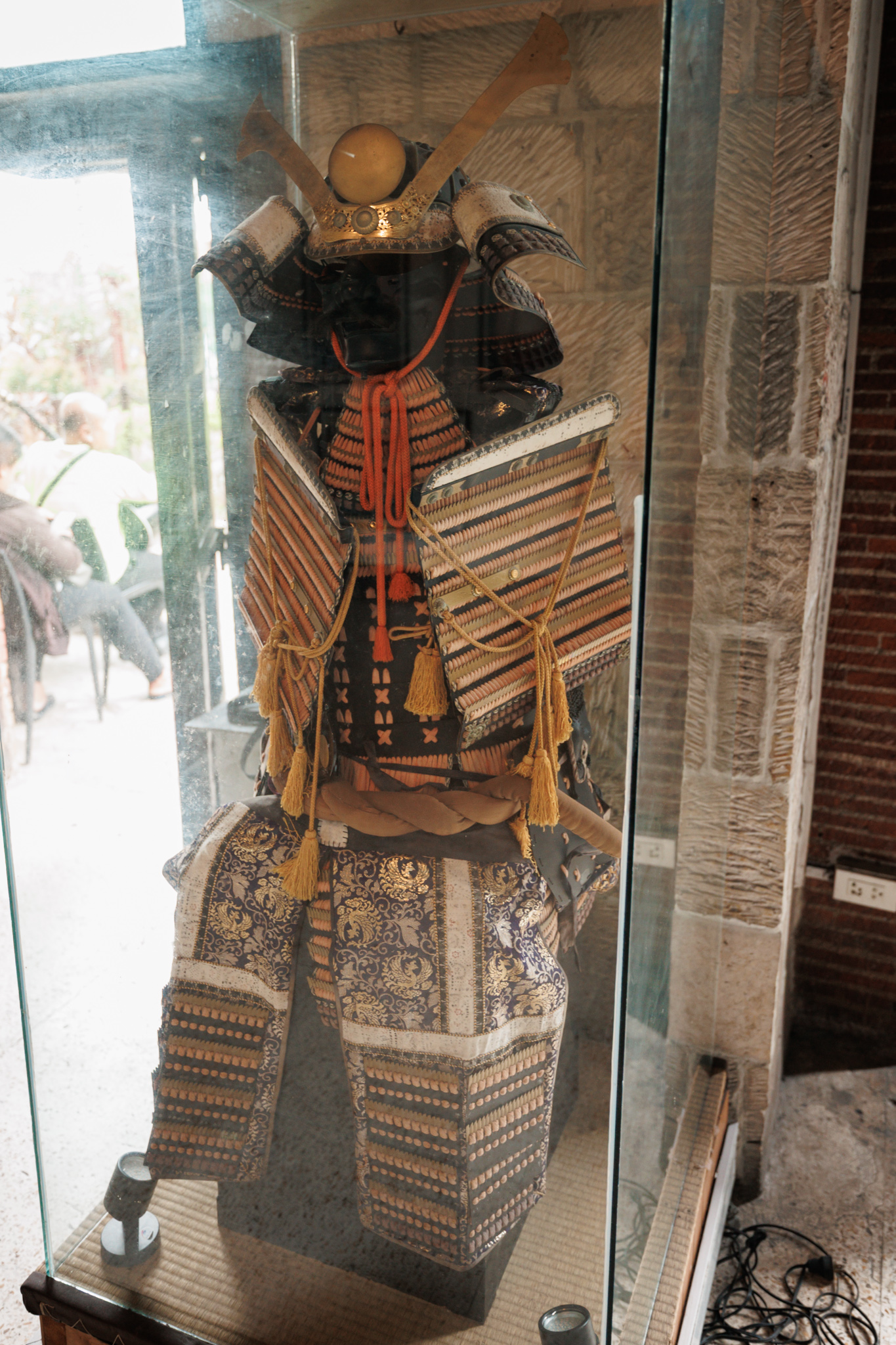
I have no note of a label, and I could not find out how it came to be here. In a fort with three dates on its front door, it came with none.
Outside the walls
Outside, the plaza around the fort is still adding monuments, all of them much younger than the fort.
Swipe to explore
Tap to enlarge
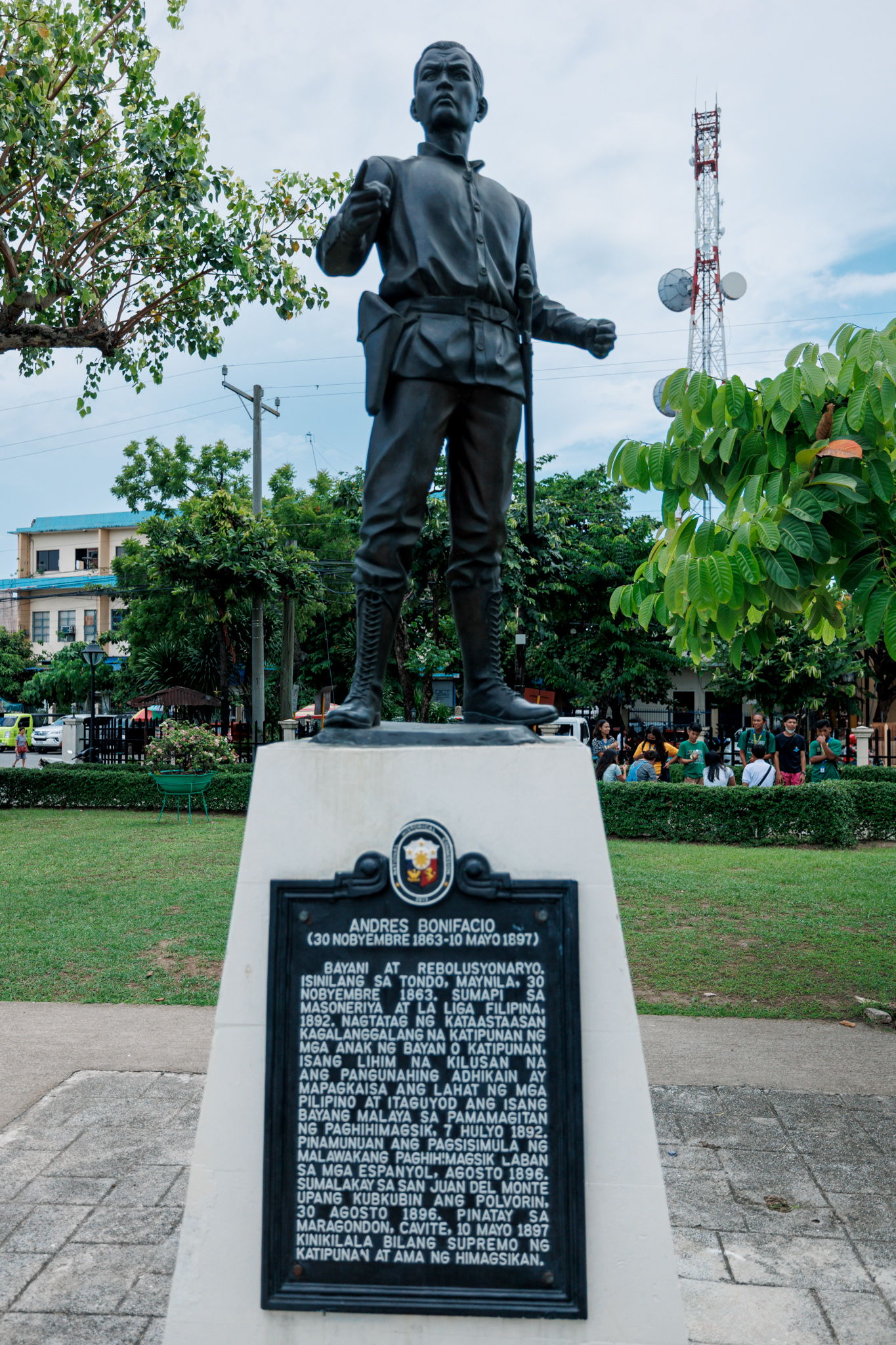
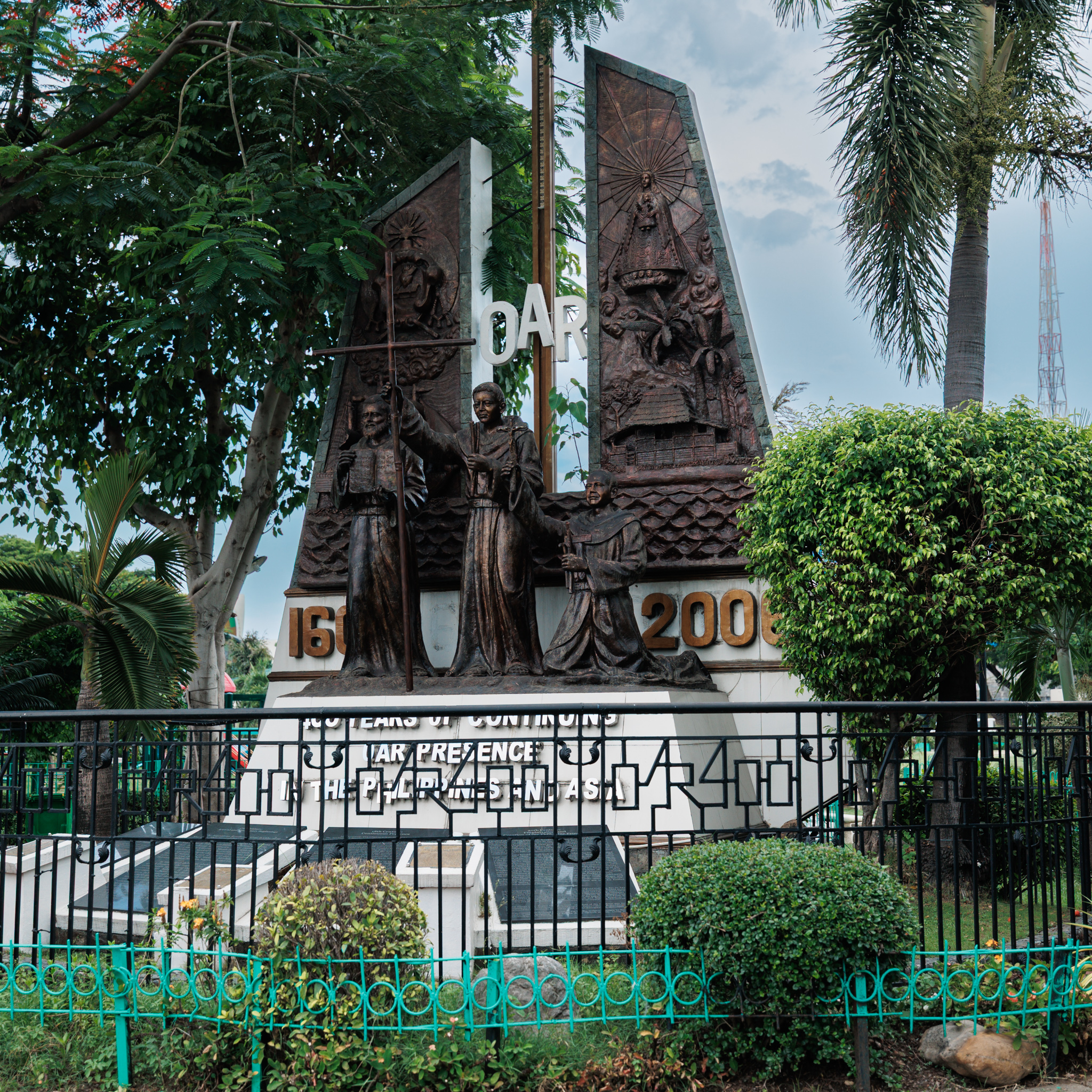
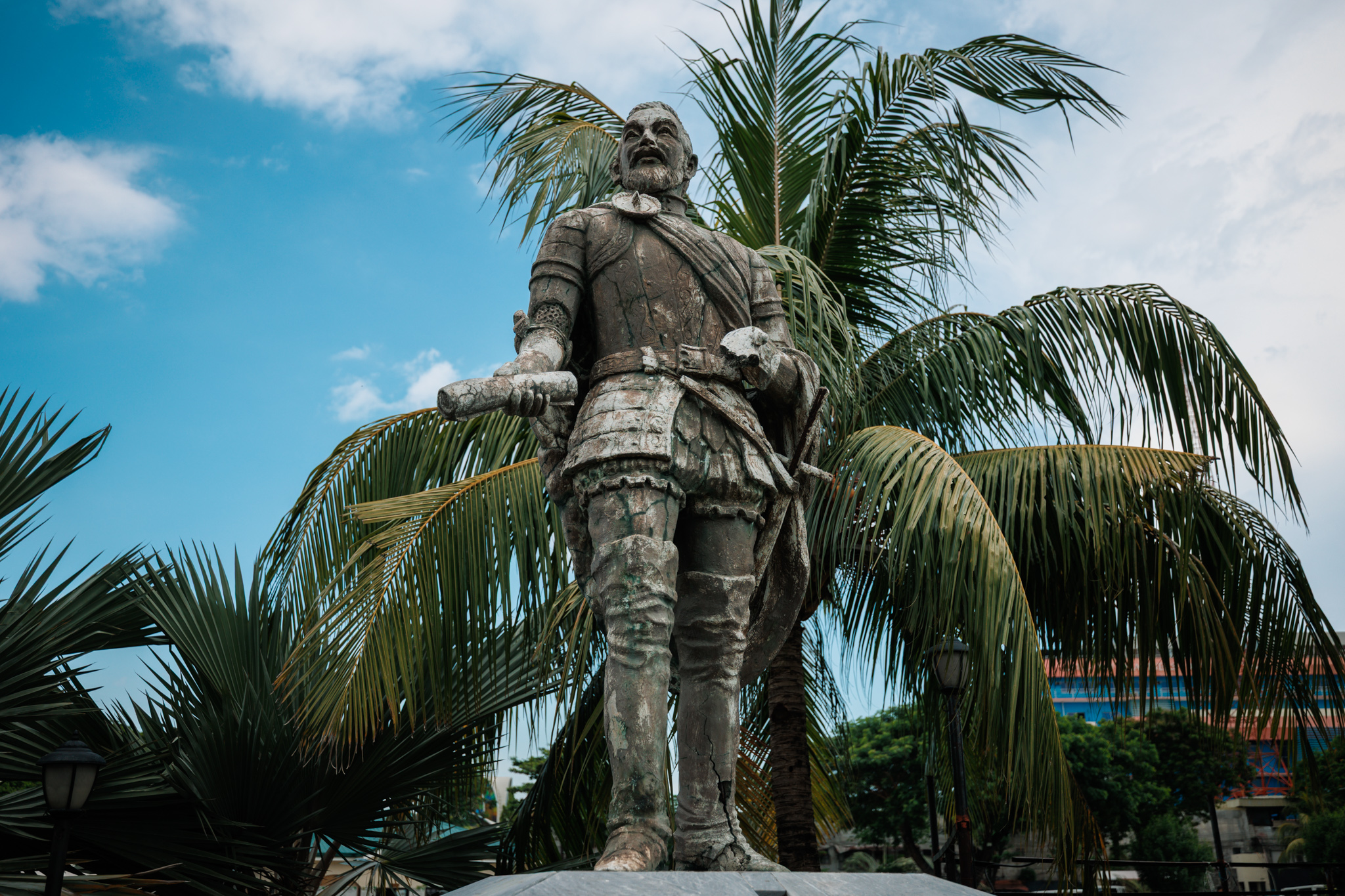
Up on the wall, a cannon still sits in a gap in the parapet, aimed through a little iron railing at all of them.
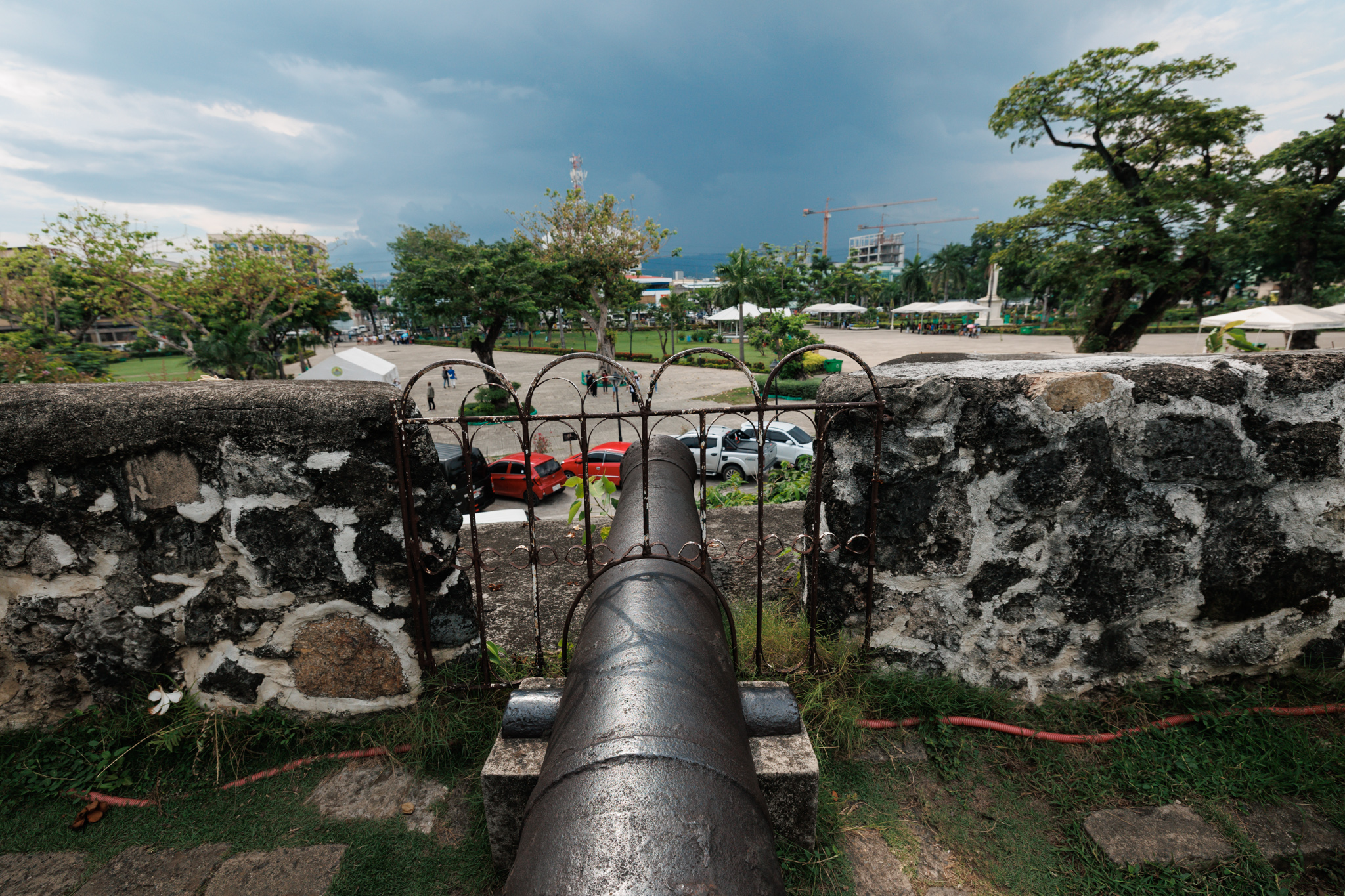
The fort is still on guard. At present, it has the parked cars covered.
Visit this place
Location
Fort San Pedro
On Plaza Independencia, near the port in downtown Cebu City
A. Pigafetta Street, Plaza Independencia, Cebu City, Cebu, Philippines
Practical Information
- Admission
- ₱30 for adults; ₱20 for students and senior citizens
Information last checked: October 16, 2026 (Location checked against the Google place listing; admission per Suroy.ph (updated July 2026). Opening hours vary between sources and are not stated.)
Conversation
Comments
Review pending commentsComments are reviewed before appearing. The internet already contains enough unattended surprises.
Loading comments…
Leave a comment