Heritage of Cebu Monument: Five Centuries in Three Minutes
In Parian, my driver gave me one rule. If anyone tried to sell me something, I was not to look at them. If anyone talked to me, I was not to look at them either. I was to ignore them completely.
He was the same man who had shown me round Mactan, and he came along.
There were people selling things. I did not look at them. I set off once round the monument in the middle of the plaza without catching anyone’s eye.
In the monument, almost everyone was trying to catch mine.
The Heritage of Cebu Monument packs the history of Cebu into one great pile of concrete, brass, bronze and steel. It was designed by the sculptor Eduardo Castrillo and finished in 2000. Castrillo started out designing jewellery.
The front row
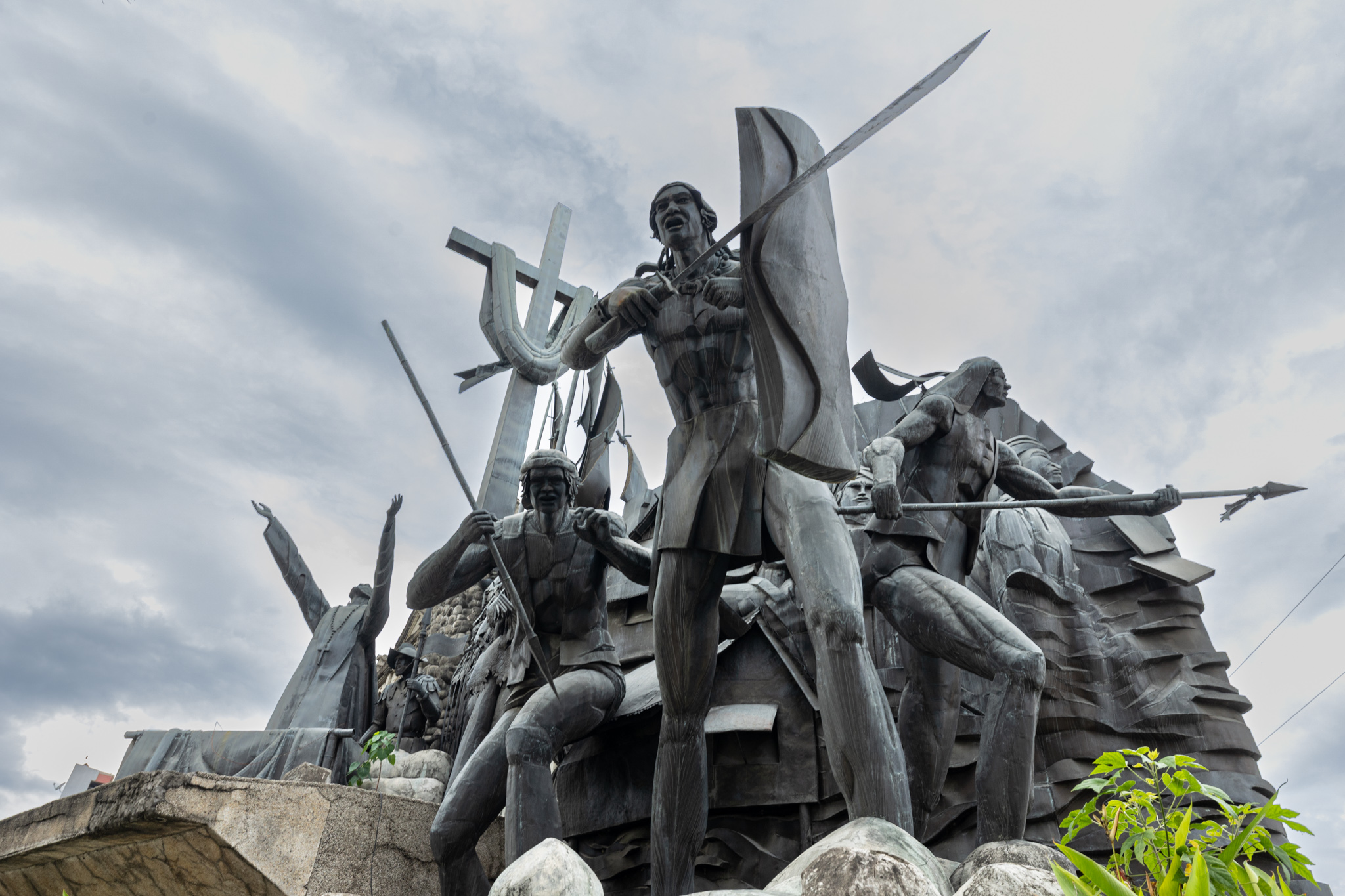
At the front, warriors charge with sword, shield and spear. The one in the middle has his mouth wide open. This is the Battle of Mactan, in 1521, and he is probably Lapulapu, whose men killed Ferdinand Magellan. The battle itself was fought on Mactan, across the water.
Behind the warriors, a robed figure throws up both arms, and over everyone stands a tall cross. From the front, the warriors have the stage. From the side, the cross does.
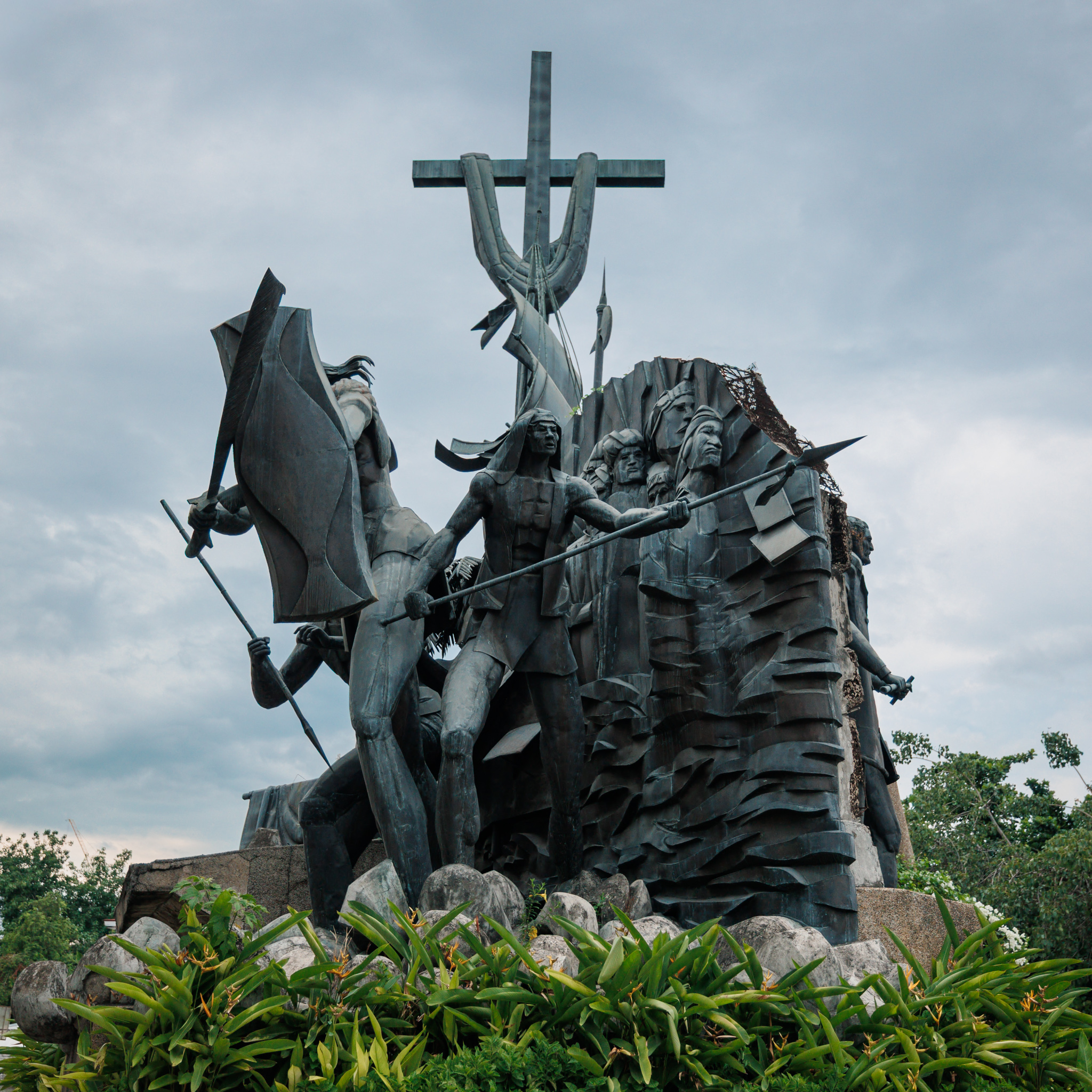
Not to scale
Round the corner, the century changes. Church fronts rise behind a crowd in procession, and raised above the crowd is a small crowned child. This is the Santo Niño, Cebu’s image of the Child Jesus. Here, he is a statue of a statue.
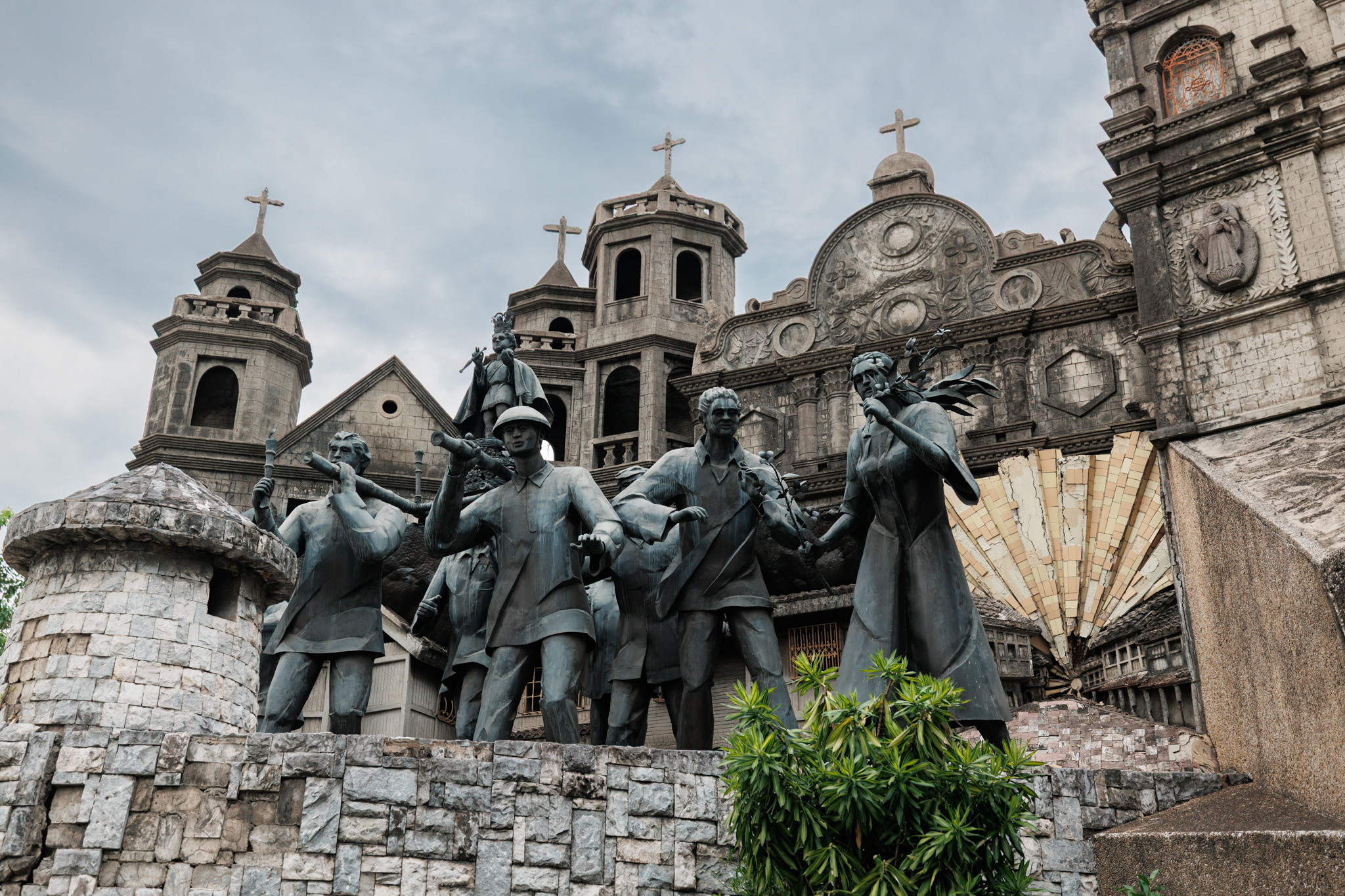
The people are bigger than the churches, and three churches stand shoulder to shoulder, with no street between them. Nothing here is to scale. It is the only way all of it fits on one traffic circle.
Two out of three
Two of the three churches in the monument are a short walk away: the Basilica del Santo Niño and the Metropolitan Cathedral.
The third is St John the Baptist, the old parish church of Parian. For most of its life, the parish was fought over: land, tribute, who it answered to, who should be its priest. It was abolished, restored and abolished again. One local leader is said to have declared that he would rather see the church destroyed than have a friar in it. A Spanish engineer found the building unsafe, and in the 1870s it was pulled down.
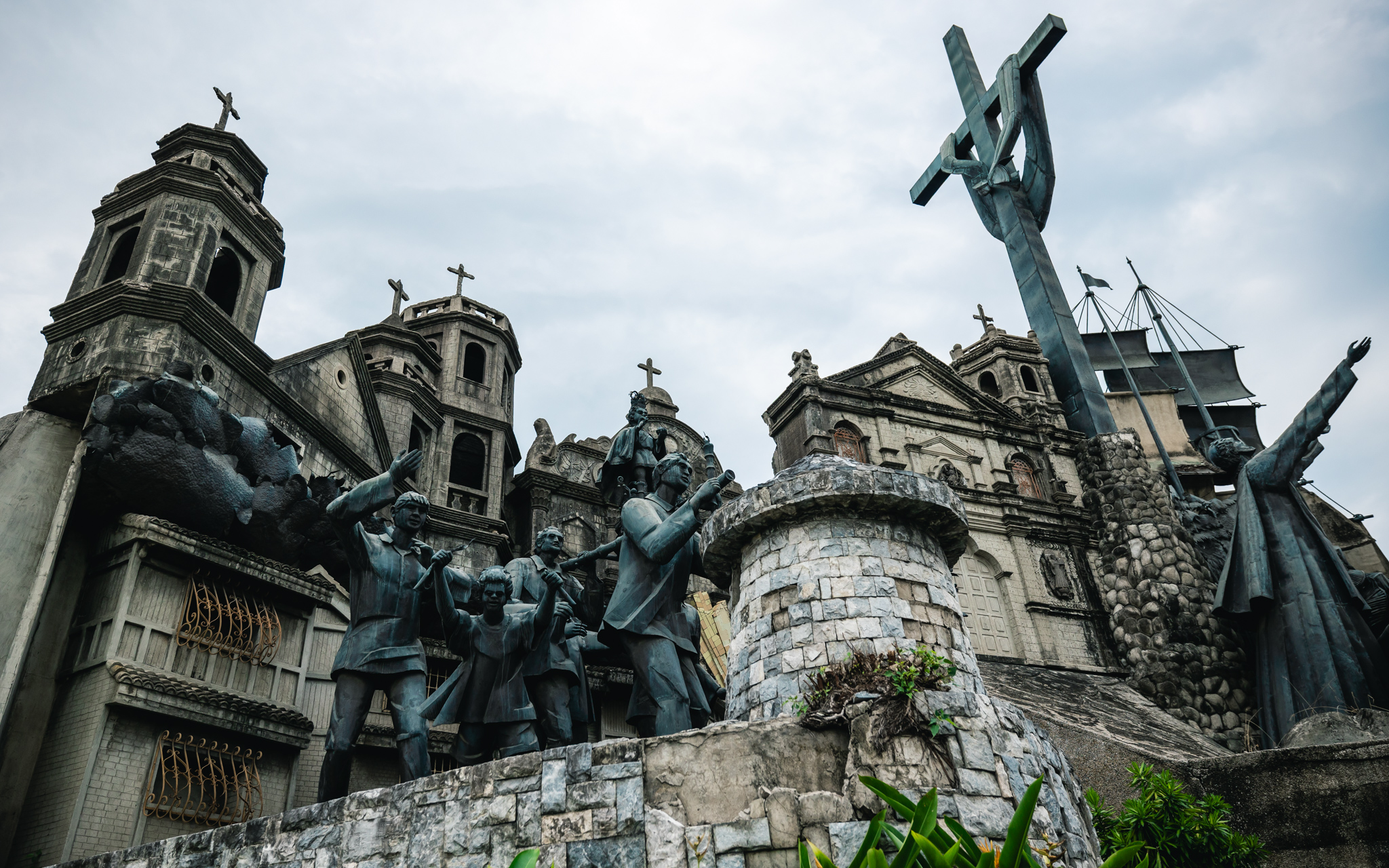
It stood here in Parian. Of the three churches in the monument, it is the only one you can no longer walk to.
Blessed, then saint
Further round, a young man holds up a cross in one hand and a book in the other. This is Pedro Calungsod, a catechist from the Visayas who went with Jesuit missionaries to the Marianas in the seventeenth century, and was killed on Guam.
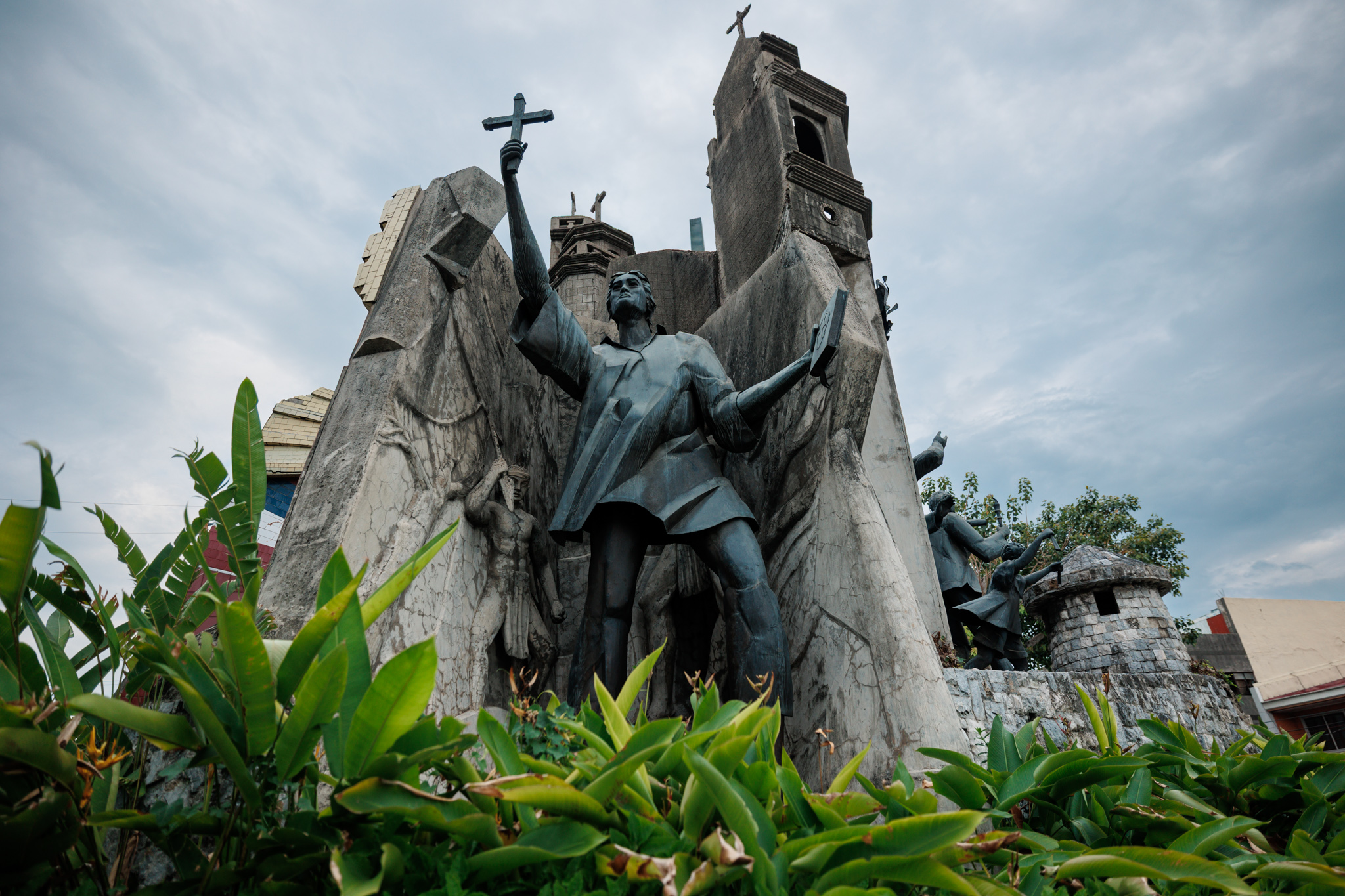
The newest scene in the monument is his beatification, in 2000, the same year the monument was finished. At the time, he was Blessed Pedro Calungsod. He has since been made a saint.
His statue is older than his sainthood.
The president’s chair
A few steps on, a man in a suit sits in a chair with his legs crossed and one hand raised, against rays of red, white and blue. He is Sergio Osmeña, a Cebuano who became president of the Philippines during the Second World War.
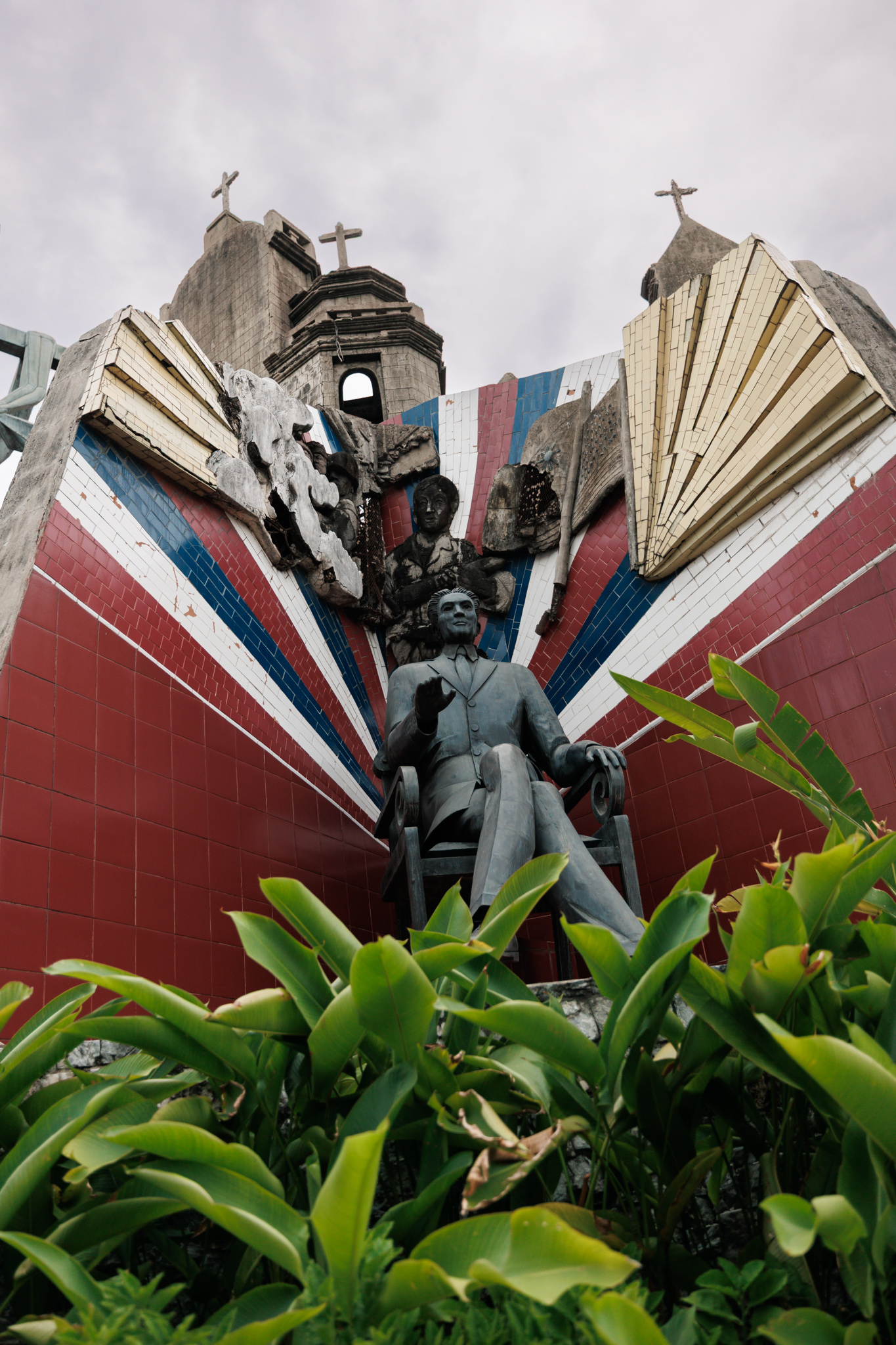
The monument counts his inauguration as a Cebu scene. It took place in Washington, where the government was in exile while Japan occupied the Philippines.
The far side
On the last side, the hull of a galleon bulges out of the wall among barrels, next to a small boat packed with people and a man in uniform standing on his own. None of them came with a name that I could see.
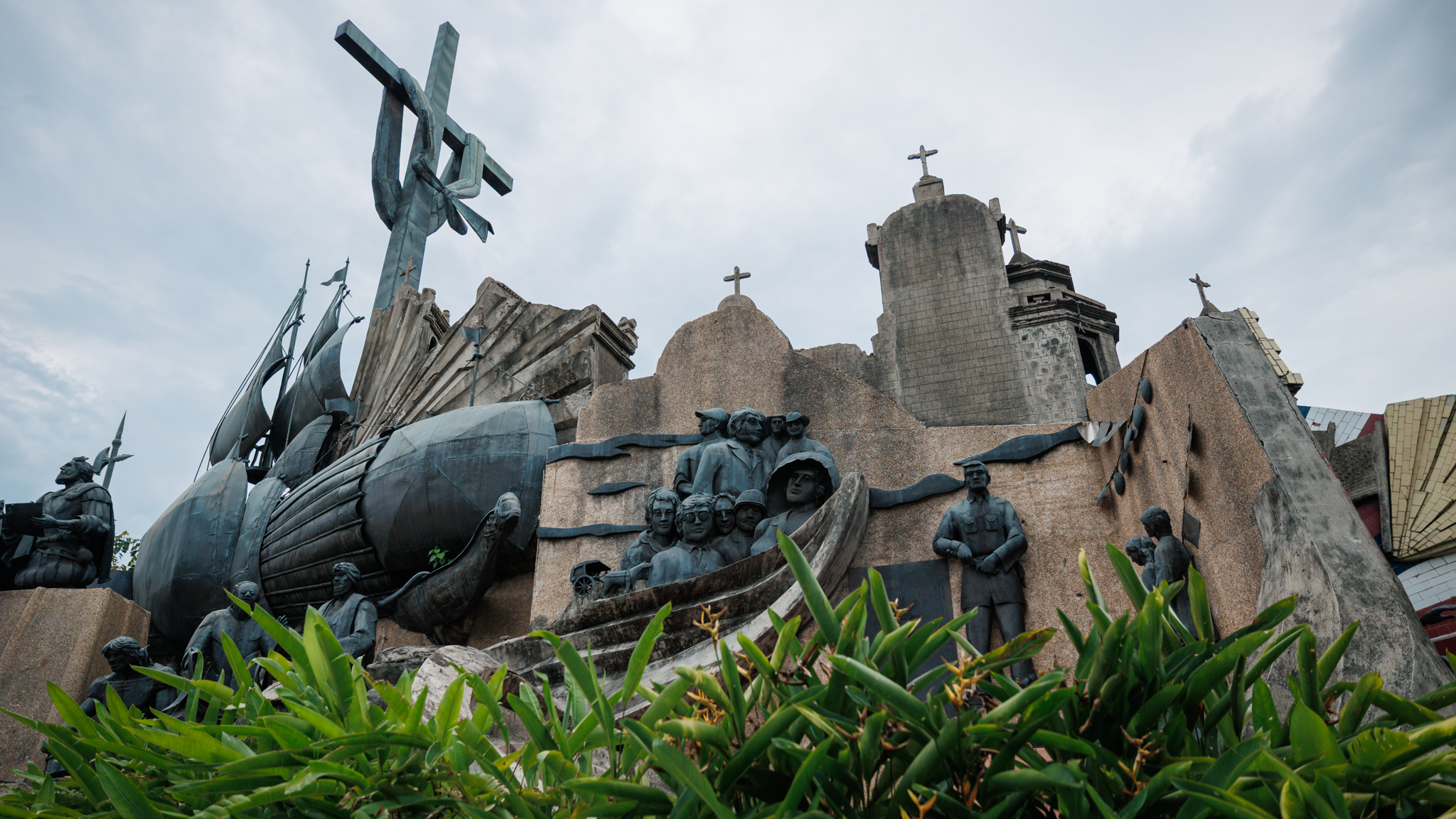
The ships suit the neighbourhood. Parian grew up as a district of Chinese traders, and its name is said to come from pari-pari, to barter or trade.
That was the whole circuit. Nothing happened. Apart from my driver, the only faces I had looked at were made of metal.
My first and last photographs of the monument were taken three minutes and thirteen seconds apart.
Almost five centuries of Cebu, in just over three minutes.
Visit this place
Location
Heritage of Cebu Monument
On the traffic circle at Parian, in old downtown Cebu City, a few minutes’ walk from the Metropolitan Cathedral and the Basilica del Santo Niño
Sikatuna Street, Parian, Cebu City, Cebu, Philippines
Practical Information
Information last checked: October 17, 2026 (Location checked. Admission, opening hours and access inside the fence are not stated.)
Conversation
Comments
Review pending commentsComments are reviewed before appearing. The internet already contains enough unattended surprises.
Loading comments…
Leave a comment