Cộng Cà Phê in Hanoi: A Shake on a Soviet Textbook
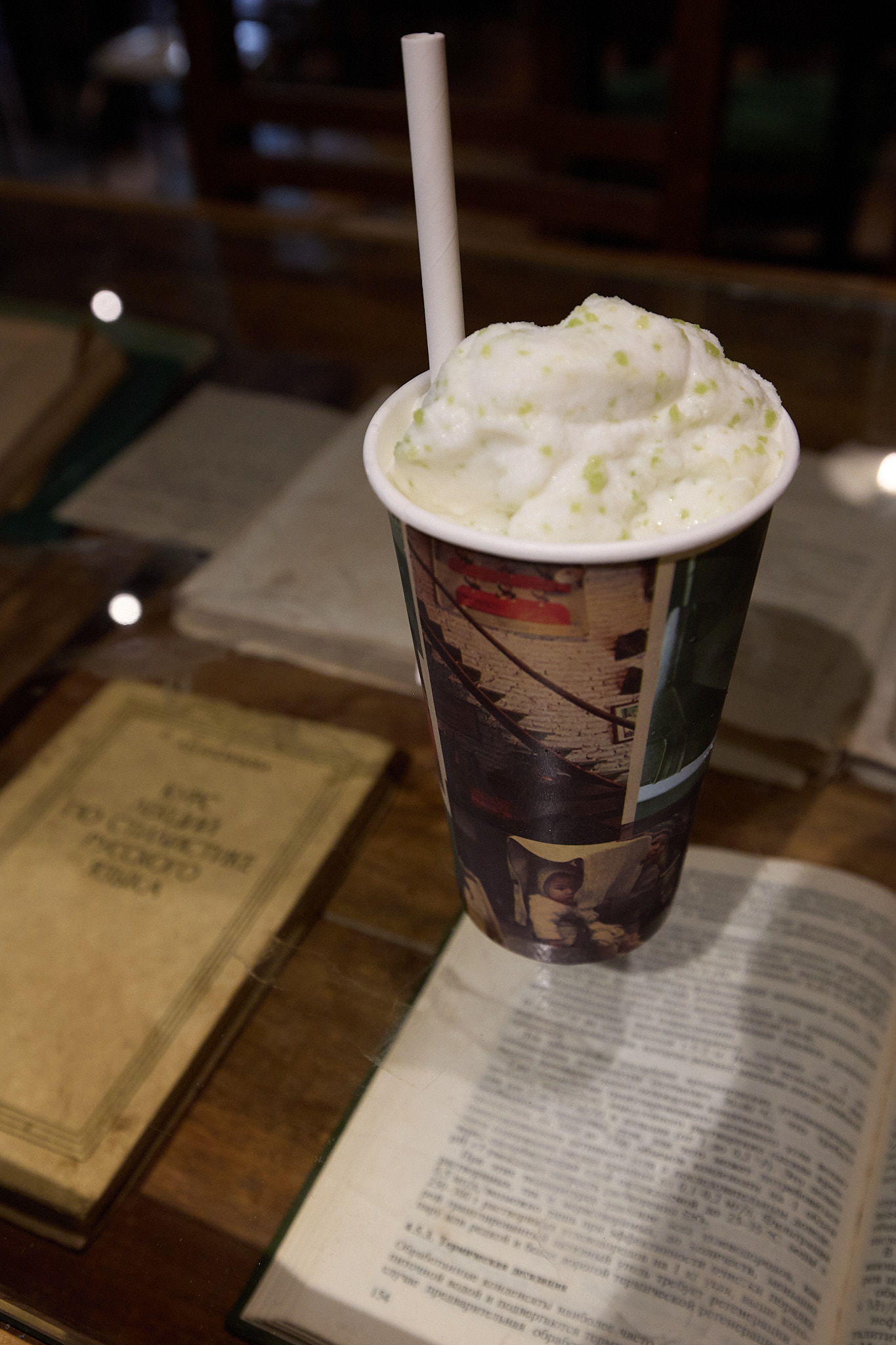
The table I put my drink on had a book in it: Mineral Resources and the Formation of Industrial Territorial Complexes, Kyiv, 1978.
The tabletop was a sheet of glass. Underneath lay old books, some closed, some open; the ones I could make out were in Russian. On top sat a coconut shake, heaped well above the rim of its paper cup.
Plus
Cộng Cà Phê began in 2007 as a small drinks shop on Triệu Việt Vương Street in Hanoi. Its owner, Linh Dung, filled it with old-style tables and chairs and objects that brought back her childhood in the subsidy period, the years of ration books before the market reforms.
The name, the company says, comes from the start of the country’s official name, Cộng hòa Xã hội Chủ nghĩa Việt Nam: the Socialist Republic of Vietnam. By itself, cộng means plus. It also begins cộng hòa, republic, and cộng sản, communist. The company goes with republic.
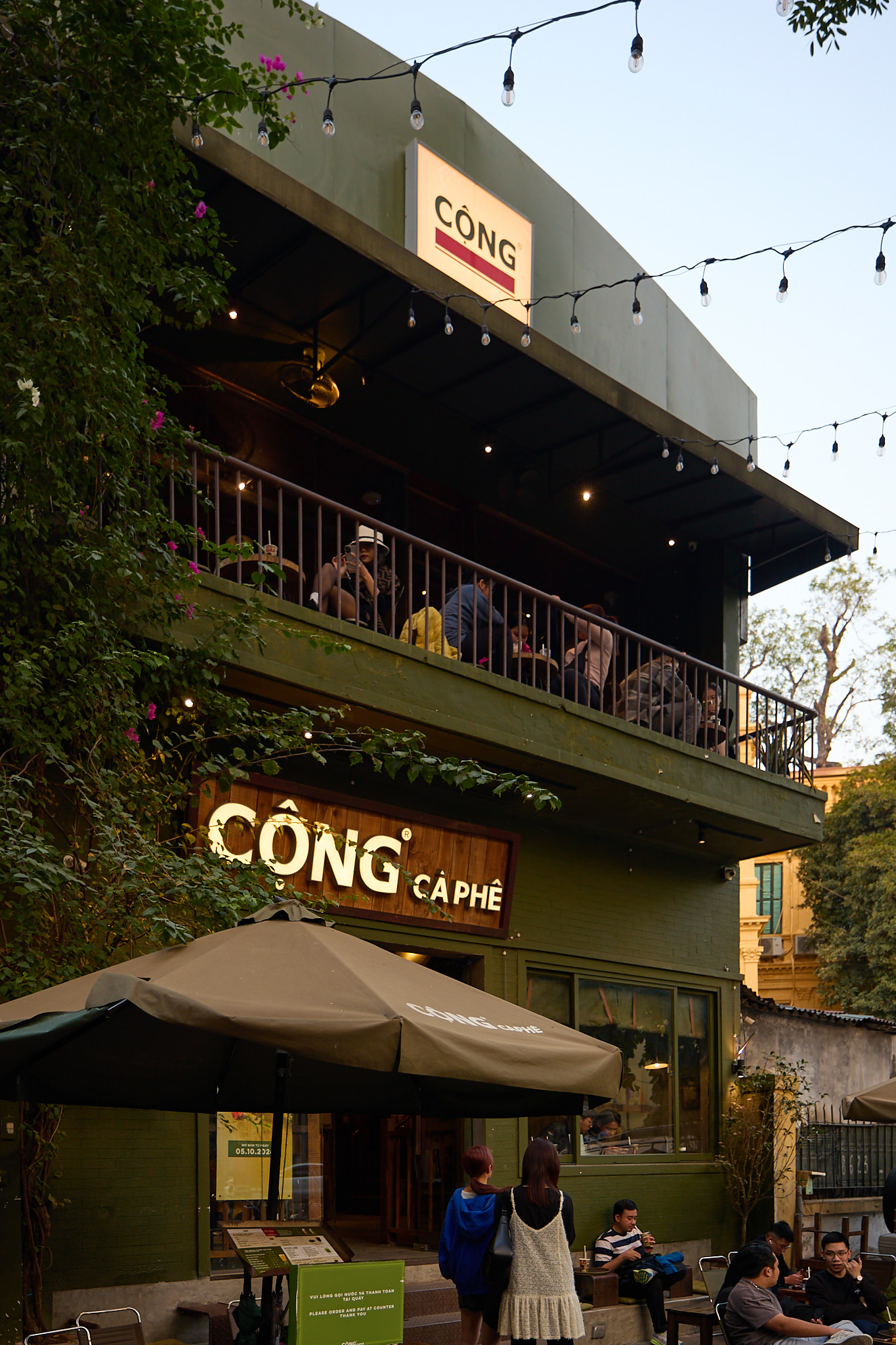
At last count, there were branches in seven countries, some 35 of them in South Korea. Nostalgia for the ration-book years, it turns out, travels.
The concept
Said quickly, Cộng Cà Phê sounds a lot like konkafe, the Japanese shorthand for a concept café. Say konkafe to me and I picture young women in costume bringing drinks to the table.
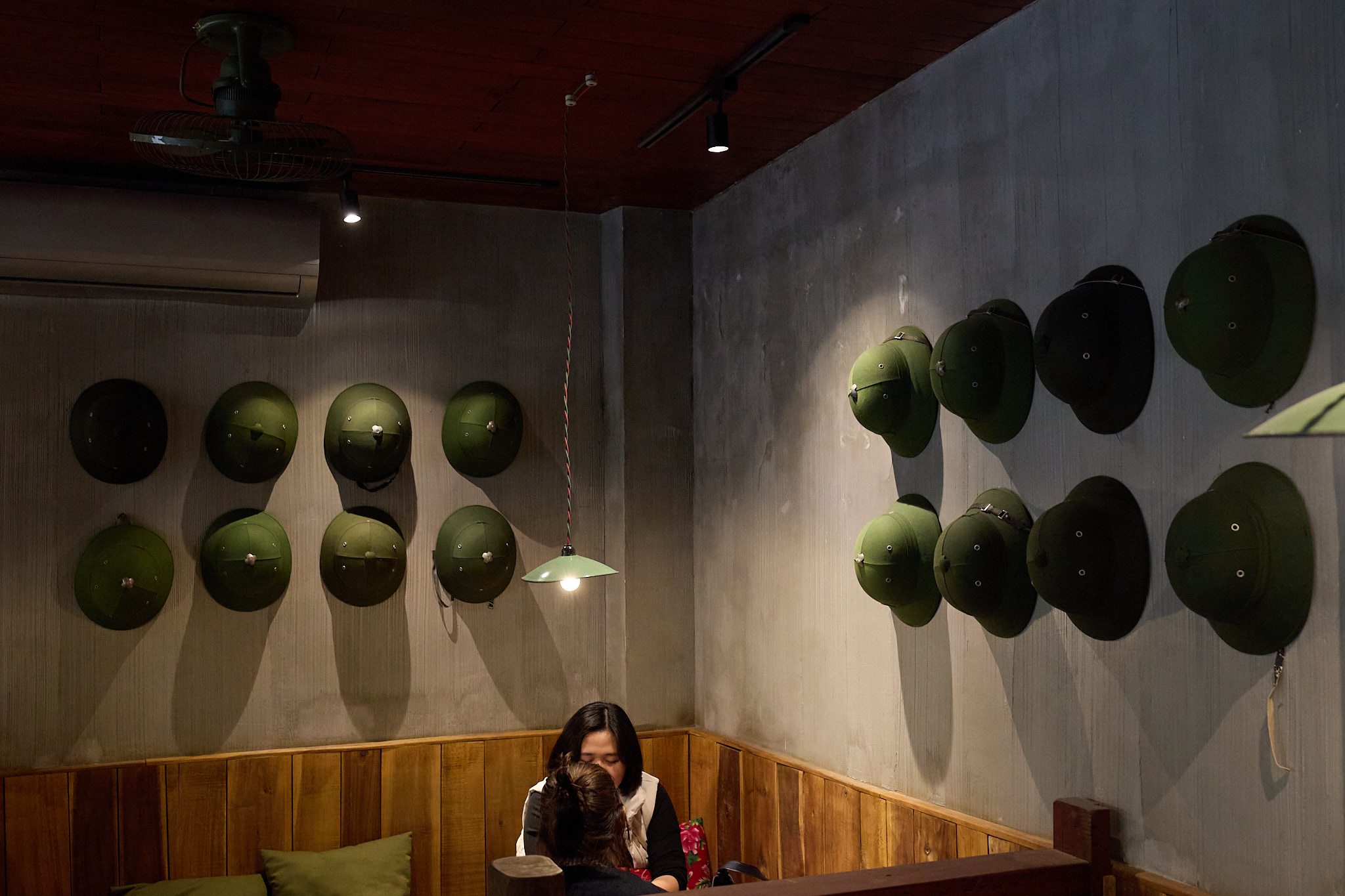
The concept here, the company says, draws on three things: community life in the subsidy period, the Vietnamese army, and the factories of the time. In one corner, two walls were hung with green pith helmets, the kind long worn by Vietnamese soldiers, in neat rows of four.
Under the glass
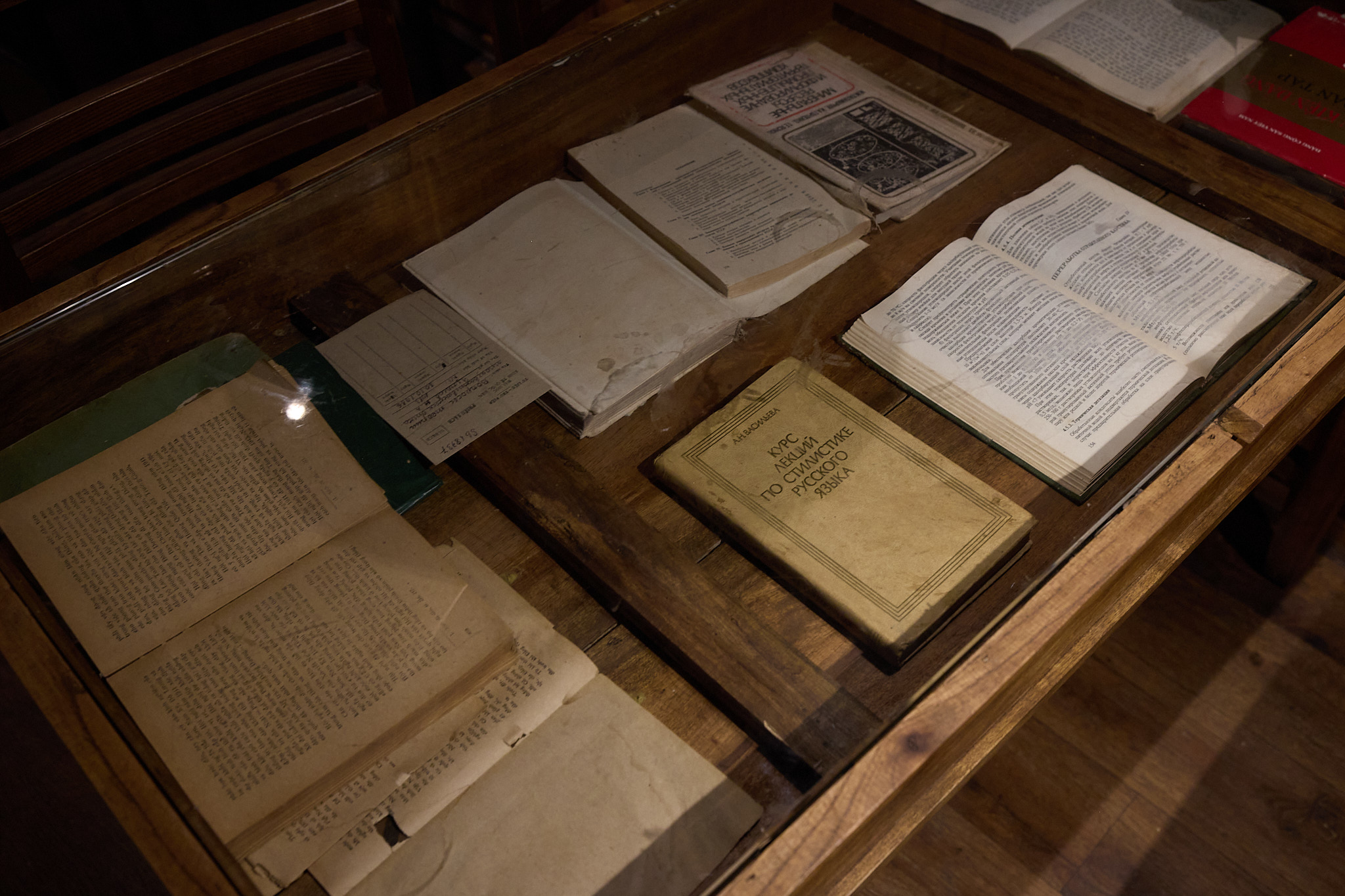
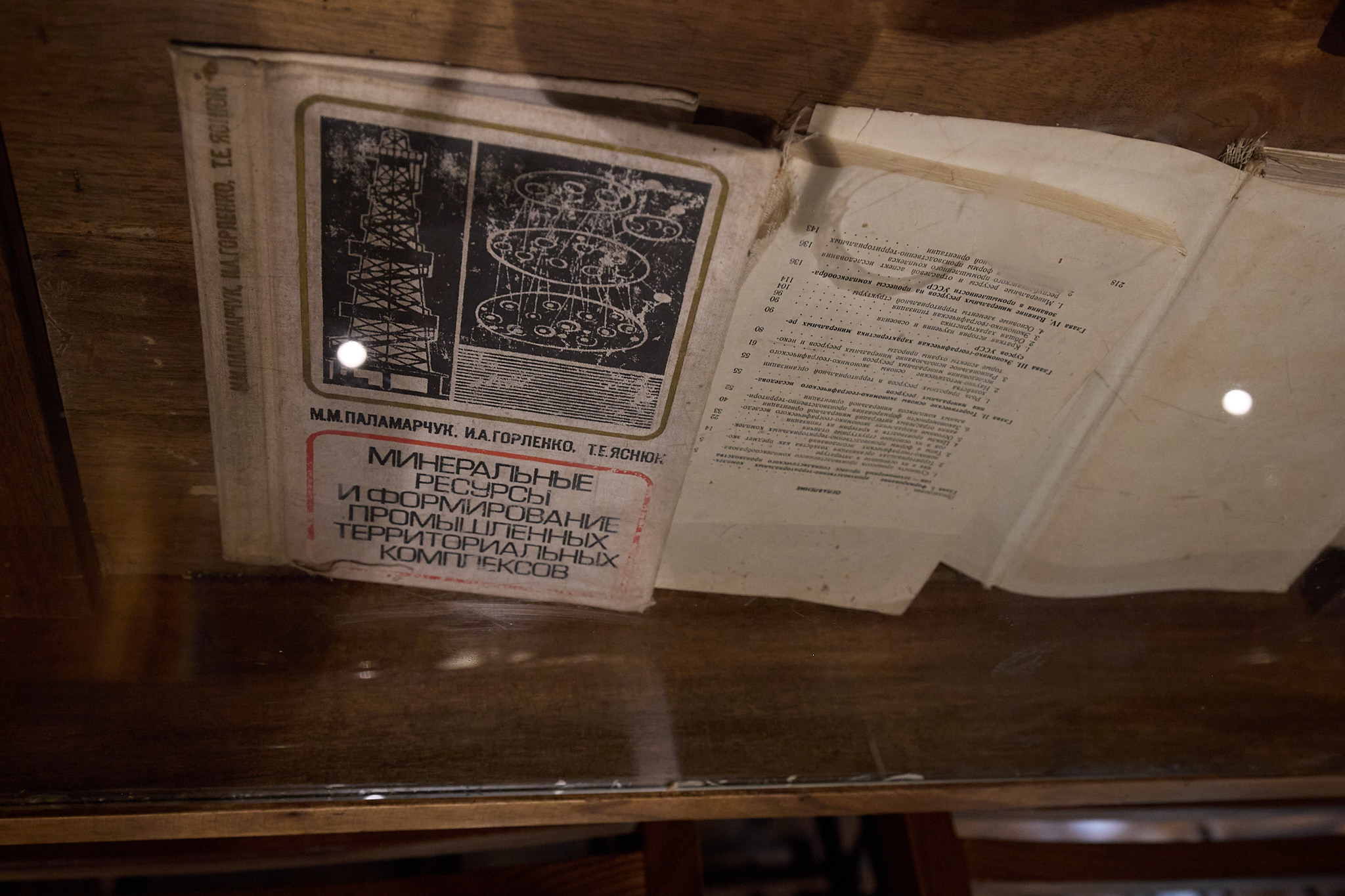
The mineral resources book is the work of three geographers, published in Kyiv, then the capital of Soviet Ukraine. It lay open at the contents, where two of the chapters are about the mineral resources and industry of the Ukrainian SSR.
Tucked between two of the books was what looked like a library card, filled in by hand. In a corner of the table lay a red volume with ĐẢNG CỘNG SẢN VIỆT NAM on the cover: Communist Party of Vietnam.
In the middle sat a yellow-brown volume: A Course of Lectures on the Stylistics of the Russian Language, by A. N. Vasilyeva. It was meant for foreigners who made a serious study of Russian, and for the people who taught it to them.
Vietnam produced a good many of those. The two countries established relations in 1950, and Vietnam soon began sending students to Soviet universities; by the time the Soviet Union ended, tens of thousands of Vietnamese had been trained with its help. How these particular books reached a café in Hanoi, I don’t know.
In the places I visited in Vietnam, the Soviet Union seemed to be remembered as a friend who had come through when it counted. Earlier that afternoon I had walked past a bronze Lenin, standing in a park on Điện Biên Phủ Street. Given the history, it makes sense. Coming from Japan, it felt like stepping into a parallel world: the same century, catalogued differently.
Autumn in December
After an afternoon in the old citadel, I did not order coffee. I ordered Coconut Green Rice, cốt dừa cốm xanh.
Cốm is young sticky rice, roasted and pounded, and in Hanoi it is the taste of autumn. This was late December. The green flecks on top were the rice.
To me, it tasted like zunda, the sweet green paste of mashed edamame from northeastern Japan. It was very good. It was also enormous: the cup had been filled to the rim, and the shake had carried on upwards. I finished it.
The cup was printed with old-looking photographs, a brick wall, a child bundled up in a hood. The décor remembers the ration-book years. The portions have forgotten them entirely.
Location
Café
Cộng Cà Phê (Điện Biên Phủ)
On Điện Biên Phủ Street in Ba Đình, central Hanoi
32 Điện Biên Phủ, Ba Đình, Hanoi, Vietnam
Practical Information
- Drink
- Coconut Green Rice (Cốt dừa cốm xanh): a coconut shake with young green rice
- Opening hours
- Daily 7:00–23:00, as listed on Google Maps
- Price
- 69,000 VND on the chain’s online menu (checked November 2026); prices may differ by branch
- Visitor note
- When I visited in December 2024, a sign by the entrance asked customers to order and pay at the counter. There is seating upstairs, including a terrace over the street.
- Phone
- +84 911 811 141
Information last checked: November 1, 2026 (Location, phone and opening hours checked against the café’s Google Maps listing; the price is from the chain’s online menu, not a branch price list.)
Conversation
Comments
Review pending commentsComments are reviewed before appearing. The internet already contains enough unattended surprises.
Loading comments…
Leave a comment