One Pillar Pagoda: Back on Its Foot
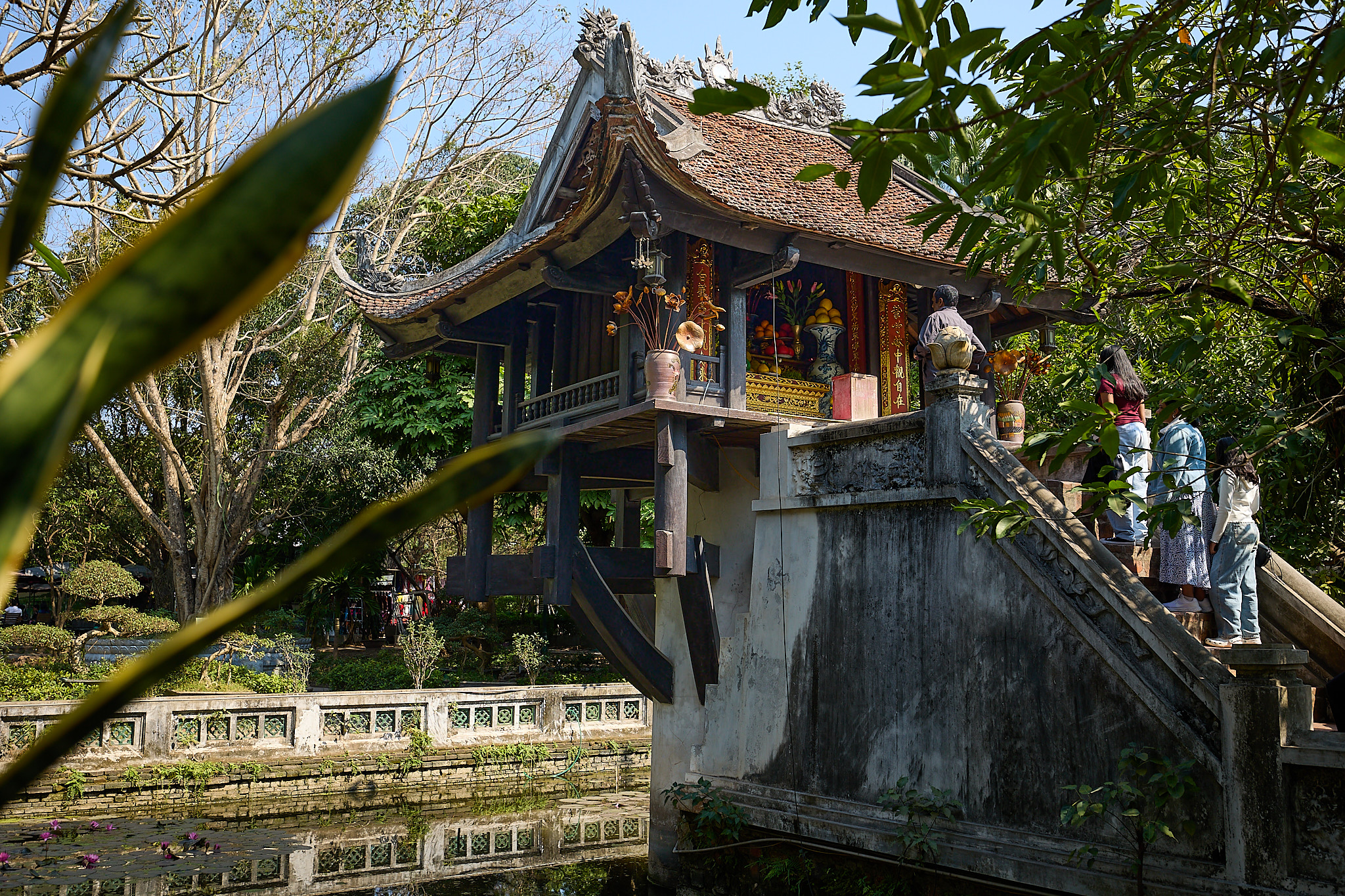
The one pillar of the One Pillar Pagoda is two stones. They are joined so neatly that from the bank they look like one: a column about four metres tall and more than a metre across, standing in a square pond, with a wooden hall three metres square on top.
The pagoda is often called a symbol of Hanoi, and its story begins in 1049. The hall on the pillar was built in 1955.
A lotus in a dream
As the court annals tell it, King Lý Thái Tông dreamed of Quan Âm, the bodhisattva of compassion, seated on a lotus. She reached out and led him up onto it. Some of his officials took the dream as a bad omen. A monk advised him to build a pagoda: a stone pillar set in the ground, with a lotus seat for Quan Âm on top, as he had seen it in his sleep. It was named Diên Hựu, “lasting blessings”.
A stele tells it differently. In that version, the king had no heir and came here to pray. Quan Âm appeared in a dream, invited him up into a tower and placed a child in his arms. That month, the queen became pregnant.
Either way, the hall on its pillar looks like a lotus flower rising out of the water. In 1105, a pond was dug around the pillar and planted with lotuses.
1954
In September 1954, as French forces prepared to leave Hanoi, an explosion destroyed the wooden hall above the pillar. Who was responsible remains disputed.
The following year, the architect Nguyễn Bá Lăng rebuilt the hall in its old form.
In 2012, the Asian Records Organisation recognised the rebuilt pagoda for having “the most unique architecture in Asia”.
Up the steps
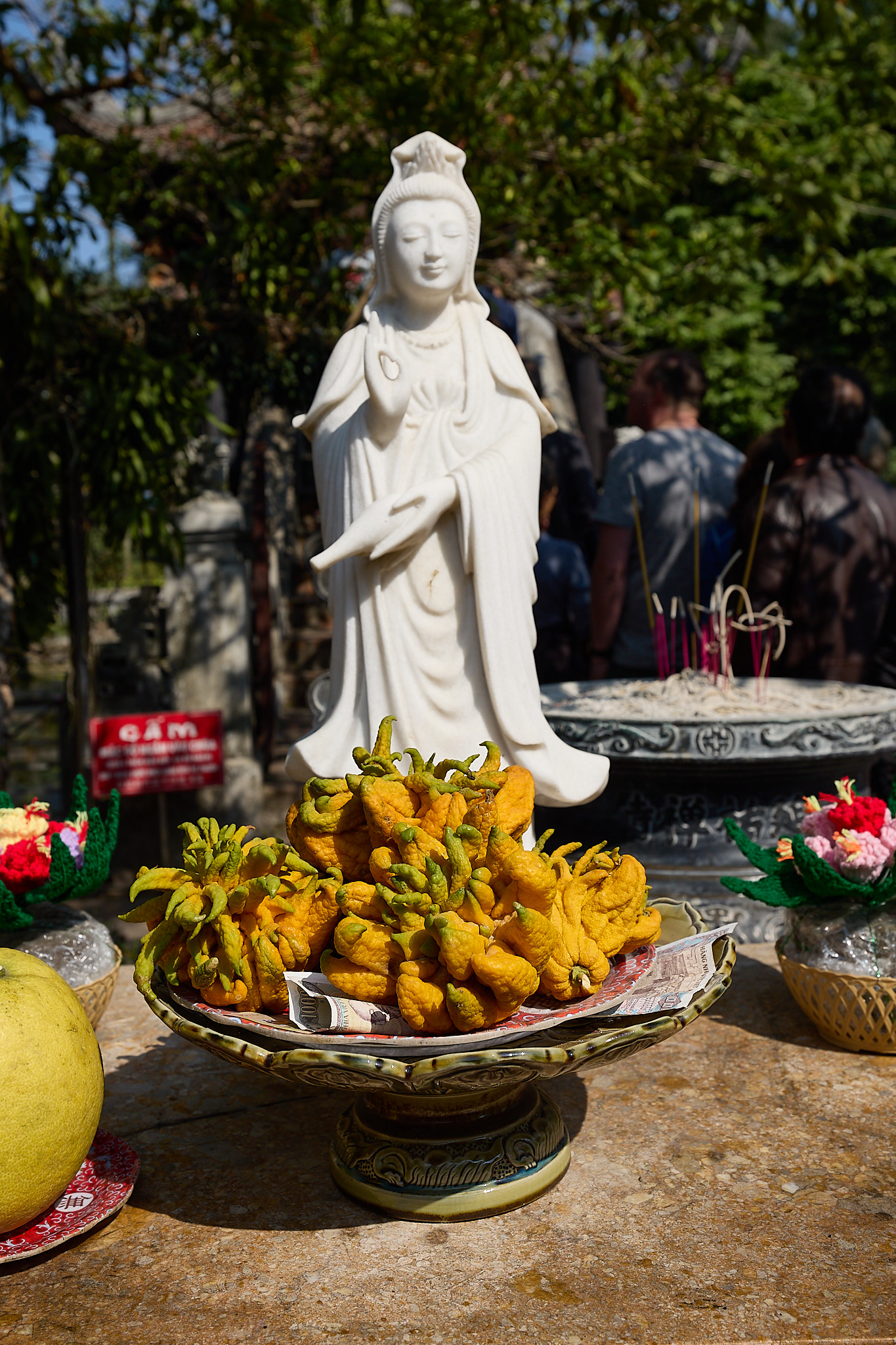
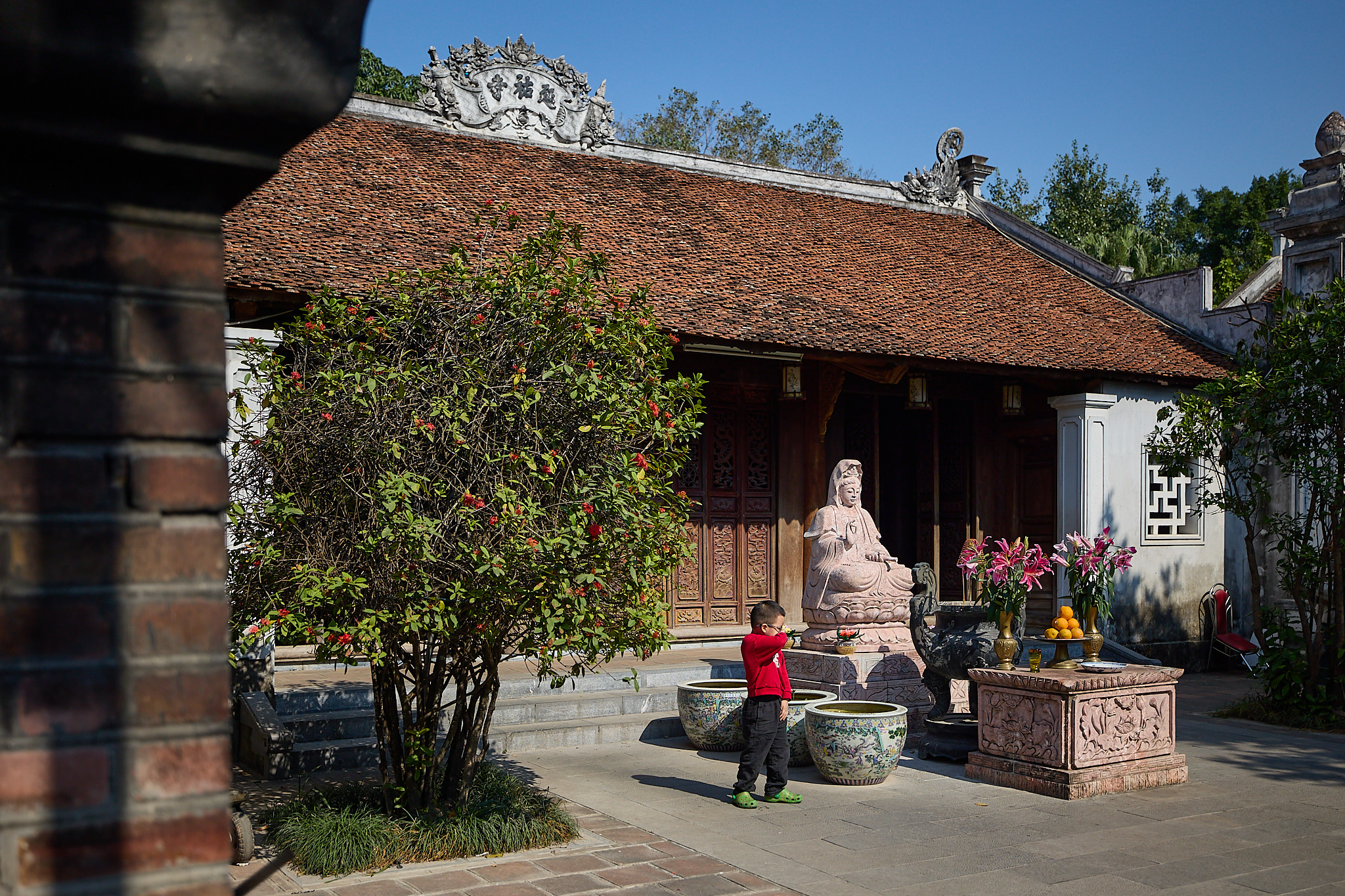
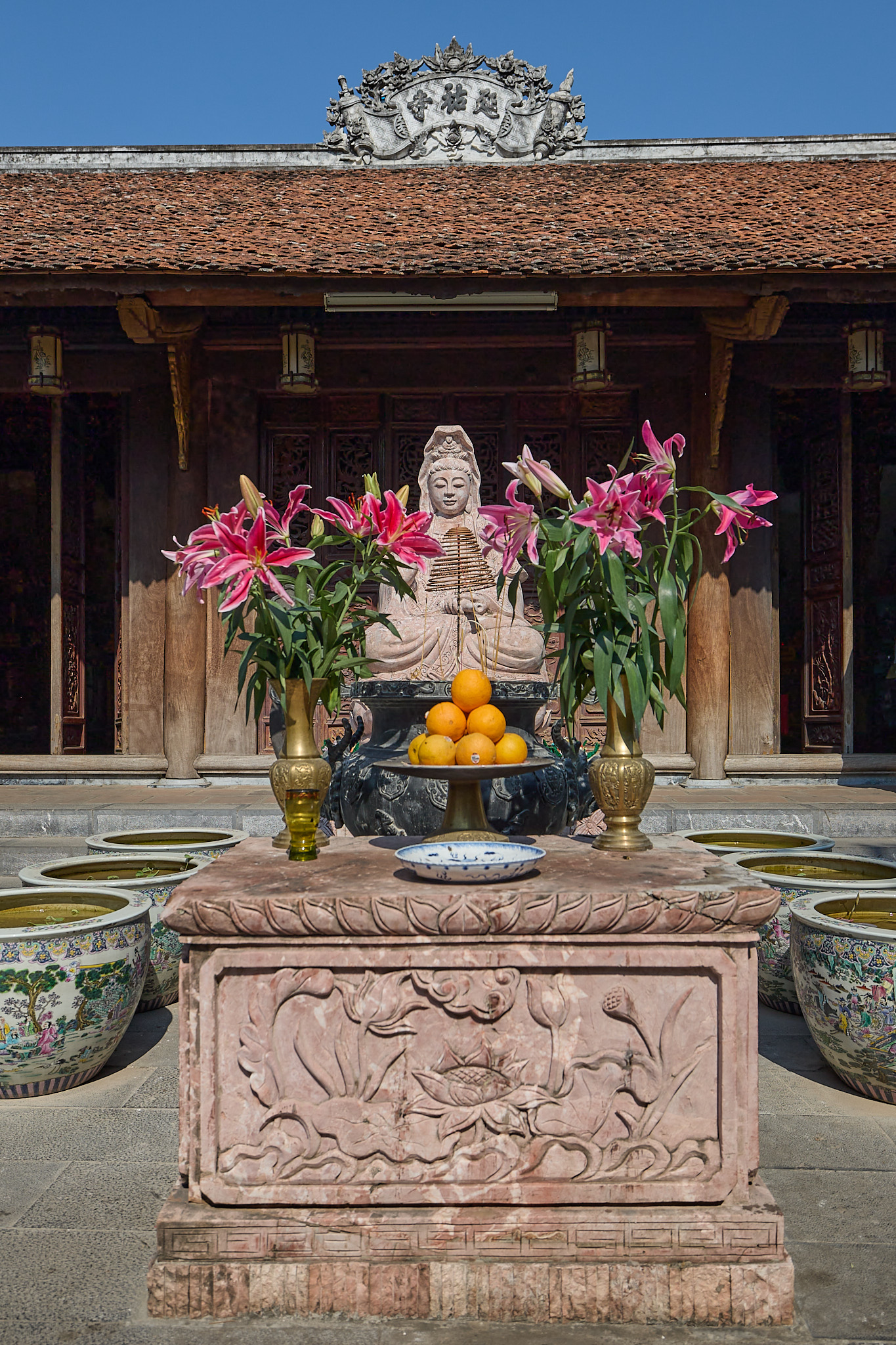
In the courtyard stands a white figure with a plate of fruit in front of it. Some of the fruit looks like small yellow hands, with too many fingers. It is a citron that grows divided into fingers, known in English as Buddha’s hand, and in Vietnamese as phật thủ, which means the same. It is beautifully scented, and a favourite offering at the new and full moon and at Tết.
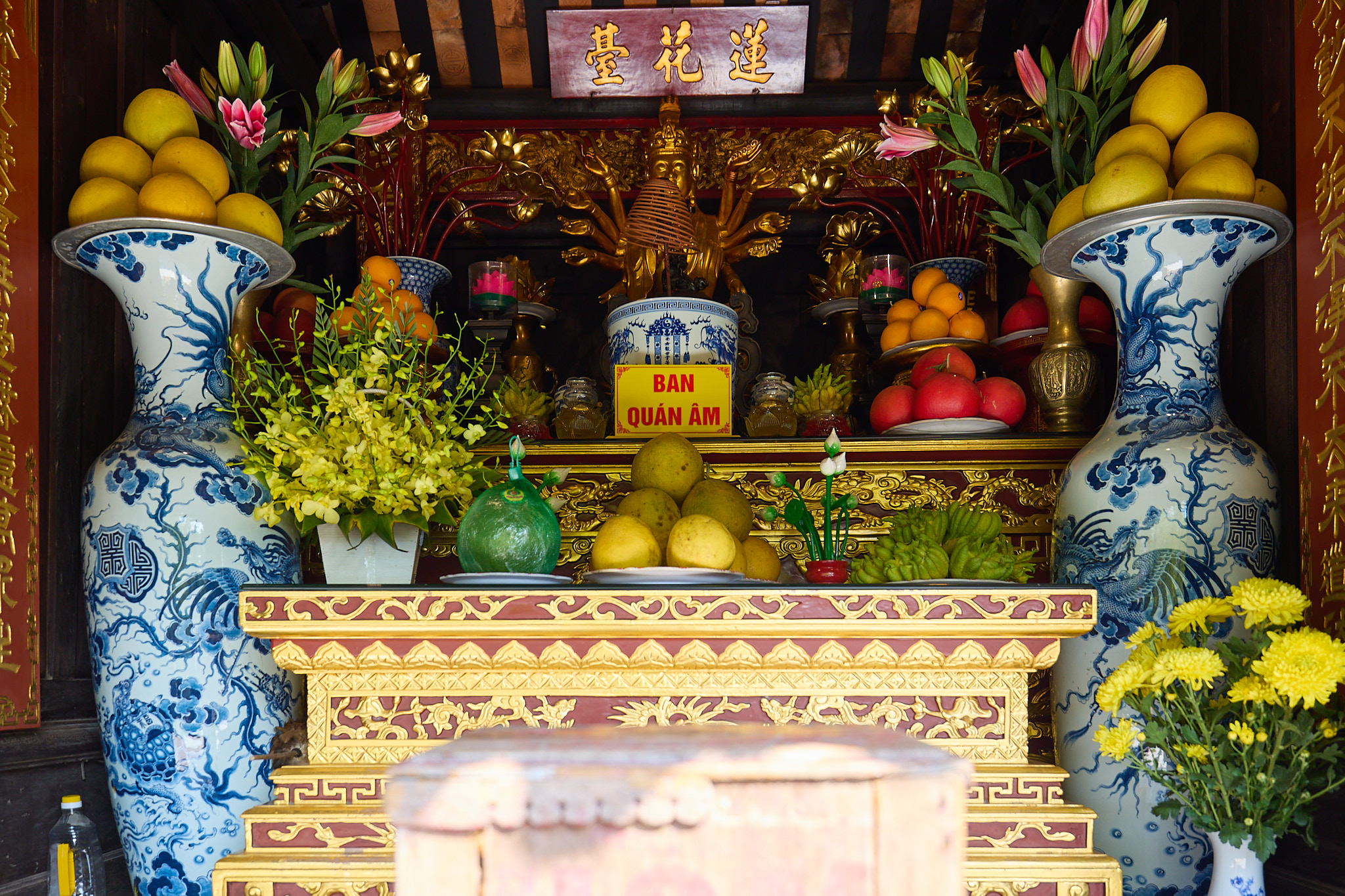
The steps up to the hall had a queue.
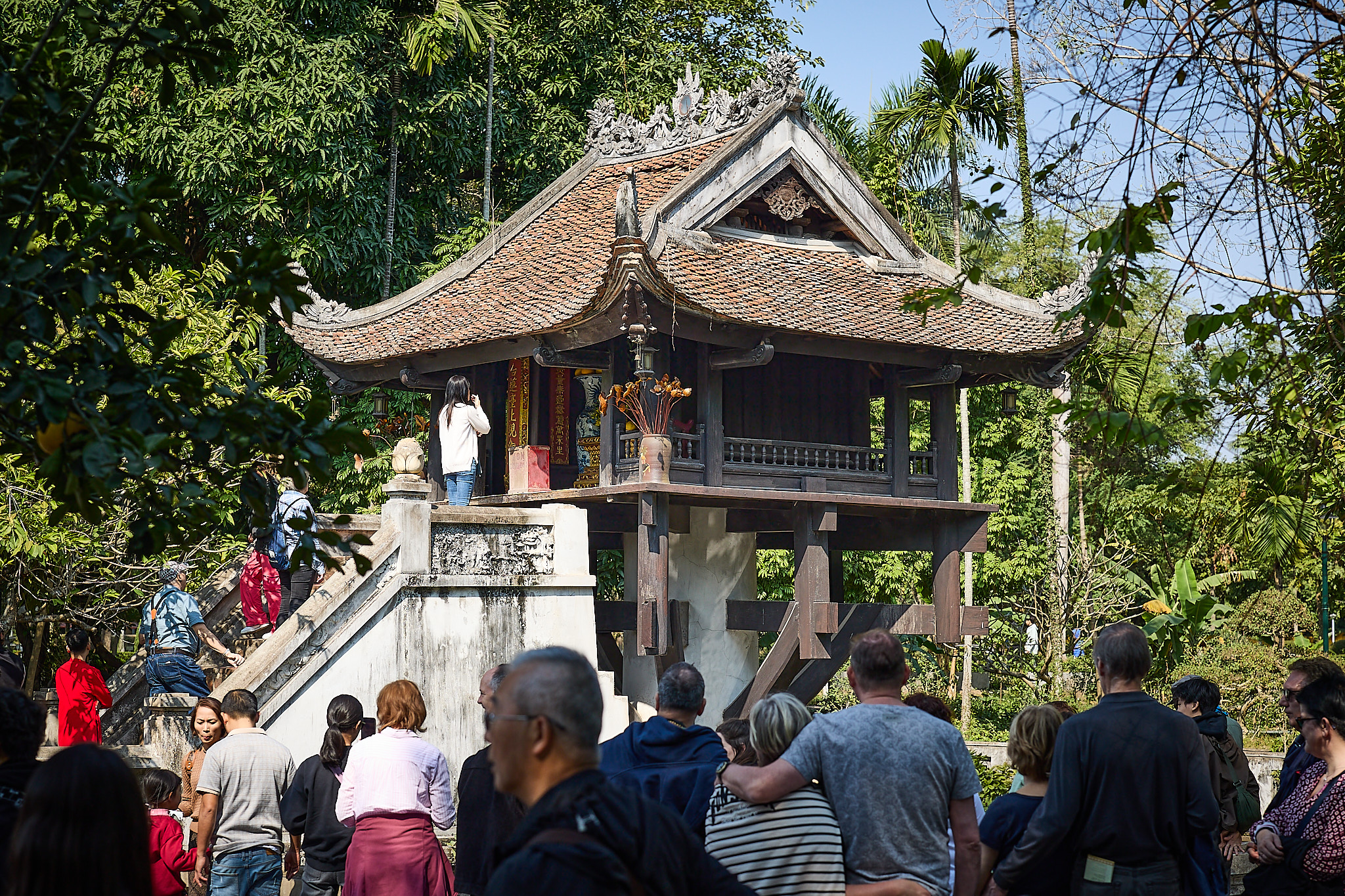
There is no inside to speak of. The steps end at the door, and the altar is right there, under a board that reads 蓮花臺, Liên Hoa Đài. A label in front of it says BAN QUÁN ÂM, Quan Âm’s altar. Between two tall blue-and-white vases were pomelos, oranges, coils of incense and more Buddha’s hands.
Next door
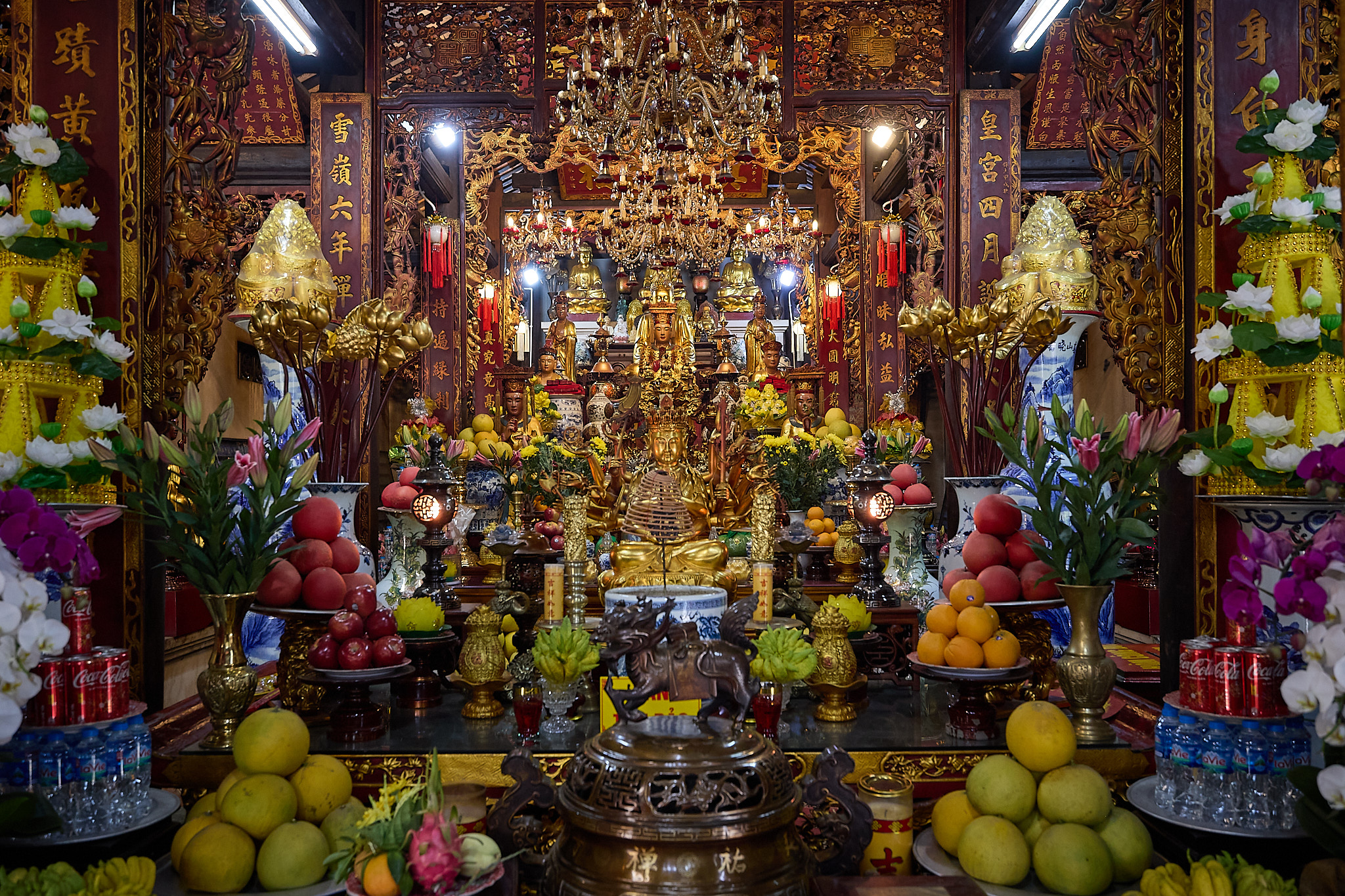
The hall on the pillar is only one part of the temple. Next to it is the main hall of Diên Hựu, its name over the door.
This one you can walk into, and its altar is much fuller: gilded figures, lamps, orchids, pyramids of fruit. On either side, stacked between the pomelos and the orchids, were cans of Coca-Cola, with bottles of water on the shelf below.
A bell of the right size
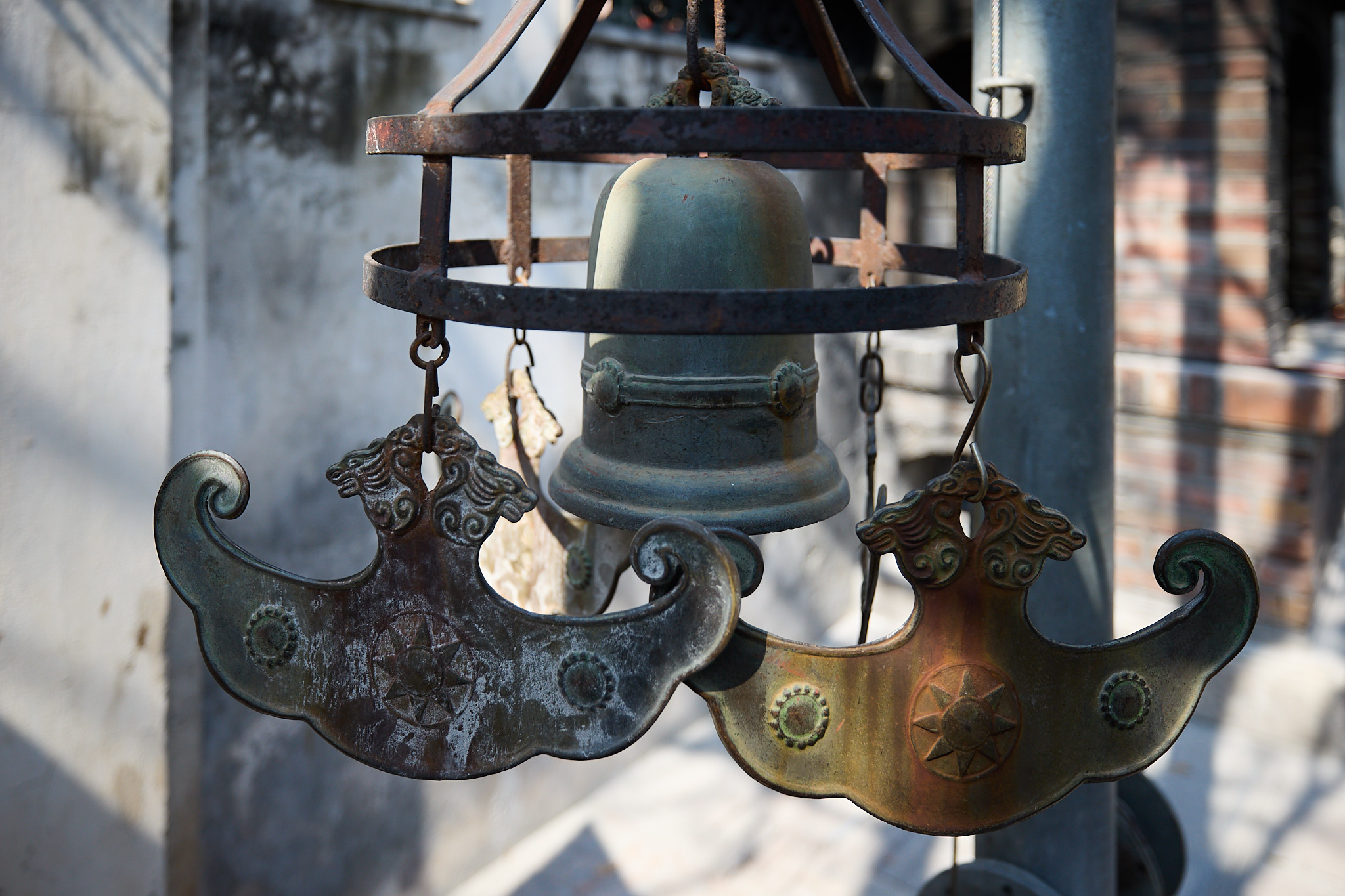
The temple once had a bell. The story goes that it was so big that it could not be hung, and lying on the ground, it would not ring. It was left in a rice field nearby, where turtles gathered round it, and it became known as the bell of the turtle field. In the fifteenth century, the occupying Ming army took it and turned it into weapons.
The bell that hangs at the temple today is small enough to ring.
Cause and effect
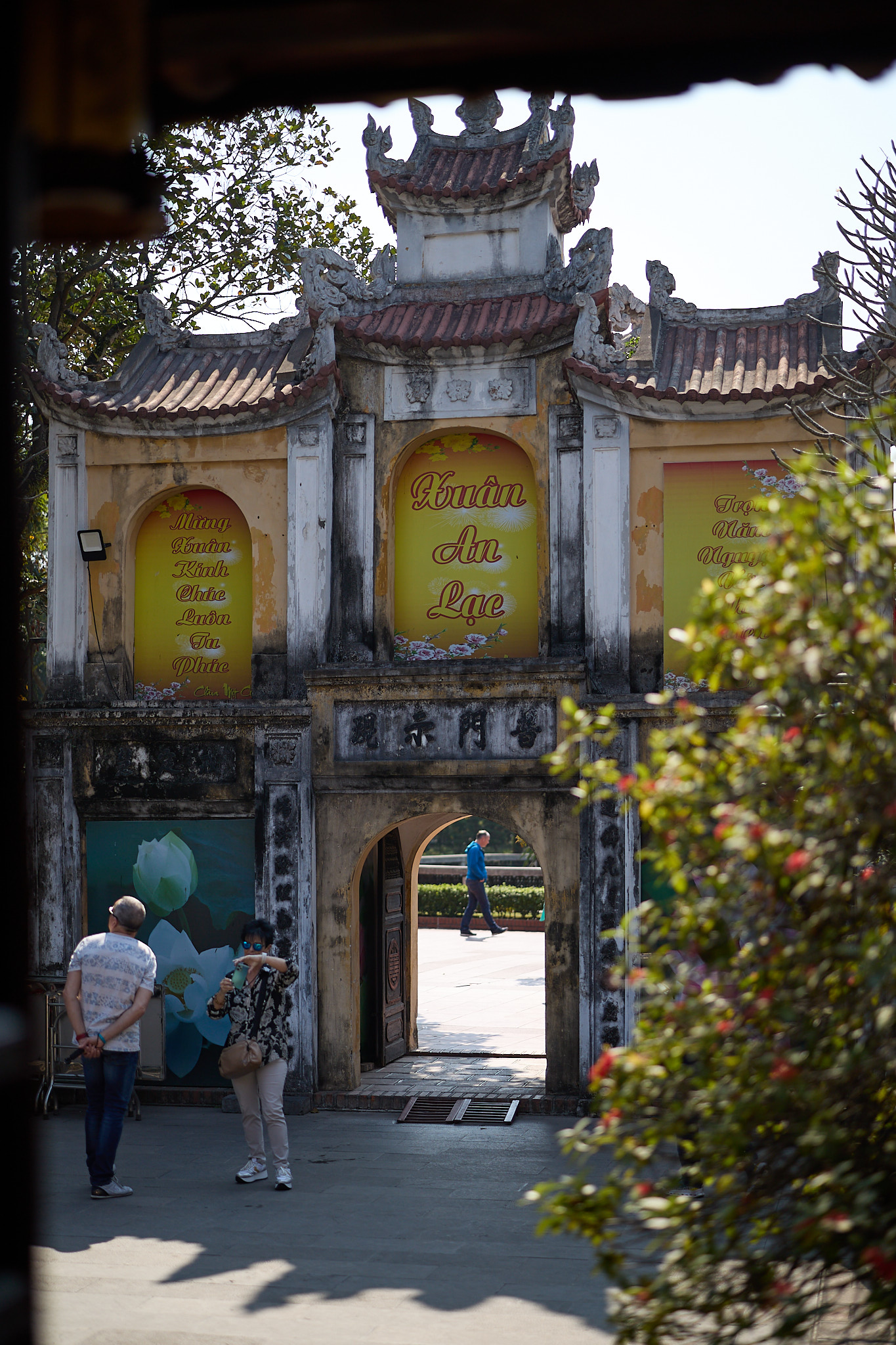
Over the gate hangs a banner wishing everyone a peaceful spring.
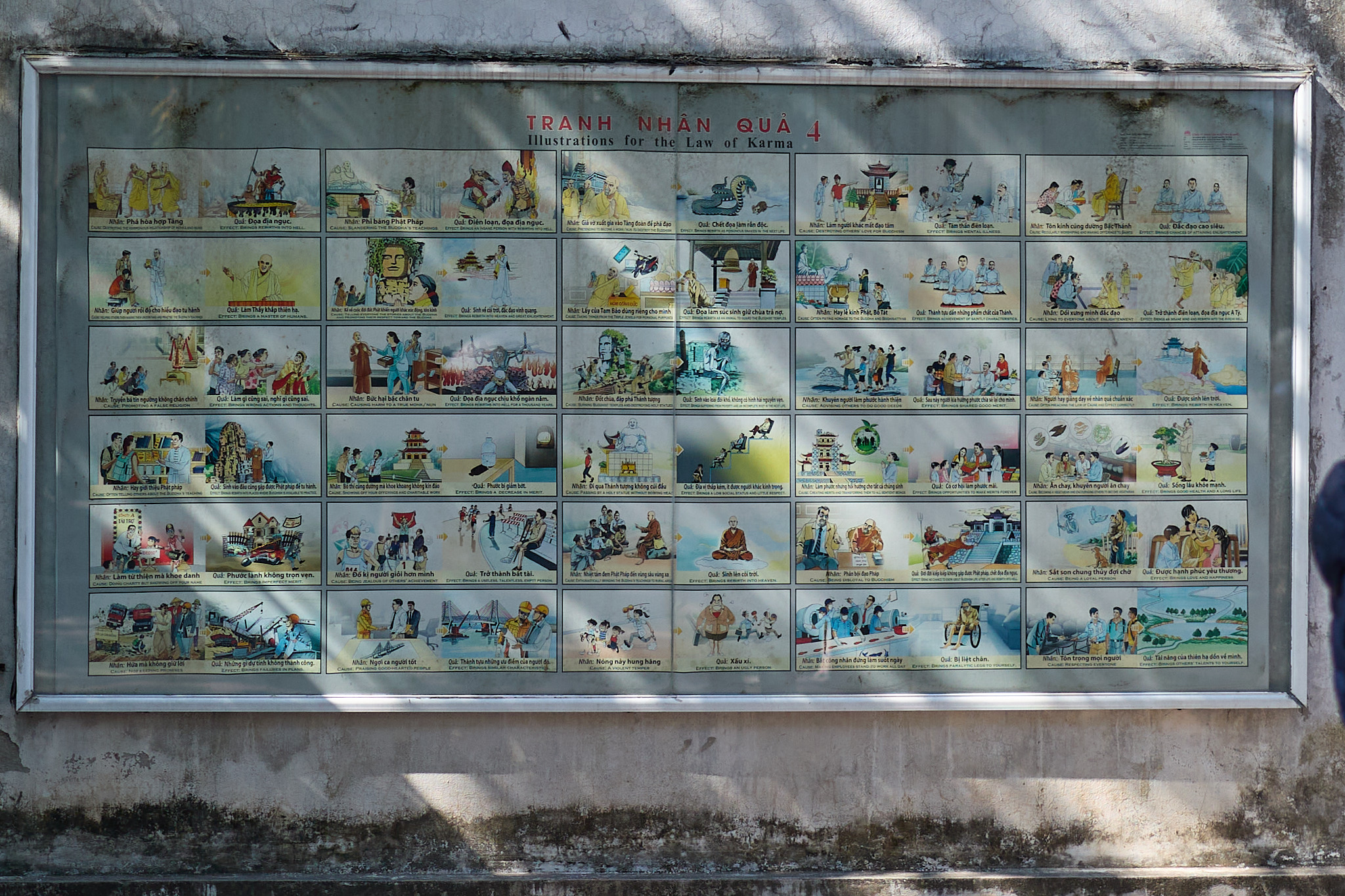
Along a wall of the courtyard runs a row of numbered panels: Illustrations for the Law of Karma. Each panel is a grid of small pictures in pairs, cause on the left and effect on the right, with an arrow between them and captions in Vietnamese and English.
“Doing charity but showing off your name” leads to a wrecked car outside a damaged house: “Brings imperfect merit.” “Not keeping promises” leads to a crane lying on its side: “Brings failures in plans.” A runner jealous of the winner on the podium becomes “a useless, talentless, empty person”.
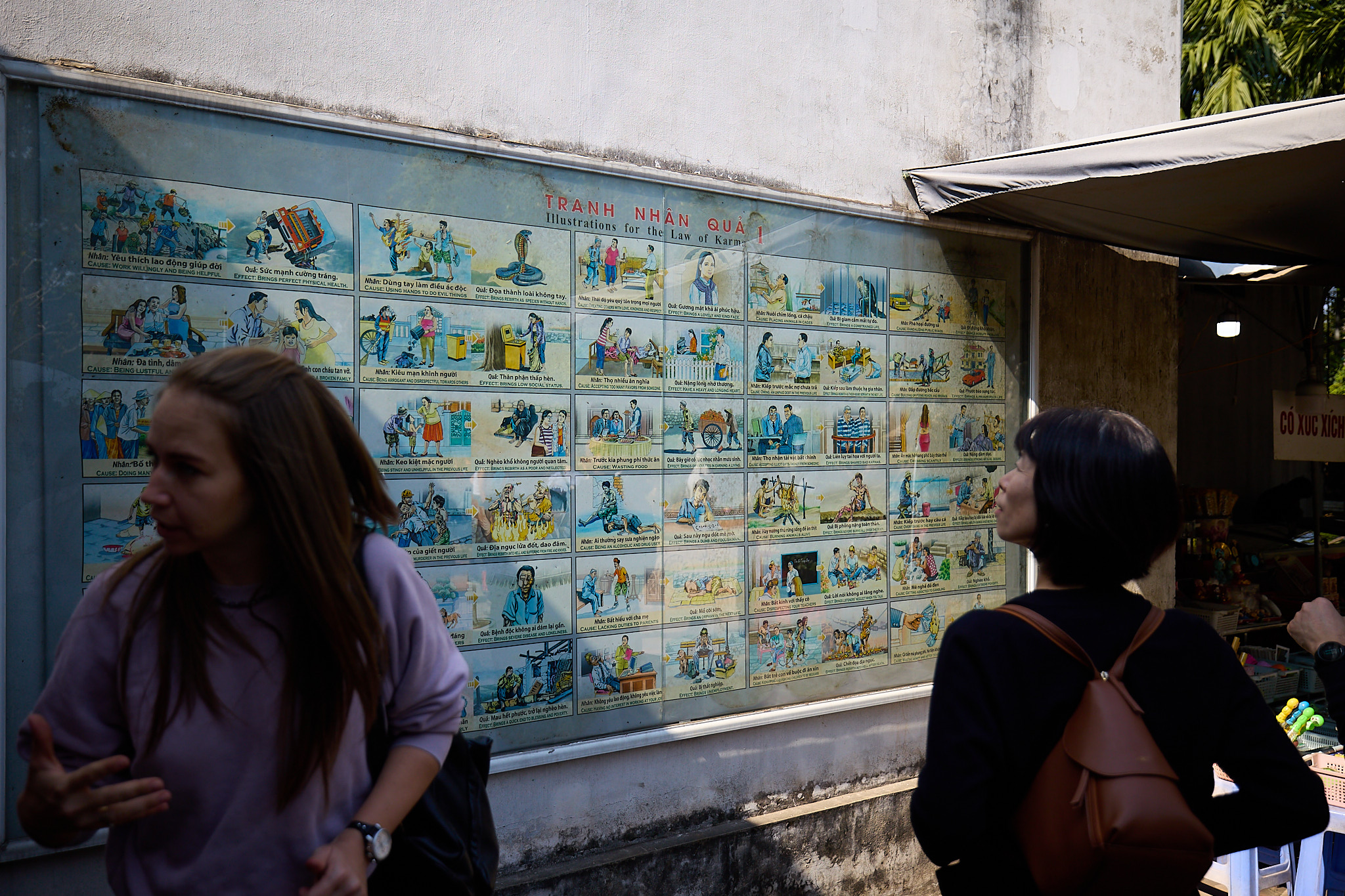
And “Praising good-hearted people,” according to the panel, “brings similar characteristics.”
So, for the record: it is a very fine pagoda.
Visit this place
Location
One Pillar Pagoda (Chùa Một Cột)
In a small park off Ông Ích Khiêm Street, beside the Ho Chi Minh Museum and a short walk from the mausoleum
Chùa Một Cột Street, Ba Đình, Hanoi, Vietnam
Practical Information
- Opening hours
- Usually daily, 7:00–18:00
- Visitor note
- A working Buddhist temple. The hall on the pillar is reached by a short flight of steps, often with a queue; the altar is at the top, with no room inside. Dress respectfully.
Information last checked: October 27, 2026 (Usual opening hours; admission information differs between visitor guides, so no fee is listed.)
Conversation
Comments
Review pending commentsComments are reviewed before appearing. The internet already contains enough unattended surprises.
Loading comments…
Leave a comment