Hanoi Flag Tower: Kept for the View
In 1805, the emperor Gia Long took the dragon out of Hanoi’s name.
The city was then called Thăng Long, “rising dragon”. But Gia Long ruled from Huế, and the dragon was the emperor’s symbol, not something for a city where the emperor no longer lived. He swapped the character for another, pronounced the same, meaning “prosperity”. The old citadel, too grand for a regional city, was replaced with a smaller one.
It did get a tower.
Eight windows
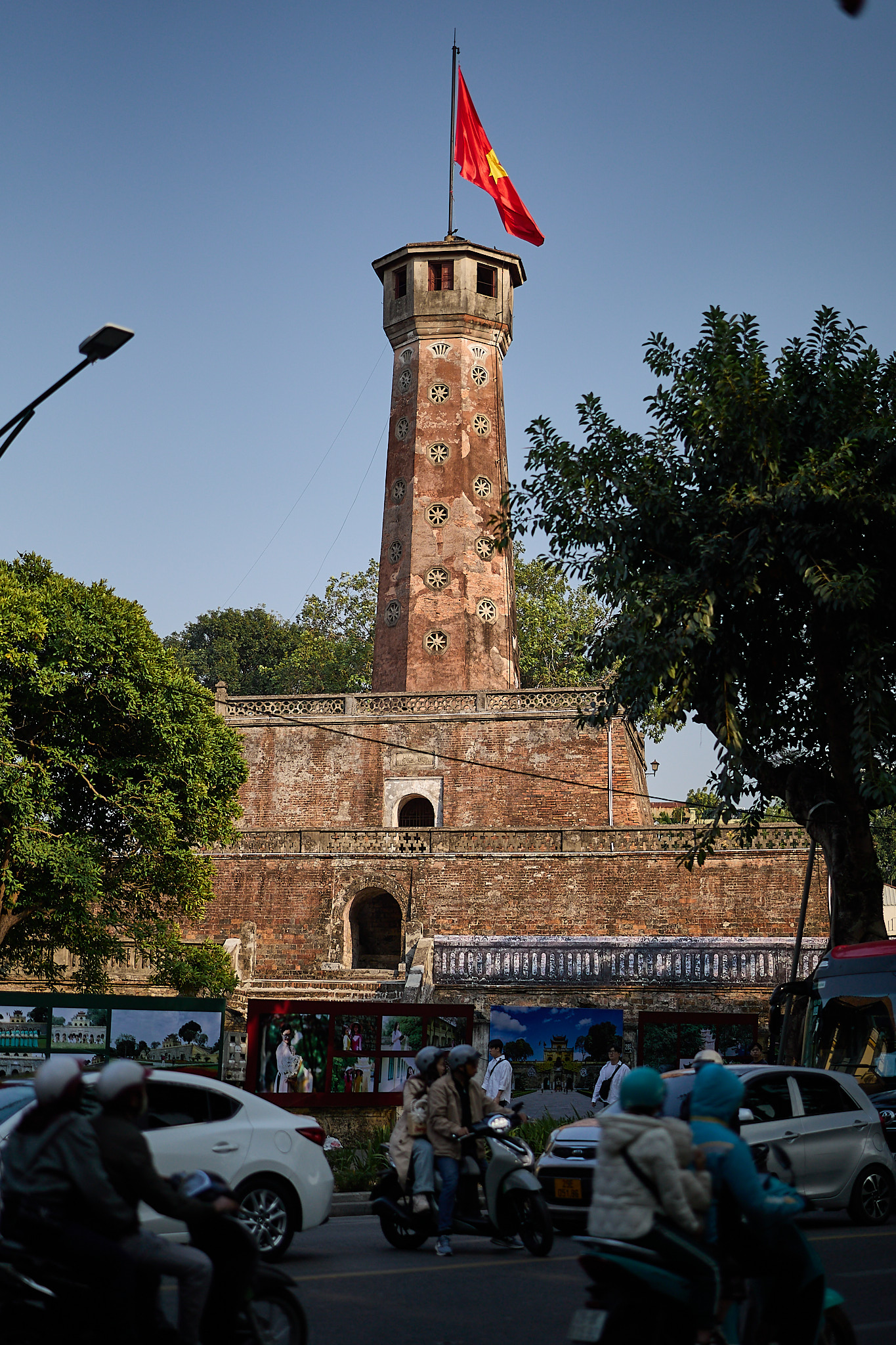
The flag tower was finished around 1812. It was built to fly a flag, and also to keep watch and send signals. Three square terraces are stacked one on top of another, and on them stands an eight-sided shaft, narrowing as it rises. A spiral staircase inside climbs to a room with eight windows at the top.
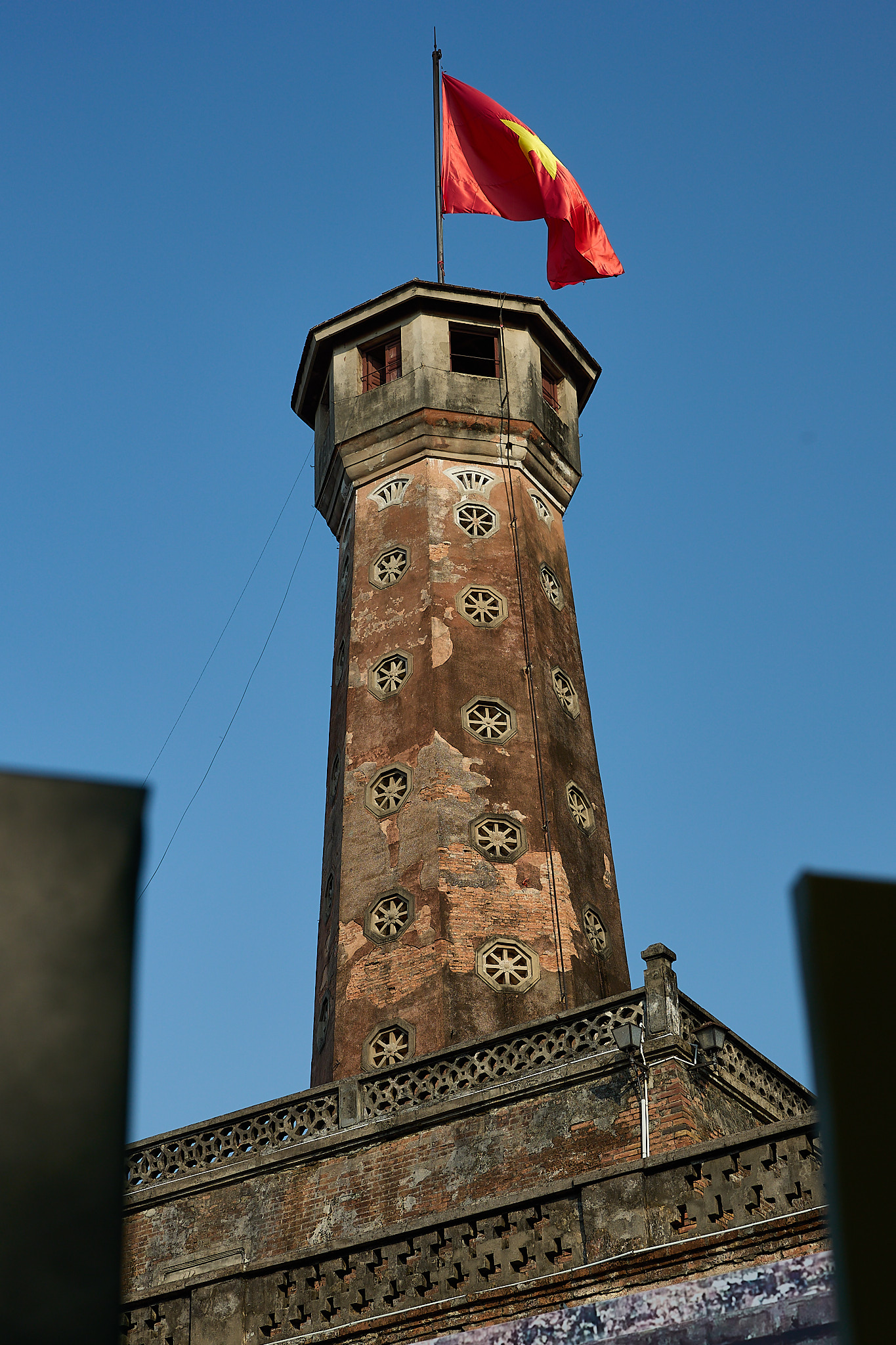
The tower marks the southern end of the central axis of the citadel. From here, the line runs north through the main gate to where the throne hall once stood. Three of the doors on the second terrace are named after light: Welcoming the Morning Light on the east, Reflected Light on the west, Facing the Light on the south. The north door was left without a name.
Kept on
In 1882, the French took the citadel. They put up barracks on the tower’s terraces and set the tower itself to work as a lookout and signal post.
In the 1890s, they pulled most of the citadel down. The tower stayed. The usual explanation is the view: it was the tallest thing in the citadel, and from the top you could see a long way across the city. The walls, it seems, were expendable. The view was not.
October 1954
On 10 October 1954, Vietnamese troops took over Hanoi from the departing French, and a ceremony was held at the tower. At three in the afternoon, the siren of the Opera House sounded, and the red flag with the yellow star was raised to the top. A flag has flown there every day since.
About a decade later, during the American bombing of the North, it kept watch for Hanoi’s air defence forces. This time, what it watched for came from the sky.
Across the road
In December 2024, the tower changed hands again. After decades in the grounds of the Vietnam Military History Museum, it passed to the heritage centre that looks after the citadel. I came that week, before it reopened to visitors, and saw it from the park across the road, where a statue of Lenin stands.
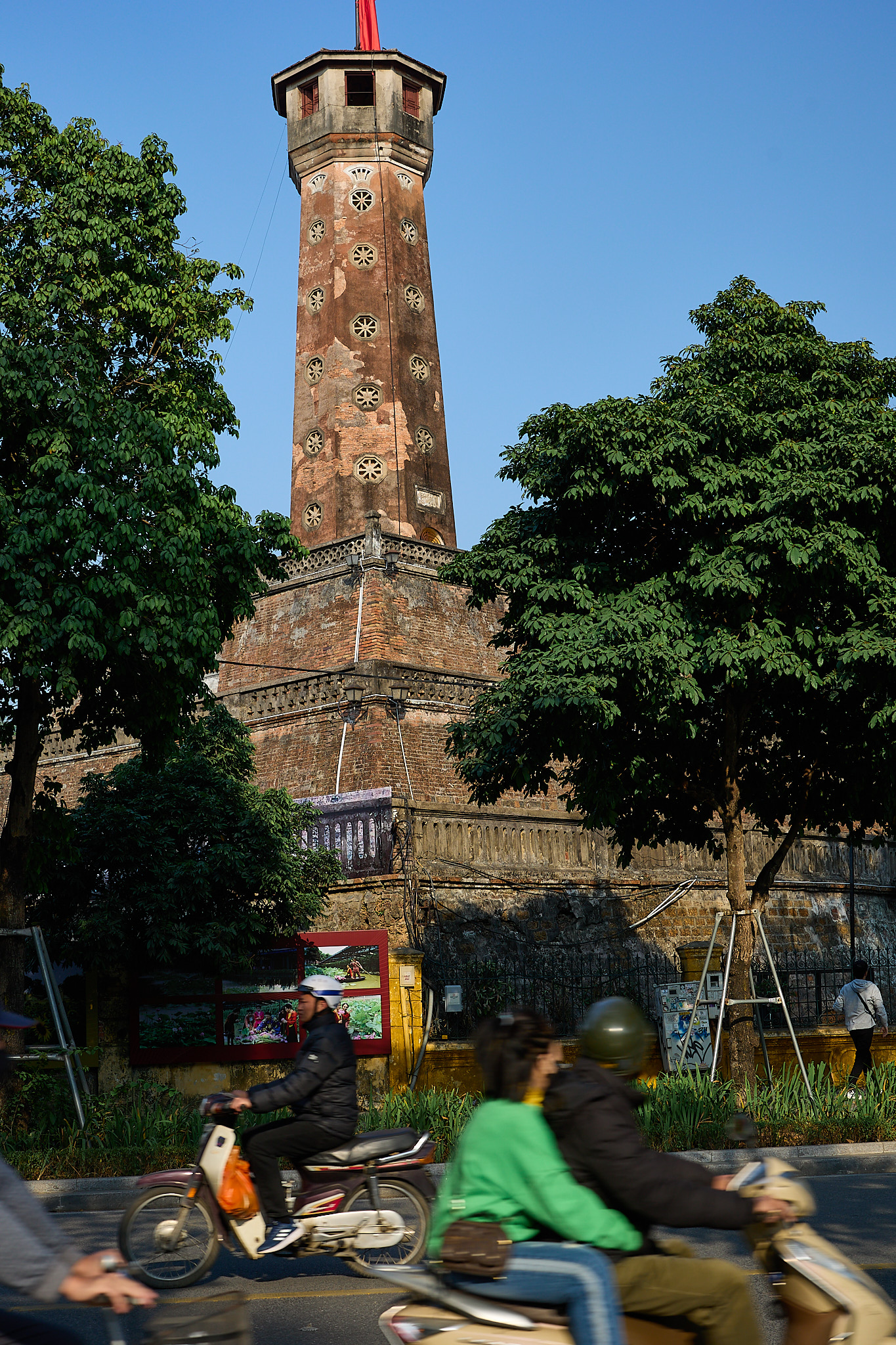
Since 1964, the street between the park and the tower has been called Điện Biên Phủ.
The French kept the tower as a lookout. The street it looks out on is named after the battle that sent them home.
Visit this place
Location
Hanoi Flag Tower (Cột cờ Hà Nội)
On Điện Biên Phủ Street, at the southern end of the Imperial Citadel of Thang Long, across the road from Lenin Park
28A Điện Biên Phủ, Hanoi, Vietnam
Practical Information
- Opening hours
- Daily, 8:00–17:00
- Admission
- The adult rate announced from January 2025 is 100,000 VND, with concessions and free entry for children under 16. Confirm current prices and whether a separate tower ticket is needed at the entrance. The tower can be seen from the street at any time.
- Visitor note
- Access to the upper levels of the tower may be limited. Check at the entrance which parts are open on the day.
- Official website
- Visitor information
Information last checked: November 1, 2026 (Opening hours checked against Google Maps; admission announcement and official access notices reviewed. Current ticket coverage and upper-level access remain unconfirmed.)
Conversation
Comments
Review pending commentsComments are reviewed before appearing. The internet already contains enough unattended surprises.
Loading comments…
Leave a comment