Hanoi’s Lenin Park: Flowers From the Party, an Extra N for the Skaters
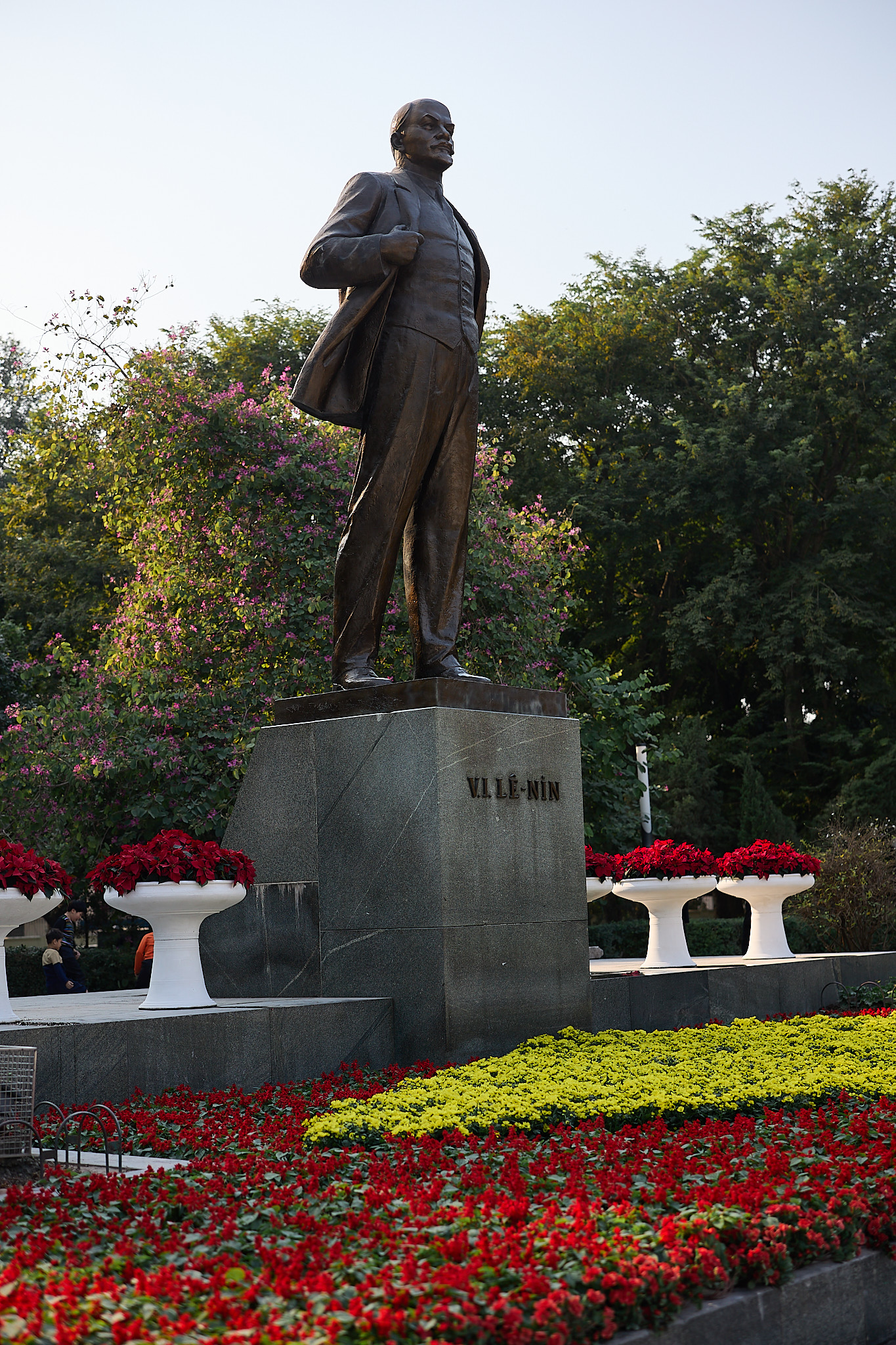
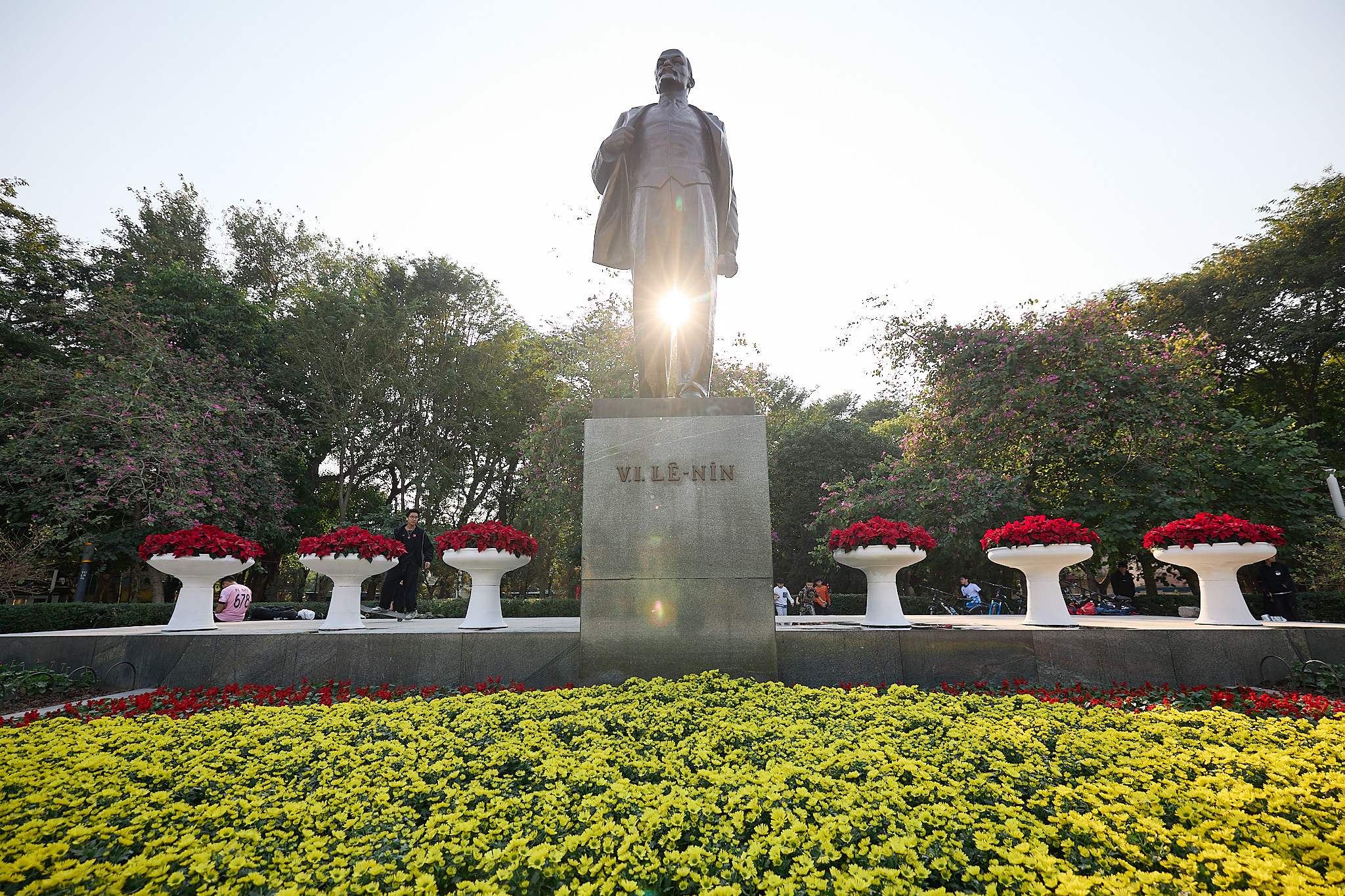
In April, on his birthday, and in November, on the anniversary of the October Revolution, Hanoi’s leaders come to Lenin with flowers.
He stands in bronze on a granite pedestal, in a triangular park on Điện Biên Phủ Street, across the road from the flag tower. He was put up in August 1985. The Soviet Union lasted six more years. He is still here.
In Asia, that alone makes him unusual. Lenins are still easy to find in Russia, and some still stand in the former Soviet republics of Central Asia. Elsewhere on the continent, they are rare. Even Mongolia, a Soviet ally for most of the twentieth century, took down the last one in its capital in 2012.
Vietnam, meanwhile, got a new one in 2024, in Vinh, in Ho Chi Minh’s home province of Nghệ An. It was a gift from Lenin’s home province in Russia, which had already got a Ho Chi Minh of its own.
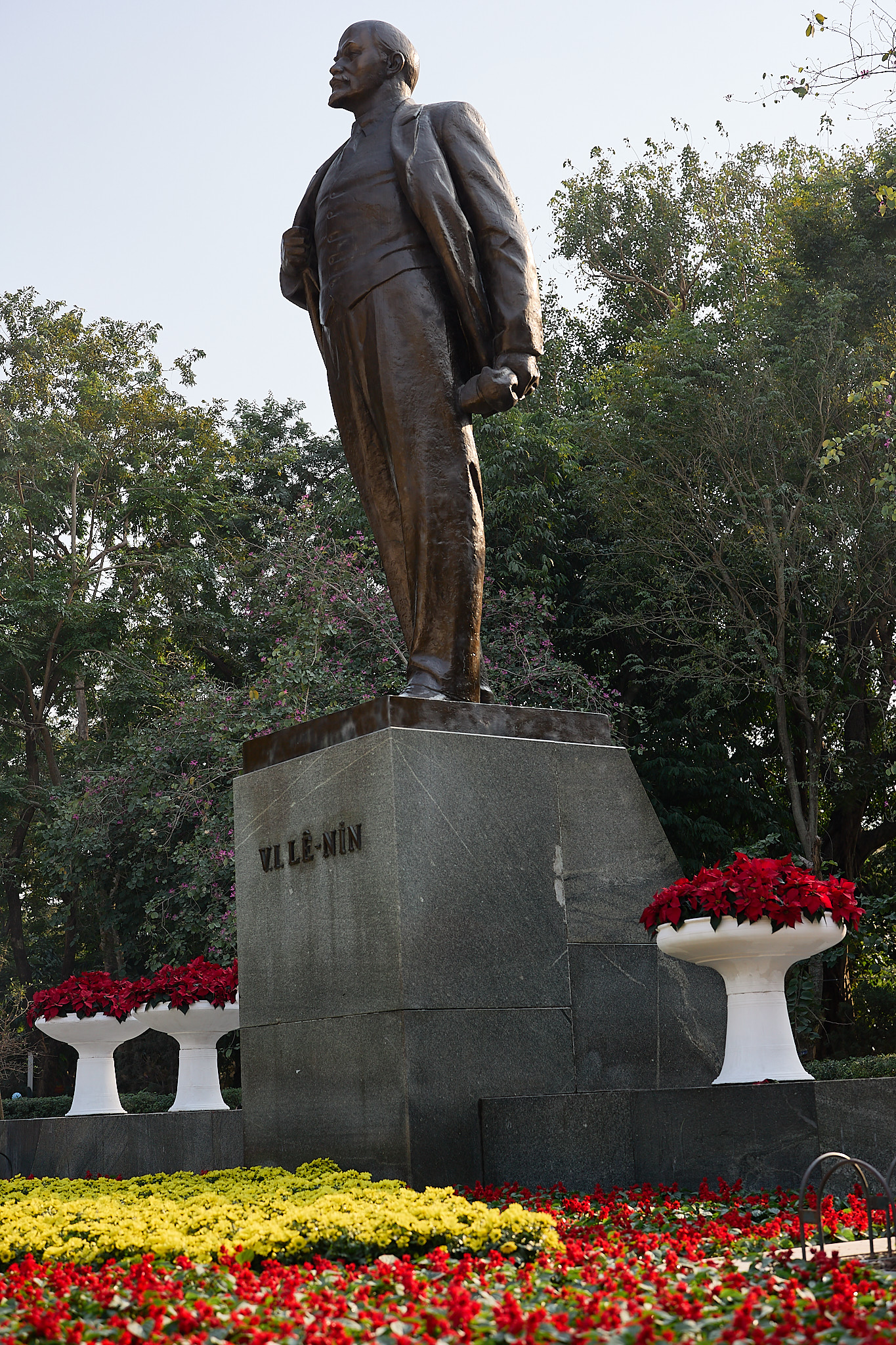
Hanoi’s Lenin grips the lapel of his coat with his right hand, and the coat swings out behind him as if in a wind. The left hand hangs at his side.
Before Lenin
There was a lake here once, where soldiers are said to have bathed elephants. In the 1890s, the French filled it in, made a flower garden and put up a monument: two French soldiers, one swinging his arm to throw a grenade, the other aiming his rifle at the flag tower. Around the base, in relief, were the local people, scholars, farmers, artisans and merchants; on the front, a farmer with a plough on his shoulder, leading a buffalo out to the fields.
In 1945, the monument was pulled down. The garden stayed. Forty years later, Lenin arrived in it.
A newspaper in Paris
In July 1920, a Vietnamese man living in Paris, Nguyễn Ái Quốc, later known as Ho Chi Minh, read a text by Lenin in the newspaper L’Humanité. Three years after leading the Russian Revolution, Lenin was calling on communists everywhere to help the colonies win their freedom. Years later, Ho Chi Minh wrote of that moment: this is what we need, this is the path to our liberation.
That December, at a congress of French socialists in Tours, he voted to join Lenin’s Communist International and became one of the founders of the French Communist Party.
He never met Lenin, and called it a great regret of his life. By the time he reached Russia, Lenin was seriously ill and being treated at Gorki, outside Moscow, so he could not visit him.
In January 1924, he was having breakfast in the restaurant downstairs at his hotel in Moscow when the news came. Nobody at the table wanted to believe it, until they turned round and saw the flag of the Moscow Soviet at half-mast. The breakfast was left unfinished. Nobody was hungry any more.
From Moscow he went to southern China to train young Vietnamese revolutionaries. In 1930, at the International’s request, he brought rival groups together in Hong Kong and founded the party that still leads Vietnam. The constitution of the Socialist Republic of Vietnam names Marxism–Leninism and Ho Chi Minh Thought as that party’s ideological foundation.
The second half of “Marxism–Leninism” is standing in the park.
Moscow’s friend
When Moscow and Beijing fell out, Southeast Asia’s communists did not all take the same side. The parties in Malaya and Indonesia looked to Beijing, and Indonesia’s was crushed in the mid-1960s.
During the Vietnam War and for a few years after it, Vietnam tried to stay on good terms with both. Then its relations with China soured. In June 1978, Vietnam joined Comecon, the Soviet bloc’s economic club, as its only member in Southeast Asia, and China promptly pulled its technicians out and stopped work on its projects in the country. That November, Vietnam signed a treaty of friendship with Moscow. From the following year, Soviet ships were using Cam Ranh Bay, which became the Soviet Union’s largest naval base abroad.
The statue in the park belongs to those years.
The square
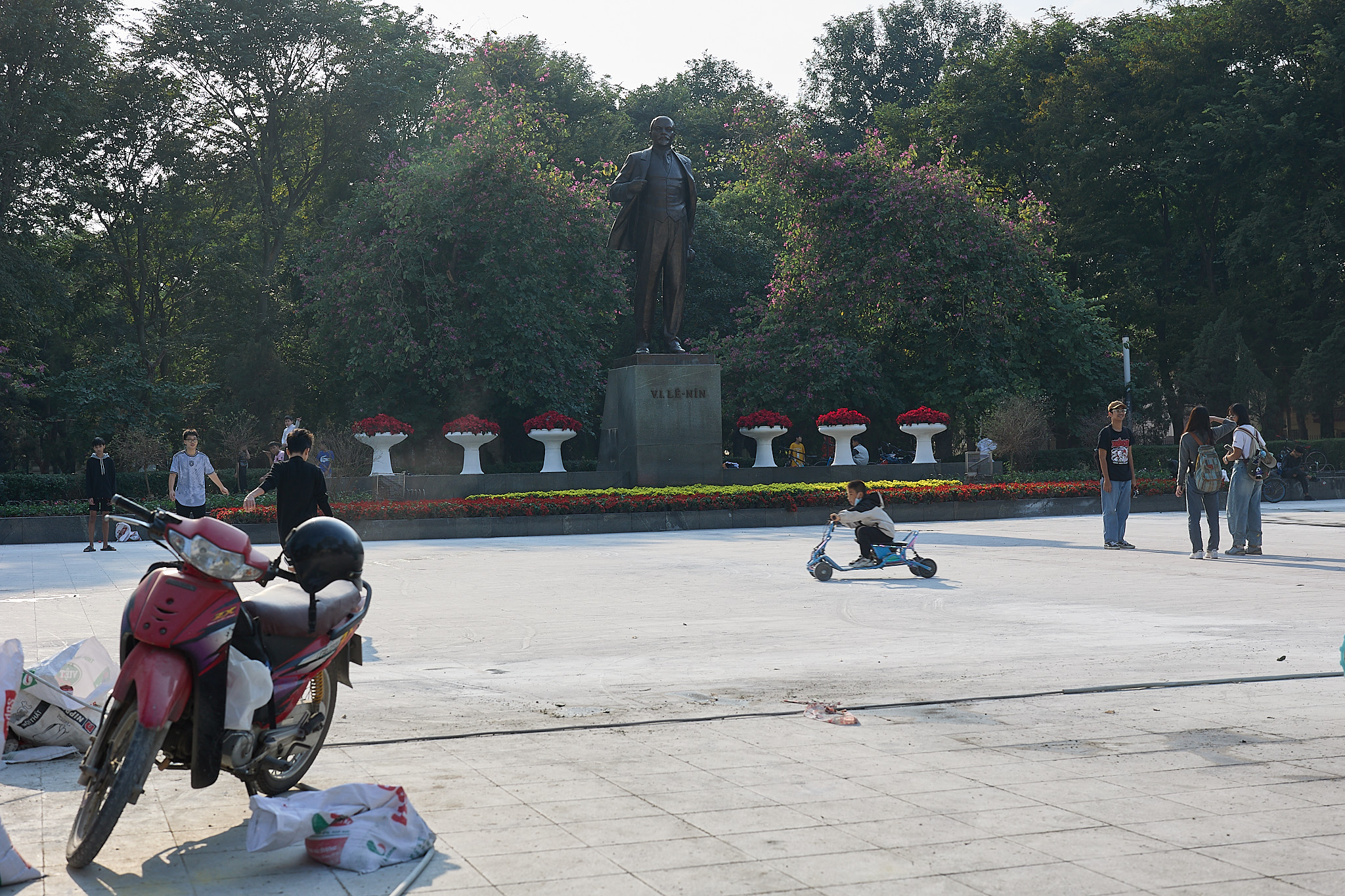
Between the April and November flowers, the square in front of him is just a square. I walked through on a Saturday afternoon at the end of December, on my way to the old citadel. A child, mask pulled down to the chin, was riding a small blue three-wheeler across the paving. Off to the left, a few teenagers stood spread out with their arms half raised, as if in the middle of a game.
In 2019, Vietnam’s first national skateboarding team was getting ready for the Southeast Asian Games. They had no skate park to train in. Most days they used an abandoned basketball court; on other days, public spots around the city, Lenin’s square among them, sharing it with children and tourists and now and then being moved on by the police.
Generations of young skaters got their start here. A Hanoi skate shop named its own brand after the park, with a second n for the many who skated there: Leninn.
Days after Lenin died, his widow, Nadezhda Krupskaya, asked in Pravda that there be no monuments to him, no palaces named after him and no grand ceremonies in his memory. In life, she wrote, he had cared very little for such things.
Hanoi has the monument, a park in his name and the flowers.
She said nothing about an extra n.
Visit this place
Location
Lenin Park (Công viên Lê-nin)
A triangular park on Điện Biên Phủ Street, across the road from the Hanoi Flag Tower
28A Điện Biên Phủ, Hanoi, Vietnam
Practical Information
- Opening hours
- An open public park. The statue can be seen from Điện Biên Phủ Street at any time.
- Admission
- Free
- Visitor note
- Official flower-laying ceremonies are held at the statue on the mornings around 22 April (Lenin’s birthday) and 7 November (the anniversary of the October Revolution).
Information last checked: November 3, 2026 (Open-air public park; no tickets or posted hours. Ceremonies checked against reports. Temporary closures not independently verified.)
Conversation
Comments
Review pending commentsComments are reviewed before appearing. The internet already contains enough unattended surprises.
Loading comments…
Leave a comment