Ho Chi Minh Museum: Modern Vietnam’s Backstory, via Guernica and Mayakovsky
Upstairs in the Ho Chi Minh Museum hangs a huge red poster: a woman’s face and Russian lettering. It looks like propaganda. It is the cover of a love poem.
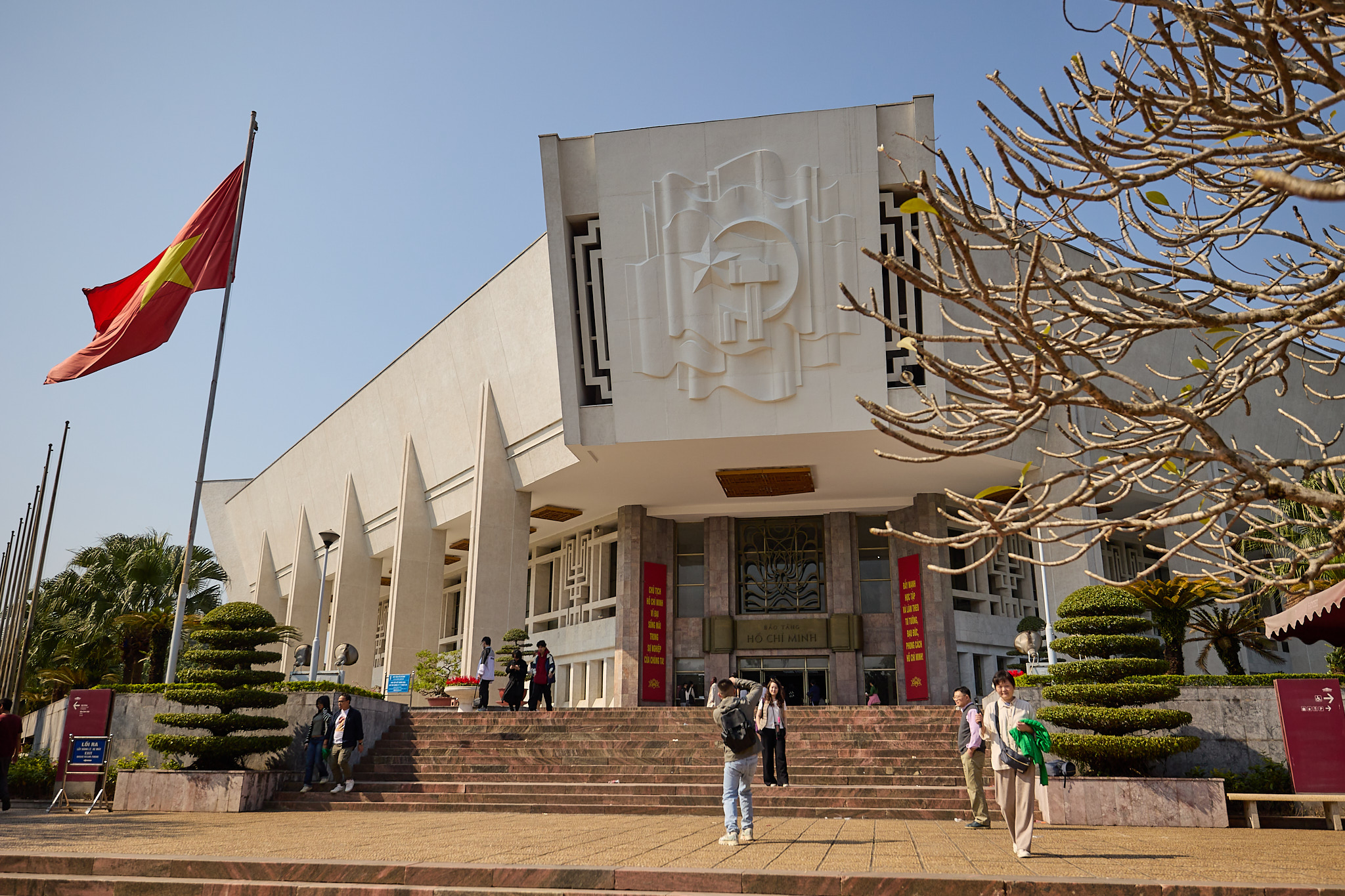
The museum stands behind the mausoleum in Hanoi. It opened on 19 May 1990, the hundredth anniversary of his birth, as a gift from the people of the Soviet Union, and its white, angular building, nearly twenty metres high, is meant to be a lotus: a symbol, the museum says, of his simplicity. It was my second lotus of the morning, after the One Pillar Pagoda next door.
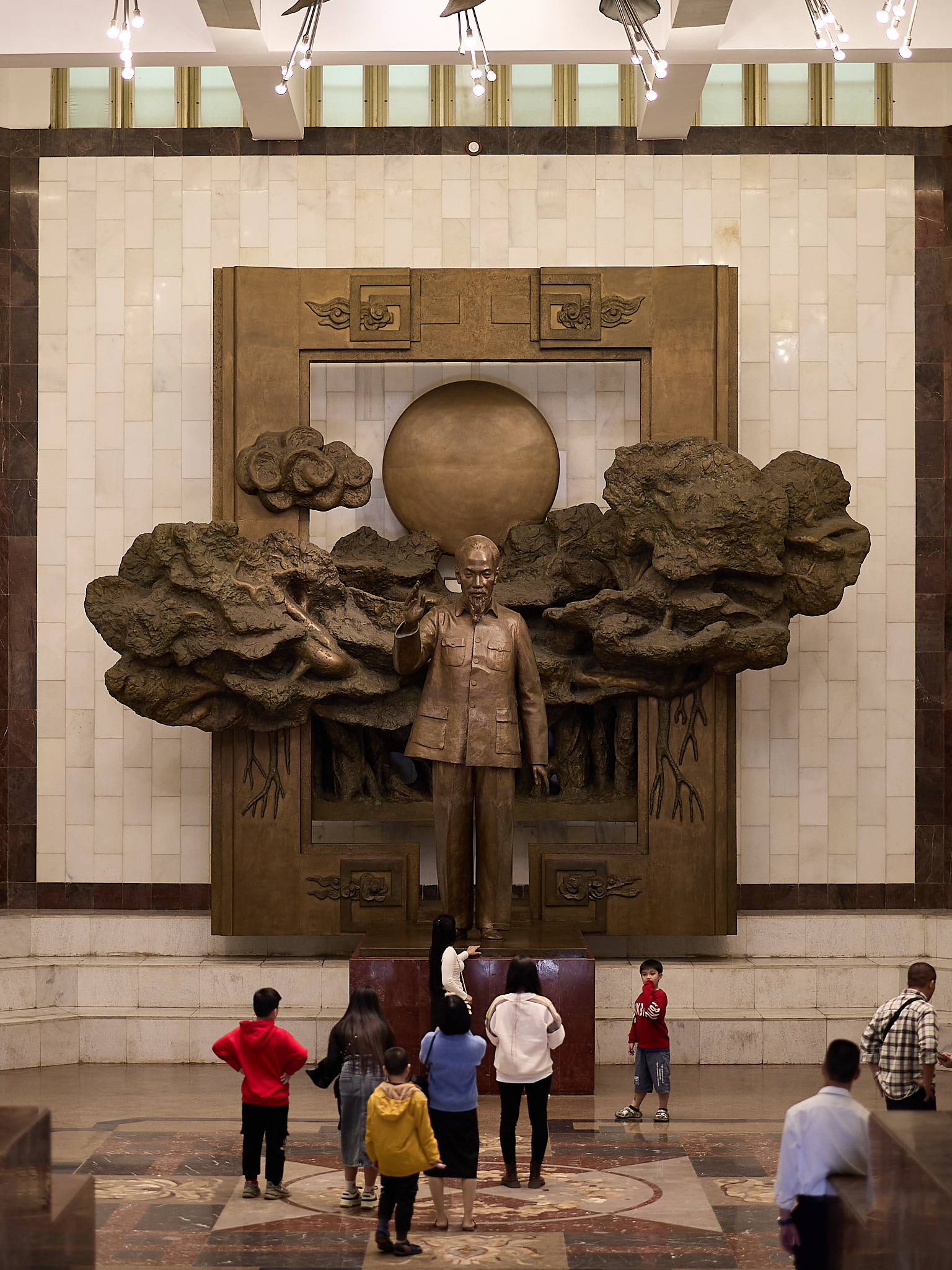
In the main hall, a bronze Ho Chi Minh three and a half metres tall stands in front of a spreading banyan tree and a sun.
Upstairs
The biography is only part of the museum. It also has a section devoted to “some major events in world history from the end of the nineteenth century to the present”: the October Revolution, the fight against fascism, the world after the Second World War, the movements for national liberation. In the museum’s telling, these events shaped him and his country. Here, they appear not only in documents but in large, theatrical installations.
That is how a love poem ended up on the wall.
A love poem
The red cover reads ПРО ЭТО, “About This”, and МАЯКОВСКИЙ, Mayakovsky. In 1923, the poet Vladimir Mayakovsky published a long love poem for Lilya Brik, his lover and muse. The face on the cover is hers. The cover was designed by Aleksandr Rodchenko, and the book contained the first photomontages he used in book design.
Next to it stands a pillar covered with satirical posters from ROSTA, the Russian Telegraph Agency. Mayakovsky also drew for its poster windows. In front, a spiral lattice climbs out of the floor. It looks like a model of Tatlin’s Monument to the Third International, a tower designed in 1920 and never built.
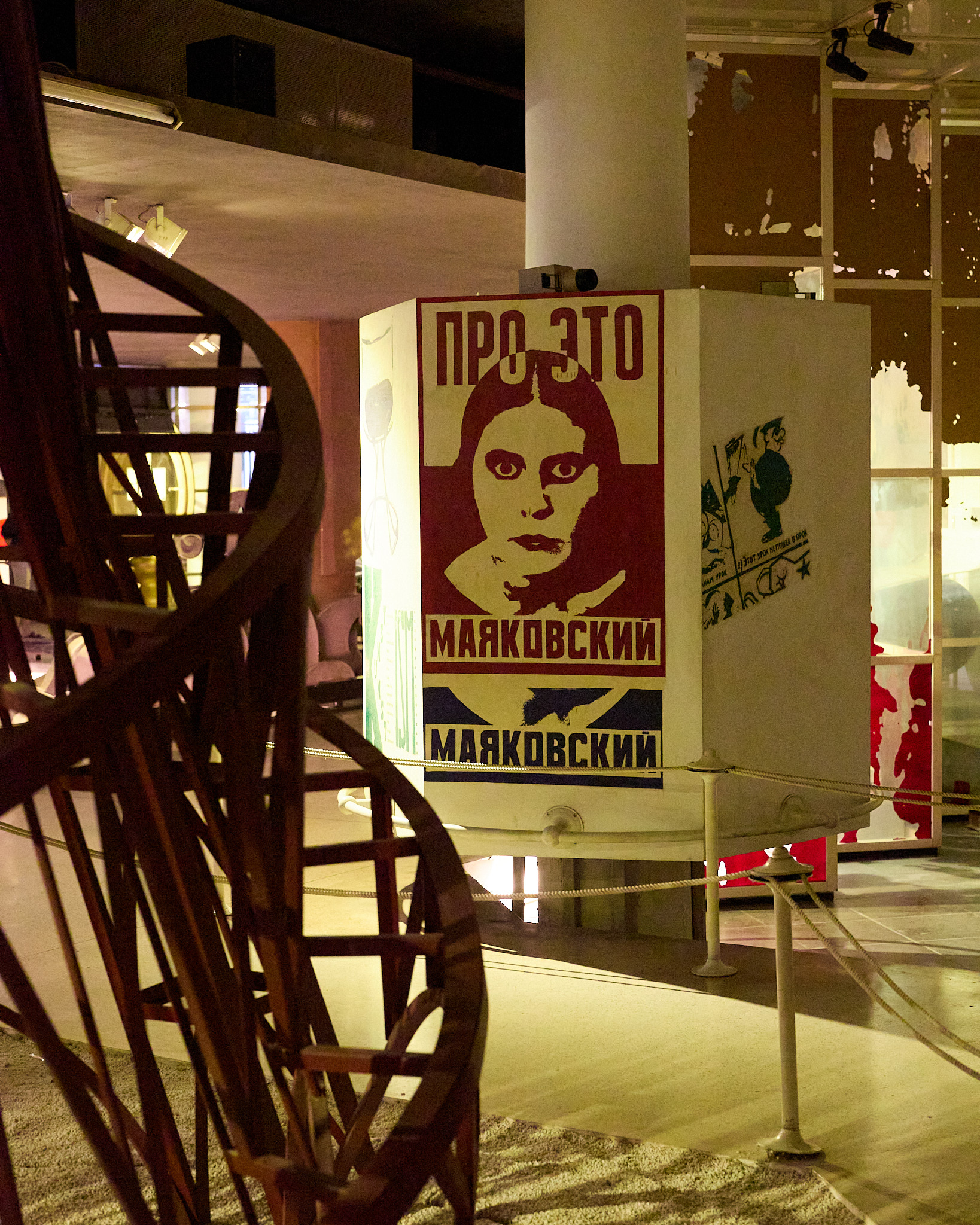
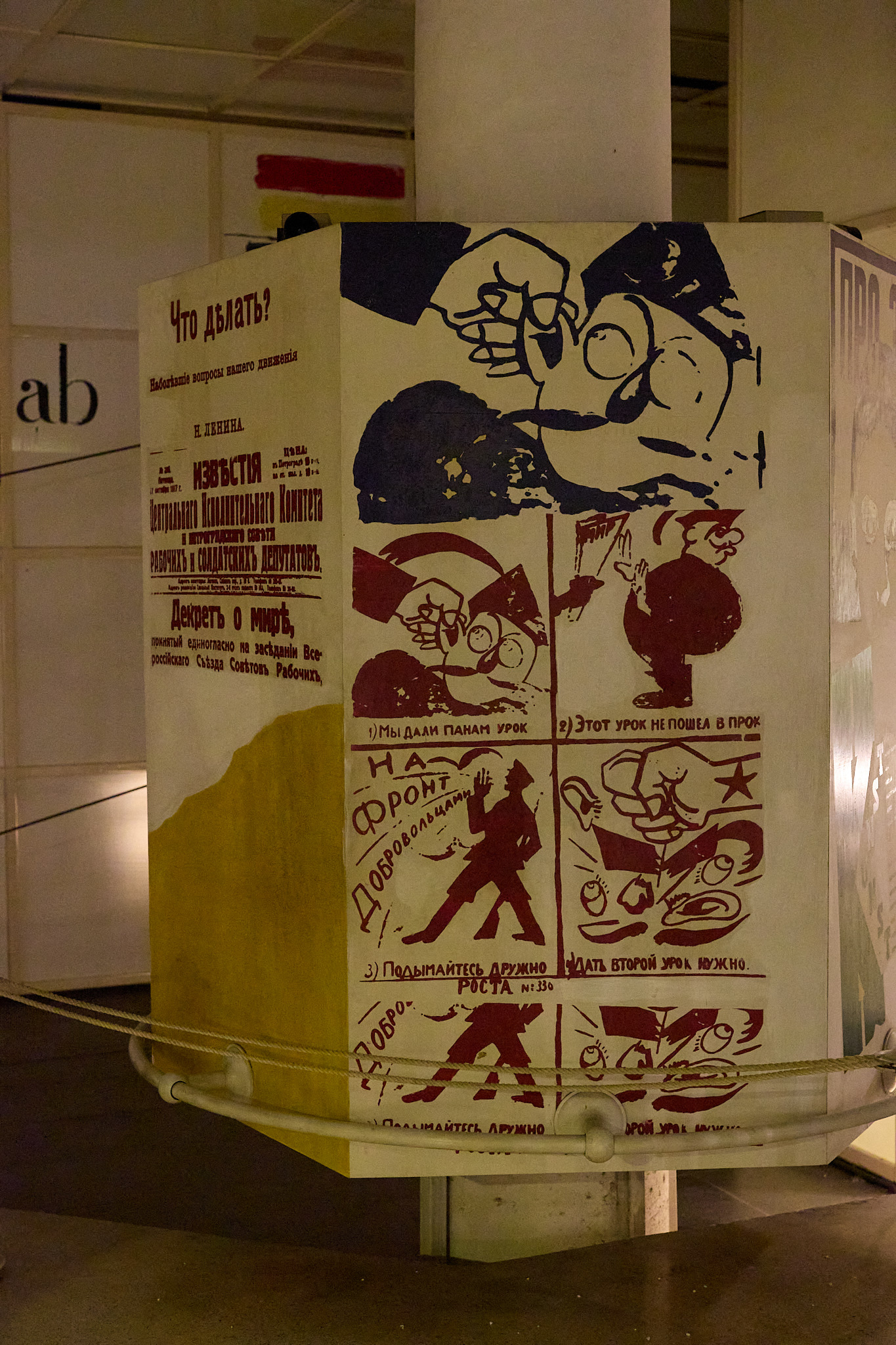
A love poem, a tower that was never built and a telegraph agency’s cartoons: this is what the October Revolution looks like here.
The bull
Around a corner, a huge grey bull’s head sticks out of a white column. Nearby is a head with its mouth open in a scream. Both come from Picasso’s Guernica, painted in 1937 for the Spanish Republic’s pavilion at the Paris International Exposition, after the bombing of the Basque town. Here, parts of it have been rebuilt in three dimensions, in the rooms about the fight against fascism.
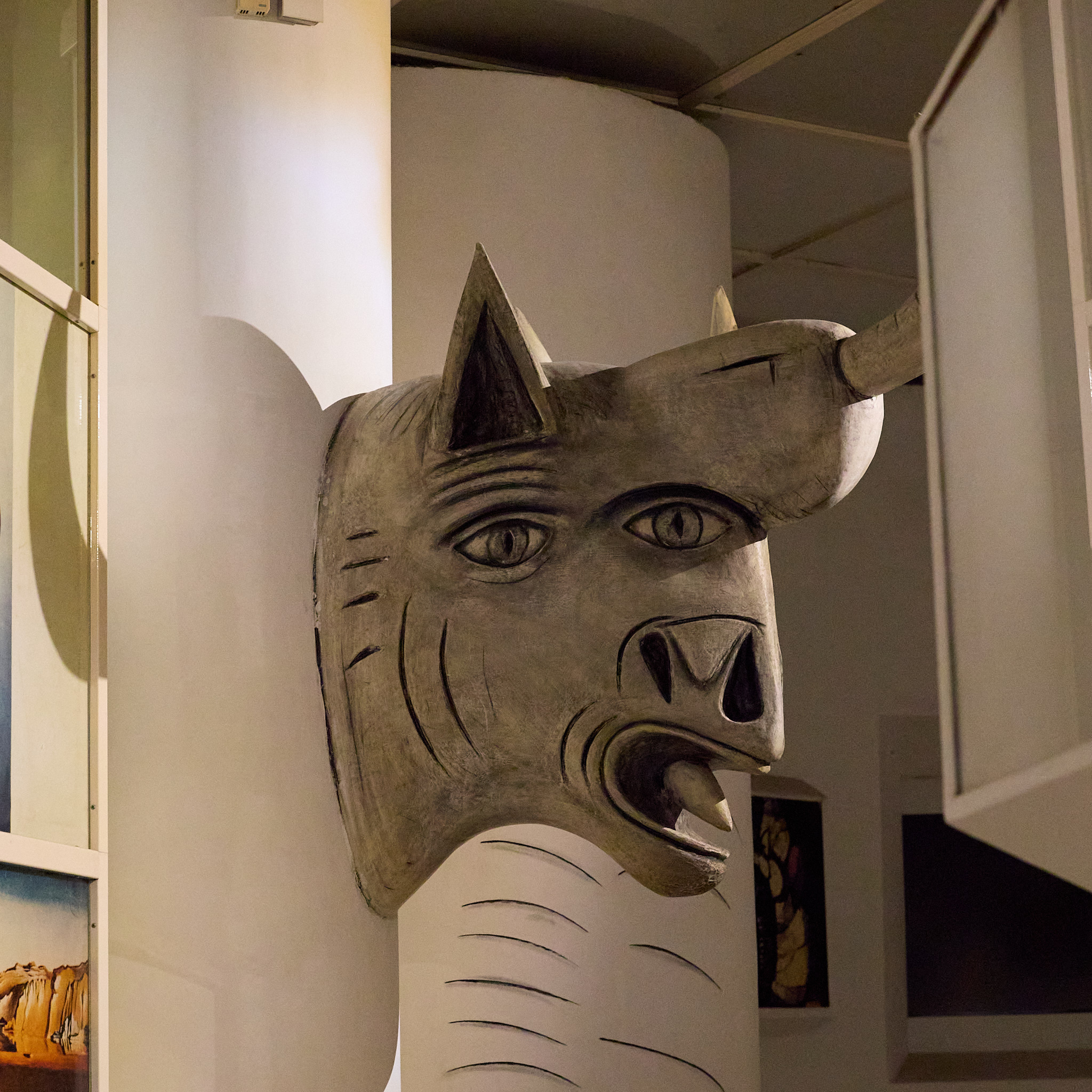
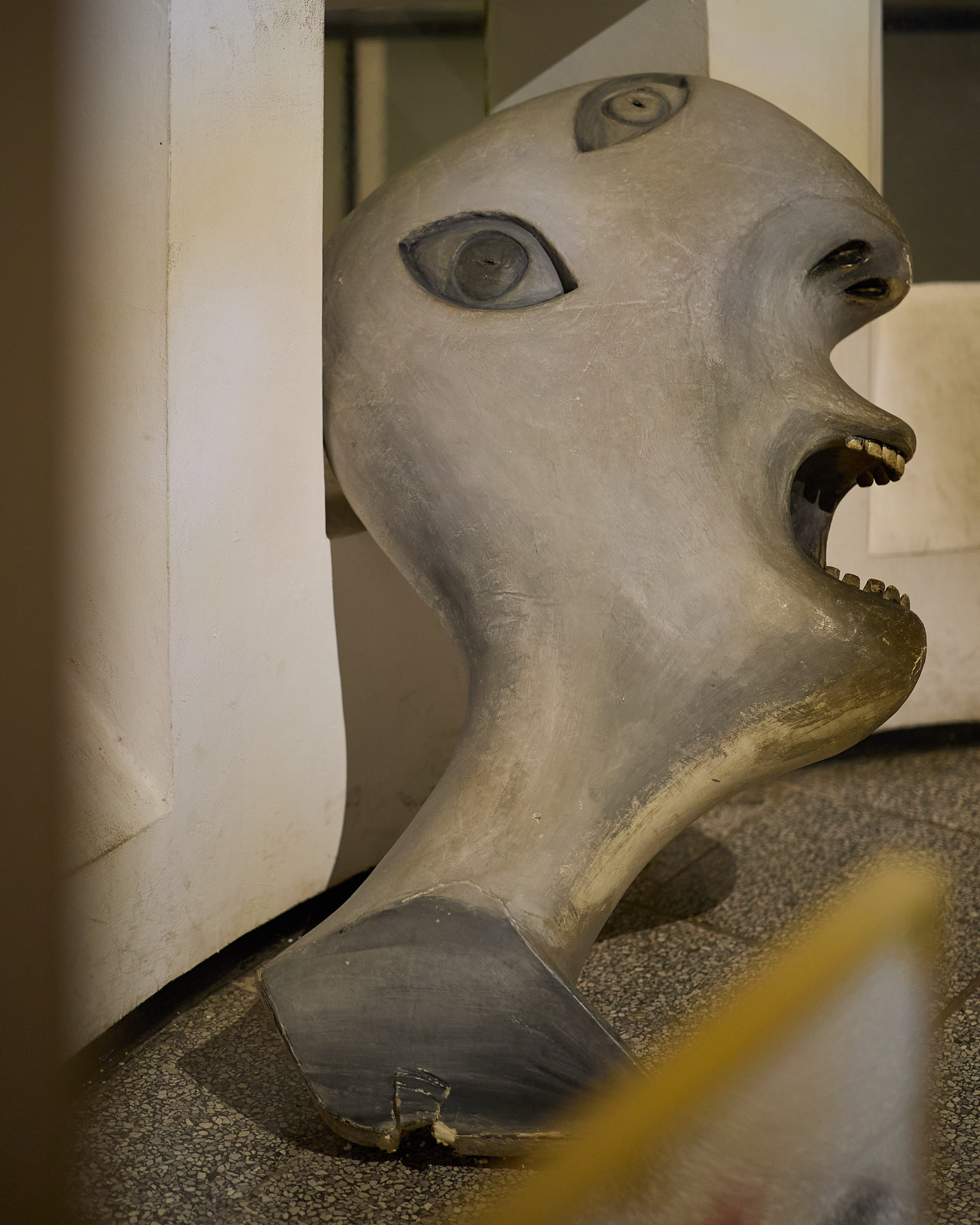
There is a real connection. In August 1961, Ho Chi Minh wrote to Picasso, in French, for his eightieth birthday. People who love goodness, beauty, peace and humanity, he wrote, stay young at heart, and it was that love that had led Picasso to communism.
1946
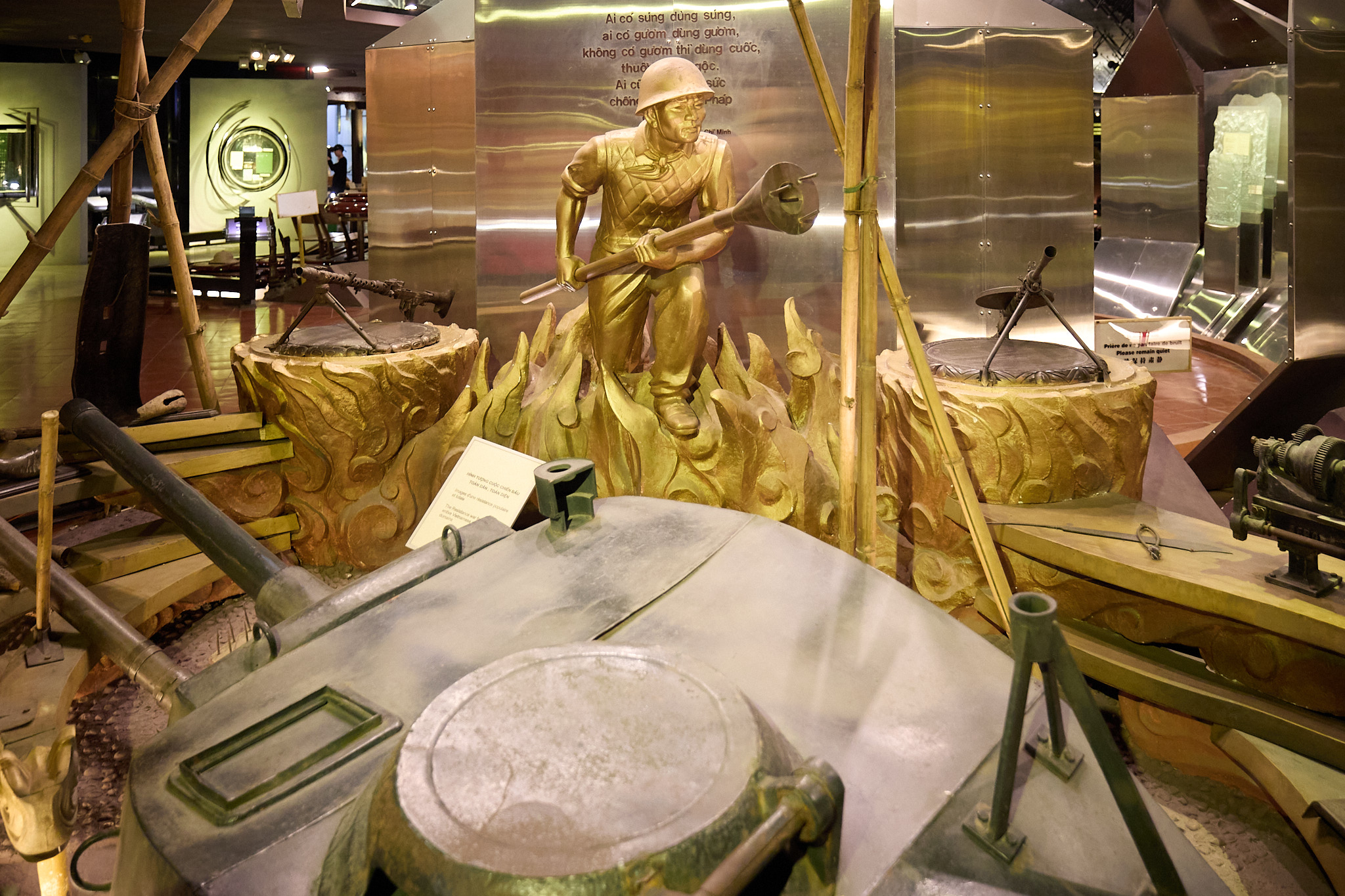
The war against the French gets a room of its own. A gilded soldier stands among petal-shaped forms beside the hull of a tank. He carries a pole with three prongs on the end, a bom ba càng, a weapon used against French tanks in the streets of Hanoi in December 1946. On the wall is a line from Ho Chi Minh’s call to national resistance of that month: whoever has a gun should use a gun, whoever has a sword should use a sword, and whoever has neither should use hoes, shovels and sticks.
A red room
Further on, a room glows red. A circle of light falls on a mask with horns, and across the wall, in large black letters, is NAM MỸ. Nam is south, as in Việt Nam. Mỹ, in Vietnam, usually means the United States. Put them together, and you get South America.
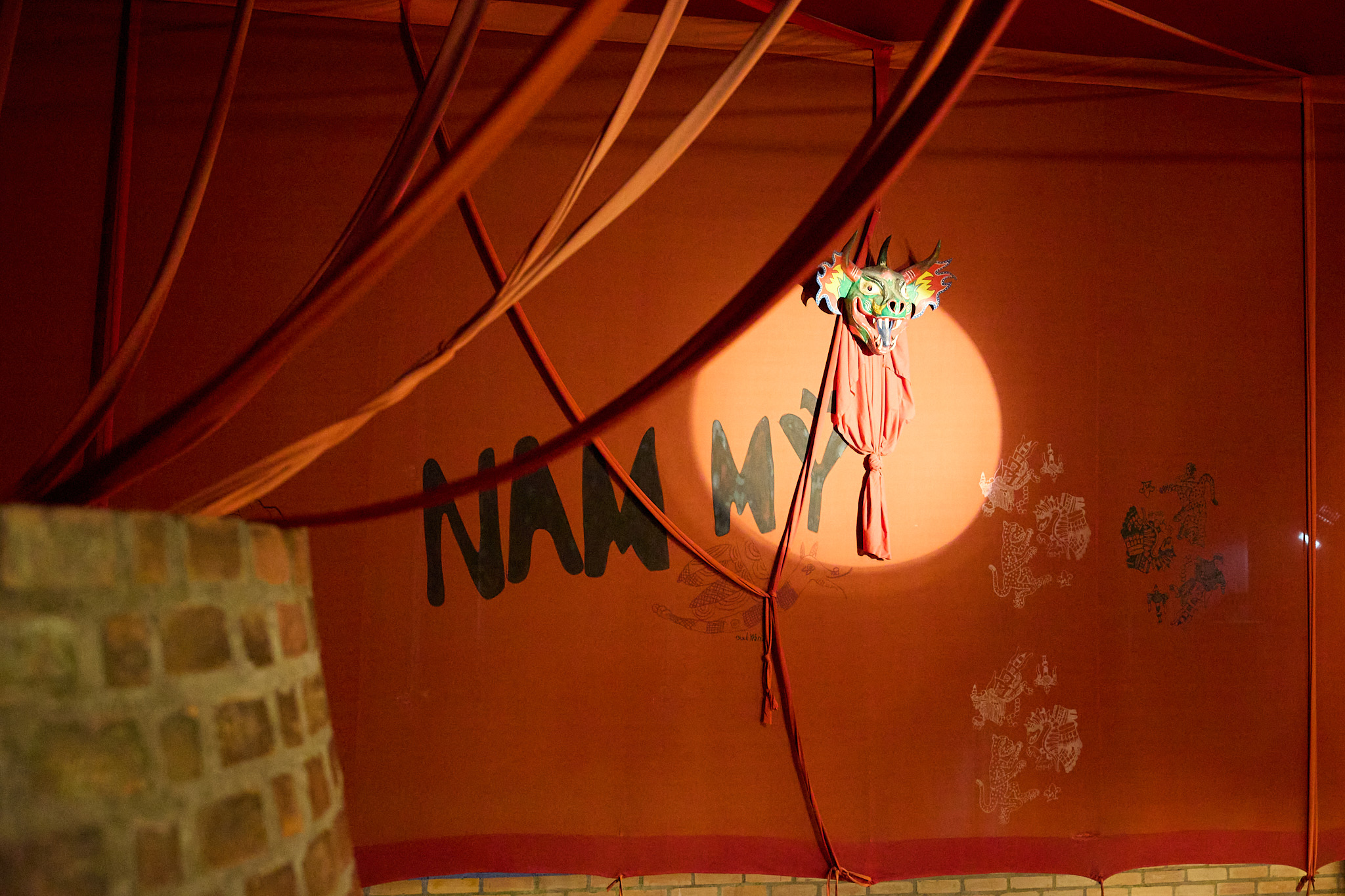
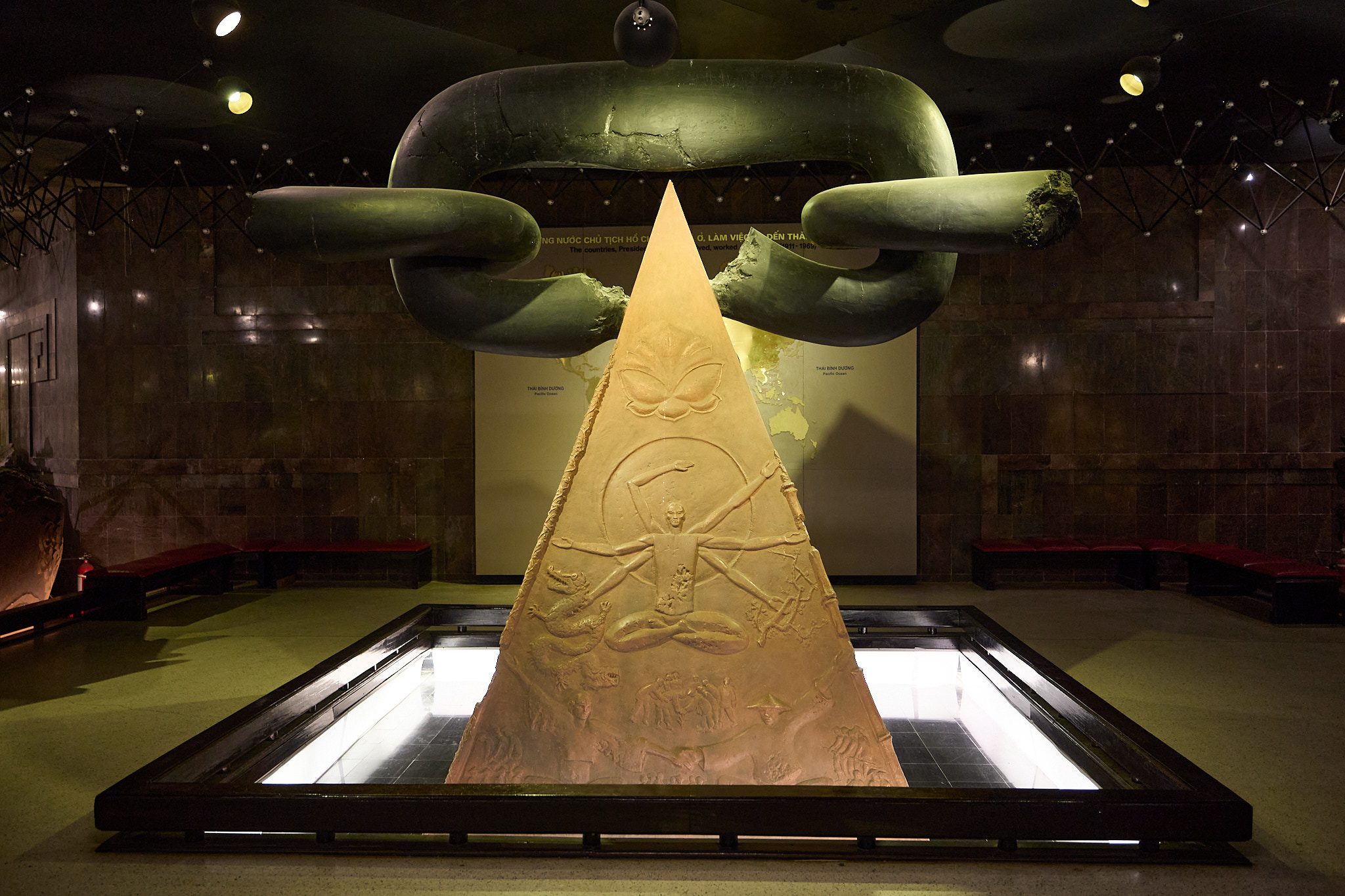
Then a huge broken chain, hanging in the air above a pyramid carved with a lotus and a figure with many arms.
The last rooms
By the time I reached the last rooms, it was nearly noon. The museum would soon close for lunch.
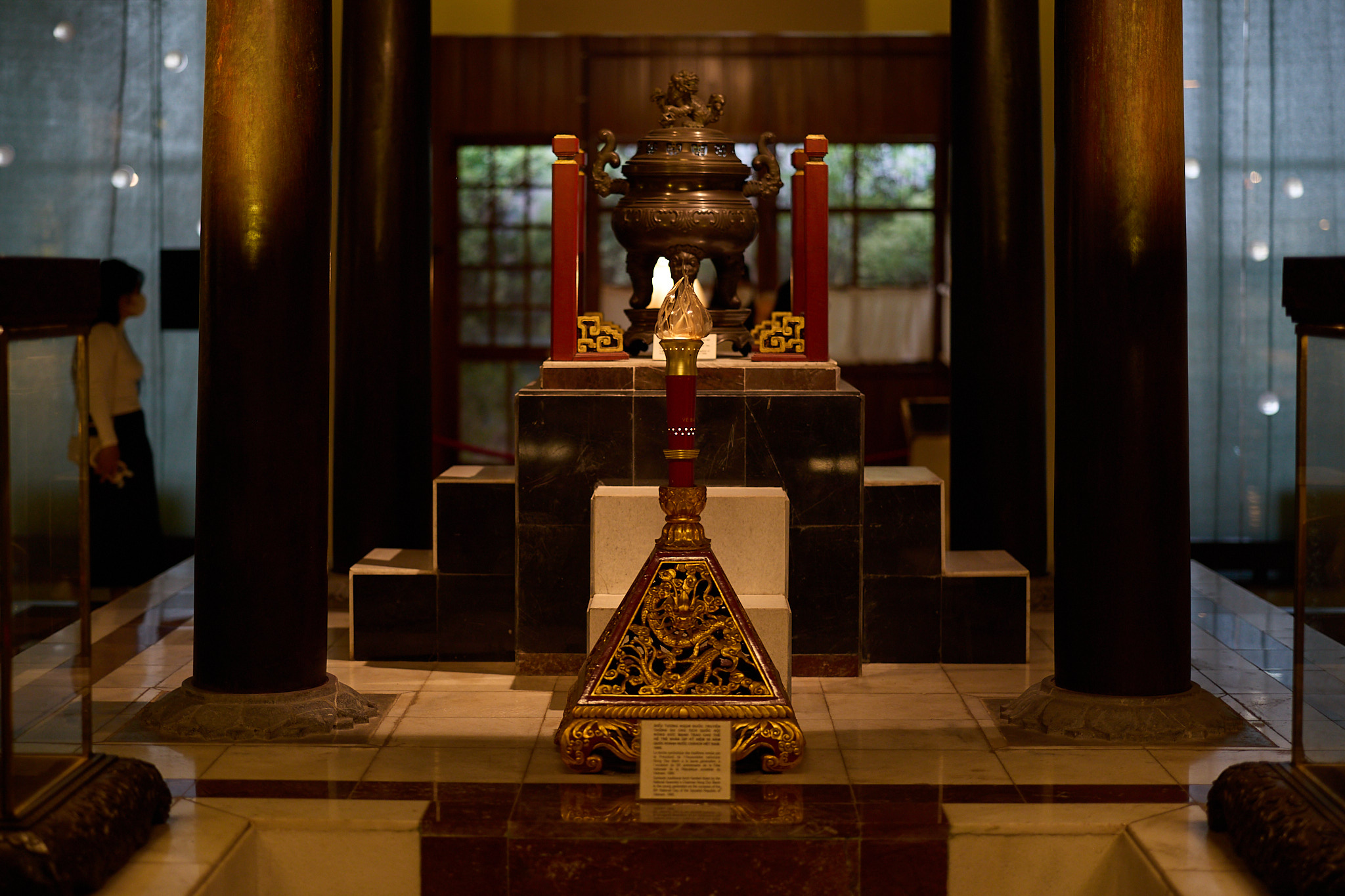
The first is a memorial, built in the style of a Vietnamese village temple, with dark wooden columns and a curved roof. Behind it, the museum says, is the autumn sky over Hanoi in early September 1969; thin strips of metal stand for tears, and stylised wreaths for the thousands of wreaths sent to the city.
Beyond it, at a desk by a window, under a lamp, a wax Ho Chi Minh sits at a typewriter, writing his will.
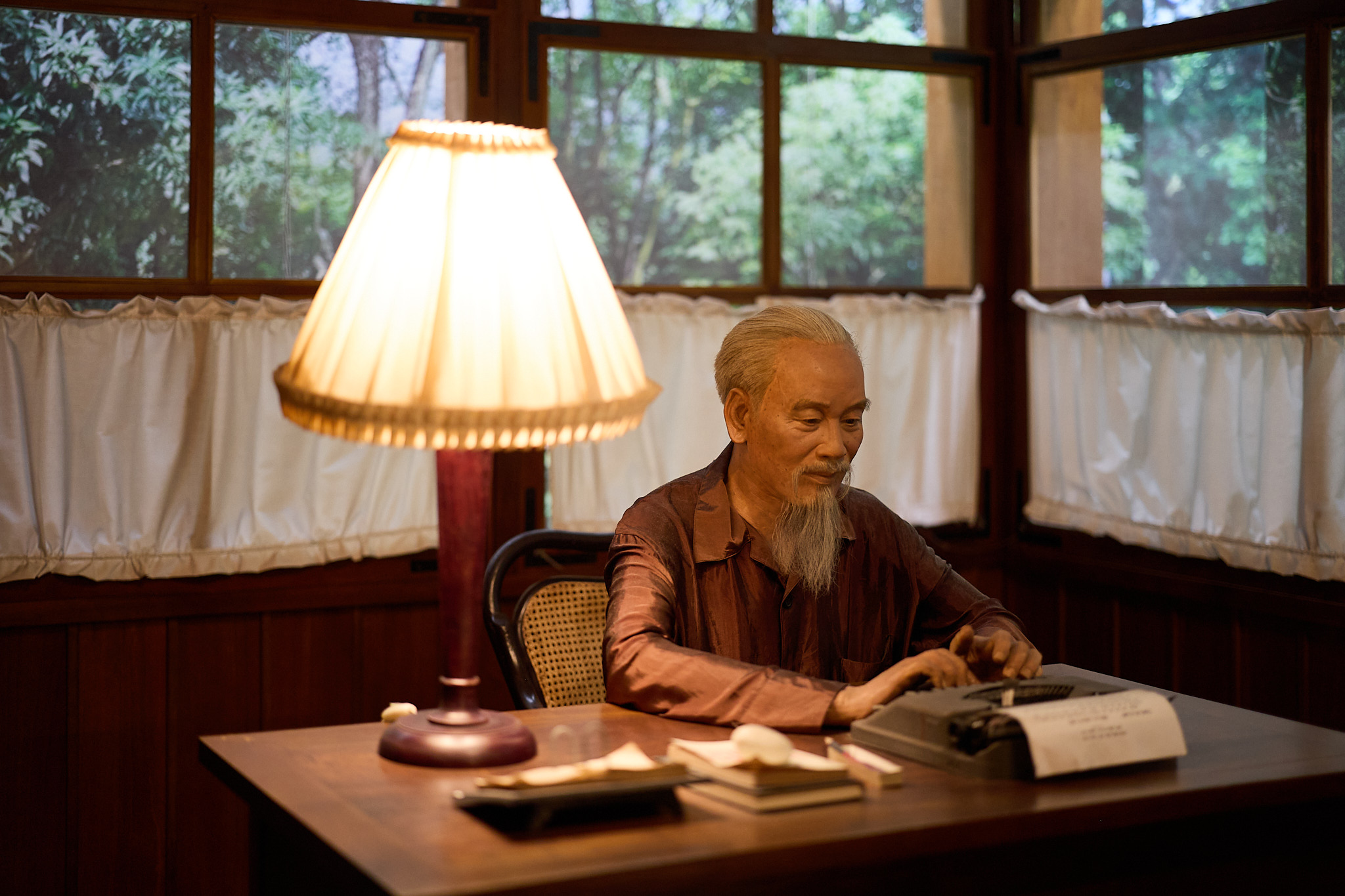
Room after room, his century is told with other people’s art. The last room is his alone: a lamp, a typewriter and a will.
Visit this place
Location
Ho Chi Minh Museum (Bảo tàng Hồ Chí Minh)
Behind the Ho Chi Minh Mausoleum, next to the One Pillar Pagoda, in Ba Đình
19 Ngọc Hà, Ba Đình, Hanoi, Vietnam
Practical Information
- Opening hours
- Tuesday–Thursday and Saturday–Sunday, 8:00–12:00 and 14:00–16:30; closed Monday and Friday. The museum closes over lunch.
- Admission
- 40,000 VND for international visitors, as listed on the museum’s ticket page.
- Visitor note
- Next to the One Pillar Pagoda, a short walk from the mausoleum. The museum asks visitors to check with its staff before filming or taking photos.
- Official website
- Visitor information
Information last checked: November 24, 2026 (Opening hours and admission checked against the museum’s official visitor pages.)
Conversation
Comments
Review pending commentsComments are reviewed before appearing. The internet already contains enough unattended surprises.
Loading comments…
Leave a comment