Vietnam Fine Arts Museum: From Lacquer to Lunge Mines
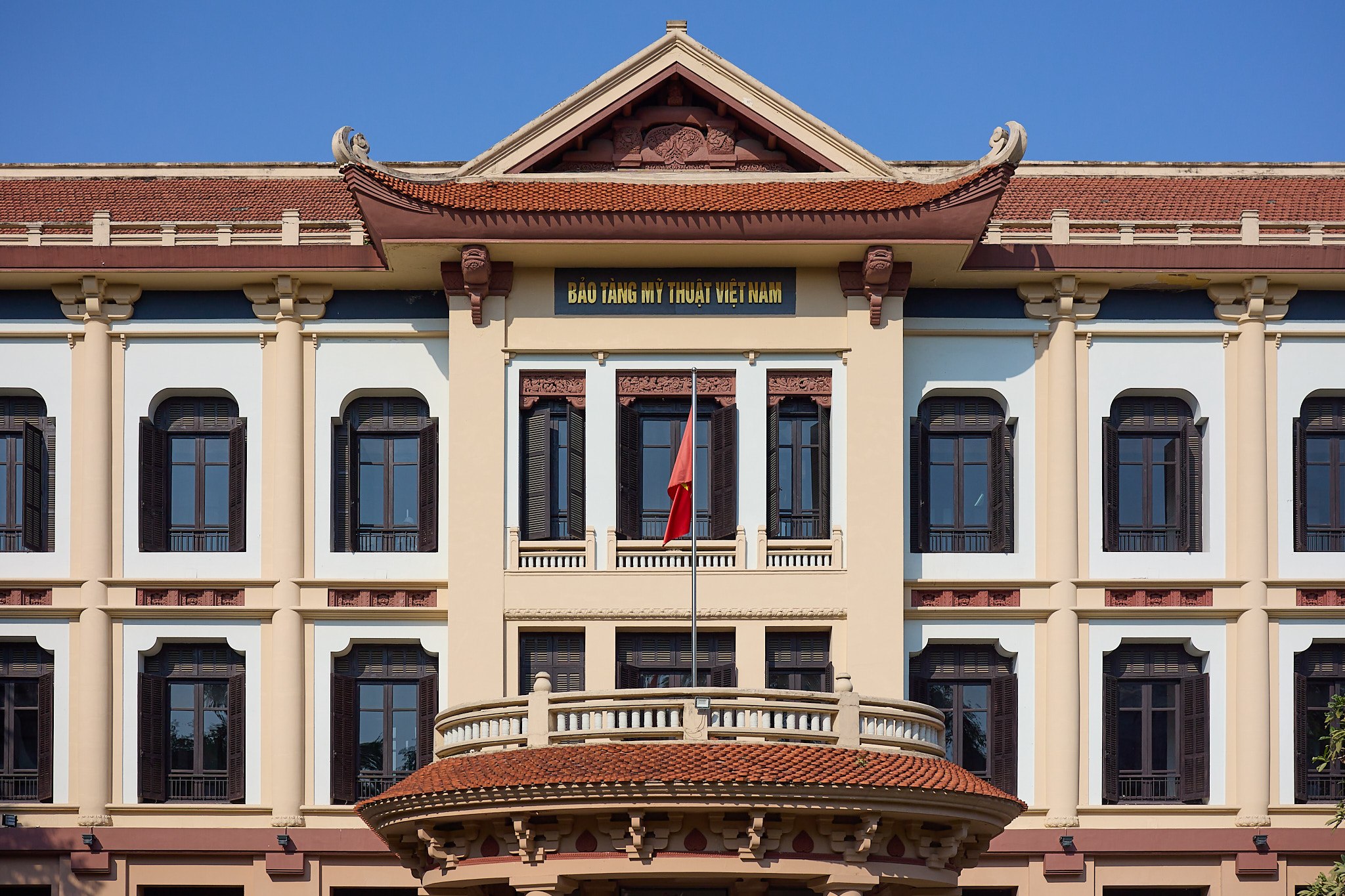
Before it held Vietnam’s art, the building held French schoolgirls.
It was built as Famille de Jeanne d’Arc, a Catholic boarding house where daughters of French officials from across Indochina stayed while studying in Hanoi. After the French left, it housed a Polish delegation, then Soviet experts, before it was handed to the Ministry of Culture to be made into a museum.
The work was led by the painter Nguyễn Đỗ Cung, who became the museum’s first director. He gave the building a new roof, decorated to recall the wood carvings of a Vietnamese village communal house. Designing and building the roof took nearly three years, including the detailed drawings and research. The museum opened in 1966.
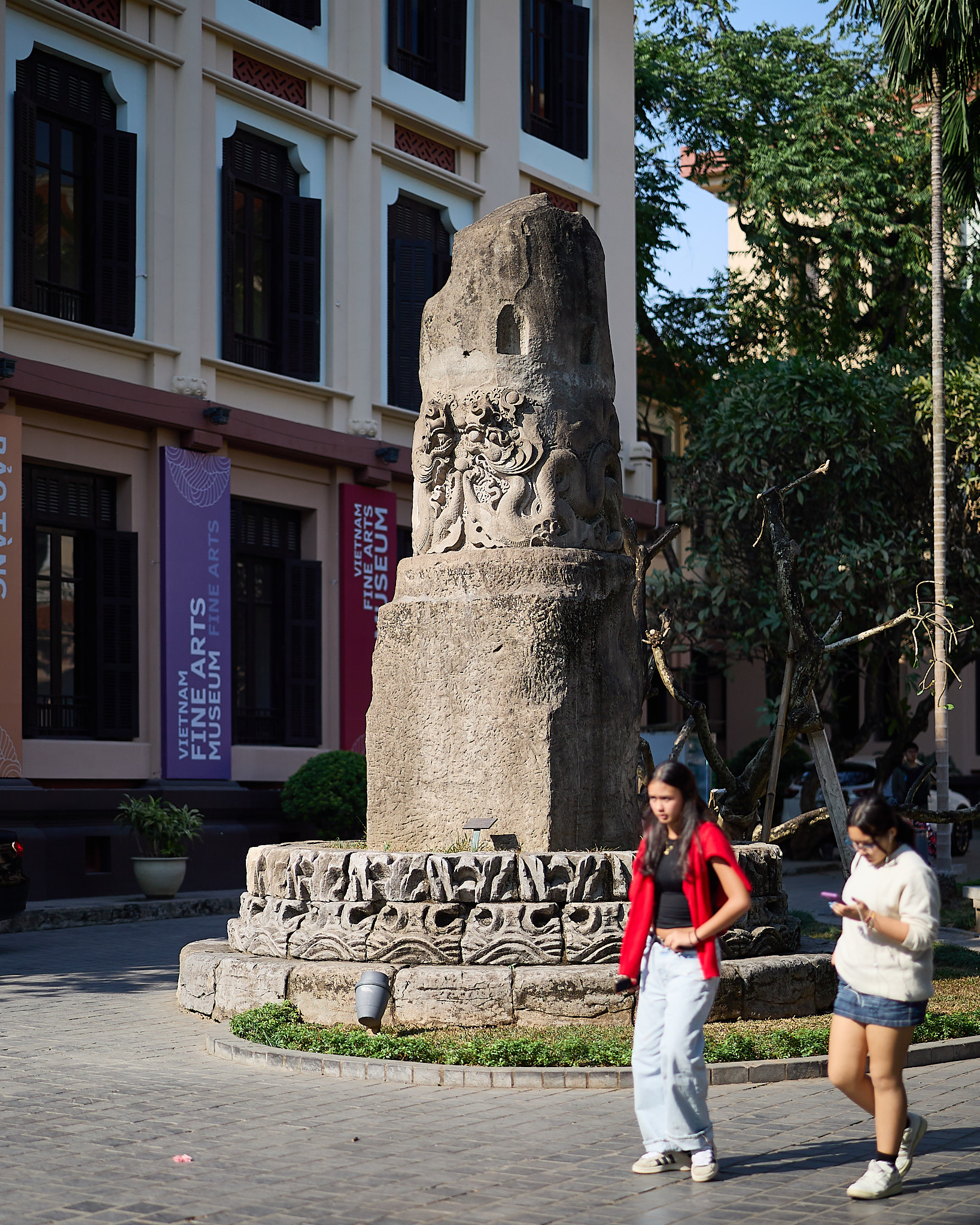
The old rooms
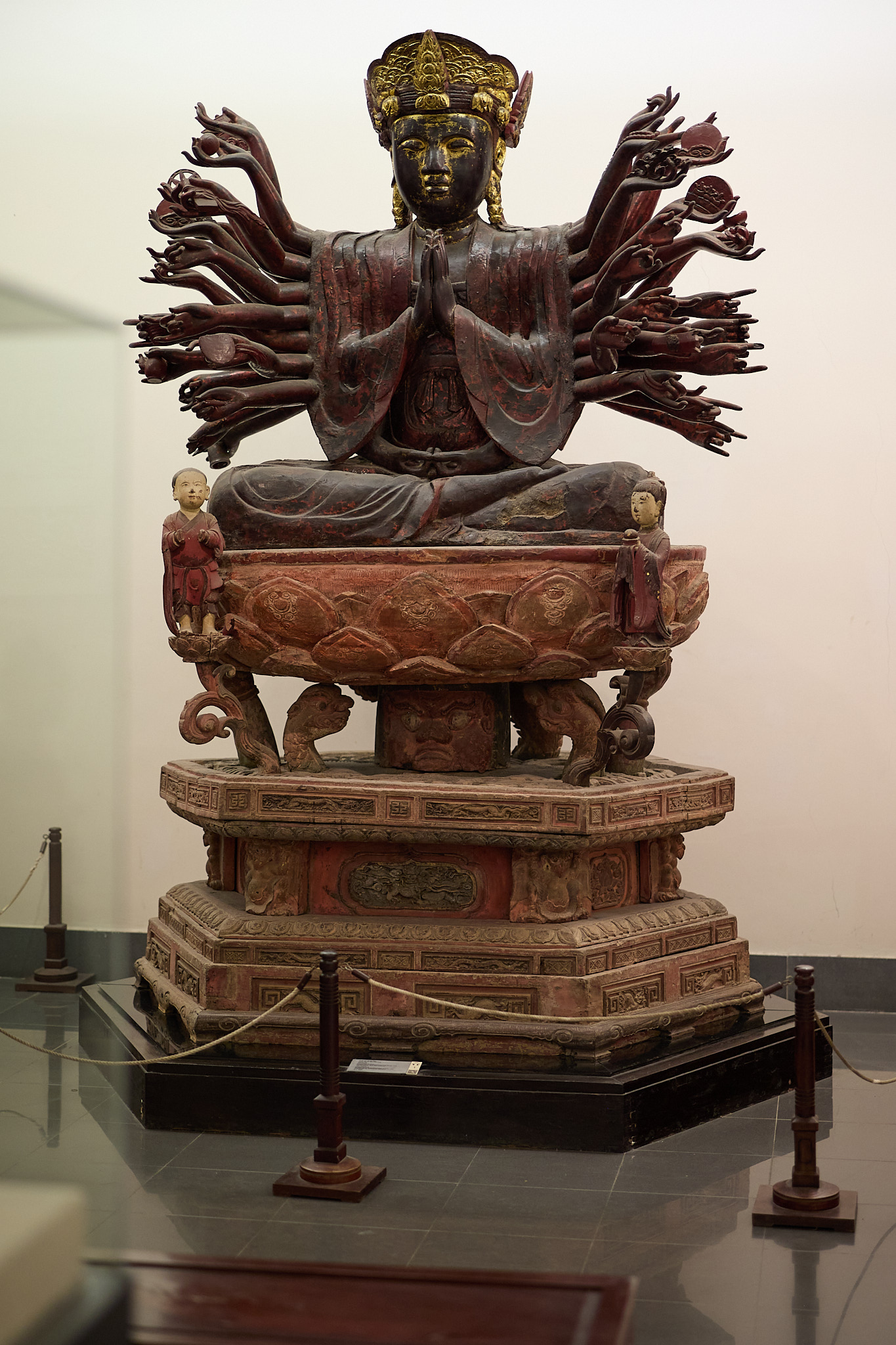
In the old rooms sits a Bodhisattva of compassion from the Hội Hạ Pagoda, carved in the sixteenth century and lacquered, more than three metres high. The statue has forty-two arms. Two are joined in front of the chest, two rest in the lap in meditation, and the rest spread out on either side, each hand with its own gesture or treasure.
Beneath the lotus it sits on, the head of a monster rises out of a carved sea, and its two hands hold the lotus up. Two small attendants stand on lotuses of their own. The statue is a national treasure.
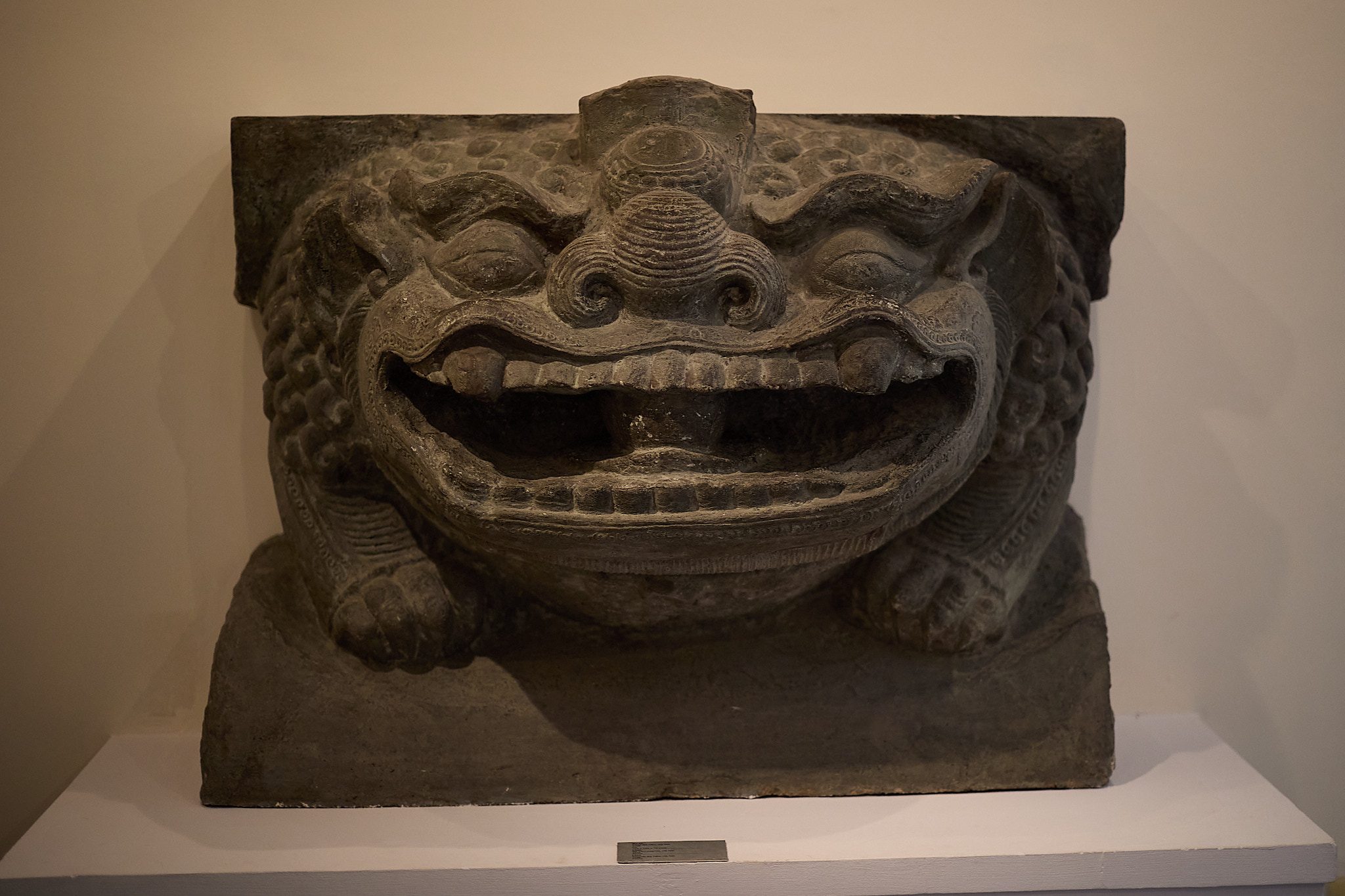
The other faces in the old rooms are not always what they look like.
Swipe to explore
Tap to enlarge
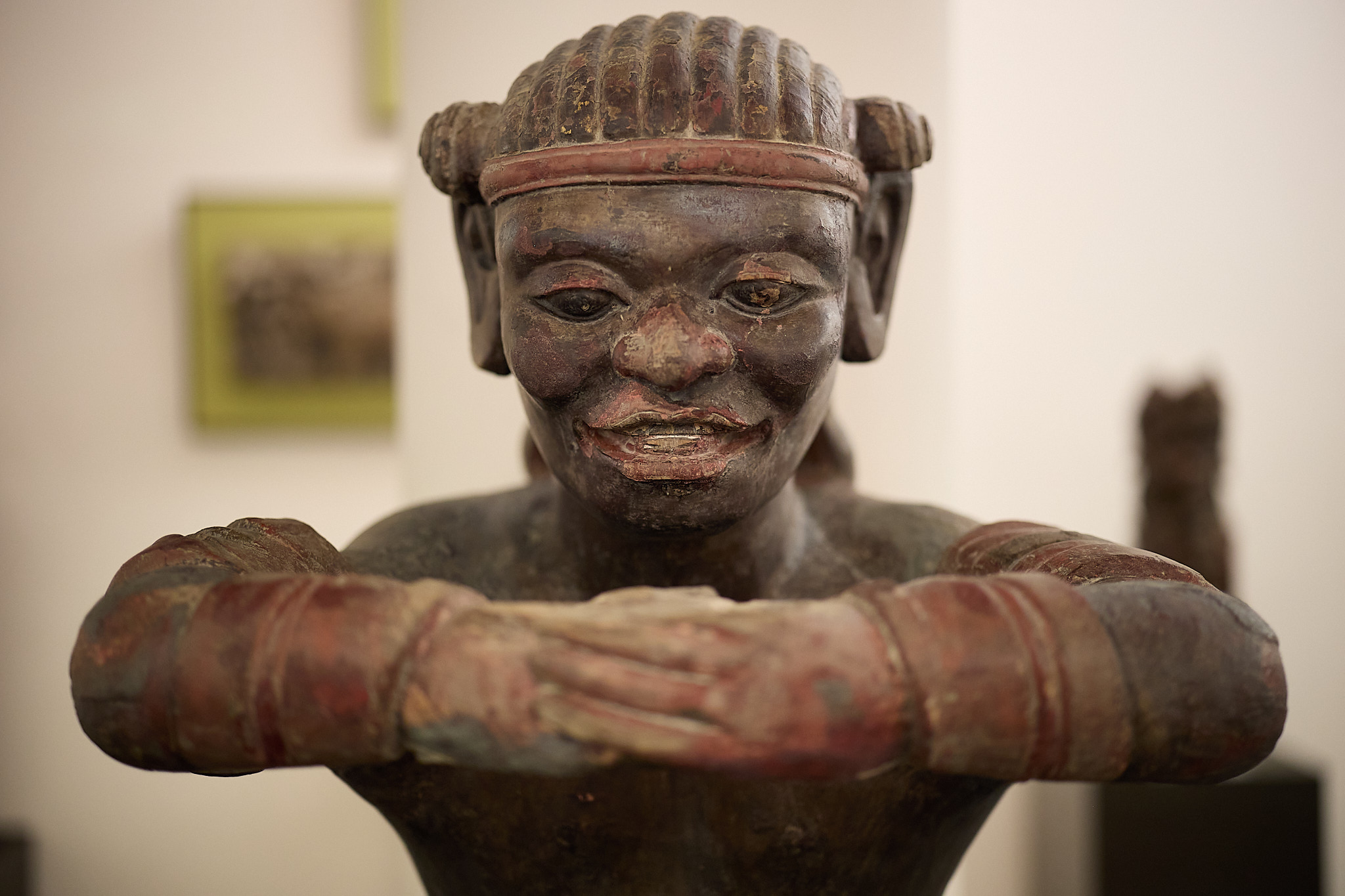
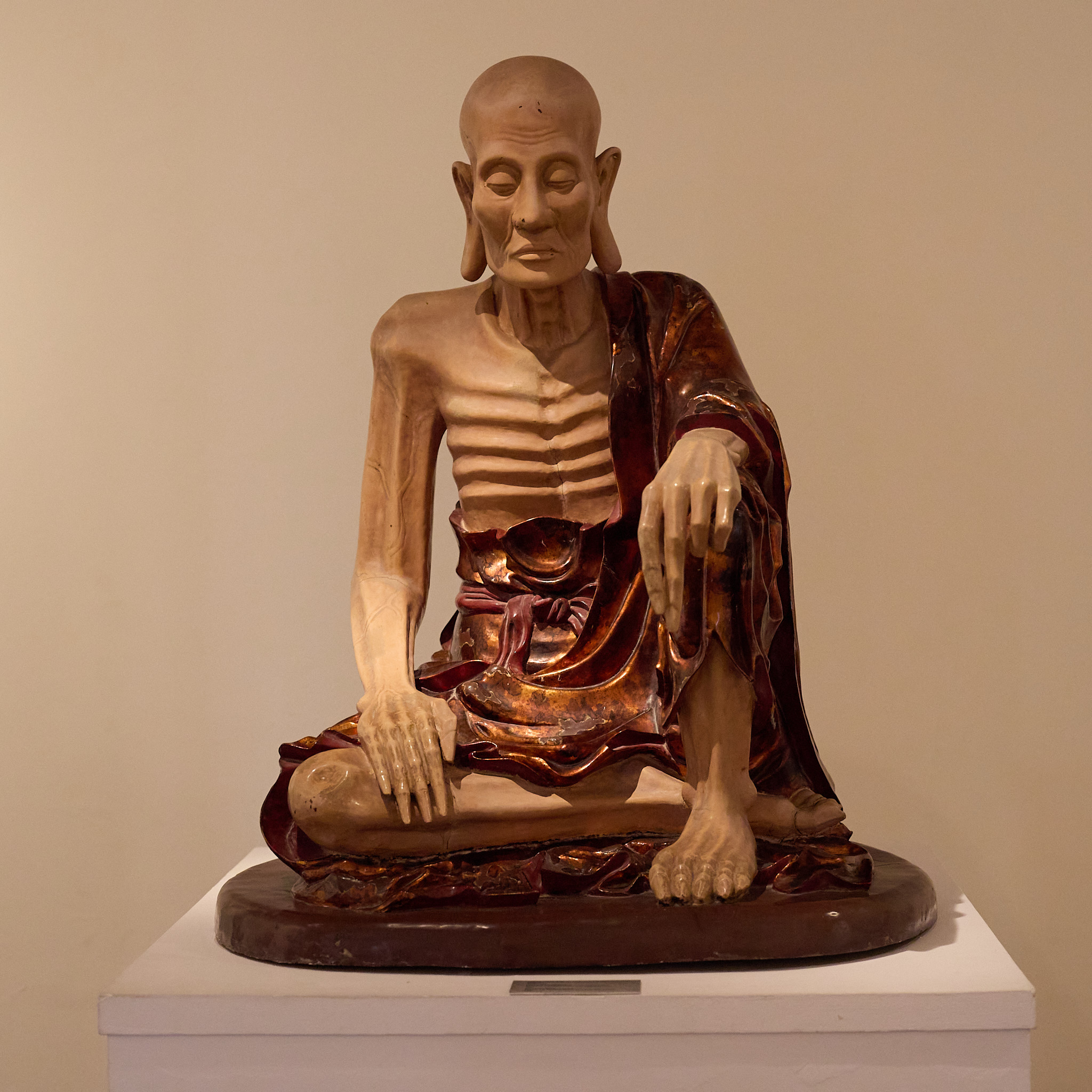
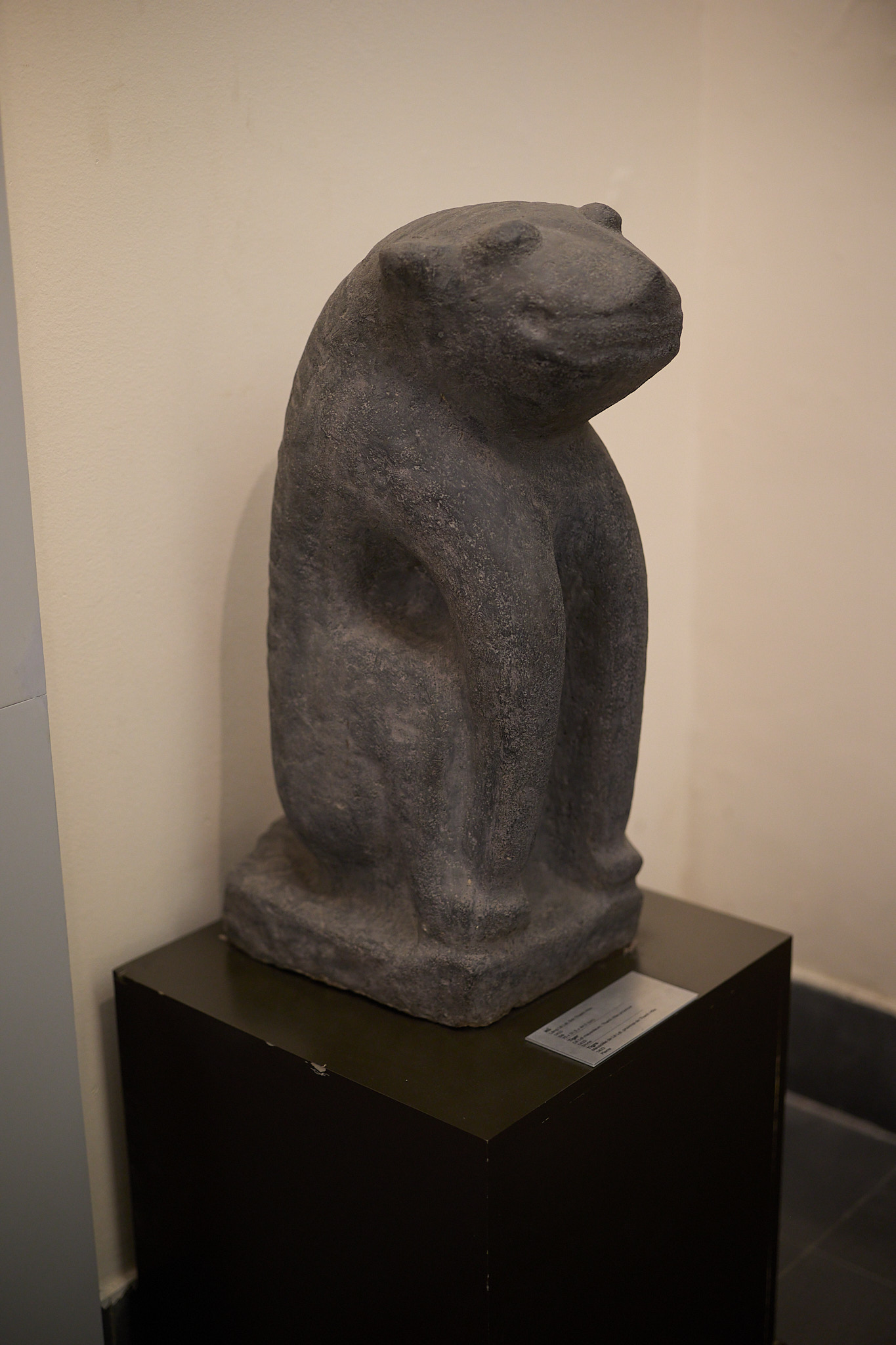
The school
In 1925, the French painter Victor Tardieu, with the Vietnamese painter Nam Sơn, opened the École des Beaux-Arts de l’Indochine in Hanoi. It was modelled on the school in Paris, and it set out to join Western art and local tradition into something new. Nguyễn Đỗ Cung, the painter behind the museum’s roof, was one of its students.
One of the things it produced was a new use for an old material. In Vietnam, lacquer had long protected and decorated temple fittings and things for the home. In the 1930s, students and teachers at the school made it a medium for paintings.
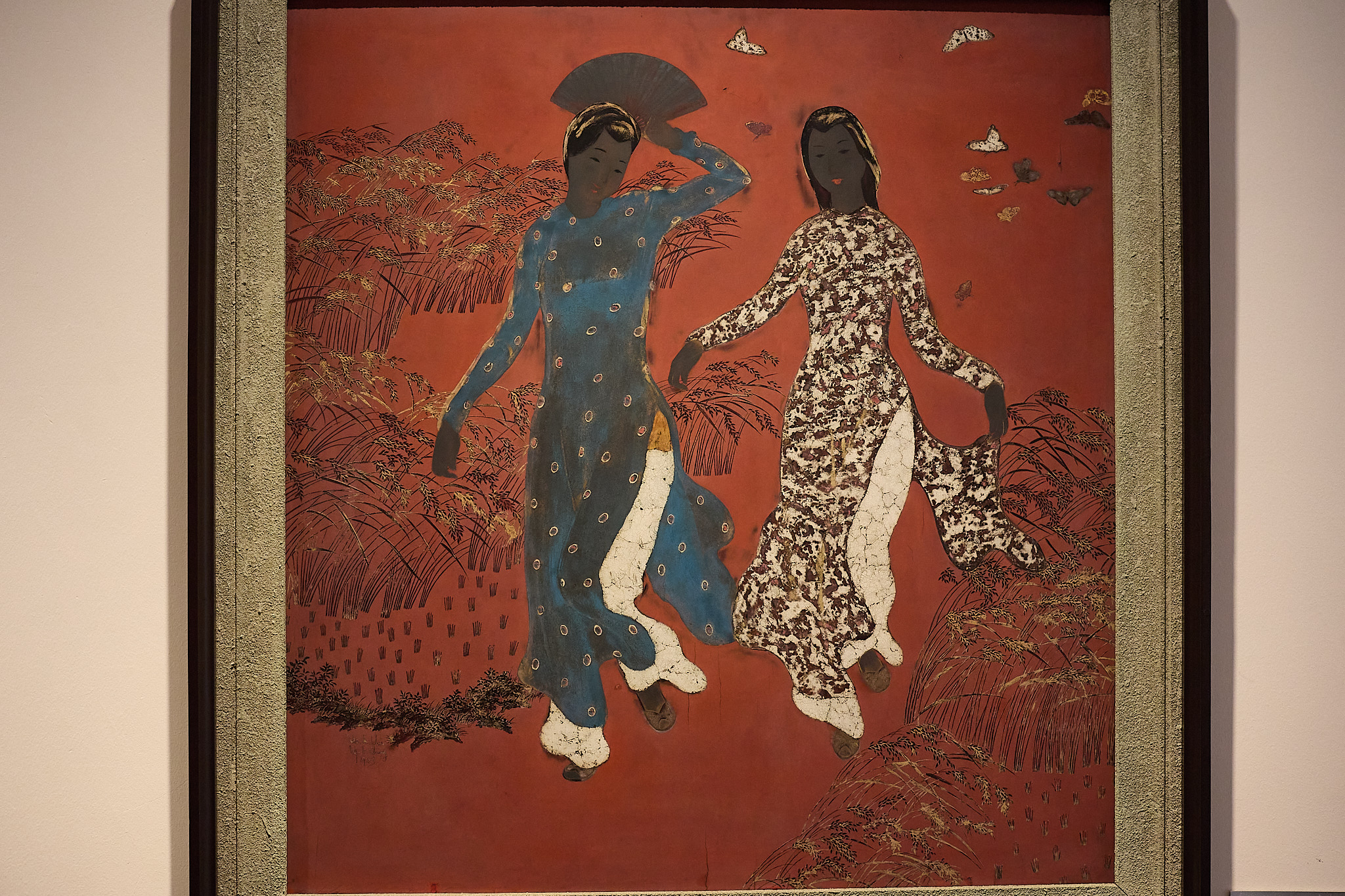
Nguyễn Tiến Chung, who graduated in 1940, painted two young women in lacquer a few years later. One holds a fan above her head, the hems of their áo dài swing out, and butterflies float on the red. They look as if they are dancing. According to the title, they are walking through a rice field.
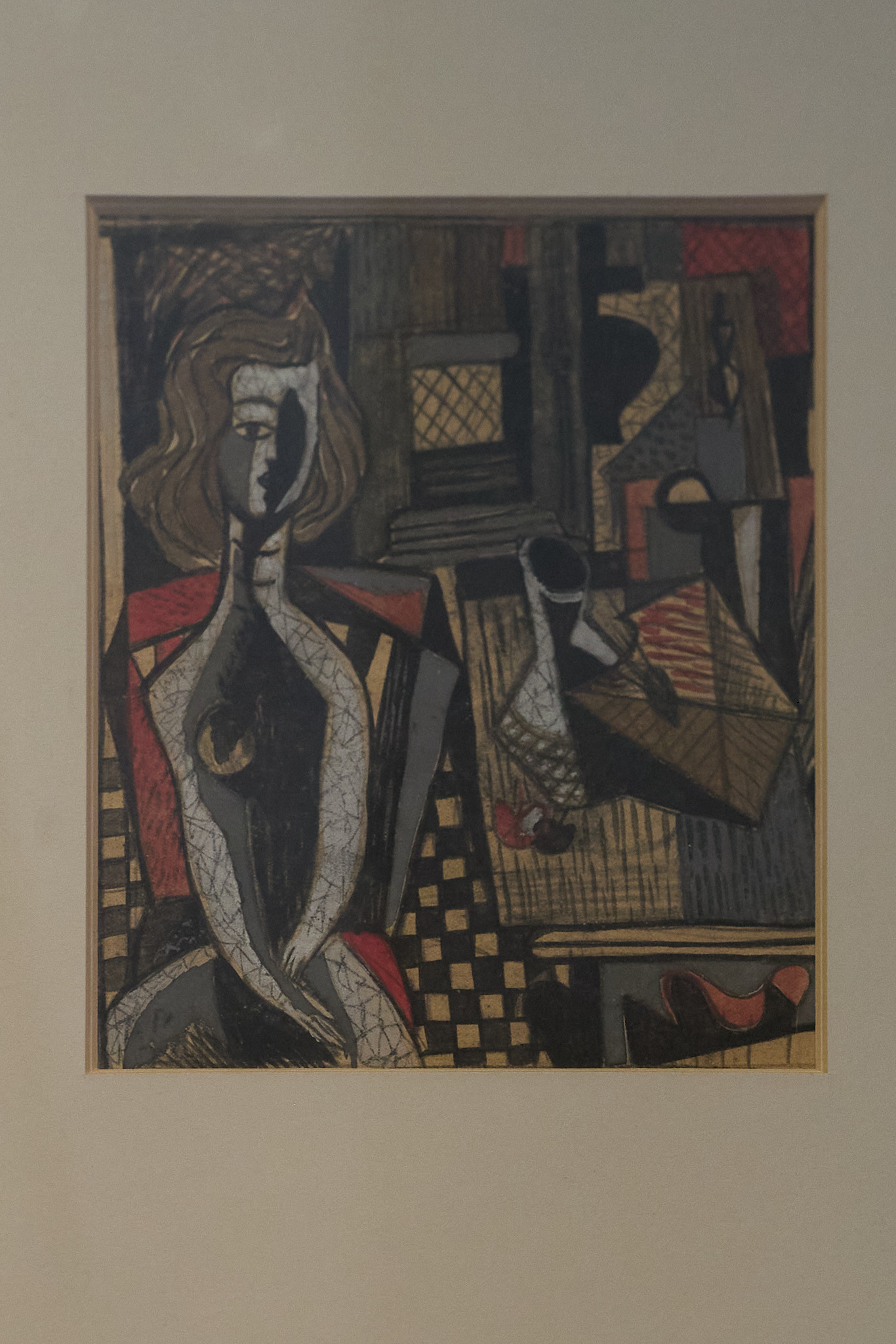
Some of Europe arrived by newspaper. One of the school’s students, Tạ Tỵ, is said to have found Cubism while he was still enrolled, in European pictures printed in the papers.
In 1948, he painted Young Woman. Her face is split down the middle, half pale and half dark, and her body is cut into flat planes; around her are a chequered floor, a table, a jug and shapes that could be windows.
Lunge mines
Then the war. In Trần Văn Hòe’s bronze, a soldier leans forward with a long pole tipped with three prongs: a bom ba càng, a lunge mine. That morning, at the Ho Chi Minh Museum, I had seen one carried by a gilded soldier.
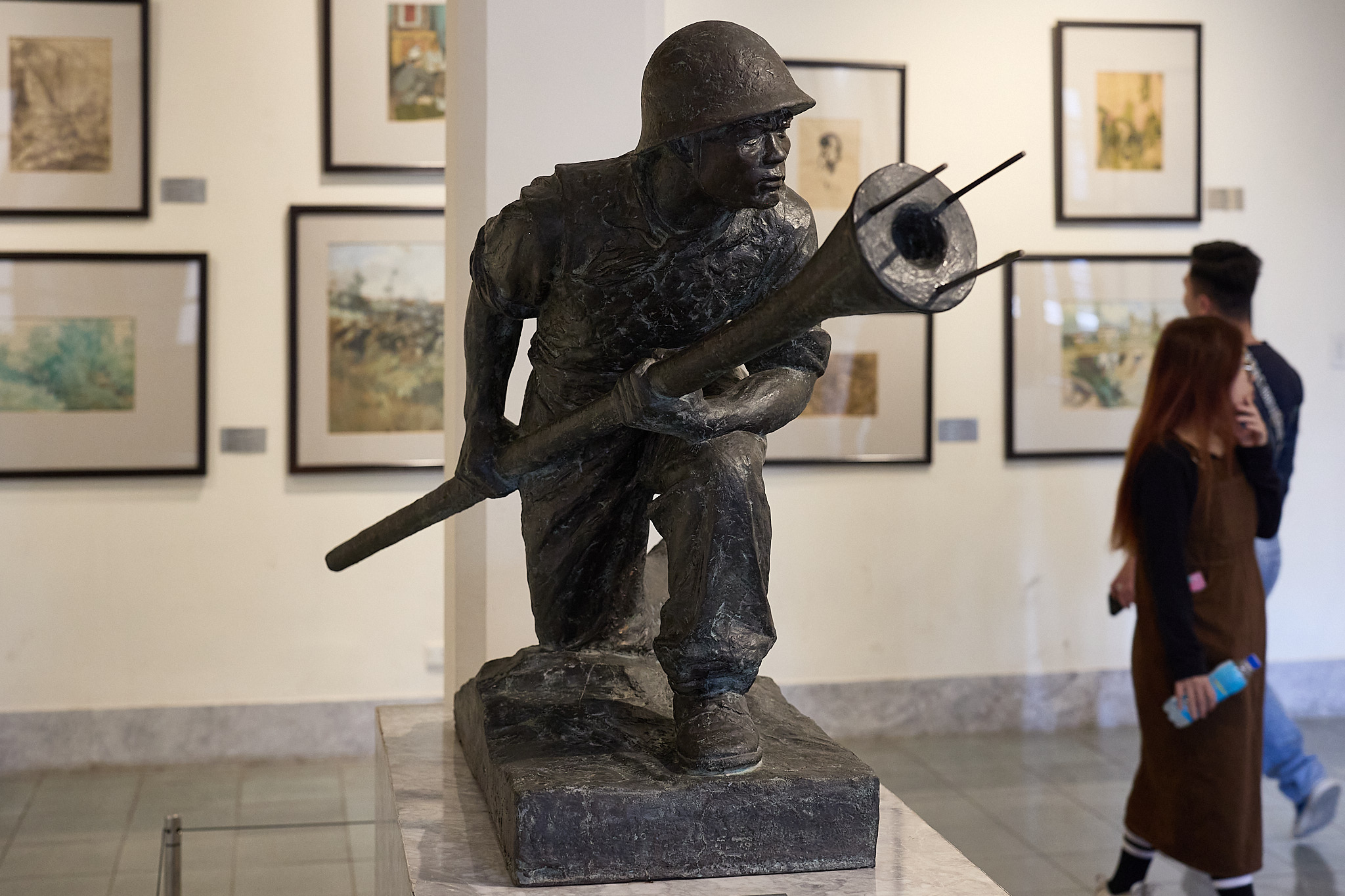
In 2023, this museum put on a show of works on paper from the resistance against the French, 1945 to 1954. It was called Nghệ sĩ là chiến sĩ: the artist is a soldier. In those years, artists painted and held exhibitions, made newspapers and propaganda, taught art, and some fought.
Of the show’s thirty artists, twenty-two had trained at the colonial art school.
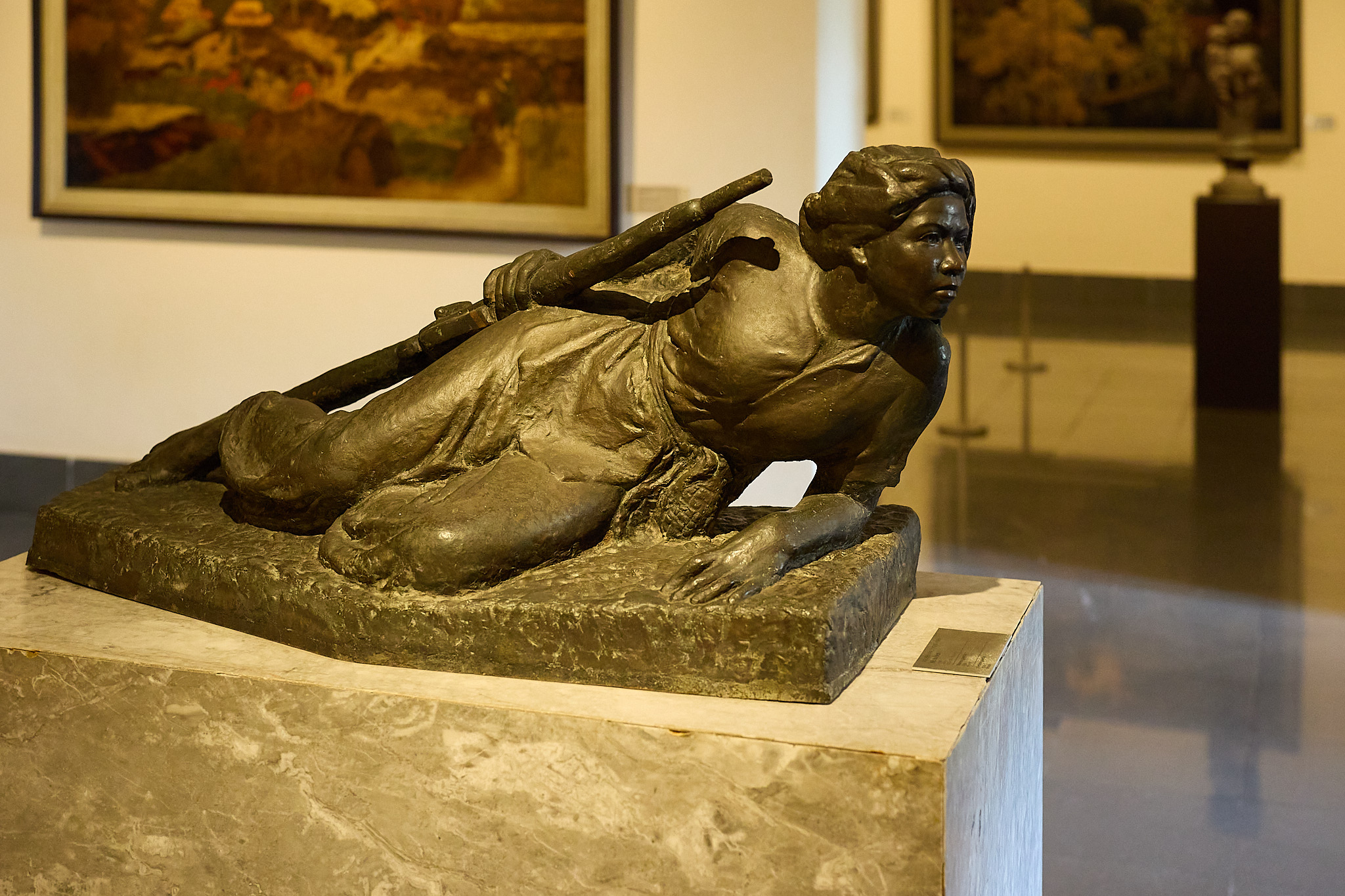
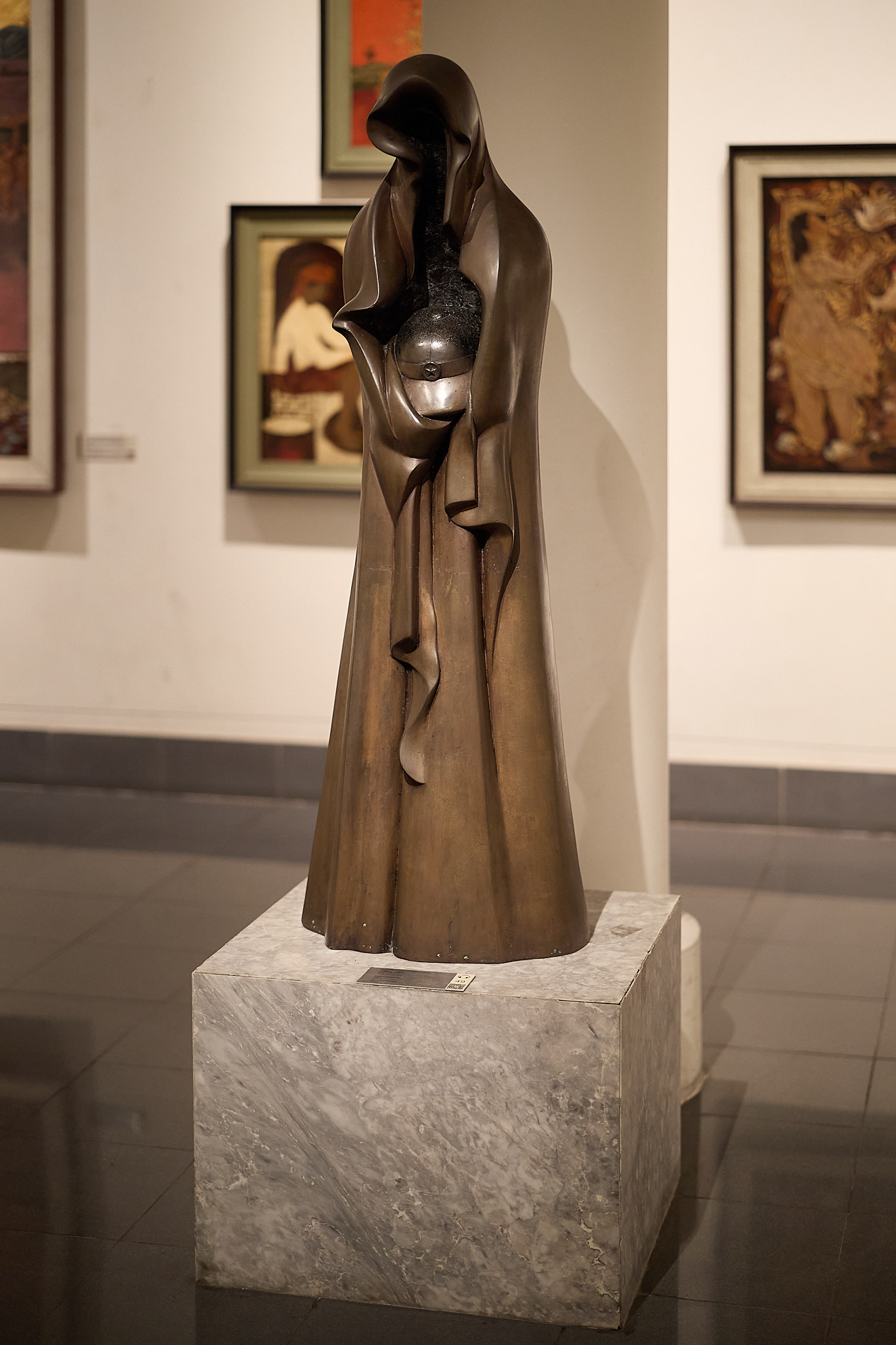
Further on, in Nguyễn Văn Lý’s A Female Guerrilla of the South, made in 1958, a woman crawls low with a rifle. A hooded figure, its face lost in shadow, holds a helmet with a star against its chest. It is called Memorial, by Nguyễn Phú Cường, and it was made in 2000.
Year of the Snake
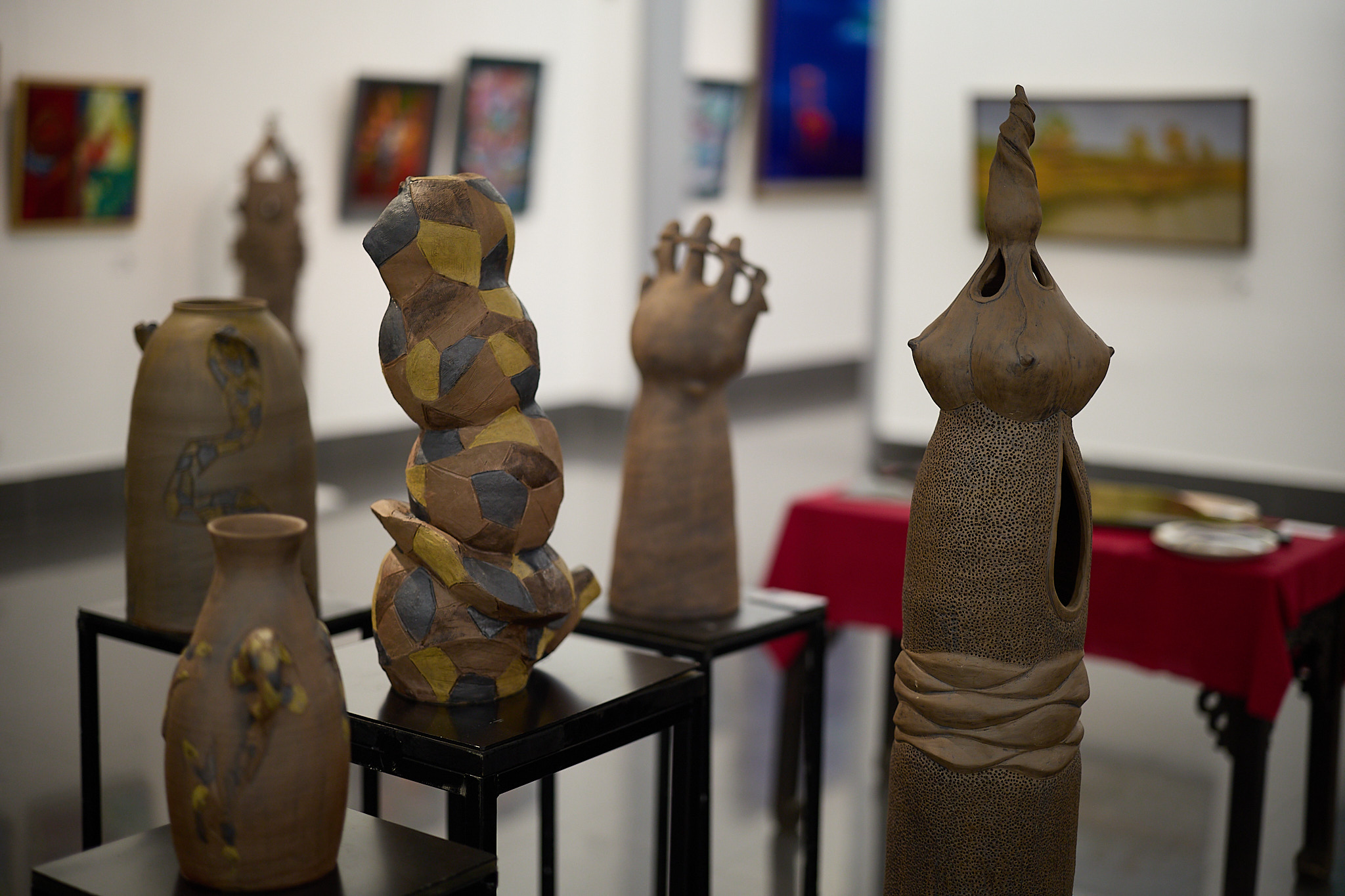
The Year of the Snake was a month away, and the snakes were early. They climbed the sides of clay jars, next to a tall clay figure with breasts facing four ways.
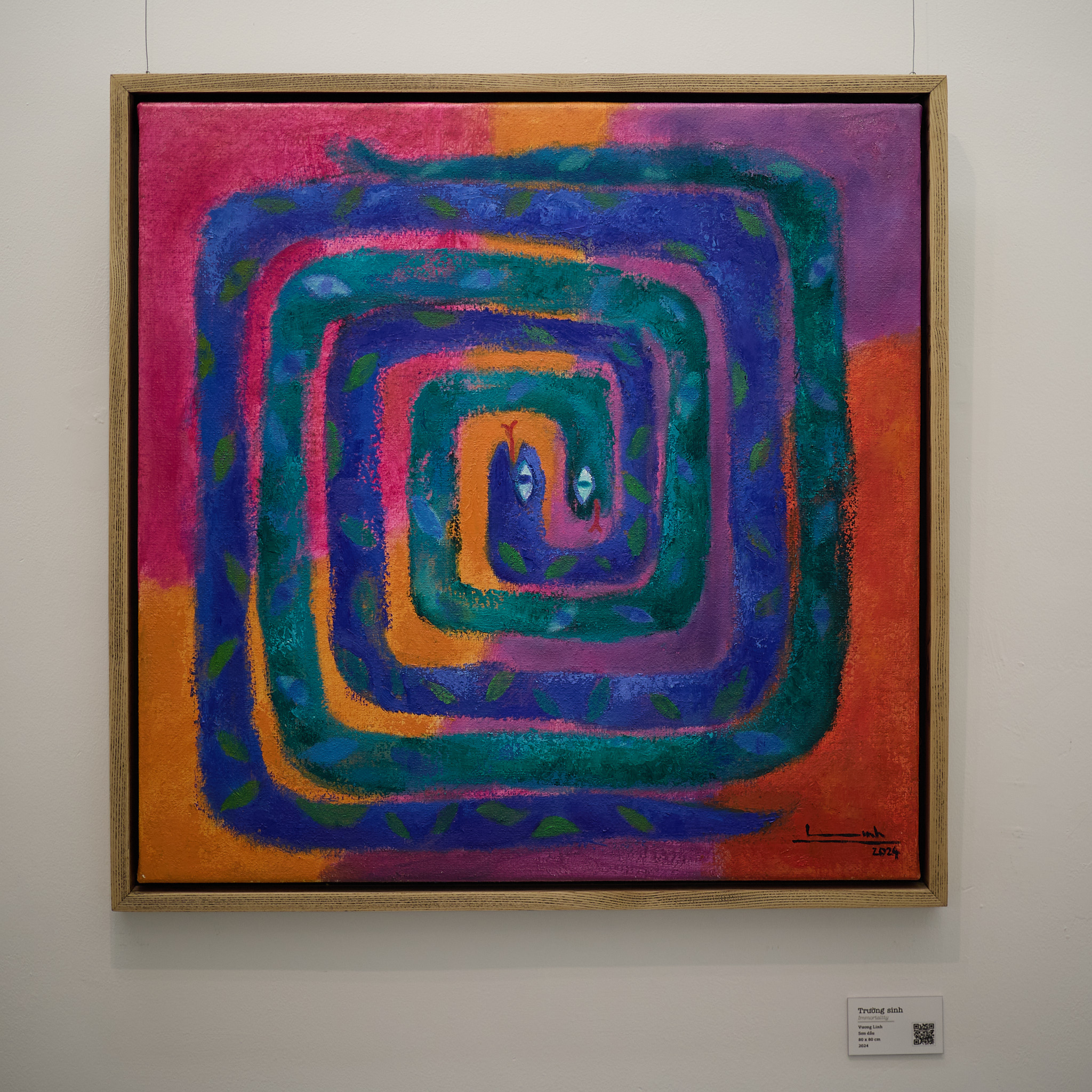
On a wall nearby, two snakes coil into one square spiral, blue and teal on pink and orange. Vương Linh painted them that year and called them Immortality.
The visitors were getting ready for the new year too. At sight after sight on that trip, young women in áo dài and other traditional dress were posing for photos to welcome Tết, the Lunar New Year. The museum’s corridor was one more backdrop.
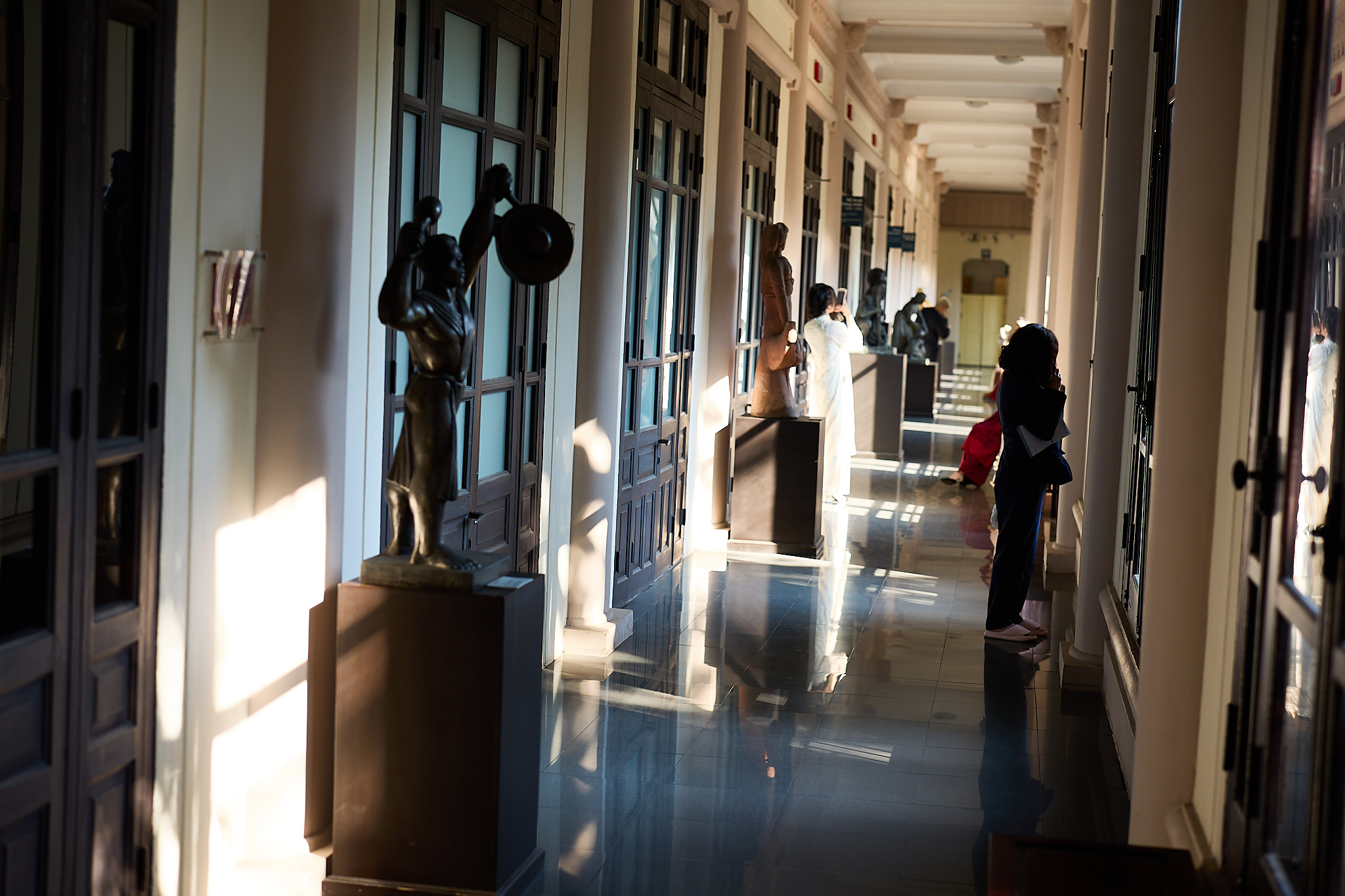
The old boarding house still had young women in it. Some of them had brought a photographer.
Visit this place
Location
Vietnam National Fine Arts Museum (Bảo tàng Mỹ thuật Việt Nam)
On Nguyễn Thái Học Street in Ba Đình
66 Nguyễn Thái Học, Ba Đình, Hanoi, Vietnam
Practical Information
- Opening hours
- Tuesday–Sunday, 8:30–17:00; closed Monday
- Admission
- 40,000 VND for adults; 20,000 VND for students; 10,000 VND for children aged 6–16; free for children under 6 and disabled visitors
- Official website
- Visitor information
Information last checked: November 24, 2026 (Opening hours and admission checked against the museum’s official visiting page (Vietnamese).)
Conversation
Comments
Review pending commentsComments are reviewed before appearing. The internet already contains enough unattended surprises.
Loading comments…
Leave a comment