Ba Den Guanyin: Everything but the Sea
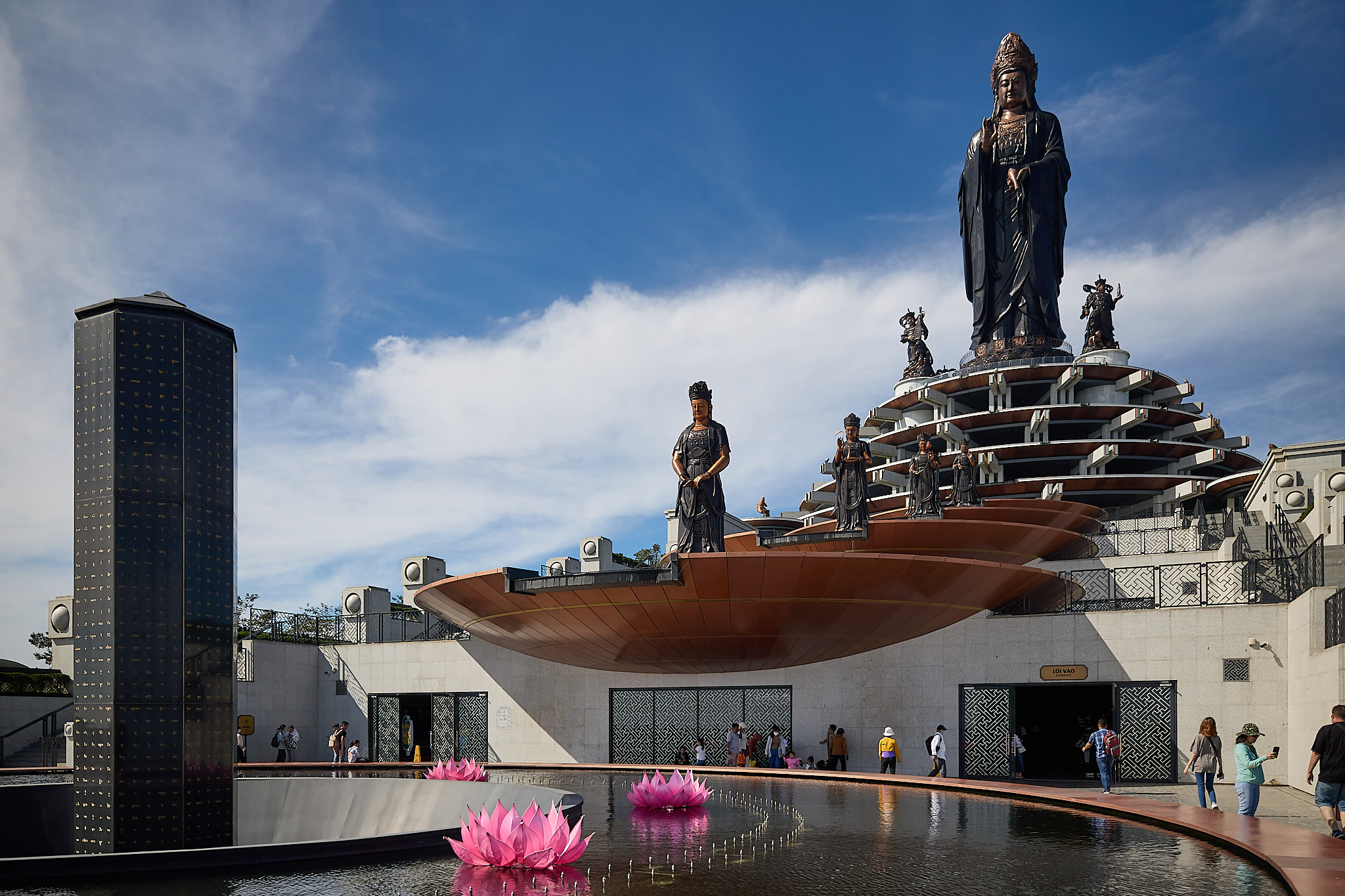
The Guanyin on top of Bà Đen mountain has her name carved on the lotus under her feet, in Chinese characters read from right to left: 西補陀山, Tây Bổ Đà Sơn in Vietnamese, West Potalaka Mountain. It is less a name than an address.
Potalaka is where Guanyin, the Buddhist bodhisattva of mercy, lives. In the scriptures, it is a mountain said to lie in the sea south of India. It is not on any map, so people have been choosing their own. China settled on an island off its east coast and named it Putuo Shan. Tibet named a palace after it: the Potala, in Lhasa.
Tây Ninh has had one since 2021: the top of Bà Đen, nearly a kilometre up.
The mountain, it should be said, already had a goddess. It is named after her: Bà Đen, honoured as the Holy Mother of the Sacred Mountain, whose temple has stood on the slopes since the eighteenth century. Who she was in life depends on which story you hear. The newcomer is someone else entirely, the mountain’s operator is careful to point out. In Vietnamese, she is Phật Bà, the Lady Buddha. So the mountain now has two ladies, one on the slope and one on the top.
I came up by cable car. From the station, it is a short walk to her feet.
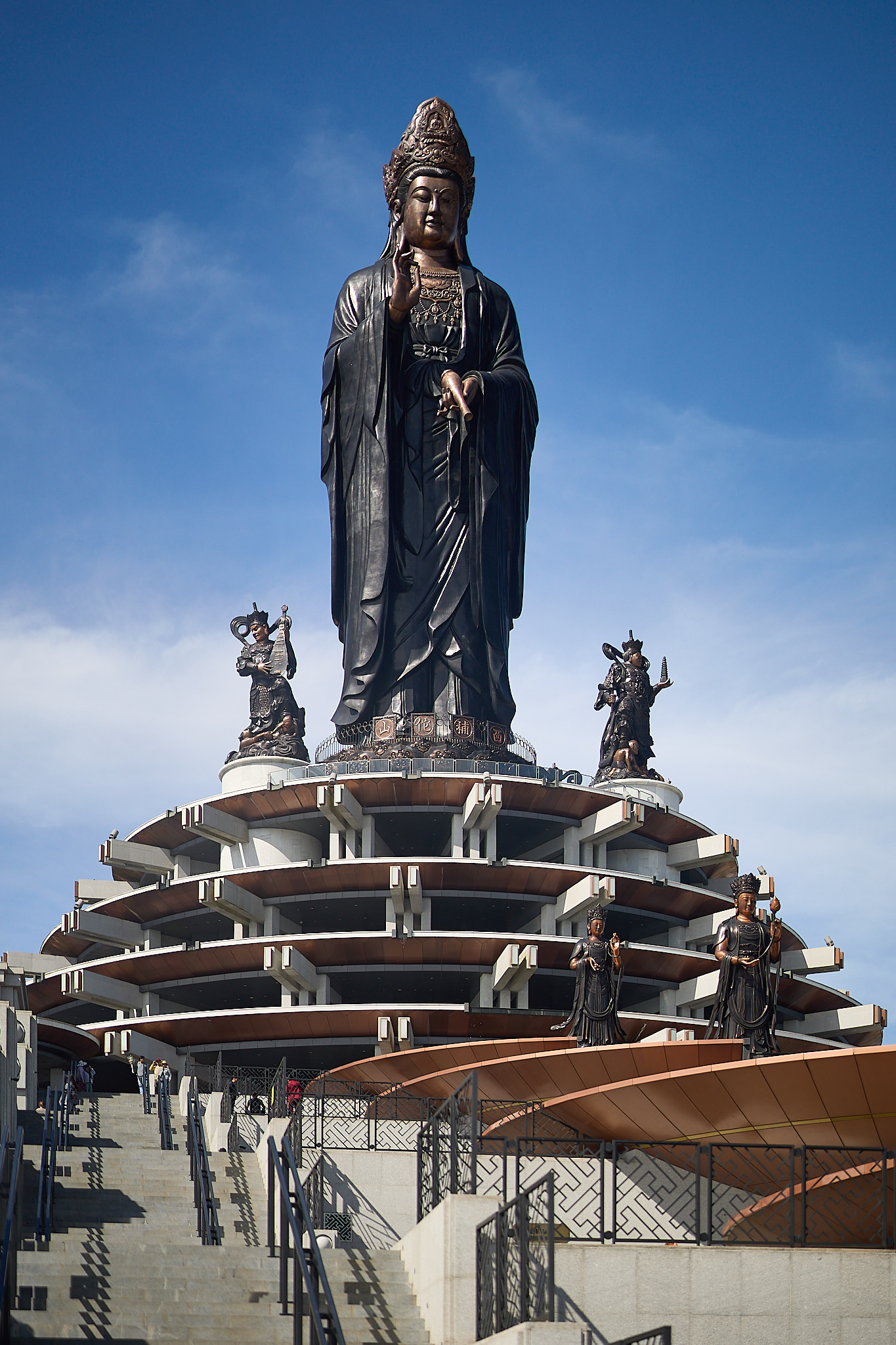
Counting her lotus and the five tiers of her pedestal, she is 72 metres tall, in more than 170 tonnes of bronze. She was made in the style of Vietnam’s Lê dynasty, with details borrowed from old Guanyins in temples around the country. A small seated Buddha sits in her crown. Her left hand tips a vase, as if about to pour.
Her things
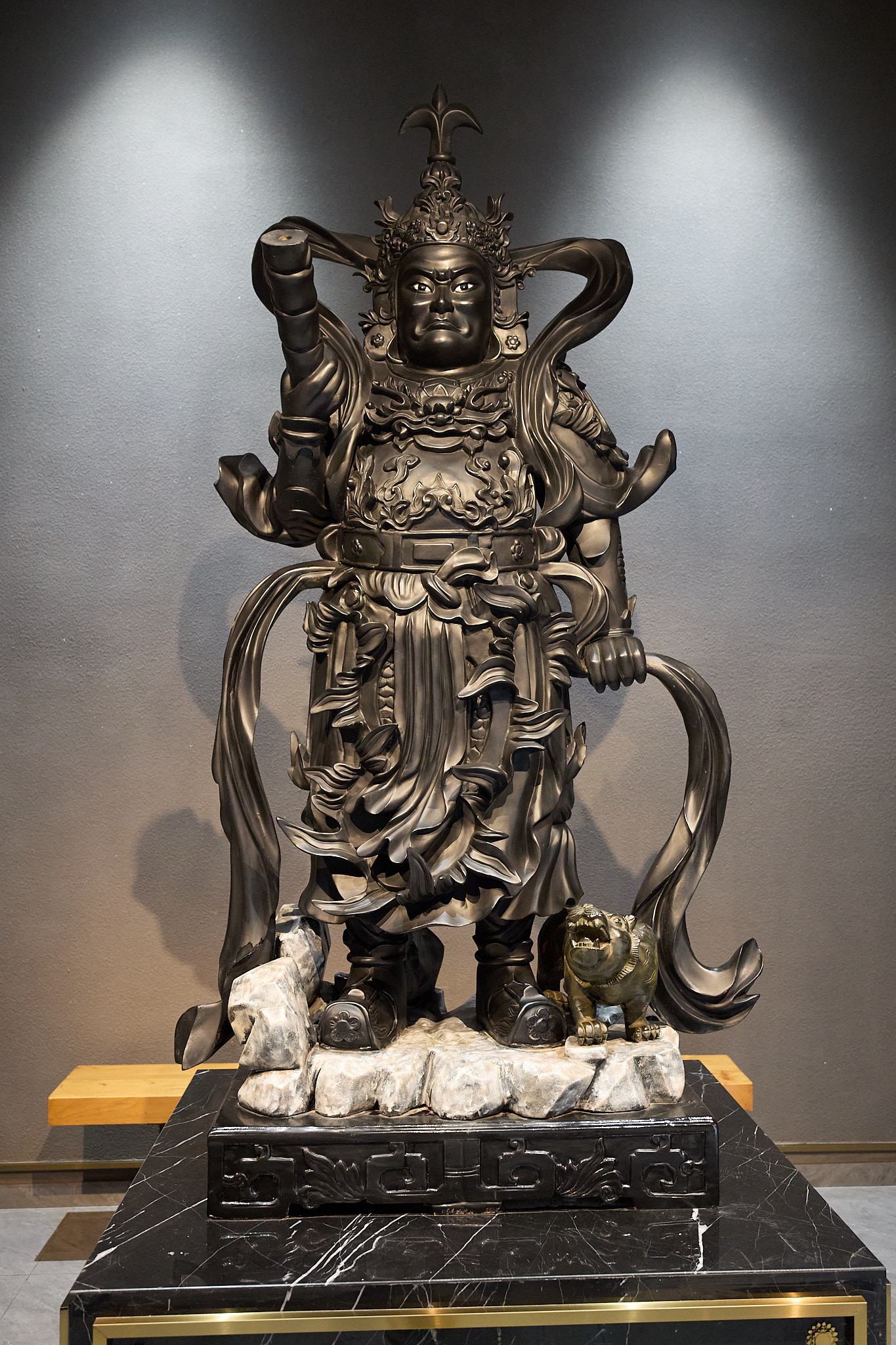
Around her feet stand her guards, the Four Heavenly Kings, also in bronze. Below her, five great basins step down from her pedestal, built so that water runs from one to the next.
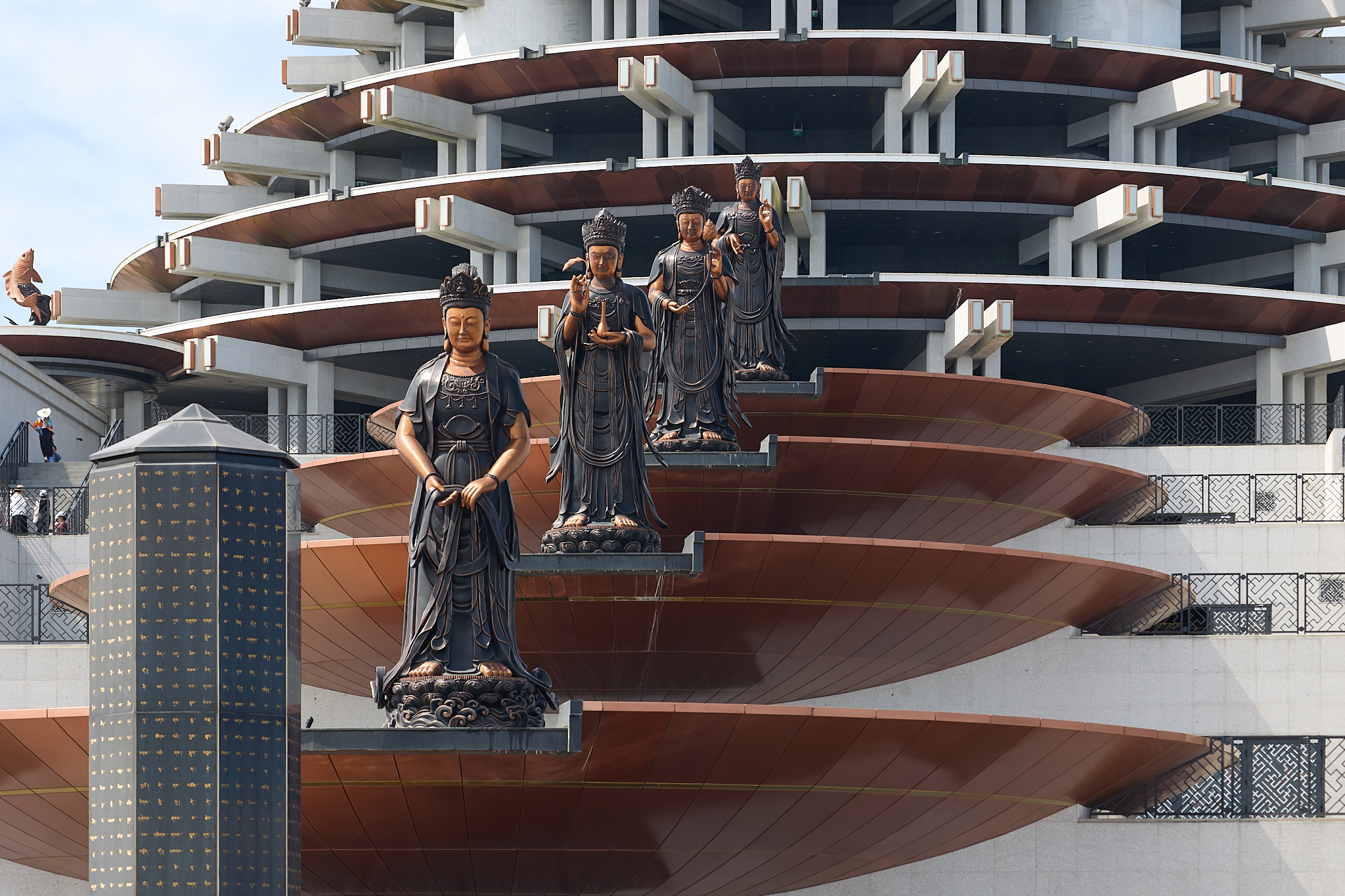
In the first four stand four more Guanyins. In one tradition, she has thirty-three forms; these are four of them, each holding something different. The other twenty-nine are presumably elsewhere.
In the fifth stands a pillar of black granite nearly twenty metres high, inscribed in gold with the Heart Sutra. In the Heart Sutra, it is Guanyin who does the talking. Here, she does it in Tibetan.
Underneath
Her pedestal is hollow. Inside, on four floors, is an exhibition.
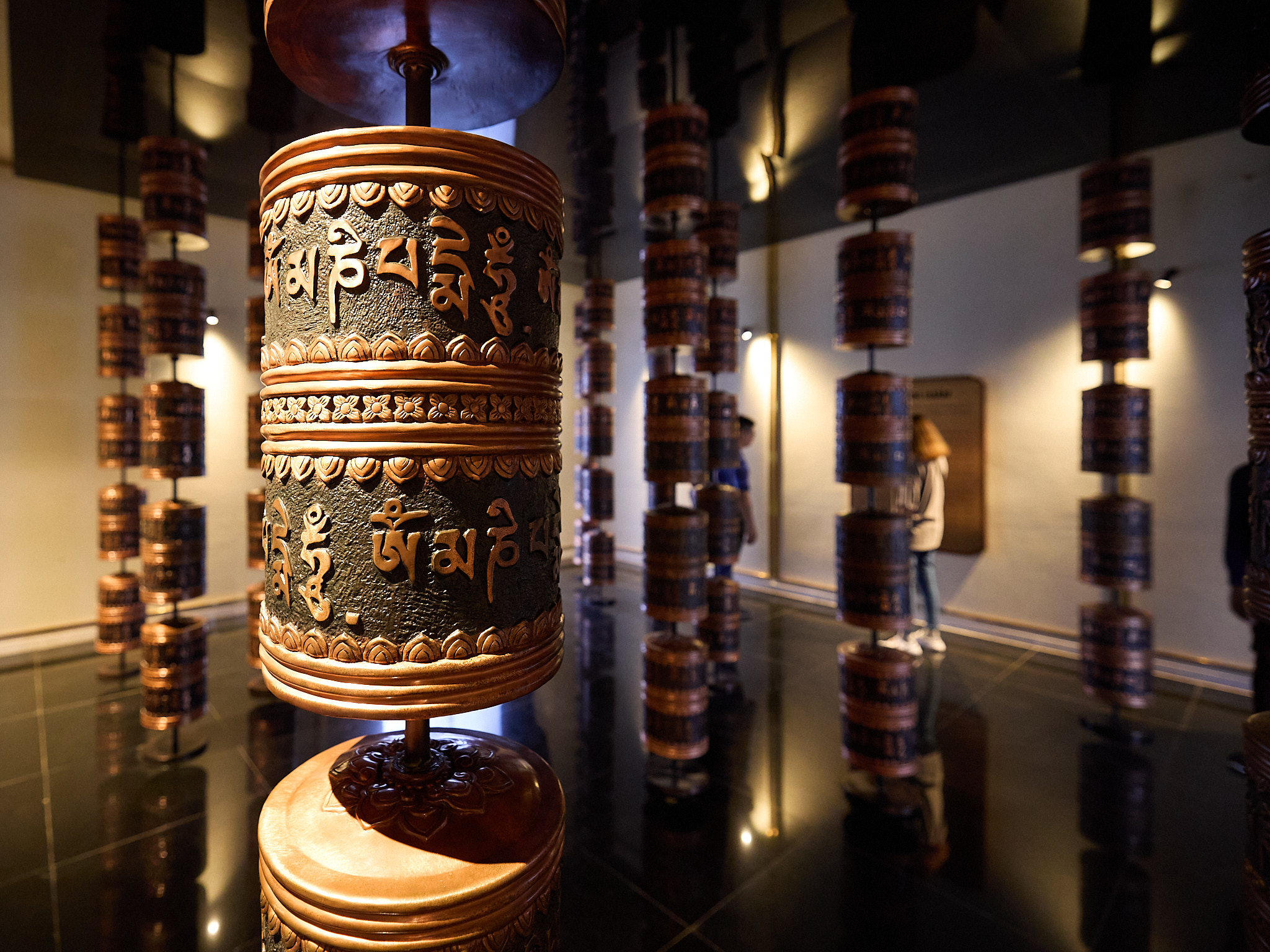
Her mantra, Om mani padme hum, is carved on rows of prayer wheels, for turning as you pass. I turned one.
Under a dome twenty metres across, a film shows the universe as Buddhism describes it. I remember it as faintly psychedelic. In a round hall, she appears again, this time with a thousand arms.
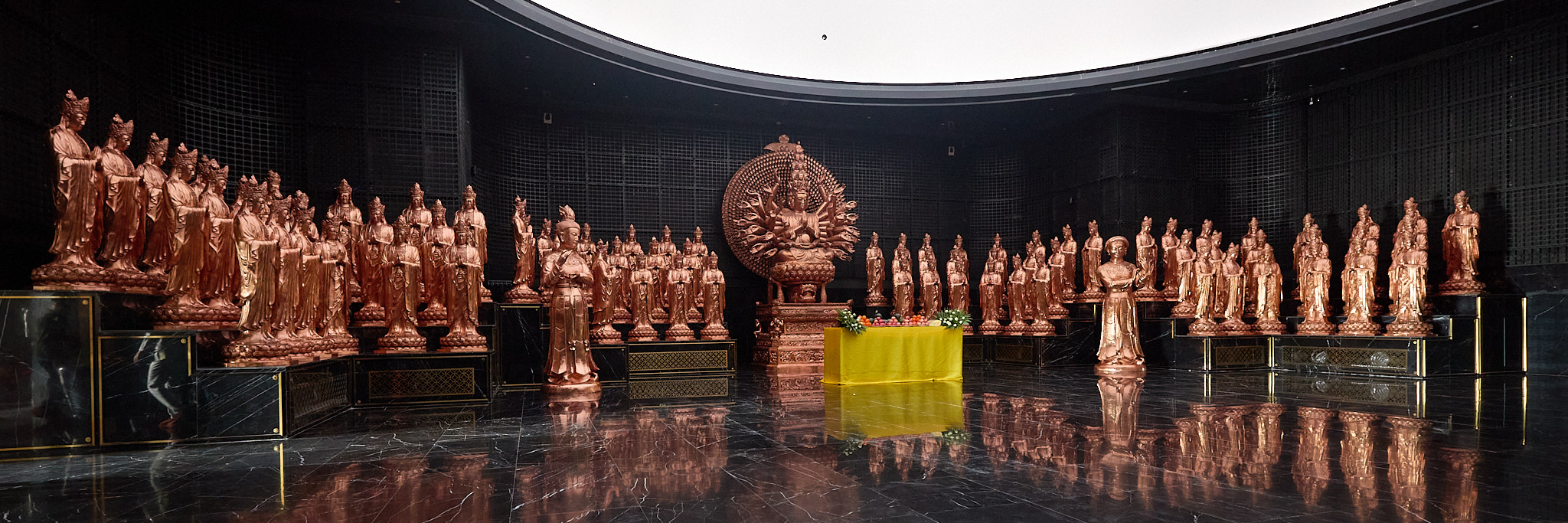
Not everything down here is hers. There are copies of famous Buddhist statues from eight countries, from India to Japan, and, on the top floor since 2023, relics of the Buddha himself.
Her name, her guards, her other forms, her sutra, her mantra: the summit has everything a Potalaka needs.
Not hers
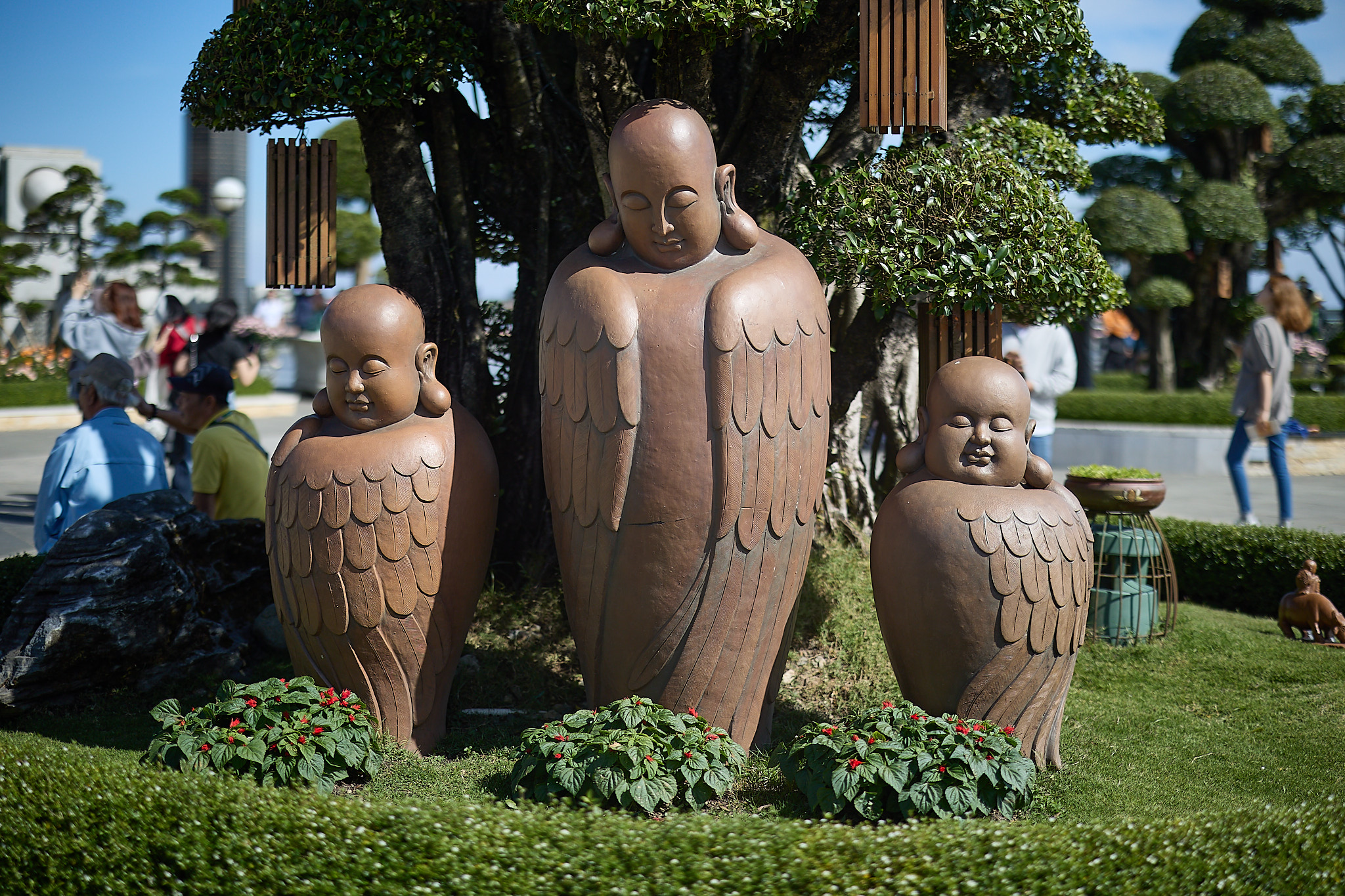
Not everyone up here is hers, either. In a garden near the station, three figures with the heads of monks and the bodies of birds stand with their eyes closed. They are bird-bodied Buddhas by the ceramicist Nguyễn Tuấn, said to stand for enlightenment and the endless motion of life. These three were already here when I visited. In 2026, an exhibition of his work brought 95 of them to the summit.
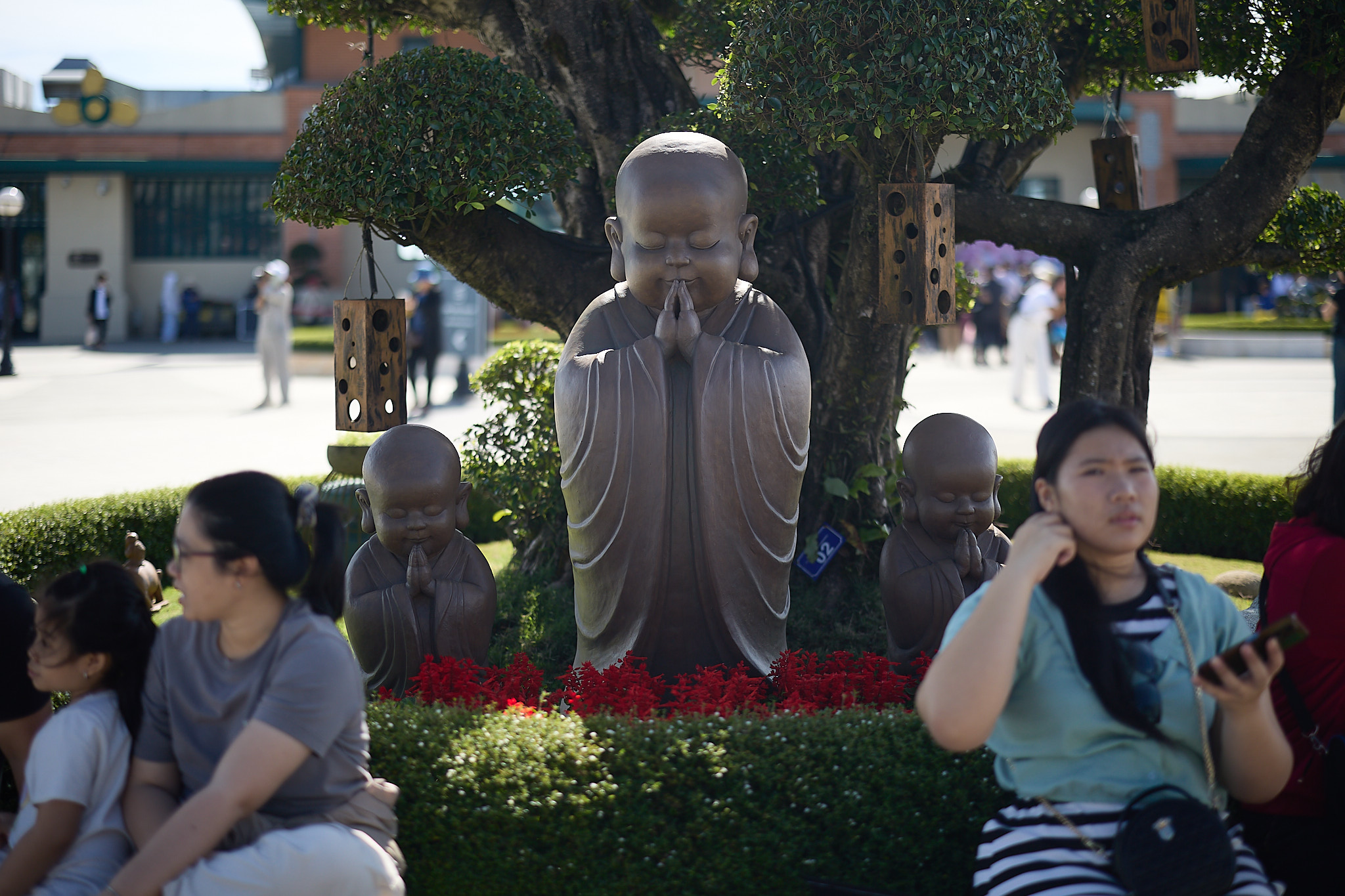
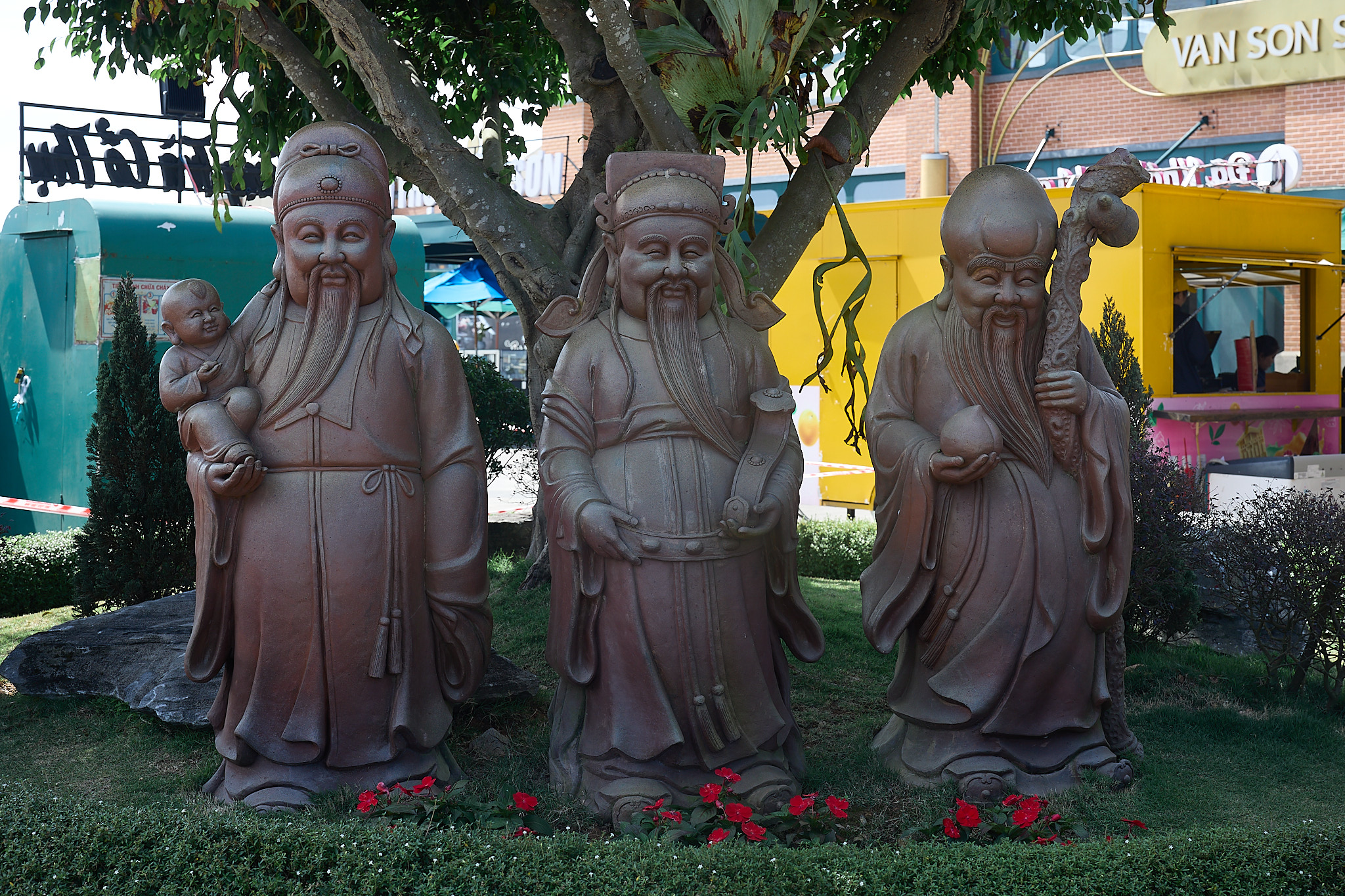
Smaller monks stand among the trees with their palms together. Nearby stand Phúc, Lộc and Thọ, the three old gods of blessings, prosperity and long life.
The view
Across the summit sits a giant laughing Maitreya, which is another story. Beyond the edge, the plain goes on for a very long way. Add the view, and the whole place felt enormous.
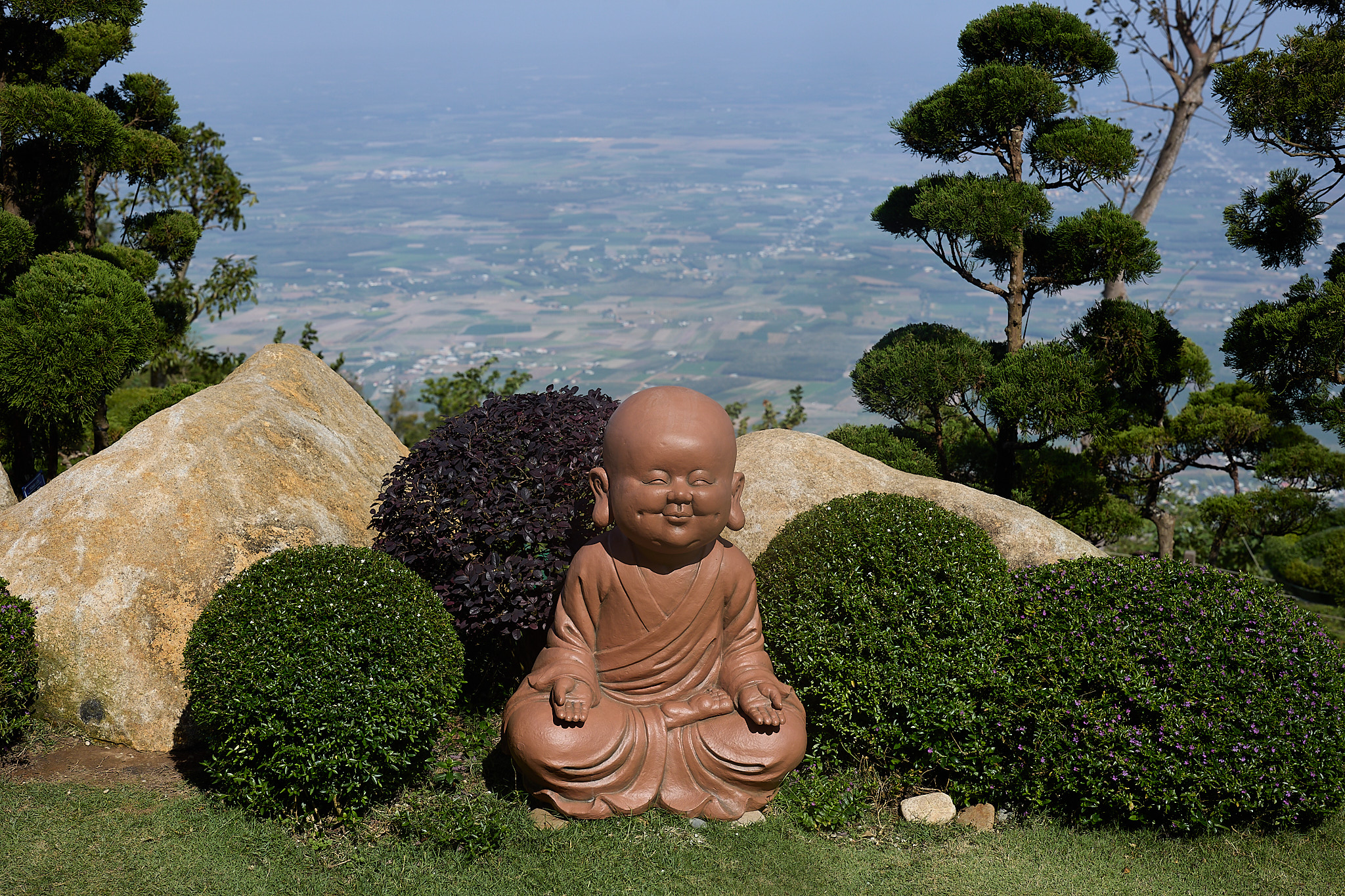
Potalaka, though, is supposed to be in the sea, and the sea is a long way from here. Guanyin, for her part, is said to look towards Dầu Tiếng, the largest irrigation reservoir in Vietnam.
For a sea, it will have to do.
Visit this place
Location
Tây Bổ Đà Sơn Guanyin, Sun World Ba Den Mountain (summit)
On the summit of Bà Đen mountain, nearly a kilometre up, a short walk from the Vân Sơn cable-car station.
Summit of Ba Den Mountain, Ninh Phú, Bình Minh, Tây Ninh, Vietnam
Practical Information
- Getting there
- From the base station, Ga Bà Đen, the Vân Sơn cable car reaches the summit in about 8 minutes; the statue is a short walk from the top station. The base is about 100 km north-west of Ho Chi Minh City.
- Cable-car hours
- Vân Sơn: Mon–Fri 6:00–20:30, Sat 5:30–21:00, Sun 5:30–20:30. Hours may change; check Sun World before you go.
- Admission
- Standard prices for 28 September–31 December 2026 (adult / child, VND): site entry 10,000 / 5,000; Vân Sơn cable car 450,000 / 350,000.
The summit can also be reached on foot. Other routes and combinations are priced separately; buy at the base station or through Sun World’s booking site. Sun World — Bà Đen ticket prices (Vietnamese) - Visitor note
- A place of worship as well as an attraction: dress respectfully and keep voices low near the statue. The pedestal holds a Buddhist exhibition; check Sun World for current access and any separate charge.
- Official website
- Sun World Ba Den Mountain
Information last checked: November 24, 2026 (Vân Sơn cable-car hours and standard ticket prices checked against Sun World’s timetable effective 28 September 2026 and its price list for 28 September–31 December 2026. Access to individual exhibition floors and any separate exhibition charge are unconfirmed.)
Conversation
Comments
Review pending commentsComments are reviewed before appearing. The internet already contains enough unattended surprises.
Loading comments…
Leave a comment