Basilica del Santo Niño: A Child with a Deputy
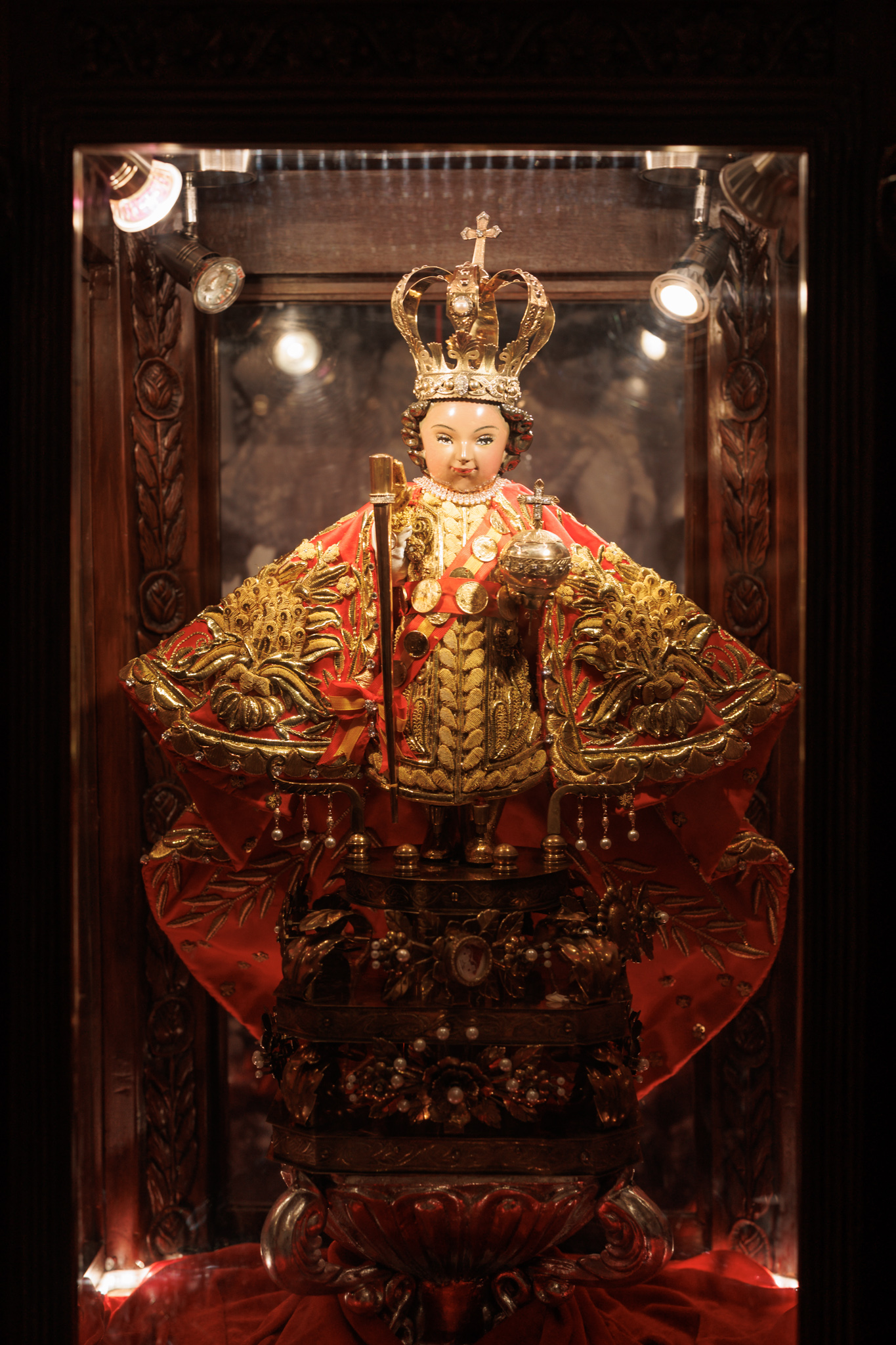
Every year, at the height of Cebu’s great fiesta, the Santo Niño leaves his church for a procession through the streets. As he goes out, another Santo Niño, from the church of San Nicolas, comes in.
The one going out holds the rank of Captain General. The one coming in is his Teniente General, his lieutenant general. According to the basilica, it is a matter of military protocol: there should be no leadership vacuum under any circumstance.
Both of them are children.
Santo Niño means Holy Child: the Child Jesus. Cebu’s has been here longer than the church that holds him. When I visited, in May 2023, there happened to be no great crowd in front of him, and I could take a proper look at his clothes. He wears a crown and a long red cape, heavy with gold embroidery. In one hand he holds a sceptre, in the other an orb topped with a cross. The crown, the sceptre and the orb are a king’s. The cape, according to the basilica, marks his rank, and so does the sash hung with coins.
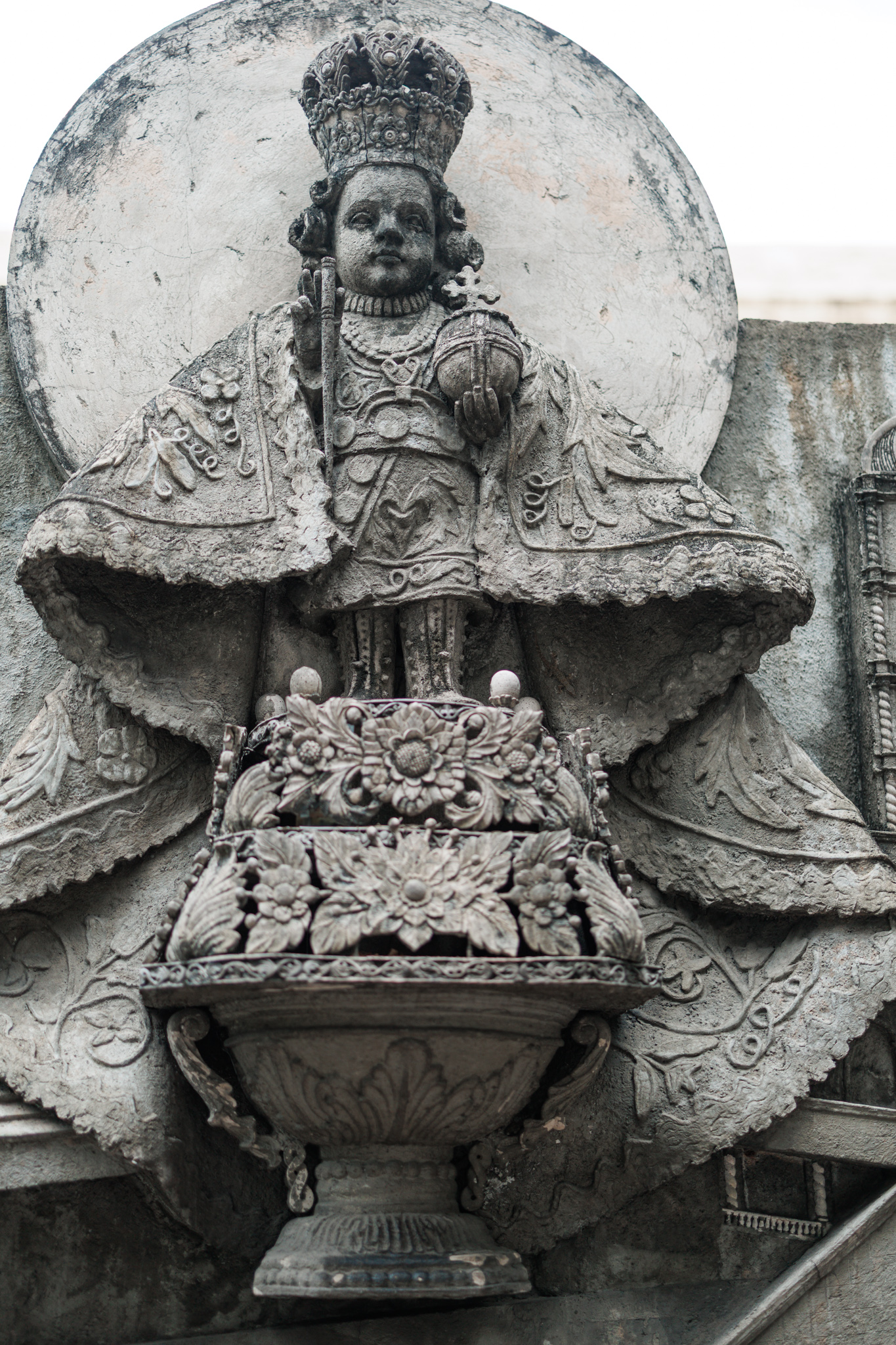
He is not the only Jesus in the building. Just inside the entrance, the same person hangs on a cross, fully grown.
Forty-four years
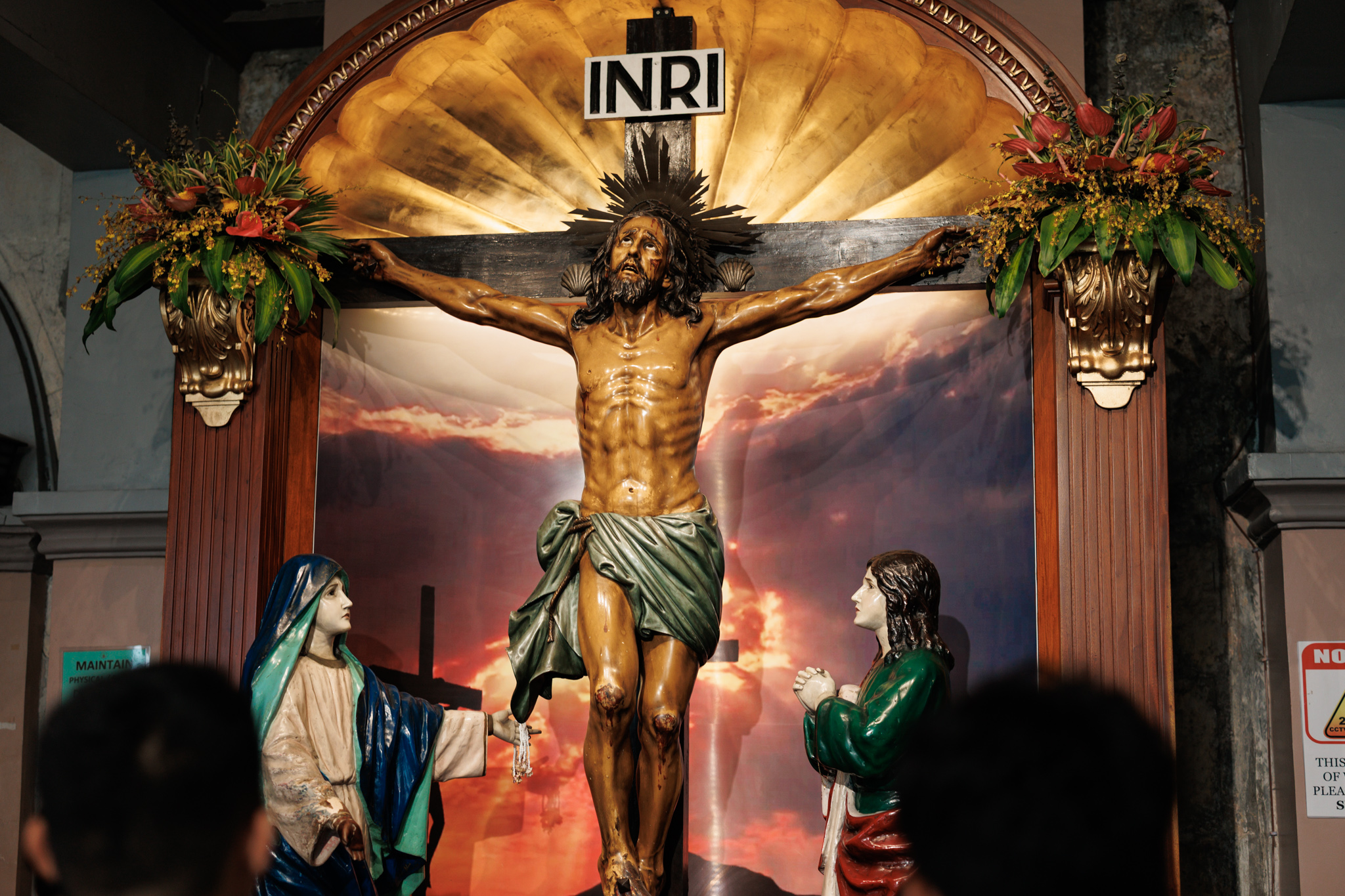
The image came to Cebu with Ferdinand Magellan’s expedition, in 1521. It was a baptism present for the wife of Cebu’s ruler, who took the name Juana. The expedition did not stay long.
The next Spanish expedition to Cebu came from Mexico, under Miguel López de Legazpi, with Augustinian friars on board. When it took the town, a large part of it burned. Afterwards, the soldiers went through the houses the fire had spared. In one of them, a soldier named Juan Camus found two boxes tied together. One held a bowl and a boar’s tusk; the other was empty. Further in was a third box, tied with Castilian cord. Inside it was a box of pine, and inside that, the Santo Niño.
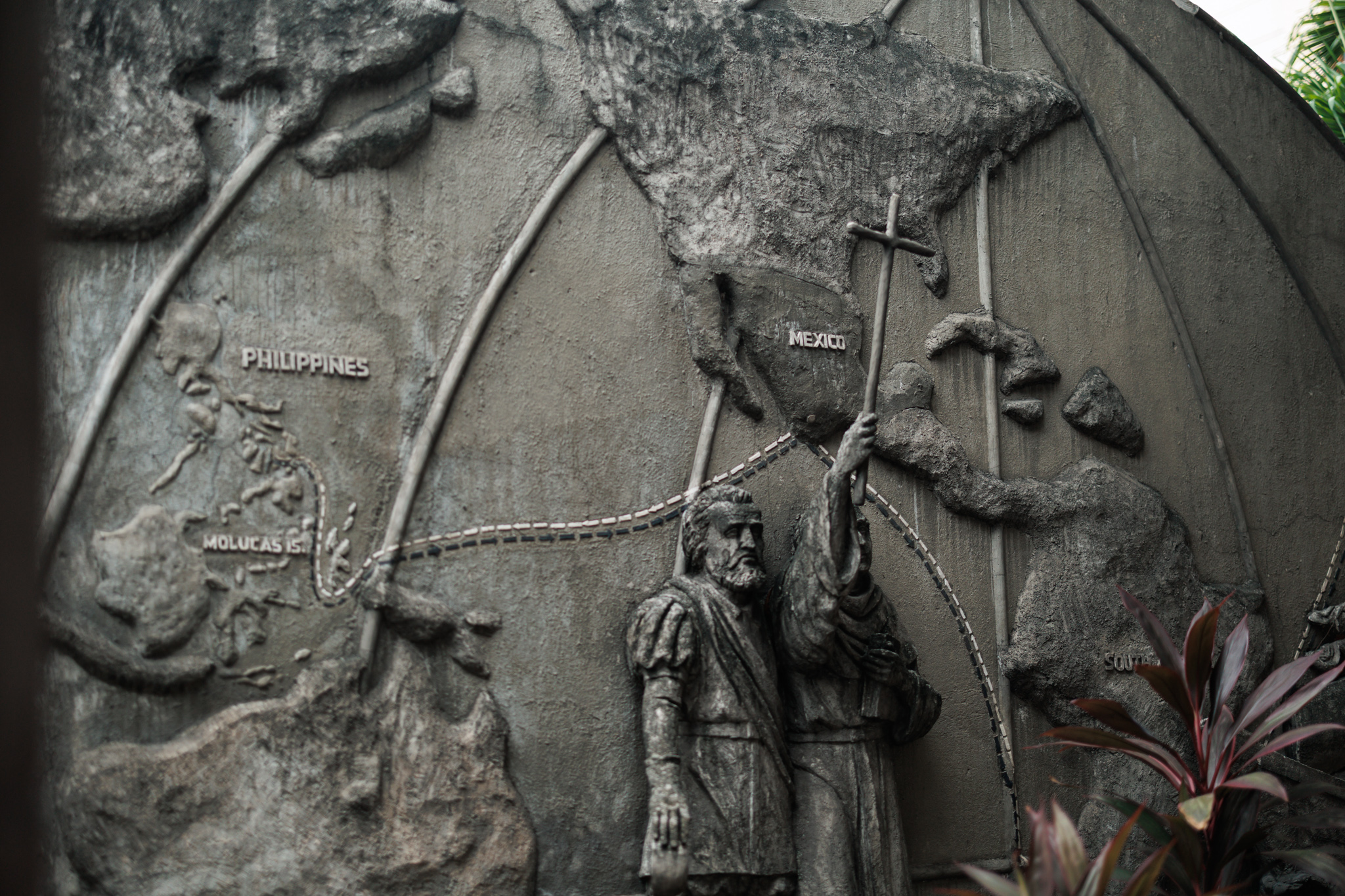
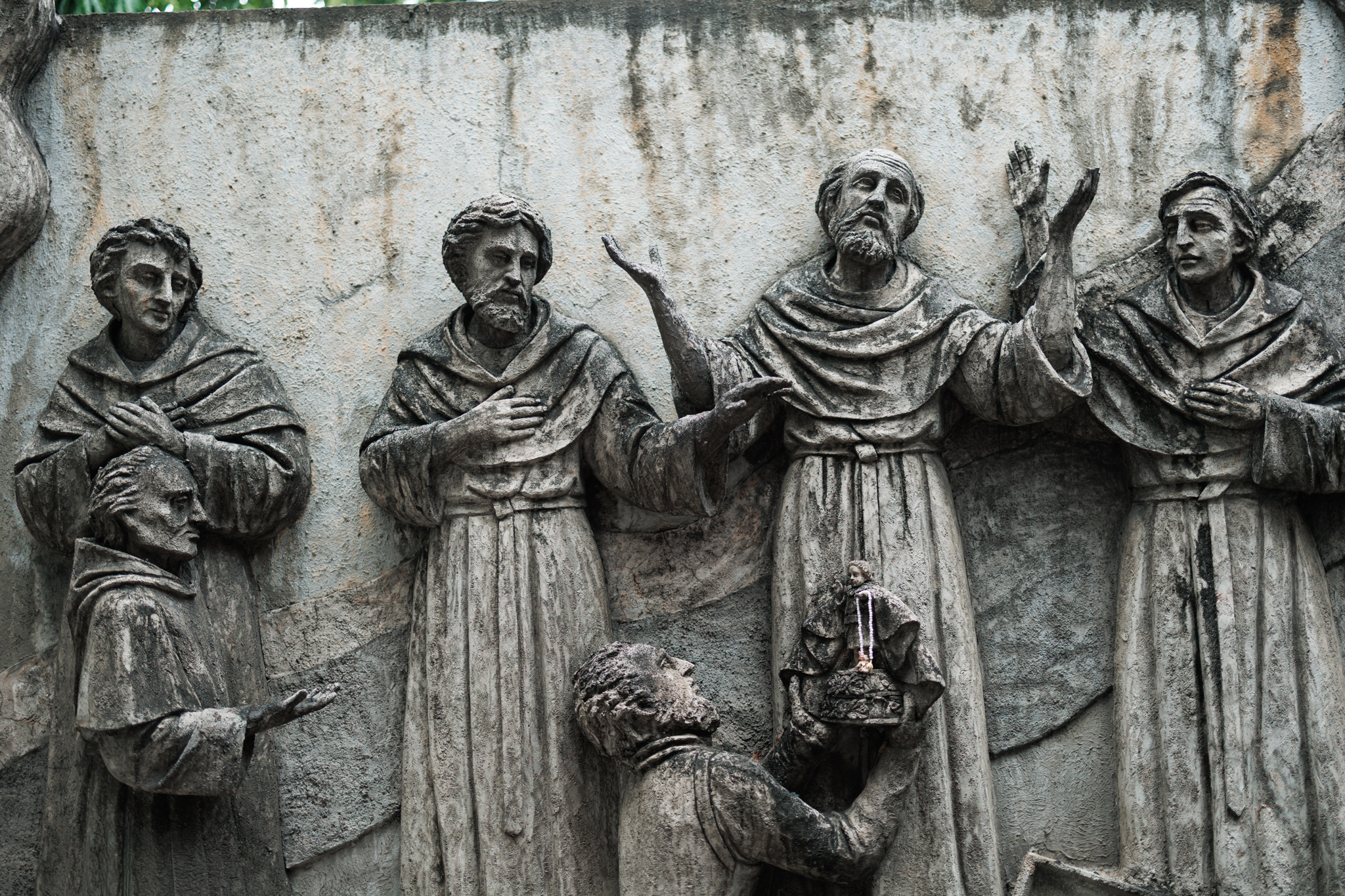
Cebu still celebrates the day as the Kaplag: the Finding.
For the Spanish, it was a discovery. For forty-four years, the image had been in Cebu, in somebody’s keeping.
Whose, and what he meant to them in that time, is not known. Historians still debate it.
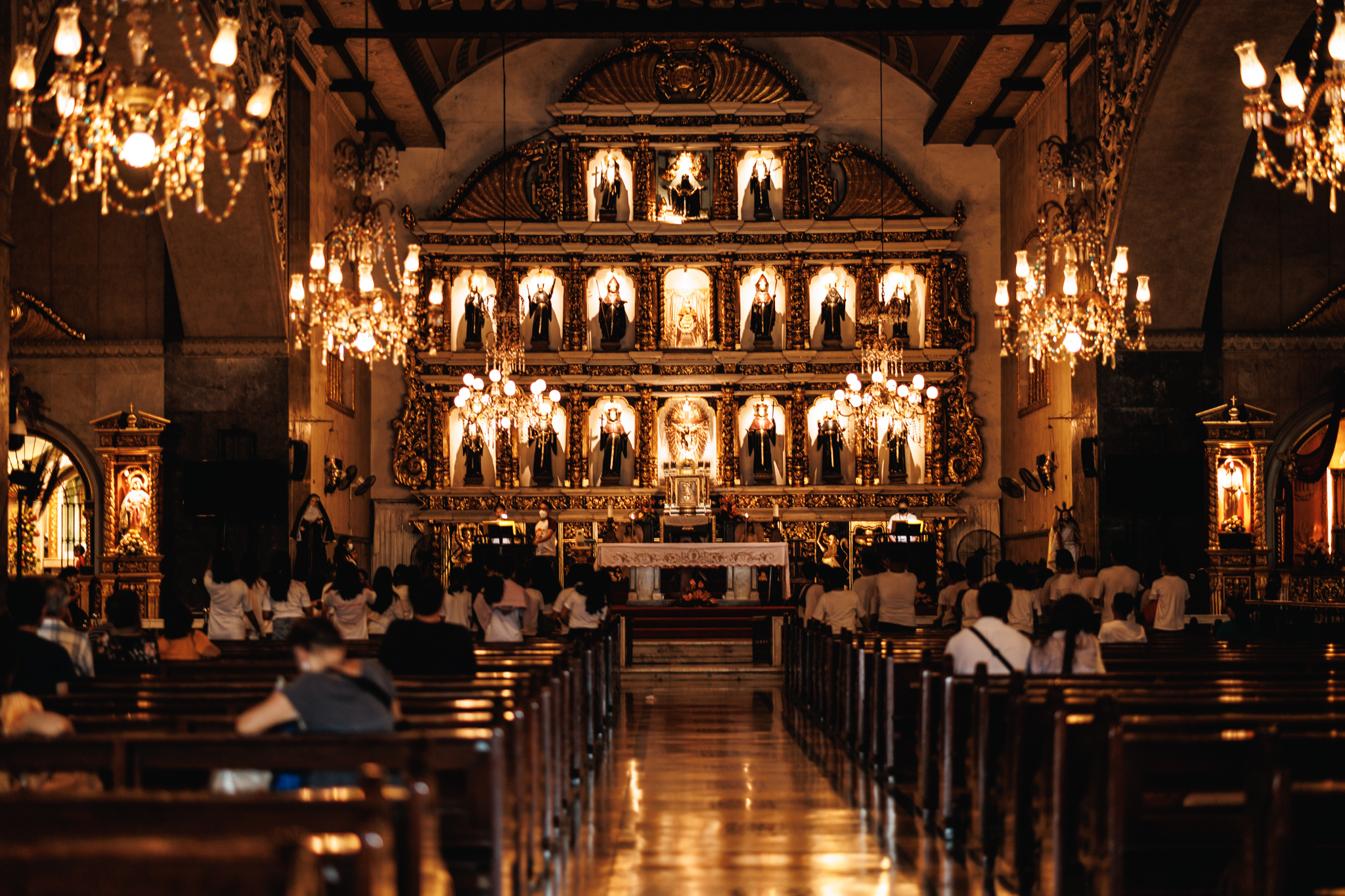
The same year, the friars founded a church and a convent here. The church has burned and been rebuilt since. The present building dates from the 18th century.
Extensions
People keep coming to see him, and the basilica keeps making room.
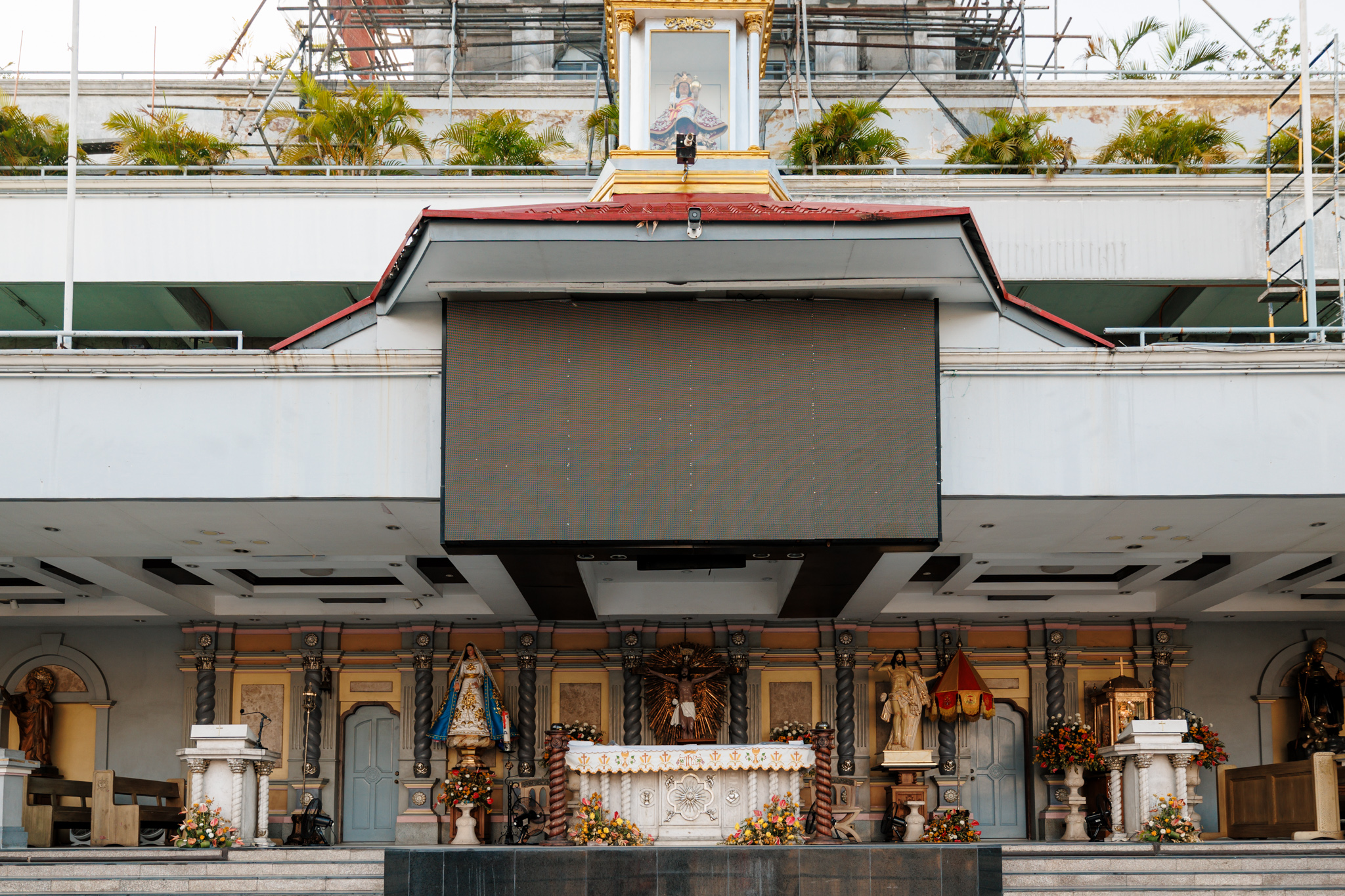
The friars gave the image a marble side chapel of his own. Later came the Pilgrim Center, built for the overflow. Its front is modelled on the great altarpiece inside the church, and below it an altar faces the open air.
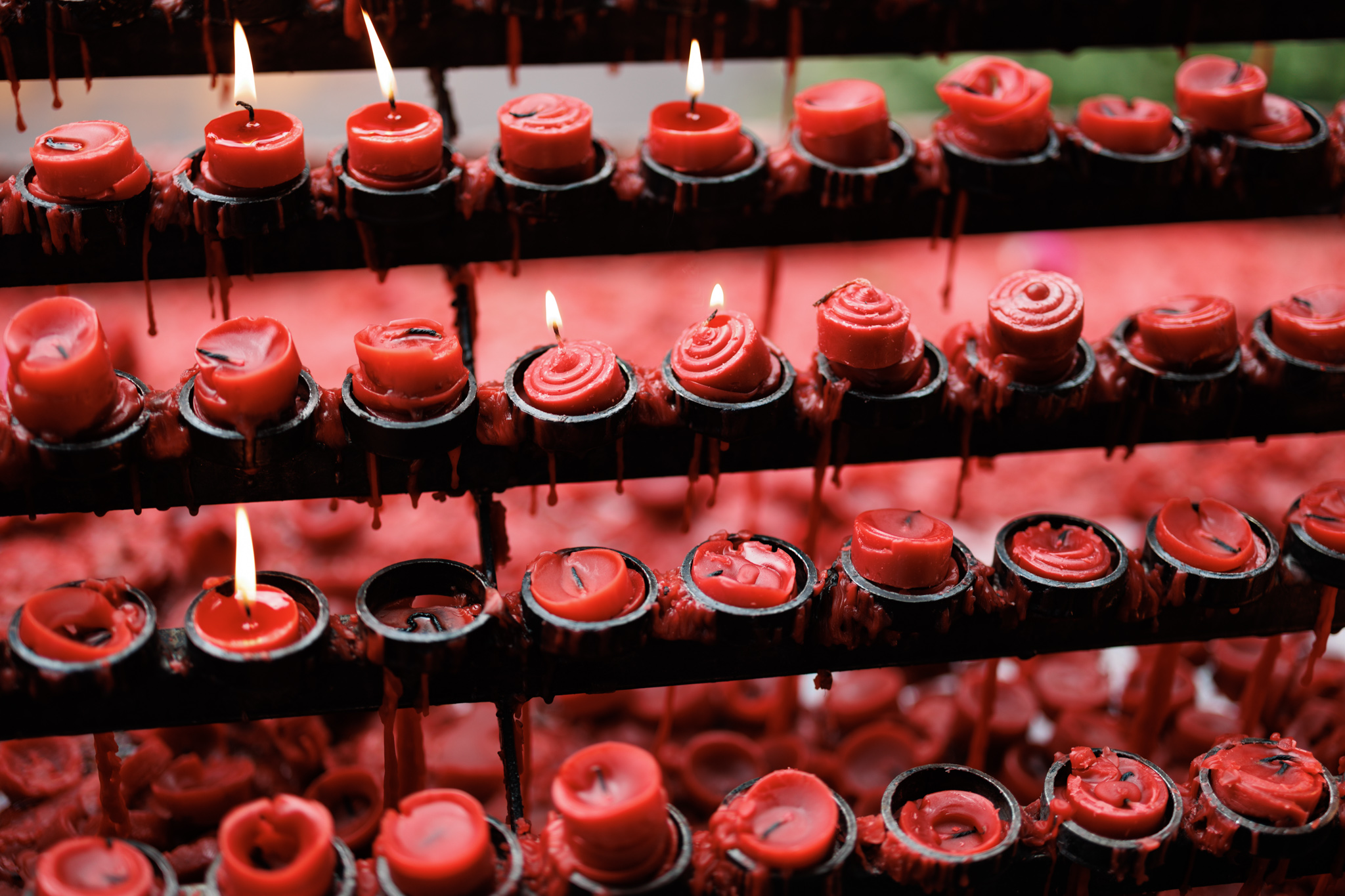
Candles used to be lit in an inner garden of the basilica. After a fire started by long candles, the friars moved them to the basketball court.
The bell tower fell in an earthquake in 2013 and took three years to put back. When I saw it from down the street, it was wrapped in scaffolding and blue netting.
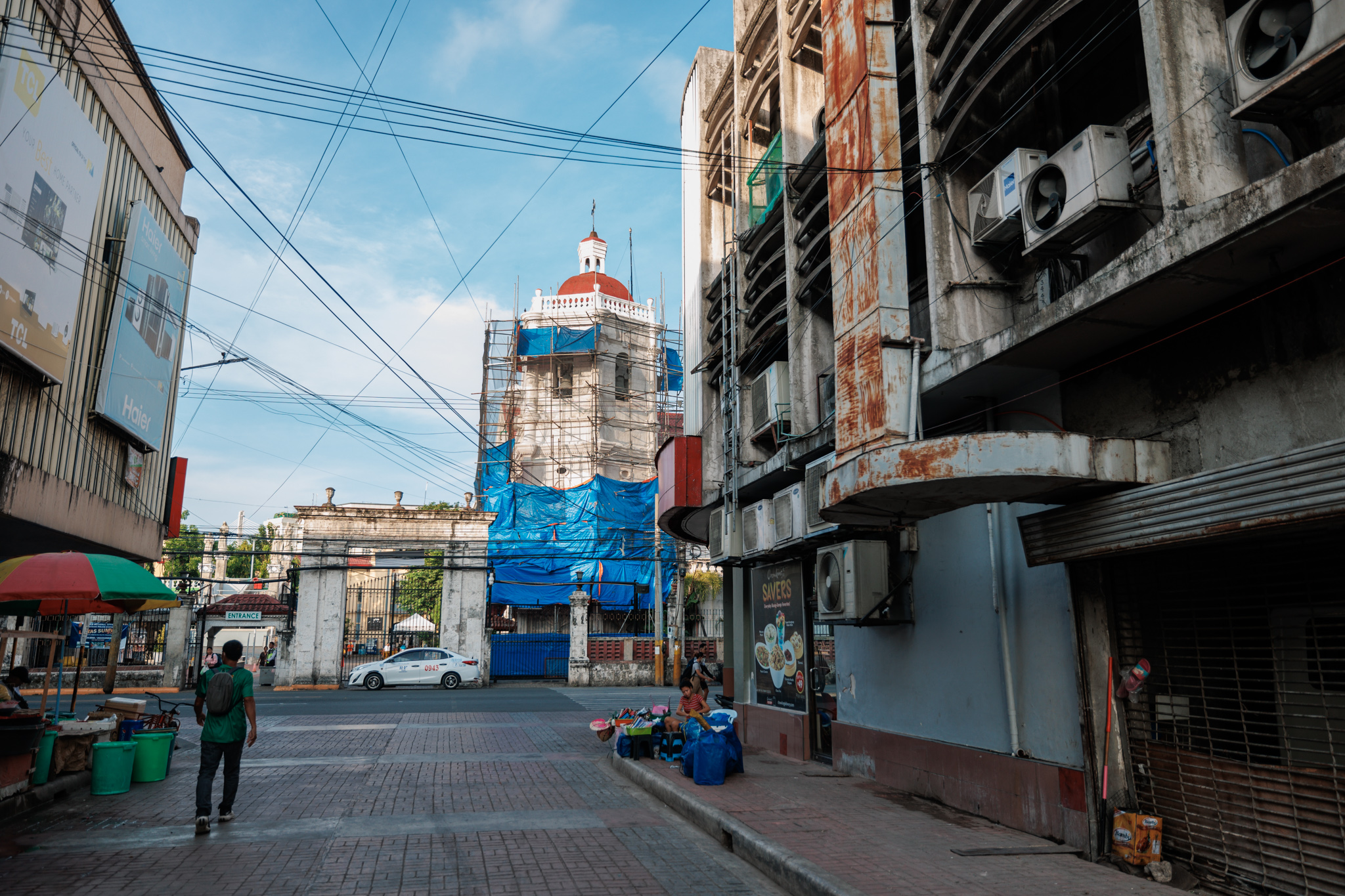
The Captain General himself now stays indoors. During one procession, the original image fell from its float, broke and had to be restored. Since then, the basilica has had replicas made, and one of them goes out in his place. The general who leaves the basilica for the fiesta is a replica. The original stays at home.
The lieutenant general still comes in to mind the house.
The friars’ mark
The Augustinians who founded the church still run it, and they have left their mark around the place.
In a courtyard garden, a friar in white stands with a book under one arm and a hand at his chin, thinking. A small child stands in front of him.
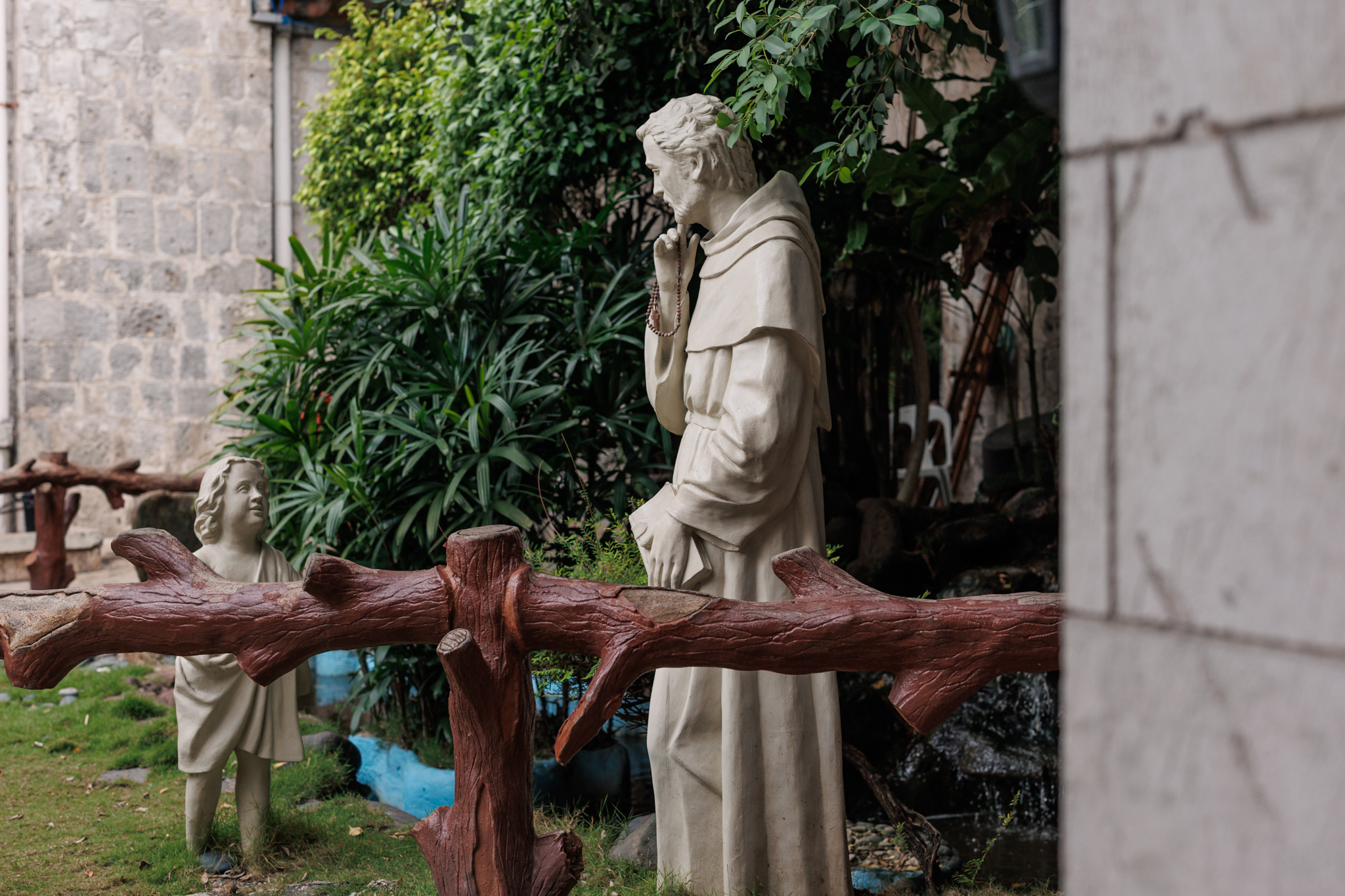
It looks like an old story about Augustine himself. Walking by the sea, the story goes, and trying to understand the Trinity, he came upon a child scooping the sea into a hole in the sand with a shell. It could not be done, Augustine told him. Nor, said the child, could what Augustine was attempting.
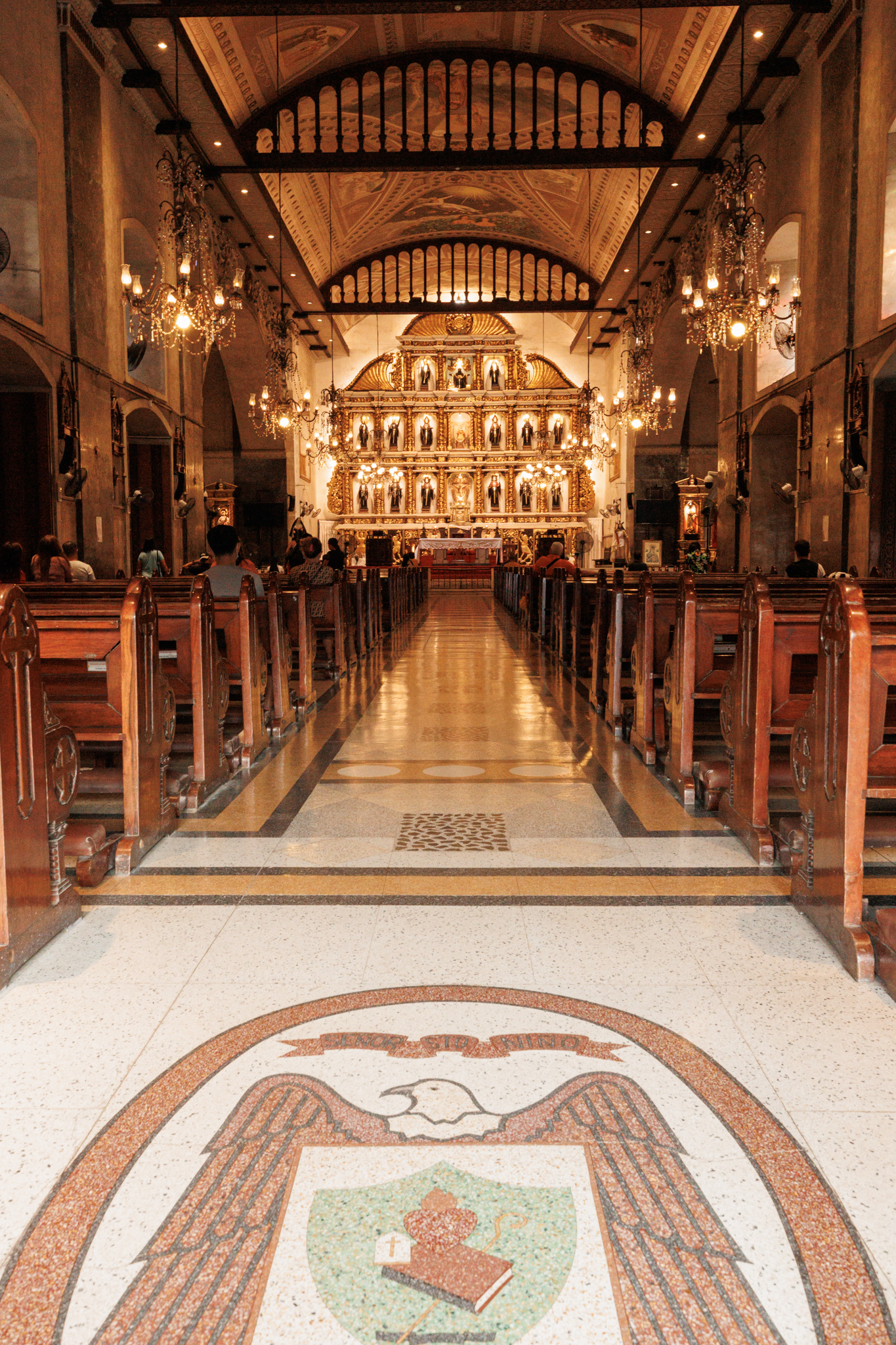
Set into the floor of the church is a shield under a spread eagle, with SEÑOR STO. NIÑO on a banner above it. On the shield, a heart topped with flames rests on a book, beside a bishop’s mitre and crozier.
Outside, by a walkway, stands a big lettered sign of the kind made for selfies: I ♥ NIÑO. The heart is red. It has an arrow through it, and it is on fire.
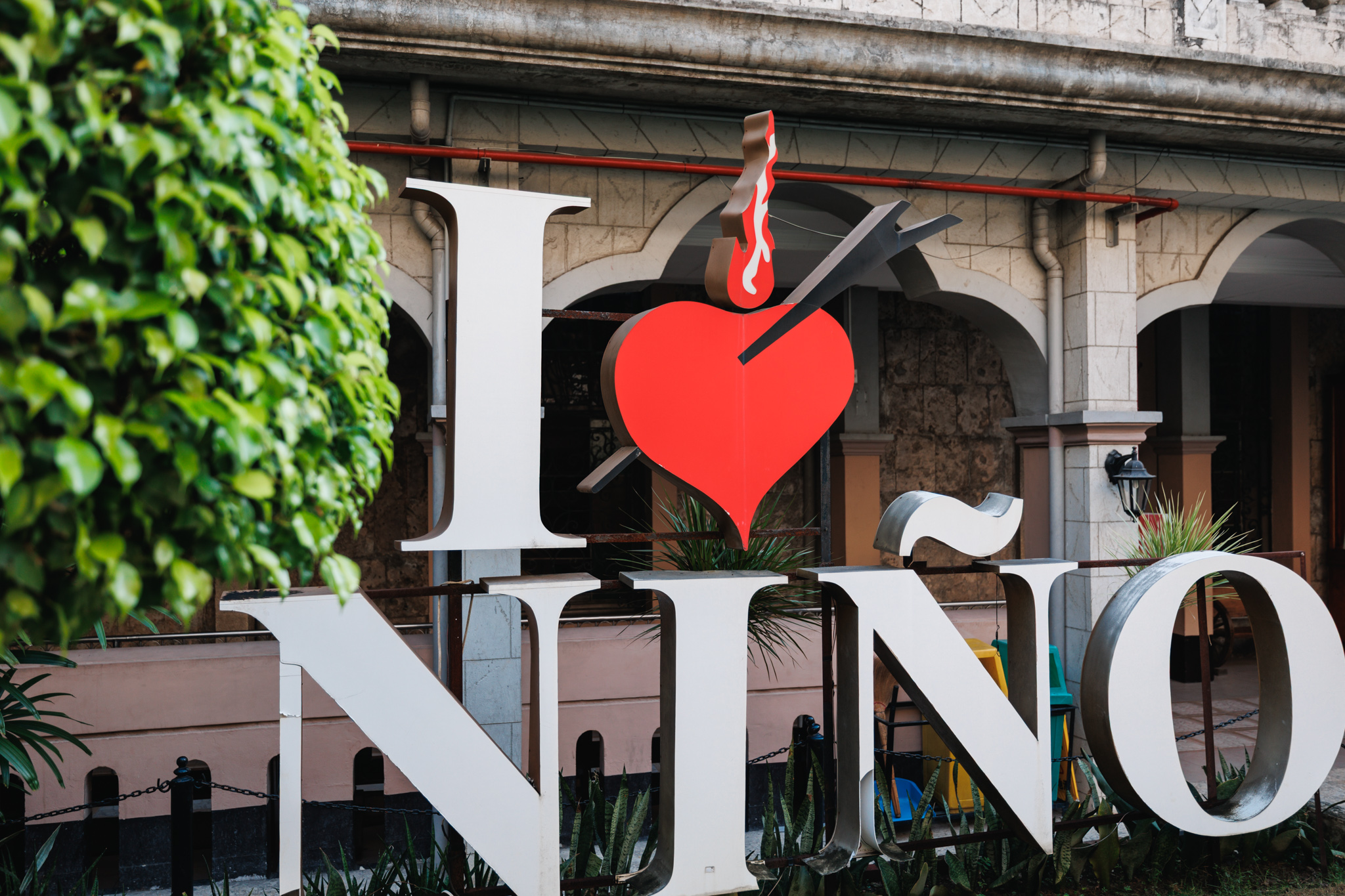
It is not a broken heart. A heart in flames, pierced by an arrow, is the emblem of the Augustinians. The heart is the human heart, burning with love of God, and the arrow is the Spirit of God going through it.
On a selfie sign, it stands in for the word love. Which is what it meant in the first place.
Visit this place
Location
Basilica Minore del Santo Niño de Cebu
In old downtown Cebu City, next to Magellan’s Cross and a short walk from Cebu Metropolitan Cathedral
Osmeña Boulevard, Cebu City, Cebu, Philippines
Practical Information
- Visiting
- An active basilica and a place of pilgrimage. Keep quiet inside and avoid disturbing Mass and prayer.
- Official page
- Basilica Minore del Santo Niño de Cebu
Information last checked: October 17, 2026 (Address and official page checked. Mass times and opening hours are not listed here.)
Conversation
Comments
Review pending commentsComments are reviewed before appearing. The internet already contains enough unattended surprises.
Loading comments…
Leave a comment