Blood Compact Monument: Raise a Glass, Keep the Sword
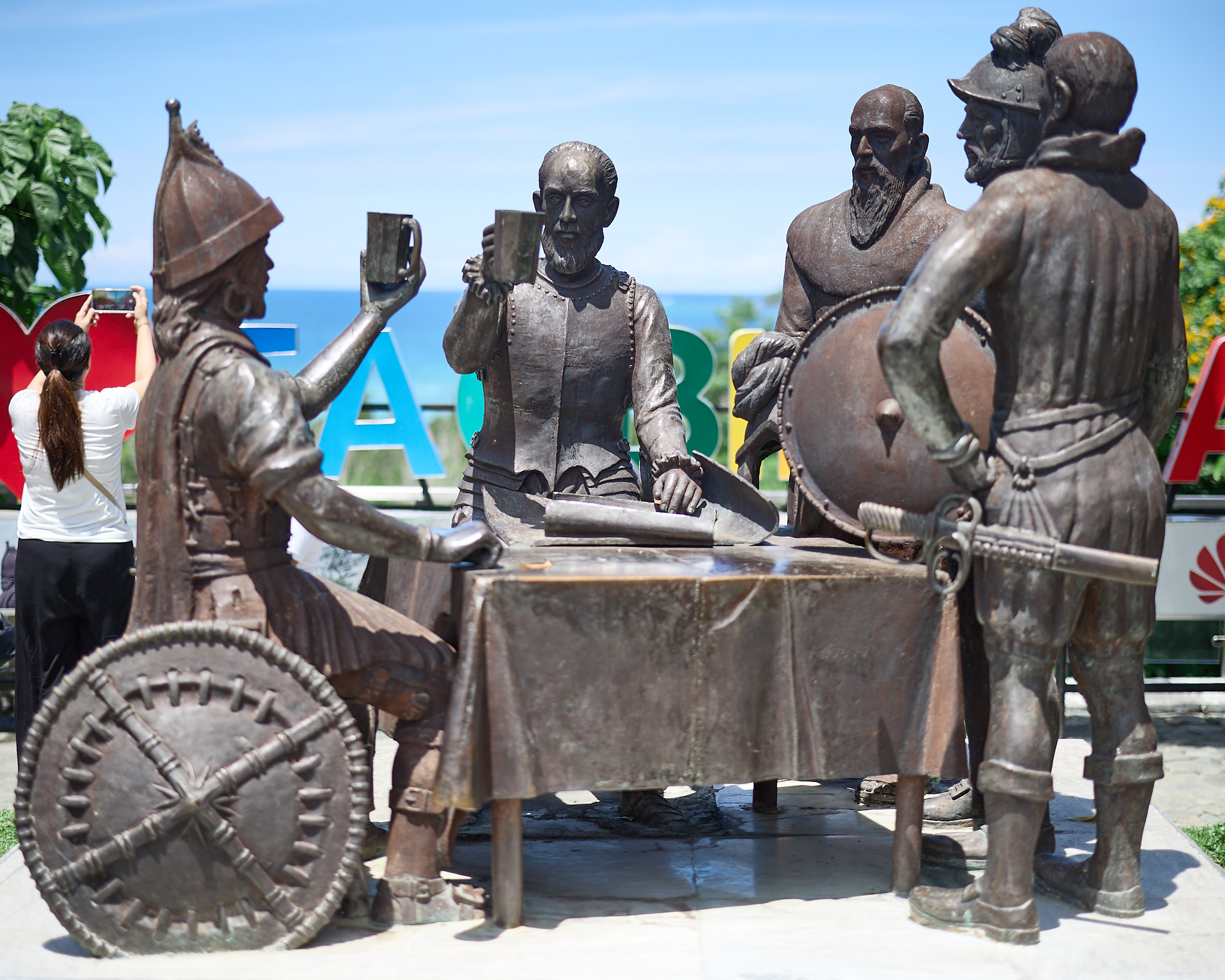
Two bronze men are raising their mugs to each other across a table, like two old friends at the end of a long dinner.
What is in the mugs, if the story is right, is wine with a few drops of the other man’s blood in it.
This is the Blood Compact Monument in Tagbilaran, on the island of Bohol. The compact is known here as the Sandugo, “one blood”. In 1565, Datu Sikatuna, a chief of Bohol, and Miguel López de Legazpi, who had brought a Spanish expedition across the Pacific from Mexico, sealed a friendship in the local way: a small cut, a few drops of blood in wine, and each man drank the other’s. The bronzes are by Napoleon Abueva, a National Artist who grew up on Bohol.
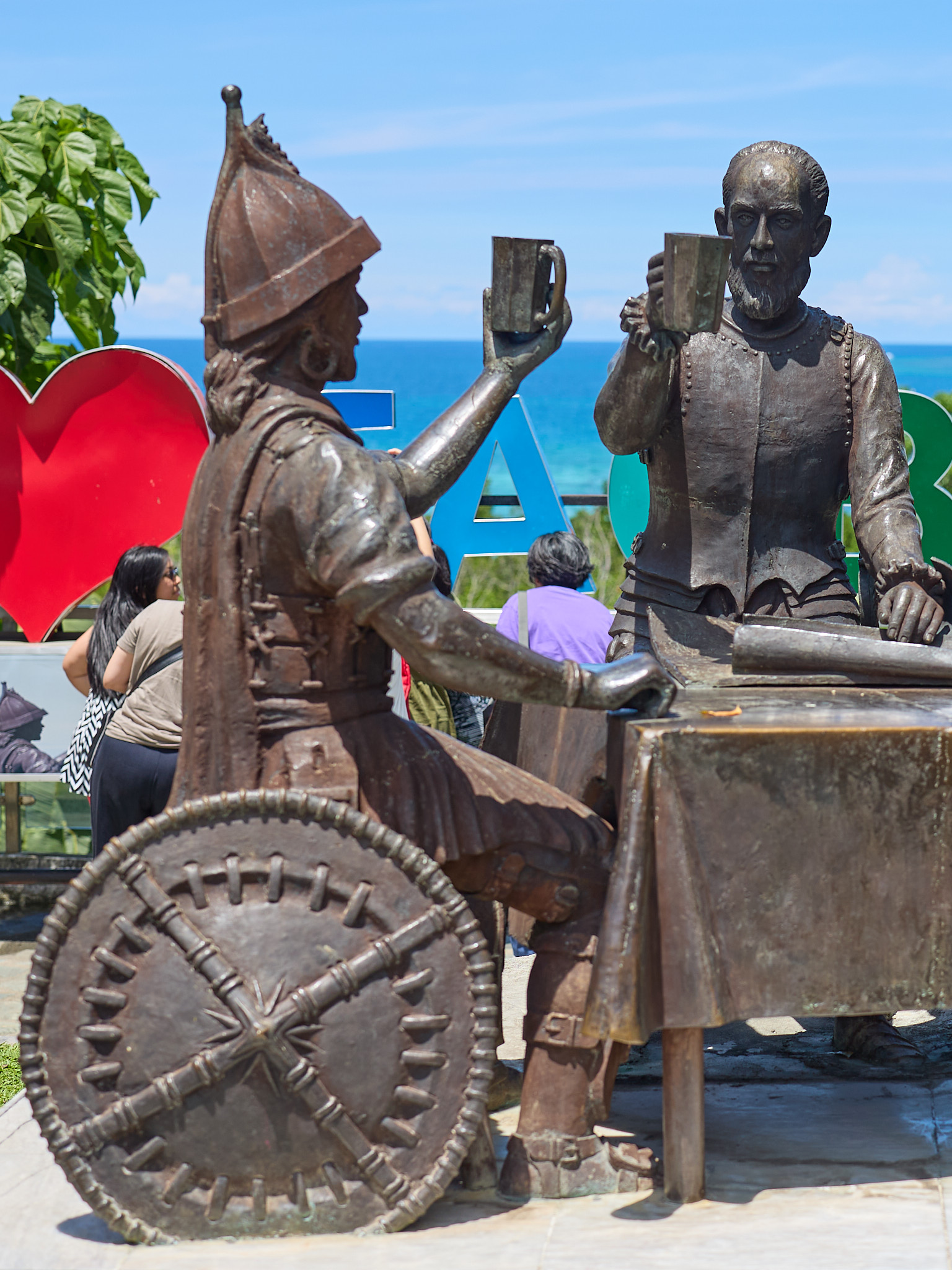
The other three
Only two of the five are raising a cup. The other three stand around the table, and they have come armed: a round shield, a sword, a hand on the hip.
The old marker here said Legazpi entered into the compact “manifesting trust and confidence in the islanders”. Legazpi’s own report, written in Cebu later that year, is less sure of the mood.
At first, he wrote, the people of Bohol kept away from his fleet. A pilot from Borneo explained why. About two years earlier, some Portuguese had sailed through these islands. Wherever they went, they asked for peace and friendship, claiming to be Castilians, Spaniards in other words. Once people felt safe with them, they attacked. On Bohol, more than a thousand people were killed or carried off.
Legazpi tried to explain that the Portuguese were a different nation, with a different king. They did not trust him.
They said the Spaniards looked just like the Portuguese: the same clothes, the same weapons.
The Bornean went inland and brought two chiefs, Sikatuna and Sigala, out to the fleet, and they made friends with Legazpi. It did not settle everything. “We could put no confidence in them,” he wrote, and they would sell him nothing, only make promises. Yet when one of his ships was long overdue, the two chiefs set off with two of his soldiers for Cebu to look for news of it. What the soldiers saw there helped Legazpi decide where to go next: Cebu, where he soon began a fort.
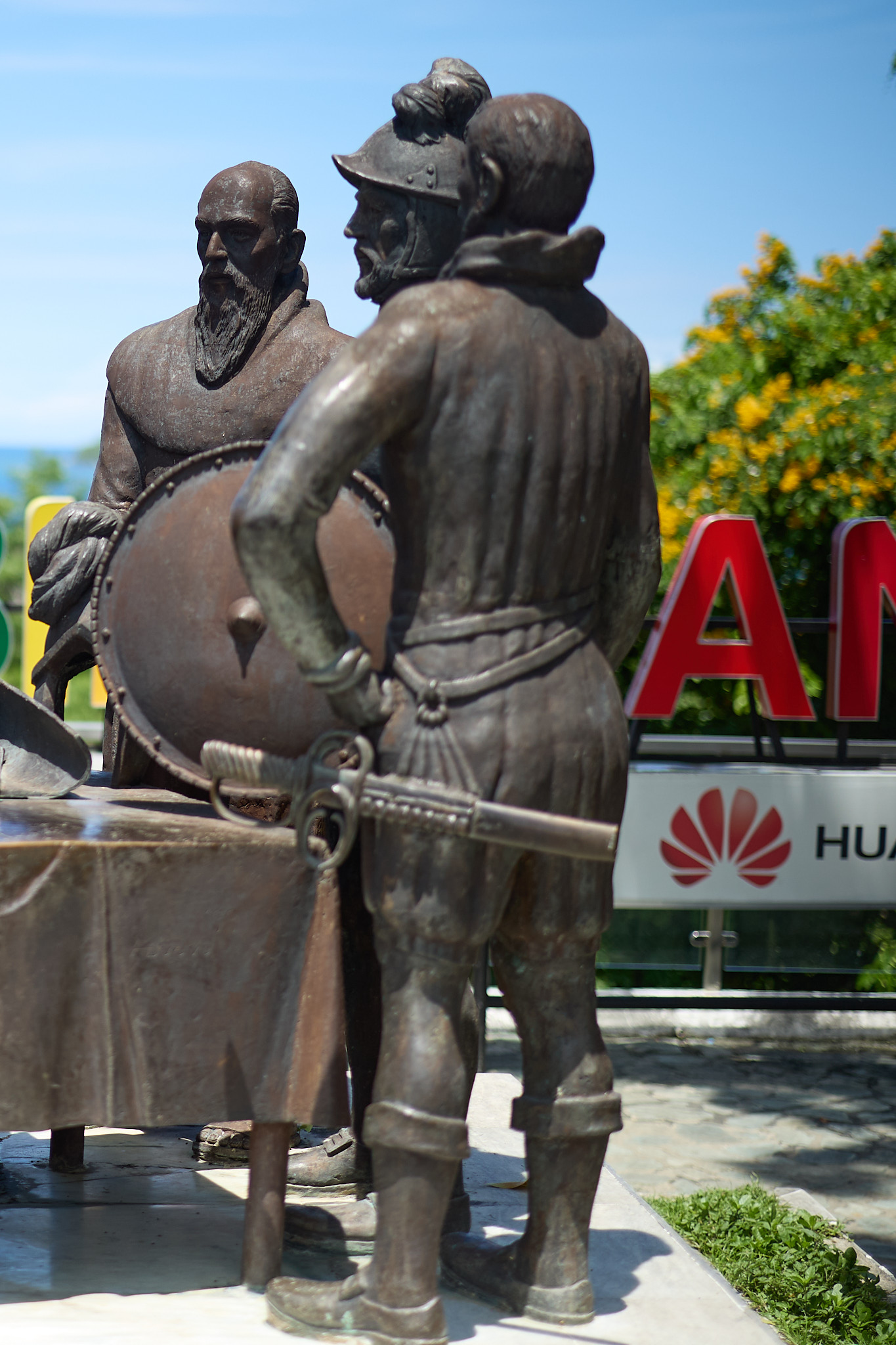
The sculpture keeps the weapons at the table.
Through the letters
This was my first stop on Bohol. I had come over from Cebu on the morning boat, and my guide brought me here before anything else.
Behind the statues, the ground fell away to the sea, and the city’s name stood in giant coloured letters, with a red heart. Some of the letters had holes you could look through. I looked through one.
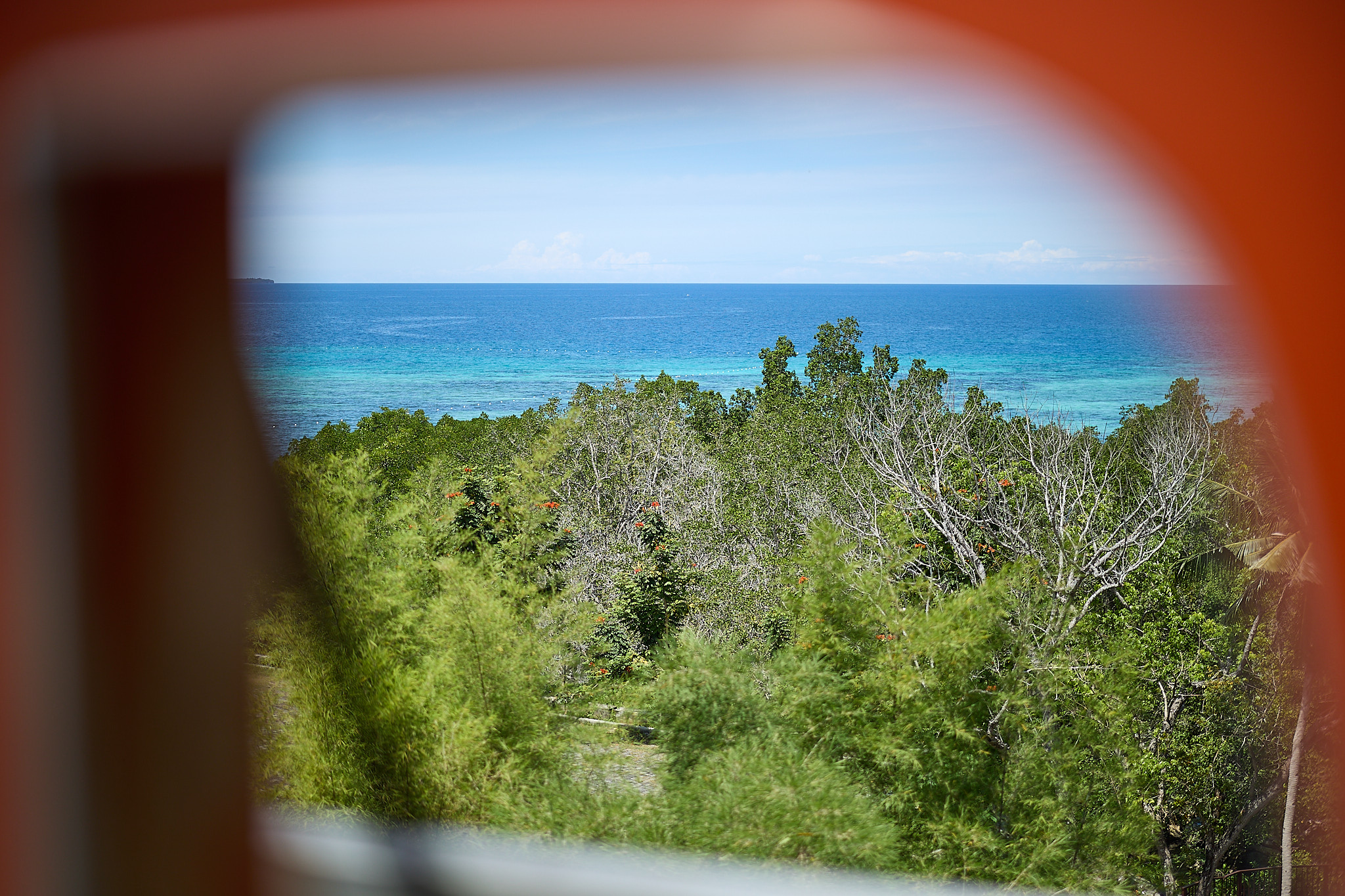
It looked like a fine place for a fleet to anchor and make friends. I learned later that, according to the historians, it was not the place.
In 2005, after going through the documents and interviewing divers, fishermen and residents in both towns, a panel of the National Historical Institute concluded that the compact was made further along the coast, off the town of Loay, aboard Legazpi’s flagship, the San Pedro, at anchor in Hinawanan Bay. The old marker here, the one with the trust and confidence, was taken off the national register. Loay got a marker of its own.
The law that made 16 March Blood Compact Day puts the compact here, in Bool, a district of Tagbilaran. The historians’ date is nine days later.
Since then
The statues are no longer where I photographed them. In 2024 they were moved: not to Loay, but a few steps down the slope, into a park.
It is called Friendship Park.
Visit this place
Location
Blood Compact Shrine
Abueva’s Sandugo sculpture group in Tagbilaran City Friendship Park, Bool, a few steps below the original monument site
J.P EK Inting St, Bool, Tagbilaran City, Bohol, Philippines
Practical Information
- Visiting
- The statues now stand in Tagbilaran City Friendship Park, a few steps below where they stood until 2024. The photographs here show the earlier layout, in 2023.
Information last checked: October 27, 2026 (Location and current position within Friendship Park. Photographs show the 2023 layout.)
Conversation
Comments
Review pending commentsComments are reviewed before appearing. The internet already contains enough unattended surprises.
Loading comments…
Leave a comment