Sajmište Camp Memorial: In Plain Sight of Belgrade
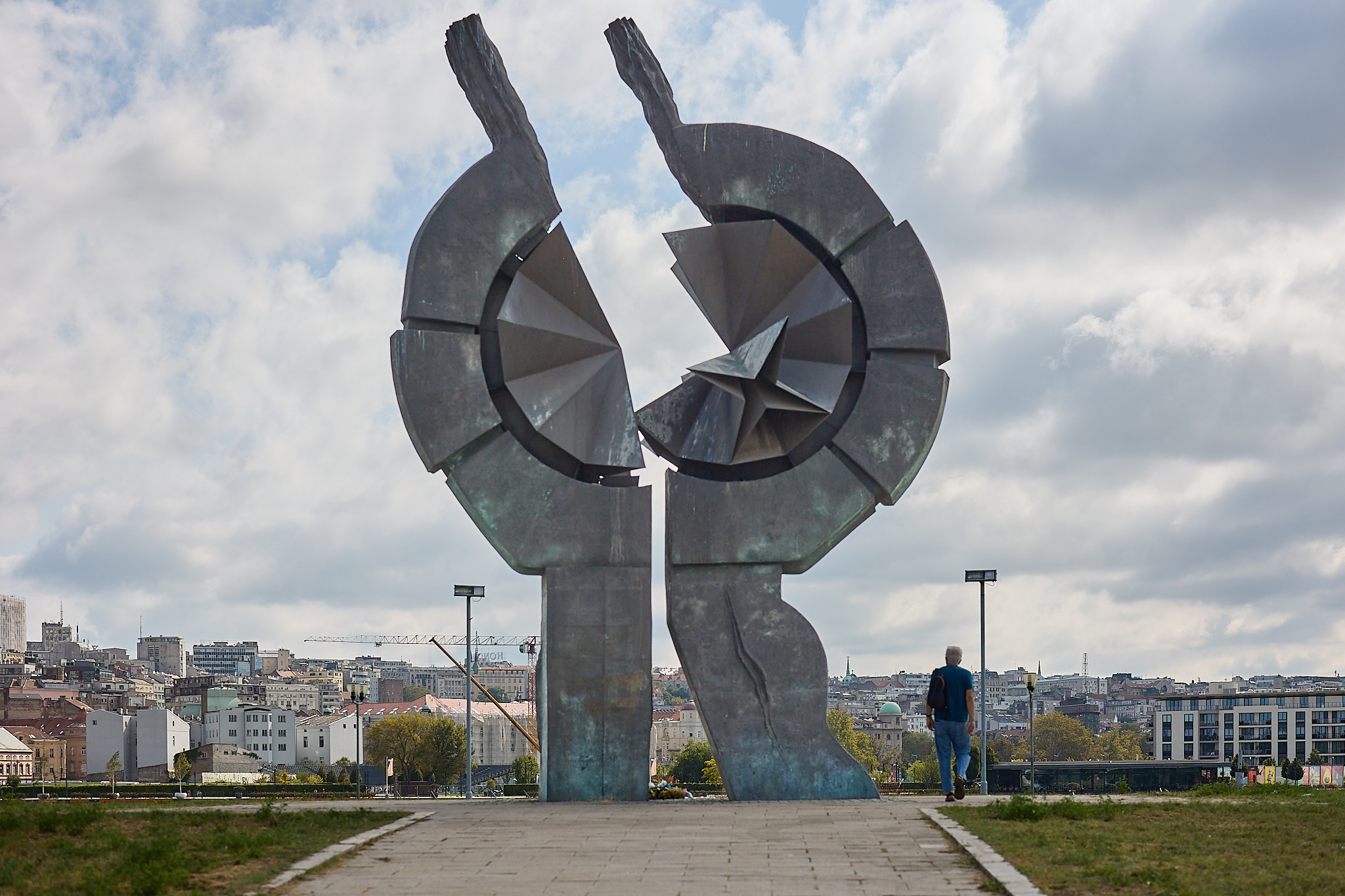
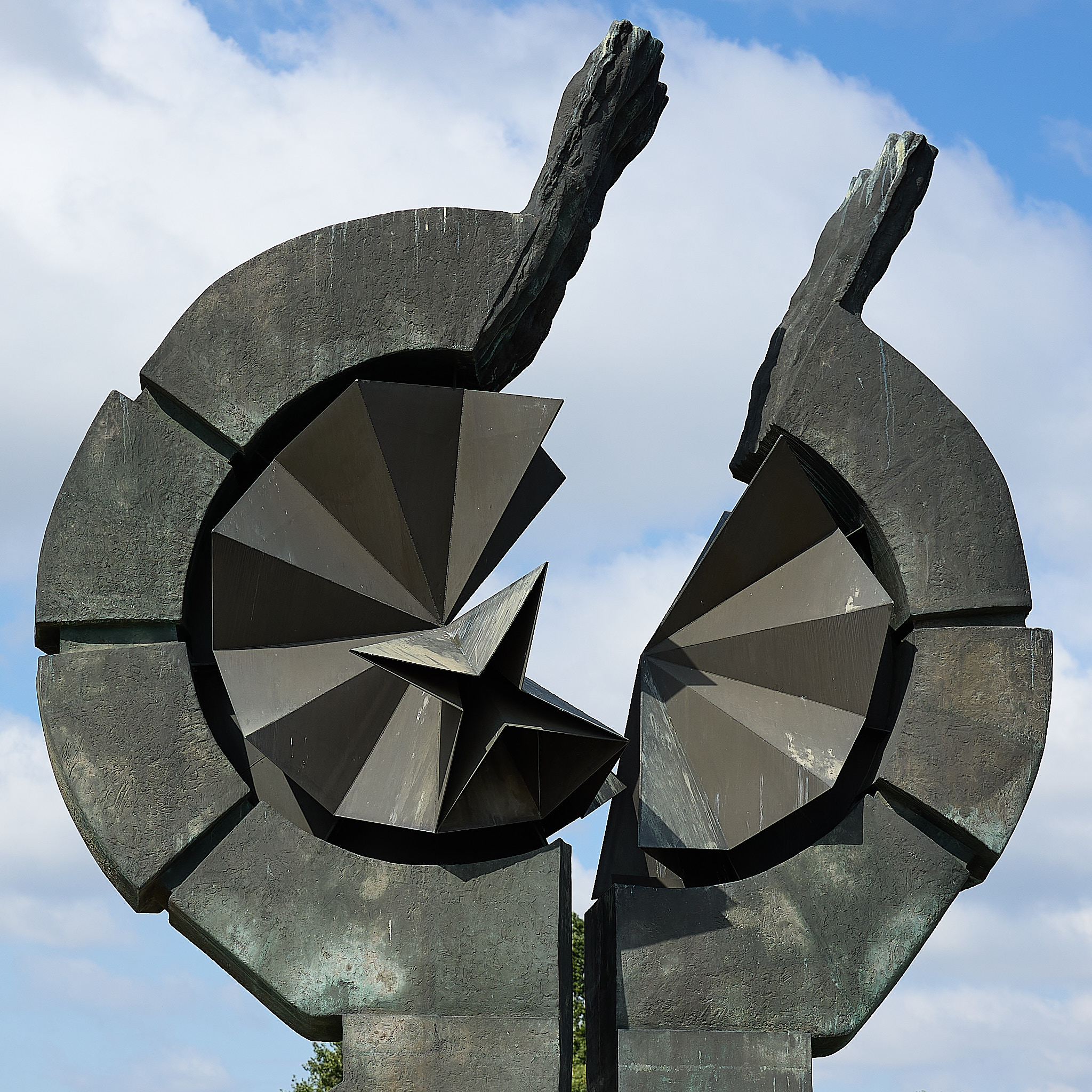
On the left bank of the Sava in Belgrade stands a bronze circle, split from top to bottom. It is described as a circle burst open, one part standing for life and the other for death.
The description does not say which is which.
The sculpture is no help. It is ten metres tall and carries no dedication. What it has is a position: on the riverbank, directly across the water from the old town.
A bank in full view
Until the 1930s, this bank was a marsh, and one that could be seen from the centre of Belgrade and from the fortress above the river. In 1937 a fairground opened on it, the first step in the capital’s expansion across the Sava. The site is still called Staro Sajmište, the Old Fairground. It was a short walk from the centre and quickly became a popular outing. Its central tower was said to be visible from the farthest points of the city, especially at night, when the whole fairground was lit.
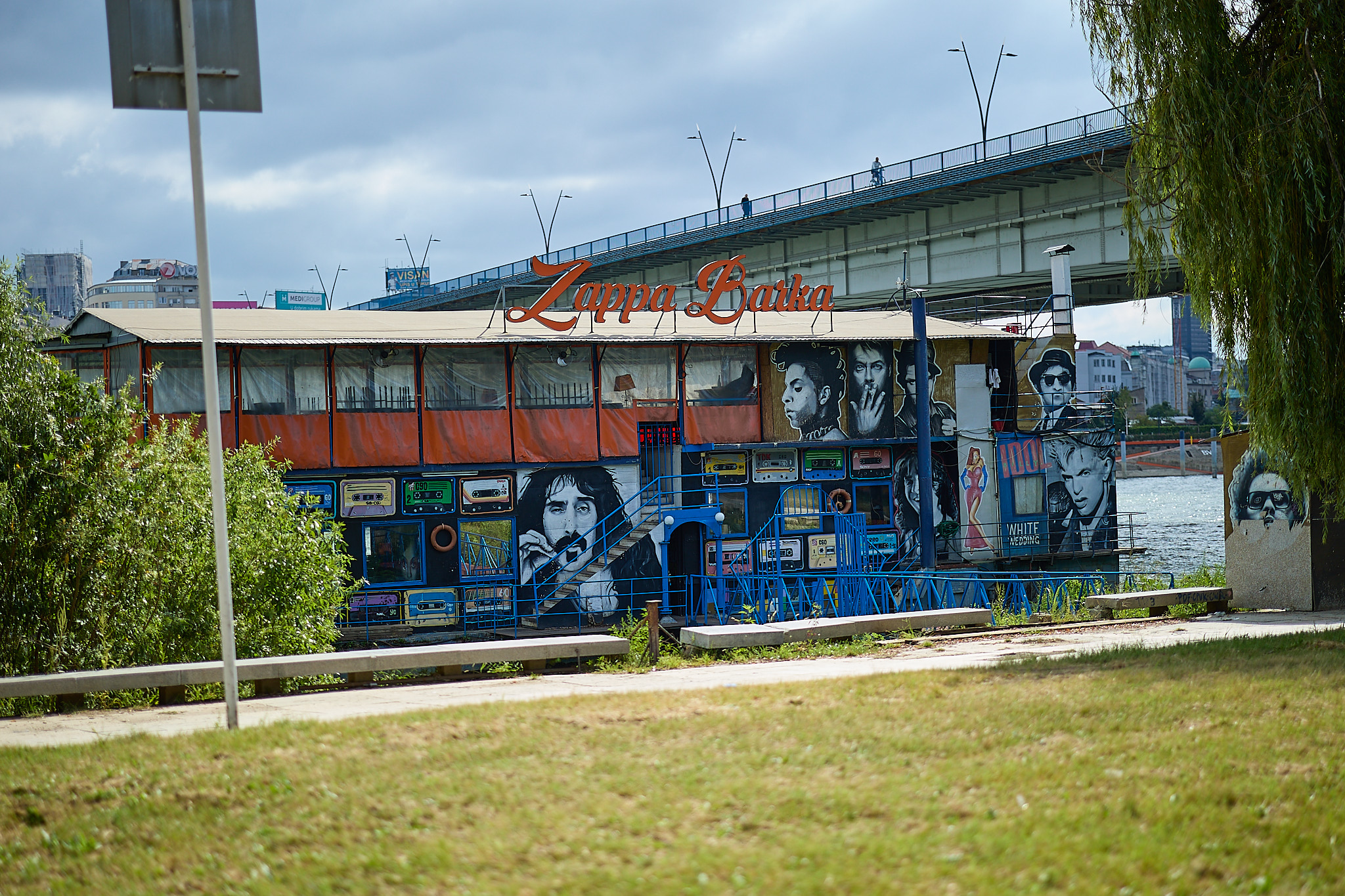
It is still a short walk. I came over Branko’s Bridge from the old town.
In September 1938, Philips demonstrated television in its pavilion. It was the first time the public in Yugoslavia had seen it.
The fairground was built to be looked at.
December 1941
When Germany and its allies invaded Yugoslavia in April 1941, the Sava became a border. On paper, its left bank now belonged to the Independent State of Croatia, set up under the occupation. The camp that opened in the fair’s pavilions that December was run by the Germans.
Jewish women, children and elderly people from Belgrade and the Banat were brought to it over a pontoon bridge. Others were brought in later, among them women and children held in a camp at Niš. In all, almost 7,000 Jews were held there, along with several hundred Roma women and children. Most of the Jewish men had been shot that autumn, as hostages in the German reprisals.
Most of the Jewish prisoners were held in a pavilion with a damaged roof and just four small stoves for heat. Through the winter, the dead were carried across the frozen river to Belgrade for burial.
In March 1942, a gas van arrived. Prisoners were told they were being moved to another camp. On the far side of the bridge, the exhaust was connected to the sealed compartment.
The van then drove through the middle of Belgrade.
By the time it reached the firing range at Jajinci, south of the city, the people inside were dead. Between March and May, about 6,300 people were killed this way.
Hedvige Schonfein, a prisoner who was later released as a Swiss national, once tried to climb the central tower to see where the truck was going. She was caught.
Aleksandar Mošić, who campaigned for years for a memorial on the site, put it in one sentence: “It is the only camp in Europe which was so visible.”
For the next two years, the pavilions held a different camp, mostly for Serbs: political prisoners, captured partisans and people sent on from other camps. Some of the first came from Jasenovac, further up the Sava. About 32,000 people passed through the camp. More than ten thousand of them died.
Forty people on the floor
After the war, the site housed the youth brigades who were building New Belgrade. In the 1950s, artists moved in.
In 1954, a Belgrade theatre rehearsed Waiting for Godot and then dropped it. At the end of May it was performed anyway, in the studio of the painter Mića Popović at the old fairground, for about forty people on chairs and on the floor. For a secret performance, a site in full view of the capital turned out to be discreet enough.
It was 1974 before the site had its first memorial plaque.
A clearly visible monument
In 1987, the city listed the old fairground as a historic site and resolved to give it a monument that could be clearly seen. The design chosen was by the sculptor Miodrag Popović, known as Miša. It had won second prize in a competition for the memorial park at Jajinci, where the van had been heading.
The unveiling was planned for May 1989. The signature at the foot of the bronze is dated 1991. The monument was finally unveiled in April 1995, in a Yugoslavia much smaller than the one in which it had been planned. At the ceremony, German and local police reports were read aloud, along with prisoners’ letters.
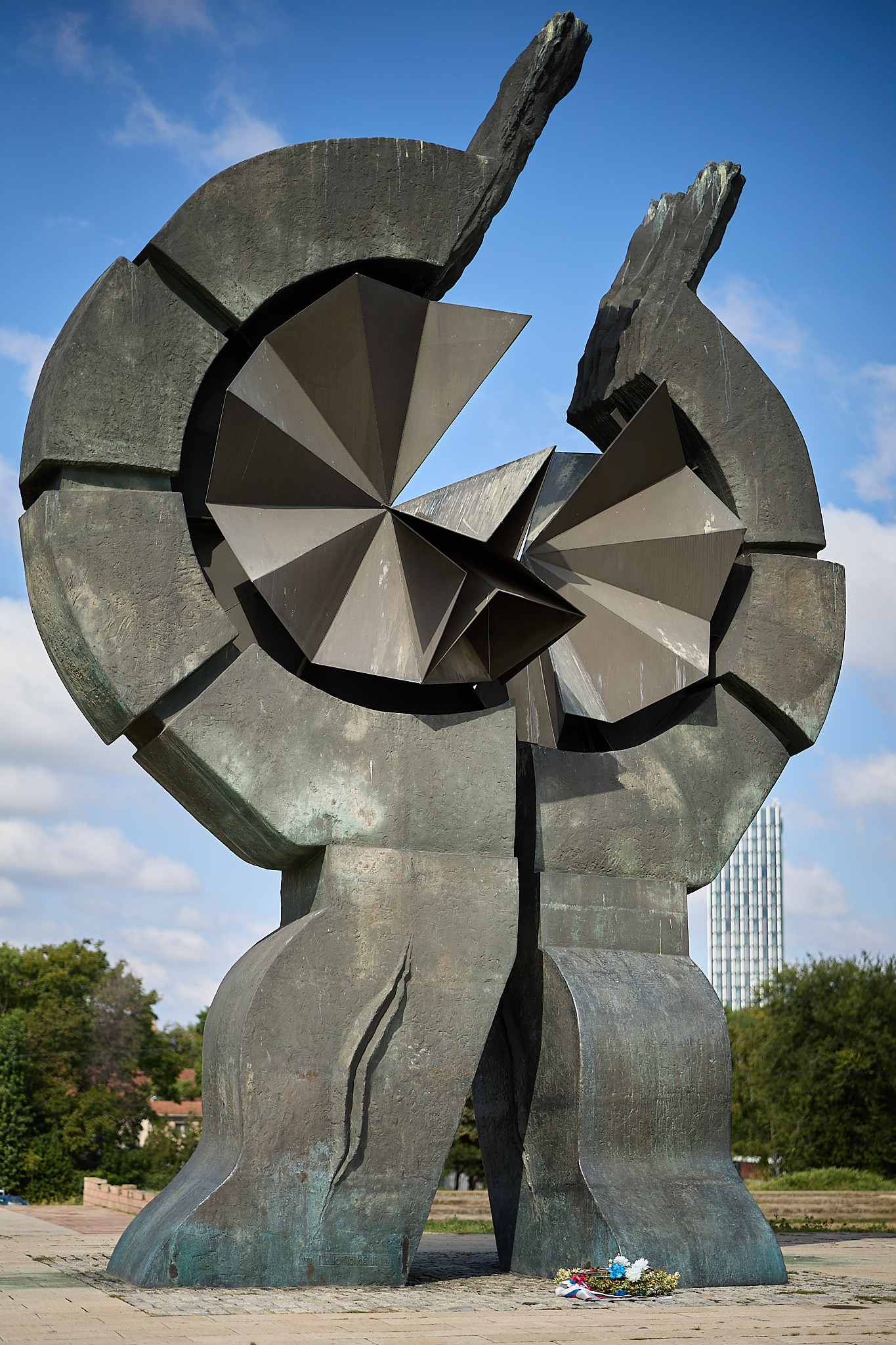
The monument was not put among the pavilions. It went on the riverbank, so that, as Mošić explained, it could be seen from the bridge and from the fortress.
The dedication went on a separate plaque, and it reached well beyond this bank: to the victims of this camp and of Jasenovac, to those killed under Hungarian occupation whose bodies the Sava and the Danube carried to Belgrade, to the resistance, and to all of Yugoslavia’s victims of genocide.
In 2013, the writer Ivan Ivanji, whose mother was one of the camp’s victims, wrote that the monument stood in the wrong place, away from where the camp’s horrors had happened. When a television crew filmed him in front of it, children were playing football nearby. They had left their coats and bags at its foot. He suggested asking them whether they knew what it commemorated. The editor preferred not to.
In the autumn of 2024, the bank around the monument became a works yard for taking down the Old Sava Bridge, the next bridge upstream from Branko’s. By September 2025, the bronze that had been put there to be seen stood among machinery and containers, inside a box of translucent sheeting.
September 2023
When I was there, on a morning in September 2023, a wreath lay on the cobbles at its foot. On the ribbon, someone had written in marker pen: ЖРТВАМА, “to the victims”.
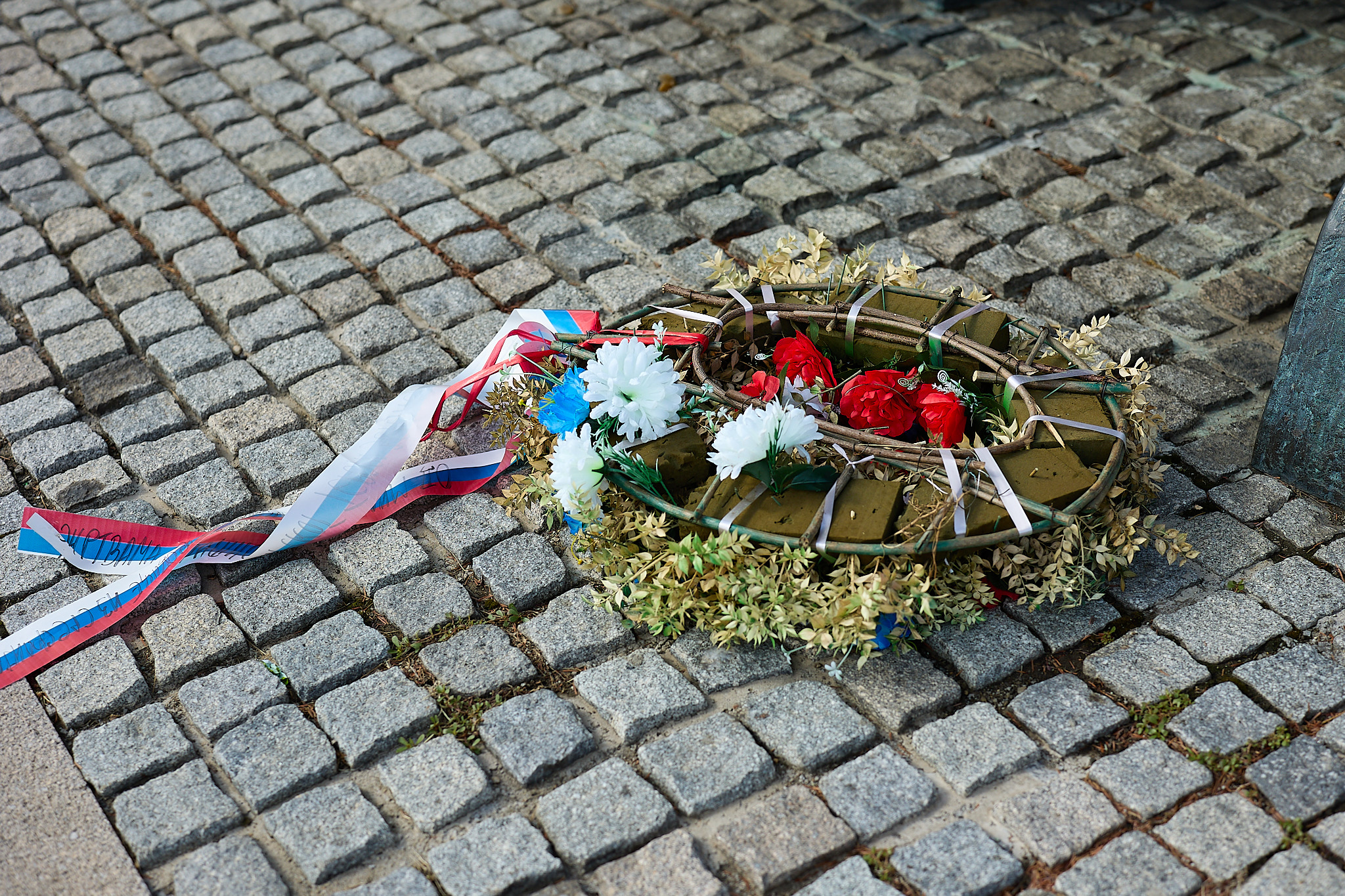
The circle is split all the way to the ground. From the path, through the gap between life and death, whichever is which, there was Belgrade.
It has always been in plain sight from here, too.
Visit this place
Location
Monument to the Victims of the Sajmište Camp / Spomenik žrtvama logora Sajmište
On the left bank of the Sava in New Belgrade, between Branko’s Bridge and the Sava bridge, across the river from the old town
Zemunski put, Belgrade, Serbia
Practical Information
- Admission
- Free
- Current access
- Since autumn 2024, the monument has stood inside a construction site, first for removing the Old Sava Bridge and now for building the new bridge in its place. In September 2025 the sculpture was enclosed in protective sheeting. Until the works are finished, it may not be possible to reach it or to see it uncovered.
- Visitor note
- An open-air memorial to the victims of the camp; please be respectful around it.
- Current listing
- Google Maps lists the monument as temporarily closed (checked 10 November 2026). Access to the monument is unconfirmed; do not enter fenced construction areas.
Information last checked: November 10, 2026 (Construction-site reports and current bridge-work information checked; access to the monument and removal of its protective sheeting remain unconfirmed.)
Conversation
Comments
Review pending commentsComments are reviewed before appearing. The internet already contains enough unattended surprises.
Loading comments…
Leave a comment