Gardoš Tower: Where Hungary Once Ended
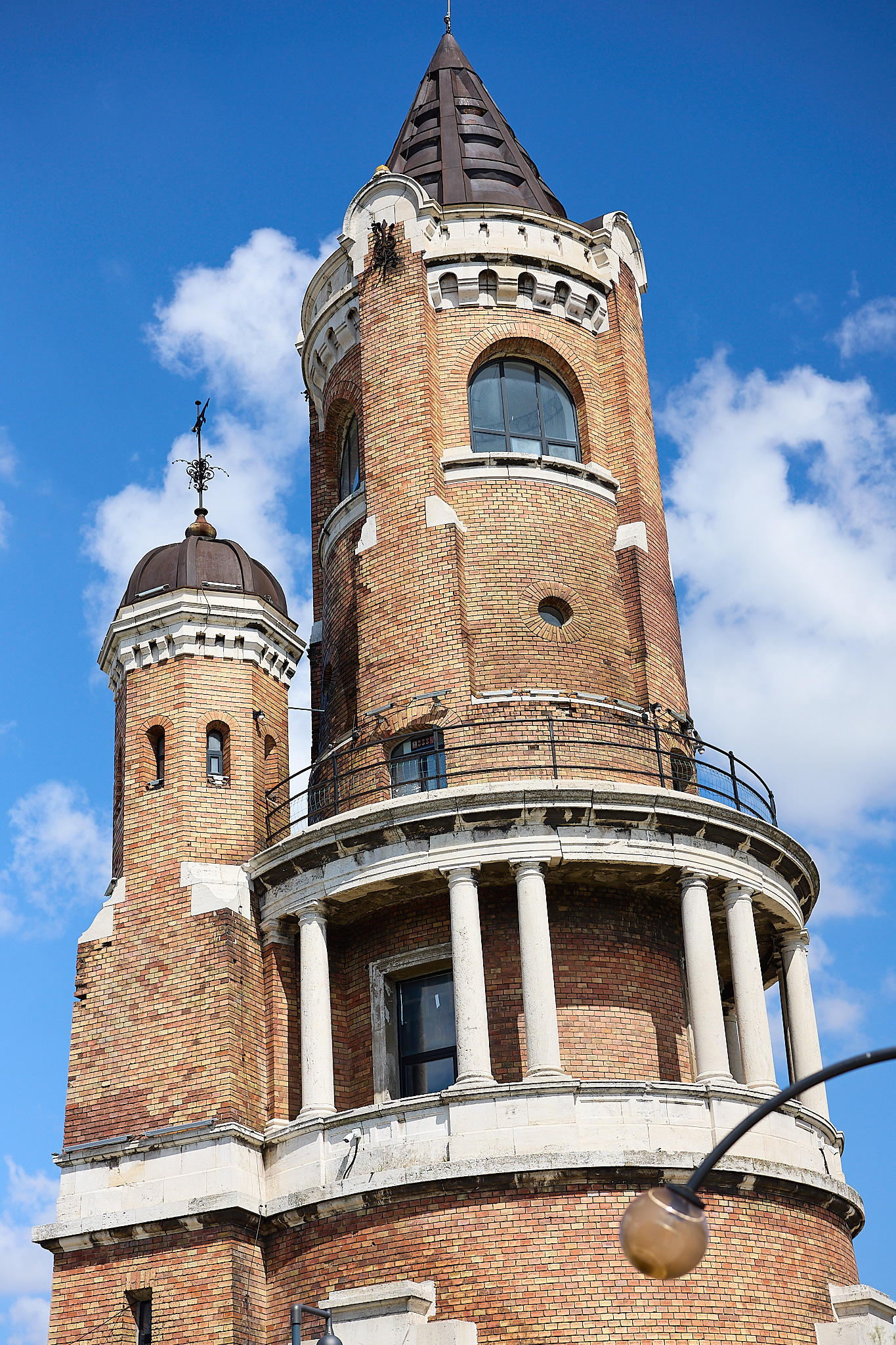
In 1896, Hungary celebrated a thousand years since the Magyars settled in the Pannonian Plain. A Hungarian encyclopedia of the time set out the programme of events. One of the unveilings was to take place at Zimony, “on the country’s southern border”.
Zimony is the Hungarian name for Zemun. Zemun is now part of Belgrade.
Hungary’s southern border, in other words, once ran through what is now the Serbian capital.
The monument is mostly still there: a tower on top of Gardoš, a hill in Zemun’s old town.
Uphill
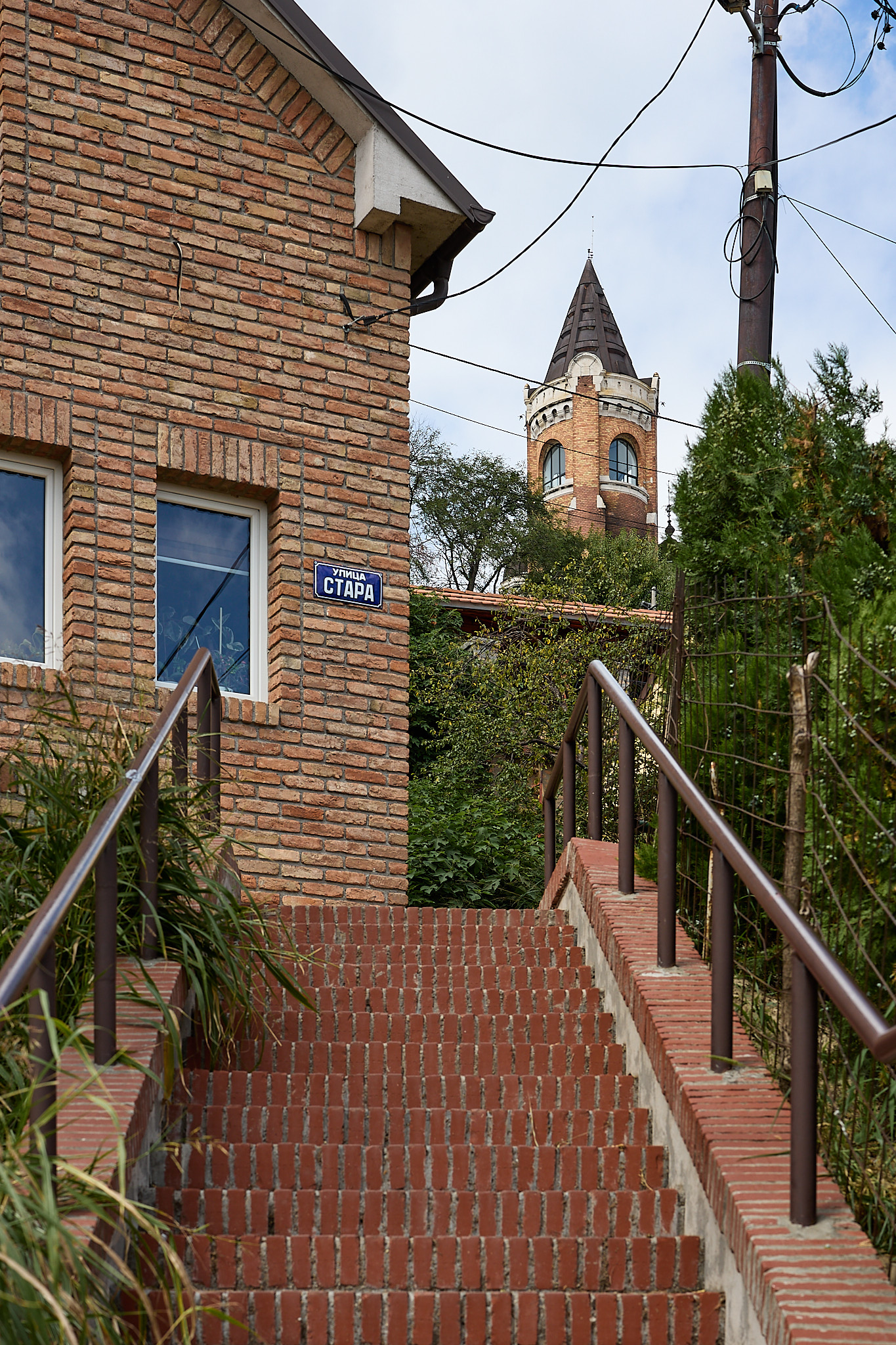
Getting there felt like a long walk, much of it uphill: the old town climbs away from the Danube towards Gardoš. Near the top, the way turns into a flight of brick steps, and the tower appears over the roofs.
Seven monuments
The tower was one of seven monuments that a Hungarian law of 1896 placed around the kingdom to mark the millennium, and Zemun’s was the furthest south. The architect Gyula Berczik designed it as a tall round tower in brick and pale stone, with a slimmer tower at its side. It stands in the middle of the ruins of a medieval fortress.
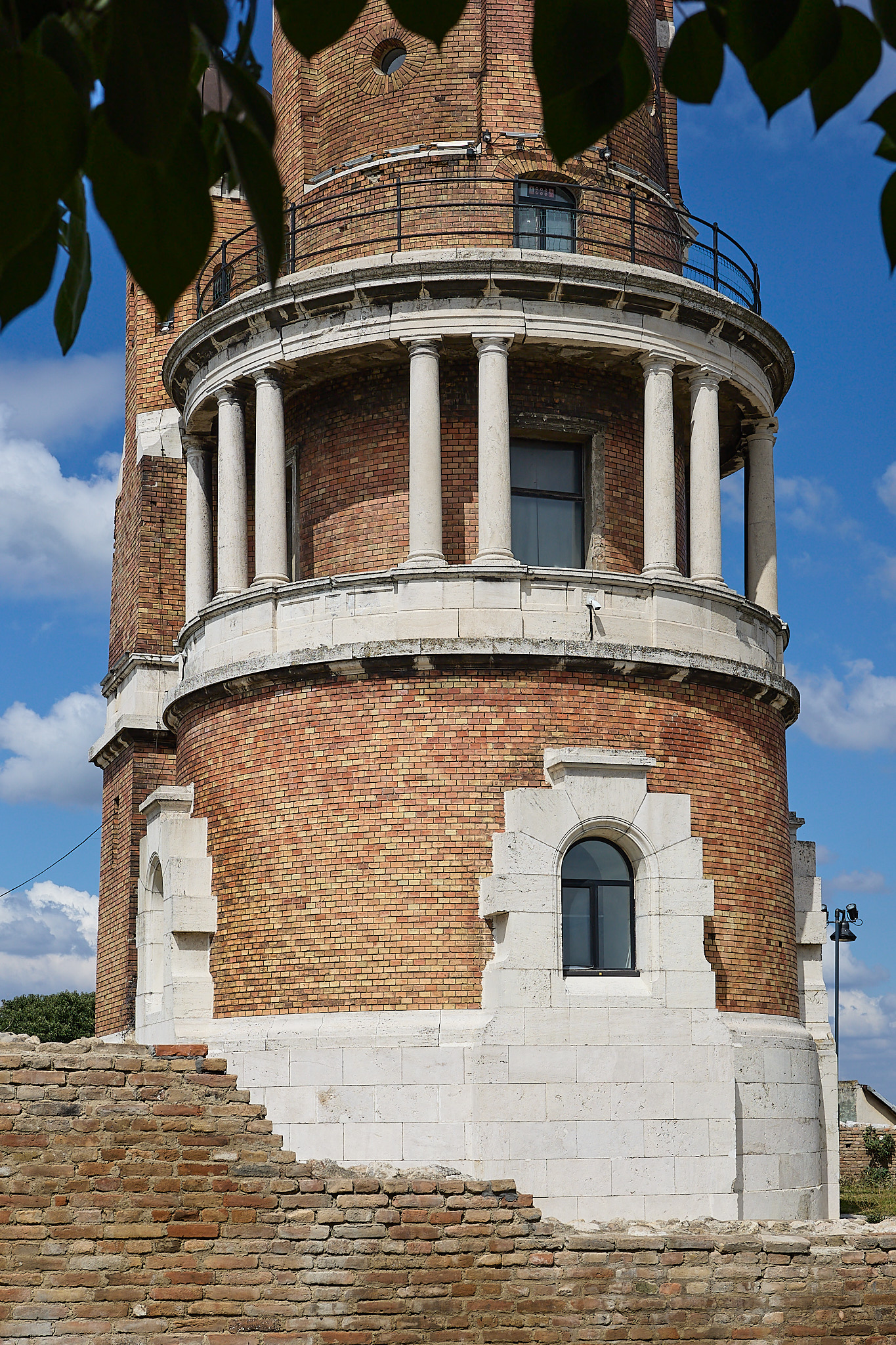
At the top stood a bronze turul, the great bird of Hungarian legend, its wings spread and a sword in its grip. Lower down sat a figure of Hungária, the personification of Hungary, between two stone lions.
Sibinjanin Janko
Not long after the tower was finished, people in Zemun started calling it something else: the Tower of Sibinjanin Janko. In Hungarian, too, it came to be known as the Hunyadi Tower.
Sibinjanin Janko is the name Serbian epic poetry gives to János Hunyadi, the commander who broke the Ottoman siege of Belgrade for the Kingdom of Hungary in July 1456. About three weeks later, he died in an epidemic that had broken out among his troops. He is said to have died here on Gardoš, in the old fortress, 440 years before the tower was built.
He went on living in song. One of the earliest surviving records of South Slavic epic poetry, ten lines written down in southern Italy in 1497, is about him in prison.
Hungary built the tower. Zemun named it after one of Hungary’s great commanders, who was already a hero of Serbian song.
Where the bird went
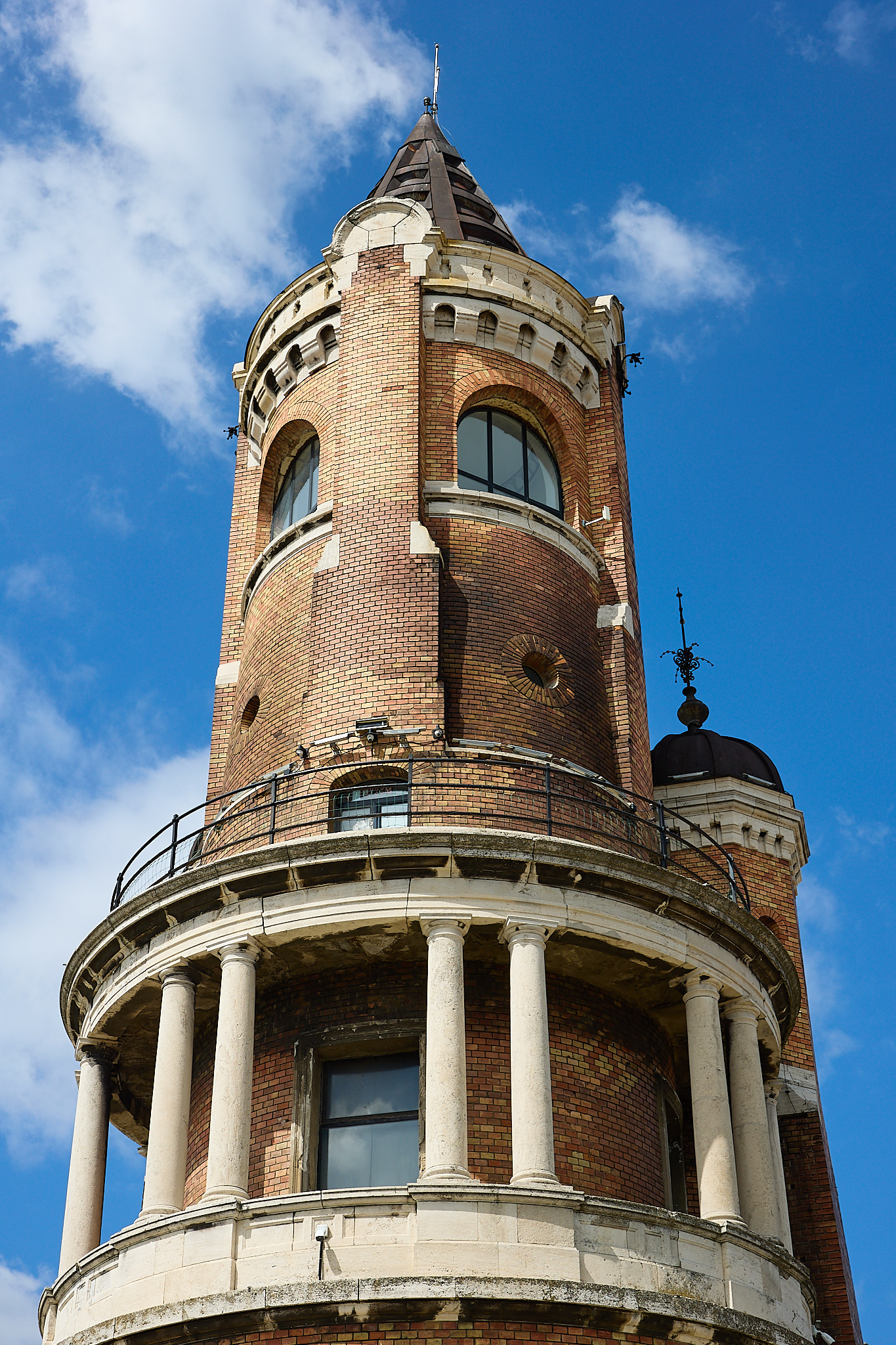
Look up today, and the bird is not there.
The southern border lasted another twenty-two years. In 1918, at the end of the First World War, Zemun became part of the new Kingdom of Serbs, Croats and Slovenes, along with Belgrade on the other side of the river. In less than a generation, five of the seven millennium monuments had ended up outside Hungary.
That raised the question of what to do with them. Two, at Devín and on Zobor Hill near Nitra, in what was by then Czechoslovakia, were destroyed within three weeks of each other in 1921. For the tower in Zemun, one proposal that year was to keep it and give it a new meaning, as a memorial to the new state’s victory in the war.
Then, on the night of Pentecost in 1924, a group of young people stripped the monument of its decorations. They smashed the statues and knocked off the inscription and the coat of arms.
The turul was gone from the top as well. Accounts differ about when it came down, and about whether it was lost or melted. None of them has it coming back.
The tower itself stayed where it was, and it can still be climbed.
Inside
For decades, Zemun’s firemen used the tower as a lookout, which, given the view, was the obvious use for it. By 2006 it was derelict, with no doors, no windows, no electricity and no water. Borka and Đorđe Čubrilo, a husband-and-wife team of gallerists, cleared out several tons of rubbish and restored it under the direction of the heritage authorities, following the original plans from 1896. When I visited, there was a gallery inside, and a viewing balcony at the top.
Near the top, the inside is plainer than the outside suggests: white, curved walls, with the windows set deep into them.
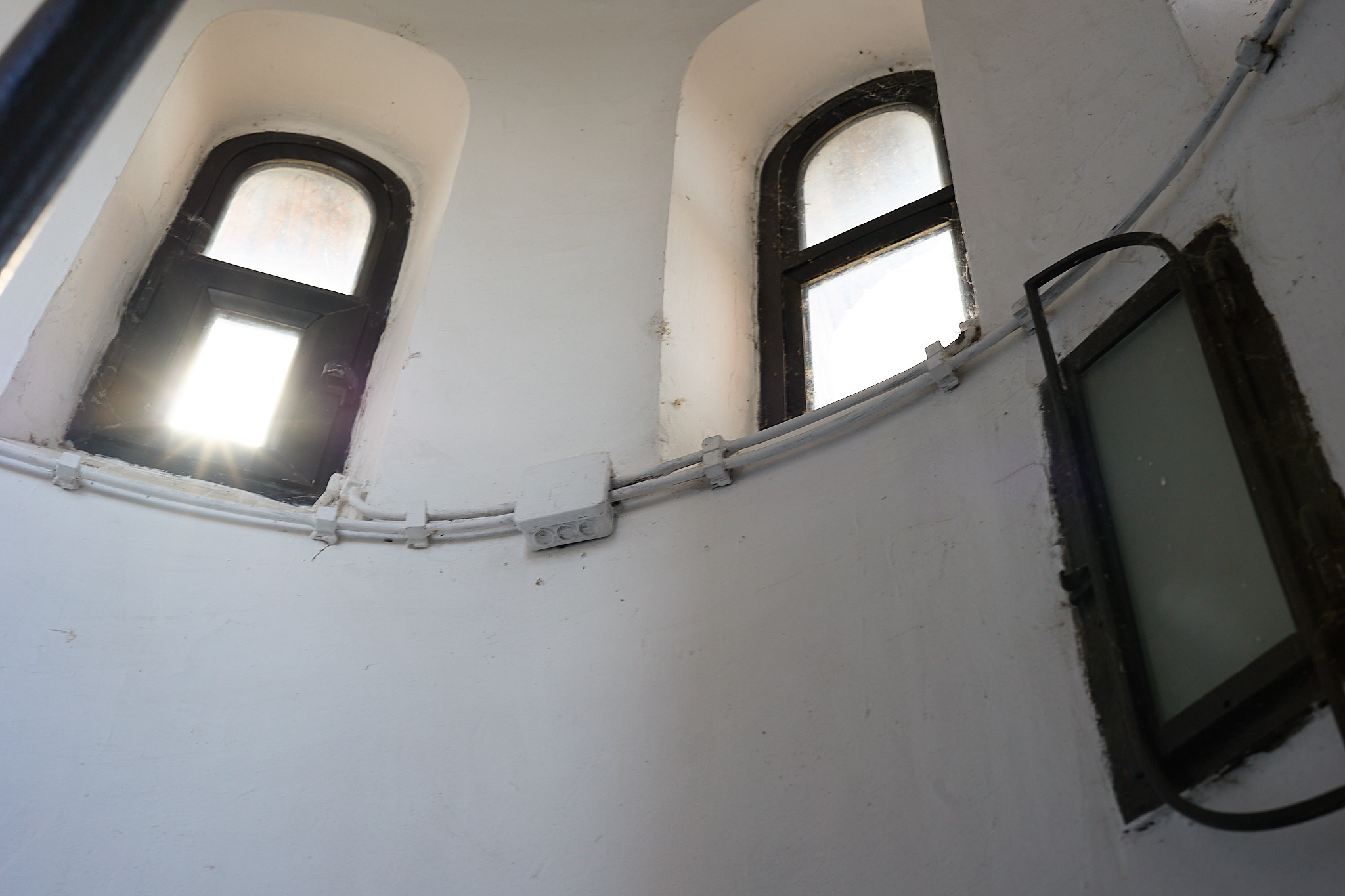
The stairs carry on where the steps outside left off. The tower marks a thousand years in about 36 metres. After the hill, that felt like plenty.
Across the water
From the balcony, Zemun’s red roofs spread out below.
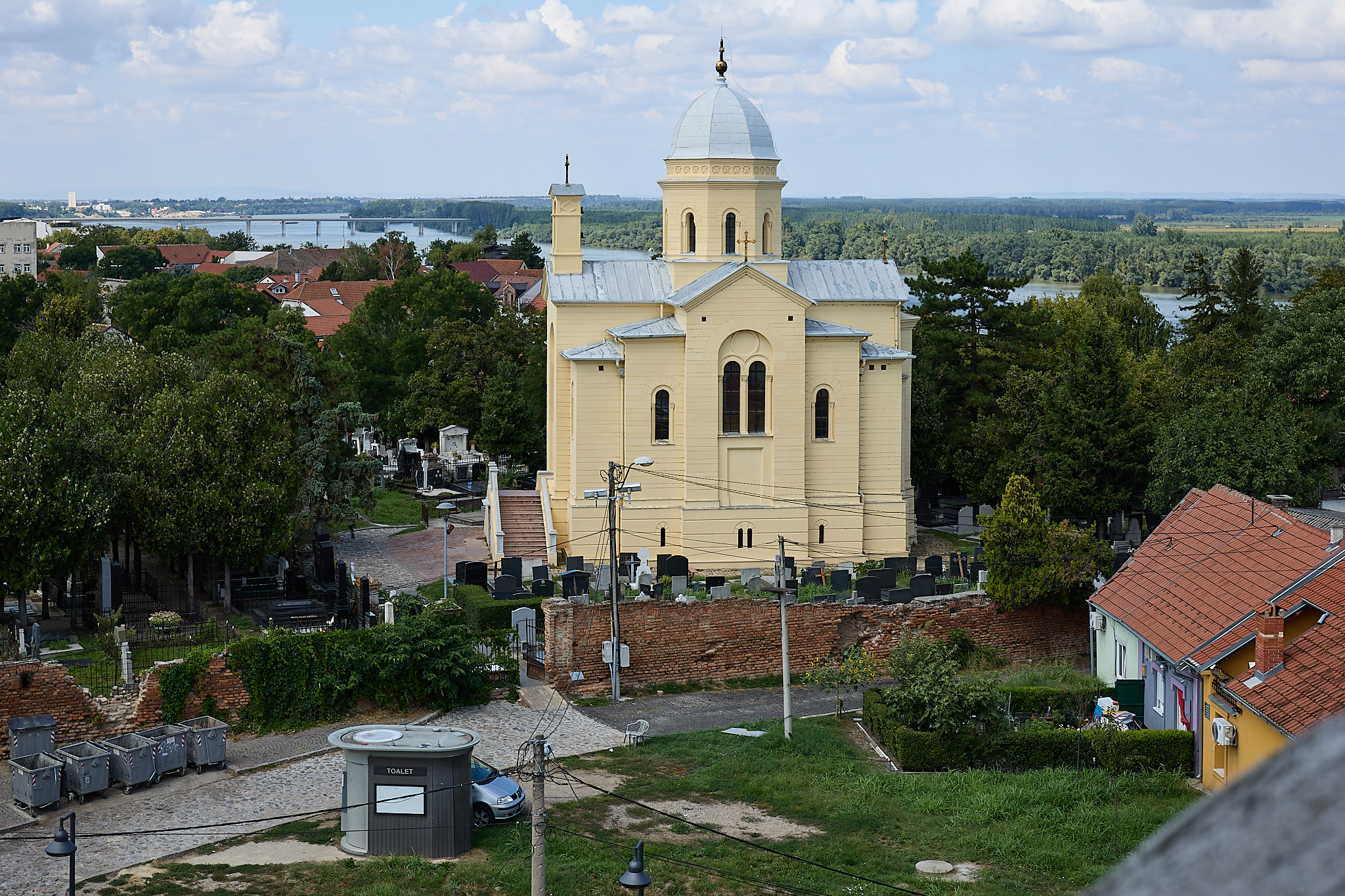
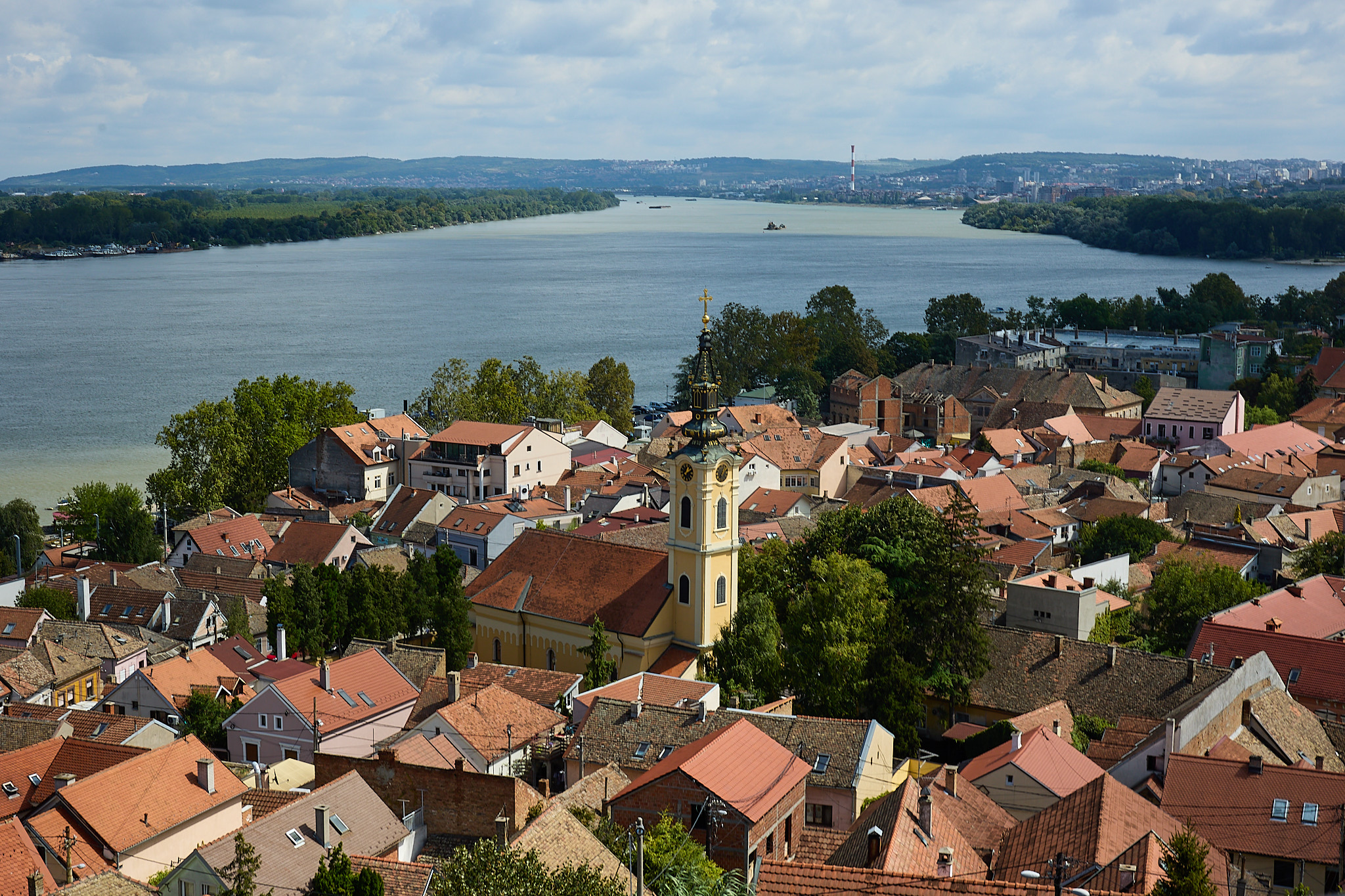
On another side, beyond the roofs, the river and a long wooded island, is Belgrade.
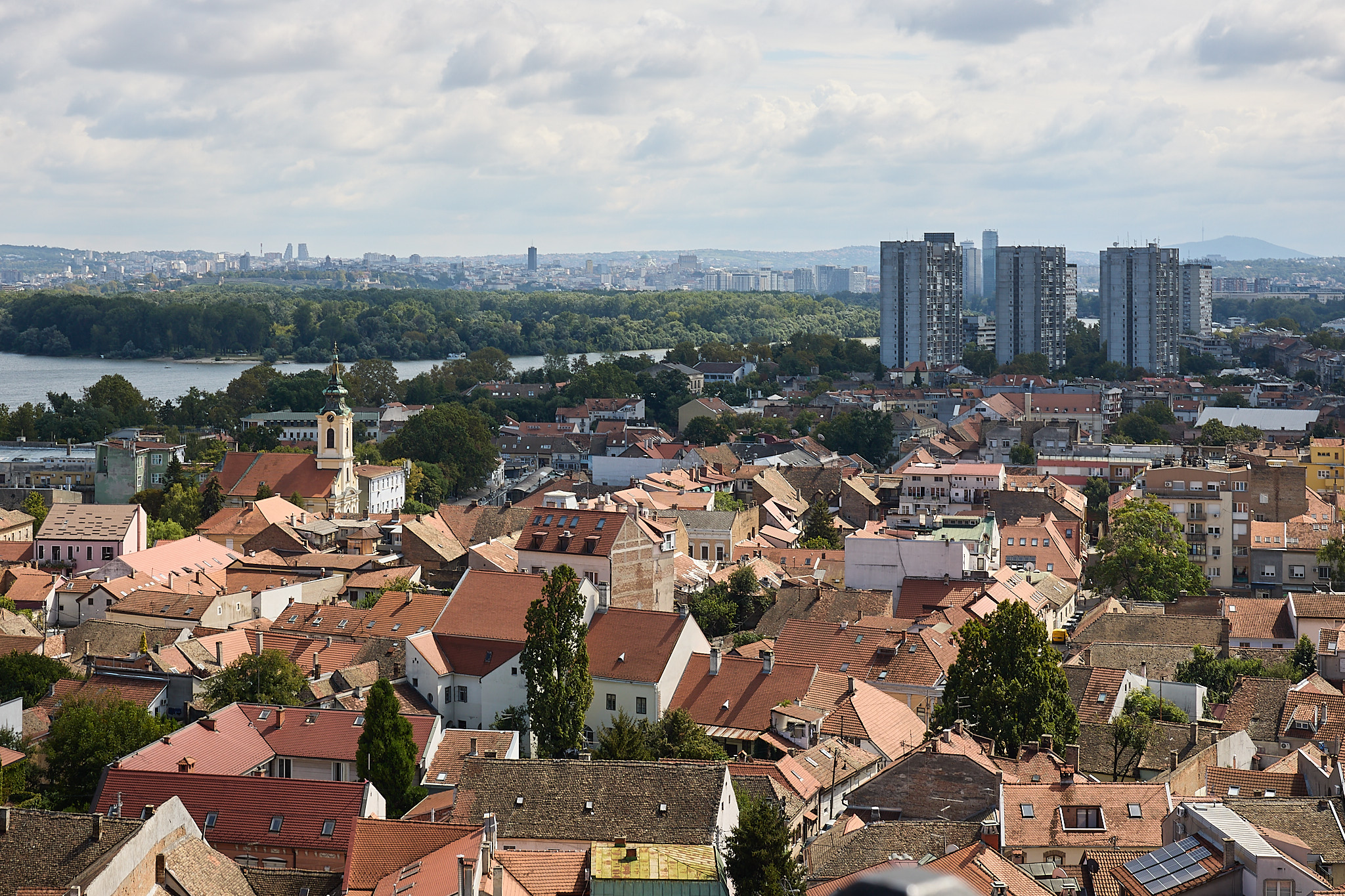
In 1896, Zemun belonged to Croatia-Slavonia, a kingdom under the Hungarian crown. The city on the far bank was the capital of the Kingdom of Serbia.
From Hungary’s southern border, the view was of someone else’s capital.
It was not always a peaceful view. In July 1914, river monitors of the Austro-Hungarian flotilla based at Zemun opened fire on Belgrade. Their first rounds are widely regarded as the opening shots of the First World War. On today’s map, they were fired from inside Belgrade.
Underneath
The fortress around the tower dates from the late 14th or early 15th century: a roughly square citadel with a round tower at each corner. What was left of its walls and corner towers was restored in 2018 and 2019. Few of the original bricks had survived six centuries, so the restorers brought in old bricks from around Vojvodina, the province to the north, and bound them with lime mortar made from crushed brick. Even the repairs are second-hand.
The restored walls now share the hilltop with a restaurant terrace.
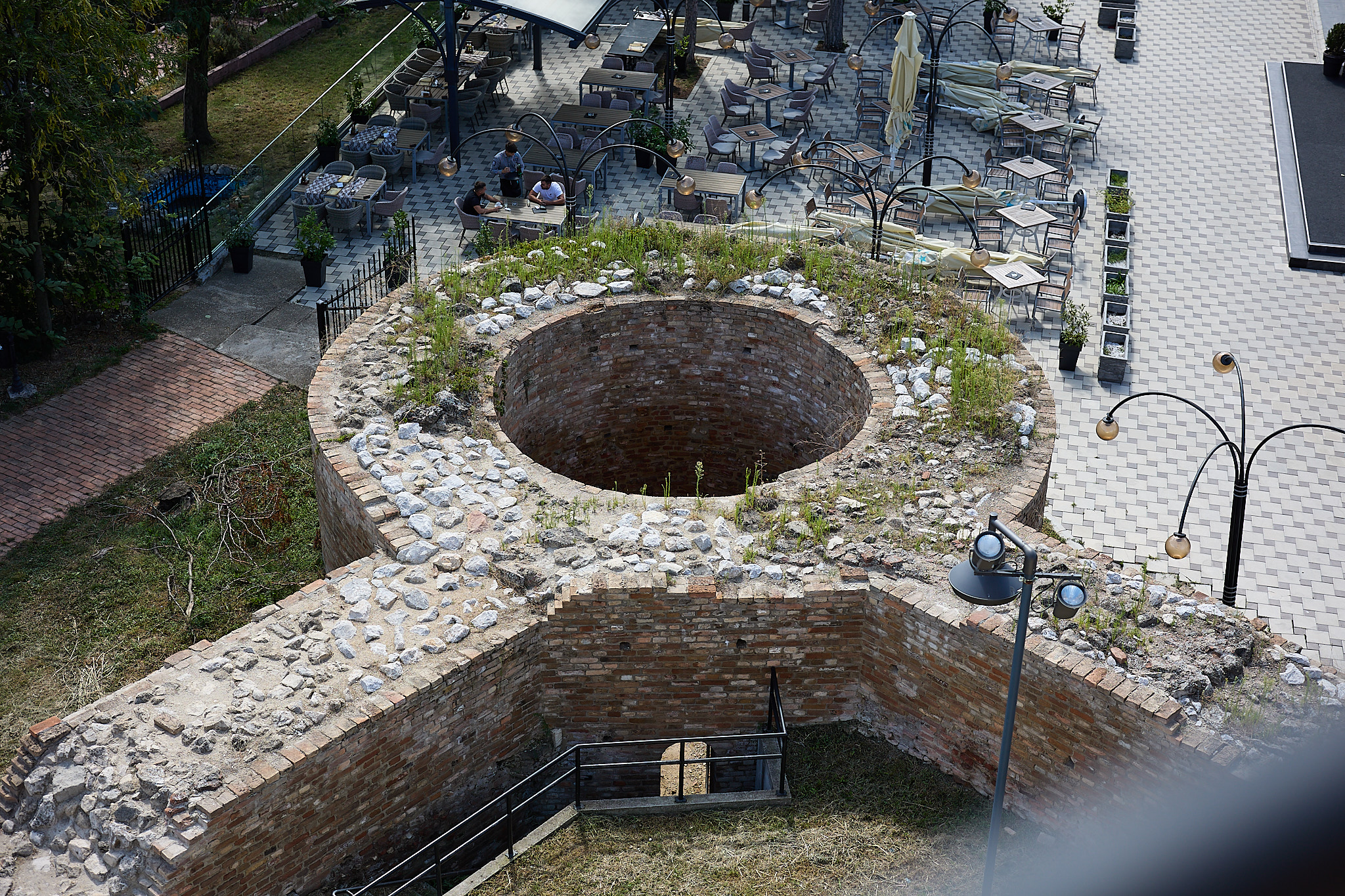
Below ground, Zemun has old corridors dug into its soft loess, and one local legend has a passage running from a cellar beneath the tower, under the river, all the way to Belgrade Fortress on the far bank. It took hold after the tower was hit by shellfire later in 1914 and the stairs down to the cellar reportedly collapsed, burying it. Some people decided this had been done on purpose, to hide the passage. After the war, a tunnel was dug into the cellar from the tower’s ground floor. No passage was found leading out of it. The legend survives anyway.
Had it existed, it would have been a remarkably discreet way across the border.
In 1934, Zemun became part of Belgrade. The tower now looks across the water at its own city centre. People in Zemun still often point out that Zemun is a town of its own, not part of the capital. Belgrade’s own tourist board repeats that Zemun is “a city within the city”, and calls the tower its symbol.
Built to mark where Hungary ended, it now marks where Zemun likes to think it begins.
Visit this place
Location
Gardoš Tower / Кула Гардош (Millennium Tower)
On top of Gardoš hill in Zemun’s old town, in the middle of the remains of the medieval Zemun fortress, above the Danube
Grobljanska 22, Zemun, Belgrade, Serbia
Practical Information
- Getting there
- In Zemun, north-west of central Belgrade across the Sava. From the centre of Zemun, the old-town streets and steps climb to the top of Gardoš hill.
- Opening hours
- Listed on Google Maps as 10:00–16:00 daily (November 2026). Hours vary by season; check before you go.
- Visitor note
- The viewing balcony is reached by steep stairs inside the tower. The hilltop around the tower, with the remains of the medieval fortress, is open to walk around.
- More information
- Zemun — Tourist Organisation of Belgrade
Information last checked: November 10, 2026 (Opening hours from Google Maps, checked on 10 November 2026; hours vary by season. Current admission prices are unconfirmed.)
Conversation
Comments
Review pending commentsComments are reviewed before appearing. The internet already contains enough unattended surprises.
Loading comments…
Leave a comment